Rigveda 10.19: To the cows
Introduction
Rigveda 10.19 is a hymn of 8 verses addressed to the cows. It stands in book (maṇḍala) 10, the last and latest book. The Rigveda is the oldest collection of Sanskrit hymns, composed in the second half of the second millennium BCE and handed down orally for many centuries before it was written down.
The manuscript shown is Penn Ms. Coll. 390 Item 41 (University of Pennsylvania), an undated paper manuscript of the padapāṭha (the word-by-word recitation text, in which every word is written separately and compounds are split) of the whole Ṛgveda in Devanāgarī, 884 leaves in fascicles, 7-9 lines to the page, accents in red; this hymn stands on fol. 759v-760r. Each section below gives the verses that end on one page; the page boundaries were read on the images (the opening words of every page), not counted out. Where the manuscript is a padapāṭha (the word-by-word recitation text), the section shows Aufrecht's continuous (saṃhitā) text first and, as the edition text, the padapāṭha of the same verses, which is the form written on the page.
How was this verified? (Provenance)
Where on the image
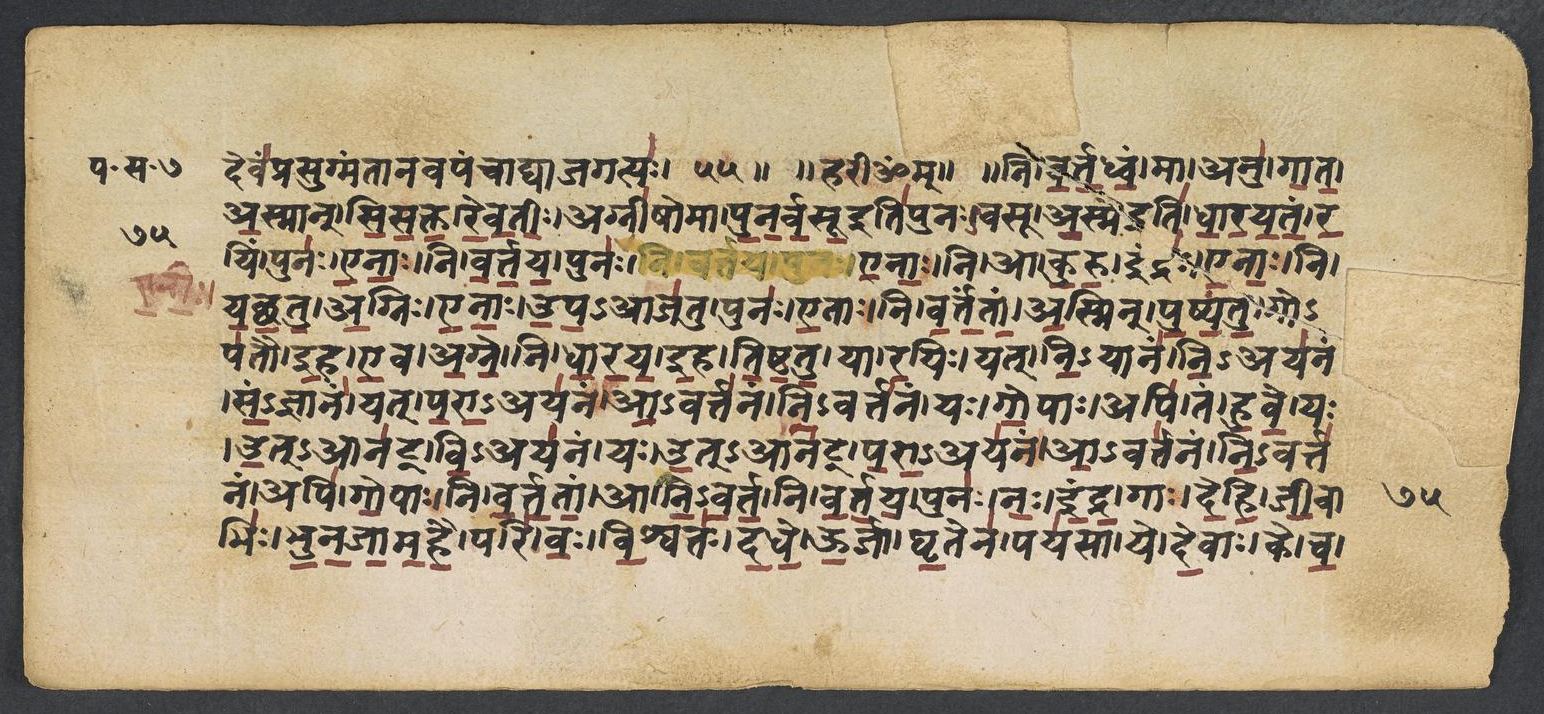
Penn Ms. Coll. 390 Item 41, fol. 759v (numbered 75v by the scribe) (OPenn image 760, upper leaf). Checked on the image: the Rigveda text on this page begins in RV 10.19.1 ‹ni vartadhvam mā anu›. Line 1 ends the anukramaṇī (number 55) and gives ॥ hariḥ oṃ ॥; 10.19.1 (ni vartadhvam mā anu gāta) begins in line 1. The next page with Rigveda text, fol. 760r (numbered 76r by the scribe), begins in RV 10.19.7 ‹yajñiyāḥ te rayyā sam›. Verses 10.19.1-6 end on this page.
1ni va̍rtadhva̱m mānu̍ gātā̱smān si̍ṣakta revatīḥ | agnī̍ṣomā punarvasū a̱sme dhā̍rayataṁ ra̱yim ||
2puna̍r enā̱ ni va̍rtaya̱ puna̍r enā̱ ny ā ku̍ru | indra̍ eṇā̱ ni ya̍cchatv a̱gnir e̍nā u̱pāja̍tu ||
3puna̍r e̱tā ni va̍rtantām a̱smin pu̍ṣyantu̱ gopa̍tau | i̱haivāgne̱ ni dhā̍raye̱ha ti̍ṣṭhatu̱ yā ra̱yiḥ ||
4yan ni̱yāna̱ṁ nyaya̍naṁ sa̱ṁjñāna̱ṁ yat pa̱rāya̍ṇam | ā̱varta̍naṁ ni̱varta̍na̱ṁ yo go̱pā api̱ taṁ hu̍ve ||
5ya u̱dāna̱ḍ vyaya̍na̱ṁ ya u̱dāna̍ṭ pa̱rāya̍ṇam | ā̱varta̍naṁ ni̱varta̍na̱m api̍ go̱pā ni va̍rtatām ||
6ā ni̍varta̱ ni va̍rtaya̱ puna̍r na indra̱ gā de̍hi | jī̱vābhi̍r bhunajāmahai ||
Compare: Padapāṭha (word-by-word text written in the manuscript; Sansknet e-text via GRETIL)
1ni | vartadhvam | mā | anu | gāta | asmān | sisakta | revatīḥ | agnīṣomā | punarvasūitipunaḥ-vasū | asme iti | dhārayatam | rayim
2punaḥ | enāḥ | ni | vartaya | punaḥ | enāḥ | ni | ā | kuru | indra | enāḥ | ni | yacchatu | agniḥ | enāḥ | upa-ājatu
3punaḥ | etāḥ | ni | vartantām | asmin | puṣyantu | go--patau | iha | eva | agne | ni | dhāraya | iha | tiṣṭhatu | yā | rayiḥ
4yat | ni-yānam | ni-ayanam | sam-jñānam | yat | parāyanam | āvartanan | ni-vartanam | yaḥ | gopāḥ | api | tam | huve
5yaḥ | ut-ānaṭ | vi-ayanam | yaḥ | ut-ānaṭ | parāyanam | āvartanam | n i-vartanam | api | gopāḥ | ni | vartatām
6ā | ni-varta | ni | vartaya | punaḥ | naḥ | indra | gāḥ | dehi | jīvābhiḥ | bhunajāmahai
1TURN, go not farther on your way: visit us, O ye Wealthy Ones. Agni and Soma, ye who bring riches again, secure us wealth.
2Make these return to us again, bring them beside us once again. May. Indra give them back to us, and Agni drive them hither-ward.
3Let them return to us again: under this herdsman let them feed. Do thou, O Agni, keep them here, and let the wealth we have remain.
4I call upon their herdsman, him who knoweth well their coming nigh, Their parting and their home-return, and watcheth their approach and rest.
5Yea, let the herdsman, too, return, who marketh well their driving-forth; Marketh their wandering away, their turning back and coming home.
6Home-leader, lead them home to us; Indra, restore to us our kine: We will rejoice in them alive.
Where on the image
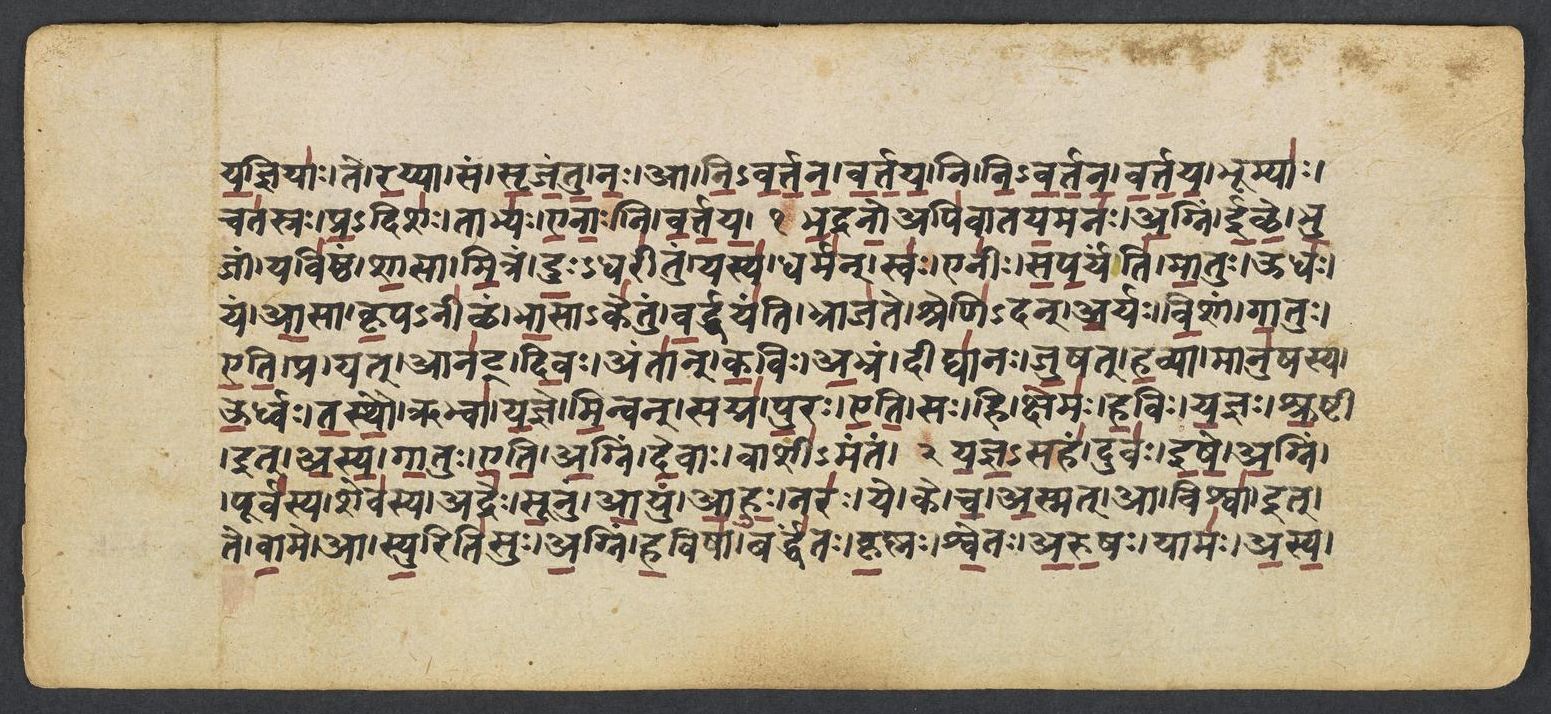
Penn Ms. Coll. 390 Item 41, fol. 760r (numbered 76r by the scribe) (OPenn image 760, lower leaf). Checked on the image: the Rigveda text on this page begins in RV 10.19.7 ‹yajñiyāḥ te rayyā sam›. The next page with Rigveda text, fol. 760v (numbered 76v by the scribe), begins in RV 10.20.9 ‹bradhnaḥ ṛjraḥ uta śoṇaḥ›. Verses 10.19.7-8 end on this page; 10.19.7 begins on fol. 759v (numbered 75v by the scribe).
7pari̍ vo vi̱śvato̍ dadha ū̱rjā ghṛ̱tena̱ paya̍sā | ye de̱vāḥ ke ca̍ ya̱jñiyā̱s te ra̱yyā saṁ sṛ̍jantu naḥ ||
8ā ni̍vartana vartaya̱ ni ni̍vartana vartaya | bhūmyā̱ś cata̍sraḥ pra̱diśa̱s tābhya̍ enā̱ ni va̍rtaya ||
Compare: Padapāṭha (word-by-word text written in the manuscript; Sansknet e-text via GRETIL)
7pari | vaḥ | viśvataḥ | dadhe | ūrjā | ghṛtena | payasā | ye | devāḥ | ke | ca | yajñiyāḥ | te | rayyā | sam | sṛjantu | naḥ
8ā | ni-vartana | vartaya | ni | ni-vartana | vartaya | bhūmyāḥ | catasraḥ | pra-diśaḥ | tābhyaḥ | enāḥ | ni | vartaya
7I offer you on every side butter and milk and strengthening food. May all the Holy Deities pour down on us a flood of wealth.
8O thou Home-leader, lead them home, restore them thou who bringest home. Four are the quarters of the earth; from these bring back to us our kine,
Notes
- Sanskrit: Aufrecht's edition (1877) with the Vedic accents, as entered by van Nooten and Holland (GRETIL).
- English: Ralph T. H. Griffith, The Hymns of the Rigveda (1889-1892; 2nd ed. 1896-1897), from the VedaWeb digital text; OCR slips in that text were corrected against the printed 2nd edition (data/sources/rigveda/griffith_errata.json).
- Padapāṭha (edition text): Sansknet e-text via GRETIL (CC BY-NC-SA 4.0).
Cite
Sources
- Source: Penn Ms. Coll. 390 Item 41 (undated (catalogued with Penn's 18th-19th c. Vedic manuscripts)), OPenn, Public Domain Mark + Aufrecht's accented text (GRETIL) + Griffith's English (VedaWeb) (holding institution)
- Critical edition: Aufrecht (1877), accented e-text via GRETIL
← previous · → next · v cycle view · l back to library