Rigveda 10.3: To Agni
Introduction
Rigveda 10.3 is a hymn of 7 verses addressed to Agni. It stands in book (maṇḍala) 10, the last and latest book. The Rigveda is the oldest collection of Sanskrit hymns, composed in the second half of the second millennium BCE and handed down orally for many centuries before it was written down.
The manuscript shown is Penn Ms. Coll. 390 Item 41 (University of Pennsylvania), an undated paper manuscript of the padapāṭha (the word-by-word recitation text, in which every word is written separately and compounds are split) of the whole Ṛgveda in Devanāgarī, 884 leaves in fascicles, 7-9 lines to the page, accents in red; this hymn stands on fol. 743v-744v. Each section below gives the verses that end on one page; the page boundaries were read on the images (the opening words of every page), not counted out. Where the manuscript is a padapāṭha (the word-by-word recitation text), the section shows Aufrecht's continuous (saṃhitā) text first and, as the edition text, the padapāṭha of the same verses, which is the form written on the page.
How was this verified? (Provenance)
Where on the image
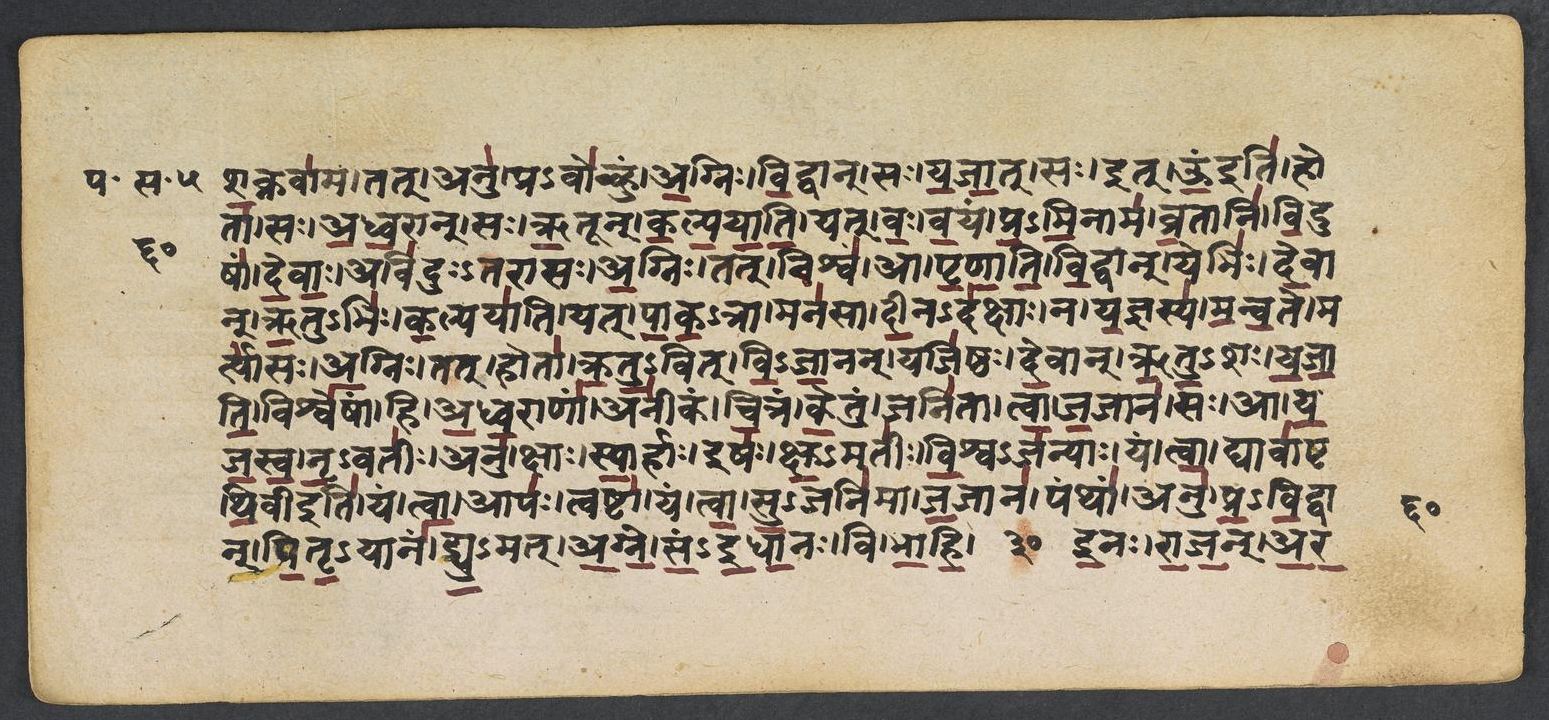
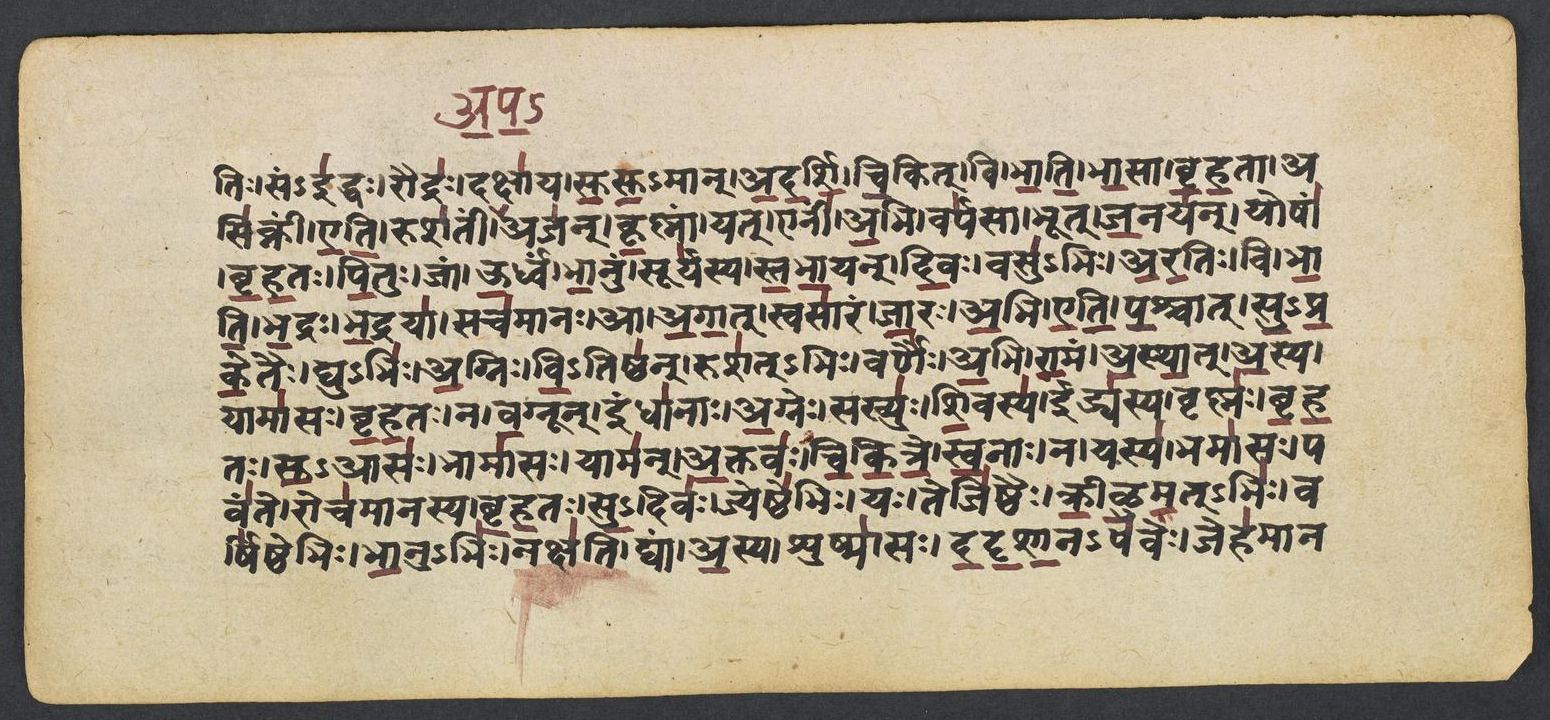
Penn Ms. Coll. 390 Item 41, fol. 744r (numbered 61r by the scribe) (OPenn image 744, lower leaf). Checked on the image: the Rigveda text on this page begins in RV 10.3.1 ‹-aratiḥ sam-iddhaḥ raudraḥ dakṣāya›. The next page with Rigveda text, fol. 744v (numbered 61v by the scribe), begins in RV 10.3.6 ‹-jehamānasya svanayan niyut-bhiḥ pratnebhiḥ›. Verses 10.3.1-5 end on this page; 10.3.1 begins on fol. 743v (numbered 60v by the scribe).
1i̱no rā̍jann ara̱tiḥ sami̍ddho̱ raudro̱ dakṣā̍ya suṣu̱mām̐ a̍darśi | ci̱kid vi bhā̍ti bhā̱sā bṛ̍ha̱tāsi̍knīm eti̱ ruśa̍tīm a̱pāja̍n ||
2kṛ̱ṣṇāṁ yad enī̍m a̱bhi varpa̍sā̱ bhūj ja̱naya̱n yoṣā̍m bṛha̱taḥ pi̱tur jām | ū̱rdhvam bhā̱nuṁ sūrya̍sya stabhā̱yan di̱vo vasu̍bhir ara̱tir vi bhā̍ti ||
3bha̱dro bha̱drayā̱ saca̍māna̱ āgā̱t svasā̍raṁ jā̱ro a̱bhy e̍ti pa̱ścāt | su̱pra̱ke̱tair dyubhi̍r a̱gnir vi̱tiṣṭha̱n ruśa̍dbhi̱r varṇai̍r a̱bhi rā̱mam a̍sthāt ||
4a̱sya yāmā̍so bṛha̱to na va̱gnūn indhā̍nā a̱gneḥ sakhyu̍ḥ śi̱vasya̍ | īḍya̍sya̱ vṛṣṇo̍ bṛha̱taḥ svāso̱ bhāmā̍so̱ yāma̍nn a̱ktava̍ś cikitre ||
5sva̱nā na yasya̱ bhāmā̍sa̱ḥ pava̍nte̱ roca̍mānasya bṛha̱taḥ su̱diva̍ḥ | jyeṣṭhe̍bhi̱r yas teji̍ṣṭhaiḥ krīḻu̱madbhi̱r varṣi̍ṣṭhebhir bhā̱nubhi̱r nakṣa̍ti̱ dyām ||
Compare: Padapāṭha (word-by-word text written in the manuscript; Sansknet e-text via GRETIL)
1inaḥ | rājan | aratiḥ | sam-iddhaḥ | raudraḥ | dakṣāya | susu-mān | adarśi | cikit | vi | bhāti | bṛhatā | asiknīm | eti | ruśatīm | apa-ajan
2kṛṣṇām | yat | enīm | abhi | varpasā | bhūt | janayan | yoṣām | bṛhataḥ | pituḥ | jām | ūrdhvam | bhānum | sūryasya | stabhāyan | divaḥ | vasu-bhiḥ | aratiḥ | vi | bhāti
3bhadraḥ | bhadrayā | sacamānaḥ | ā | agāt | svasāram | jāraḥ | abhi | eti | paścāt | su-praketaiḥ | dyu-bhiḥ | agniḥ | vi-tiṣṭhan | ruśat-bhiḥ | varṇaiḥ | abhi | rāmam | asthāt
4asya | yāmāsaḥ | bṛhataḥ | na | vagnūn | indhānāḥ | agneḥ | sakhyuḥ | śivasya | īḍyasya | vṛṣṇaḥ | bṛhataḥ | su-āsaḥ | bhāmāsaḥ | yāman | aktavaḥ | cikitre
5svanāḥ | na | yasya | bhāmāsaḥ | pavante | rocamānasya | bṛhataḥ | su-divaḥ | jyeṣṭhebhiḥ | yaḥ | tejiṣṭhaiḥ | krīḷumat-bhiḥ | varṣiṣṭhebhiḥ | bhānu-bhiḥ | nakṣati | dyām
1O KING, the potent and terrific envoy, kindled for strength, is manifest in beauty. He shines, all-knowing, with his lofty splendour: chasing black Night he comes with white-rayed Morning.
2Having o'ercome the glimmering Black with beauty, and bringing forth the dame the Great Sire's Daughter, Holding aloft the radiant light of Sûrya, as messenger of heaven he shines with treasures.
3Attendant on the Blessed Dame the Blessed hath come: the Lover followeth his Sister. Agni, far-spreading with conspicuous lustre, hath compassed Night with whitelyshining garments.
4His goings-forth kindle as 'twere high voices the goings of the auspicious Friend of Agni. The rays, the bright beams of the strong-jawed, mighty, adorable Steer are visible as he cometh.
5Whose radiant splendours flow, like sounds, about us, his who is lofty, brilliant, and effulgent, Who reaches heaven with best and brightest lustres, sportive and piercing even to the summit.
Where on the image
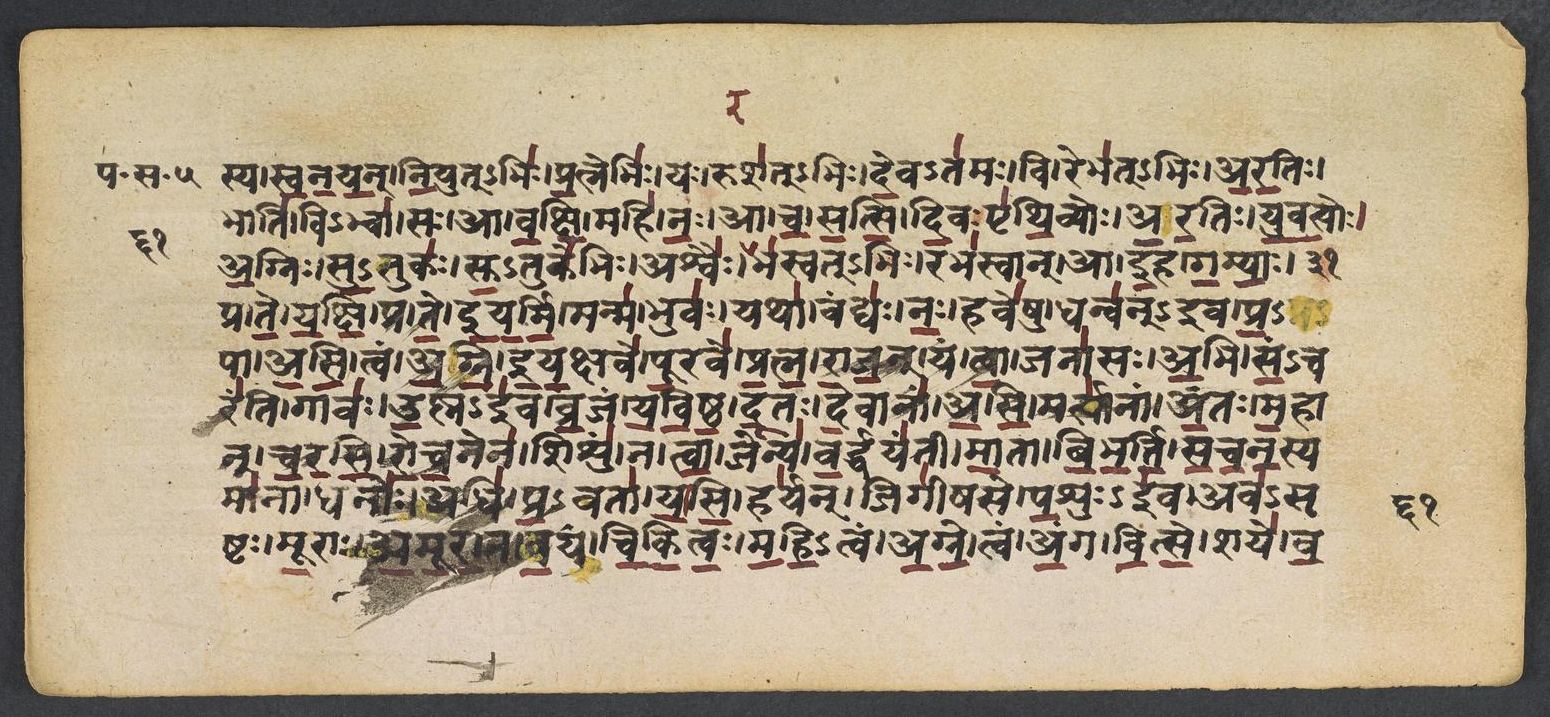
Penn Ms. Coll. 390 Item 41, fol. 744v (numbered 61v by the scribe) (OPenn image 745, upper leaf). Checked on the image: the Rigveda text on this page begins in RV 10.3.6 ‹-jehamānasya svanayan niyut-bhiḥ pratnebhiḥ›. The next page with Rigveda text, fol. 745r (numbered 62r by the scribe), begins in RV 10.4.4 ‹-vavriḥ carati jihvayā adan›. Verses 10.3.6-7 end on this page; 10.3.6 begins on fol. 744r (numbered 61r by the scribe).
6a̱sya śuṣmā̍so dadṛśā̱napa̍ve̱r jeha̍mānasya svanayan ni̱yudbhi̍ḥ | pra̱tnebhi̱r yo ruśa̍dbhir de̱vata̍mo̱ vi rebha̍dbhir ara̱tir bhāti̱ vibhvā̍ ||
7sa ā va̍kṣi̱ mahi̍ na̱ ā ca̍ satsi di̱vaspṛ̍thi̱vyor a̍ra̱tir yu̍va̱tyoḥ | a̱gniḥ su̱tuka̍ḥ su̱tuke̍bhi̱r aśvai̱ rabha̍svadbhī̱ rabha̍svā̱m̐ eha ga̍myāḥ ||
Compare: Padapāṭha (word-by-word text written in the manuscript; Sansknet e-text via GRETIL)
6asya | śuṣmāsaḥ | dadṛśāna-paveḥ | jehamānasya | svanayan | niyut-bhiḥ | pratnebhiḥ | yaḥ | ruśat-bhiḥ | deva-tamaḥ | vi | rebhat-bhiḥ | aratiḥ | bhāti | v i-bhvā
7saḥ | ā | vakṣi | mahi | naḥ | ā | ca | satsi | divaḥpṛthivyoḥ | aratiḥ | yuvatyoḥ | agniḥ | su-tukaḥ | sut-ukebhiḥ | aśvaiḥ | rabhasvat-bhiḥ | rabhasvān | ā | iha | gamyāḥ
6His powers, whose chariot fellies gleam and glitter have loudly roared while, as with teams, he hasted. He, the most Godlike, far-extending envoy, shines with flames ancient, resonant, whitely-shining.
7So bring us ample wealth: seat thee as envoy of the two youthful Matrons, Earth and Heaven. Let Agni rapid with his rapid, horses, impetuous with impetuous Steeds, come hither.
Notes
- Sanskrit: Aufrecht's edition (1877) with the Vedic accents, as entered by van Nooten and Holland (GRETIL).
- English: Ralph T. H. Griffith, The Hymns of the Rigveda (1889-1892; 2nd ed. 1896-1897), from the VedaWeb digital text; OCR slips in that text were corrected against the printed 2nd edition (data/sources/rigveda/griffith_errata.json).
- Padapāṭha (edition text): Sansknet e-text via GRETIL (CC BY-NC-SA 4.0).
Cite
Sources
- Source: Penn Ms. Coll. 390 Item 41 (undated (catalogued with Penn's 18th-19th c. Vedic manuscripts)), OPenn, Public Domain Mark + Aufrecht's accented text (GRETIL) + Griffith's English (VedaWeb) (holding institution)
- Critical edition: Aufrecht (1877), accented e-text via GRETIL
← previous · → next · v cycle view · l back to library