Rigveda 10.22: To Indra
Introduction
Rigveda 10.22 is a hymn of 15 verses addressed to Indra. It stands in book (maṇḍala) 10, the last and latest book. The Rigveda is the oldest collection of Sanskrit hymns, composed in the second half of the second millennium BCE and handed down orally for many centuries before it was written down.
The manuscript shown is Penn Ms. Coll. 390 Item 41 (University of Pennsylvania), an undated paper manuscript of the padapāṭha (the word-by-word recitation text, in which every word is written separately and compounds are split) of the whole Ṛgveda in Devanāgarī, 884 leaves in fascicles, 7-9 lines to the page, accents in red; this hymn stands on fol. 761r-762r. Each section below gives the verses that end on one page; the page boundaries were read on the images (the opening words of every page), not counted out. Where the manuscript is a padapāṭha (the word-by-word recitation text), the section shows Aufrecht's continuous (saṃhitā) text first and, as the edition text, the padapāṭha of the same verses, which is the form written on the page.
How was this verified? (Provenance)
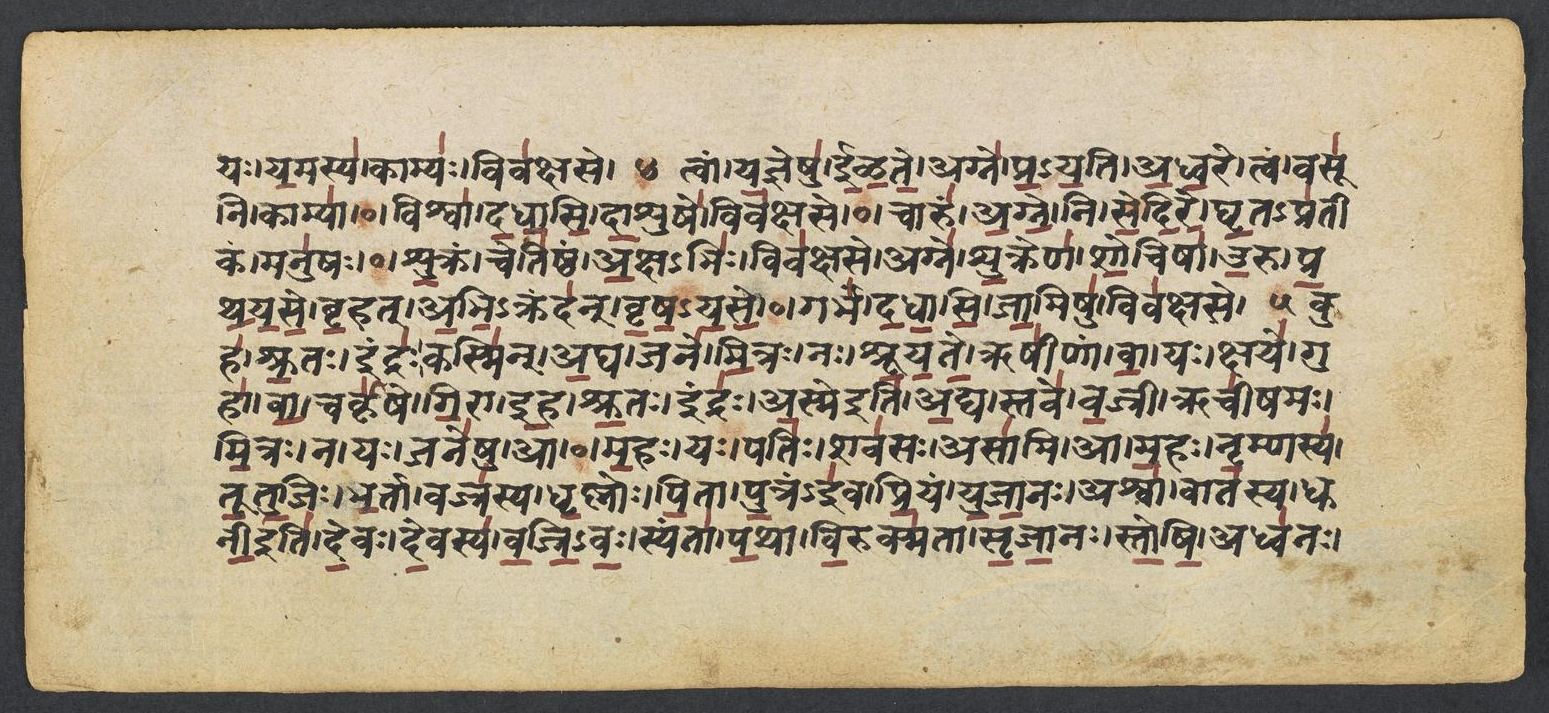
Where on the image
Penn Ms. Coll. 390 Item 41, fol. 761r (numbered 77r by the scribe) (OPenn image 761, lower leaf). Checked on the image: the Rigveda text on this page begins in RV 10.21.5 ‹-priyaḥ yamasya kāmyaḥ vivakṣase›. The next page with Rigveda text, fol. 761v (numbered 77v by the scribe), begins in RV 10.22.5 ‹tvam tyā cit vātasya›. Verses 10.22.1-4 end on this page.
1kuha̍ śru̱ta indra̱ḥ kasmi̍nn a̱dya jane̍ mi̱tro na śrū̍yate | ṛṣī̍ṇāṁ vā̱ yaḥ kṣaye̱ guhā̍ vā̱ carkṛ̍ṣe gi̱rā ||
2i̱ha śru̱ta indro̍ a̱sme a̱dya stave̍ va̱jry ṛcī̍ṣamaḥ | mi̱tro na yo jane̱ṣv ā yaśa̍ś ca̱kre asā̱my ā ||
3ma̱ho yas pati̱ḥ śava̍so̱ asā̱my ā ma̱ho nṛ̱mṇasya̍ tūtu̱jiḥ | bha̱rtā vajra̍sya dhṛ̱ṣṇoḥ pi̱tā pu̱tram i̍va pri̱yam ||
4yu̱jā̱no aśvā̱ vāta̍sya̱ dhunī̍ de̱vo de̱vasya̍ vajrivaḥ | syantā̍ pa̱thā vi̱rukma̍tā sṛjā̱naḥ sto̱ṣy adhva̍naḥ ||
Compare: Padapāṭha (word-by-word text written in the manuscript; Sansknet e-text via GRETIL)
1kuha | śrutaḥ | indraḥ | kasmin | adya | jane | mitraḥ | na | śrūyate | ṛṣīṇām | vā | yaḥ | kṣaye | guhā | vā | carkṛṣe | girā
2iha | śrutaḥ | indraḥ | asme iti | adya | stave | vajrī | ṛcīṣamaḥ | mitraḥ | na | yaḥ | janeṣu | ā | yaśaḥ | cakre | asāmi | ā
3mahaḥ | yaḥ | patiḥ | śavasaḥ | asāmi | ā | mahaḥ | nṛmṇasya | tūtujiḥ | bhartā | vajrasya | dhṛṣṇoḥ | pitā | putram-iva | priyam
4yujānaḥ | aśvā | vātasya | dhunī iti | devaḥ | devasya | vajri-vaḥ | syantā | pathā | virukmatā | sṛjānaḥ | stoṣi | adhvanaḥ
1WHERE is famed Indra heard of? With what folk is he renowned to-day as Mitra is,– Who in the home of R̥ishis and in secret is extolled with song?
2Even here is Indra famed, and among us this day the glorious Thunderer is praised, He who like Mitra mid the folk hath won complete and full renown.
3He who is Sovran Lord of great and perfect strength, exerter of heroic might, Who bears the fearless thunder as a father bears his darling son.
4Harnessing to thy car, as God, two blustering Steeds Of the Wind-God, O Thunderer, That speed along the shining path, thou making ways art glorified.
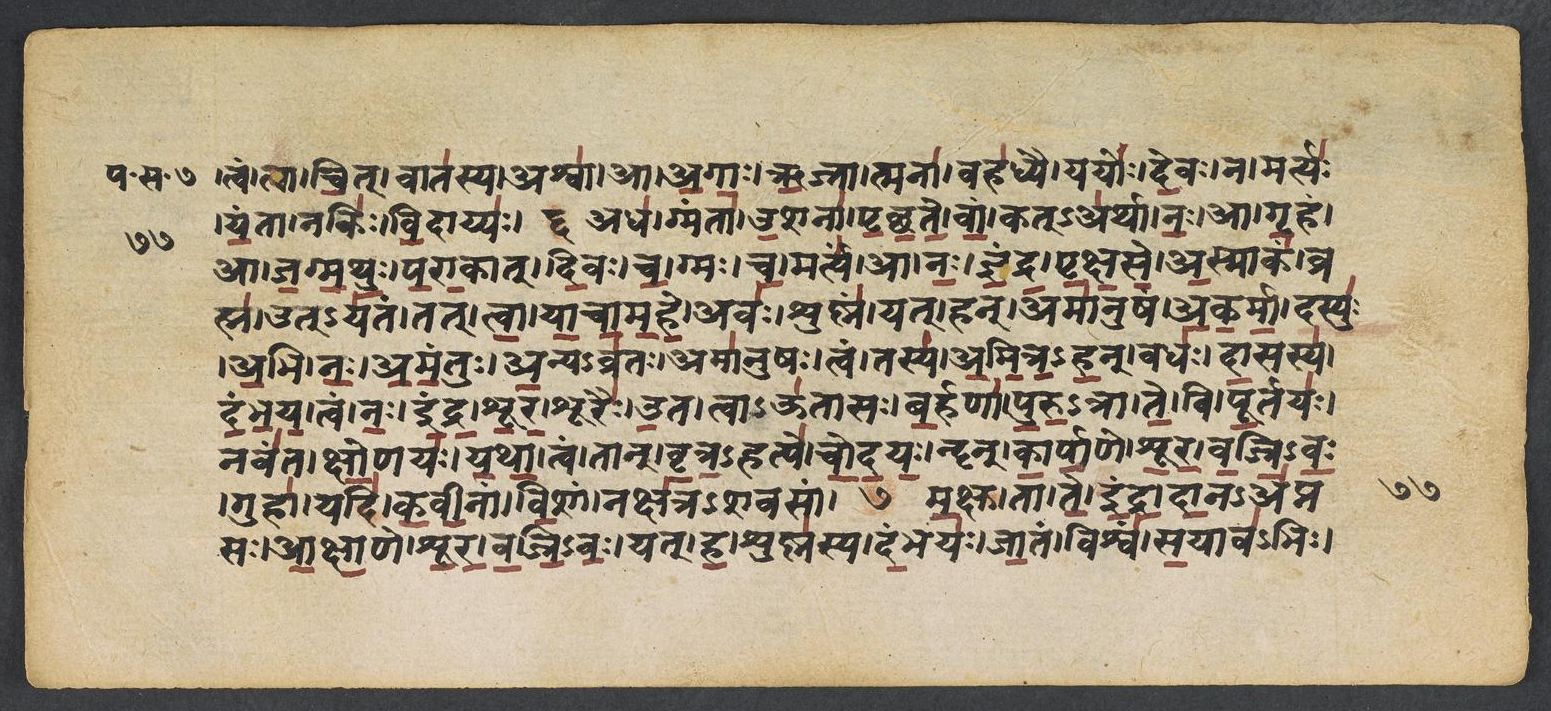
Where on the image
Penn Ms. Coll. 390 Item 41, fol. 761v (numbered 77v by the scribe) (OPenn image 762, upper leaf). Checked on the image: the Rigveda text on this page begins in RV 10.22.5 ‹tvam tyā cit vātasya›. The next page with Rigveda text, fol. 762r (numbered 78r by the scribe), begins in RV 10.22.12 ‹mā akudhryak indra śūra›. Verses 10.22.5-11 end on this page.
5tvaṁ tyā ci̱d vāta̱syāśvāgā̍ ṛ̱jrā tmanā̱ vaha̍dhyai | yayo̍r de̱vo na martyo̍ ya̱ntā naki̍r vi̱dāyya̍ḥ ||
6adha̱ gmanto̱śanā̍ pṛcchate vā̱ṁ kada̍rthā na̱ ā gṛ̱ham | ā ja̍gmathuḥ parā̱kād di̱vaś ca̱ gmaś ca̱ martya̍m ||
7ā na̍ indra pṛkṣase̱ 'smāka̱m brahmodya̍tam | tat tvā̍ yācāma̱he 'va̱ḥ śuṣṇa̱ṁ yad dhann amā̍nuṣam ||
8a̱ka̱rmā dasyu̍r a̱bhi no̍ ama̱ntur a̱nyavra̍to̱ amā̍nuṣaḥ | tvaṁ tasyā̍mitraha̱n vadha̍r dā̱sasya̍ dambhaya ||
9tvaṁ na̍ indra śūra̱ śūrai̍r u̱ta tvotā̍so ba̱rhaṇā̍ | pu̱ru̱trā te̱ vi pū̱rtayo̱ nava̍nta kṣo̱ṇayo̍ yathā ||
10tvaṁ tān vṛ̍tra̱hatye̍ codayo̱ nṝn kā̍rpā̱ṇe śū̍ra vajrivaḥ | guhā̱ yadī̍ kavī̱nāṁ vi̱śāṁ nakṣa̍traśavasām ||
11ma̱kṣū tā ta̍ indra dā̱nāpna̍sa ākṣā̱ṇe śū̍ra vajrivaḥ | yad dha̱ śuṣṇa̍sya da̱mbhayo̍ jā̱taṁ viśva̍ṁ sa̱yāva̍bhiḥ ||
Compare: Padapāṭha (word-by-word text written in the manuscript; Sansknet e-text via GRETIL)
5tvam | tyā | cit | vātasya | aśvā | ā | agāḥ | ṛjrā | tmanā | vahadhyai | yayoḥ | devaḥ | na | martyaḥ | yantā | nakiḥ | vidāyyaḥ
6adha | gmantā | uśanā | pṛcchate | vām | kat-arthā | naḥ | ā | gṛham | ā | jagmathuḥ | parākāt | divaḥ | ca | gmaḥ | ca | martyam
7ā | naḥ | indra | pṛkṣase | asmākam | brahma | ut-yatam | tat | tvā | yācāmahe | avaḥ | śuṣṇam | yat | han | amānuṣam
8akarmā | dasuḥ | abhi | naḥ | amantuḥ | anya-vrataḥ | amānuṣaḥ | tvam | tasya | amitra-han | vadhaḥ | dāsasya | dambhaya
9tvam | naḥ | indra | śūra | śūraiḥ | uta | tvāūtāsaḥ | barhanā | puru-trā | te | vi | pūrtayaḥ | navanta | kṣoṇayaḥ | yathā
10tvam | tān | vṛtra-hatye | codayaḥ | nṝn | kārpāṇe | śūra | vajri-vaḥ | guhā | yadi | kavīnām | viśām | nakṣatra-śavasām
11makṣu | tā | te | indra | dāna-apnasaḥ | ākṣāṇe | śūra | vajri-vaḥ | yat | ha | śuṣṇasya | dambhayaḥ | jātam | viśvam | sayāva-bhiḥ
5Even to these dark Steeds of Wind thou of thyself hast come to ride, Of which no driver may be found, none, be he God or mortal man.
6When ye approach, men ask you, thee and Uṣanâ: Why come ye to our dwelling-place? Why are ye come to mortal man from distant realms of earth and heaven?
7O Indra, thou shalt speak us fair: our holy prayer is offered up. We pray to thee for help as thou didst strike the monster Ṣushṇa dead.
8Around us is the Dasyu, riteless, void of sense, inhuman, keeping alien laws. Baffle, thou Slayer of the foe, the weapon which this Dâsa wields.
9Hero with Heroes, thou art ours: yea, strong are they whom thou dost help. In many a place are thy full gifts, and men, like vassals, sing thy praise.
10Urge thou these heroes on to slay the enemy, brave Thunderer! in the fight with swords. Even when hid among the tribes of Sages numerous as stars.
11Swift come those gifts of thine whose hand is prompt to rend and burn, O Hero Thunder-armed: As thou with thy Companions didst destroy the whole of Ṣushṇa's brood.
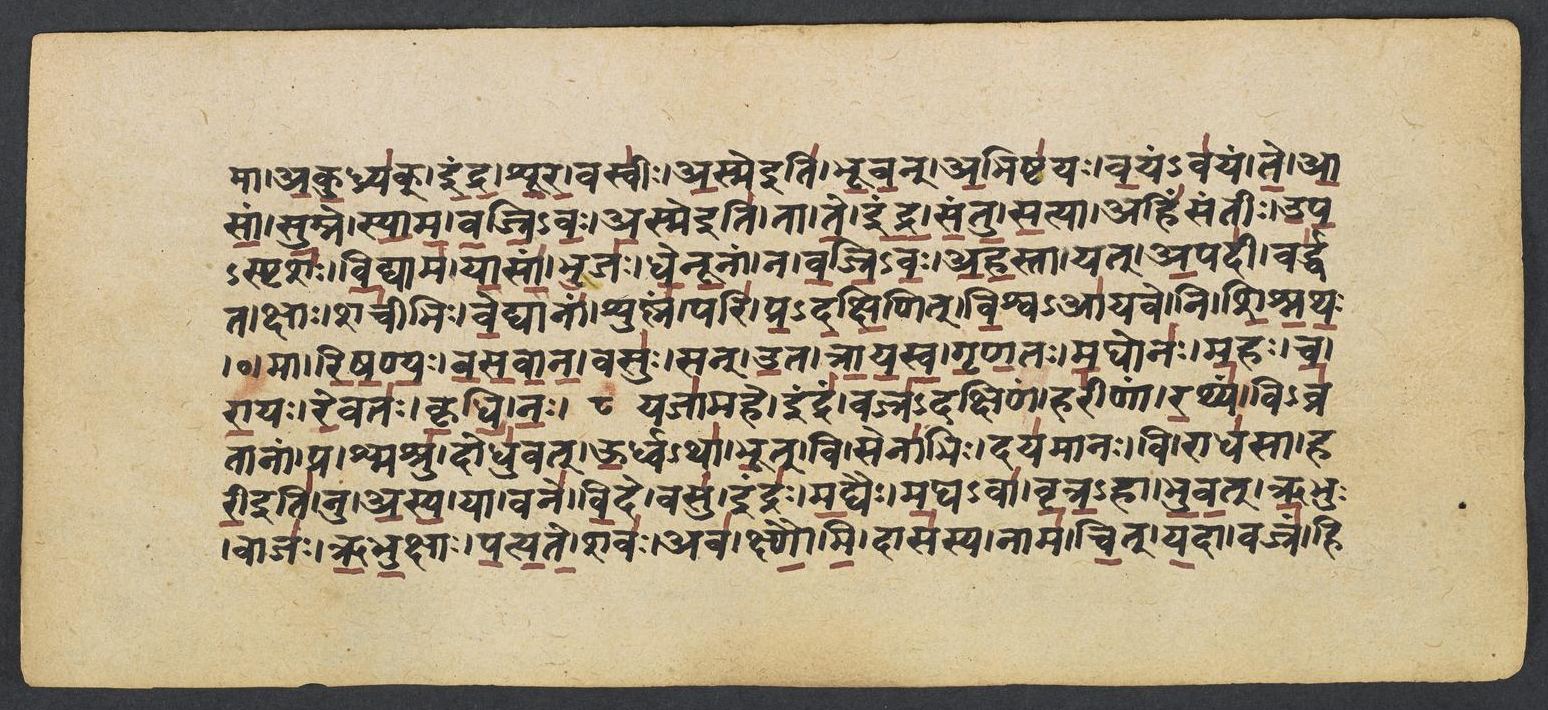
Where on the image
Penn Ms. Coll. 390 Item 41, fol. 762r (numbered 78r by the scribe) (OPenn image 762, lower leaf). Checked on the image: the Rigveda text on this page begins in RV 10.22.12 ‹mā akudhryak indra śūra›. The next page with Rigveda text, fol. 762v (numbered 78v by the scribe), begins in RV 10.23.3 ‹-hiraṇyam it atha ratham›. Verses 10.22.12-15 end on this page.
12māku̱dhrya̍g indra śūra̱ vasvī̍r a̱sme bhū̍vann a̱bhiṣṭa̍yaḥ | va̱yaṁ-va̍yaṁ ta āsāṁ su̱mne syā̍ma vajrivaḥ ||
13a̱sme tā ta̍ indra santu sa̱tyāhi̍ṁsantīr upa̱spṛśa̍ḥ | vi̱dyāma̱ yāsā̱m bhujo̍ dhenū̱nāṁ na va̍jrivaḥ ||
14a̱ha̱stā yad a̱padī̱ vardha̍ta̱ kṣāḥ śacī̍bhir ve̱dyānā̍m | śuṣṇa̱m pari̍ pradakṣi̱ṇid vi̱śvāya̍ve̱ ni śi̍śnathaḥ ||
15pibā̍-pi̱bed i̍ndra śūra̱ soma̱m mā ri̍ṣaṇyo vasavāna̱ vasu̱ḥ san | u̱ta trā̍yasva gṛṇa̱to ma̱ghono̍ ma̱haś ca̍ rā̱yo re̱vata̍s kṛdhī naḥ ||
Compare: Padapāṭha (word-by-word text written in the manuscript; Sansknet e-text via GRETIL)
12mā | akudhryak | indra | śūra | vasvīḥ | asme iti | bhūvan | abhiṣṭayaḥ | vayam-vayam | te | āsām | sumne | syāma | vajri-vaḥ
13asme iti | tā | te | indra | santu | satyā | ahiṃsantīḥ | upa-spṛṣaḥ | vidyāma | yāsām | bhujaḥ | dhenūnām | na | vajri-vaḥ
14ahastā | yat | apadī | vardhata | kṣāḥ | śacībhiḥ | vedyānām | śuṣṇam | pari | pra-dakṣiṇit | viśva-āyave | ni | śiśnathaḥ
15piba-piba | it | indra | śūra | somam | mā | riṣaṇyaḥ | vasavāna | vasuḥ | san | uta | trāyasva | gṛṇataḥ | maghonaḥ | mahaḥ | ca | rāyaḥ | revataḥ | kṛdhi | naḥ
12Let not thine excellent assistance come to us, O Hero Indra, profitless. May we, may we enjoy the bliss of these thy favours, Thunderer!
13May those soft impulses of thine, O Indra, be fruitful and innocent to us. May we know these whose treasures are like those of milch-kine, Thunderer!
14That Earth, through power of knowing things that may be known, handless and footless yet might thrive, Thou slewest, turning to the right, gu;na for every living man.
15Drink, drink the Soma, Hero Indra; be not withheld as thou art good, O Treasure-giver. Preserve the singers and our liberal princes, and make us wealthy with abundant riches.
Notes
- Sanskrit: Aufrecht's edition (1877) with the Vedic accents, as entered by van Nooten and Holland (GRETIL).
- English: Ralph T. H. Griffith, The Hymns of the Rigveda (1889-1892; 2nd ed. 1896-1897), from the VedaWeb digital text; OCR slips in that text were corrected against the printed 2nd edition (data/sources/rigveda/griffith_errata.json).
- Padapāṭha (edition text): Sansknet e-text via GRETIL (CC BY-NC-SA 4.0).
Cite
Sources
- Source: Penn Ms. Coll. 390 Item 41 (undated (catalogued with Penn's 18th-19th c. Vedic manuscripts)), OPenn, Public Domain Mark + Aufrecht's accented text (GRETIL) + Griffith's English (VedaWeb) (holding institution)
- Critical edition: Aufrecht (1877), accented e-text via GRETIL
← previous · → next · v cycle view · l back to library