Rigveda 10.23: To Indra
Introduction
Rigveda 10.23 is a hymn of 7 verses addressed to Indra. It stands in book (maṇḍala) 10, the last and latest book. The Rigveda is the oldest collection of Sanskrit hymns, composed in the second half of the second millennium BCE and handed down orally for many centuries before it was written down.
The manuscript shown is Penn Ms. Coll. 390 Item 41 (University of Pennsylvania), an undated paper manuscript of the padapāṭha (the word-by-word recitation text, in which every word is written separately and compounds are split) of the whole Ṛgveda in Devanāgarī, 884 leaves in fascicles, 7-9 lines to the page, accents in red; this hymn stands on fol. 762r-762v. Each section below gives the verses that end on one page; the page boundaries were read on the images (the opening words of every page), not counted out. Where the manuscript is a padapāṭha (the word-by-word recitation text), the section shows Aufrecht's continuous (saṃhitā) text first and, as the edition text, the padapāṭha of the same verses, which is the form written on the page.
How was this verified? (Provenance)
Where on the image
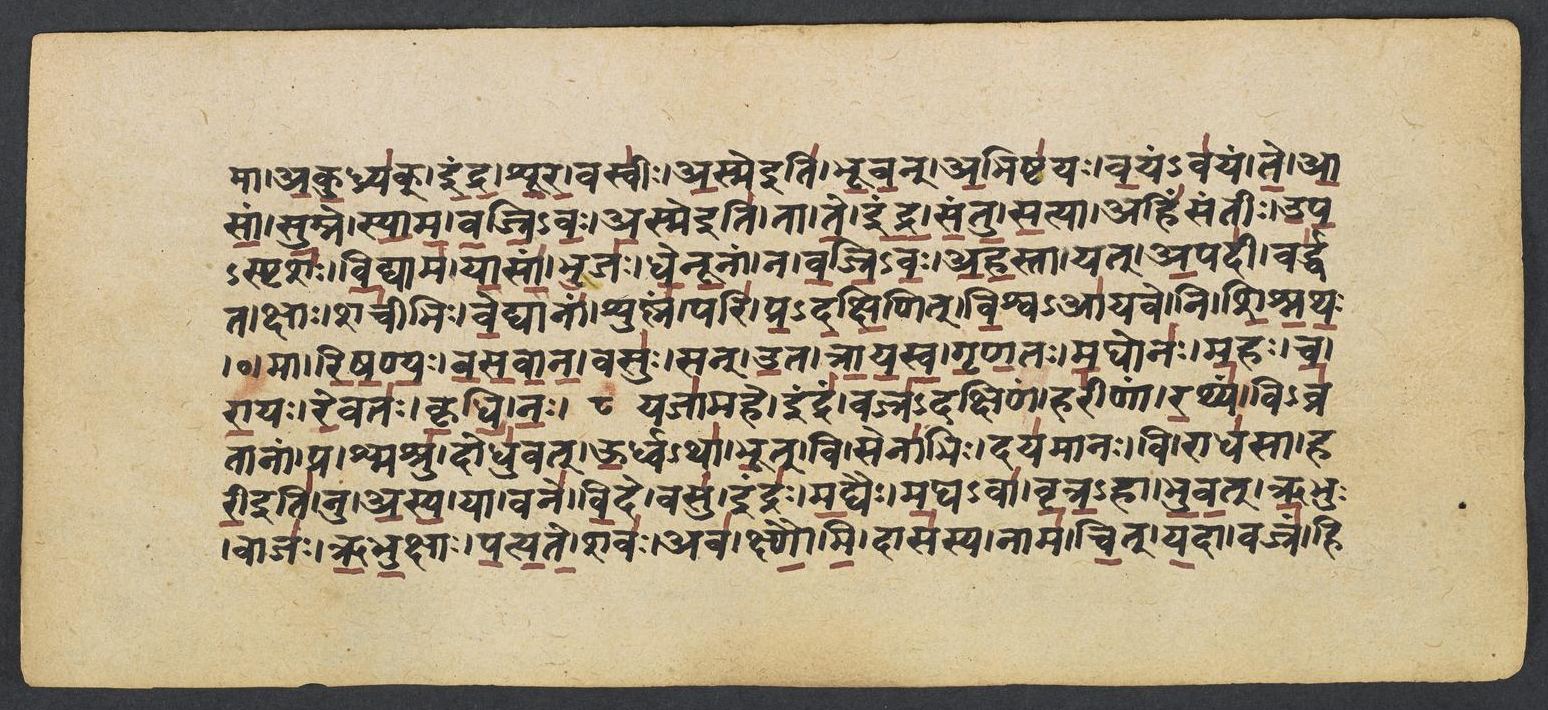
Penn Ms. Coll. 390 Item 41, fol. 762r (numbered 78r by the scribe) (OPenn image 762, lower leaf). Checked on the image: the Rigveda text on this page begins in RV 10.22.12 ‹mā akudhryak indra śūra›. The next page with Rigveda text, fol. 762v (numbered 78v by the scribe), begins in RV 10.23.3 ‹-hiraṇyam it atha ratham›. Verses 10.23.1-2 end on this page.
1yajā̍maha̱ indra̱ṁ vajra̍dakṣiṇa̱ṁ harī̍ṇāṁ ra̱thya1̱̍ṁ vivra̍tānām | pra śmaśru̱ dodhu̍vad ū̱rdhvathā̍ bhū̱d vi senā̍bhi̱r daya̍māno̱ vi rādha̍sā ||
2harī̱ nv a̍sya̱ yā vane̍ vi̱de vasv indro̍ ma̱ghair ma̱ghavā̍ vṛtra̱hā bhu̍vat | ṛ̱bhur vāja̍ ṛbhu̱kṣāḥ pa̍tyate̱ śavo 'va̍ kṣṇaumi̱ dāsa̍sya̱ nāma̍ cit ||
Compare: Padapāṭha (word-by-word text written in the manuscript; Sansknet e-text via GRETIL)
1yajāmahe | indram | vajra-dakṣiṇam | harīnām | rathyam | vi-vratānām | pra | śmaśru | dodhuvat | ūrdhva-thā | bhūt | vi | senābhiḥ | dayamānaḥ | vi | rādhasā
2harī iti | nu | asya | yā | vane | vide | vasu | indraḥ | maghaiḥ | magha-vā | vṛtra-hā | bhuvat | ṛbhuḥ | vājaḥ | ṛbhukṣāḥ | patyate | śavaḥ | ava | kṣṇaumi | dāsasya | nāma | c it
1INDRA, whose right hand wields the bolt, we worship, driver of Bay Steeds seeking sundered courses. Shaking his beard with might he hath arisen, casting his weapons forth and dealing bounties.
2The treasure which his Bay Steeds found at sacrifice,– this wealth made opulent Indra slayer of the foe. R̥ibhu, R̥ibhukshan, Vâja-he is Lord of Might. The Dâsa's very name I utterly destroy.
Where on the image
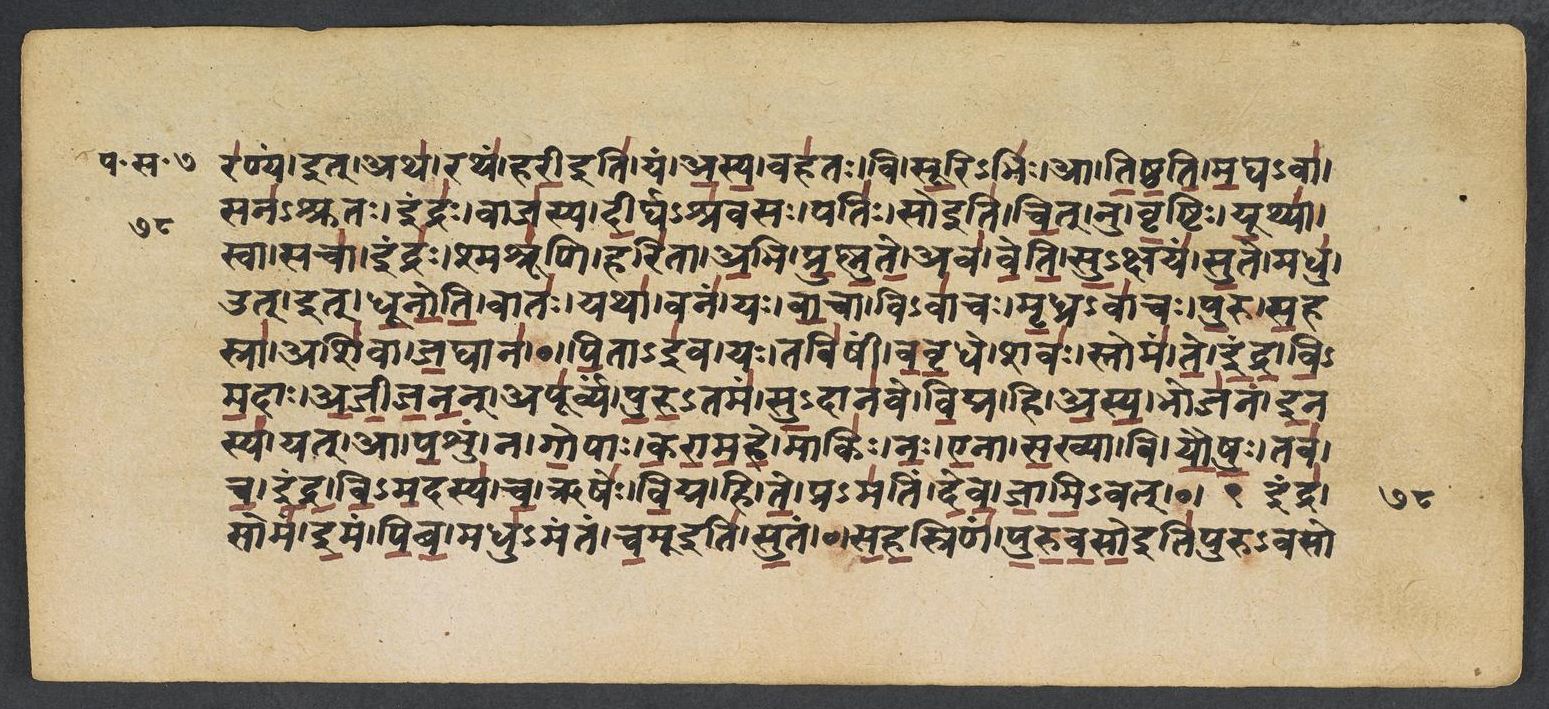
Penn Ms. Coll. 390 Item 41, fol. 762v (numbered 78v by the scribe) (OPenn image 763, upper leaf). Checked on the image: the Rigveda text on this page begins in RV 10.23.3 ‹-hiraṇyam it atha ratham›. The next page with Rigveda text, fol. 763r (numbered 79r by the scribe), begins in RV 10.24.1 ‹vivakṣase›. Verses 10.23.3-7 end on this page; 10.23.3 begins on fol. 762r (numbered 78r by the scribe).
3ya̱dā vajra̱ṁ hira̍ṇya̱m id athā̱ ratha̱ṁ harī̱ yam a̍sya̱ vaha̍to̱ vi sū̱ribhi̍ḥ | ā ti̍ṣṭhati ma̱ghavā̱ sana̍śruta̱ indro̱ vāja̍sya dī̱rghaśra̍vasa̱s pati̍ḥ ||
4so ci̱n nu vṛ̱ṣṭir yū̱thyā̱3̱̍ svā sacā̱m̐ indra̱ḥ śmaśrū̍ṇi̱ hari̍tā̱bhi pru̍ṣṇute | ava̍ veti su̱kṣaya̍ṁ su̱te madhūd id dhū̍noti̱ vāto̱ yathā̱ vana̍m ||
5yo vā̱cā vivā̍co mṛ̱dhravā̍caḥ pu̱rū sa̱hasrāśi̍vā ja̱ghāna̍ | tat-ta̱d id a̍sya̱ pauṁsya̍ṁ gṛṇīmasi pi̱teva̱ yas tavi̍ṣīṁ vāvṛ̱dhe śava̍ḥ ||
6stoma̍ṁ ta indra vima̱dā a̍jījana̱nn apū̍rvyam puru̱tama̍ṁ su̱dāna̍ve | vi̱dmā hy a̍sya̱ bhoja̍nam i̱nasya̱ yad ā pa̱śuṁ na go̱pāḥ ka̍rāmahe ||
7māki̍r na e̱nā sa̱khyā vi yau̍ṣu̱s tava̍ cendra vima̱dasya̍ ca̱ ṛṣe̍ḥ | vi̱dmā hi te̱ prama̍tiṁ deva jāmi̱vad a̱sme te̍ santu sa̱khyā śi̱vāni̍ ||
Compare: Padapāṭha (word-by-word text written in the manuscript; Sansknet e-text via GRETIL)
3yadā | vajram | hiraṇyam | it | atha | ratham | harī iti | yam | asya | vahataḥ | vi | sūri-bhiḥ | ā | tiṣṭhati | magha-vā | sana-śrutaḥ | indraḥ | vājasya | dīrgha-śravasaḥ | patiḥ
4so iti | cit | nu | vṛṣṭiḥ | yūthyā | svā | sacā | indraḥ | śmaśrūṇi | haritā | abhi | pruṣṇute | ava | veti | su-kṣayam | sute | madhu | ut | it | dhūnoti | vātaḥ | yathā | vanam
5yaḥ | vācā | vi-vācaḥ | mṛdhra-vācaḥ | puru | sahasrā | asivā | jaghāna | tat-tat | it | asya | paiṃsyam | gṛṇīmasi | pitāiva | yaḥ | taviṣīm | vavṛdhe | śavaḥ
6stomam | te | indra | vi-madāḥ | ajījanan | apūrvyam | puru-tamam | su-dānave | vidma | hi | asya | bhojanam | inasya | yat | ā | paśum | na | gopāḥ | karāmahe
7mākiḥ | naḥ | enā | sakhyā | vi | yauṣuḥ | tava | ca | indra | vi-madasya | ca | ṛṣeḥ | vidma | hi | te | pra-matim | deva | jāmi-vat | asme iti | te | santu | sakhyā | śivāni
3When, with the Princes, Maghavan, famed of old, comes nigh the thunderbolt of gold, and the Controller's car Which his two Tawny Coursers draw, then Indra is the Sovran Lord of power whose glory spreads afar.
4With him too is this rain of his that comes like herds: Indra throws drops of moisture on his yellow beard. When the sweet juice is shed he seeks the pleasant place, and stirs the worshipper as wind disturbs the wood.
5We laud and praise his several deeds of valour who, fatherlike, with power hath made us stronger; Who with his voice slew many thousand wicked ones who spake in varied manners with contemptuous cries.
6Indra, the Vimadas have formed for thee a laud, copious, unparalleled, for thee Most Bountiful. We know the good we gain from him the Mighty One when we attract him as a herdsman calls the kine.
7Ne'er may this bond of friendship be dissevered, the R̥ishi Vimada's and thine, O Indra. We know thou carest for us as a brother with us, O God, be thine auspicious friendship.
Notes
- Sanskrit: Aufrecht's edition (1877) with the Vedic accents, as entered by van Nooten and Holland (GRETIL).
- English: Ralph T. H. Griffith, The Hymns of the Rigveda (1889-1892; 2nd ed. 1896-1897), from the VedaWeb digital text; OCR slips in that text were corrected against the printed 2nd edition (data/sources/rigveda/griffith_errata.json).
- Padapāṭha (edition text): Sansknet e-text via GRETIL (CC BY-NC-SA 4.0).
Cite
Sources
- Source: Penn Ms. Coll. 390 Item 41 (undated (catalogued with Penn's 18th-19th c. Vedic manuscripts)), OPenn, Public Domain Mark + Aufrecht's accented text (GRETIL) + Griffith's English (VedaWeb) (holding institution)
- Critical edition: Aufrecht (1877), accented e-text via GRETIL
← previous · → next · v cycle view · l back to library