Rigveda 10.25: To Soma
Introduction
Rigveda 10.25 is a hymn of 11 verses addressed to Soma. It stands in book (maṇḍala) 10, the last and latest book. The Rigveda is the oldest collection of Sanskrit hymns, composed in the second half of the second millennium BCE and handed down orally for many centuries before it was written down.
The manuscript shown is Penn Ms. Coll. 390 Item 41 (University of Pennsylvania), an undated paper manuscript of the padapāṭha (the word-by-word recitation text, in which every word is written separately and compounds are split) of the whole Ṛgveda in Devanāgarī, 884 leaves in fascicles, 7-9 lines to the page, accents in red; this hymn stands on fol. 763r-764r. Each section below gives the verses that end on one page; the page boundaries were read on the images (the opening words of every page), not counted out. Where the manuscript is a padapāṭha (the word-by-word recitation text), the section shows Aufrecht's continuous (saṃhitā) text first and, as the edition text, the padapāṭha of the same verses, which is the form written on the page.
How was this verified? (Provenance)
Where on the image
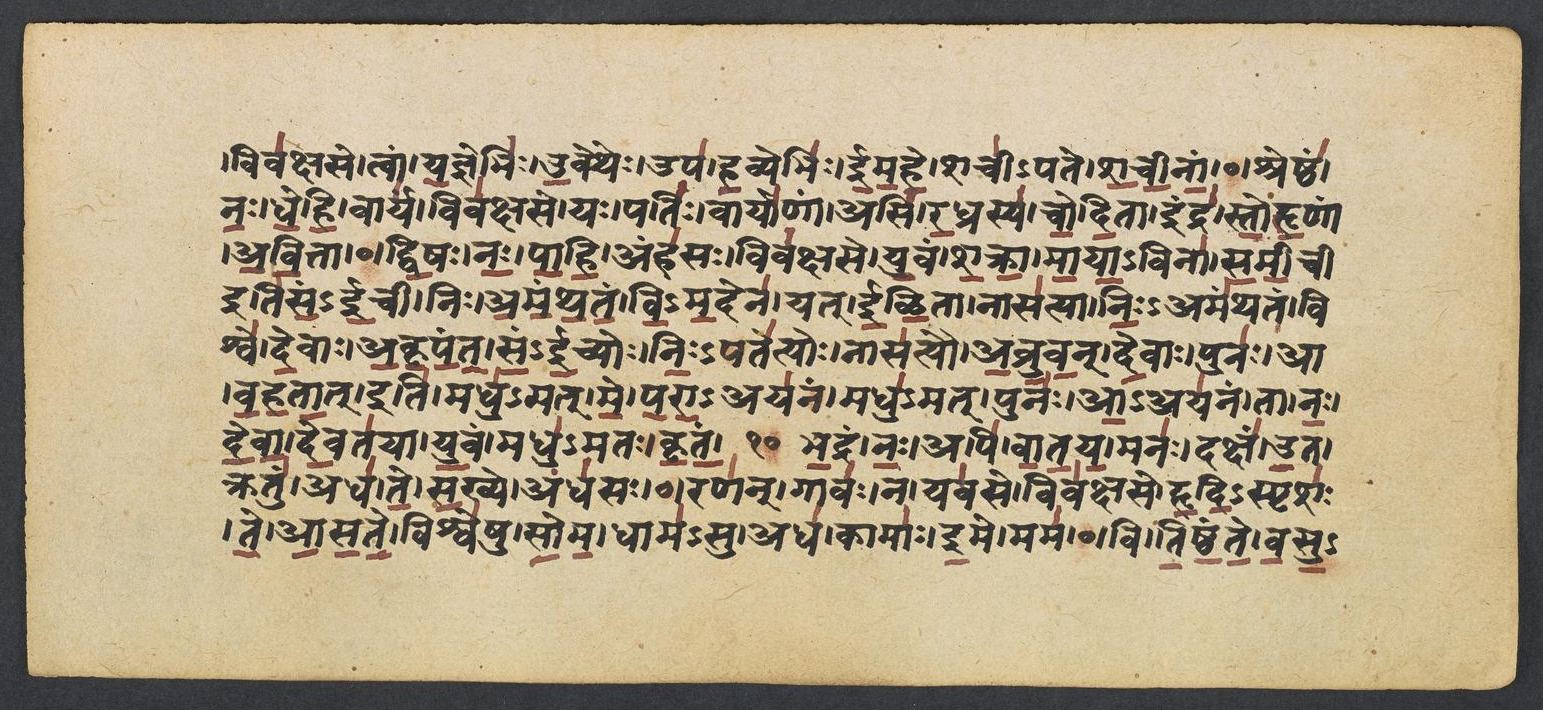
Penn Ms. Coll. 390 Item 41, fol. 763r (numbered 79r by the scribe) (OPenn image 763, lower leaf). Checked on the image: the Rigveda text on this page begins in RV 10.24.1 ‹vivakṣase›. The next page with Rigveda text, fol. 763v (numbered 79v by the scribe), begins in RV 10.25.2 ‹-vasu-yavaḥ vivakṣase›. Verse 10.25.1 ends on this page.
1bha̱draṁ no̱ api̍ vātaya̱ mano̱ dakṣa̍m u̱ta kratu̍m | adhā̍ te sa̱khye andha̍so̱ vi vo̱ made̱ raṇa̱n gāvo̱ na yava̍se̱ viva̍kṣase ||
Compare: Padapāṭha (word-by-word text written in the manuscript; Sansknet e-text via GRETIL)
1bhadram | naḥ | api | vātaya | manaḥ | dakṣam | uta | kratum | adha | te | sakhye | andhasaḥ | vi | vaḥ | made | raṇan | gāvaḥ | na | yavase | vivakṣase
1SEND us a good and happy mind, send energy and mental power. Then-at your glad carouse-let men joy in thy love, Sweet juice! as kine in pasture. Thou. art waxing great.
Where on the image
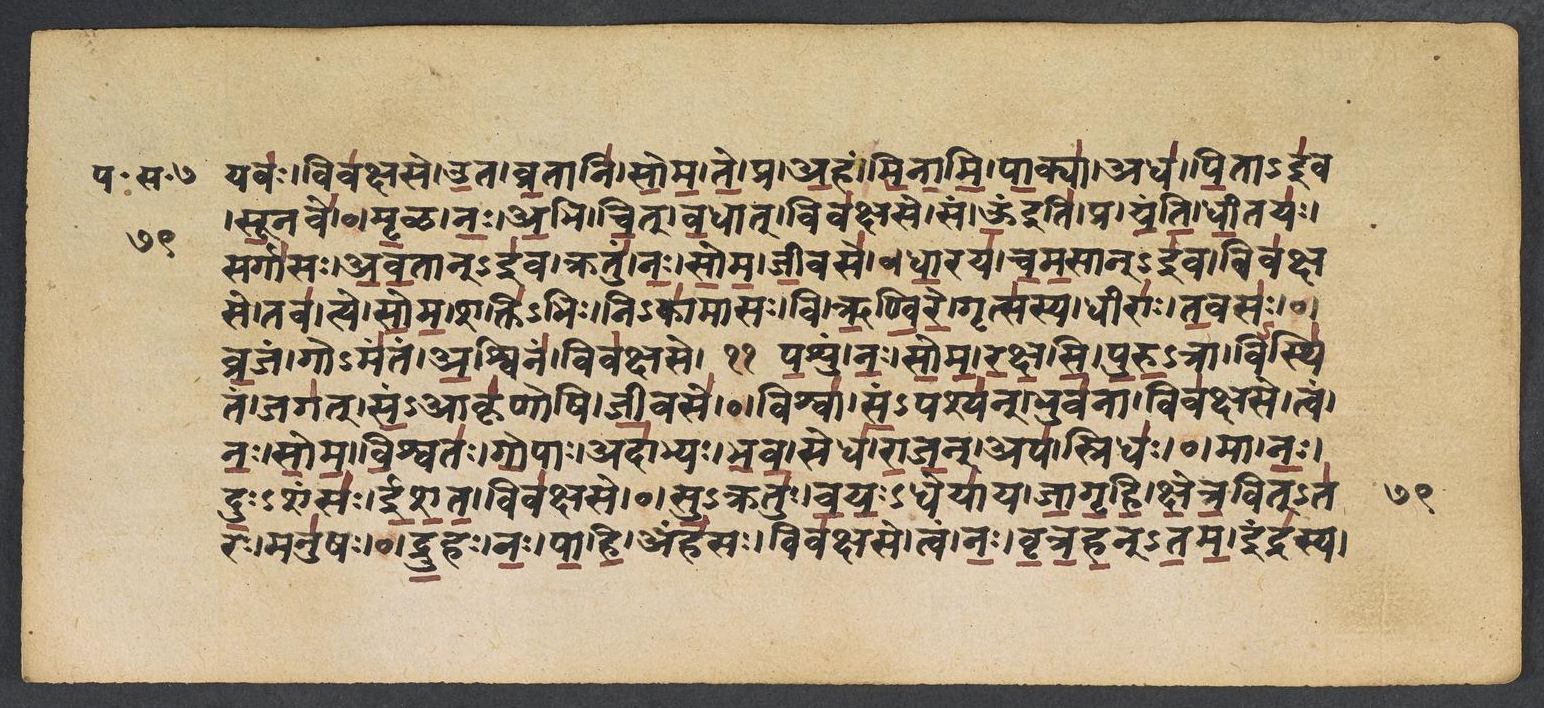
Penn Ms. Coll. 390 Item 41, fol. 763v (numbered 79v by the scribe) (OPenn image 764, upper leaf). Checked on the image: the Rigveda text on this page begins in RV 10.25.2 ‹-vasu-yavaḥ vivakṣase›. The next page with Rigveda text, fol. 764r (numbered 80r by the scribe), begins in RV 10.25.9 ‹indo iti śivaḥ sakhā›. Verses 10.25.2-8 end on this page; 10.25.2 begins on fol. 763r (numbered 79r by the scribe).
2hṛ̱di̱spṛśa̍s ta āsate̱ viśve̍ṣu soma̱ dhāma̍su | adhā̱ kāmā̍ i̱me mama̱ vi vo̱ made̱ vi ti̍ṣṭhante vasū̱yavo̱ viva̍kṣase ||
3u̱ta vra̱tāni̍ soma te̱ prāham mi̍nāmi pā̱kyā̍ | adhā̍ pi̱teva̍ sū̱nave̱ vi vo̱ made̍ mṛ̱ḻā no̍ a̱bhi ci̍d va̱dhād viva̍kṣase ||
4sam u̱ pra ya̍nti dhī̱taya̱ḥ sargā̍so 'va̱tām̐ i̍va | kratu̍ṁ naḥ soma jī̱vase̱ vi vo̱ made̍ dhā̱rayā̍ cama̱sām̐ i̍va̱ viva̍kṣase ||
5tava̱ tye so̍ma̱ śakti̍bhi̱r nikā̍māso̱ vy ṛ̍ṇvire | gṛtsa̍sya̱ dhīrā̍s ta̱vaso̱ vi vo̱ made̍ vra̱jaṁ goma̍ntam a̱śvina̱ṁ viva̍kṣase ||
6pa̱śuṁ na̍ḥ soma rakṣasi puru̱trā viṣṭhi̍ta̱ṁ jaga̍t | sa̱mākṛ̍ṇoṣi jī̱vase̱ vi vo̱ made̱ viśvā̍ sa̱mpaśya̱n bhuva̍nā̱ viva̍kṣase ||
7tvaṁ na̍ḥ soma vi̱śvato̍ go̱pā adā̍bhyo bhava | sedha̍ rāja̱nn apa̱ sridho̱ vi vo̱ made̱ mā no̍ du̱ḥśaṁsa̍ īśatā̱ viva̍kṣase ||
8tvaṁ na̍ḥ soma su̱kratu̍r vayo̱dheyā̍ya jāgṛhi | kṣe̱tra̱vitta̍ro̱ manu̍ṣo̱ vi vo̱ made̍ dru̱ho na̍ḥ pā̱hy aṁha̍so̱ viva̍kṣase ||
Compare: Padapāṭha (word-by-word text written in the manuscript; Sansknet e-text via GRETIL)
2hṛdi-spṛśaḥ | te | āsate | viśveṣu | soma | dhāma-su | adha | kāmāḥ | ime | mama | vi | vaḥ | made | vi | tiṣṭhante | vasu-yavaḥ | vivakṣase
3uta | vratāni | soma | te | pra | aham | mināmi | pākyā | adha | pitāiva | sūnave | vi | vaḥ | made | mṛḷa | naḥ | abhi | cit | vadhāt | vivakṣase
4sam | oṃ iti | pra | yanti | dhītayaḥ | sargāsaḥ | avatān-iva | kratum | naḥ | soma | jīvase | vi | vaḥ | made | dhāraya | camasān-iva | vivakṣase
5tava | tye | soma | śakti-bhiḥ | ni-kāmāsaḥ | vi | ṛṇvire | gṛtsasya | dhīrāḥ | tavasaḥ | vi | vaḥ | made | vrajam | go--mantam | aśvinam | vivakṣase
6paśum | naḥ | soma | rakṣasi | puru-trā | vi-sthitam | jagat | sam-ākṛṇoṣi | jīvase | vi | vaḥ | made | viśvā | sam-paśyan | bhuvanā | vivakṣase
7tvam | naḥ | soma | viśvataḥ | gopāḥ | adābhyaḥ | bhava | sedha | rājan | apa | sridhaḥ | vi | vaḥ | made | mā | naḥ | duḥ-śaṃsaḥ | īśata | vivakṣase
8tvam | naḥ | soma | su-kratuḥ | vayaḥ-dheyāya | jāgṛhi | kṣetravit-taraḥ | manuṣaḥ | vi | vaḥ | made | druhaḥ | naḥ | pāhi | aṃhasaḥ | / vivakṣase
2rn all thy forms, O Soma, rest thy powers that influence the heart. So also these my longings-at your glad carouse-spread themselves seeking riches. Thou art waxing great.
3Even if, O Soma, I neglect thy laws through my simplicity, Be gracious-at your glad carouse-as sire to son. Preserve us even from slaughter. T'hou. art waxing great.
4Our songs in concert go to thee as streams of water to the wells. Soma, that we may live, grant-at your glad carouse-full powers of mind, like beakers. Thou art waxing great.
5O Soma, through thy might who art skilful and strong, these longing men, These sages, have thrown open-at your glad carouse-the stall of kine and horses. Thou art waxing great
6Our herds thou guardest, Soma, and the moving world spread far and wide. Thou fittest them for living,– at your glad carouse-looking upon all beings. Thou art waxing great.
7On all sides, Soma, be to us a Guardian ne'er to be deceived. King, drive away our foemen-at your glad carouse:-let not the wicked rule us. Thou art waxing great.
8Be watchful, Soma, passing wise, to give us store of vital strength. More skilled than man to guide us,– at your glad carouse-save us from harm and sorrow. Thou art waxing great.
Where on the image
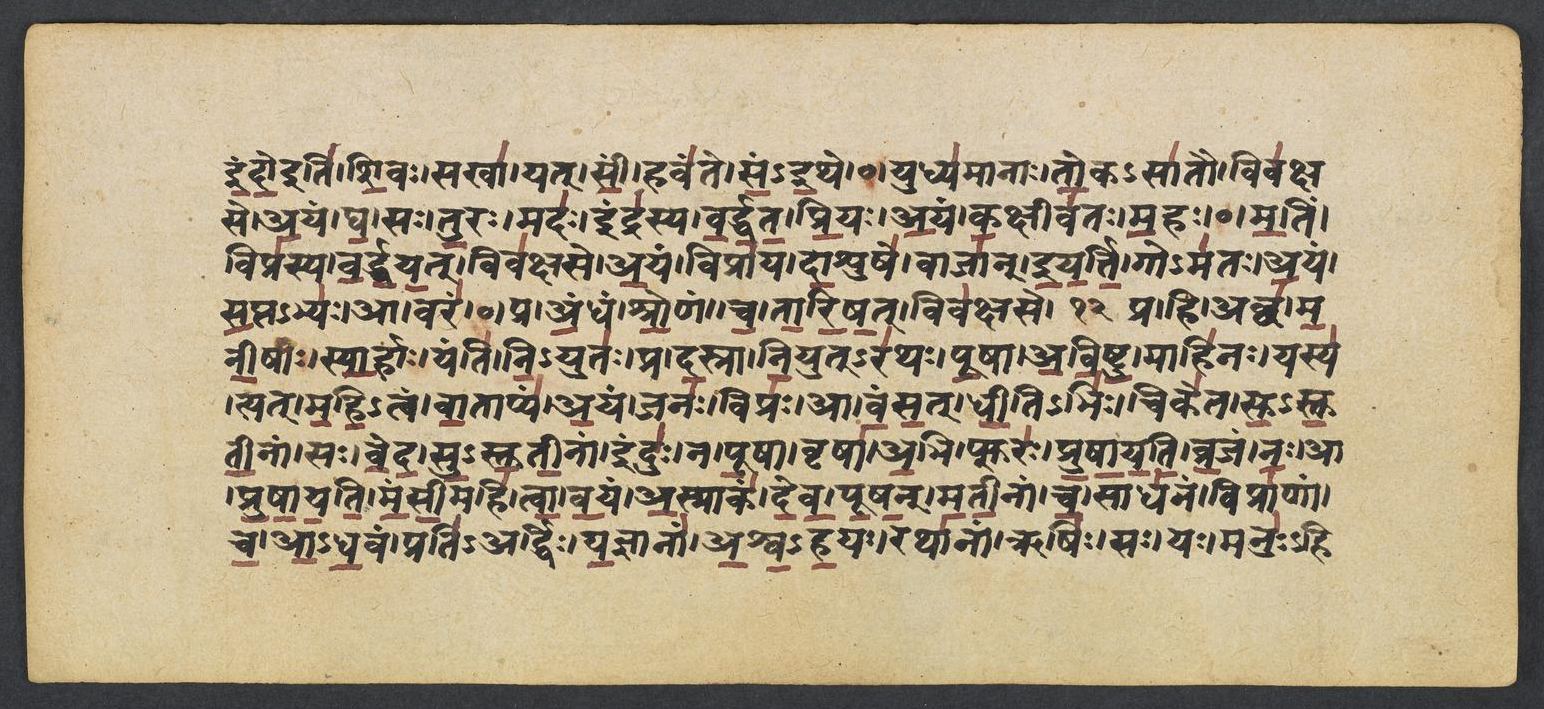
Penn Ms. Coll. 390 Item 41, fol. 764r (numbered 80r by the scribe) (OPenn image 764, lower leaf). Checked on the image: the Rigveda text on this page begins in RV 10.25.9 ‹indo iti śivaḥ sakhā›. The next page with Rigveda text, fol. 764v (numbered 80v by the scribe), begins in RV 10.26.5 ‹-itaḥ viprasya yavayat-sakhaḥ›. Verses 10.25.9-11 end on this page; 10.25.9 begins on fol. 763v (numbered 79v by the scribe).
9tvaṁ no̍ vṛtrahanta̱mendra̍syendo śi̱vaḥ sakhā̍ | yat sī̱ṁ hava̍nte sami̱the vi vo̱ made̱ yudhya̍mānās to̱kasā̍tau̱ viva̍kṣase ||
10a̱yaṁ gha̱ sa tu̱ro mada̱ indra̍sya vardhata pri̱yaḥ | a̱yaṁ ka̱kṣīva̍to ma̱ho vi vo̱ made̍ ma̱tiṁ vipra̍sya vardhaya̱d viva̍kṣase ||
11a̱yaṁ viprā̍ya dā̱śuṣe̱ vājā̍m̐ iyarti̱ goma̍taḥ | a̱yaṁ sa̱ptabhya̱ ā vara̱ṁ vi vo̱ made̱ prāndhaṁ śro̱ṇaṁ ca̍ tāriṣa̱d viva̍kṣase ||
Compare: Padapāṭha (word-by-word text written in the manuscript; Sansknet e-text via GRETIL)
9tvam | naḥ | vṛtrahan-tama | indrasya | indo iti | śivaḥ | sakhā | yat | sīm | havante | sam-ithe | vi | vaḥ | made | yudhyamānāḥ | toka-sātau | vivakṣase
10ayam | gha | saḥ | turaḥ | madaḥ | indrasya | vardhata | priyaḥ | ayam | kakṣīvataḥ | mahaḥ | vi | vaḥ | made | matim | viprasya | vardhayat | vivakṣase
11ayam | viprāya | dāśuṣe | vājān | iyarti | go--mataḥ | ayam | sapta-bhyaḥ | ā | varam | vi | vaḥ | made | pra | andham | śroṇam | ca | tāriṣat | vivakṣase
9Chief slayer of our foemen, thou, Indu, art Indra's gracious Friend, When warriors invoke him-at your glad carouse -in fight, to win them offspring. Thou art waxing great.
10Victorious is this gladdening drink: to Indra dear it grows in strength. This-at your glad carouse -enhanced the mighty hymn of the great sage Kakshîvân. Thou art waxing great.
11This to the sage who offers gifts brings power that comes from wealth in kine. This, better than the seven, hath-at your glad carouse-furthered the blind, the cripple. Thou art waxing great.
Notes
- Sanskrit: Aufrecht's edition (1877) with the Vedic accents, as entered by van Nooten and Holland (GRETIL).
- English: Ralph T. H. Griffith, The Hymns of the Rigveda (1889-1892; 2nd ed. 1896-1897), from the VedaWeb digital text; OCR slips in that text were corrected against the printed 2nd edition (data/sources/rigveda/griffith_errata.json).
- Padapāṭha (edition text): Sansknet e-text via GRETIL (CC BY-NC-SA 4.0).
Cite
Sources
- Source: Penn Ms. Coll. 390 Item 41 (undated (catalogued with Penn's 18th-19th c. Vedic manuscripts)), OPenn, Public Domain Mark + Aufrecht's accented text (GRETIL) + Griffith's English (VedaWeb) (holding institution)
- Critical edition: Aufrecht (1877), accented e-text via GRETIL
← previous · → next · v cycle view · l back to library