Rigveda 10.26: To Pusan
Introduction
Rigveda 10.26 is a hymn of 9 verses addressed to Pusan. It stands in book (maṇḍala) 10, the last and latest book. The Rigveda is the oldest collection of Sanskrit hymns, composed in the second half of the second millennium BCE and handed down orally for many centuries before it was written down.
The manuscript shown is Penn Ms. Coll. 390 Item 41 (University of Pennsylvania), an undated paper manuscript of the padapāṭha (the word-by-word recitation text, in which every word is written separately and compounds are split) of the whole Ṛgveda in Devanāgarī, 884 leaves in fascicles, 7-9 lines to the page, accents in red; this hymn stands on fol. 764r-764v. Each section below gives the verses that end on one page; the page boundaries were read on the images (the opening words of every page), not counted out. Where the manuscript is a padapāṭha (the word-by-word recitation text), the section shows Aufrecht's continuous (saṃhitā) text first and, as the edition text, the padapāṭha of the same verses, which is the form written on the page.
How was this verified? (Provenance)
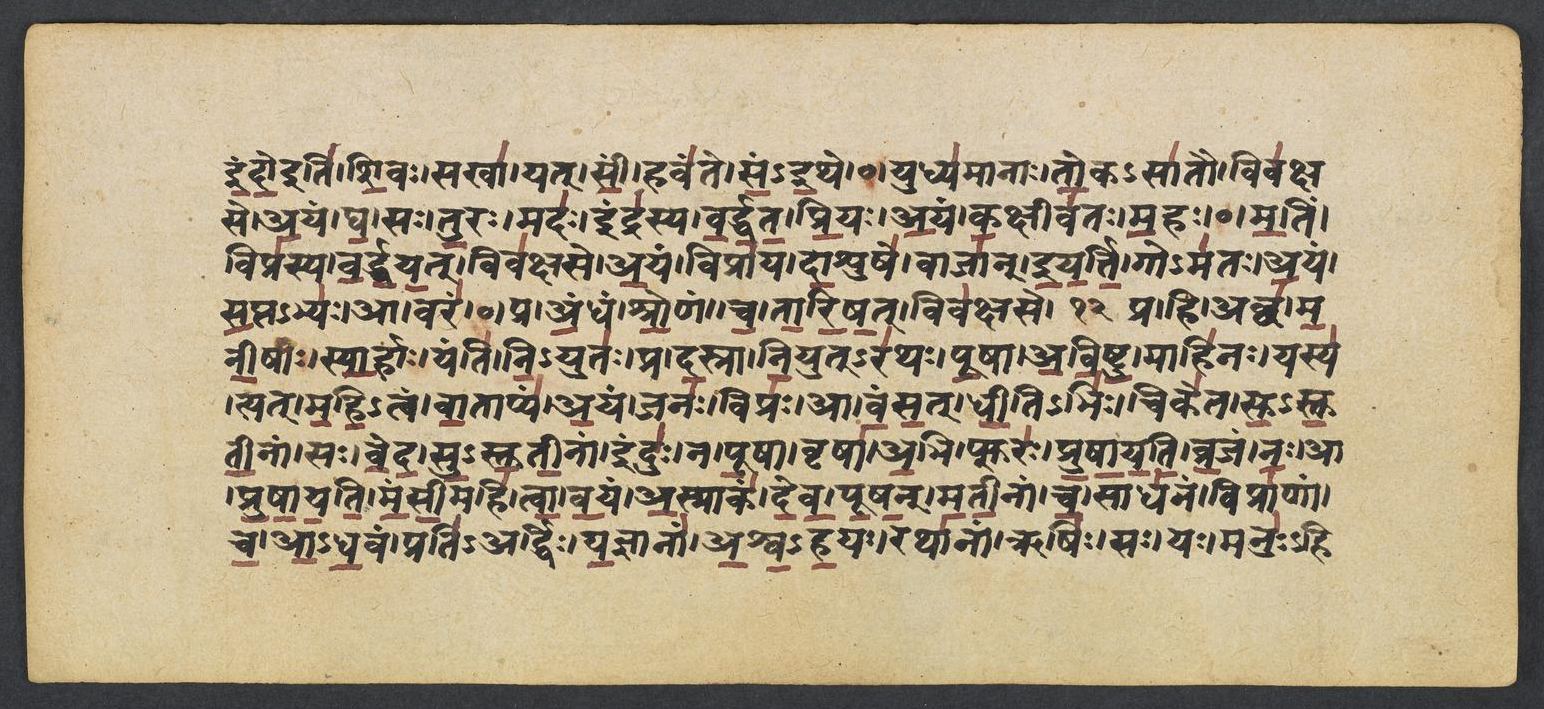
Where on the image
Penn Ms. Coll. 390 Item 41, fol. 764r (numbered 80r by the scribe) (OPenn image 764, lower leaf). Checked on the image: the Rigveda text on this page begins in RV 10.25.9 ‹indo iti śivaḥ sakhā›. The next page with Rigveda text, fol. 764v (numbered 80v by the scribe), begins in RV 10.26.5 ‹-itaḥ viprasya yavayat-sakhaḥ›. Verses 10.26.1-4 end on this page.
1pra hy acchā̍ manī̱ṣāḥ spā̱rhā yanti̍ ni̱yuta̍ḥ | pra da̱srā ni̱yudra̍thaḥ pū̱ṣā a̍viṣṭu̱ māhi̍naḥ ||
2yasya̱ tyan ma̍hi̱tvaṁ vā̱tāpya̍m a̱yaṁ jana̍ḥ | vipra̱ ā va̍ṁsad dhī̱tibhi̱ś cike̍ta suṣṭutī̱nām ||
3sa ve̍da suṣṭutī̱nām indu̱r na pū̱ṣā vṛṣā̍ | a̱bhi psura̍ḥ pruṣāyati vra̱jaṁ na̱ ā pru̍ṣāyati ||
4ma̱ṁsī̱mahi̍ tvā va̱yam a̱smāka̍ṁ deva pūṣan | ma̱tī̱nāṁ ca̱ sādha̍na̱ṁ viprā̍ṇāṁ cādha̱vam ||
Compare: Padapāṭha (word-by-word text written in the manuscript; Sansknet e-text via GRETIL)
1pra | hi | accha | manīṣāḥ | spārhāḥ | yanti | ni-yutaḥ | pra | dasrā | niyut-rathaḥ | pūṣā | aviṣṭu | māhinaḥ
2yasya | tyat | mahi-tvam | vātāpyam | ayam | janaḥ | vipraḥ | ā | vaṃsat | dhīti-bhiḥ | ciketa | su-stutīnām
3saḥ | veda | su-stutīnām | induḥ | na | pūṣā | vṛṣā | abhi | psuraḥ | pruṣāyati | vrajam | naḥ | ā | pruṣāyati
4maṃsīmahi | tvā | vayam | asmākam | deva | pūṣan | matīnām | ca | sādhanam | viprāṇām | ca | ādhavam
1FORWARD upon their way proceed the ready teams, the lovely songs. Further them glorious Pûshan with yoked chariot, and the Mighty Twain!
2With sacred hymns let this man here, this singer, win the God to whom Belong this majesty and might. He hath observed our eulogies.
3Pûshan the Strong hath knowledge of sweet praises even as Indu hath. He dews our corn with moisture, he bedews the pasture of our kine.
4We will bethink ourselves of thee, O Pûshan, O thou God, as One. Who brings fulfilment of our hymns, and stirs the singer and the sage.
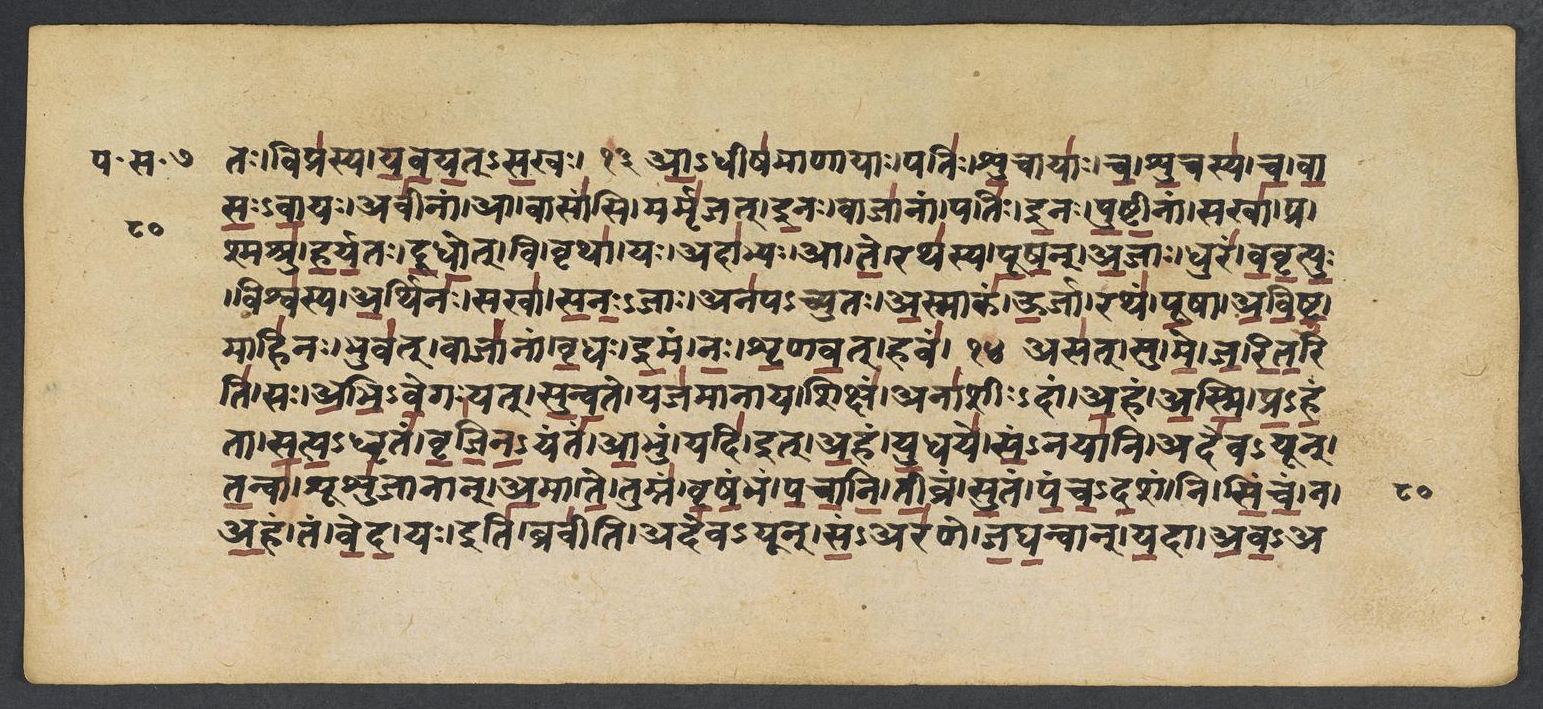
Where on the image
Penn Ms. Coll. 390 Item 41, fol. 764v (numbered 80v by the scribe) (OPenn image 765, upper leaf). Checked on the image: the Rigveda text on this page begins in RV 10.26.5 ‹-itaḥ viprasya yavayat-sakhaḥ›. The next page with Rigveda text, fol. 765r (numbered 81r by the scribe), begins in RV 10.27.3 ‹-ava-akhyat sam-araṇam ṛghāvat āt›. Verses 10.26.5-9 end on this page; 10.26.5 begins on fol. 764r (numbered 80r by the scribe).
5pratya̍rdhir ya̱jñānā̍m aśvaha̱yo rathā̍nām | ṛṣi̱ḥ sa yo manu̍rhito̱ vipra̍sya yāvayatsa̱khaḥ ||
6ā̱dhīṣa̍māṇāyā̱ḥ pati̍ḥ śu̱cāyā̍ś ca śu̱casya̍ ca | vā̱so̱vā̱yo 'vī̍nā̱m ā vāsā̍ṁsi̱ marmṛ̍jat ||
7i̱no vājā̍nā̱m pati̍r i̱naḥ pu̍ṣṭī̱nāṁ sakhā̍ | pra śmaśru̍ harya̱to dū̍dho̱d vi vṛthā̱ yo adā̍bhyaḥ ||
8ā te̱ ratha̍sya pūṣann a̱jā dhura̍ṁ vavṛtyuḥ | viśva̍syā̱rthina̱ḥ sakhā̍ sano̱jā ana̍pacyutaḥ ||
9a̱smāka̍m ū̱rjā ratha̍m pū̱ṣā a̍viṣṭu̱ māhi̍naḥ | bhuva̱d vājā̍nāṁ vṛ̱dha i̱maṁ na̍ḥ śṛṇava̱d dhava̍m ||
Compare: Padapāṭha (word-by-word text written in the manuscript; Sansknet e-text via GRETIL)
5prati-ardhiḥ | yajñānām | aśva-hayaḥ | rathānām | ṛṣiḥ | saḥ | yaḥ | manuḥ-h itaḥ | viprasya | yavayat-sakhaḥ
6ādhīṣamāṇāyāḥ | patiḥ | śucāyāḥ | ca | śucasya | ca | vāsaḥ-vāyaḥ | avīnām | ā | vāsāṃsi | marmṛjat
7inaḥ | vājānām | patiḥ | inaḥ | puṣṭīnām | sakhā | pra | śmaśru | haryataḥ | dūdhot | vi | vṛthā | yaḥ | adābhyaḥ
8ā | te | rathasya | pūṣan | ajāḥ | dhuram | vavṛtyuḥ | viśvasya | arthinaḥ | sakhā | sanaḥ-jāḥ | anapa-cyutaḥ
9asmākam | ūrjā | ratham | pūṣā | aviṣṭu | māhinaḥ | bhuvat | vājānām | vṛdhaḥ | imam | naḥ | śṛṇavat | havam
5joint-sharer of each sacrifice, the driver of the chariot steeds; The R̥ishi who is good to man, the singer's Friend and faithful Guard.
6One who is Lord of Suca, Lord of Suca caring for herself: Weaving the raiment of the sheep and making raiment beautiful.
7The mighty Lord of spoil and wealth, Strong Friend of all prosperity; He with light movement shakes his beard, lovely and ne'er to be deceived.
8O Pûshan, may those goats of thine turn hitherward thy chariot-pole. Friend of all suppliants; art thou, born in old time, and arm and sure.
9May the majestic Pûshan speed our chariot with his power and might. May he increase our store of wealth and listen to this call of ours.
Notes
- Sanskrit: Aufrecht's edition (1877) with the Vedic accents, as entered by van Nooten and Holland (GRETIL).
- English: Ralph T. H. Griffith, The Hymns of the Rigveda (1889-1892; 2nd ed. 1896-1897), from the VedaWeb digital text; OCR slips in that text were corrected against the printed 2nd edition (data/sources/rigveda/griffith_errata.json).
- Padapāṭha (edition text): Sansknet e-text via GRETIL (CC BY-NC-SA 4.0).
Cite
Sources
- Source: Penn Ms. Coll. 390 Item 41 (undated (catalogued with Penn's 18th-19th c. Vedic manuscripts)), OPenn, Public Domain Mark + Aufrecht's accented text (GRETIL) + Griffith's English (VedaWeb) (holding institution)
- Critical edition: Aufrecht (1877), accented e-text via GRETIL
← previous · → next · v cycle view · l back to library