Rigveda 10.27: To Indra
Introduction
Rigveda 10.27 is a hymn of 24 verses addressed to Indra. It stands in book (maṇḍala) 10, the last and latest book. The Rigveda is the oldest collection of Sanskrit hymns, composed in the second half of the second millennium BCE and handed down orally for many centuries before it was written down.
The manuscript shown is Penn Ms. Coll. 390 Item 41 (University of Pennsylvania), an undated paper manuscript of the padapāṭha (the word-by-word recitation text, in which every word is written separately and compounds are split) of the whole Ṛgveda in Devanāgarī, 884 leaves in fascicles, 7-9 lines to the page, accents in red; this hymn stands on fol. 764v-766v. Each section below gives the verses that end on one page; the page boundaries were read on the images (the opening words of every page), not counted out. Where the manuscript is a padapāṭha (the word-by-word recitation text), the section shows Aufrecht's continuous (saṃhitā) text first and, as the edition text, the padapāṭha of the same verses, which is the form written on the page.
How was this verified? (Provenance)
Where on the image
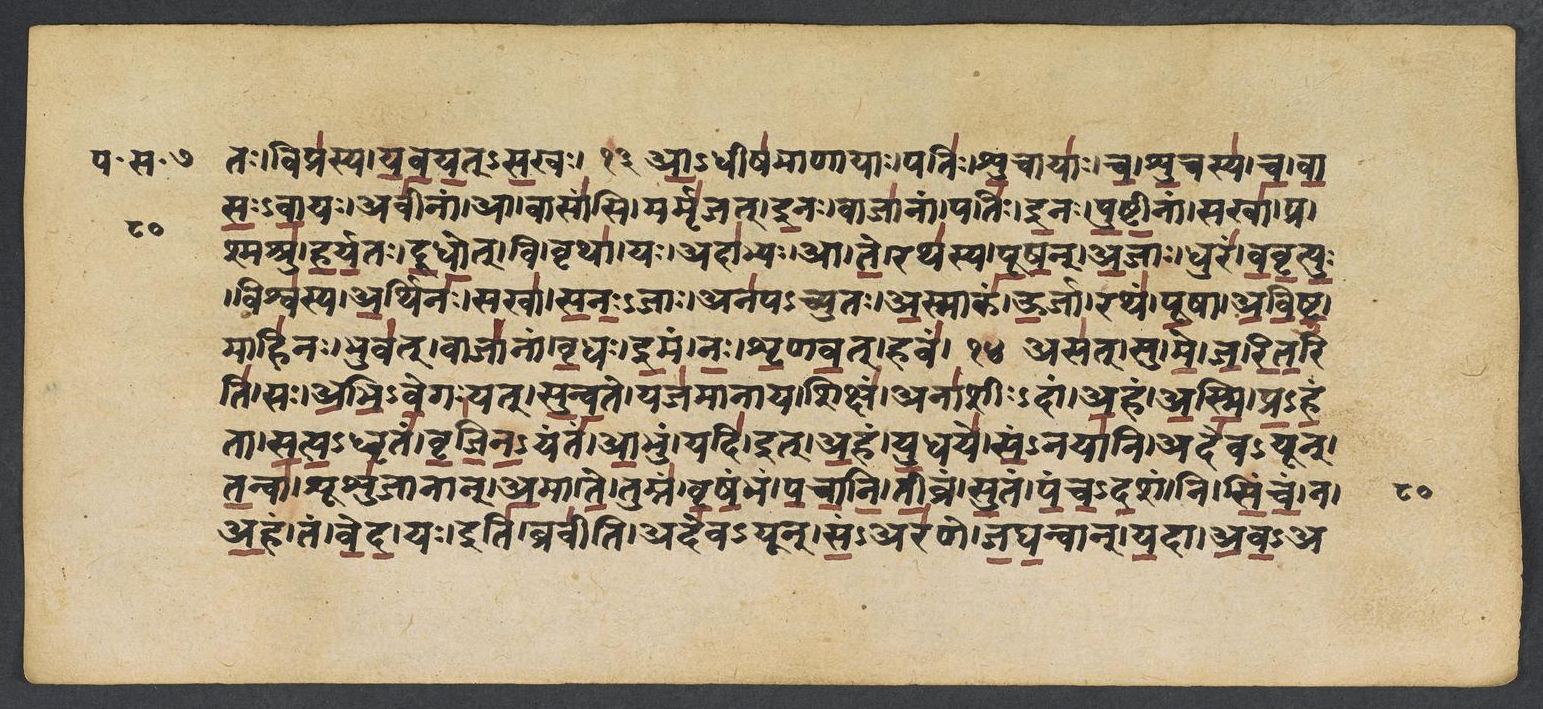
Penn Ms. Coll. 390 Item 41, fol. 764v (numbered 80v by the scribe) (OPenn image 765, upper leaf). Checked on the image: the Rigveda text on this page begins in RV 10.26.5 ‹-itaḥ viprasya yavayat-sakhaḥ›. The next page with Rigveda text, fol. 765r (numbered 81r by the scribe), begins in RV 10.27.3 ‹-ava-akhyat sam-araṇam ṛghāvat āt›. Verses 10.27.1-2 end on this page.
1asa̱t su me̍ jarita̱ḥ sābhi̍ve̱go yat su̍nva̱te yaja̍mānāya̱ śikṣa̍m | anā̍śīrdām a̱ham a̍smi praha̱ntā sa̍tya̱dhvṛta̍ṁ vṛjinā̱yanta̍m ā̱bhum ||
2yadīd a̱haṁ yu̱dhaye̍ sa̱ṁnayā̱ny ade̍vayūn ta̱nvā̱3̱̍ śūśu̍jānān | a̱mā te̱ tumra̍ṁ vṛṣa̱bham pa̍cāni tī̱vraṁ su̱tam pa̍ñcada̱śaṁ ni ṣi̍ñcam ||
Compare: Padapāṭha (word-by-word text written in the manuscript; Sansknet e-text via GRETIL)
1asat | su | me | jaritariti | saḥ | abhi-vegaḥ | yat | sunvate | yajamānāya | śikṣam | anāśīḥ-dām | aham | asmi | pra-hantā | satya-dhvṛtam | vṛjina-yantam | ābhum
2yadi | it | aham | yudhaye | sam-nayāni | adeva-yūn | tanvā | śūśujānān | amā | te | tumram | vṛṣabham | pacāni | tīvram | sutam | pañca-daśam | ni | siñcam
1THIS, singer, is my firm determination, to aid the worshipper who pours the Soma. I slay the man who brings no milkoblation, unrighteous, powerful, the truth's perverter.
2Then Will I, when I lead my friends to battle against the radiant persons of the godless, Prepare for thee at home a vigorous bullock, and pour for thee the fifteen-fold strong juices.
Where on the image
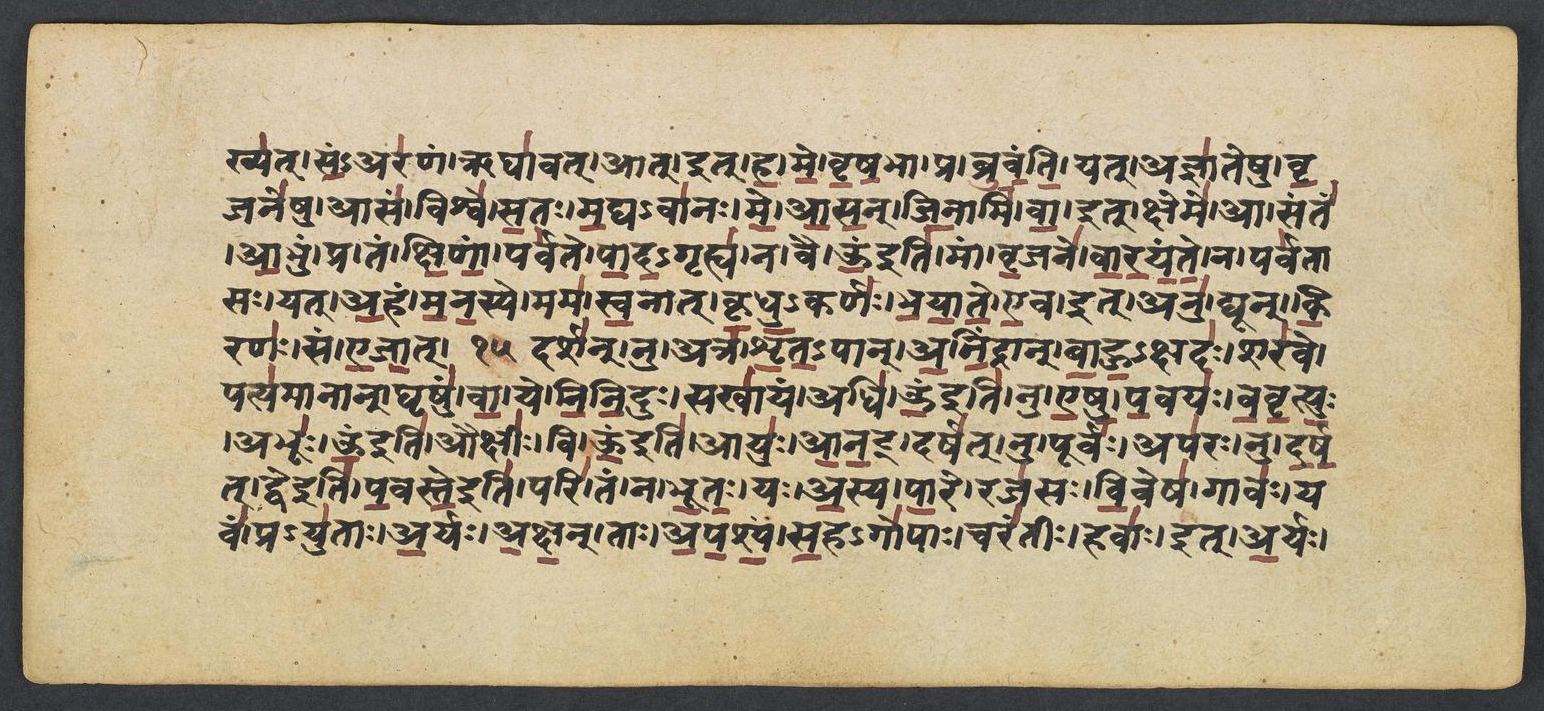
Penn Ms. Coll. 390 Item 41, fol. 765r (numbered 81r by the scribe) (OPenn image 765, lower leaf). Checked on the image: the Rigveda text on this page begins in RV 10.27.3 ‹-ava-akhyat sam-araṇam ṛghāvat āt›. The next page with Rigveda text, fol. 765v (numbered 81v by the scribe), begins in RV 10.27.8 ‹abhitaḥ sam āyan kiyat›. Verses 10.27.3-7 end on this page; 10.27.3 begins on fol. 764v (numbered 80v by the scribe).
3nāhaṁ taṁ ve̍da̱ ya iti̱ bravī̱ty ade̍vayūn sa̱mara̍ṇe jagha̱nvān | ya̱dāvākhya̍t sa̱mara̍ṇa̱m ṛghā̍va̱d ād id dha̍ me vṛṣa̱bhā pra bru̍vanti ||
4yad ajñā̍teṣu vṛ̱jane̱ṣv āsa̱ṁ viśve̍ sa̱to ma̱ghavā̍no ma āsan | ji̱nāmi̱ vet kṣema̱ ā santa̍m ā̱bhum pra taṁ kṣi̍ṇā̱m parva̍te pāda̱gṛhya̍ ||
5na vā u̱ māṁ vṛ̱jane̍ vārayante̱ na parva̍tāso̱ yad a̱ham ma̍na̱sye | mama̍ sva̱nāt kṛ̍dhu̱karṇo̍ bhayāta e̱ved anu̱ dyūn ki̱raṇa̱ḥ sam e̍jāt ||
6darśa̱n nv atra̍ śṛta̱pām̐ a̍ni̱ndrān bā̍hu̱kṣada̱ḥ śara̍ve̱ patya̍mānān | ghṛṣu̍ṁ vā̱ ye ni̍ni̱duḥ sakhā̍ya̱m adhy ū̱ nv e̍ṣu pa̱vayo̍ vavṛtyuḥ ||
7abhū̱r v aukṣī̱r vy u1̱̍ āyu̍r āna̱ḍ darṣa̱n nu pūrvo̱ apa̍ro̱ nu da̍rṣat | dve pa̱vaste̱ pari̱ taṁ na bhū̍to̱ yo a̱sya pā̱re raja̍so vi̱veṣa̍ ||
Compare: Padapāṭha (word-by-word text written in the manuscript; Sansknet e-text via GRETIL)
3na | aham | tam | veda | yaḥ | iti | bravīti | adeva-yūn | sam-araṇe | jaghanvān | yadā | ava-akhyat | sam-araṇam | ṛghāvat | āt | it | ha | me | vṛṣabhā | pra | bruvant i
4yat | ajñāteṣu | vṛjaneṣu | āsam | viśve | sataḥ | magha-vānaḥ | me | āsan | jināmi | vā | it | kṣeme | ā | santam | ābhum | pra | tam | kṣiṇām | parvate | pāda-gṛhya
5na | vai | oṃ iti | mām | vṛjane | vārayante | na | parvatāsaḥ | yat | aham | manasye | mama | svanāt | kṛdhu-karṇaḥ | bhayāte | eva | it | anu | dyūn | kiraṇaḥ | sam | ejāt
6darśan | nu | atra | śṛta-pān | anindrān | bāhu-kṣadaḥ | śarave | patyamānān | ghṛṣum | vā | ye | niniduḥ | sakhāyam | adhi | oṃ iti | nu | eṣu | pavayaḥ | vavṛtyuḥ
7abhūḥ | oṃ iti | aukṣīḥ | vi | oṃ iti | āyuḥ | ānaṭ | darṣat | nu | pūrvaḥ | aparaḥ | nu | darṣat | dve iti | pavasteiti | pari | tam | na | bhūtaḥ | yaḥ | asya | pāre | rajasaḥ | viveṣa
3I know not him who sayeth and declareth that he hath slain the godless in the battle. Soon as they see the furious combat raging, men speak forth praises of my vigorous horses.
4While yet my deeds of might were unrecorded, all passed for Maghavans though I existed. The potent one who dwelt in peace I conquered, grasped by the foot and slew him on the mountain.
5None hinder me in mine heroic exploits, no, not the mountains when I will and purpose. Even the deaf will tremble at my roaring, and every day will dust be agitated.
6To see the Indraless oblation-drinkers, mean offerers, o'ertaken by destruction! Then shall the fellies of my car pass over those who have blamed my joyous Friend and scorned him.
7Thou wast, thou grewest to full vital vigour: an earlier saw, a later one shall see thee. Two canopies, as 'twere, are round about him who reacheth to the limit of this region.
Where on the image
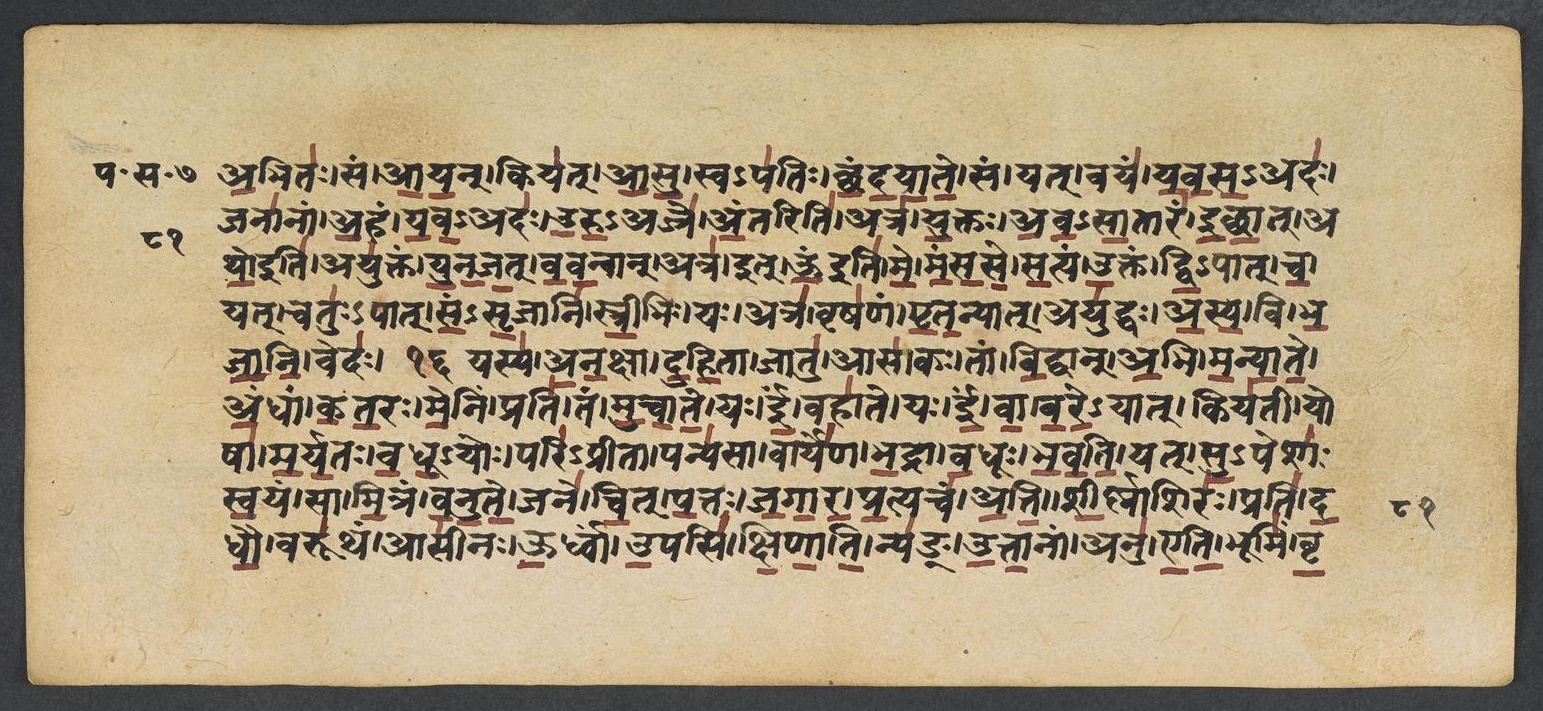
Penn Ms. Coll. 390 Item 41, fol. 765v (numbered 81v by the scribe) (OPenn image 766, upper leaf). Checked on the image: the Rigveda text on this page begins in RV 10.27.8 ‹abhitaḥ sam āyan kiyat›. The next page with Rigveda text, fol. 766r (numbered 82r by the scribe), begins in RV 10.27.14 ‹bṛhan acchāyaḥ apalāśaḥ arvā›. Verses 10.27.8-13 end on this page; 10.27.8 begins on fol. 765r (numbered 81r by the scribe).
8gāvo̱ yava̱m prayu̍tā a̱ryo a̍kṣa̱n tā a̍paśyaṁ sa̱hago̍pā̱ś cara̍ntīḥ | havā̱ id a̱ryo a̱bhita̱ḥ sam ā̍ya̱n kiya̍d āsu̱ svapa̍tiś chandayāte ||
9saṁ yad vaya̍ṁ yava̱sādo̱ janā̍nām a̱haṁ ya̱vāda̍ u̱rvajre̍ a̱ntaḥ | atrā̍ yu̱kto̍ 'vasā̱tāra̍m icchā̱d atho̱ ayu̍ktaṁ yunajad vava̱nvān ||
10atred u̍ me maṁsase sa̱tyam u̱ktaṁ dvi̱pāc ca̱ yac catu̍ṣpāt saṁsṛ̱jāni̍ | strī̱bhir yo atra̱ vṛṣa̍ṇam pṛta̱nyād ayu̍ddho asya̱ vi bha̍jāni̱ veda̍ḥ ||
11yasyā̍na̱kṣā du̍hi̱tā jātv āsa̱ kas tāṁ vi̱dvām̐ a̱bhi ma̍nyāte a̱ndhām | ka̱ta̱ro me̱nim prati̱ tam mu̍cāte̱ ya ī̱ṁ vahā̍te̱ ya ī̍ṁ vā vare̱yāt ||
12kiya̍tī̱ yoṣā̍ marya̱to va̍dhū̱yoḥ pari̍prītā̱ panya̍sā̱ vārye̍ṇa | bha̱drā va̱dhūr bha̍vati̱ yat su̱peśā̍ḥ sva̱yaṁ sā mi̱traṁ va̍nute̱ jane̍ cit ||
13pa̱tto ja̍gāra pra̱tyañca̍m atti śī̱rṣṇā śira̱ḥ prati̍ dadhau̱ varū̍tham | āsī̍na ū̱rdhvām u̱pasi̍ kṣiṇāti̱ nya̍ṅṅ uttā̱nām anv e̍ti̱ bhūmi̍m ||
Compare: Padapāṭha (word-by-word text written in the manuscript; Sansknet e-text via GRETIL)
8gāva | yavam | pra-yutāḥ | aryaḥ | akṣan | tāḥ | apaśyam | saha-gopāḥ | carantīḥ | havāḥ | it | aryaḥ | abhitaḥ | sam | āyan | kiyat | āsu | sva-patiḥ | chandayāte
9sam | yat | vayam | yavasa-adaḥ | janānām | aham | yava-adaḥ | uru-ajre | antariti | atra | yuktaḥ | ava-sātāram | icchāt | atho iti | ayuktam | yunajat | vavanvān
10atra | it | oṃ iti | me | maṃsase | satyam | uktam | dvi-pāt | ca | yat | catuḥ-pāt | sam-sṛjāni | strī-bhiḥ | yaḥ | atra | vṛṣaṇam | pṛtanyāt | ayuddhaḥ | asya | vi | bhajāni | vedaḥ
11yasya | anakṣā | duhitā | jātu | āsa | kaḥ | tām | vidvān | abhi | manyāte | andhām | kataraḥ | menim | prati | tam | mucāte | yaḥ | īm | vahāte | yaḥ | īm | vā | vare--yāt
12kiyatī | yoṣā | maryataḥ | vadhū-yoḥ | pari-prītā | panyasā | vāryeṇa | bhadrā | vadhūḥ | bhavati | yat | su-peśāḥ | svayam | sā | mitram | vanutejanecit
13pattaḥ | jagāra | pratyañcam | atti | śīrṣṇā | śiraḥ | prati | dadhau | varūtham | āsīnaḥ | ūrdhvām | upasi | kṣiṇāti | nyaṅ | uttānām | anu | eti | bhūmim
8The freed kine eat the barley of the pious. I saw them as they wandered with the herdsman. The calling of the pious rang around them. What portion will these kine afford their owner?
9When we who eat the grass of men are gathered I am with barley-eaters in the corn-land. There shall the captor yoke the yokeless bullock, and he who hath been yoked seek one to loose him.
10There wilt thou hold as true my spoken purpose, to bring together quadrupeds. and bipeds. I will divide, without a fight, his riches who warreth here, against the Bull, with women.
11When a man's daughter hath been ever eyeless, who, knowing, will be wroth with her for blindness? Which of the two will loose on him his anger-the man who leads her home or he who woos her?
12How many a maid is pleasing to the suitor who fain would marry for her splendid riches? If the girl be both good and fair of feature, she finds, herself, a friend among the people.
13His feet have grasped: he eats the man who meets him. Around his head he sets the head for shelter. Sitting anear and right above he smites us, and follows earth that lies spread out beneath him.
Where on the image
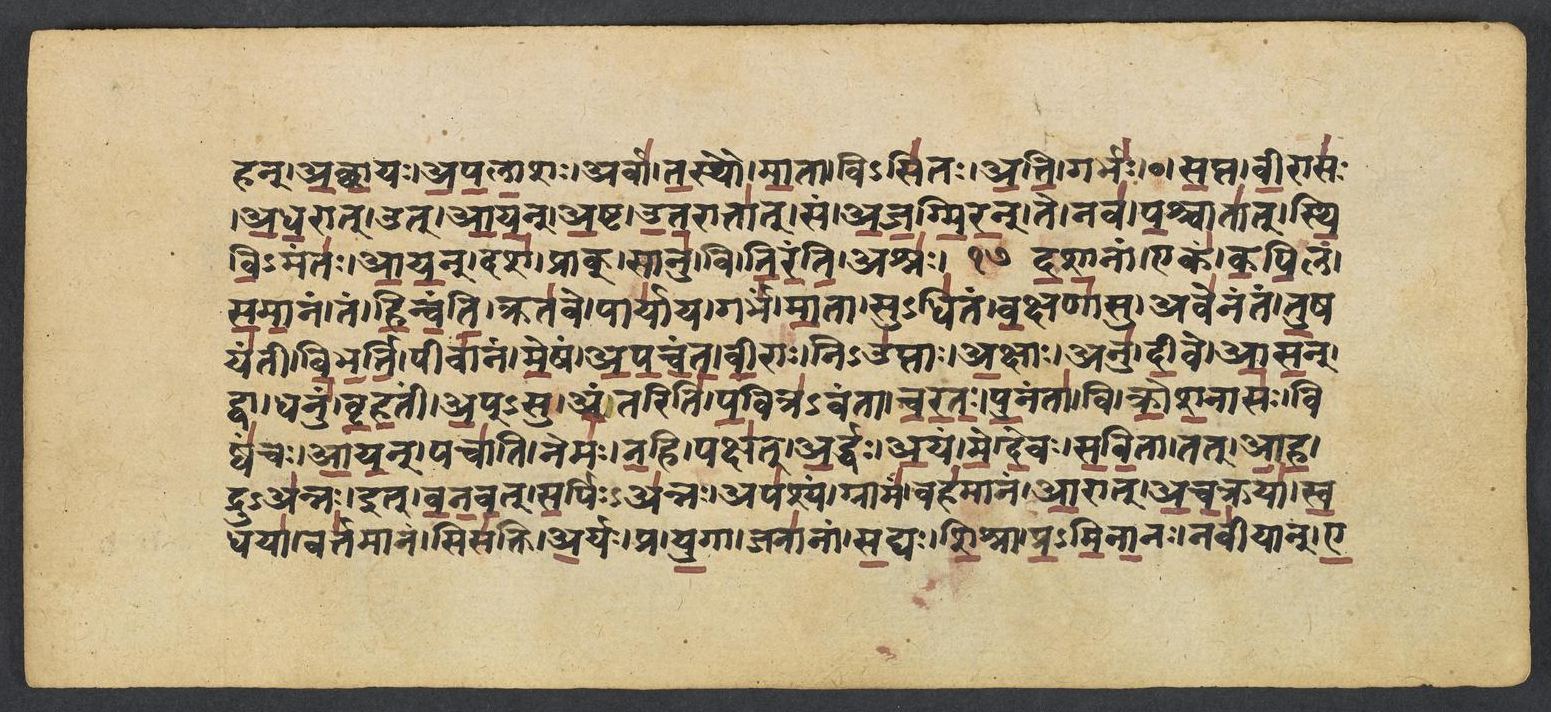
Penn Ms. Coll. 390 Item 41, fol. 766r (numbered 82r by the scribe) (OPenn image 766, lower leaf). Checked on the image: the Rigveda text on this page begins in RV 10.27.14 ‹bṛhan acchāyaḥ apalāśaḥ arvā›. The next page with Rigveda text, fol. 766v (numbered 82v by the scribe), begins in RV 10.27.20 ‹etau me gāvau pra-marasya›. Verses 10.27.14-19 end on this page.
14bṛ̱hann a̍cchā̱yo a̍palā̱śo arvā̍ ta̱sthau mā̱tā viṣi̍to atti̱ garbha̍ḥ | a̱nyasyā̍ va̱tsaṁ ri̍ha̱tī mi̍māya̱ kayā̍ bhu̱vā ni da̍dhe dhe̱nur ūdha̍ḥ ||
15sa̱pta vī̱rāso̍ adha̱rād ud ā̍yann a̱ṣṭotta̱rāttā̱t sam a̍jagmira̱n te | nava̍ pa̱ścātā̍t sthivi̱manta̍ āya̱n daśa̱ prāk sānu̱ vi ti̍ra̱nty aśna̍ḥ ||
16da̱śā̱nām eka̍ṁ kapi̱laṁ sa̍mā̱naṁ taṁ hi̍nvanti̱ krata̍ve̱ pāryā̍ya | garbha̍m mā̱tā sudhi̍taṁ va̱kṣaṇā̱sv ave̍nantaṁ tu̱ṣaya̍ntī bibharti ||
17pīvā̍nam me̱ṣam a̍pacanta vī̱rā nyu̍ptā a̱kṣā anu̍ dī̱va ā̍san | dvā dhanu̍m bṛha̱tīm a̱psv a1̱̍ntaḥ pa̱vitra̍vantā carataḥ pu̱nantā̍ ||
18vi kro̍śa̱nāso̱ viṣva̍ñca āya̱n pacā̍ti̱ nemo̍ na̱hi pakṣa̍d a̱rdhaḥ | a̱yam me̍ de̱vaḥ sa̍vi̱tā tad ā̍ha̱ drva̍nna̱ id va̍navat sa̱rpira̍nnaḥ ||
19apa̍śya̱ṁ grāma̱ṁ vaha̍mānam ā̱rād a̍ca̱krayā̍ sva̱dhayā̱ varta̍mānam | siṣa̍kty a̱ryaḥ pra yu̱gā janā̍nāṁ sa̱dyaḥ śi̱śnā pra̍minā̱no navī̍yān ||
Compare: Padapāṭha (word-by-word text written in the manuscript; Sansknet e-text via GRETIL)
14bṛhan | acchāyaḥ | apalāśaḥ | arvā | tasthau | mātā | vi-sitaḥ | atti | garbhaḥ | anyasyāḥ | vatsam | rihatī | mimāya | kayā | bhuvā | ni | dadhe | dhenuḥ | ūdhaḥ
15sapta | vīrāsaḥ | adharāt | ut | āyan | aṣṭa | uttarāttāt | sam | ajagmiran | te | nava | paścātāt | sthivi-mantaḥ | āyan | daśa | prāk | sānu | vi | tiranti | aśnaḥ
16daśānām | ekam | kapilam | samānam | tam | hinvanti | kratave | pāryāya | gabharm | mātā | su-dhitam | vakṣaṇāsu | avenantam | tuṣayantī | bibharti
17pīvānam | meṣam | apacanta | vīrāḥ | ni-uptāḥ | akṣāḥ | anu | dīve | āsan | dvā | dhanum | bṛhatīm | ap-su | antariti | pavitra-vantā | carataḥ | punantā
18vi | krośanāsaḥ | viṣvañcaḥ | āyan | pacāti | nemaḥ | nahi | pakṣat | ardhaḥ | ayam | me | devaḥ | savitā | tat | āha | dru-annaḥ | it | vanavat | sarpiḥ-annaḥ
19apaśyam | grāmam | vahamānam | ārāt | acakrayā | svadhayā | vartamānam | sisakti | aryaḥ | pra | yugā | janānām | sadyaḥ | śiśnā | pra-minānaḥ | navīyān
14High, leafless, shadowless, and swift is Heaven: the Mother stands, the Youngling, loosed, is feeding. Loud hath she lowed, licking Another's offspring. In what world hath the Cow laid down her udder?
15Seven heroes from the nether part ascended, and from the upper part came eight together. Nine from behind came armed with winnowing-baskets: ten from the front pressed o'er the rock's high ridges.
16One of the ten, the tawny, shared in common, they send to execute their final purpose. The Mother carries on her breast the Infant of noble form and soothes it while it knows not.
17The Heroes dressed with fire the fatted wether: the dice were thrown by way of sport and gaming. Two reach the plain amid the heavenly waters, hallowing and with means of purifying.
18Crying aloud they ran in all directions: One half of them will cook, and not the other. To me hath Savitar, this God, declared it: He will perform, whose food is wood and butter.
19I saw a troop advancing from the distance moved, not by wheels but their own God-like nature. The Friendly One seeks human generations, destroying, still new bands of evil beings.
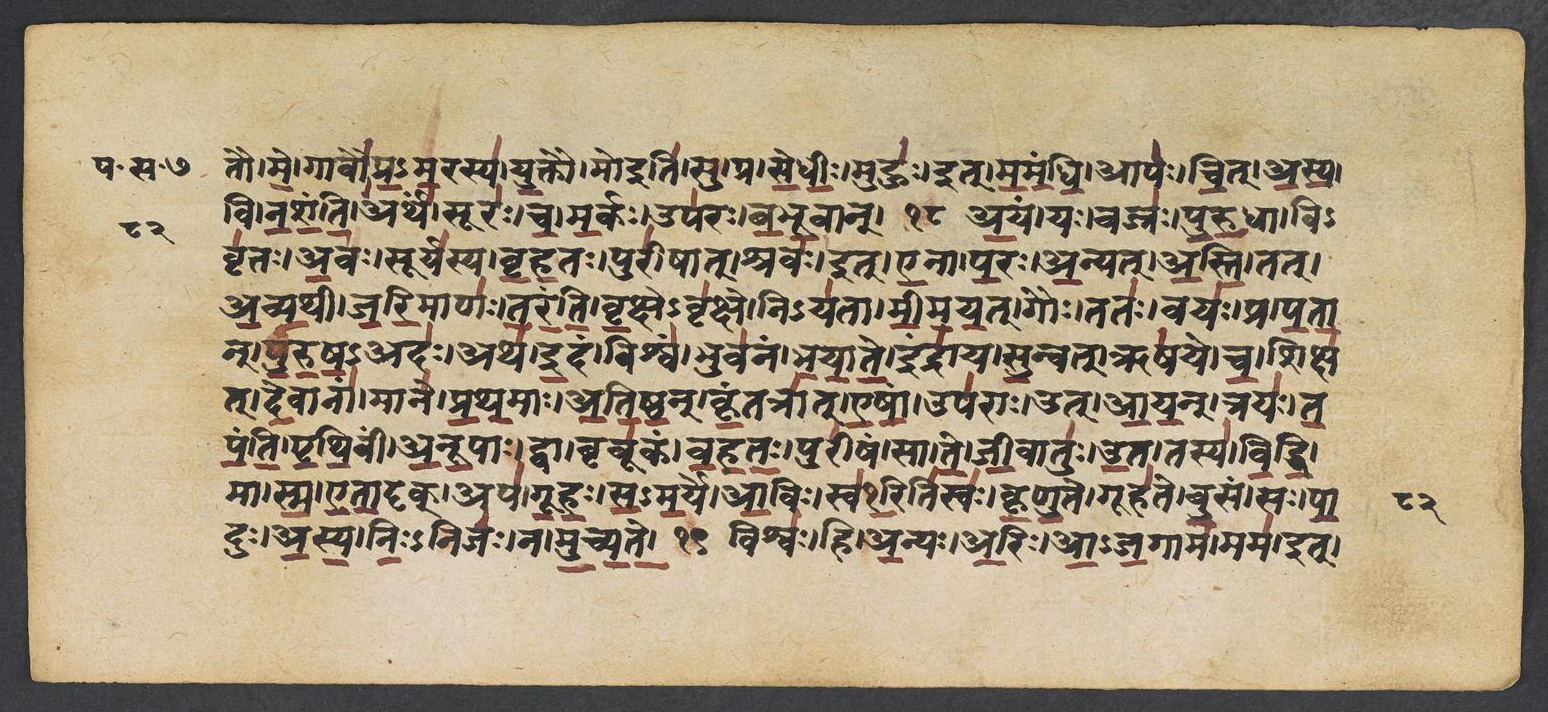
Where on the image
Penn Ms. Coll. 390 Item 41, fol. 766v (numbered 82v by the scribe) (OPenn image 767, upper leaf). Checked on the image: the Rigveda text on this page begins in RV 10.27.20 ‹etau me gāvau pra-marasya›. The next page with Rigveda text, fol. 767r (numbered 83r by the scribe), begins in RV 10.28.1 ‹aha śvaśuraḥ na ā›. Verses 10.27.20-24 end on this page.
20e̱tau me̱ gāvau̍ prama̱rasya̍ yu̱ktau mo ṣu pra se̍dhī̱r muhu̱r in ma̍mandhi | āpa̍ś cid asya̱ vi na̍śa̱nty artha̱ṁ sūra̍ś ca ma̱rka upa̍ro babhū̱vān ||
21a̱yaṁ yo vajra̍ḥ puru̱dhā vivṛ̍tto̱ 'vaḥ sūrya̍sya bṛha̱taḥ purī̍ṣāt | śrava̱ id e̱nā pa̱ro a̱nyad a̍sti̱ tad a̍vya̱thī ja̍ri̱māṇa̍s taranti ||
22vṛ̱kṣe-vṛ̍kṣe̱ niya̍tā mīmaya̱d gaus tato̱ vaya̱ḥ pra pa̍tān pūru̱ṣāda̍ḥ | athe̱daṁ viśva̱m bhuva̍nam bhayāta̱ indrā̍ya su̱nvad ṛṣa̍ye ca̱ śikṣa̍t ||
23de̱vānā̱m māne̍ pratha̱mā a̍tiṣṭhan kṛ̱ntatrā̍d eṣā̱m upa̍rā̱ ud ā̍yan | traya̍s tapanti pṛthi̱vīm a̍nū̱pā dvā bṛbū̍kaṁ vahata̱ḥ purī̍ṣam ||
24sā te̍ jī̱vātu̍r u̱ta tasya̍ viddhi̱ mā smai̍tā̱dṛg apa̍ gūhaḥ sama̱rye | ā̱viḥ sva̍ḥ kṛṇu̱te gūha̍te bu̱saṁ sa pā̱dur a̍sya ni̱rṇijo̱ na mu̍cyate ||
Compare: Padapāṭha (word-by-word text written in the manuscript; Sansknet e-text via GRETIL)
20etau | me | gāvau | pra-marasya | yuktau | mo iti | su | pra | sedhīḥ | muhuḥ | it | mamandhi | āpaḥ | cit | asya | vi | naśanti | atharm | sūraḥ | ca | markaḥ | uparaḥ | babhūvān
21ayam | yaḥ | vajraḥ | purudhā | vi-vṛttaḥ | avaḥ | sūryasya | bṛhataḥ | purīṣāt | śravaḥ | it | enā | paraḥ | anyat | asti | tat | avyathī | jarimāṇaḥ | taranti
22vṛkṣe--vṛkṣe | ni-yatā | mīmayat | gauḥ | tataḥ | vayaḥ | pra | patān | puruṣa-adaḥ | atha | idam | viśvam | bhuvanam | bhayāte | indrāya | sunvat | ṛṣaye | ca | śikṣat
23devānām | māne | prathamāḥ | atiṣṭhan | kṛntatrāt | eṣām | uparāḥ | ut | āyan | trayaḥ | tapanti | pṛthivīm | anūpāḥ | dvā | bṛbūkam | vahataḥ | purīṣam
24sā | te | jīvātuḥ | uta | tasya | viddhi | mā | sma | etādṛk | apa | gūhaḥ | samarye | āviḥ | svar itisvaḥ | kṛṇute | gūhate | busam | saḥ | pāduḥ | asya | niḥ-nijaḥ | na | mucyate
20These my two Bulls, even Pramara's, are harnessed: drive them not far; here let them often linger. The waters even shall aid him to his object, and the all-cleansing Sun who is above us.
21This is the thunderbolt which often whirleth down from the lofty misty realm of Sûrya. Beyond this realm there is another glory so through old age they pass and feel no sorrow.
22Bound fast to,every tree the cow is lowing, and thence the man-consuming birds are flying, Then all this world, though pressing juice for Indra and strengthening the R̥ishi, is affrighted.
23In the Gods' mansion stood the first-created, and from their separation came the later. Three warm the Earth while holding stores of water, and Two of these convey the murmuring moisture.
24This is thy life: and do thou mark and know it. As such, hide not thyself in time of battle. He manifests the light and hides the vapour: his foot is never free from robes that veil it.
Notes
- Sanskrit: Aufrecht's edition (1877) with the Vedic accents, as entered by van Nooten and Holland (GRETIL).
- English: Ralph T. H. Griffith, The Hymns of the Rigveda (1889-1892; 2nd ed. 1896-1897), from the VedaWeb digital text; OCR slips in that text were corrected against the printed 2nd edition (data/sources/rigveda/griffith_errata.json).
- Padapāṭha (edition text): Sansknet e-text via GRETIL (CC BY-NC-SA 4.0).
Cite
Sources
- Source: Penn Ms. Coll. 390 Item 41 (undated (catalogued with Penn's 18th-19th c. Vedic manuscripts)), OPenn, Public Domain Mark + Aufrecht's accented text (GRETIL) + Griffith's English (VedaWeb) (holding institution)
- Critical edition: Aufrecht (1877), accented e-text via GRETIL
← previous · → next · v cycle view · l back to library