Rigveda 10.28: To Indra, a dispute
Introduction
Rigveda 10.28 is a hymn of 12 verses addressed to Indra, a dispute. It stands in book (maṇḍala) 10, the last and latest book. The Rigveda is the oldest collection of Sanskrit hymns, composed in the second half of the second millennium BCE and handed down orally for many centuries before it was written down.
The manuscript shown is Penn Ms. Coll. 390 Item 41 (University of Pennsylvania), an undated paper manuscript of the padapāṭha (the word-by-word recitation text, in which every word is written separately and compounds are split) of the whole Ṛgveda in Devanāgarī, 884 leaves in fascicles, 7-9 lines to the page, accents in red; this hymn stands on fol. 766v-768r. Each section below gives the verses that end on one page; the page boundaries were read on the images (the opening words of every page), not counted out. Where the manuscript is a padapāṭha (the word-by-word recitation text), the section shows Aufrecht's continuous (saṃhitā) text first and, as the edition text, the padapāṭha of the same verses, which is the form written on the page.
How was this verified? (Provenance)
Where on the image
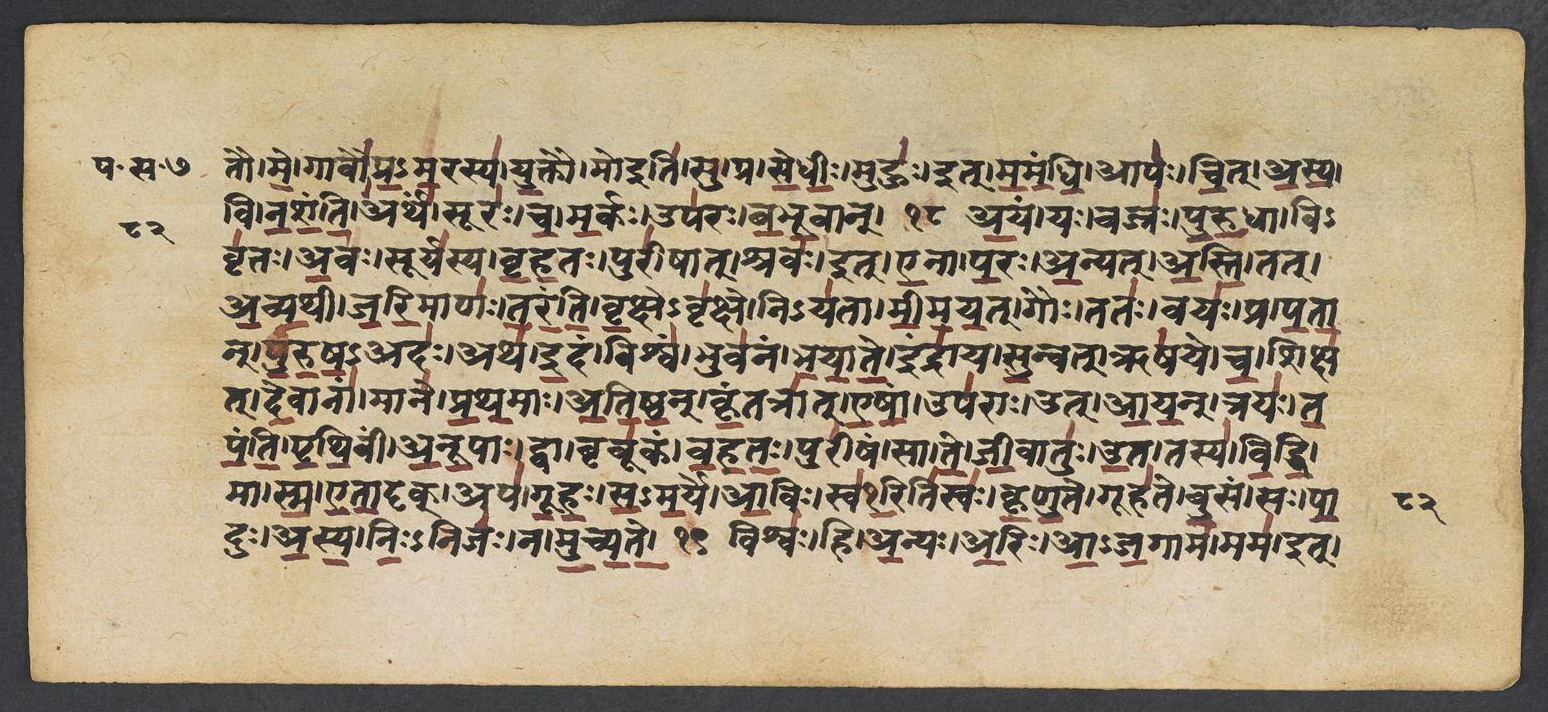
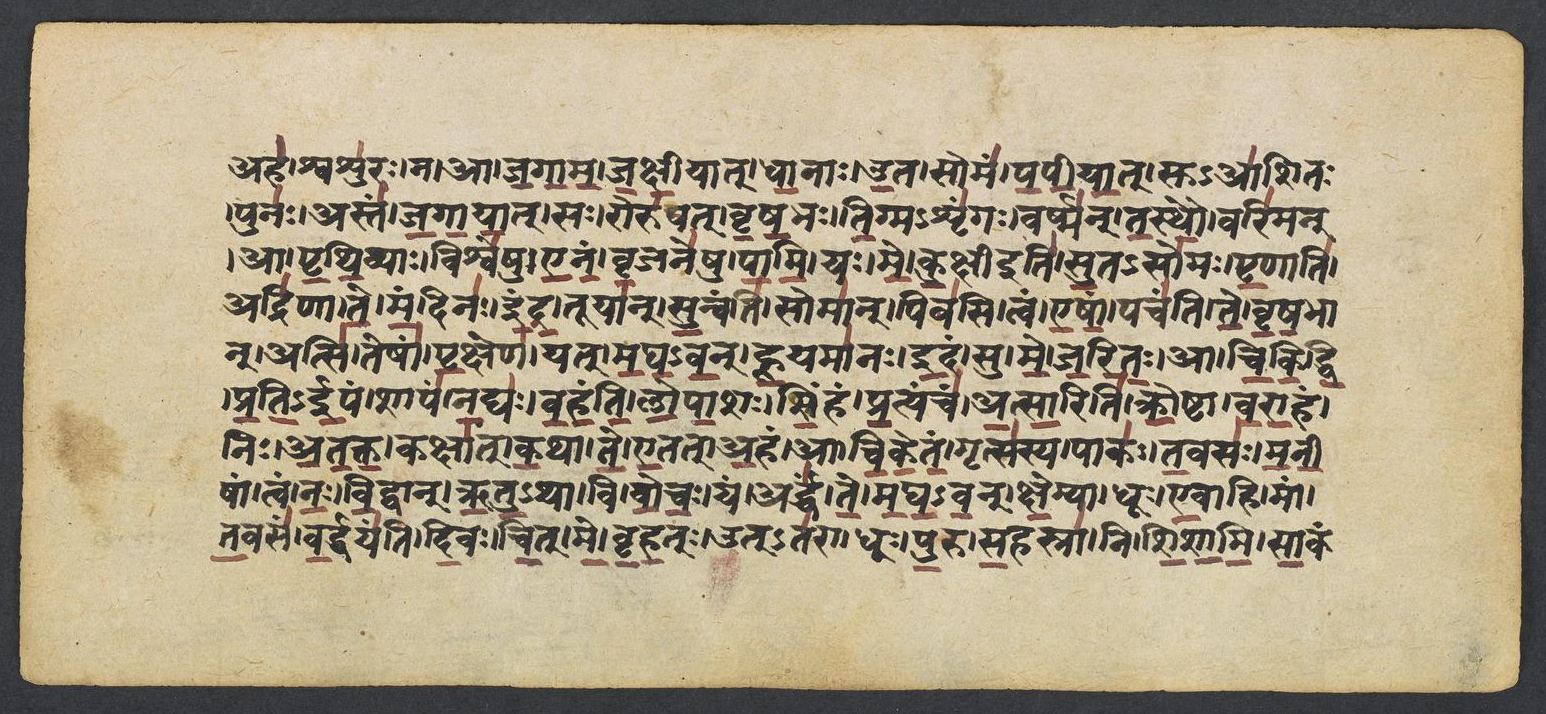
Penn Ms. Coll. 390 Item 41, fol. 767r (numbered 83r by the scribe) (OPenn image 767, lower leaf). Checked on the image: the Rigveda text on this page begins in RV 10.28.1 ‹aha śvaśuraḥ na ā›. The next page with Rigveda text, fol. 767v (numbered 83v by the scribe), begins in RV 10.28.6 ‹aśatrum hi mā janitā›. Verses 10.28.1-5 end on this page; 10.28.1 begins on fol. 766v (numbered 82v by the scribe).
1viśvo̱ hy a1̱̍nyo a̱rir ā̍ja̱gāma̱ mamed aha̱ śvaśu̍ro̱ nā ja̍gāma | ja̱kṣī̱yād dhā̱nā u̱ta soma̍m papīyā̱t svā̍śita̱ḥ puna̱r asta̍ṁ jagāyāt ||
2sa roru̍vad vṛṣa̱bhas ti̱gmaśṛ̍ṅgo̱ varṣma̍n tasthau̱ vari̍ma̱nn ā pṛ̍thi̱vyāḥ | viśve̍ṣv enaṁ vṛ̱jane̍ṣu pāmi̱ yo me̍ ku̱kṣī su̱taso̍maḥ pṛ̱ṇāti̍ ||
3adri̍ṇā te ma̱ndina̍ indra̱ tūyā̍n su̱nvanti̱ somā̱n piba̍si̱ tvam e̍ṣām | paca̍nti te vṛṣa̱bhām̐ atsi̱ teṣā̍m pṛ̱kṣeṇa̱ yan ma̍ghavan hū̱yamā̍naḥ ||
4i̱daṁ su me̍ jarita̱r ā ci̍kiddhi pratī̱paṁ śāpa̍ṁ na̱dyo̍ vahanti | lo̱pā̱śaḥ si̱ṁham pra̱tyañca̍m atsāḥ kro̱ṣṭā va̍rā̱haṁ nir a̍takta̱ kakṣā̍t ||
5ka̱thā ta̍ e̱tad a̱ham ā ci̍keta̱ṁ gṛtsa̍sya̱ pāka̍s ta̱vaso̍ manī̱ṣām | tvaṁ no̍ vi̱dvām̐ ṛ̍tu̱thā vi vo̍co̱ yam ardha̍ṁ te maghavan kṣe̱myā dhūḥ ||
Compare: Padapāṭha (word-by-word text written in the manuscript; Sansknet e-text via GRETIL)
1viśvaḥ | hi | anyaḥ | ariḥ | ājagāma | mama | it | aha | śvaśuraḥ | na | ā | jagāma | jakṣīyāt | dhānāḥ | uta | somam | papīyāt | su-āśitaḥ | punaḥ | astam | jagāyāt
2saḥ | roruvat | vṛṣabhaḥ | tigma-śṛṅgaḥ | varṣman | tasthau | variman | ā | pṛthivyāḥ | viśveṣu | enam | vṛjaneṣu | pāmi | yaḥ | me | kukṣī iti | suta-somaḥ | pṛṇāti
3adriṇā | te | mandinaḥ | indra | tūyān | sunvanti | somān | pibasi | tvam | eṣām | pacanti | te | vṛṣabhān | atsi | teṣām | pṛkṣeṇa | yat | magha-van | hūyamānaḥ
4idam | su | me | jaritaḥ | ā | cikiddhi | prati-īpam | śāpam | nadyaḥ | vahanti | lopāśaḥ | siṃham | pratyañcam | atsāriti | kroṣṭā | varāham | niḥ | atakta | kakṣāt
5kathā | te | etat | aham | ā | ciketam | gṛtsasya | pākaḥ | tavasaḥ | manīṣām | tvam | naḥ | vidvān | ṛtu-thā | vi | vocaḥ | yam | ardham | te | magha-van | kṣemyā | dhūḥ
1Now all my other friends are here assembled: my Sire-in-law alone hath not come hither. So might he eat the grain and drink the Soma, and, satisfied, return unto; his dwelling.
2Loud belloweth the Bull whose horns are sharpened: upon the height above earth's breadth he standeth. That man I guard and save in all his troubles who fills my flanks when he hath shed the Soma.
3Men with the stone press out for thee, O Indra, strong, gladdening Soma, and thereof thou drinkest. Bulls they dress for thee, and of these thou eatest when, Maghavan, with food thou art invited.
4Resolve for me, O singer, this my riddle: The rivers send their swelling water backward: The fox steals up to the approaching lion: the jackal drives the wild-boar from the brushwood.
5How shall I solve this riddle, I, the simple, declare the thought of thee the Wise and Mighty? Tell us, well knowing, as befits the season: Whitherward is thy prosperous car advancing?
Where on the image
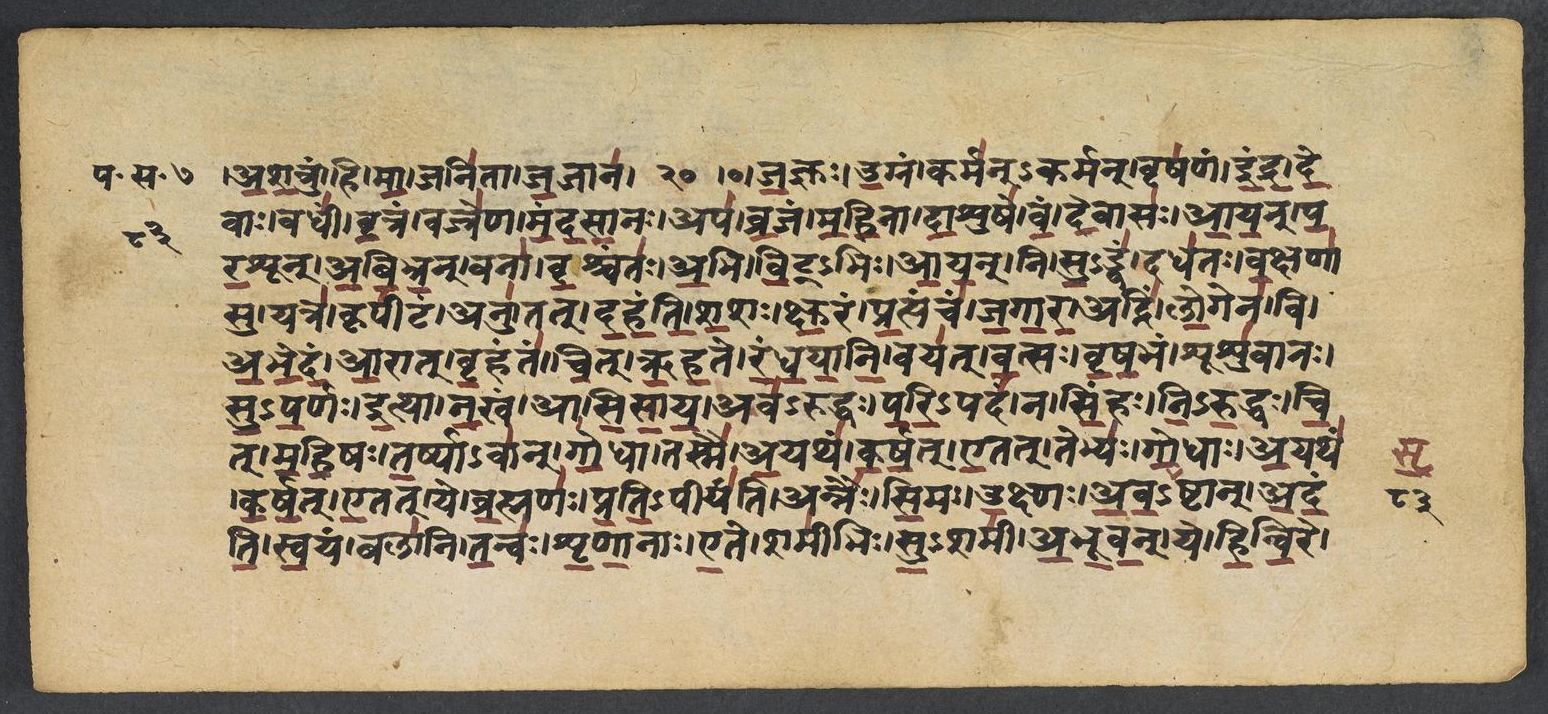
Penn Ms. Coll. 390 Item 41, fol. 767v (numbered 83v by the scribe) (OPenn image 768, upper leaf). Checked on the image: the Rigveda text on this page begins in RV 10.28.6 ‹aśatrum hi mā janitā›. The next page with Rigveda text, fol. 768r (numbered 84r by the scribe), begins in RV 10.28.12 ‹tanvaḥ some ukthaiḥ nṛ-vat›. Verses 10.28.6-11 end on this page; 10.28.6 begins on fol. 767r (numbered 83r by the scribe).
6e̱vā hi māṁ ta̱vasa̍ṁ va̱rdhaya̍nti di̱vaś ci̍n me bṛha̱ta utta̍rā̱ dhūḥ | pu̱rū sa̱hasrā̱ ni śi̍śāmi sā̱kam a̍śa̱truṁ hi mā̱ jani̍tā ja̱jāna̍ ||
7e̱vā hi māṁ ta̱vasa̍ṁ ja̱jñur u̱graṁ karma̍n-karma̱n vṛṣa̍ṇam indra de̱vāḥ | vadhī̍ṁ vṛ̱traṁ vajre̍ṇa mandasā̱no 'pa̍ vra̱jam ma̍hi̱nā dā̱śuṣe̍ vam ||
8de̱vāsa̍ āyan para̱śūm̐r a̍bibhra̱n vanā̍ vṛ̱ścanto̍ a̱bhi vi̱ḍbhir ā̍yan | ni su̱drva1̱̍ṁ dadha̍to va̱kṣaṇā̍su̱ yatrā̱ kṛpī̍ṭa̱m anu̱ tad da̍hanti ||
9śa̱śaḥ kṣu̱ram pra̱tyañca̍ṁ jagā̱rādri̍ṁ lo̱gena̱ vy a̍bhedam ā̱rāt | bṛ̱hanta̍ṁ cid ṛha̱te ra̍ndhayāni̱ vaya̍d va̱tso vṛ̍ṣa̱bhaṁ śūśu̍vānaḥ ||
10su̱pa̱rṇa i̱tthā na̱kham ā si̍ṣā̱yāva̍ruddhaḥ pari̱pada̱ṁ na si̱ṁhaḥ | ni̱ru̱ddhaś ci̍n mahi̱ṣas ta̱rṣyāvā̍n go̱dhā tasmā̍ a̱yatha̍ṁ karṣad e̱tat ||
11tebhyo̍ go̱dhā a̱yatha̍ṁ karṣad e̱tad ye bra̱hmaṇa̍ḥ prati̱pīya̱nty annai̍ḥ | si̱ma u̱kṣṇo̍ 'vasṛ̱ṣṭām̐ a̍danti sva̱yam balā̍ni ta̱nva̍ḥ śṛṇā̱nāḥ ||
Compare: Padapāṭha (word-by-word text written in the manuscript; Sansknet e-text via GRETIL)
6eva | hi | mām | tavasam | vardhayanti | divaḥ | cit | me | bṛhataḥ | ut-tarā | dhūḥ | puru | sahasrā | ni | śiśāmi | sākam | aśatrum | hi | mā | janitā | jajāna
7eva | hi | mām | tavasam | jajñuḥ | ugram | karman-karman | vṛṣaṇam | indra | devāḥ | vadhīm | vṛtram | vajreṇa | mandasānaḥ | apa | vrajam | mahinā | dāśuṣe | vam
8devāsaḥ | āyan | paraśūn | abibhran | vanā | vṛścantaḥ | abhi | viṭ-bhiḥ | āyan | ni | su-dram | dadhataḥ | vakṣaṇāsu | yatra | kṛpīṭam | anu | tat | dahanti
9śaśaḥ | kṣuram | pratyañcam | jagāra | adrim | logena | vi | abhedam | ārāt | bṛhantam | cit | ṛhate | randhayāni | vayat | vatsaḥ | vṛṣabham | śūśuvānaḥ
10su-parṇaḥ | itthā | nakham | ā | sisāya | ava-ruddhaḥ | pari-padam | na | siṃhaḥ | ni-ruddhaḥ | cit | mahiṣaḥ | tarṣyāvān | godhā | tasmai | ayatham | karṣat | etat
11tebhyaḥ | godhāḥ | ayatham | karṣat | etat | ye | brahmaṇaḥ | prati-pīyanti | annaiḥ | simaḥ | ukṣṇaḥ | ava-sṛṣṭān | adanti | svayam | balāni | tanvaḥ | śṛṇānāḥ
6Thus do they magnify me, me the mighty higher than even high heaven is my car-pole. I all at once demolish many thousands: my Sire begot me with no foe to match me.
7Yea, and the Gods have known me also, Indra, as mighty, fierce and strong in every exploit. Exulting with the bolt I slaughtered Vr̥itra, and for the offerer oped with might the cow-stall.
8The Deities approached, they carried axes; splitting the wood they came with their attendants. They laid good timber in the fire-receivers, and burnt the grass up where they found it growing.
9The hare hath swallowed up the opposing razor: I sundered with a clod the distant mountain. The great will I make subject to the little: the calf shall wax in strength and eat the bullock.
10There hath the strong-winged eagle left his talon, as a snared lion leaves the trap that caught him. Even the wild steer in his thirst is captured: the leather strap still holds his foot entangled.
11So may the leather strap their foot entangle who fatten on the viands of the Brahman. They all devour the bulls set free to wander, while they themselves destroy their bodies' vigour.
Where on the image
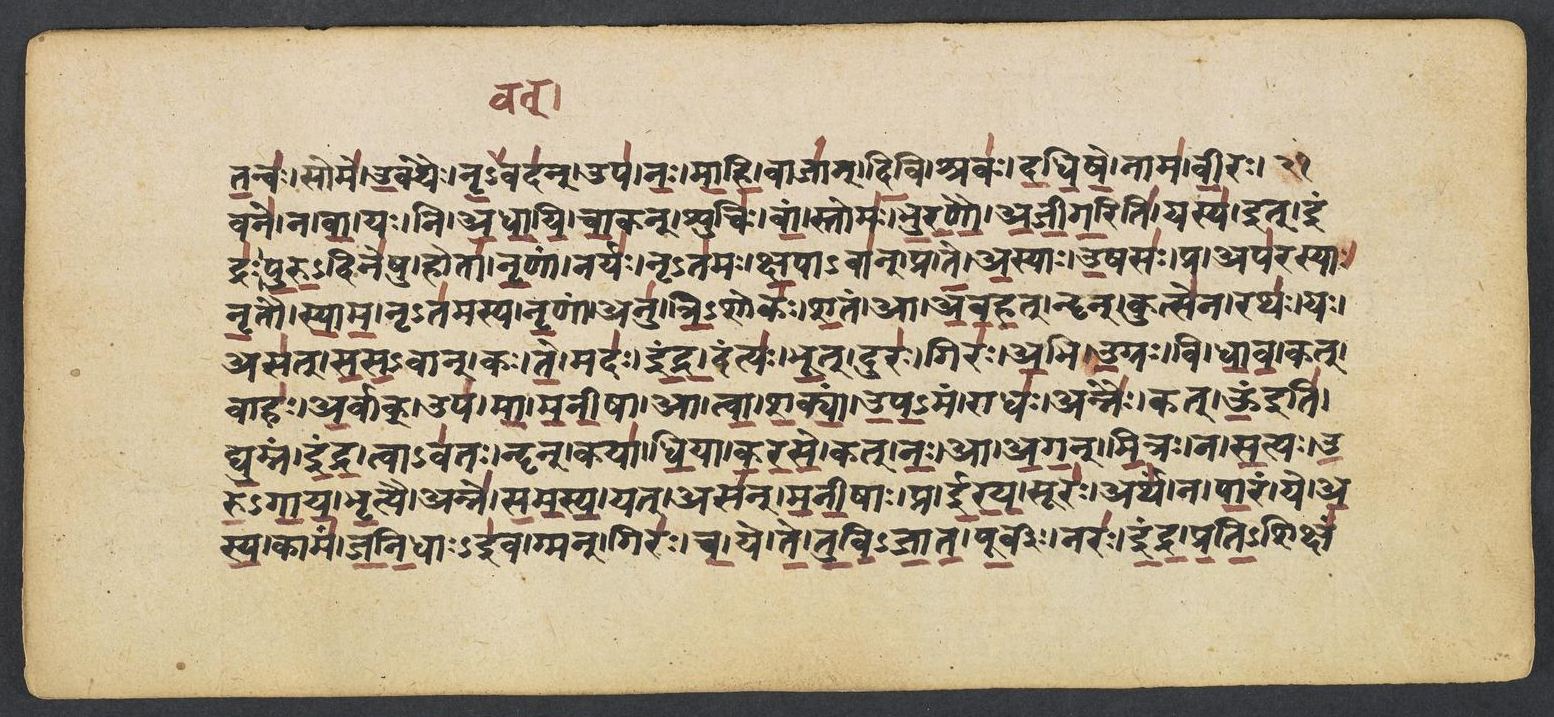
Penn Ms. Coll. 390 Item 41, fol. 768r (numbered 84r by the scribe) (OPenn image 768, lower leaf). Checked on the image: the Rigveda text on this page begins in RV 10.28.12 ‹tanvaḥ some ukthaiḥ nṛ-vat›. The next page with Rigveda text, fol. 768v (numbered 84v by the scribe), begins in RV 10.29.5 ‹-prati-śikṣanti annaiḥ›. Verse 10.28.12 ends on this page; 10.28.12 begins on fol. 767v (numbered 83v by the scribe).
12e̱te śamī̍bhiḥ su̱śamī̍ abhūva̱n ye hi̍nvi̱re ta̱nva1̱̍ḥ soma̍ u̱kthaiḥ | nṛ̱vad vada̱nn upa̍ no māhi̱ vājā̍n di̱vi śravo̍ dadhiṣe̱ nāma̍ vī̱raḥ ||
Compare: Padapāṭha (word-by-word text written in the manuscript; Sansknet e-text via GRETIL)
12ete | śamībhiḥ | su-śamī | abhūvan | ye | hinvire | tanvaḥ | some | ukthaiḥ | nṛ-vat | vadan | upa | naḥ | māhi | vājān | divi | śravaḥ | dadhiṣe | nāma | vīraḥ
12They were well occupied with holy duties who sped in person with their lauds to Soma. Speaking like man, mete to us wealth and booty: in heaven thou hast the name and fame of Hero.
Notes
- Sanskrit: Aufrecht's edition (1877) with the Vedic accents, as entered by van Nooten and Holland (GRETIL).
- English: Ralph T. H. Griffith, The Hymns of the Rigveda (1889-1892; 2nd ed. 1896-1897), from the VedaWeb digital text; OCR slips in that text were corrected against the printed 2nd edition (data/sources/rigveda/griffith_errata.json).
- Padapāṭha (edition text): Sansknet e-text via GRETIL (CC BY-NC-SA 4.0).
Cite
Sources
- Source: Penn Ms. Coll. 390 Item 41 (undated (catalogued with Penn's 18th-19th c. Vedic manuscripts)), OPenn, Public Domain Mark + Aufrecht's accented text (GRETIL) + Griffith's English (VedaWeb) (holding institution)
- Critical edition: Aufrecht (1877), accented e-text via GRETIL
← previous · → next · v cycle view · l back to library