Rigveda 10.29: To Indra
Introduction
Rigveda 10.29 is a hymn of 8 verses addressed to Indra. It stands in book (maṇḍala) 10, the last and latest book. The Rigveda is the oldest collection of Sanskrit hymns, composed in the second half of the second millennium BCE and handed down orally for many centuries before it was written down.
The manuscript shown is Penn Ms. Coll. 390 Item 41 (University of Pennsylvania), an undated paper manuscript of the padapāṭha (the word-by-word recitation text, in which every word is written separately and compounds are split) of the whole Ṛgveda in Devanāgarī, 884 leaves in fascicles, 7-9 lines to the page, accents in red; this hymn stands on fol. 768r-768v. Each section below gives the verses that end on one page; the page boundaries were read on the images (the opening words of every page), not counted out. Where the manuscript is a padapāṭha (the word-by-word recitation text), the section shows Aufrecht's continuous (saṃhitā) text first and, as the edition text, the padapāṭha of the same verses, which is the form written on the page.
How was this verified? (Provenance)
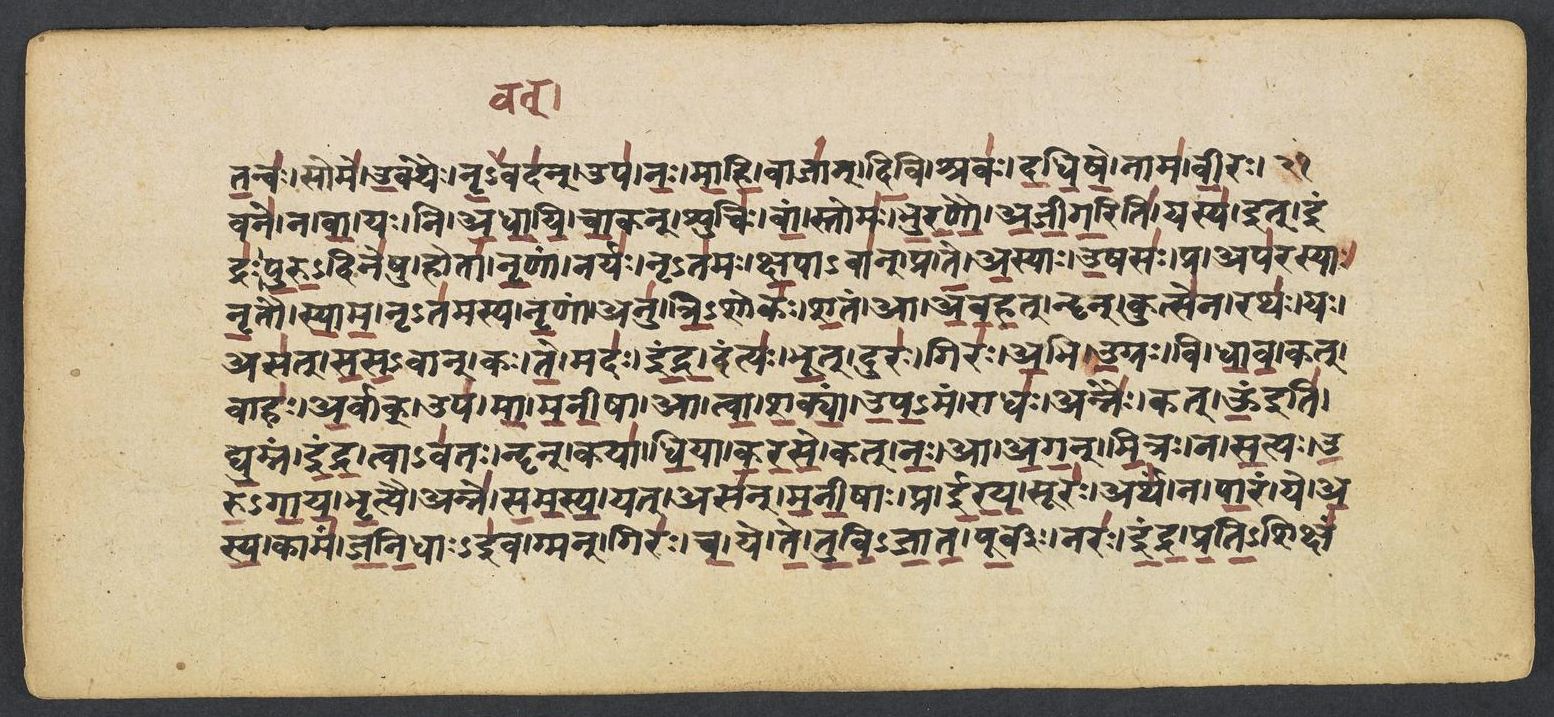
Where on the image
Penn Ms. Coll. 390 Item 41, fol. 768r (numbered 84r by the scribe) (OPenn image 768, lower leaf). Checked on the image: the Rigveda text on this page begins in RV 10.28.12 ‹tanvaḥ some ukthaiḥ nṛ-vat›. The next page with Rigveda text, fol. 768v (numbered 84v by the scribe), begins in RV 10.29.5 ‹-prati-śikṣanti annaiḥ›. Verses 10.29.1-4 end on this page.
1vane̱ na vā̱ yo ny a̍dhāyi cā̱kañ chuci̍r vā̱ṁ stomo̍ bhuraṇāv ajīgaḥ | yasyed indra̍ḥ puru̱dine̍ṣu̱ hotā̍ nṛ̱ṇāṁ naryo̱ nṛta̍maḥ kṣa̱pāvā̍n ||
2pra te̍ a̱syā u̱ṣasa̱ḥ prāpa̍rasyā nṛ̱tau syā̍ma̱ nṛta̍masya nṛ̱ṇām | anu̍ tri̱śoka̍ḥ śa̱tam āva̍ha̱n nṝn kutse̍na̱ ratho̱ yo asa̍t sasa̱vān ||
3kas te̱ mada̍ indra̱ rantyo̍ bhū̱d duro̱ giro̍ a̱bhy u1̱̍gro vi dhā̍va | kad vāho̍ a̱rvāg upa̍ mā manī̱ṣā ā tvā̍ śakyām upa̱maṁ rādho̱ annai̍ḥ ||
4kad u̍ dyu̱mnam i̍ndra̱ tvāva̍to̱ nṝn kayā̍ dhi̱yā ka̍rase̱ kan na̱ āga̍n | mi̱tro na sa̱tya u̍rugāya bhṛ̱tyā anne̍ samasya̱ yad asa̍n manī̱ṣāḥ ||
Compare: Padapāṭha (word-by-word text written in the manuscript; Sansknet e-text via GRETIL)
1vane | na | vā | yaḥ | ni | adhāyi | cākan | śuciḥ | vām | stomaḥ | bhuraṇau | ajīgariti | yasya | it | indraḥ | puru-dineṣu | hotā | nṛṇām | naryaḥ | nṛ-tamaḥ | kṣapāvān
2pra | te | asyāḥ | uṣasaḥ | pra | aparasyāḥ | nṛtau | syāma | nṛ-tamasya | nṛṇām | anu | tri-śokaḥ | śatam | ā | avahan | nṝn | kutsena | rathaḥ | yaḥ | asat | sasa-vān
3kaḥ | te | madaḥ | indra | rantyaḥ | bhūt | duraḥ | giraḥ | abhi | ugraḥ | vi | dhāva | kat | vāhaḥ | arvāk | upa | mā | manīṣā | ā | tvā | śakyām | upa-mam | rādhaḥ | annaiḥ
4kat | oṃ iti | dyumnam | indra | tvāvataḥ | nṝn | kayā | dhiyā | karase | kat | naḥ | ā | agan | mitraḥ | na | satyaḥ | uru-gāya | bhṛtyai | anne | samasya | yat | asan | manīṣāḥ
1As sits the young bird on the tree rejoicing, ye, swift Pair, have been roused by clear laudation, Whose Herald-Priest through many days is Indra, earth's Guardian, Friend of men, the best of Heroes.
2May we, when this Dawn and the next dance hither, be thy best servants, most heroic Hero! Let the victorious car with triple splendour bring hitherward the hundred chiefs with Kutsa.
3What was the gladdening draught that pleased thee, Indra? Speed through our doors to songs, for thou art mighty. Why comest thou to me, what gift attracts thee? Fain would I bring thee food most meet to offer.
4Indra, what fame hath one like thee mid heroes? With what plan wilt thou act? Why hast thou sought us? As a true Friend, Wide-Strider! to sustain us, since food absorbs the thought of each among us.
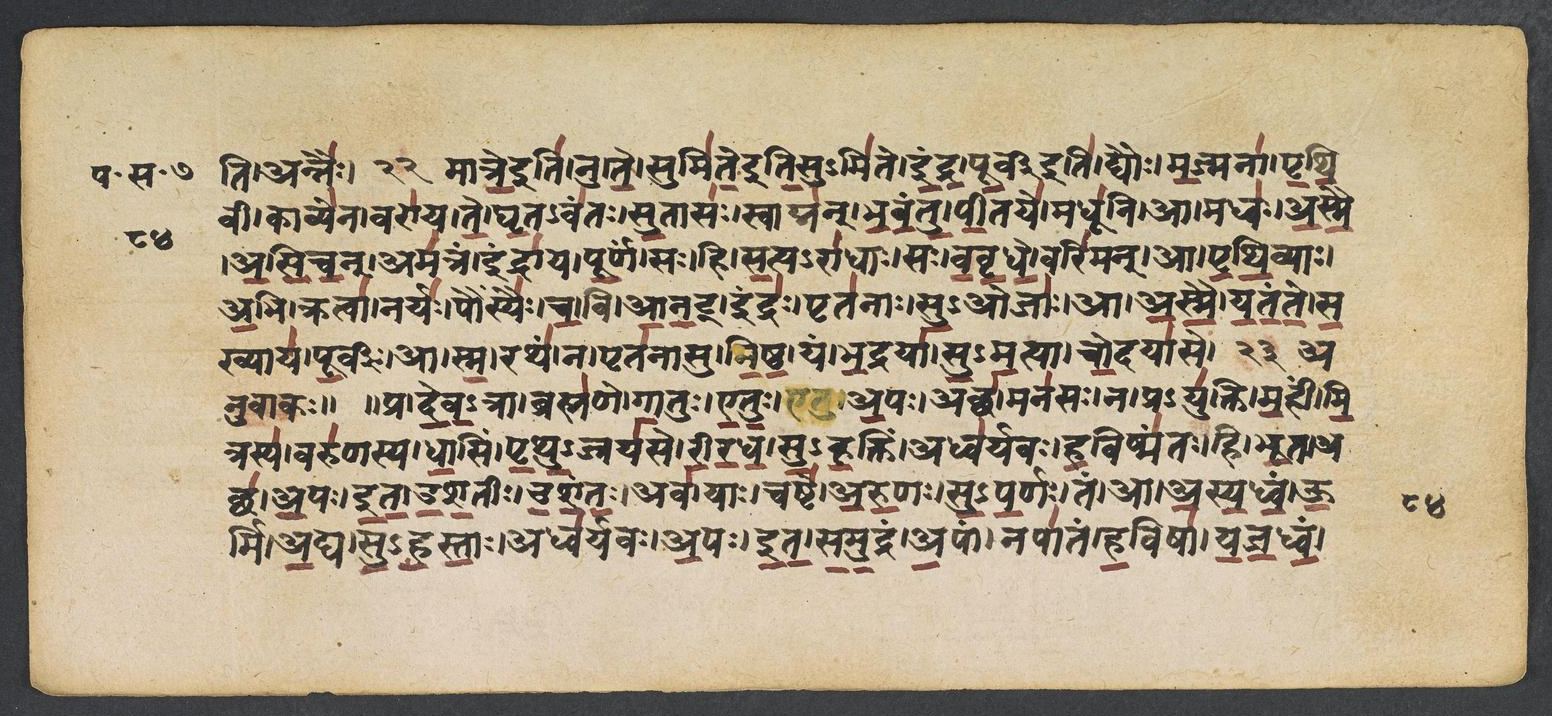
Where on the image
Penn Ms. Coll. 390 Item 41, fol. 768v (numbered 84v by the scribe) (OPenn image 769, upper leaf). Checked on the image: the Rigveda text on this page begins in RV 10.29.5 ‹-prati-śikṣanti annaiḥ›. The next page with Rigveda text, fol. 769r (numbered 85r by the scribe), begins in RV 10.30.3 ‹saḥ vaḥ dadat ūrmim›. Verses 10.29.5-8 end on this page; 10.29.5 begins on fol. 768r (numbered 84r by the scribe).
5prera̍ya̱ sūro̱ artha̱ṁ na pā̱raṁ ye a̍sya̱ kāma̍ṁ jani̱dhā i̍va̱ gman | gira̍ś ca̱ ye te̍ tuvijāta pū̱rvīr nara̍ indra prati̱śikṣa̱nty annai̍ḥ ||
6mātre̱ nu te̱ sumi̍te indra pū̱rvī dyaur ma̱jmanā̍ pṛthi̱vī kāvye̍na | varā̍ya te ghṛ̱tava̍ntaḥ su̱tāsa̱ḥ svādma̍n bhavantu pī̱taye̱ madhū̍ni ||
7ā madhvo̍ asmā asica̱nn ama̍tra̱m indrā̍ya pū̱rṇaṁ sa hi sa̱tyarā̍dhāḥ | sa vā̍vṛdhe̱ vari̍ma̱nn ā pṛ̍thi̱vyā a̱bhi kratvā̱ narya̱ḥ pauṁsyai̍ś ca ||
8vy ā̍na̱ḻ indra̱ḥ pṛta̍nā̱ḥ svojā̱ āsmai̍ yatante sa̱khyāya̍ pū̱rvīḥ | ā smā̱ ratha̱ṁ na pṛta̍nāsu tiṣṭha̱ yam bha̱drayā̍ suma̱tyā co̱dayā̍se ||
Compare: Padapāṭha (word-by-word text written in the manuscript; Sansknet e-text via GRETIL)
5pra | īraya | sūraḥ | artham | na | pāram | ye | asya | kāmam | janidhāḥ-iva | gman | giraḥ | ca | ye | te | tuvi-jāta | pūrvīḥ | naraḥ | indra | prati-śikṣanti | annaiḥ
6mātreiti | nu | te | sumiteitisu-mite | indra | pūrvī iti | dyauḥ | majmanā | pṛthivī | kāvyena | varāya | te | ghṛta-vantaḥ | sutāsaḥ | svādman | bhavantu | pītaye | madhūni
7ā | madhvaḥ | asmai | asican | amatram | indrāya | pūrṇam | saḥ | hi | satya-rādhāḥ | saḥ | vavṛdhe | variman | ā | pṛthivyāḥ | abhi | kratvā | naryaḥ | paiṃsyaiḥ | ca
8vi | ānaṭ | indraḥ | pṛtanāḥ | su-ojāḥ | ā | asmai | yatante | sakhyāya | pūrvīḥ | ā | sma | ratham | na | pṛtanāsu | tiṣṭha | yam | bhadrayā | su-matyā | codayāse
5Speed happily those, as Sûrya ends his journey, who meet his wish as bridegrooms meet their spouses; Men who present, O Indra strong by nature, with food the many songs that tell thy praises.
6Thine are two measures, Indra, wide-wellmeted, heaven for thy majesty, earth for thy wisdom. Here for thy choice are Somas mixed with butter: may the sweet meath be pleasant for thy drinking.
7They have poured out a bowl to him, to Indra, full of sweet juice, for faithful is his bounty. O'er earth's expanse hath he grown great by wisdom, the Friend of man, and by heroic exploits.
8Indra hath conquered in his wars, the Mighty: men strive in multitudes to win his friendship. Ascend thy chariot as it were in battle, which thou shalt drive to us with gracious favour.
Notes
- Sanskrit: Aufrecht's edition (1877) with the Vedic accents, as entered by van Nooten and Holland (GRETIL).
- English: Ralph T. H. Griffith, The Hymns of the Rigveda (1889-1892; 2nd ed. 1896-1897), from the VedaWeb digital text; OCR slips in that text were corrected against the printed 2nd edition (data/sources/rigveda/griffith_errata.json).
- Padapāṭha (edition text): Sansknet e-text via GRETIL (CC BY-NC-SA 4.0).
Cite
Sources
- Source: Penn Ms. Coll. 390 Item 41 (undated (catalogued with Penn's 18th-19th c. Vedic manuscripts)), OPenn, Public Domain Mark + Aufrecht's accented text (GRETIL) + Griffith's English (VedaWeb) (holding institution)
- Critical edition: Aufrecht (1877), accented e-text via GRETIL
← previous · → next · v cycle view · l back to library