Rigveda 10.30: To the waters
Introduction
Rigveda 10.30 is a hymn of 15 verses addressed to the waters. It stands in book (maṇḍala) 10, the last and latest book. The Rigveda is the oldest collection of Sanskrit hymns, composed in the second half of the second millennium BCE and handed down orally for many centuries before it was written down.
The manuscript shown is Penn Ms. Coll. 390 Item 41 (University of Pennsylvania), an undated paper manuscript of the padapāṭha (the word-by-word recitation text, in which every word is written separately and compounds are split) of the whole Ṛgveda in Devanāgarī, 884 leaves in fascicles, 7-9 lines to the page, accents in red; this hymn stands on fol. 768v-770r. Each section below gives the verses that end on one page; the page boundaries were read on the images (the opening words of every page), not counted out. Where the manuscript is a padapāṭha (the word-by-word recitation text), the section shows Aufrecht's continuous (saṃhitā) text first and, as the edition text, the padapāṭha of the same verses, which is the form written on the page.
How was this verified? (Provenance)
Where on the image
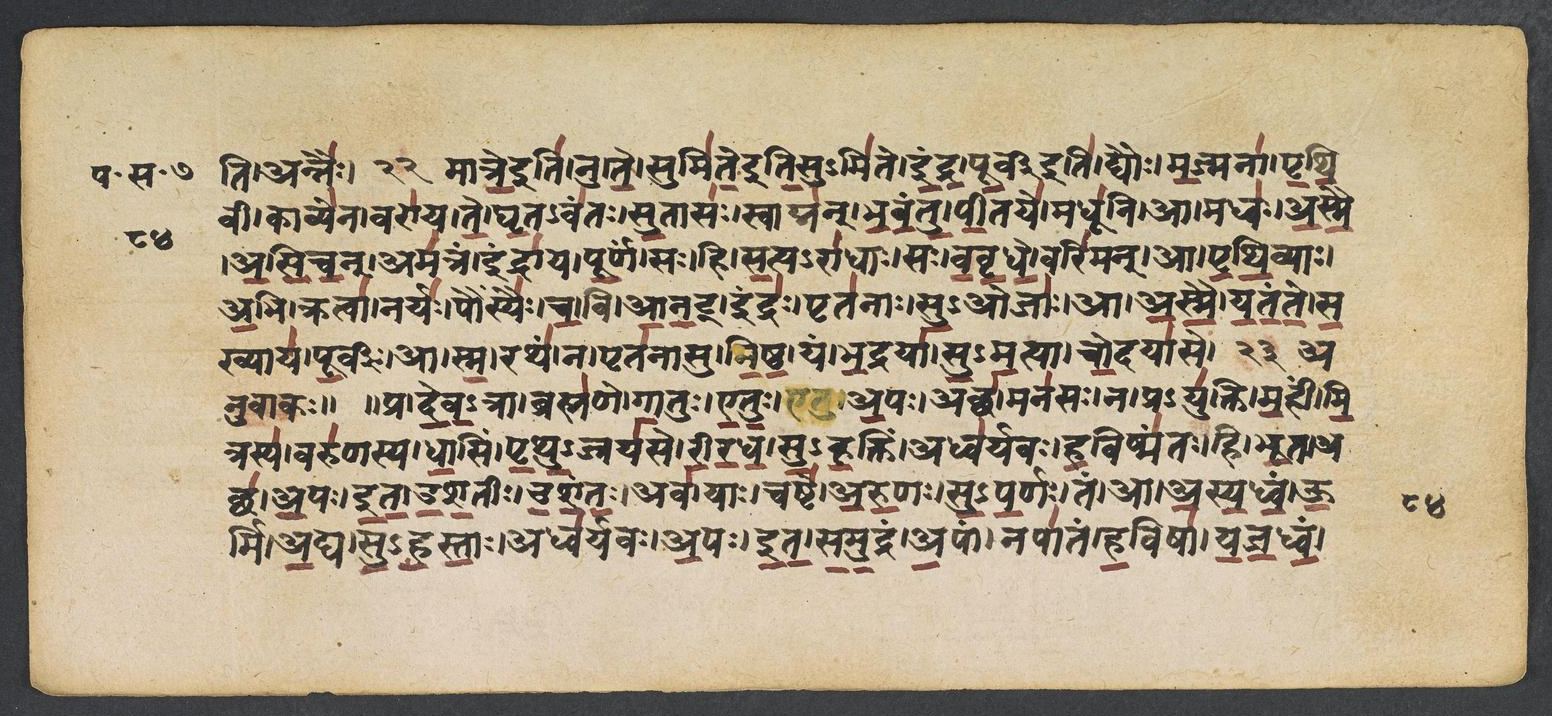
Penn Ms. Coll. 390 Item 41, fol. 768v (numbered 84v by the scribe) (OPenn image 769, upper leaf). Checked on the image: the Rigveda text on this page begins in RV 10.29.5 ‹-prati-śikṣanti annaiḥ›. The next page with Rigveda text, fol. 769r (numbered 85r by the scribe), begins in RV 10.30.3 ‹saḥ vaḥ dadat ūrmim›. Verses 10.30.1-2 end on this page.
1pra de̍va̱trā brahma̍ṇe gā̱tur e̍tv a̱po acchā̱ mana̍so̱ na prayu̍kti | ma̱hīm mi̱trasya̱ varu̍ṇasya dhā̱sim pṛ̍thu̱jraya̍se rīradhā suvṛ̱ktim ||
2adhva̍ryavo ha̱viṣma̍nto̱ hi bhū̱tācchā̱pa i̍tośa̱tīr u̍śantaḥ | ava̱ yāś caṣṭe̍ aru̱ṇaḥ su̍pa̱rṇas tam āsya̍dhvam ū̱rmim a̱dyā su̍hastāḥ ||
Compare: Padapāṭha (word-by-word text written in the manuscript; Sansknet e-text via GRETIL)
1pra | deva-trā | brahmaṇe | gātuḥ | etu | apaḥ | accha | manasaḥ | na | pra-yukti | mahīm | mitrasya | varuṇasya | dhāsim | pṛthu-jrayase | rīradha | su-vṛktim
2adhvaryavaḥ | haviṣmantaḥ | hi | bhūta | accha | apaḥ | ita | uśatīḥ | uśantaḥ | ava | yāḥ | caṣte | aruṇaḥ | su-parṇaḥ | tam | ā | asyadhvam | ūrmim | adya | su-hastāḥ
1As 'twere with swift exertion of the spirit, let the priest speed to the celestial Waters, The glorious food of Varuṇa and Mitra. To him who spreadeth far this laud I offer.
2Adhvaryus, he ye ready with oblations,, and come with longing to the longing Waters, Down on which looks the. purple-tinted Eagle. Pour ye that flowing wave this day, deft-handed.
Where on the image
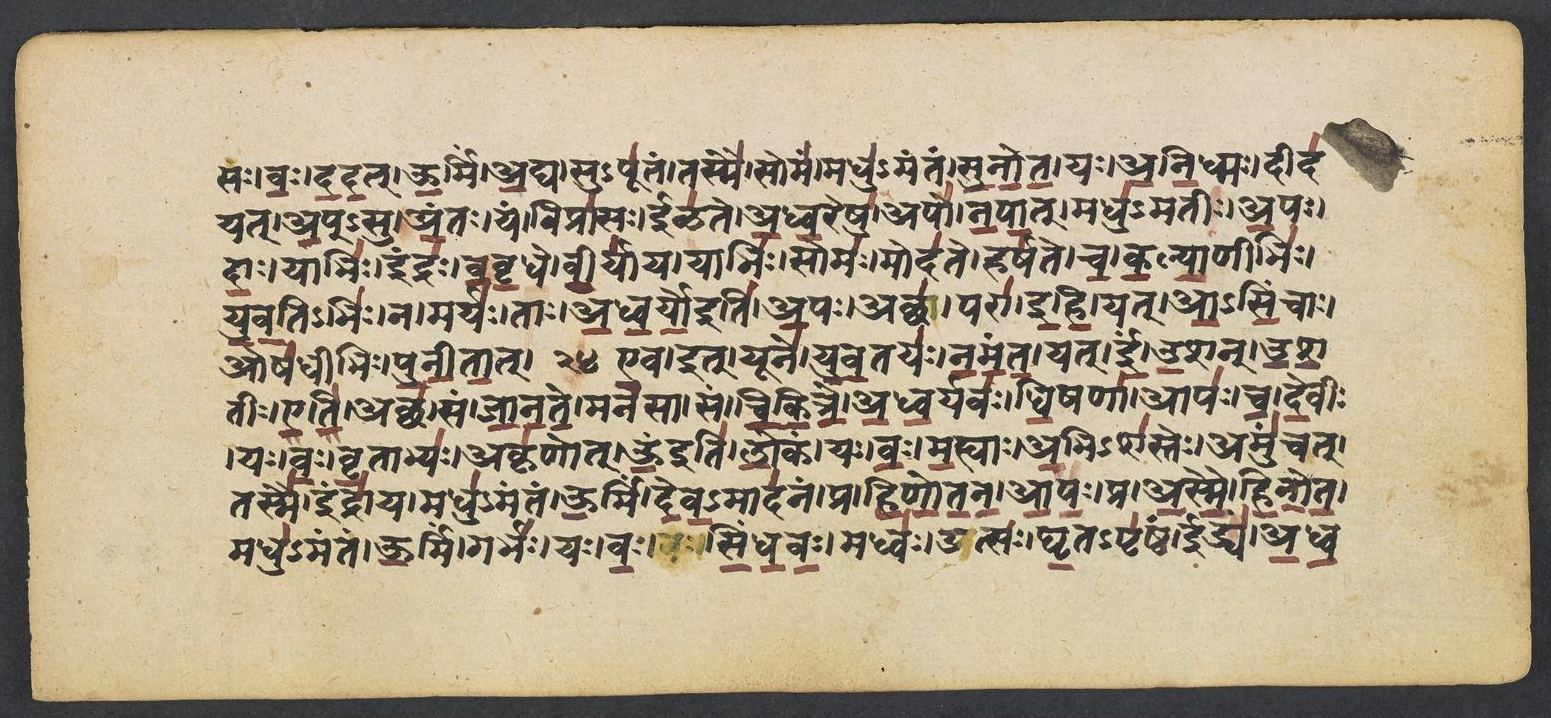
Penn Ms. Coll. 390 Item 41, fol. 769r (numbered 85r by the scribe) (OPenn image 769, lower leaf). Checked on the image: the Rigveda text on this page begins in RV 10.30.3 ‹saḥ vaḥ dadat ūrmim›. The next page with Rigveda text, fol. 769v (numbered 85v by the scribe), begins in RV 10.30.8 ‹-adhvareṣu āpaḥ revatīḥ śṛṇuta›. Verses 10.30.3-7 end on this page; 10.30.3 begins on fol. 768v (numbered 84v by the scribe).
3adhva̍ryavo̱ 'pa i̍tā samu̱dram a̱pāṁ napā̍taṁ ha̱viṣā̍ yajadhvam | sa vo̍ dadad ū̱rmim a̱dyā supū̍ta̱ṁ tasmai̱ soma̱m madhu̍mantaṁ sunota ||
4yo a̍ni̱dhmo dīda̍yad a̱psv a1̱̍ntar yaṁ viprā̍sa̱ īḻa̍te adhva̱reṣu̍ | apā̍ṁ napā̱n madhu̍matīr a̱po dā̱ yābhi̱r indro̍ vāvṛ̱dhe vī̱ryā̍ya ||
5yābhi̱ḥ somo̱ moda̍te̱ harṣa̍te ca kalyā̱ṇībhi̍r yuva̱tibhi̱r na marya̍ḥ | tā a̍dhvaryo a̱po acchā̱ pare̍hi̱ yad ā̍si̱ñcā oṣa̍dhībhiḥ punītāt ||
6e̱ved yūne̍ yuva̱tayo̍ namanta̱ yad ī̍m u̱śann u̍śa̱tīr ety accha̍ | saṁ jā̍nate̱ mana̍sā̱ saṁ ci̍kitre 'dhva̱ryavo̍ dhi̱ṣaṇāpa̍ś ca de̱vīḥ ||
7yo vo̍ vṛ̱tābhyo̱ akṛ̍ṇod u lo̱kaṁ yo vo̍ ma̱hyā a̱bhiśa̍ste̱r amu̍ñcat | tasmā̱ indrā̍ya̱ madhu̍mantam ū̱rmiṁ de̍va̱māda̍na̱m pra hi̍ṇotanāpaḥ ||
Compare: Padapāṭha (word-by-word text written in the manuscript; Sansknet e-text via GRETIL)
3adhvaryavaḥ | apaḥ | ita | samudram | apām | napātam | haviṣā | yajadhvam | saḥ | vaḥ | dadat | ūrmim | adya | su-pūtam | tasmai | somam | madhu-mantam | sunota
4yaḥ | anidhmaḥ | dīdayat | ap-su | antaḥ | yam | viprāsaḥ | īḷate | adhvareṣu | apām | napāt | madhu-matīḥ | apaḥ | dāḥ | yābhiḥ | indraḥ | vavṛdhe | vīryāya
5yābhiḥ | somaḥ | modate | harṣate | ca | kalyāṇībhiḥ | yuvati-bhiḥ | na | maryaḥ | tāḥ | adhvaryo iti | apaḥ | accha | parā | ihi | yat | āsiñcāḥ | oṣadhībhiḥ | punītāt
6eva | it | yūne | yuvatayaḥ | namanta | yat | īm | uśan | uṣatīḥ | eti | accha | sam | jānate | manasā | sam | cikitre | adhvaryavaḥ | dhiṣaṇā | āpaḥ | ca | devīḥ
7yaḥ | vaḥ | vṛtābhyaḥ | akṛṇot | oṃ iti | lokam | yaḥ | vaḥ | mahyāḥ | abhi-śasteḥ | amuñcat | tasmai | indrāya | madhu-mantam | ūrmim | deva-mādanam | pra | hiṇotana | āpaḥ
3Go to the reservoir, O ye Adhvaryus worship the Waters' Child with your oblations. A consecrated wave he now will give you, so press for him the Soma rich in sweetness.
4He who shines bright in floods, unfed with fuel, whom sages worship at their sacrifices: Give waters rich in sweets, Child of the Waters, even those which gave heroic might to Indra:
5Those in which Soma joys and is delighted, as a young man with fair and pleasant damsels. Go thou unto those Waters, O Adhvaryu, and purify with herbs what thou infusest.
6So maidens bow before the youthful gallant who comes with love to them who yearn to meet him. In heart accordant and in wish one-minded are the Adhvaryus and the heavenly Waters.
7He who made room for you when fast imprisoned, who freed you from the mighty imprecation,– Even to that Indra send the meath-rich current, the wave that gratifies the Gods, O Waters.
Where on the image
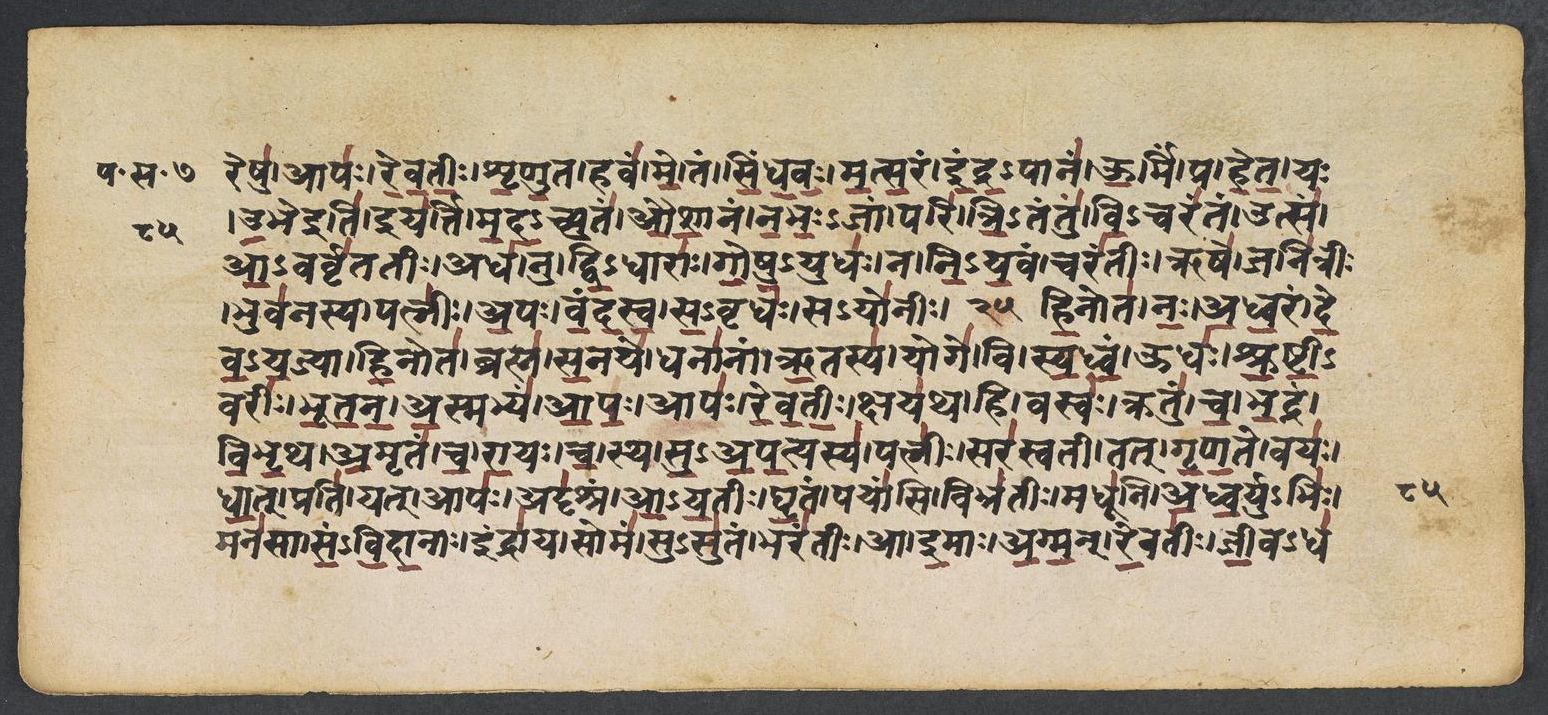
Penn Ms. Coll. 390 Item 41, fol. 769v (numbered 85v by the scribe) (OPenn image 770, upper leaf). Checked on the image: the Rigveda text on this page begins in RV 10.30.8 ‹-adhvareṣu āpaḥ revatīḥ śṛṇuta›. The next page with Rigveda text, fol. 770r (numbered 86r by the scribe), begins in RV 10.30.14 ‹-jīva-dhanyāḥ adhvaryavaḥ sādayata sakhāyaḥ›. Verses 10.30.8-13 end on this page; 10.30.8 begins on fol. 769r (numbered 85r by the scribe).
8prāsmai̍ hinota̱ madhu̍mantam ū̱rmiṁ garbho̱ yo va̍ḥ sindhavo̱ madhva̱ utsa̍ḥ | ghṛ̱tapṛ̍ṣṭha̱m īḍya̍m adhva̱reṣv āpo̍ revatīḥ śṛṇu̱tā hava̍m me ||
9taṁ si̍ndhavo matsa̱ram i̍ndra̱pāna̍m ū̱rmim pra he̍ta̱ ya u̱bhe iya̍rti | ma̱da̱cyuta̍m auśā̱naṁ na̍bho̱jām pari̍ tri̱tantu̍ṁ vi̱cara̍nta̱m utsa̍m ||
10ā̱varvṛ̍tatī̱r adha̱ nu dvi̱dhārā̍ goṣu̱yudho̱ na ni̍ya̱vaṁ cara̍ntīḥ | ṛṣe̱ jani̍trī̱r bhuva̍nasya̱ patnī̍r a̱po va̍ndasva sa̱vṛdha̱ḥ sayo̍nīḥ ||
11hi̱notā̍ no adhva̱raṁ de̍vaya̱jyā hi̱nota̱ brahma̍ sa̱naye̱ dhanā̍nām | ṛ̱tasya̱ yoge̱ vi ṣya̍dhva̱m ūdha̍ḥ śruṣṭī̱varī̍r bhūtanā̱smabhya̍m āpaḥ ||
12āpo̍ revatī̱ḥ kṣaya̍thā̱ hi vasva̱ḥ kratu̍ṁ ca bha̱dram bi̍bhṛ̱thāmṛta̍ṁ ca | rā̱yaś ca̱ stha sva̍pa̱tyasya̱ patnī̱ḥ sara̍svatī̱ tad gṛ̍ṇa̱te vayo̍ dhāt ||
13prati̱ yad āpo̱ adṛ̍śram āya̱tīr ghṛ̱tam payā̍ṁsi̱ bibhra̍tī̱r madhū̍ni | a̱dhva̱ryubhi̱r mana̍sā saṁvidā̱nā indrā̍ya̱ soma̱ṁ suṣu̍ta̱m bhara̍ntīḥ ||
Compare: Padapāṭha (word-by-word text written in the manuscript; Sansknet e-text via GRETIL)
8pra | asmai | hinota | madhu-mantam | ūrmim | garbhaḥ | yaḥ | vaḥ | sindhavaḥ | madhvaḥ | utsaḥ | ghṛta-pṛṣṭham | īḍyam | adhvareṣu | āpaḥ | revatīḥ | śṛṇuta | havam | me
9tam | sindhavaḥ | matsaram | indra-pānam | ūrmim | pra | heta | yaḥ | ubhe iti | iyarti | mada-cyutam | auśānam | nabhaḥ-jām | pari | tri-tantum | vi-carantam | utsam
10āvarvṛtatīḥ | adha | nu | dvi-dhārāḥ | goṣu-yudhaḥ | na | ni-yavam | carantīḥ | ṛṣe | janitrīḥ | bhuvanasya | patnīḥ | apaḥ | vandasva | sa-vṛdhaḥ | sa-yonīḥ
11hinota | naḥ | adhvaram | deva-yajyā | hinota | brahma | sanaye | dhanānām | ṛtasya | yoge | vi | syadhvam | ūdhaḥ | śruṣṭī-varīḥ | bhūtana | asmabhyam | āpaḥ
12āpaḥ | revatīḥ | kṣayatha | hi | vasvaḥ | kratum | ca | bhadram | bibhṛthām | ṛtam | ca | rāyaḥ | ca | stha | su-apatyasya | patnīḥ | sarasvatī | tat | gṛṇate | vayaḥ | dhāt
13prati | yat | āpaḥ | adṛśram | āyatīḥ | ghṛtam | payāṃsi | bibhratīḥ | madhūni | adhvaryu-bhiḥ | manasā | sam-vidānāḥ | indrāya | somam | su-sutam | bharantīḥ
8Send forth to him the meath-rich wave, O Rivers, which is your offspring and a well of sweetness, Oil-balmed, to be implored at sacrifices. Ye wealthy Waters, hear mine invocation.
9Send forth the rapture-giving wave, O Rivers, which Indra drinks, which sets the Twain in motion; The well that springeth from the clouds, desirous, that wandereth triple-formed, distilling transport.
10These winding Streams which with their double current, like cattle-raiders, seek the lower pastures,– Waters which dwell together, thrive together, Queens, Mothers of the world, these, R̥ishi, honour.
11Send forth our sacrifice with holy worship send forth the hymn and prayer for gain of riches. For need of sacrifice disclose the udder. Give gracious hearing to our call, O Waters.
12For, wealthy Waters, ye control all treasures: ye bring auspicious intellect and Amrit. Ye are the Queens of independent riches Sarasvatî give full life to the singer!
13When I behold the Waters coming hither, carrying with them milk and mcath and butter, Bearing the well-pressed Soma juice to Indra, they harmonize in spirit with Adhvaryus.
Where on the image
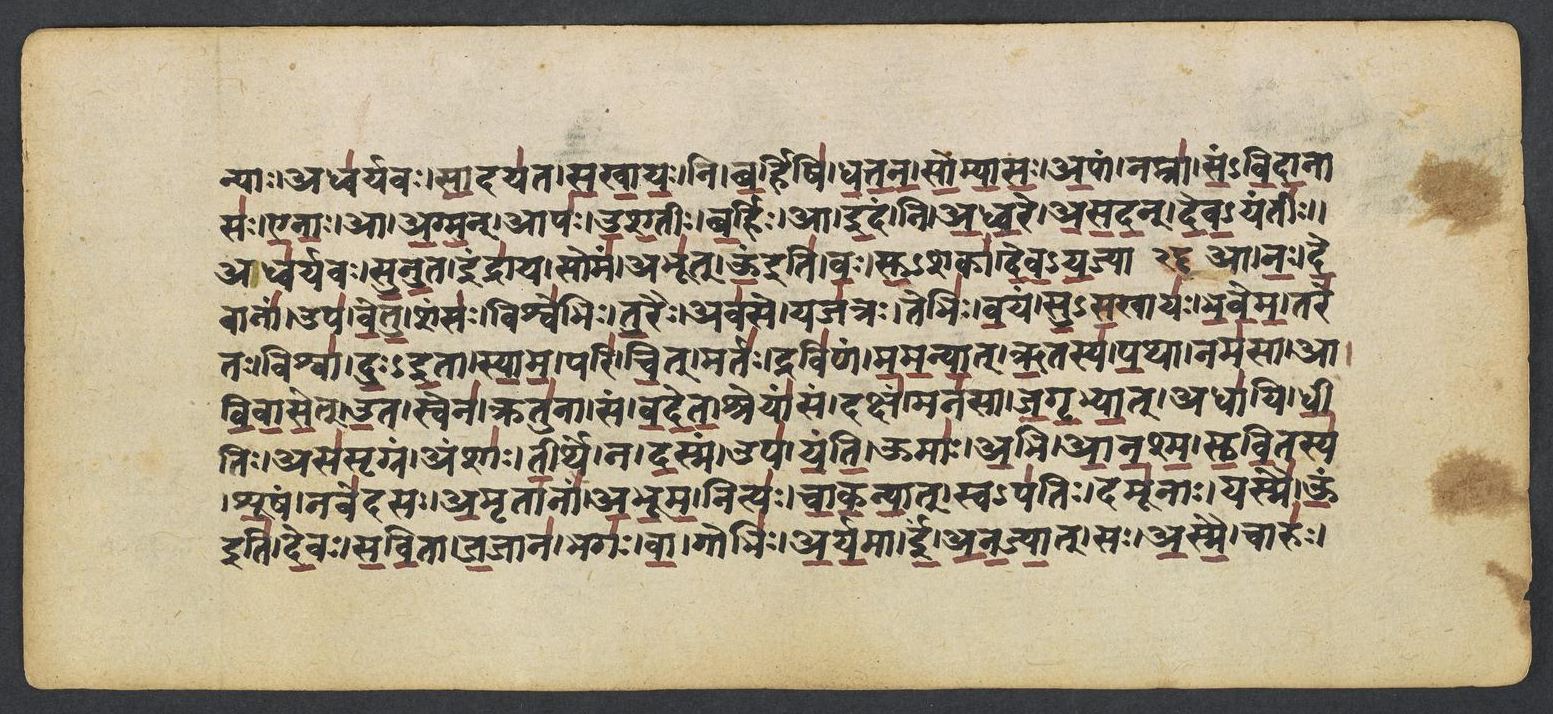
Penn Ms. Coll. 390 Item 41, fol. 770r (numbered 86r by the scribe) (OPenn image 770, lower leaf). Checked on the image: the Rigveda text on this page begins in RV 10.30.14 ‹-jīva-dhanyāḥ adhvaryavaḥ sādayata sakhāyaḥ›. The next page with Rigveda text, fol. 770v (numbered 86v by the scribe), begins in RV 10.31.4 ‹chadayat uta syāt›. Verses 10.30.14-15 end on this page; 10.30.14 begins on fol. 769v (numbered 85v by the scribe).
14emā a̍gman re̱vatī̍r jī̱vadha̍nyā̱ adhva̍ryavaḥ sā̱daya̍tā sakhāyaḥ | ni ba̱rhiṣi̍ dhattana somyāso̱ 'pāṁ naptrā̍ saṁvidā̱nāsa̍ enāḥ ||
15āgma̱nn āpa̍ uśa̱tīr ba̱rhir edaṁ ny a̍dhva̱re a̍sadan deva̱yantī̍ḥ | adhva̍ryavaḥ sunu̱tendrā̍ya̱ soma̱m abhū̍d u vaḥ su̱śakā̍ devaya̱jyā ||
Compare: Padapāṭha (word-by-word text written in the manuscript; Sansknet e-text via GRETIL)
14ā | imāḥ | agman | revatīḥ | jīva-dhanyāḥ | adhvaryavaḥ | sādayata | sakhāyaḥ | ni | barhiṣi | dhattana | somyāsaḥ | apām | naptrā | sam-vidānāsaḥ | enāḥ
15ā | agman | āpaḥ | uśatīḥ | barhiḥ | ā | idam | ni | adhvare | asadan | deva-yantīḥ | adhvaryavaḥ | sunuta | indrāya | somam | abhūt | oṃ iti | vaḥ | su-śakā | deva-yajyā
14Rich, they are come with wealth for living beings, O friends, Adhvaryus, seat them in their places. Seat them on holy grass, ye Soma-bringers in harmony with the Offspring of the Waters.
15Now to this grass are come the longing Waters: the Pious Ones are seated at our worship. Adhvaryus, press the Soma juice for Indra so will the service of the Gods be easy.
Notes
- Sanskrit: Aufrecht's edition (1877) with the Vedic accents, as entered by van Nooten and Holland (GRETIL).
- English: Ralph T. H. Griffith, The Hymns of the Rigveda (1889-1892; 2nd ed. 1896-1897), from the VedaWeb digital text; OCR slips in that text were corrected against the printed 2nd edition (data/sources/rigveda/griffith_errata.json).
- Padapāṭha (edition text): Sansknet e-text via GRETIL (CC BY-NC-SA 4.0).
Cite
Sources
- Source: Penn Ms. Coll. 390 Item 41 (undated (catalogued with Penn's 18th-19th c. Vedic manuscripts)), OPenn, Public Domain Mark + Aufrecht's accented text (GRETIL) + Griffith's English (VedaWeb) (holding institution)
- Critical edition: Aufrecht (1877), accented e-text via GRETIL
← previous · → next · v cycle view · l back to library