Rigveda 10.4: To Agni
Introduction
Rigveda 10.4 is a hymn of 7 verses addressed to Agni. It stands in book (maṇḍala) 10, the last and latest book. The Rigveda is the oldest collection of Sanskrit hymns, composed in the second half of the second millennium BCE and handed down orally for many centuries before it was written down.
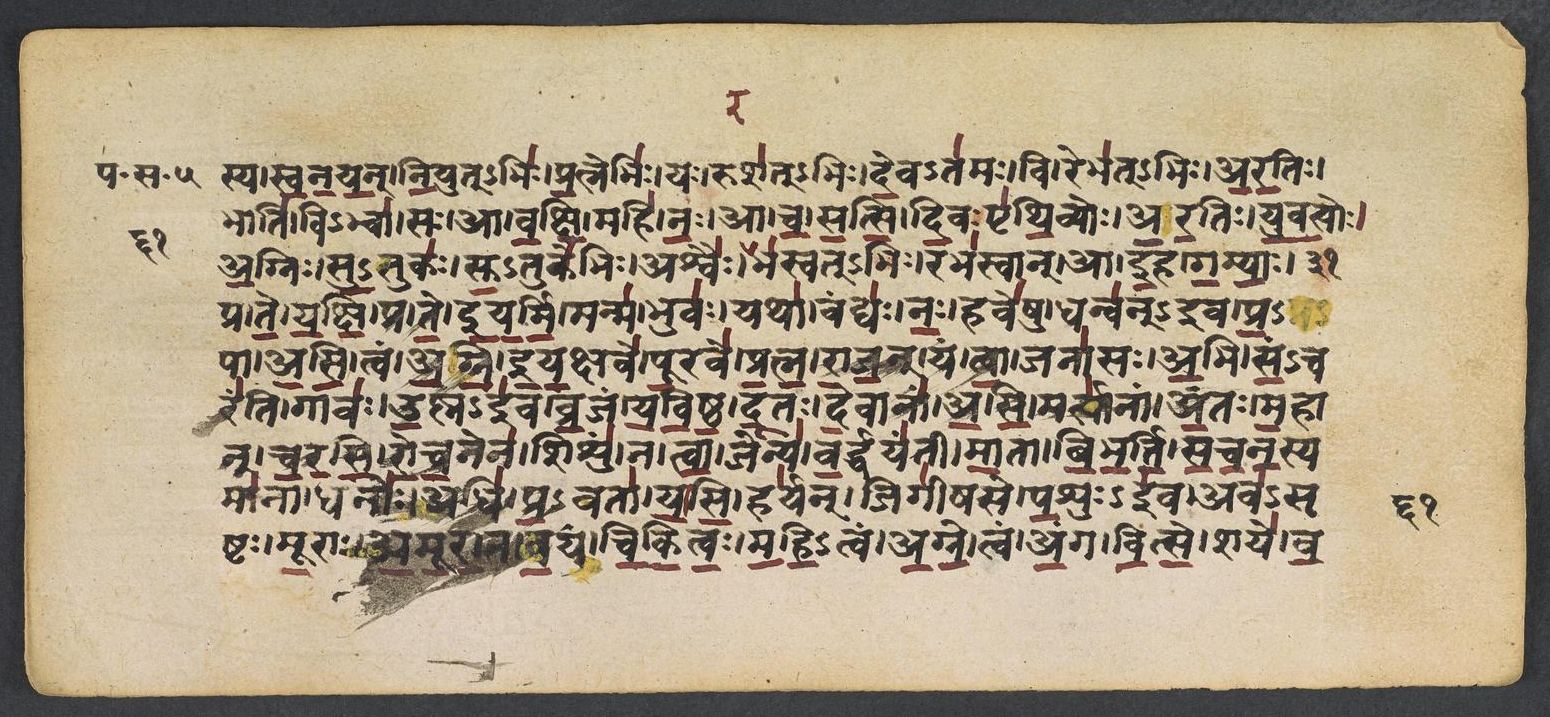
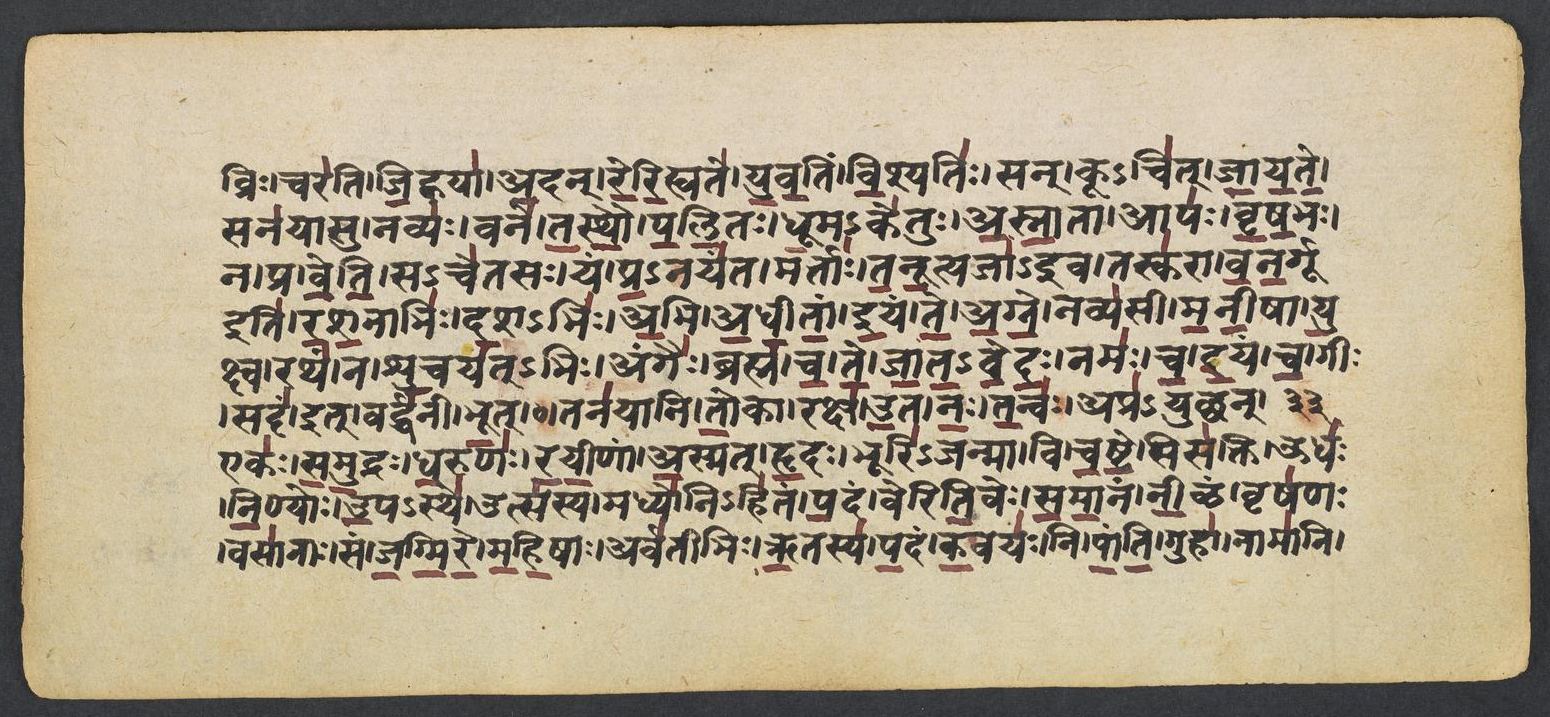
The manuscript shown is Penn Ms. Coll. 390 Item 41 (University of Pennsylvania), an undated paper manuscript of the padapāṭha (the word-by-word recitation text, in which every word is written separately and compounds are split) of the whole Ṛgveda in Devanāgarī, 884 leaves in fascicles, 7-9 lines to the page, accents in red; this hymn stands on fol. 744v-745r. Each section below gives the verses that end on one page; the page boundaries were read on the images (the opening words of every page), not counted out. Where the manuscript is a padapāṭha (the word-by-word recitation text), the section shows Aufrecht's continuous (saṃhitā) text first and, as the edition text, the padapāṭha of the same verses, which is the form written on the page.
How was this verified? (Provenance)
Where on the image
Penn Ms. Coll. 390 Item 41, fol. 744v (numbered 61v by the scribe) (OPenn image 745, upper leaf). Checked on the image: the Rigveda text on this page begins in RV 10.3.6 ‹-jehamānasya svanayan niyut-bhiḥ pratnebhiḥ›. The next page with Rigveda text, fol. 745r (numbered 62r by the scribe), begins in RV 10.4.4 ‹-vavriḥ carati jihvayā adan›. Verses 10.4.1-3 end on this page.
1pra te̍ yakṣi̱ pra ta̍ iyarmi̱ manma̱ bhuvo̱ yathā̱ vandyo̍ no̱ have̍ṣu | dhanva̍nn iva pra̱pā a̍si̱ tvam a̍gna iya̱kṣave̍ pū̱rave̍ pratna rājan ||
2yaṁ tvā̱ janā̍so a̱bhi sa̱ṁcara̍nti̱ gāva̍ u̱ṣṇam i̍va vra̱jaṁ ya̍viṣṭha | dū̱to de̱vānā̍m asi̱ martyā̍nām a̱ntar ma̱hām̐ś ca̍rasi roca̱nena̍ ||
3śiśu̱ṁ na tvā̱ jenya̍ṁ va̱rdhaya̍ntī mā̱tā bi̍bharti sacana̱syamā̍nā | dhano̱r adhi̍ pra̱vatā̍ yāsi̱ harya̱ñ jigī̍ṣase pa̱śur i̱vāva̍sṛṣṭaḥ ||
Compare: Padapāṭha (word-by-word text written in the manuscript; Sansknet e-text via GRETIL)
1pra | te | yakṣi | pra | te | iyarmi | manma | bhuvaḥ | yathā | vandyaḥ | naḥ | haveṣu | dhanvan-iva | pra-pā | asi | tvam | agne | iyakṣave | pūrave | pratna | rājan
2yam | tvā | janāsaḥ | abhi | sam-caranti | gāvaḥ | uṣṇam-iva | vrajam | yaviṣṭha | dūtaḥ | devānām | asi | martyānām | antaḥ | mahān | carasi | rocanena
3śiśum | na | tvā | jenyam | vardhayantī | mātā | bibharti | sacanasyamānā | dhanoḥ | adhi | pra-vatā | yāsi | haryam | jagīṣase | paśuḥ-iva | ava-sṛṣṭaḥ
1To thee will send praise and bring oblation, as thou hast merited lauds when we invoked thee. A fountain in the desert art thou, Agni, O Ancient King, to man who fain would worship,
2Thou unto whom resort the gathered people, as the kine seek the warm stall, O Most Youthful. Thou art the messenger of Gods and mortals, and goest glorious with thy light between them.
3Making thee grow as 'twere some noble infant, thy Mother nurtures thee with sweet affection. Over the desert slopes thou passest longing, and seekest, like some beast set free, thy fodder.
Where on the image
Penn Ms. Coll. 390 Item 41, fol. 745r (numbered 62r by the scribe) (OPenn image 745, lower leaf). Checked on the image: the Rigveda text on this page begins in RV 10.4.4 ‹-vavriḥ carati jihvayā adan›. The next page with Rigveda text, fol. 745v (numbered 62v by the scribe), begins in RV 10.5.2 ‹dadhire parāṇi›. Verses 10.4.4-7 end on this page; 10.4.4 begins on fol. 744v (numbered 61v by the scribe).
4mū̱rā a̍mūra̱ na va̱yaṁ ci̍kitvo mahi̱tvam a̍gne̱ tvam a̱ṅga vi̍tse | śaye̍ va̱vriś cara̍ti ji̱hvayā̱dan re̍ri̱hyate̍ yuva̱tiṁ vi̱śpati̱ḥ san ||
5kūci̍j jāyate̱ sana̍yāsu̱ navyo̱ vane̍ tasthau pali̱to dhū̱make̍tuḥ | a̱snā̱tāpo̍ vṛṣa̱bho na pra ve̍ti̱ sace̍taso̱ yam pra̱ṇaya̍nta̱ martā̍ḥ ||
6ta̱nū̱tyaje̍va̱ taska̍rā vana̱rgū ra̍śa̱nābhi̍r da̱śabhi̍r a̱bhy a̍dhītām | i̱yaṁ te̍ agne̱ navya̍sī manī̱ṣā yu̱kṣvā ratha̱ṁ na śu̱caya̍dbhi̱r aṅgai̍ḥ ||
7brahma̍ ca te jātavedo̱ nama̍ś ce̱yaṁ ca̱ gīḥ sada̱m id vardha̍nī bhūt | rakṣā̍ ṇo agne̱ tana̍yāni to̱kā rakṣo̱ta na̍s ta̱nvo̱3̱̍ apra̍yucchan ||
Compare: Padapāṭha (word-by-word text written in the manuscript; Sansknet e-text via GRETIL)
4mūrāḥ | amūra | na | vayam | cikitvaḥ | mahi-tvam | agne | tvam | aṅga | vitse | śaye | vavriḥ | carati | jihvayā | adan | rerihyate | yuvatim | viśpatiḥ | san
5kū-cit | jāyate | sanayāsu | navyaḥ | vane | tasthau | palitaḥ | dhūma-ketuḥ | asnātā | āpaḥ | vṛṣabhaḥ | na | pra | veti | sa-cetasaḥ | yam | pra-nayanta | matārḥ
6tanūtyajāiva | taskarā | vanargū iti | raśanābhiḥ | daśa-bhiḥ | abhi | adhītām | iyam | te | agne | navyasī | manīṣā | yukṣva | ratham | na | śucayat-bhiḥ | aṅgaiḥ
7brahma | ca | te | jāta-vedaḥ | namaḥ | ca | iyam | ca | gīḥ | sadam | it | vardhanī | bhūt | rakṣa | naḥ | agne | tanayāni | tokā | rakṣa | uta | naḥ | tanvaḥ | apra-yucchan
4Foolish are we, O Wise and free from error: verily, Agni, thou dost know thy grandeur. There lies the form: he moves and licks, and swallows, and, as House-Lord, kisses the Youthful Maiden.
5He rises ever fresh in ancient fuel: smoke-bannered, gray, he makes the wood his dwelling. No swimmer, Steer, he presses through the waters, and to his place accordant mortals bear him.
6Like thieves who risk their lives and haunt the forest, the twain with their ten girdles have secured him. This is a new hymn meant for thee, O Agni: yoke as it were thy car with parts that glitter.
7Homage and prayer are thine, O Jâtavedas, and this my song shall evermore exalt thee. Agni, protect our children and descendants, and guard with ever-watcliful care our bodies.
Notes
- Sanskrit: Aufrecht's edition (1877) with the Vedic accents, as entered by van Nooten and Holland (GRETIL).
- English: Ralph T. H. Griffith, The Hymns of the Rigveda (1889-1892; 2nd ed. 1896-1897), from the VedaWeb digital text; OCR slips in that text were corrected against the printed 2nd edition (data/sources/rigveda/griffith_errata.json).
- Padapāṭha (edition text): Sansknet e-text via GRETIL (CC BY-NC-SA 4.0).
Cite
Sources
- Source: Penn Ms. Coll. 390 Item 41 (undated (catalogued with Penn's 18th-19th c. Vedic manuscripts)), OPenn, Public Domain Mark + Aufrecht's accented text (GRETIL) + Griffith's English (VedaWeb) (holding institution)
- Critical edition: Aufrecht (1877), accented e-text via GRETIL
← previous · → next · v cycle view · l back to library