Rigveda 10.31: To all the gods
Introduction
Rigveda 10.31 is a hymn of 11 verses addressed to all the gods. It stands in book (maṇḍala) 10, the last and latest book. The Rigveda is the oldest collection of Sanskrit hymns, composed in the second half of the second millennium BCE and handed down orally for many centuries before it was written down.
The manuscript shown is Penn Ms. Coll. 390 Item 41 (University of Pennsylvania), an undated paper manuscript of the padapāṭha (the word-by-word recitation text, in which every word is written separately and compounds are split) of the whole Ṛgveda in Devanāgarī, 884 leaves in fascicles, 7-9 lines to the page, accents in red; this hymn stands on fol. 770r-771r. Each section below gives the verses that end on one page; the page boundaries were read on the images (the opening words of every page), not counted out. Where the manuscript is a padapāṭha (the word-by-word recitation text), the section shows Aufrecht's continuous (saṃhitā) text first and, as the edition text, the padapāṭha of the same verses, which is the form written on the page.
How was this verified? (Provenance)
Where on the image
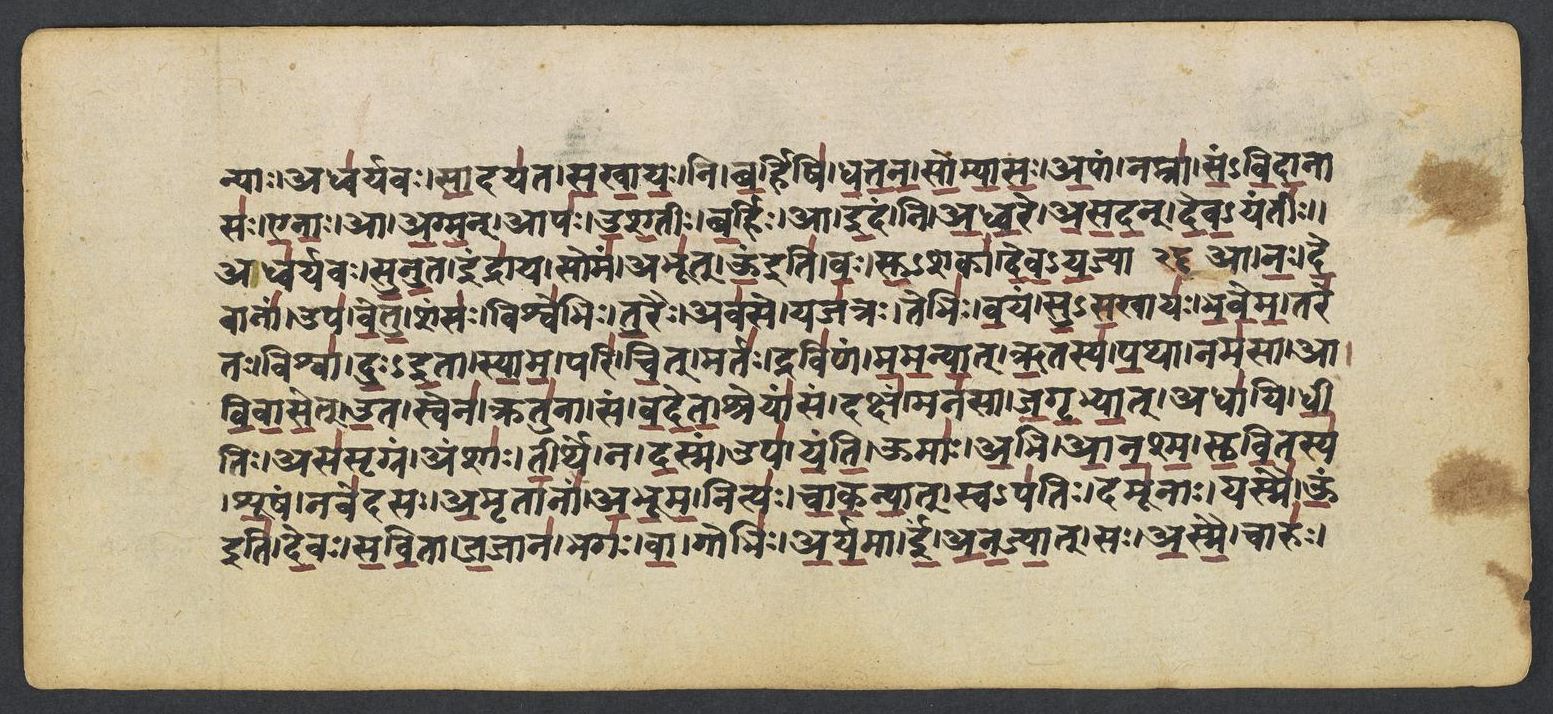
Penn Ms. Coll. 390 Item 41, fol. 770r (numbered 86r by the scribe) (OPenn image 770, lower leaf). Checked on the image: the Rigveda text on this page begins in RV 10.30.14 ‹-jīva-dhanyāḥ adhvaryavaḥ sādayata sakhāyaḥ›. The next page with Rigveda text, fol. 770v (numbered 86v by the scribe), begins in RV 10.31.4 ‹chadayat uta syāt›. Verses 10.31.1-3 end on this page.
1ā no̍ de̱vānā̱m upa̍ vetu̱ śaṁso̱ viśve̍bhis tu̱rair ava̍se̱ yaja̍traḥ | tebhi̍r va̱yaṁ su̍ṣa̱khāyo̍ bhavema̱ tara̍nto̱ viśvā̍ duri̱tā syā̍ma ||
2pari̍ ci̱n marto̱ dravi̍ṇam mamanyād ṛ̱tasya̍ pa̱thā nama̱sā vi̍vāset | u̱ta svena̱ kratu̍nā̱ saṁ va̍deta̱ śreyā̍ṁsa̱ṁ dakṣa̱m mana̍sā jagṛbhyāt ||
3adhā̍yi dhī̱tir asa̍sṛgra̱m aṁśā̍s tī̱rthe na da̱smam upa̍ ya̱nty ūmā̍ḥ | a̱bhy ā̍naśma suvi̱tasya̍ śū̱ṣaṁ nave̍daso a̱mṛtā̍nām abhūma ||
Compare: Padapāṭha (word-by-word text written in the manuscript; Sansknet e-text via GRETIL)
1ā | naḥ | devānām | upa | vetu | śaṃsaḥ | viśvebhiḥ | turaiḥ | avase | yajatraḥ | tebh iḥ | vayam | su-sakhāyaḥ | bhavema | tarantaḥ | viśvā | duḥ-itā | syāma
2pari | cit | martaḥ | draviṇam | mamanyāt | ṛtasya | pathā | namasā | vivāset | uta | svena | kratunā | sam | vadeta | śreyāṃsam | dakṣam | manasā | jagṛbhyāt
3adhāyi | dhītiḥ | asasṛgram | aṃśāḥ | tīrthe | na | dasmam | upa | yanti | ūmāḥ | abhi | ānaśma | suvitasya | śūṣam | navedasaḥ | amṛtānām | abhūma
1MAY benediction of the Gods approach us, holy, to aid us with all rapid succours. Therewith may we be happily befriended, and pass triumphant over all our troubles.
2A man should think on wealth and strive to win it by adoration on the path of Order, Counsel himself with his own mental insight, and grasp still nobler vigour with his spirit.
3The hymn is formed, poured are the allotted portions: as to a ford friends come unto the Wondrous. We have obtained the power of ease and comfort, we haVe become acquainted, with Immortals.
Where on the image
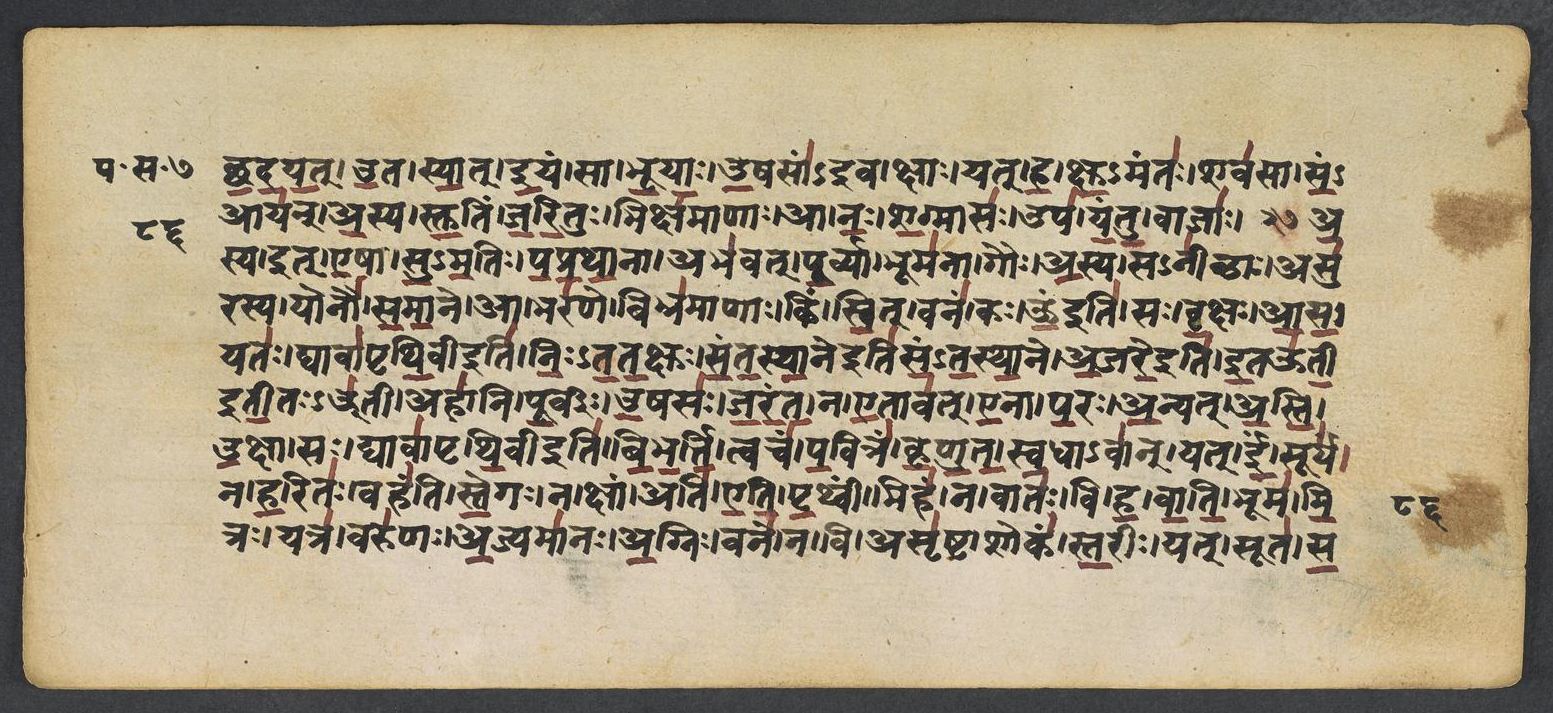
Penn Ms. Coll. 390 Item 41, fol. 770v (numbered 86v by the scribe) (OPenn image 771, upper leaf). Checked on the image: the Rigveda text on this page begins in RV 10.31.4 ‹chadayat uta syāt›. The next page with Rigveda text, fol. 771r (numbered 87r by the scribe), begins in RV 10.31.10 ‹-sadyaḥ ajyamānā vyathiḥ avyathīḥ›. Verses 10.31.4-9 end on this page; 10.31.4 begins on fol. 770r (numbered 86r by the scribe).
4nitya̍ś cākanyā̱t svapa̍ti̱r damū̍nā̱ yasmā̍ u de̱vaḥ sa̍vi̱tā ja̱jāna̍ | bhago̍ vā̱ gobhi̍r arya̱mem a̍najyā̱t so a̍smai̱ cāru̍ś chadayad u̱ta syā̍t ||
5i̱yaṁ sā bhū̍yā u̱ṣasā̍m iva̱ kṣā yad dha̍ kṣu̱manta̱ḥ śava̍sā sa̱māya̍n | a̱sya stu̱tiṁ ja̍ri̱tur bhikṣa̍māṇā̱ ā na̍ḥ śa̱gmāsa̱ upa̍ yantu̱ vājā̍ḥ ||
6a̱syed e̱ṣā su̍ma̱tiḥ pa̍prathā̱nābha̍vat pū̱rvyā bhūma̍nā̱ gauḥ | a̱sya sanī̍ḻā̱ asu̍rasya̱ yonau̍ samā̱na ā bhara̍ṇe̱ bibhra̍māṇāḥ ||
7kiṁ svi̱d vana̱ṁ ka u̱ sa vṛ̱kṣa ā̍sa̱ yato̱ dyāvā̍pṛthi̱vī ni̍ṣṭata̱kṣuḥ | sa̱ṁta̱sthā̱ne a̱jare̍ i̱taū̍tī̱ ahā̍ni pū̱rvīr u̱ṣaso̍ jaranta ||
8naitāva̍d e̱nā pa̱ro a̱nyad a̍sty u̱kṣā sa dyāvā̍pṛthi̱vī bi̍bharti | tvaca̍m pa̱vitra̍ṁ kṛṇuta sva̱dhāvā̱n yad ī̱ṁ sūrya̱ṁ na ha̱rito̱ vaha̍nti ||
9ste̱go na kṣām aty e̍ti pṛ̱thvīm miha̱ṁ na vāto̱ vi ha̍ vāti̱ bhūma̍ | mi̱tro yatra̱ varu̍ṇo a̱jyamā̍no̱ 'gnir vane̱ na vy asṛ̍ṣṭa̱ śoka̍m ||
Compare: Padapāṭha (word-by-word text written in the manuscript; Sansknet e-text via GRETIL)
4nityaḥ | cākanyāt | sva-patiḥ | damūnāḥ | yasmai | oṃ iti | devaḥ | savitā | jajāna | bhagaḥ | vā | gobhiḥ | aryamā | īm | anajyāt | saḥ | asmai | cāruḥ | chadayat | uta | syāt
5iyam | sā | bhūyāḥ | uṣasām-iva | kṣāḥ | yat | ha | kṣu-mantaḥ | śavasā | sam-āyan | asya | stutim | jarituḥ | bhikṣamāṇāḥ | ā | naḥ | śagmāsaḥ | upa | yantu | vājāḥ
6asya | it | eṣā | su-matiḥ | paprathānā | abhavat | pūrvyā | bhūmanā | gauḥ | asya | sa-nīḷāḥ | asurasya | yonau | samāne | ā | bharaṇe | bibhramāṇāḥ
7kim | svit | vanam | kaḥ | oṃ iti | saḥ | vṛkṣaḥ | āsa | yataḥ | dyāvāpṛthivī iti | niḥ-tatakṣuḥ | santasthāne itisam-tasthāne | ajareiti | itaūtī itītaḥ-ūtī | ahāni | pūrvīḥ | uṣasaḥ | jaranta
8na | etāvat | enā | paraḥ | anyat | asti | ukṣā | saḥ | dyāvāpṛthivī iti | bibharti | tvacam | pavitram | kṛṇuta | svadhāvān | yat | īm | sūryam | na | haritaḥ | vahanti
9stegaḥ | na | kṣam | ati | eti | pṛthvīm | miham | na | vātaḥ | vi | ha | vāti | bhūma | mitraḥ | yatra | varuṇaḥ | ajyamānaḥ | agniḥ | vane | na | vi | asṛṣṭa | śokam
4Pleased be the Eternal Lord who loves the household with this man whom God Savitar created. May Bhaga Aryaman grace him with cattle: may he appear to him, and be, delightful.
5Like the Dawns' dwelling-place be this assembly, where in their might men rich in food have gathered. Striving to share the praises of this singer. To us come strengthening and effectual riches!
6This Bull's most gracious far-extended favour existed first of all in full abundance. By his support they are maintained in common who in the Asura's mansion dwell together.
7What was the tree, what wood, in sooth, produced it, from which they fashioned forth the Earth and Heaven? These Twain stand fast and wax not old for ever: these have sung praise to many a day and morning.
8Not only here is this: more is beyond us. He is the Bull, the Heaven's and Earth's supporter. With power divine he makes his skin a filter, when the Bay Coursers bear him on as Sûrya.
9He passes o'er the broad earth like a Stega: he penetrates the world as Wind the mist-cloud. He, balmed with oil, near Varuṇa and Mitra, like Agni in the wood, hath shot forth splendour.
Where on the image
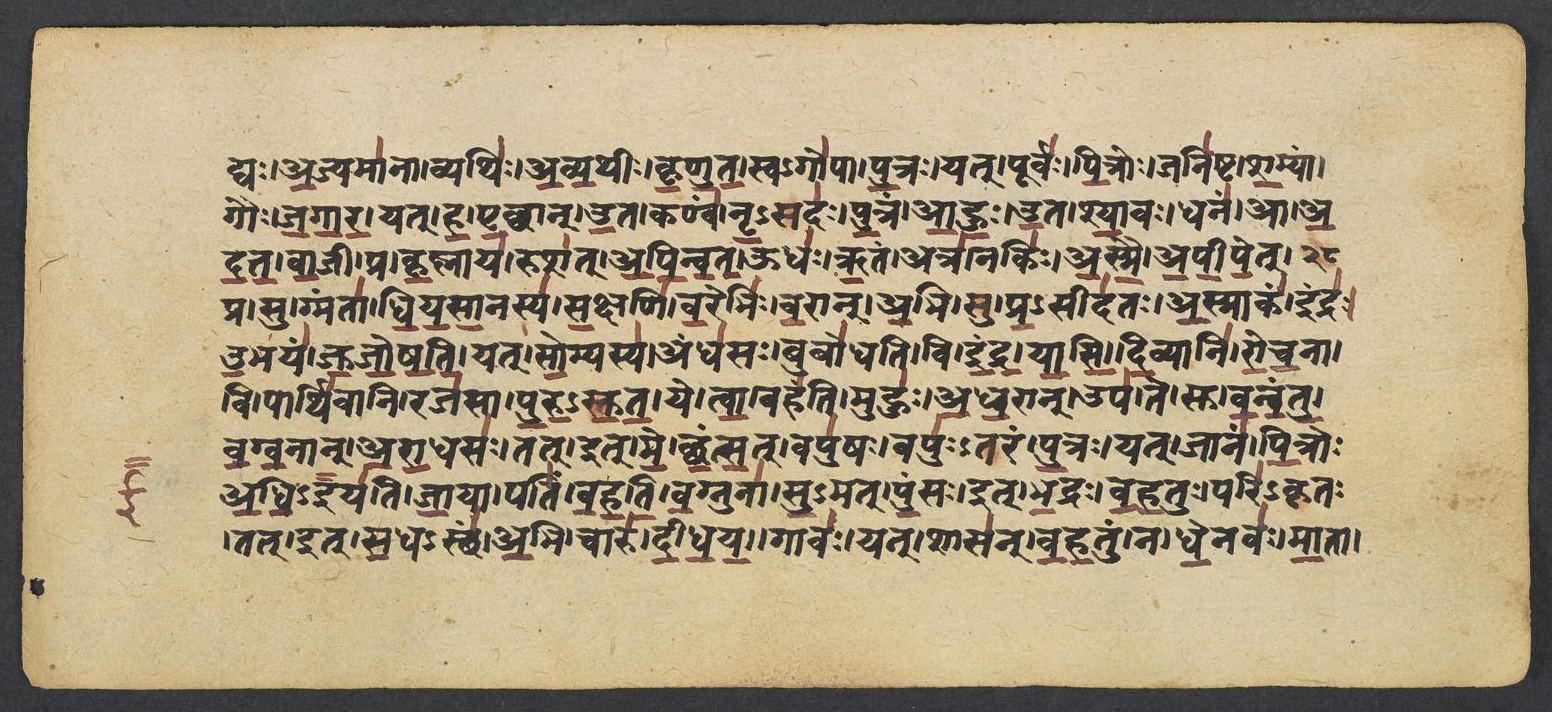
Penn Ms. Coll. 390 Item 41, fol. 771r (numbered 87r by the scribe) (OPenn image 771, lower leaf). Checked on the image: the Rigveda text on this page begins in RV 10.31.10 ‹-sadyaḥ ajyamānā vyathiḥ avyathīḥ›. The next page with Rigveda text, fol. 771v (numbered 87v by the scribe), begins in RV 10.32.4 ‹yat mantuḥ yūthasya pūrvyā›. Verses 10.31.10-11 end on this page; 10.31.10 begins on fol. 770v (numbered 86v by the scribe).
10sta̱rīr yat sūta̍ sa̱dyo a̱jyamā̍nā̱ vyathi̍r avya̱thīḥ kṛ̍ṇuta̱ svago̍pā | pu̱tro yat pūrva̍ḥ pi̱tror jani̍ṣṭa śa̱myāṁ gaur ja̍gāra̱ yad dha̍ pṛ̱cchān ||
11u̱ta kaṇva̍ṁ nṛ̱ṣada̍ḥ pu̱tram ā̍hur u̱ta śyā̱vo dhana̱m āda̍tta vā̱jī | pra kṛ̱ṣṇāya̱ ruśa̍d apinva̱todha̍r ṛ̱tam atra̱ naki̍r asmā apīpet ||
Compare: Padapāṭha (word-by-word text written in the manuscript; Sansknet e-text via GRETIL)
10starīḥ | yat | sūta | sadyaḥ | ajyamānā | vyathiḥ | avyathīḥ | kṛṇuta | sva-gopā | putraḥ | yat | pūrvaḥ | pitroḥ | janiṣṭa | śamyām | gauḥ | jagāra | yat | ha | pṛcchān
11uta | kaṇvam | nṛ-sadaḥ | putram | āhuḥ | uta | śyāvaḥ | dhanam | ā | adatta | vājī | pra | kṛṣṇāya | ruśat | apinvata | ūdhaḥ | ṛtam | atra | nakiḥ | asmai | apīpet
10When suddenly calved the cow that erst was barren, she, self-protected, ended all her troubles. Earth, when the first son sprang from sire and mother, cast up the gami, that which men were seeking.
11To Nr̥ishad's son they gave the name of Kaṇva, and he the brown-hued courser won the treasure. For him dark-coloured streamed the shining udder: none made it swell for him. Thus Order willed it.
Notes
- Sanskrit: Aufrecht's edition (1877) with the Vedic accents, as entered by van Nooten and Holland (GRETIL).
- English: Ralph T. H. Griffith, The Hymns of the Rigveda (1889-1892; 2nd ed. 1896-1897), from the VedaWeb digital text; OCR slips in that text were corrected against the printed 2nd edition (data/sources/rigveda/griffith_errata.json).
- Padapāṭha (edition text): Sansknet e-text via GRETIL (CC BY-NC-SA 4.0).
Cite
Sources
- Source: Penn Ms. Coll. 390 Item 41 (undated (catalogued with Penn's 18th-19th c. Vedic manuscripts)), OPenn, Public Domain Mark + Aufrecht's accented text (GRETIL) + Griffith's English (VedaWeb) (holding institution)
- Critical edition: Aufrecht (1877), accented e-text via GRETIL
← previous · → next · v cycle view · l back to library