Rigveda 10.32: To Indra
Introduction
Rigveda 10.32 is a hymn of 9 verses addressed to Indra. It stands in book (maṇḍala) 10, the last and latest book. The Rigveda is the oldest collection of Sanskrit hymns, composed in the second half of the second millennium BCE and handed down orally for many centuries before it was written down.
The manuscript shown is Penn Ms. Coll. 390 Item 41 (University of Pennsylvania), an undated paper manuscript of the padapāṭha (the word-by-word recitation text, in which every word is written separately and compounds are split) of the whole Ṛgveda in Devanāgarī, 884 leaves in fascicles, 7-9 lines to the page, accents in red; this hymn stands on fol. 771r-771v. Each section below gives the verses that end on one page; the page boundaries were read on the images (the opening words of every page), not counted out. Where the manuscript is a padapāṭha (the word-by-word recitation text), the section shows Aufrecht's continuous (saṃhitā) text first and, as the edition text, the padapāṭha of the same verses, which is the form written on the page.
How was this verified? (Provenance)
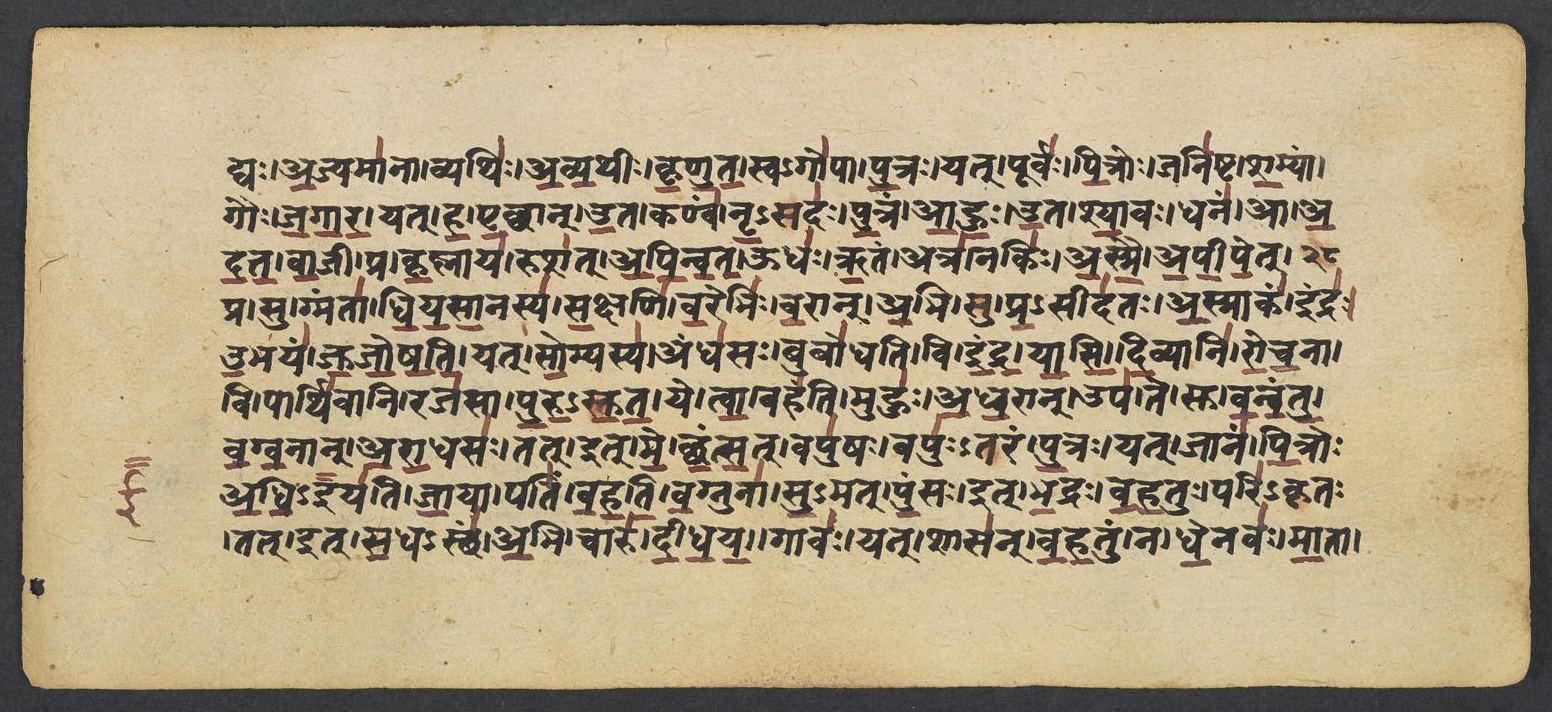
Where on the image
Penn Ms. Coll. 390 Item 41, fol. 771r (numbered 87r by the scribe) (OPenn image 771, lower leaf). Checked on the image: the Rigveda text on this page begins in RV 10.31.10 ‹-sadyaḥ ajyamānā vyathiḥ avyathīḥ›. The next page with Rigveda text, fol. 771v (numbered 87v by the scribe), begins in RV 10.32.4 ‹yat mantuḥ yūthasya pūrvyā›. Verses 10.32.1-3 end on this page.
1pra su gmantā̍ dhiyasā̱nasya̍ sa̱kṣaṇi̍ va̱rebhi̍r va̱rām̐ a̱bhi ṣu pra̱sīda̍taḥ | a̱smāka̱m indra̍ u̱bhaya̍ṁ jujoṣati̱ yat so̱myasyāndha̍so̱ bubo̍dhati ||
2vī̍ndra yāsi di̱vyāni̍ roca̱nā vi pārthi̍vāni̱ raja̍sā puruṣṭuta | ye tvā̱ vaha̍nti̱ muhu̍r adhva̱rām̐ upa̱ te su va̍nvantu vagva̱nām̐ a̍rā̱dhasa̍ḥ ||
3tad in me̍ chantsa̱d vapu̍ṣo̱ vapu̍ṣṭaram pu̱tro yaj jāna̍m pi̱tror a̱dhīya̍ti | jā̱yā pati̍ṁ vahati va̱gnunā̍ su̱mat pu̱ṁsa id bha̱dro va̍ha̱tuḥ pari̍ṣkṛtaḥ ||
Compare: Padapāṭha (word-by-word text written in the manuscript; Sansknet e-text via GRETIL)
1pra | su | gmantā | dhiyasānasya | sakṣaṇi | varebhiḥ | varān | abhi | su | pra-sīdataḥ | asmākam | indraḥ | ubhayam | jujoṣati | yat | somyasya | andhasaḥ | bubodhati
2vi | indra | yāsi | divyāni | rocanā | vi | pārthivāni | rajasā | puru-stuta | ye | tvā | vahanti | muhuḥ | adhvarān | upa | te | su | vanvantu | vagvanān | arādhasaḥ
3tat | it | me | chantsat | vapuṣaḥ | vapuḥ-taram | putraḥ | yat | jānam | pitroḥ | adhi-iyati | jāyā | patim | vahati | vanunā | su-mat | puṃsaḥ | it | bhadraḥ | vahatuḥ | pari-kṛtaḥ
1FORTH speed the Pair to bring the meditating God, benevolent with boons sent in return for boons. May Indra graciously accept both gifts from us, when he hath knowledge of the flowing Soma juice.
2Thou wanderest far, O Indra, through the spheres of light and realms of earth, the region, thou whom many praise! Let those who often bring their solemn rites conquer the noisy babblers who present no gifts.
3More beautiful than beauty must this seem to me, when the son duly careth for his parents' line. The wife attracts the husband: with a shout of joy the man's auspicious marriage is performed aright.
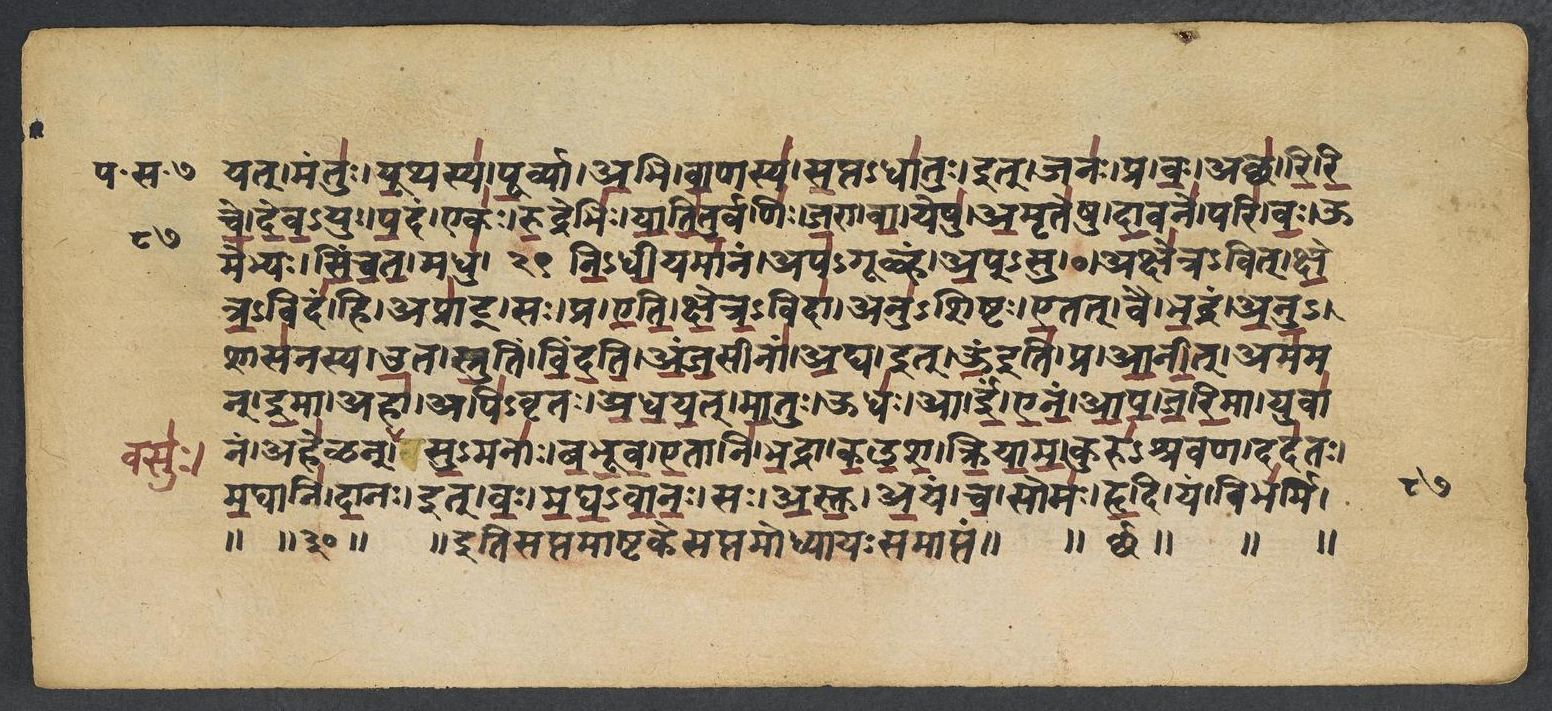
Where on the image
Penn Ms. Coll. 390 Item 41, fol. 771v (numbered 87v by the scribe) (OPenn image 772, upper leaf). Checked on the image: the Rigveda text on this page begins in RV 10.32.4 ‹yat mantuḥ yūthasya pūrvyā›. The next page with Rigveda text, fol. 772r (numbered 88r by the scribe), begins in RV 10.33.1 ‹pra mā yuyujre pra-yujaḥ›. Verses 10.32.4-9 end on this page; 10.32.4 begins on fol. 771r (numbered 87r by the scribe).
4tad it sa̱dhastha̍m a̱bhi cāru̍ dīdhaya̱ gāvo̱ yac chāsa̍n vaha̱tuṁ na dhe̱nava̍ḥ | mā̱tā yan mantu̍r yū̱thasya̍ pū̱rvyābhi vā̱ṇasya̍ sa̱ptadhā̍tu̱r ij jana̍ḥ ||
5pra vo 'cchā̍ ririce deva̱yuṣ pa̱dam eko̍ ru̱drebhi̍r yāti tu̱rvaṇi̍ḥ | ja̱rā vā̱ yeṣv a̱mṛte̍ṣu dā̱vane̱ pari̍ va̱ ūme̍bhyaḥ siñcatā̱ madhu̍ ||
6ni̱dhī̱yamā̍na̱m apa̍gūḻham a̱psu pra me̍ de̱vānā̍ṁ vrata̱pā u̍vāca | indro̍ vi̱dvām̐ anu̱ hi tvā̍ ca̱cakṣa̱ tenā̱ham a̍gne̱ anu̍śiṣṭa̱ āgā̍m ||
7akṣe̍travit kṣetra̱vida̱ṁ hy aprā̱ṭ sa praiti̍ kṣetra̱vidānu̍śiṣṭaḥ | e̱tad vai bha̱dram a̍nu̱śāsa̍nasyo̱ta sru̱tiṁ vi̍ndaty añja̱sīnā̍m ||
8a̱dyed u̱ prāṇī̱d ama̍mann i̱māhāpī̍vṛto adhayan mā̱tur ūdha̍ḥ | em e̍nam āpa jari̱mā yuvā̍na̱m ahe̍ḻa̱n vasu̍ḥ su̱manā̍ babhūva ||
9e̱tāni̍ bha̱drā ka̍laśa kriyāma̱ kuru̍śravaṇa̱ dada̍to ma̱ghāni̍ | dā̱na id vo̍ maghavāna̱ḥ so a̍stv a̱yaṁ ca̱ somo̍ hṛ̱di yam bibha̍rmi ||
Compare: Padapāṭha (word-by-word text written in the manuscript; Sansknet e-text via GRETIL)
4tat | it | sadha-stham | abhi | cāru | dīdhaya | gāvaḥ | yat | śāsan | vahatum | na | dhenavaḥ | mātā | yat | mantuḥ | yūthasya | pūrvyā | abhi | vāṇasya | sapta-dhātuḥ | it | janaḥ
5pra | vaḥ | accha | ririce | deva-yuḥ | padam | ekaḥ | rudrebhiḥ | yāti | turvaṇiḥ | jarā | vā | yeṣu | amṛteṣu | dāvane | pari | vaḥ | ūmebhyaḥ | siñcata | madhu
6ni-dhīyamānam | apa-gūḷham | ap-su | pra | me | devānām | vrata-pāḥ | uvāca | indraḥ | vidvān | anu | hi | tvā | cacakṣa | tena | aham | agne | anu-śiṣṭaḥ | ā | agām
7akṣetra-vit | kṣetra-vidam | hi | aprāṭ | saḥ | pra | eti | kṣetra-vidā | anu-śiṣṭaḥ | etat | vai | bhadram | anu-śāsanasya | uta | srutim | vindati | añjasīnām
8adya | it | oṃ iti | pra | āṇīt | amaman | imā | ahā | api-vṛtaḥ | adhayat | mātuḥ | ūdhaḥ | ā | īm | enam | āpa | jarimā | yuvānam | aheḷan | vasuḥ | su-manāḥ | babhūva
9etāni | bhadrā | kalaśa | kriyāma | kuru-śravaṇa | dadataḥ | maghāni | dānaḥ | it | vaḥ | magha-vānaḥ | saḥ | astu | ayam | ca | somaḥ | hṛdi | yam | bibharmi
4This beauteous place of meeting have I looked upon, where, like milch-cows, the kine order the marriage train; Where the Herd's Mother counts as first and best of all, and round her are the seven-toned people of the choir.
5The Pious One hath reached your place before the rest: One only moves victorious with the Rudras' band. To these your helpers pour out meath, Immortal Gods, with whom your song of praise hath power to win their gifts.
6He who maintains the Laws of God informed me that thou wast lying hidden in the waters. Indra, who knoweth well, beheld and showed thee. By him instructed am I come, O Agni.
7The stranger asks the way of him who knows it: taught by the skilful guide he travels onward. This is, in truth, the blessing of instruction: he finds the path that leads directly forward.
8Even now he breathed: these days hath he remembered. Concealed, he sucked the bosom of his Mother. Yet in his youth old age hath come upon him: he hath grown gracious, good, and free from anger.
9O Kalasa, all these blessings will we bring them, O Kuruṣravaṇa, who give rich presents. May he, O wealthy princes, and this Soma which I am bearing in my heart, reward you.
Notes
- Sanskrit: Aufrecht's edition (1877) with the Vedic accents, as entered by van Nooten and Holland (GRETIL).
- English: Ralph T. H. Griffith, The Hymns of the Rigveda (1889-1892; 2nd ed. 1896-1897), from the VedaWeb digital text; OCR slips in that text were corrected against the printed 2nd edition (data/sources/rigveda/griffith_errata.json).
- Padapāṭha (edition text): Sansknet e-text via GRETIL (CC BY-NC-SA 4.0).
Cite
Sources
- Source: Penn Ms. Coll. 390 Item 41 (undated (catalogued with Penn's 18th-19th c. Vedic manuscripts)), OPenn, Public Domain Mark + Aufrecht's accented text (GRETIL) + Griffith's English (VedaWeb) (holding institution)
- Critical edition: Aufrecht (1877), accented e-text via GRETIL
← previous · → next · v cycle view · l back to library