Rigveda 10.33: A singer's lament
Introduction
Rigveda 10.33 is a hymn of 9 verses addressed to a singer's lament. It stands in book (maṇḍala) 10, the last and latest book. The Rigveda is the oldest collection of Sanskrit hymns, composed in the second half of the second millennium BCE and handed down orally for many centuries before it was written down.
The manuscript shown is Penn Ms. Coll. 390 Item 41 (University of Pennsylvania), an undated paper manuscript of the padapāṭha (the word-by-word recitation text, in which every word is written separately and compounds are split) of the whole Ṛgveda in Devanāgarī, 884 leaves in fascicles, 7-9 lines to the page, accents in red; this hymn stands on fol. 772r-772v. Each section below gives the verses that end on one page; the page boundaries were read on the images (the opening words of every page), not counted out. Where the manuscript is a padapāṭha (the word-by-word recitation text), the section shows Aufrecht's continuous (saṃhitā) text first and, as the edition text, the padapāṭha of the same verses, which is the form written on the page.
How was this verified? (Provenance)
Where on the image
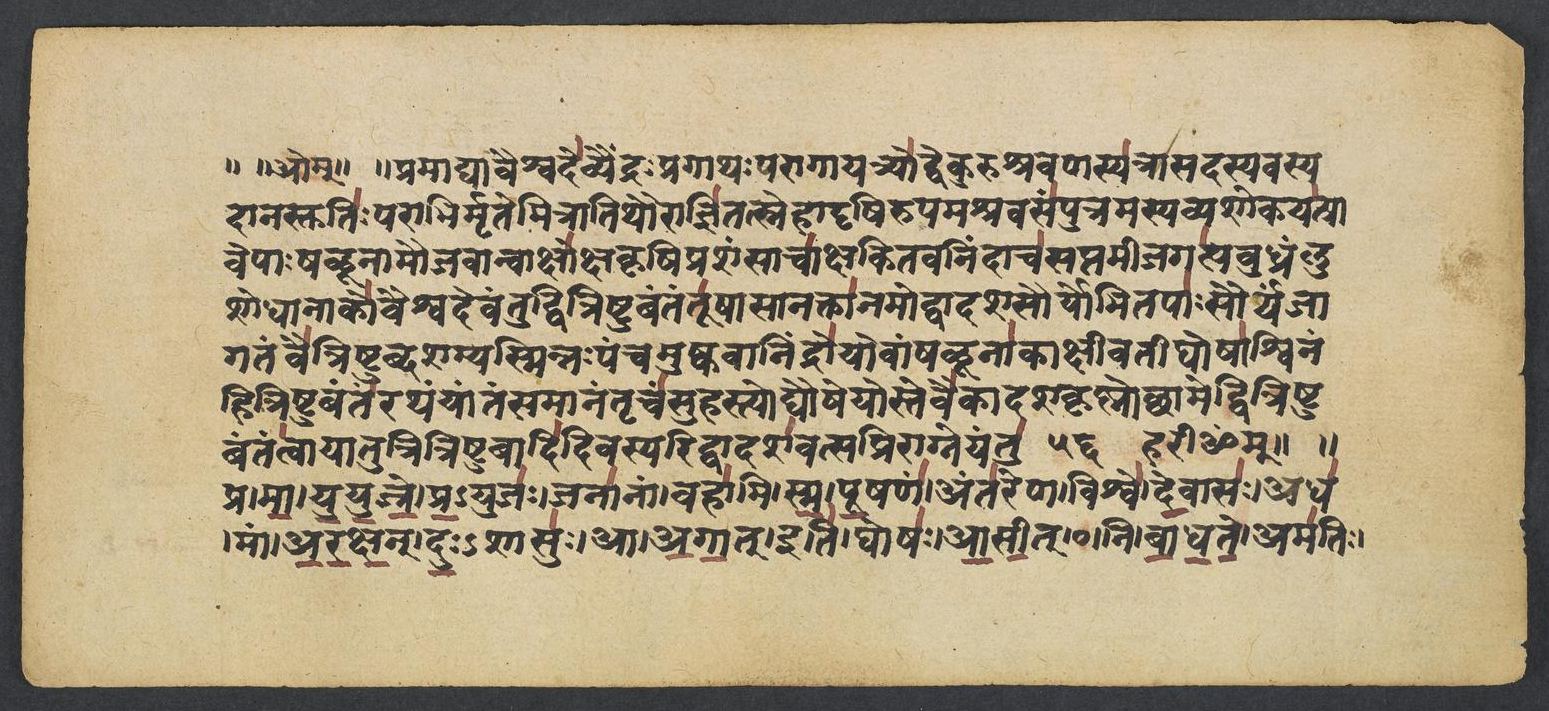
Penn Ms. Coll. 390 Item 41, fol. 772r (numbered 88r by the scribe) (OPenn image 772, lower leaf). Checked on the image: the Rigveda text on this page begins in RV 10.33.1 ‹pra mā yuyujre pra-yujaḥ›. Lines 1-7 carry the anukramaṇī for the next adhyāya (number 56) and ॥ hariḥ oṃ ॥; 10.33.1 (pra mā yuyujre prayujaḥ janānām) begins in line 7. The next page with Rigveda text, fol. 772v (numbered 88v by the scribe), begins in RV 10.33.2 ‹nagnatā jasuḥ veḥ na›. Verse 10.33.1 ends on this page.
1pra mā̍ yuyujre pra̱yujo̱ janā̍nā̱ṁ vahā̍mi sma pū̱ṣaṇa̱m anta̍reṇa | viśve̍ de̱vāso̱ adha̱ mām a̍rakṣan du̱ḥśāsu̱r āgā̱d iti̱ ghoṣa̍ āsīt ||
Compare: Padapāṭha (word-by-word text written in the manuscript; Sansknet e-text via GRETIL)
1pra | mā | yuyujre | pra-yujaḥ | janānām | vahāmi | sma | pūṣaṇam | antareṇa | vi śve | devāsaḥ | adha | mām | arakṣan | duḥ-śāsuḥ | ā | agāt | iti | ghoṣaḥ | āsīt
1THE urgings of the people have impelled me, and by,the nearest way I bring you Pûshan. The Universal Gods have brought me safely. The cry was heard, Behold, Dubsasu cometh!
Where on the image
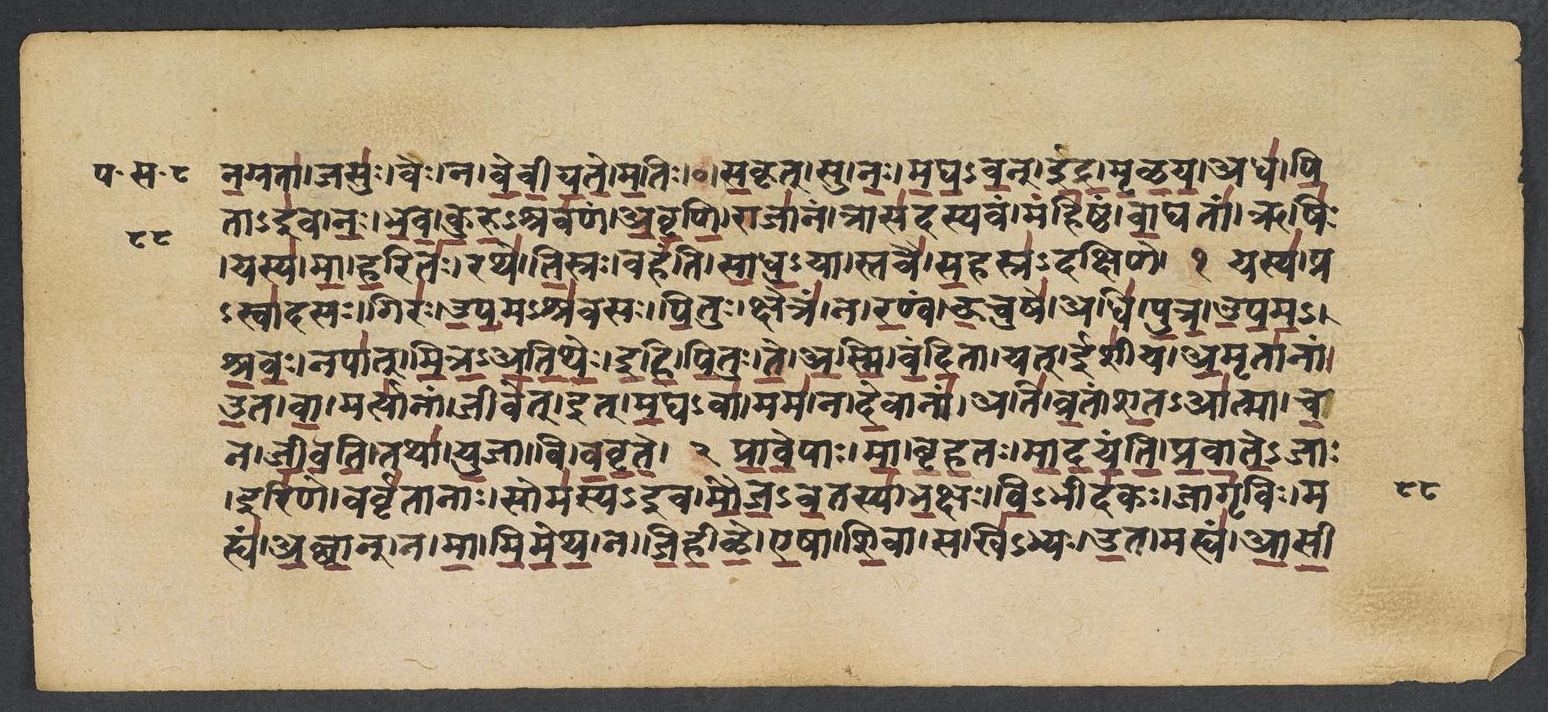
Penn Ms. Coll. 390 Item 41, fol. 772v (numbered 88v by the scribe) (OPenn image 773, upper leaf). Checked on the image: the Rigveda text on this page begins in RV 10.33.2 ‹nagnatā jasuḥ veḥ na›. The next page with Rigveda text, fol. 773r (numbered 89r by the scribe), begins in RV 10.34.2 ‹-āsīt akṣasya aham eka-parasya›. Verses 10.33.2-9 end on this page; 10.33.2 begins on fol. 772r (numbered 88r by the scribe).
2sam mā̍ tapanty a̱bhita̍ḥ sa̱patnī̍r iva̱ parśa̍vaḥ | ni bā̍dhate̱ ama̍tir na̱gnatā̱ jasu̱r ver na ve̍vīyate ma̱tiḥ ||
3mūṣo̱ na śi̱śnā vy a̍danti mā̱dhya̍ḥ sto̱tāra̍ṁ te śatakrato | sa̱kṛt su no̍ maghavann indra mṛḻa̱yādhā̍ pi̱teva̍ no bhava ||
4ku̱ru̱śrava̍ṇam āvṛṇi̱ rājā̍na̱ṁ trāsa̍dasyavam | maṁhi̍ṣṭhaṁ vā̱ghatā̱m ṛṣi̍ḥ ||
5yasya̍ mā ha̱rito̱ rathe̍ ti̱sro vaha̍nti sādhu̱yā | stavai̍ sa̱hasra̍dakṣiṇe ||
6yasya̱ prasvā̍daso̱ gira̍ upa̱maśra̍vasaḥ pi̱tuḥ | kṣetra̱ṁ na ra̱ṇvam ū̱cuṣe̍ ||
7adhi̍ putropamaśravo̱ napā̍n mitrātither ihi | pi̱tuṣ ṭe̍ asmi vandi̱tā ||
8yad īśī̍yā̱mṛtā̍nām u̱ta vā̱ martyā̍nām | jīve̱d in ma̱ghavā̱ mama̍ ||
9na de̱vānā̱m ati̍ vra̱taṁ śa̱tātmā̍ ca̱na jī̍vati | tathā̍ yu̱jā vi vā̍vṛte ||
Compare: Padapāṭha (word-by-word text written in the manuscript; Sansknet e-text via GRETIL)
2sam | mā | tapanti | abhitaḥ | sapatnīḥ-iva | parśavaḥ | ni | bādhate | amatiḥ | nagnatā | jasuḥ | veḥ | na | vevīyate | matiḥ
3mūṣaḥ | na | śiśnā | vi | adanti | mā | ādhyaḥ | stotāram | te | śatakrato itiśata-krato | sakṛt | su | naḥ | magha-van | indra | mṛḷaya | adha | pitāiva | naḥ | bhava
4kuru-śravaṇam | avṛṇi | rājānam | trāsadasyavam | maṃhiṣṭham | vāghatām | ṛṣiḥ
5yasya | mā | haritaḥ | rathe | tisraḥ | vahanti | sādhu-yā | stavai | sahasra-dakṣiṇe
6yasya | pra-svādasaḥ | giraḥ | upama-śravasaḥ | pituḥ | kṣetram | na | raṇvam | ūcuṣe
7adhi | putra | upama-śravaḥ | napāt | mitra-atitheḥ | ihi | pituḥ | te | asmi | vand itā
8yat | īśīya | amṛtānām | uta | vā | martyānām | jīvet | it | magha-vā | mama
9na | devānām | ati | vratam | śata-ātmā | cana | jīvati | tathā | yujā | vi | vavṛte
2The ribs that compass me give pain and trouble me like rival wives. Indigence, nakedness, exhaustion press me sore: my mind is fluttering like a bird's.
3As rats eat weavers' threads, cares are consuming me, thy singer, Ṣatakratu, me. Have mercy on us once, O Indra, Bounteous Lord: be thou a Father unto us.
4I the priests' R̥ishi chose as prince most liberal Kuruṣravaṇa, The son of Trasadasyu's son,
5Whose three bays harnessed to the car bear me straight onward: I will laud The giver of a thousand meeds,
6The sire of Upamaṣravas, even him whose words were passing sweet, As a fair field is to its lord.
7Mark, Upamaṣravas, his son, mark, grandson of Mitrâtithi: I am thy father's eulogist.
8If I controlled Immortal Gods, yea, even were I Lord of men, My liberal prince were living still.
9None lives, even had he hundred lives, beyond the statute of the Gods So am I parted from my friend.
Notes
- Sanskrit: Aufrecht's edition (1877) with the Vedic accents, as entered by van Nooten and Holland (GRETIL).
- English: Ralph T. H. Griffith, The Hymns of the Rigveda (1889-1892; 2nd ed. 1896-1897), from the VedaWeb digital text; OCR slips in that text were corrected against the printed 2nd edition (data/sources/rigveda/griffith_errata.json).
- Padapāṭha (edition text): Sansknet e-text via GRETIL (CC BY-NC-SA 4.0).
Cite
Sources
- Source: Penn Ms. Coll. 390 Item 41 (undated (catalogued with Penn's 18th-19th c. Vedic manuscripts)), OPenn, Public Domain Mark + Aufrecht's accented text (GRETIL) + Griffith's English (VedaWeb) (holding institution)
- Critical edition: Aufrecht (1877), accented e-text via GRETIL
← previous · → next · v cycle view · l back to library