Rigveda 10.34: The gambler's lament
Introduction
Rigveda 10.34 is a hymn of 14 verses addressed to hymn of the gambler. It stands in book (maṇḍala) 10, the last and latest book. The Rigveda is the oldest collection of Sanskrit hymns, composed in the second half of the second millennium BCE and handed down orally for many centuries before it was written down.
The manuscript shown is Penn Ms. Coll. 390 Item 41 (University of Pennsylvania), an undated paper manuscript of the padapāṭha (the word-by-word recitation text, in which every word is written separately and compounds are split) of the whole Ṛgveda in Devanāgarī, 884 leaves in fascicles, 7-9 lines to the page, accents in red; this hymn stands on fol. 772v-774r. Each section below gives the verses that end on one page; the page boundaries were read on the images (the opening words of every page), not counted out. Where the manuscript is a padapāṭha (the word-by-word recitation text), the section shows Aufrecht's continuous (saṃhitā) text first and, as the edition text, the padapāṭha of the same verses, which is the form written on the page.
How was this verified? (Provenance)
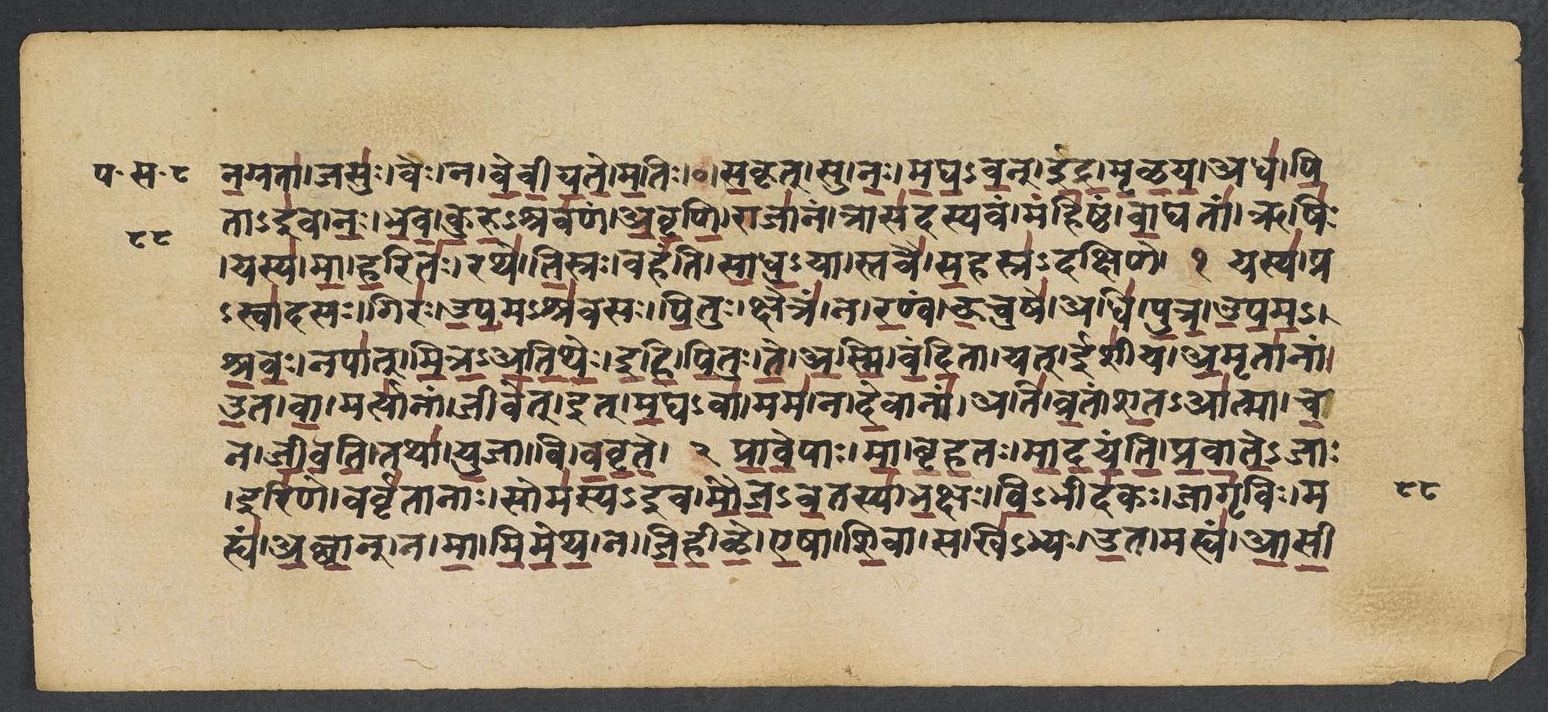
Where on the image
Penn Ms. Coll. 390 Item 41, fol. 772v (numbered 88v by the scribe) (OPenn image 773, upper leaf). Checked on the image: the Rigveda text on this page begins in RV 10.33.2 ‹nagnatā jasuḥ veḥ na›. The next page with Rigveda text, fol. 773r (numbered 89r by the scribe), begins in RV 10.34.2 ‹-āsīt akṣasya aham eka-parasya›. Verse 10.34.1 ends on this page.
1prā̱ve̱pā mā̍ bṛha̱to mā̍dayanti pravāte̱jā iri̍ṇe̱ varvṛ̍tānāḥ | soma̍syeva maujava̱tasya̍ bha̱kṣo vi̱bhīda̍ko̱ jāgṛ̍vi̱r mahya̍m acchān ||
Compare: Padapāṭha (word-by-word text written in the manuscript; Sansknet e-text via GRETIL)
1prāvepāḥ | mā | bṛhataḥ | mādayanti | pravāte--jāḥ | iriṇe | varvṛtānāḥ | somasya-iva | mauja-vatasya | bhakṣaḥ | vi-bhīdakaḥ | jāgṛviḥ | mahyam | acchān
1SPRUNG from tall trees on windy heights, these rollers transport me as they turn upon the table. Dearer to me the die that never slumbers than the deep draught of Mujavan's own Soma.
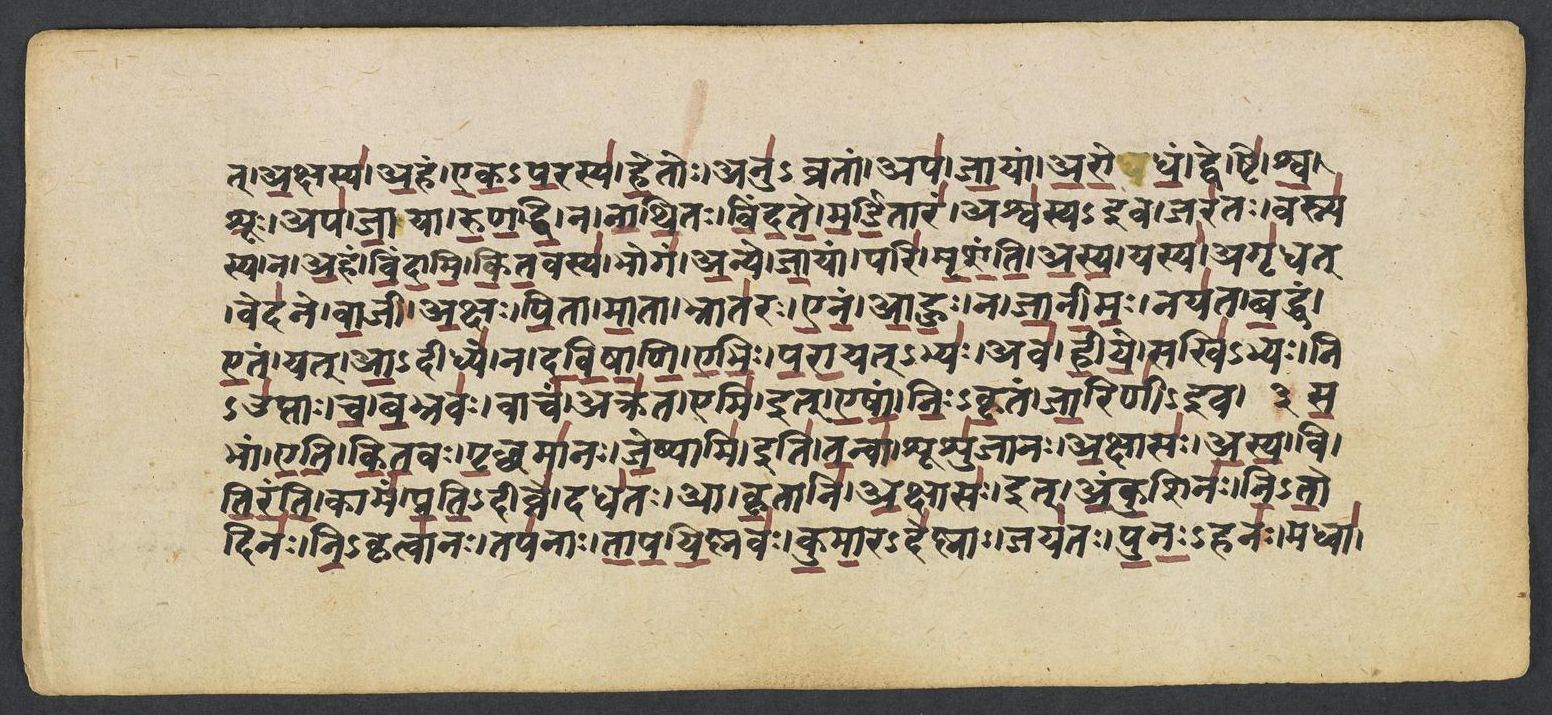
Where on the image
Penn Ms. Coll. 390 Item 41, fol. 773r (numbered 89r by the scribe) (OPenn image 773, lower leaf). Checked on the image: the Rigveda text on this page begins in RV 10.34.2 ‹-āsīt akṣasya aham eka-parasya›. The next page with Rigveda text, fol. 773v (numbered 89v by the scribe), begins in RV 10.34.7 ‹sam-pṛktāḥ kitavasya barhaṇā›. Verses 10.34.2-6 end on this page; 10.34.2 begins on fol. 772v (numbered 88v by the scribe).
2na mā̍ mimetha̱ na ji̍hīḻa e̱ṣā śi̱vā sakhi̍bhya u̱ta mahya̍m āsīt | a̱kṣasyā̱ham e̍kapa̱rasya̍ he̱tor anu̍vratā̱m apa̍ jā̱yām a̍rodham ||
3dveṣṭi̍ śva̱śrūr apa̍ jā̱yā ru̍ṇaddhi̱ na nā̍thi̱to vi̍ndate marḍi̱tāra̍m | aśva̍syeva̱ jara̍to̱ vasnya̍sya̱ nāhaṁ vi̍ndāmi kita̱vasya̱ bhoga̍m ||
4a̱nye jā̱yām pari̍ mṛśanty asya̱ yasyāgṛ̍dha̱d veda̍ne vā̱jy a1̱̍kṣaḥ | pi̱tā mā̱tā bhrāta̍ra enam āhu̱r na jā̍nīmo̱ naya̍tā ba̱ddham e̱tam ||
5yad ā̱dīdhye̱ na da̍viṣāṇy ebhiḥ parā̱yadbhyo 'va̍ hīye̱ sakhi̍bhyaḥ | nyu̍ptāś ca ba̱bhravo̱ vāca̱m akra̍ta̱m̐ emīd e̍ṣāṁ niṣkṛ̱taṁ jā̱riṇī̍va ||
6sa̱bhām e̍ti kita̱vaḥ pṛ̱cchamā̍no je̱ṣyāmīti̍ ta̱nvā̱3̱̍ śūśu̍jānaḥ | a̱kṣāso̍ asya̱ vi ti̍ranti̱ kāma̍m prati̱dīvne̱ dadha̍ta̱ ā kṛ̱tāni̍ ||
Compare: Padapāṭha (word-by-word text written in the manuscript; Sansknet e-text via GRETIL)
2na | mā | mimetha | na | jihīḷe eṣā | śivā | sakhi-bhyaḥ | uta | mahyam | āsīt | akṣasya | aham | eka-parasya | hetoḥ | anu-vratām | apa | jāyām | arodham
3dveṣṭi | śvaśrūḥ | apa | jāyā | ruṇaddhi | na | nāthitaḥ | vindate | marḍitāram | aśvasya-iva | jarataḥ | vasnyasya | na | aham | vindāmi | kitavasya | bhogam
4anye | jāyām | pari | mṛśanti | asya | yasya | agṛdhat | vedane | vājī | akṣaḥ | pitā | mātā | bhrātaraḥ | enam | āhuḥ | na | jānīmaḥ | nayata | baddham | etam
5yat | ādīdhye | na | daviṣāṇi | ebhiḥ | parāyat-bhyaḥ | ava | hīye | sakhi-bhyaḥ | ni-uptāḥ | ca | babhravaḥ | vācam | akrata | emi | it | eṣām | niḥ-kṛtam | jāriṇī-iva
6sabhām | eti | kitavaḥ | pṛcchamānaḥ | jeṣyāmi | iti | tanvā | śūśujānaḥ | akṣāsaḥ | asya | vi | tiranti | kāmam | prati-dīvne | dadhataḥ | ā | kṛtāni
2She never vexed me nor was angry with me, but to my friends and me was ever gracious. For the die's sake, whose single point is final, mine own devoted wife I alienated.
3My wife holds me aloof, her mother hates me: the wretched man finds none to give him comfort. As of a costly horse grown old and feeble, I find not any profit of the gamester.
4Others caress the wife of him whose riches the die hath coveted, that rapid courser: Of him speak father, mother, brothers saying, We know him not: bind him and take him with you.
5When I resolve to play with these no longer, my friends depart from me and leave me lonely. When the brown dice, thrown on the board, have rattled, like a fond girl I seek the place of meeting.
6The gamester seeks the gambling-house, and wonders, his body all afire, Shall I be lucky? Still do the dice extend his eager longing, staking his gains against his adversary.
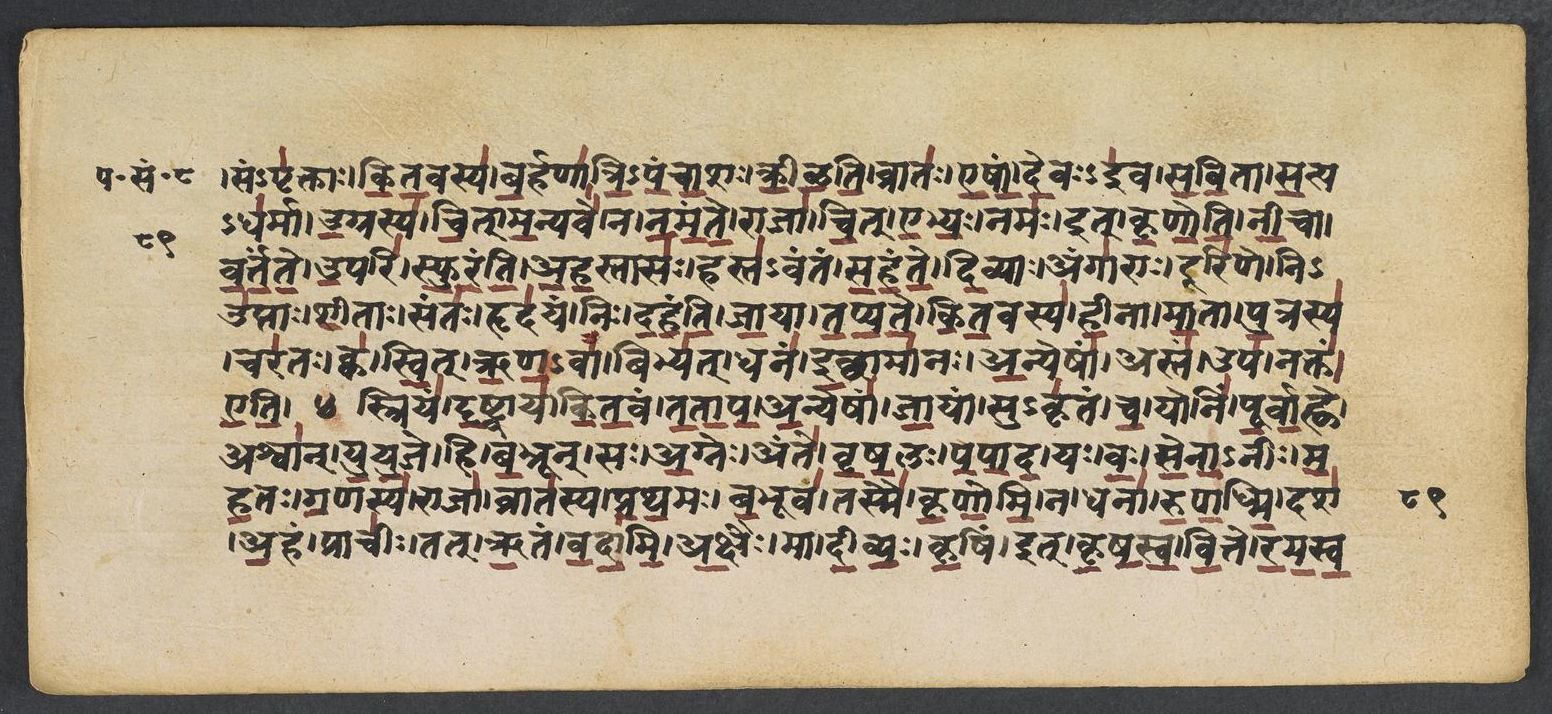
Where on the image
Penn Ms. Coll. 390 Item 41, fol. 773v (numbered 89v by the scribe) (OPenn image 774, upper leaf). Checked on the image: the Rigveda text on this page begins in RV 10.34.7 ‹sam-pṛktāḥ kitavasya barhaṇā›. The next page with Rigveda text, fol. 774r (numbered 90r by the scribe), begins in RV 10.34.13 ‹bahu manyamānaḥ tattra gāvaḥ›. Verses 10.34.7-12 end on this page; 10.34.7 begins on fol. 773r (numbered 89r by the scribe).
7a̱kṣāsa̱ id a̍ṅku̱śino̍ nito̱dino̍ ni̱kṛtvā̍na̱s tapa̍nās tāpayi̱ṣṇava̍ḥ | ku̱mā̱rade̍ṣṇā̱ jaya̍taḥ puna̱rhaṇo̱ madhvā̱ sampṛ̍ktāḥ kita̱vasya̍ ba̱rhaṇā̍ ||
8tri̱pa̱ñcā̱śaḥ krī̍ḻati̱ vrāta̍ eṣāṁ de̱va i̍va savi̱tā sa̱tyadha̍rmā | u̱grasya̍ cin ma̱nyave̱ nā na̍mante̱ rājā̍ cid ebhyo̱ nama̱ it kṛ̍ṇoti ||
9nī̱cā va̍rtanta u̱pari̍ sphuranty aha̱stāso̱ hasta̍vantaṁ sahante | di̱vyā aṅgā̍rā̱ iri̍ṇe̱ nyu̍ptāḥ śī̱tāḥ santo̱ hṛda̍ya̱ṁ nir da̍hanti ||
10jā̱yā ta̍pyate kita̱vasya̍ hī̱nā mā̱tā pu̱trasya̱ cara̍ta̱ḥ kva̍ svit | ṛ̱ṇā̱vā bibhya̱d dhana̍m i̱cchamā̍no̱ 'nyeṣā̱m asta̱m upa̱ nakta̍m eti ||
11striya̍ṁ dṛ̱ṣṭvāya̍ kita̱vaṁ ta̍tāpā̱nyeṣā̍ṁ jā̱yāṁ sukṛ̍taṁ ca̱ yoni̍m | pū̱rvā̱hṇe aśvā̍n yuyu̱je hi ba̱bhrūn so a̱gner ante̍ vṛṣa̱laḥ pa̍pāda ||
12yo va̍ḥ senā̱nīr ma̍ha̱to ga̱ṇasya̱ rājā̱ vrāta̍sya pratha̱mo ba̱bhūva̍ | tasmai̍ kṛṇomi̱ na dhanā̍ ruṇadhmi̱ daśā̱ham prācī̱s tad ṛ̱taṁ va̍dāmi ||
Compare: Padapāṭha (word-by-word text written in the manuscript; Sansknet e-text via GRETIL)
7akṣāsaḥ | it | aṅkuśinaḥ | ni-todinaḥ | ni-kṛtvānaḥ | tapanāḥ | tāpayiṣṇavaḥ | kumāra-deṣṇāḥ | jayataḥ | punaḥ-hanaḥ | madhvā | sam-pṛktāḥ | kitavasya | barhaṇā
8tri-pañcāśaḥ | krīḷati | vrātaḥ | eṣām | devaḥ-iva | savitā | satya-dharmā | ugrasya | cit | manyave | na | namante | rājā | cit | ebhyaḥ | namaḥ | it | kṛṇomi
9nīcāḥ | vartante | upari | sphuranti | ahastāsaḥ | hasta-vantam | sahante | divyāḥ | aṅgārāḥ | iriṇe | ni-uptāḥ | śītāḥ | santaḥ | hṛdayam | niḥ | dahanti
10jāyā | tapyate | kitavasya | hīnā | mātā | putrasya | carataḥ | kva | svit | ṛṇa-vā | bibhyat | dhanam | icchamānaḥ | anyeṣām | astam | upa | naktam | eti
11striyam | dṛṣṭavāya | kitavam | tatāpa | anyeṣām | jāyām | su-kṛtam | ca | yonim | pūrvāhṇe | aśvān | yuyuje | hi | babhrūn | saḥ | agneḥ | ante | vṛṣalaḥ | papāda
12yaḥ | vaḥ | senānīḥ | mahataḥ | gaṇasya | rājā | vrātasya | prathamaḥ | babhūva | tasmai | kṛṇomi | na | dhanā | ruṇadhmi | daśa | aham | prācīḥ | tat | ṛtam | vadāmi
7Dice, verily, are armed with goads and driving-hooks, deceiving and tormenting, causing grievous woe. They give frail gifts and then destroy the man who wins, thickly anointed with the player's fairest good.
8Merrily sports their troop, the three-and-fifty, like Savitar the God whose ways are faithful. They bend not even to the mighty's anger: the King himself pays homage and reveres them.
9Downward they roll, and then spring quickly upward, and, handless, force the man with hands to serve them. Cast on the board, like lumps of magic charcoal, though cold themselves they bum the heart to ashes.
10The gambler's wife is left forlorn and wretched: the mother mourns the son who wanders homeless. In constant fear, in debt, and seeking riches, he goes by night unto the home of others.
11Sad is the gambler when he sees a matron, another's wife, and his well-ordered dwelling. He yokes the brown steeds in the early morning, and when the fire is cold sinks down an outcast.
12To the great captain of your mighty army, who hath become the host's imperial leader, To him I show my ten extended fingers: I speak the truth. No wealth am I withholding.
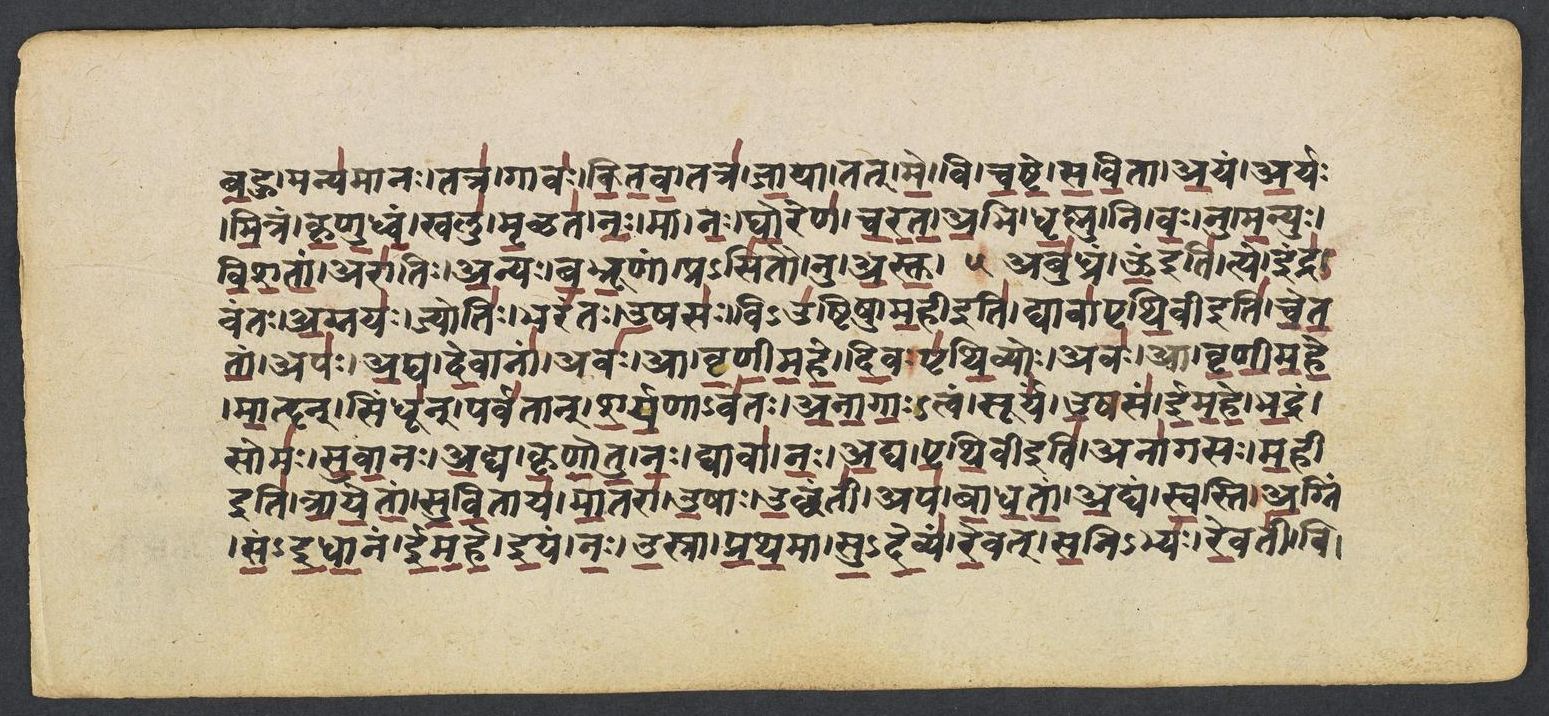
Where on the image
Penn Ms. Coll. 390 Item 41, fol. 774r (numbered 90r by the scribe) (OPenn image 774, lower leaf). Checked on the image: the Rigveda text on this page begins in RV 10.34.13 ‹bahu manyamānaḥ tattra gāvaḥ›. The next page with Rigveda text, fol. 774v (numbered 90v by the scribe), begins in RV 10.35.4 ‹ucchatu āre manyum duḥ-vidatrasya›. Verses 10.34.13-14 end on this page; 10.34.13 begins on fol. 773v (numbered 89v by the scribe).
13a̱kṣair mā dī̍vyaḥ kṛ̱ṣim it kṛ̍ṣasva vi̱tte ra̍masva ba̱hu manya̍mānaḥ | tatra̱ gāva̍ḥ kitava̱ tatra̍ jā̱yā tan me̱ vi ca̍ṣṭe savi̱tāyam a̱ryaḥ ||
14mi̱traṁ kṛ̍ṇudhva̱ṁ khalu̍ mṛ̱ḻatā̍ no̱ mā no̍ gho̱reṇa̍ caratā̱bhi dhṛ̱ṣṇu | ni vo̱ nu ma̱nyur vi̍śatā̱m arā̍tir a̱nyo ba̍bhrū̱ṇām prasi̍tau̱ nv a̍stu ||
Compare: Padapāṭha (word-by-word text written in the manuscript; Sansknet e-text via GRETIL)
13akṣaiḥ | mā | dīvyah | kṛṣim | it | kṛṣasva | vitte | ramasva | bahu | manyamānaḥ | tattra | gāvaḥ | kitava | tatra | jāyā | tat | me | vi | caṣṭe | savitā | ayam | aryaḥ
14mitram | kṛṇudhvam | khalu | mṛḷata | naḥ | mā | naḥ | ghoreṇa | carata | abhi | dhṛṣṇu | ni | vaḥ | nu | manyuḥ | viśatām | arātiḥ | anyaḥ | babhrūṇām | pra-sitau | nu | astu
13Play not with dice: no, cultivate thy corn-land. Enjoy the gain, and deem that wealth sufficient. There are thy cattle there thy wife, O gambler. So this good Savitar himself hath told me.
14Make me your friend: show us some little mercy. Assail us not with your terrific fierceness. Appeased be your malignity and anger, and let the brown dice snare some other captive.
Notes
- Sanskrit: Aufrecht's edition (1877) with the Vedic accents, as entered by van Nooten and Holland (GRETIL).
- English: Ralph T. H. Griffith, The Hymns of the Rigveda (1889-1892; 2nd ed. 1896-1897), from the VedaWeb digital text; OCR slips in that text were corrected against the printed 2nd edition (data/sources/rigveda/griffith_errata.json).
- Padapāṭha (edition text): Sansknet e-text via GRETIL (CC BY-NC-SA 4.0).
Cite
Sources
- Source: Penn Ms. Coll. 390 Item 41 (undated (catalogued with Penn's 18th-19th c. Vedic manuscripts)), OPenn, Public Domain Mark + Aufrecht's accented text (GRETIL) + Griffith's English (VedaWeb) (holding institution)
- Critical edition: Aufrecht (1877), accented e-text via GRETIL
← previous · → next · v cycle view · l back to library