Rigveda 10.35: To all the gods
Introduction
Rigveda 10.35 is a hymn of 14 verses addressed to all the gods. It stands in book (maṇḍala) 10, the last and latest book. The Rigveda is the oldest collection of Sanskrit hymns, composed in the second half of the second millennium BCE and handed down orally for many centuries before it was written down.
The manuscript shown is Penn Ms. Coll. 390 Item 41 (University of Pennsylvania), an undated paper manuscript of the padapāṭha (the word-by-word recitation text, in which every word is written separately and compounds are split) of the whole Ṛgveda in Devanāgarī, 884 leaves in fascicles, 7-9 lines to the page, accents in red; this hymn stands on fol. 774r-775r. Each section below gives the verses that end on one page; the page boundaries were read on the images (the opening words of every page), not counted out. Where the manuscript is a padapāṭha (the word-by-word recitation text), the section shows Aufrecht's continuous (saṃhitā) text first and, as the edition text, the padapāṭha of the same verses, which is the form written on the page.
How was this verified? (Provenance)
Where on the image
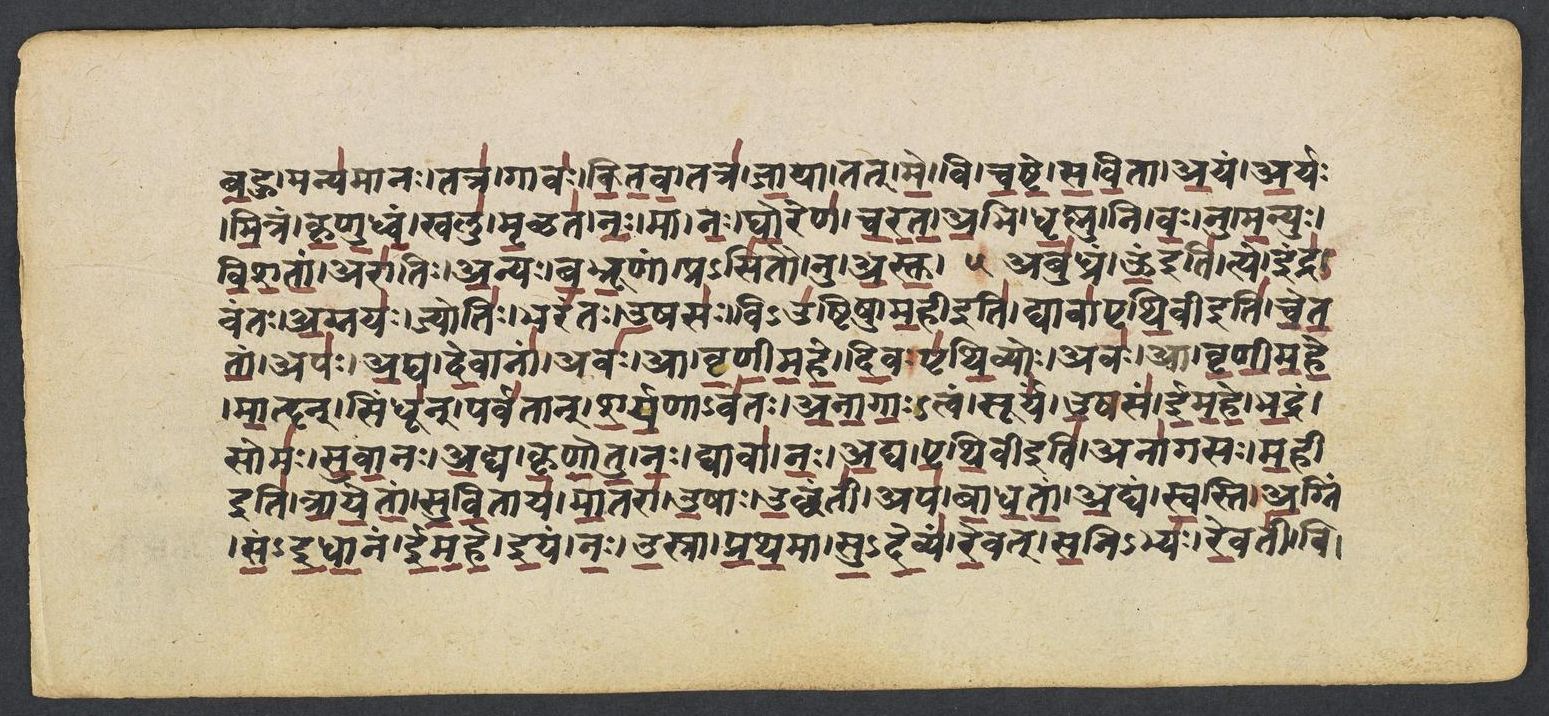
Penn Ms. Coll. 390 Item 41, fol. 774r (numbered 90r by the scribe) (OPenn image 774, lower leaf). Checked on the image: the Rigveda text on this page begins in RV 10.34.13 ‹bahu manyamānaḥ tattra gāvaḥ›. The next page with Rigveda text, fol. 774v (numbered 90v by the scribe), begins in RV 10.35.4 ‹ucchatu āre manyum duḥ-vidatrasya›. Verses 10.35.1-3 end on this page.
1abu̍dhram u̱ tya indra̍vanto a̱gnayo̱ jyoti̱r bhara̍nta u̱ṣaso̱ vyu̍ṣṭiṣu | ma̱hī dyāvā̍pṛthi̱vī ce̍tatā̱m apo̱ 'dyā de̱vānā̱m ava̱ ā vṛ̍ṇīmahe ||
2di̱vaspṛ̍thi̱vyor ava̱ ā vṛ̍ṇīmahe mā̱tṝn sindhū̱n parva̍tāñ charya̱ṇāva̍taḥ | a̱nā̱gā̱stvaṁ sūrya̍m u̱ṣāsa̍m īmahe bha̱draṁ soma̍ḥ suvā̱no a̱dyā kṛ̍ṇotu naḥ ||
3dyāvā̍ no a̱dya pṛ̍thi̱vī anā̍gaso ma̱hī trā̍yetāṁ suvi̱tāya̍ mā̱tarā̍ | u̱ṣā u̱cchanty apa̍ bādhatām a̱ghaṁ sva̱sty a1̱̍gniṁ sa̍midhā̱nam ī̍mahe ||
Compare: Padapāṭha (word-by-word text written in the manuscript; Sansknet e-text via GRETIL)
1abudhram | oṃ iti | tye | indra-vantaḥ | agnayaḥ | jyotiḥ | bharantaḥ | uṣasaḥ | vi-uṣṭiṣu | mahī iti | dyāvāpṛthivī iti | cetatām | apaḥ | adya | devānām | avaḥ | ā | vṛṇīmahe
2divaḥpṛthivyoḥ | avaḥ | ā | vṛṇīmahe | mātṝn | sindhūn | parvatān | śaryaṇāvataḥ | anāgāḥ-tvam | sūryam | uṣasam | īmahe | bhadram | somaḥ | suvānaḥ | adya | kṛṇotu | naḥ
3dyāvā | naḥ | adya | pṛthivī iti | anāgasaḥ | mahī iti | trāyetām | suvitāya | mātarā | uṣāḥ | ucchantī | apa | bādhatām | agham | svasti | agnim | sam-idhānam | īmahe
1THESE fires associate with Indra are awake, bringing their light when first the Dawn begins to shine. May Heaven and Earth, great Pair, observe our holy work. We claim for us this day the favour of the Gods.
2Yea, for ourselves we claim the grace of Heaven and Earth, of Ṣaryaṇâvân, of the Hills and Mother Streams. For innocence we pray to Sûrya and to Dawn. So may the flowing Soma bring us bliss to-day.
3May the great Twain, the Mothers, Heaven and Earth, this day preserve us free from sin for peace and happiness. May Morning sending forth her light drive sin afar. We pray to kindled Agni for felicity.
Where on the image
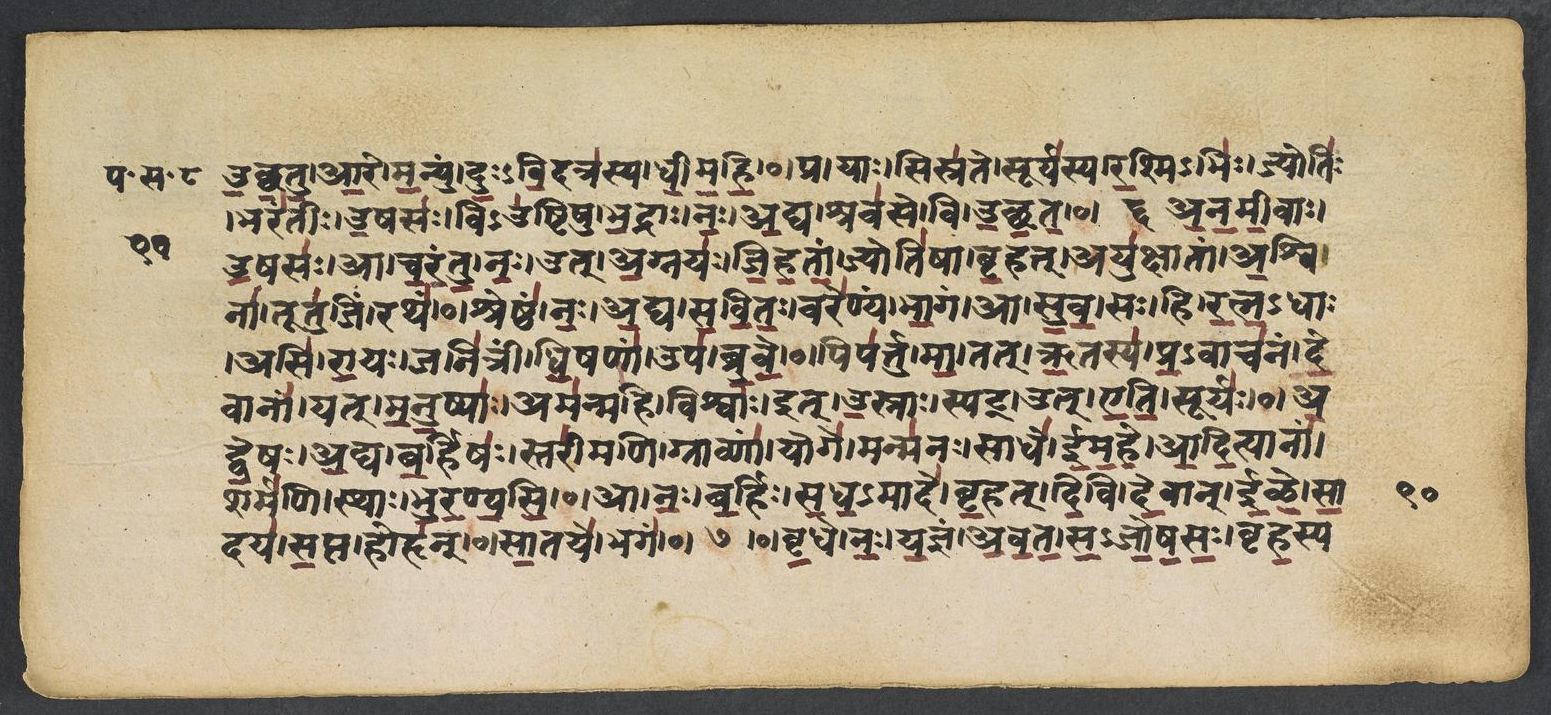
Penn Ms. Coll. 390 Item 41, fol. 774v (numbered 90v by the scribe) (OPenn image 775, upper leaf). Checked on the image: the Rigveda text on this page begins in RV 10.35.4 ‹ucchatu āre manyum duḥ-vidatrasya›. The next page with Rigveda text, fol. 775r (numbered 91r by the scribe), begins in RV 10.35.11 ‹-bṛhaspatim pūṣaṇam aśvinā bhagam›. Verses 10.35.4-10 end on this page; 10.35.4 begins on fol. 774r (numbered 90r by the scribe).
4i̱yaṁ na̍ u̱srā pra̍tha̱mā su̍de̱vya̍ṁ re̱vat sa̱nibhyo̍ re̱vatī̱ vy u̍cchatu | ā̱re ma̱nyuṁ du̍rvi̱datra̍sya dhīmahi sva̱sty a1̱̍gniṁ sa̍midhā̱nam ī̍mahe ||
5pra yāḥ sisra̍te̱ sūrya̍sya ra̱śmibhi̱r jyoti̱r bhara̍ntīr u̱ṣaso̱ vyu̍ṣṭiṣu | bha̱drā no̍ a̱dya śrava̍se̱ vy u̍cchata sva̱sty a1̱̍gniṁ sa̍midhā̱nam ī̍mahe ||
6a̱na̱mī̱vā u̱ṣasa̱ ā ca̍rantu na̱ ud a̱gnayo̍ jihatā̱ṁ jyoti̍ṣā bṛ̱hat | āyu̍kṣātām a̱śvinā̱ tūtu̍ji̱ṁ ratha̍ṁ sva̱sty a1̱̍gniṁ sa̍midhā̱nam ī̍mahe ||
7śreṣṭha̍ṁ no a̱dya sa̍vita̱r vare̍ṇyam bhā̱gam ā su̍va̱ sa hi ra̍tna̱dhā asi̍ | rā̱yo jani̍trīṁ dhi̱ṣaṇā̱m upa̍ bruve sva̱sty a1̱̍gniṁ sa̍midhā̱nam ī̍mahe ||
8pipa̍rtu mā̱ tad ṛ̱tasya̍ pra̱vāca̍naṁ de̱vānā̱ṁ yan ma̍nu̱ṣyā̱3̱̍ ama̍nmahi | viśvā̱ id u̱srāḥ spaḻ ud e̍ti̱ sūrya̍ḥ sva̱sty a1̱̍gniṁ sa̍midhā̱nam ī̍mahe ||
9a̱dve̱ṣo a̱dya ba̱rhiṣa̱ḥ starī̍maṇi̱ grāvṇā̱ṁ yoge̱ manma̍na̱ḥ sādha̍ īmahe | ā̱di̱tyānā̱ṁ śarma̍ṇi̱ sthā bhu̍raṇyasi sva̱sty a1̱̍gniṁ sa̍midhā̱nam ī̍mahe ||
10ā no̍ ba̱rhiḥ sa̍dha̱māde̍ bṛ̱had di̱vi de̱vām̐ ī̍ḻe sā̱dayā̍ sa̱pta hotṝ̍n | indra̍m mi̱traṁ varu̍ṇaṁ sā̱taye̱ bhaga̍ṁ sva̱sty a1̱̍gniṁ sa̍midhā̱nam ī̍mahe ||
Compare: Padapāṭha (word-by-word text written in the manuscript; Sansknet e-text via GRETIL)
4iyam | naḥ | usrā | prathamā | su-devyam | revat | sani-bhyaḥ | revatī | vi | ucchatu | āre | manyum | duḥ-vidatrasya | dhīmahi | svasti | agnim | sam-idhānam | īmahe
5pra | yāḥ | sisrate | sūryasya | raśmi-bhiḥ | jyotiḥ | bharantīḥ | uṣasaḥ | vi-uṣṭiṣu | bhadrāḥ | naḥ | adya | śravase | vi | ucchata | svasti | agnim | sam-idhānam | īmahe
6anamīvāḥ | uṣasaḥ | ā | carantu | naḥ | ut | agnayaḥ | jihatām | jyotiṣā | bṛhat | ayukṣātām | aśvinā | tūtujim | ratham | svasti | agnim | sam-idhānam | īmahe
7śreṣṭham | naḥ | adya | savitaḥ | vareṇyam | bhāgam | ā | suva | saḥ | hi | ratna-dhāḥ | asi | rāyaḥ | janitrīn | dhiṣaṇām | upa | bruve | svasti | agnim | sam-idhānam | īmahe
8pipartu | mā | tat | ṛtasya | pra-vācanam | devānām | yat | manuṣyāḥ | amanmahi | viśvāḥ | it | usrāḥ | spaṭ | ut | eti | sūryaḥ | svasti | agnim | sam-idhānam | īmahe
9adveṣaḥ | adya | barhiṣaḥ | starīmaṇi | grāvṇām | yoge | manmanaḥ | sādhe | īmahe | ādityānām | śarmaṇi | sthāḥ | bhuraṇyasi | svasti | agnim | sam-idhānam | īmahe
10ā | naḥ | barhiḥ | sadha-māde | bṛhat | divi | devān | īḷe | sādaya | sapta | hotṛṝn | indram | mitram | varuṇam | sātaye | bhagam | svasti | agnim | sam-idhānam | īmahe
4May this first Dawn bring us the host of gracious Gods: rich, may it richly shine for us who strive for wealth. The wrath of the malignant may we keep afar. We pray to kindled Agni for feilicity.
5Dawns, who come forward with the bright beams of the Sun, and at your earliest flushing bring to us the light, Shine ye on us to-day auspicious, for renown. We pray to kindled Agni for felicity.
6Free from all sickness may the Mornings come to us, and let our fires mount upward with a lofty blaze. The Aṣvin Pair have harnessed their swift-moving car. We pray to kindled Agni for felicity.
7Send us to-day a portion choice and excellent, O Savitar, for thou art he who dealeth wealth. I cry to Dhishaṇâ, Mother of opulence. We pray to kindled Agni for felicity.
8Further me this declaring of Eternal Law, the Law of Gods, as we mortals acknowledge it! The Sun goes up beholding all the rays of morn. We pray to kindled Agni for felicity.
9This day we pray with innocence in strewing grass, adjusting pressing-stones, and perfecting the hymn. Thou in the Âdityas' keeping movest restlessly. We pray to kindled Agni for felicity.
10To our great holy grass I bid the Gods at morn to banquet, and will seat them as the seven priests,– Varuṇa, Indra, Mitra, Bhaga for our gain. We pray to kindled Agni for felicity.
Where on the image
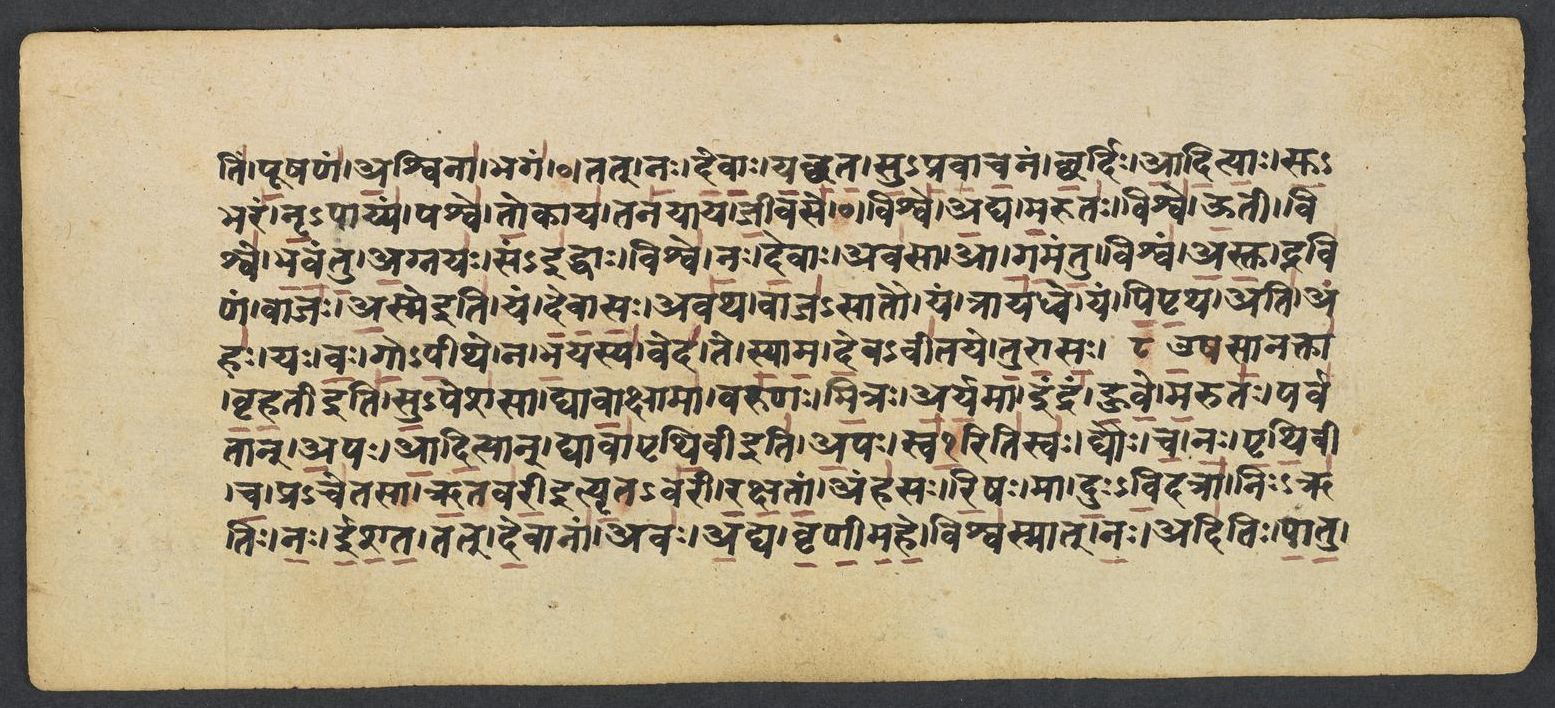
Penn Ms. Coll. 390 Item 41, fol. 775r (numbered 91r by the scribe) (OPenn image 775, lower leaf). Checked on the image: the Rigveda text on this page begins in RV 10.35.11 ‹-bṛhaspatim pūṣaṇam aśvinā bhagam›. The next page with Rigveda text, fol. 775v (numbered 91v by the scribe), begins in RV 10.36.3 ‹aṃhasaḥ mātā mitrasya varuṇasya›. Verses 10.35.11-14 end on this page; 10.35.11 begins on fol. 774v (numbered 90v by the scribe).
11ta ā̍dityā̱ ā ga̍tā sa̱rvatā̍taye vṛ̱dhe no̍ ya̱jñam a̍vatā sajoṣasaḥ | bṛha̱spati̍m pū̱ṣaṇa̍m a̱śvinā̱ bhaga̍ṁ sva̱sty a1̱̍gniṁ sa̍midhā̱nam ī̍mahe ||
12tan no̍ devā yacchata supravāca̱naṁ cha̱rdir ā̍dityāḥ su̱bhara̍ṁ nṛ̱pāyya̍m | paśve̍ to̱kāya̱ tana̍yāya jī̱vase̍ sva̱sty a1̱̍gniṁ sa̍midhā̱nam ī̍mahe ||
13viśve̍ a̱dya ma̱ruto̱ viśva̍ ū̱tī viśve̍ bhavantv a̱gnaya̱ḥ sami̍ddhāḥ | viśve̍ no de̱vā ava̱sā ga̍mantu̱ viśva̍m astu̱ dravi̍ṇa̱ṁ vājo̍ a̱sme ||
14yaṁ de̍vā̱so 'va̍tha̱ vāja̍sātau̱ yaṁ trāya̍dhve̱ yam pi̍pṛ̱thāty aṁha̍ḥ | yo vo̍ gopī̱the na bha̱yasya̱ veda̱ te syā̍ma de̱vavī̍taye turāsaḥ ||
Compare: Padapāṭha (word-by-word text written in the manuscript; Sansknet e-text via GRETIL)
11te | ādityāḥ | ā | gata | sarvatātaye | vṛdhe | naḥ | yajñam | avata | sa-joṣasaḥ | bṛhaspatim | pūṣaṇam | aśvinā | bhagam | svasti | agnim | sam-idhānam | īmahe
12tat | naḥ | devāḥ | yacchata | su-pravācanam | chardiḥ | ādityāḥ | su-bharam | nṛ-pāyyam | paśve | tokāya | tanayāya | jīvase | svasti | agnim | sam-idhānam | īmahe
13viśve | adya | marutaḥ | viśve | ūtī | viśve | bhavantu | agnayaḥ | sam-iddhāḥ | vi śve | naḥ | devāḥ | avasā | ā | gamantu | viśvam | astu | draviṇam | vājaḥ | asme iti
14yam | devāsaḥ | avatha | vāja-sātau | yam | trāyadhve | yam | pipṛtha | ati | aṃhaḥ | yaḥ | vaḥ | go--pīthe | na | bhayasya | veda | te | syāma | deva-vītaye | turāsaḥ
11Come hither, O Âdityas, for our perfect weal: accordant help our sacrifice that we may thrive. Pûshan, Br̥ihaspati, Bhaga, both Aṣvins, and enkindled Agni we implore for happiness.
12Âdityas, Gods, vouchsafe that this our home may be praise-worthy, prosperous, our heroes' sure defence, For cattle, for our sons, for progeny, for life. We pray to kindled Agni for felicity.
13This day may all the Maruts, all he near us with aid: may all our fires be well enkindled. May all Gods come to us with gracious favour. May spoil and wealth he ours, and all possessions.
14He whom ye aid, O Deities, in battle, whom ye protect and rescue from affliction, Who fears no danger at your milk-libation, -such may we be to feast the Gods, ye Mighty.
Notes
- Sanskrit: Aufrecht's edition (1877) with the Vedic accents, as entered by van Nooten and Holland (GRETIL).
- English: Ralph T. H. Griffith, The Hymns of the Rigveda (1889-1892; 2nd ed. 1896-1897), from the VedaWeb digital text; OCR slips in that text were corrected against the printed 2nd edition (data/sources/rigveda/griffith_errata.json).
- Padapāṭha (edition text): Sansknet e-text via GRETIL (CC BY-NC-SA 4.0).
Cite
Sources
- Source: Penn Ms. Coll. 390 Item 41 (undated (catalogued with Penn's 18th-19th c. Vedic manuscripts)), OPenn, Public Domain Mark + Aufrecht's accented text (GRETIL) + Griffith's English (VedaWeb) (holding institution)
- Critical edition: Aufrecht (1877), accented e-text via GRETIL
← previous · → next · v cycle view · l back to library