Rigveda 10.36: To all the gods
Introduction
Rigveda 10.36 is a hymn of 14 verses addressed to all the gods. It stands in book (maṇḍala) 10, the last and latest book. The Rigveda is the oldest collection of Sanskrit hymns, composed in the second half of the second millennium BCE and handed down orally for many centuries before it was written down.
The manuscript shown is Penn Ms. Coll. 390 Item 41 (University of Pennsylvania), an undated paper manuscript of the padapāṭha (the word-by-word recitation text, in which every word is written separately and compounds are split) of the whole Ṛgveda in Devanāgarī, 884 leaves in fascicles, 7-9 lines to the page, accents in red; this hymn stands on fol. 775r-776r. Each section below gives the verses that end on one page; the page boundaries were read on the images (the opening words of every page), not counted out. Where the manuscript is a padapāṭha (the word-by-word recitation text), the section shows Aufrecht's continuous (saṃhitā) text first and, as the edition text, the padapāṭha of the same verses, which is the form written on the page.
How was this verified? (Provenance)
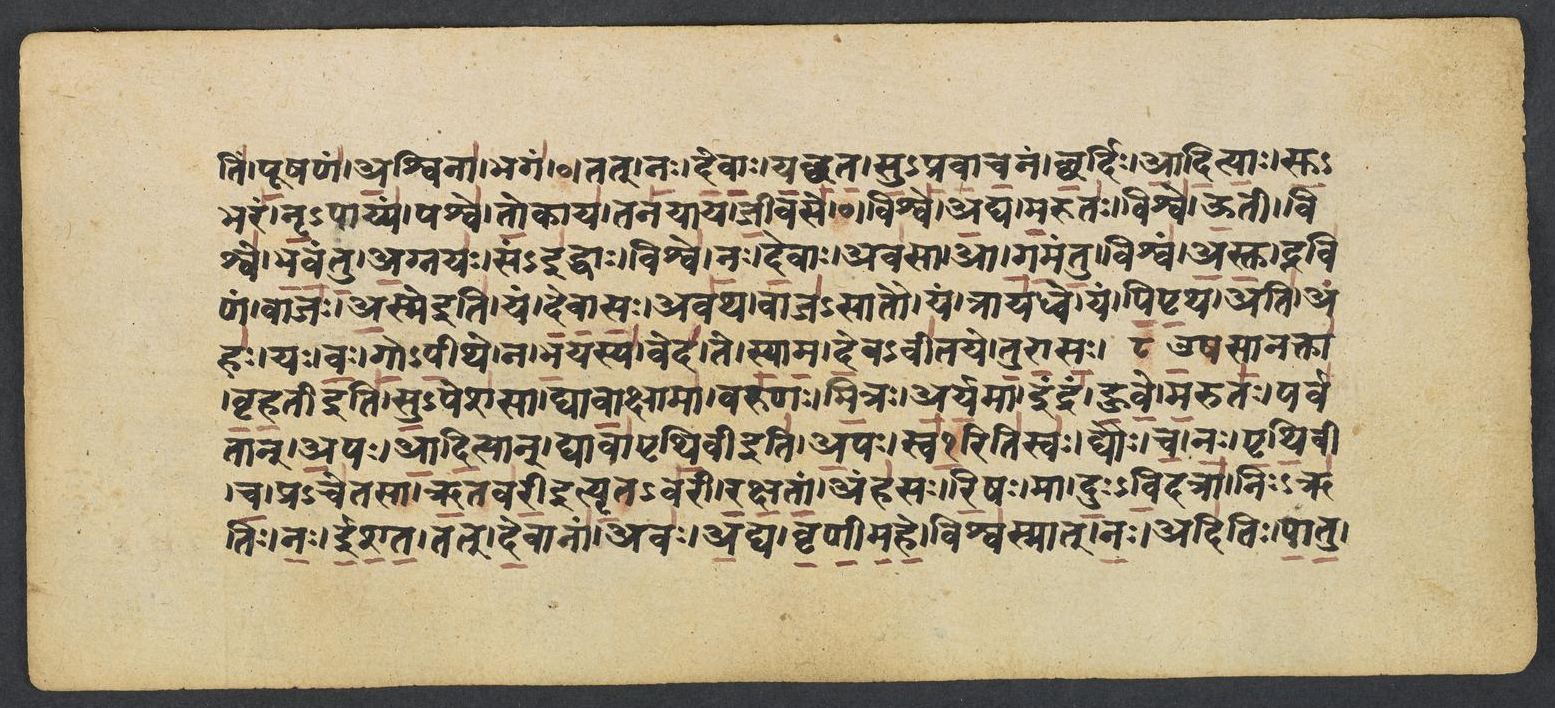
Where on the image
Penn Ms. Coll. 390 Item 41, fol. 775r (numbered 91r by the scribe) (OPenn image 775, lower leaf). Checked on the image: the Rigveda text on this page begins in RV 10.35.11 ‹-bṛhaspatim pūṣaṇam aśvinā bhagam›. The next page with Rigveda text, fol. 775v (numbered 91v by the scribe), begins in RV 10.36.3 ‹aṃhasaḥ mātā mitrasya varuṇasya›. Verses 10.36.1-2 end on this page.
1u̱ṣāsā̱naktā̍ bṛha̱tī su̱peśa̍sā̱ dyāvā̱kṣāmā̱ varu̍ṇo mi̱tro a̍rya̱mā | indra̍ṁ huve ma̱ruta̱ḥ parva̍tām̐ a̱pa ā̍di̱tyān dyāvā̍pṛthi̱vī a̱paḥ sva̍ḥ ||
2dyauś ca̍ naḥ pṛthi̱vī ca̱ prace̍tasa ṛ̱tāva̍rī rakṣatā̱m aṁha̍so ri̱ṣaḥ | mā du̍rvi̱datrā̱ nirṛ̍tir na īśata̱ tad de̱vānā̱m avo̍ a̱dyā vṛ̍ṇīmahe ||
Compare: Padapāṭha (word-by-word text written in the manuscript; Sansknet e-text via GRETIL)
1uṣasānaktā | bṛhatī iti | su-peśasā | dyāvākṣāmā | varuṇaḥ | mitraḥ | aryamā | indram | huve | marutaḥ | parvatān | apaḥ | ādityān | dyāvāpṛthivī iti | apaḥ | svar iti svaḥ
2dyauḥ | ca | naḥ | pṛthivī | ca | pra-cetasā | ṛtavarī ity ṛta-varī | rakṣatām | aṃhasaḥ | riṣaḥ | mā | duḥ-vidatrā | nr-ṛtiḥ | naḥ | īśata | tat | devānām | avaḥ | adya | vṛṇīmahe
1THERE are the Dawn and Night, the grand and beauteous Pair, Earth, Heaven, and Varuṇa, Mitra, and Aryaman. Indra I call, the Maruts, Mountains, and the Floods, Âdityas, Heaven and Earth, the Waters, and the Sky.
2May Dyaus and Pr̥ithivî, wise, true to Holy Law, keep us in safety from distress and injury. Let not malignant Nirr̥iti rule over us. We crave to-day this gracious favour of the Gods.
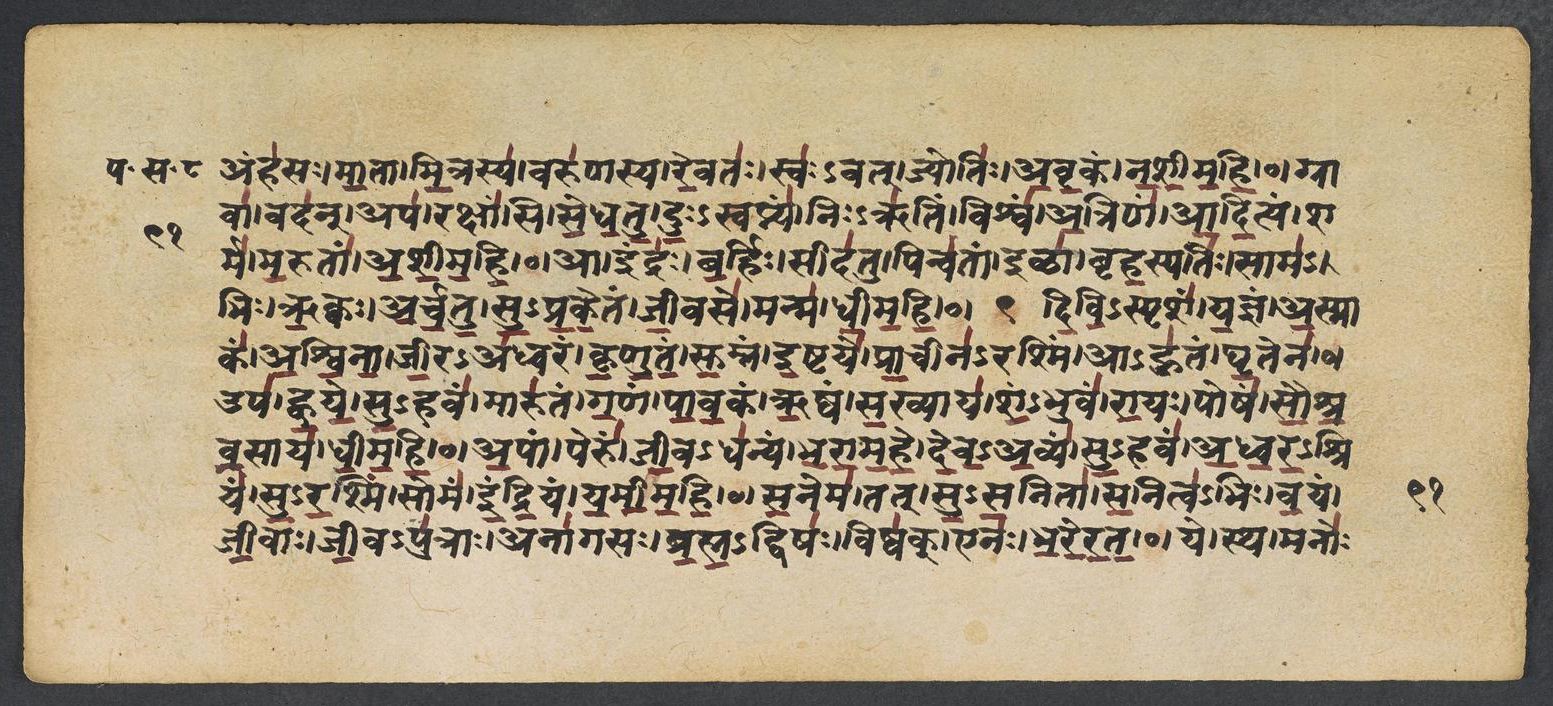
Where on the image
Penn Ms. Coll. 390 Item 41, fol. 775v (numbered 91v by the scribe) (OPenn image 776, upper leaf). Checked on the image: the Rigveda text on this page begins in RV 10.36.3 ‹aṃhasaḥ mātā mitrasya varuṇasya›. The next page with Rigveda text, fol. 776r (numbered 92r by the scribe), begins in RV 10.36.10 ‹yajñiyāḥ te śṛṇotana yat›. Verses 10.36.3-9 end on this page; 10.36.3 begins on fol. 775r (numbered 91r by the scribe).
3viśva̍smān no̱ adi̍tiḥ pā̱tv aṁha̍so mā̱tā mi̱trasya̱ varu̍ṇasya re̱vata̍ḥ | sva̍rva̱j jyoti̍r avṛ̱kaṁ na̍śīmahi̱ tad de̱vānā̱m avo̍ a̱dyā vṛ̍ṇīmahe ||
4grāvā̱ vada̱nn apa̱ rakṣā̍ṁsi sedhatu du̱ṣṣvapnya̱ṁ nirṛ̍ti̱ṁ viśva̍m a̱triṇa̍m | ā̱di̱tyaṁ śarma̍ ma̱rutā̍m aśīmahi̱ tad de̱vānā̱m avo̍ a̱dyā vṛ̍ṇīmahe ||
5endro̍ ba̱rhiḥ sīda̍tu̱ pinva̍tā̱m iḻā̱ bṛha̱spati̱ḥ sāma̍bhir ṛ̱kvo a̍rcatu | su̱pra̱ke̱taṁ jī̱vase̱ manma̍ dhīmahi̱ tad de̱vānā̱m avo̍ a̱dyā vṛ̍ṇīmahe ||
6di̱vi̱spṛśa̍ṁ ya̱jñam a̱smāka̍m aśvinā jī̱rādhva̍raṁ kṛṇutaṁ su̱mnam i̱ṣṭaye̍ | prā̱cīna̍raśmi̱m āhu̍taṁ ghṛ̱tena̱ tad de̱vānā̱m avo̍ a̱dyā vṛ̍ṇīmahe ||
7upa̍ hvaye su̱hava̱m māru̍taṁ ga̱ṇam pā̍va̱kam ṛ̱ṣvaṁ sa̱khyāya̍ śa̱mbhuva̍m | rā̱yas poṣa̍ṁ sauśrava̱sāya̍ dhīmahi̱ tad de̱vānā̱m avo̍ a̱dyā vṛ̍ṇīmahe ||
8a̱pām peru̍ṁ jī̱vadha̍nyam bharāmahe devā̱vya̍ṁ su̱hava̍m adhvara̱śriya̍m | su̱ra̱śmiṁ soma̍m indri̱yaṁ ya̍mīmahi̱ tad de̱vānā̱m avo̍ a̱dyā vṛ̍ṇīmahe ||
9sa̱nema̱ tat su̍sa̱nitā̍ sa̱nitva̍bhir va̱yaṁ jī̱vā jī̱vapu̍trā̱ anā̍gasaḥ | bra̱hma̱dviṣo̱ viṣva̱g eno̍ bharerata̱ tad de̱vānā̱m avo̍ a̱dyā vṛ̍ṇīmahe ||
Compare: Padapāṭha (word-by-word text written in the manuscript; Sansknet e-text via GRETIL)
3viśvasmāt | naḥ | aditiḥ | pātu | aṃhasaḥ | mātā | mitrasya | varuṇasya | revataḥ | svaḥ-vat | jyotiḥ | avṛkam | naśīmahi | tat | devānām | avaḥ | adya | vṛṇīmahe
4grāvā | vadan | apa | rakṣāṃsi | sedhatu | duḥ-svapnyam | niḥ-ṛtim | viśvam | atriṇam | ādityam | śarma | marutām | aśīmahi | tat | devānām | avaḥ | adya | vṛṇīmahe
5ā | indraḥ | barhiḥ | sīdatu | pinvatām | iḷā | bṛhaspatiḥ | sāma-bhiḥ | ṛkvaḥ | arcatu | su-praketam | jīvase | manma | dhīmahi | tat | devānām | avaḥ | adya | vṛṇīmahe
6divi-spṛśam | yajñam | asmākam | aśvinā | jīra-adhvaram | kṛṇutam | sumnam | iṣṭaye | prācīna-raśmim | āhutam | ghṛtena | tat | devānām | avaḥ | adya | vṛṇīmahe
7upa | hvaye | su-havam | mārutam | gaṇam | pāvakam | ṛṣvam | sakhyāya | śam-bhuvam | rāyaḥ | poṣam | sauśravasāya | dhīmahi | tat | devānām | avaḥ | adya | vṛṇīmahe
8apām | perum | jīva-dhanyam | bharāmahe | deva-avyam | su-havam | adhvara-śriyam | su-raśmim | somam | indriyam | yamīmahi | tat | devānām | avaḥ | adya | vṛṇīmahe
9sanema | tat | su-sanitā | sanitva-bhiḥ | vayam | jīvāḥ | jīva-putrāḥ | anāgasaḥ | brahma-dviṣaḥ | viṣvak | enaḥ | bharerata | tat | devānām | avaḥ | adya | vṛṇīmahe
3Mother of Mitra and of opulent Varuṇa, may Aditi preserve us safe from all distress. May we obtain the light of heaven without a foe. We crave this gracious favour of the Gods to-day.
4May ringing press-stones keep the Râkshasas afar, ill dream, and Nirr̥iti, and each voracious fiend. May the Âdityas and the Maruts shelter us. We crave this gracious favour of the Gods to-day.
5Full flow libations; on our grass let Indra sit; Br̥ihaspati the singer laud with Sâma hymns! Wise be our hearts' imaginings that we may live. We crave this gracious favour of the Gods to-day.
6Ye Aṣvins, make our sacrifice ascend to heaven, and animate the rite that it may send us bliss, Offered with holy oil, with forward-speeding rein. We crave the gracious favour of the Gods to-day.
7Hither I call the band of Maruts, swift to hear, great, purifying, bringing bliss, to he our Friends. May we increase our wealth to glorify our name. We crave this graciousfavour of the Gods to-day.
8We bring the Stay of Life, who makes the waters swell, swift-hearing, Friend of Gods, who waits on sacrifice. May we control that Power, Soma whose rays are bright. We crave this gracious favour of the Gods to-day.
9Alive ourselves, with living sons, devoid of guilt, may we win this with winners by fair means to win. Let the prayer-haters bear our sin to every side. We crave this gracious favour of the Gods to-day.
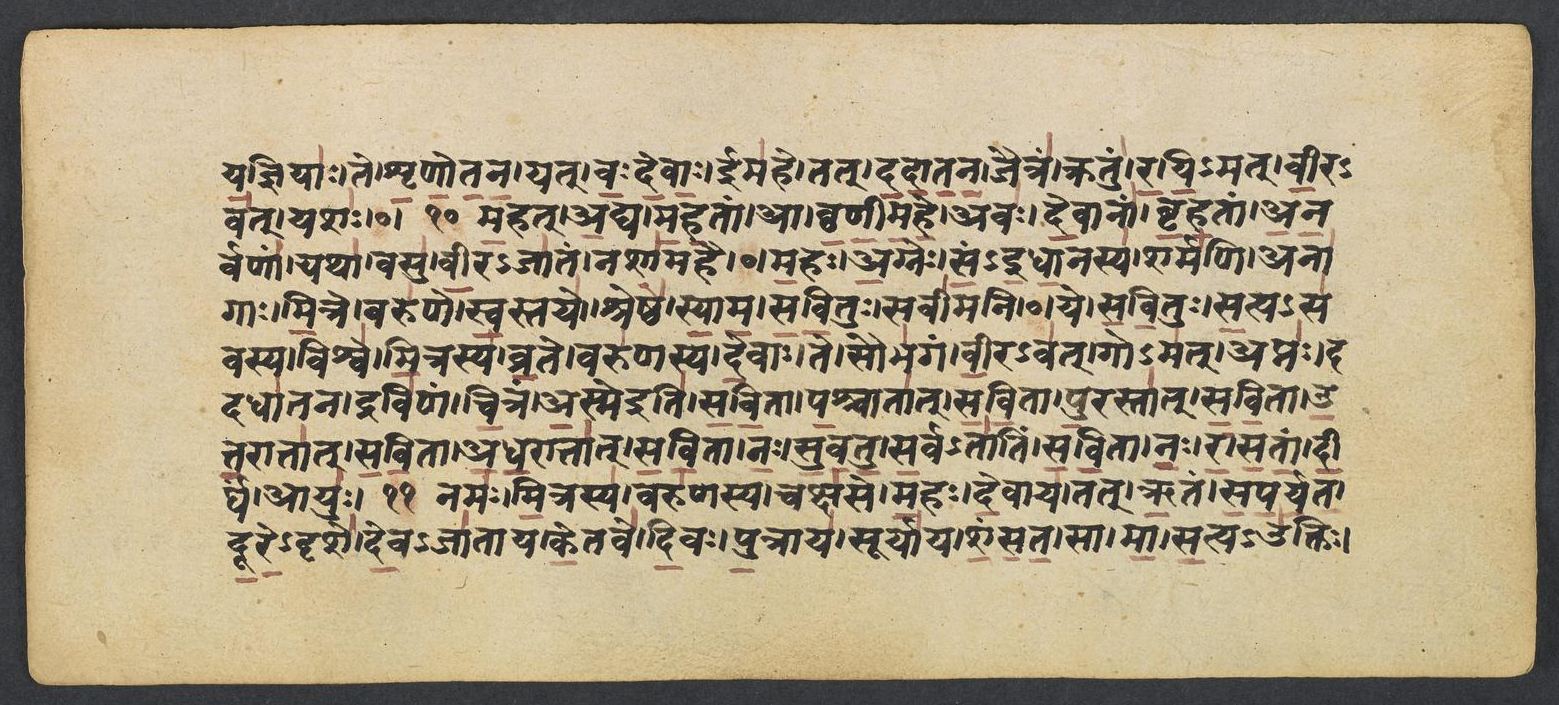
Where on the image
Penn Ms. Coll. 390 Item 41, fol. 776r (numbered 92r by the scribe) (OPenn image 776, lower leaf). Checked on the image: the Rigveda text on this page begins in RV 10.36.10 ‹yajñiyāḥ te śṛṇotana yat›. The next page with Rigveda text, fol. 776v (numbered 92v by the scribe), begins in RV 10.37.2 ‹pari pātu viśvataḥ dyāvā›. Verses 10.36.10-14 end on this page; 10.36.10 begins on fol. 775v (numbered 91v by the scribe).
10ye sthā mano̍r ya̱jñiyā̱s te śṛ̍ṇotana̱ yad vo̍ devā̱ īma̍he̱ tad da̍dātana | jaitra̱ṁ kratu̍ṁ rayi̱mad vī̱rava̱d yaśa̱s tad de̱vānā̱m avo̍ a̱dyā vṛ̍ṇīmahe ||
11ma̱had a̱dya ma̍ha̱tām ā vṛ̍ṇīma̱he 'vo̍ de̱vānā̍m bṛha̱tām a̍na̱rvaṇā̍m | yathā̱ vasu̍ vī̱rajā̍ta̱ṁ naśā̍mahai̱ tad de̱vānā̱m avo̍ a̱dyā vṛ̍ṇīmahe ||
12ma̱ho a̱gneḥ sa̍midhā̱nasya̱ śarma̱ṇy anā̍gā mi̱tre varu̍ṇe sva̱staye̍ | śreṣṭhe̍ syāma savi̱tuḥ savī̍mani̱ tad de̱vānā̱m avo̍ a̱dyā vṛ̍ṇīmahe ||
13ye sa̍vi̱tuḥ sa̱tyasa̍vasya̱ viśve̍ mi̱trasya̍ vra̱te varu̍ṇasya de̱vāḥ | te saubha̍gaṁ vī̱rava̱d goma̱d apno̱ dadhā̍tana̱ dravi̍ṇaṁ ci̱tram a̱sme ||
14sa̱vi̱tā pa̱ścātā̍t savi̱tā pu̱rastā̍t savi̱totta̱rāttā̍t savi̱tādha̱rāttā̍t | sa̱vi̱tā na̍ḥ suvatu sa̱rvatā̍tiṁ savi̱tā no̍ rāsatāṁ dī̱rgham āyu̍ḥ ||
Compare: Padapāṭha (word-by-word text written in the manuscript; Sansknet e-text via GRETIL)
10ye | sthāḥ | manoḥ | yajñiyāḥ | te | śṛṇotana | yat | vaḥ | devāḥ | īmahe | tat | dadātana | jaitram | kratum | rayimat | vīra-vat | yaśaḥ | tat | devānām | avaḥ | adya | vṛṇīmahe
11mahat | adya | mahatām | ā | vṛṇīmahe | avaḥ | devānām | bṛhatām | anarvaṇām | yathā | vasu | vīra-jātam | naśāmahai | tat | devānām | avaḥ | adya | vṛṇīmahe
12mahaḥ | agneḥ | sam-idhānasya | śarmaṇi | anāgāḥ | mitre | varuṇe | svastaye | śreṣṭhe | syāma | savituḥ | savīmani | tat | devānām | avaḥ | adya | vṛṇīmahe
13ye | savituḥ | satya-savasya | viśve | mitrasya | vrate | varuṇasya | devāḥ | te | saubhagam | vīra-vat | go--mat | apnaḥ | dadhātana | draviṇam | citram | asme iti
14savitā | paścātāt | savitā | purastāt | savitā | uttarāttāt | savitā | adharāttāt | sav itā | naḥ | suvatu | sarva-tātim | savitā | naḥ | rāsatām | dīrgham | āyuḥ
10Hear us, O ye who claim the worship of mankind, and give us, O ye Gods, the gift for which we pray, Victorious wisdom, fame with heroes and with wealth. We crave to-day this gracious favour of the Gods.
11We crave the gracious favour of the Gods to-day, great favour of great Gods, sublime and free from foes, That we may gain rich treasure sprung from hero sons. We crave this gracious favour of the Gods today.
12In great enkindled Agni's keeping, and, for bliss, free from all sin before Mitra and Varuṇa. May we share Savitar's best animating help. We crave this gracious favour of the Gods to-day.
13All ye, the Gods whom Savitar the Father of truth, and Varuṇa and Mitra govern, Give us prosperity with hero children, and opulence in kine and various treasure.
14Savitar, Savitar from east and westward, Savitar, Savitar from north and southward, Savitar send us perfect health and comfort, Savitar let our days of life be lengthened!
Notes
- Sanskrit: Aufrecht's edition (1877) with the Vedic accents, as entered by van Nooten and Holland (GRETIL).
- English: Ralph T. H. Griffith, The Hymns of the Rigveda (1889-1892; 2nd ed. 1896-1897), from the VedaWeb digital text; OCR slips in that text were corrected against the printed 2nd edition (data/sources/rigveda/griffith_errata.json).
- Padapāṭha (edition text): Sansknet e-text via GRETIL (CC BY-NC-SA 4.0).
Cite
Sources
- Source: Penn Ms. Coll. 390 Item 41 (undated (catalogued with Penn's 18th-19th c. Vedic manuscripts)), OPenn, Public Domain Mark + Aufrecht's accented text (GRETIL) + Griffith's English (VedaWeb) (holding institution)
- Critical edition: Aufrecht (1877), accented e-text via GRETIL
← previous · → next · v cycle view · l back to library