Rigveda 10.37: To Surya
Introduction
Rigveda 10.37 is a hymn of 12 verses addressed to Surya. It stands in book (maṇḍala) 10, the last and latest book. The Rigveda is the oldest collection of Sanskrit hymns, composed in the second half of the second millennium BCE and handed down orally for many centuries before it was written down.
The manuscript shown is Penn Ms. Coll. 390 Item 41 (University of Pennsylvania), an undated paper manuscript of the padapāṭha (the word-by-word recitation text, in which every word is written separately and compounds are split) of the whole Ṛgveda in Devanāgarī, 884 leaves in fascicles, 7-9 lines to the page, accents in red; this hymn stands on fol. 776r-777v. Each section below gives the verses that end on one page; the page boundaries were read on the images (the opening words of every page), not counted out. Where the manuscript is a padapāṭha (the word-by-word recitation text), the section shows Aufrecht's continuous (saṃhitā) text first and, as the edition text, the padapāṭha of the same verses, which is the form written on the page.
How was this verified? (Provenance)
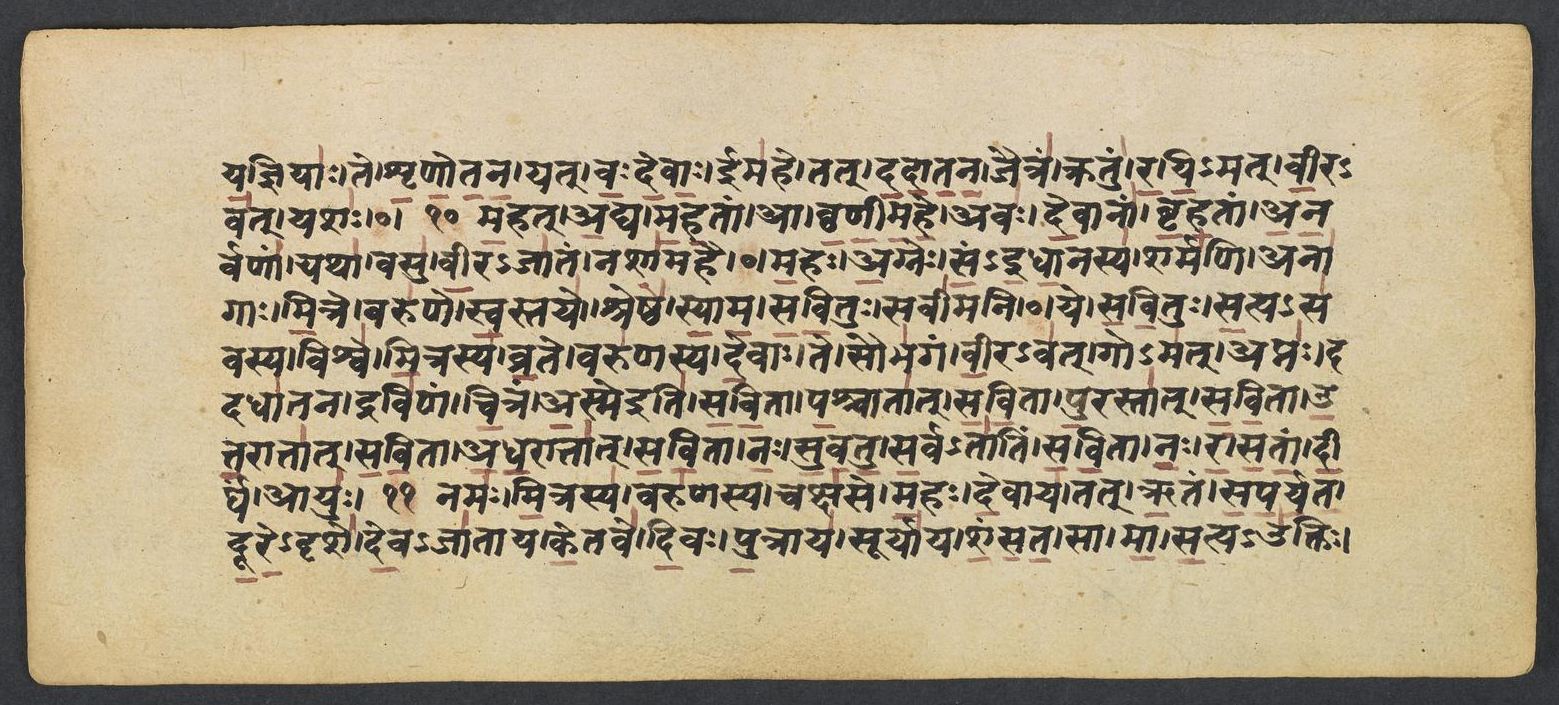
Where on the image
Penn Ms. Coll. 390 Item 41, fol. 776r (numbered 92r by the scribe) (OPenn image 776, lower leaf). Checked on the image: the Rigveda text on this page begins in RV 10.36.10 ‹yajñiyāḥ te śṛṇotana yat›. The next page with Rigveda text, fol. 776v (numbered 92v by the scribe), begins in RV 10.37.2 ‹pari pātu viśvataḥ dyāvā›. Verse 10.37.1 ends on this page.
1namo̍ mi̱trasya̱ varu̍ṇasya̱ cakṣa̍se ma̱ho de̱vāya̱ tad ṛ̱taṁ sa̍paryata | dū̱re̱dṛśe̍ de̱vajā̍tāya ke̱tave̍ di̱vas pu̱trāya̱ sūryā̍ya śaṁsata ||
Compare: Padapāṭha (word-by-word text written in the manuscript; Sansknet e-text via GRETIL)
1namaḥ | mitrasya | varuṇasya | cakṣase | mahaḥ | devāya | tat | ṛtam | saparyata | dūre--dṛśe | deva-jātāya | ketave | divaḥ | putrāya | sūryāya | śaṃsata
1Do homage unto Varuṇa's and Mitra's Eye: offer this solemn worship to the Mighty God, Who seeth far away, the Ensign, born of Gods. Sing praises unto Sûrya, to the Son of Dyaus.
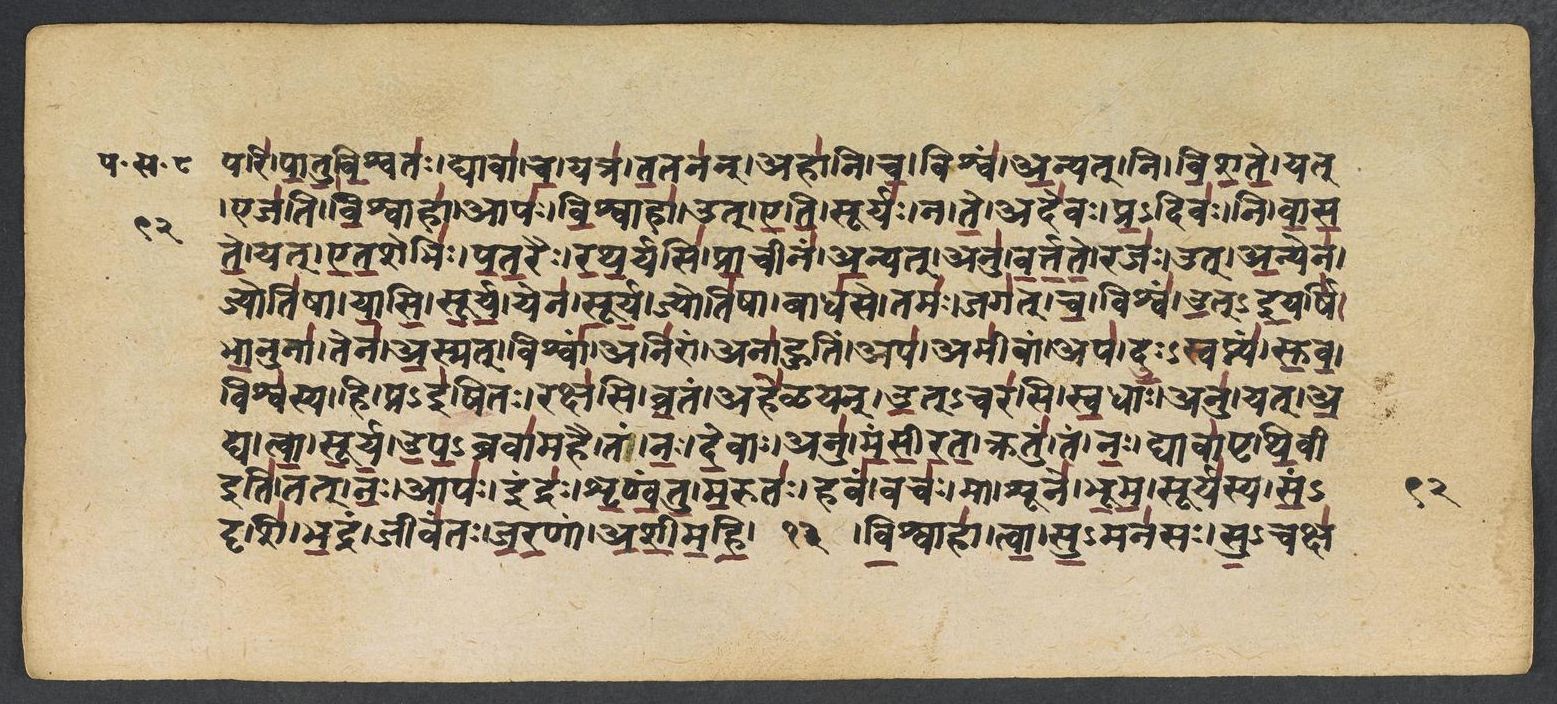
Where on the image
Penn Ms. Coll. 390 Item 41, fol. 776v (numbered 92v by the scribe) (OPenn image 777, upper leaf). Checked on the image: the Rigveda text on this page begins in RV 10.37.2 ‹pari pātu viśvataḥ dyāvā›. The next page with Rigveda text, fol. 777r (numbered 93r by the scribe), begins in RV 10.37.7 ‹-su-cakṣasaḥ prajāvantaḥ anamīvāḥ anāgasaḥ›. Verses 10.37.2-6 end on this page; 10.37.2 begins on fol. 776r (numbered 92r by the scribe).
2sā mā̍ sa̱tyokti̱ḥ pari̍ pātu vi̱śvato̱ dyāvā̍ ca̱ yatra̍ ta̱tana̱nn ahā̍ni ca | viśva̍m a̱nyan ni vi̍śate̱ yad eja̍ti vi̱śvāhāpo̍ vi̱śvāhod e̍ti̱ sūrya̍ḥ ||
3na te̱ ade̍vaḥ pra̱divo̱ ni vā̍sate̱ yad e̍ta̱śebhi̍ḥ pata̱rai ra̍tha̱ryasi̍ | prā̱cīna̍m a̱nyad anu̍ vartate̱ raja̱ ud a̱nyena̱ jyoti̍ṣā yāsi sūrya ||
4yena̍ sūrya̱ jyoti̍ṣā̱ bādha̍se̱ tamo̱ jaga̍c ca̱ viśva̍m udi̱yarṣi̍ bhā̱nunā̍ | tenā̱smad viśvā̱m ani̍rā̱m anā̍huti̱m apāmī̍vā̱m apa̍ du̱ṣṣvapnya̍ṁ suva ||
5viśva̍sya̱ hi preṣi̍to̱ rakṣa̍si vra̱tam ahe̍ḻayann u̱ccara̍si sva̱dhā anu̍ | yad a̱dya tvā̍ sūryopa̱bravā̍mahai̱ taṁ no̍ de̱vā anu̍ maṁsīrata̱ kratu̍m ||
6taṁ no̱ dyāvā̍pṛthi̱vī tan na̱ āpa̱ indra̍ḥ śṛṇvantu ma̱ruto̱ hava̱ṁ vaca̍ḥ | mā śūne̍ bhūma̱ sūrya̍sya sa̱ṁdṛśi̍ bha̱draṁ jīva̍nto jara̱ṇām a̍śīmahi ||
Compare: Padapāṭha (word-by-word text written in the manuscript; Sansknet e-text via GRETIL)
2sā | mā | satya-uktiḥ | pari | pātu | viśvataḥ | dyāvā | ca | yatra | tatanan | ahān i | ca | viśvam | anyat | ni | viśate | yat | ejati | viśvahā | apaḥ | viśvāhā | ut | et i | sūryaḥ
3na | te | adevaḥ | pra-divaḥ | ni | vāsate | yat | etaśebhiḥ | pataraiḥ | ratharyasi | prācīnam | anyat | anu | vartate | rajaḥ | ut | anyena | jyotiṣā | yāsi | sūrya
4yena | sūrya | jyotiṣā | bādhase | tamaḥ | jagat | ca | viśvam | ut-iyarṣi | bhānunā | tena | asmat | viśvām | anirām | anāhutim | apa | amīvām | apa | duḥ-svapnyam | suva
5viśvasya | hi | pra-iṣitaḥ | rakṣasi | vratam | aheḷayan | ut-carasi | svadhāḥ | anu | yat | adya | tvā | sūrya | upa-bravāmahai | tat | naḥ | devāḥ | anu | maṃsīrata | kratum
6tam | naḥ | dyāvāpṛthivī iti | tat | naḥ | āpaḥ | indraḥ | śṛṇvantu | marutaḥ | havam | vacaḥ | mā | śūne | bhūma | sūryasya | sam-dṛśi | bhadram | jīvantaḥ | jaraṇām | aśīmahi
2May this my truthful speech guard me on every side wherever heaven and earth and days are spread abroad. All else that is in motion finds a place of rest: the waters ever flow and ever mounts the Sun.
3No godless man from time remotest draws thee down when thou art driving forth with winged dappled Steeds. One lustre waits upon thee moving to the east, and, Sûrya, thou arisest with a different light.
4O Sûrya, with the light whereby thou scatterest gloom, and with thy ray impellest every moving thing, Keep far from us all feeble, worthless sacrifice, and drive away disease and every evil dream.
5Sent forth thou guardest well the Universe's law, and in thy wonted way arisest free from wrath. When Sûrya, we address our prayers to thee to-day, may the Gods favour this our purpose and desire.
6This invocation, these our words may Heaven and Earth, and Indra and the Waters and the Maruts hear. Ne'er may we suffer want in presence of the Sun, and, living happy lives, may we attain old age.
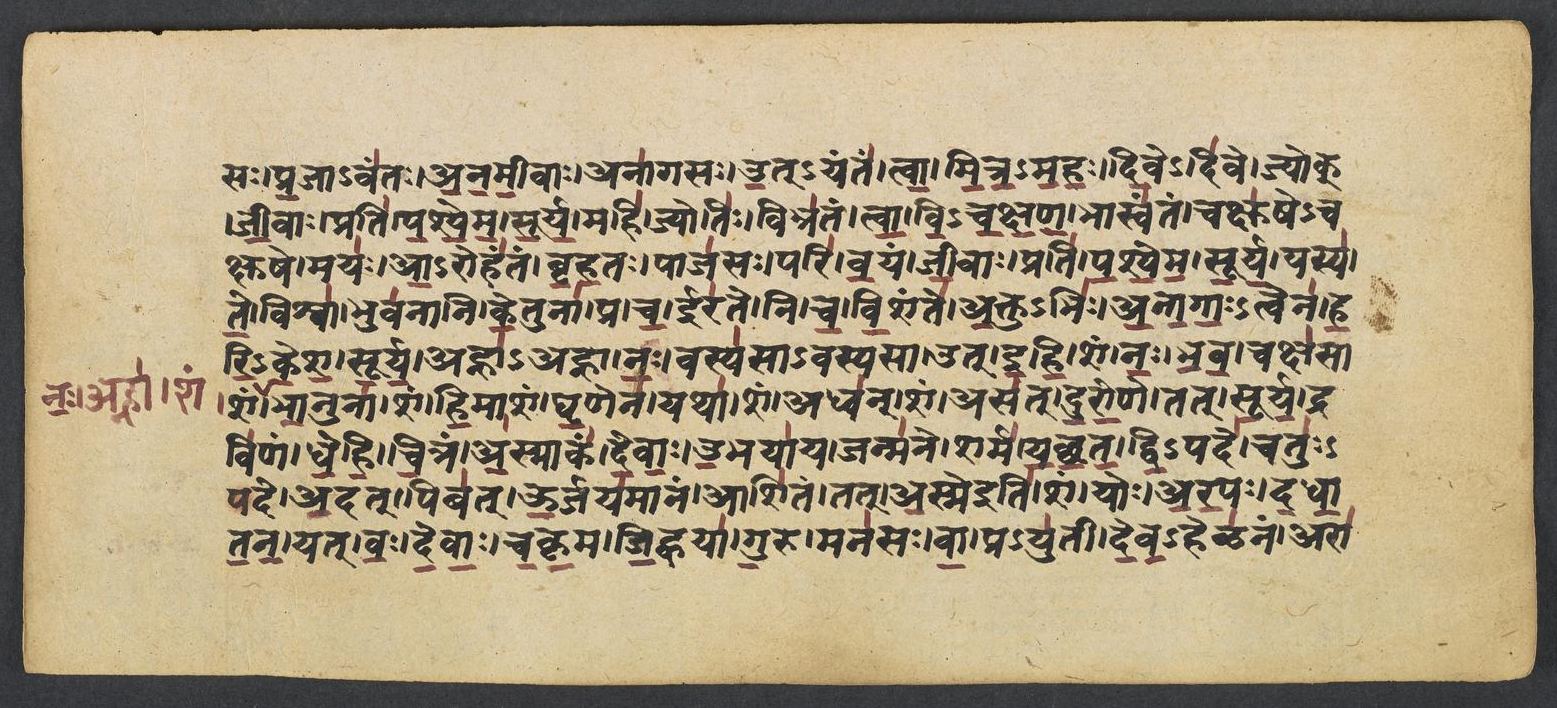
Where on the image
Penn Ms. Coll. 390 Item 41, fol. 777r (numbered 93r by the scribe) (OPenn image 777, lower leaf). Checked on the image: the Rigveda text on this page begins in RV 10.37.7 ‹-su-cakṣasaḥ prajāvantaḥ anamīvāḥ anāgasaḥ›. The next page with Rigveda text, fol. 777v (numbered 93v by the scribe), begins in RV 10.37.12 ‹-arāvā yaḥ naḥ abhi›. Verses 10.37.7-11 end on this page; 10.37.7 begins on fol. 776v (numbered 92v by the scribe).
7vi̱śvāhā̍ tvā su̱mana̍saḥ su̱cakṣa̍saḥ pra̱jāva̍nto anamī̱vā anā̍gasaḥ | u̱dyanta̍ṁ tvā mitramaho di̱ve-di̍ve̱ jyog jī̱vāḥ prati̍ paśyema sūrya ||
8mahi̱ jyoti̱r bibhra̍taṁ tvā vicakṣaṇa̱ bhāsva̍nta̱ṁ cakṣu̍ṣe-cakṣuṣe̱ maya̍ḥ | ā̱roha̍ntam bṛha̱taḥ pāja̍sa̱s pari̍ va̱yaṁ jī̱vāḥ prati̍ paśyema sūrya ||
9yasya̍ te̱ viśvā̱ bhuva̍nāni ke̱tunā̱ pra cera̍te̱ ni ca̍ vi̱śante̍ a̱ktubhi̍ḥ | a̱nā̱gā̱stvena̍ harikeśa sū̱ryāhnā̍hnā no̱ vasya̍sā-vasya̱sod i̍hi ||
10śaṁ no̍ bhava̱ cakṣa̍sā̱ śaṁ no̱ ahnā̱ śam bhā̱nunā̱ śaṁ hi̱mā śaṁ ghṛ̱ṇena̍ | yathā̱ śam adhva̱ñ cham asa̍d duro̱ṇe tat sū̍rya̱ dravi̍ṇaṁ dhehi ci̱tram ||
11a̱smāka̍ṁ devā u̱bhayā̍ya̱ janma̍ne̱ śarma̍ yacchata dvi̱pade̱ catu̍ṣpade | a̱dat piba̍d ū̱rjaya̍māna̱m āśi̍ta̱ṁ tad a̱sme śaṁ yor a̍ra̱po da̍dhātana ||
Compare: Padapāṭha (word-by-word text written in the manuscript; Sansknet e-text via GRETIL)
7viśvāhā | tvā | su-manasaḥ | su-cakṣasaḥ | prajāvantaḥ | anamīvāḥ | anāgasaḥ | ut-yantam | tvā | mitra-mahaḥ | dive--dive | jyok | jīvāḥ | prati | paśyema | sūrya
8mahi | / jyotiḥ | bibhratam | tvā | vi-cakṣaṇa | bhāsvantam | cakṣuṣe--cakṣuṣe | mayaḥ | ārohantam | bṛhataḥ | pājasaḥ | pari | vayam | jīvāḥ | prati | paśyema | sūrya
9yasya | te | viśvā | bhuvanāni | ketunā | pra | ca | īrate | ni | ca | viśante | aktu-bhiḥ | anāgāḥ-tvena | hari-keśa | sūrya | ahnā ahnā | naḥ | vasyasāvasyasā | ut | ihi
10śam | naḥ | bhava | cakṣasā | sam | naḥ | ahnā | śam | bhānunā | śam | himāḥ | śam | ghṛṇena | yathā | śam | adhvan | śam | asat | duroṇe | tat | sūrya | draviṇam | dhehi | citram
11asmākam | devāḥ | ubhayāya | janmane | śarma | yacchata | dvi-pade | catuḥ-pade | adat | pibat | ūrjayamānam | āśitam | tat | asme iti | śam | yoḥ | arapaḥ | dadhātana
7Cheerful in spirit, evermore, and keen of sight, with store of children, free from sickness and from sin, Long-living, may we look, O Sûrya, upon thee uprising day by day, thou great as Mitra is!
8Sûrya, may we live long and look upon thee still, thee, O Far-seeing One, bringing the glorious light, The radiant God, the spring of joy to every eye, as thou art mounting up o'er the high shining flood.
9Thou by whose lustre all the world of life comes forth, and by thy beams again returns unto its rest, O Sûrya with the golden hair, ascend for us day after day, still bringing purer innocence.
10Bless us with shine, bless us with perfect daylight, bless us with cold, with fervent heat and lustre. Bestow on us, O Sûrya, varied riches, to bless us in our home and when we travel.
11Gods, to our living creatures of both kinds vouchsafe protection, both to bipeds and to quadrupeds, That they may drink and eat invigorating food. So grant us health and strength and perfect innocence.
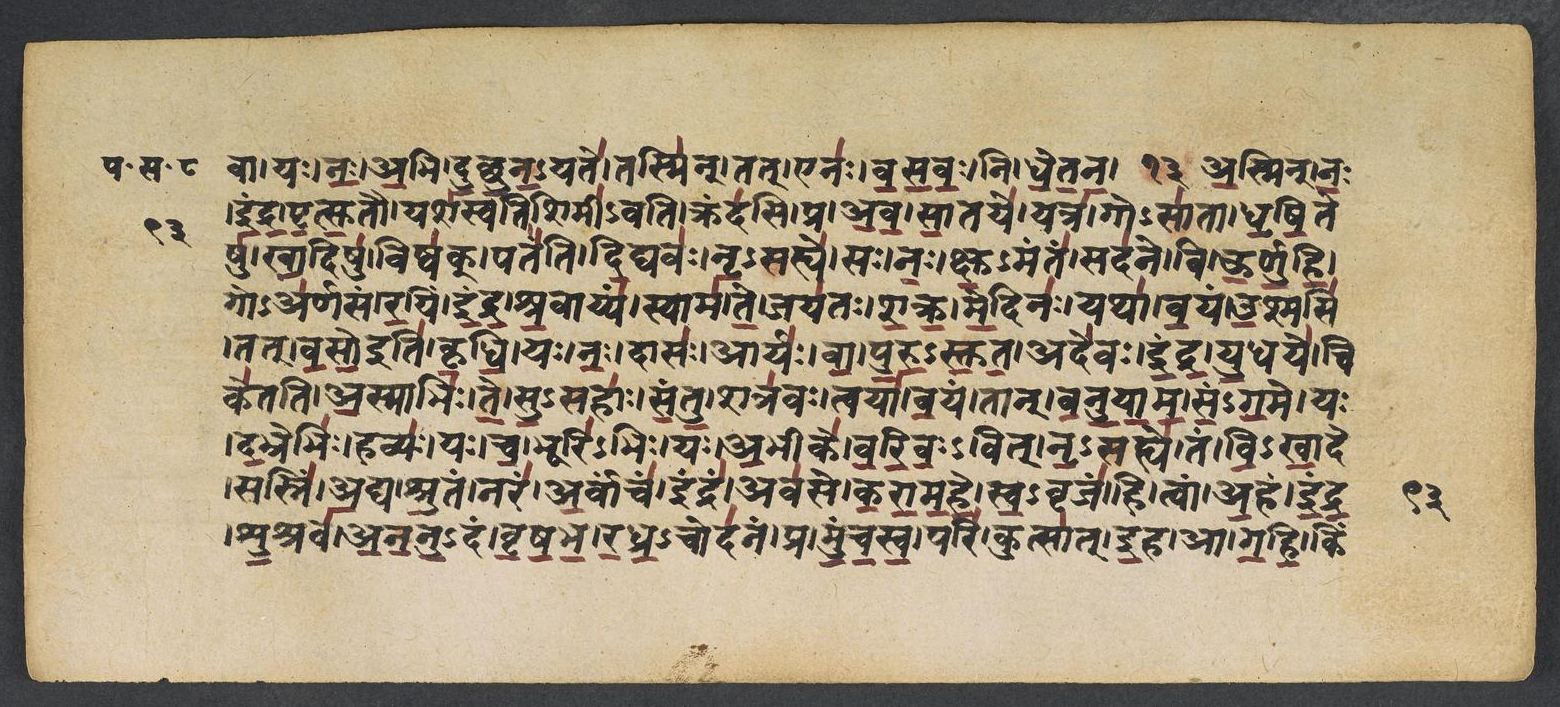
Where on the image
Penn Ms. Coll. 390 Item 41, fol. 777v (numbered 93v by the scribe) (OPenn image 778, upper leaf). Checked on the image: the Rigveda text on this page begins in RV 10.37.12 ‹-arāvā yaḥ naḥ abhi›. The next page with Rigveda text, fol. 778r (numbered 94r by the scribe), begins in RV 10.38.5 ‹oṃ iti tvāvān muṣkayoḥ›. Verse 10.37.12 ends on this page; 10.37.12 begins on fol. 777r (numbered 93r by the scribe).
12yad vo̍ devāś cakṛ̱ma ji̱hvayā̍ gu̱ru mana̍so vā̱ prayu̍tī deva̱heḻa̍nam | arā̍vā̱ yo no̍ a̱bhi du̍cchunā̱yate̱ tasmi̱n tad eno̍ vasavo̱ ni dhe̍tana ||
Compare: Padapāṭha (word-by-word text written in the manuscript; Sansknet e-text via GRETIL)
12yat | vaḥ | devāḥ | cakṛma | jihvayā | guru | manasaḥ | vā | pra-yutī | deva-heḷanam | arāvā | yaḥ | naḥ | abhi | ducchuna-yate | tasmin | tat | enaḥ | vasavaḥ | ni | dhetana
12If by some grievous sin we have provoked the Gods, O Deities, with the tongue or thoughtlessness of heart, That guilt, O Vasus, lay upon the Evil One, on him who ever leads us into deep distress.
Notes
- Sanskrit: Aufrecht's edition (1877) with the Vedic accents, as entered by van Nooten and Holland (GRETIL).
- English: Ralph T. H. Griffith, The Hymns of the Rigveda (1889-1892; 2nd ed. 1896-1897), from the VedaWeb digital text; OCR slips in that text were corrected against the printed 2nd edition (data/sources/rigveda/griffith_errata.json).
- Padapāṭha (edition text): Sansknet e-text via GRETIL (CC BY-NC-SA 4.0).
Cite
Sources
- Source: Penn Ms. Coll. 390 Item 41 (undated (catalogued with Penn's 18th-19th c. Vedic manuscripts)), OPenn, Public Domain Mark + Aufrecht's accented text (GRETIL) + Griffith's English (VedaWeb) (holding institution)
- Critical edition: Aufrecht (1877), accented e-text via GRETIL
← previous · → next · v cycle view · l back to library