Rigveda 10.5: To Agni
Introduction
Rigveda 10.5 is a hymn of 7 verses addressed to Agni. It stands in book (maṇḍala) 10, the last and latest book. The Rigveda is the oldest collection of Sanskrit hymns, composed in the second half of the second millennium BCE and handed down orally for many centuries before it was written down.
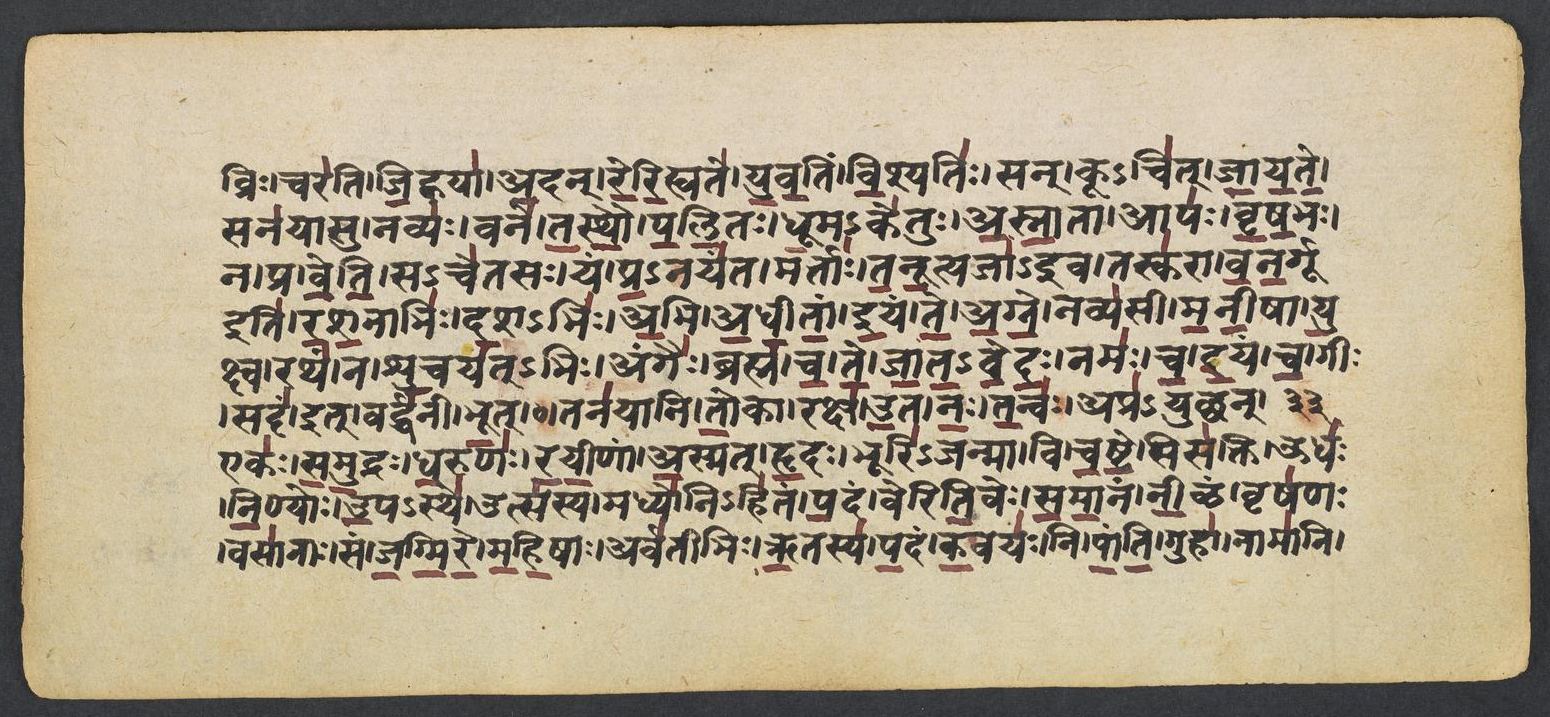
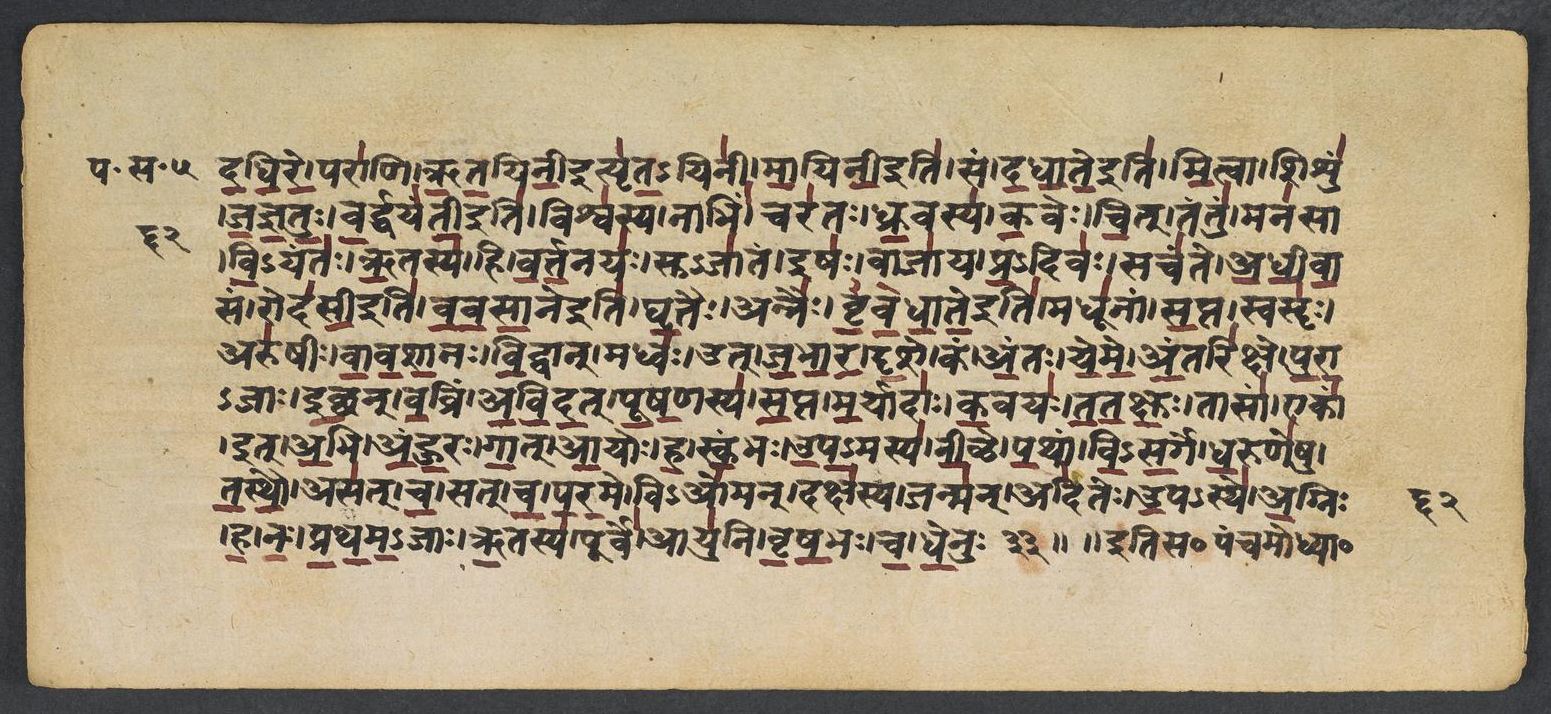
The manuscript shown is Penn Ms. Coll. 390 Item 41 (University of Pennsylvania), an undated paper manuscript of the padapāṭha (the word-by-word recitation text, in which every word is written separately and compounds are split) of the whole Ṛgveda in Devanāgarī, 884 leaves in fascicles, 7-9 lines to the page, accents in red; this hymn stands on fol. 745r-745v. Each section below gives the verses that end on one page; the page boundaries were read on the images (the opening words of every page), not counted out. Where the manuscript is a padapāṭha (the word-by-word recitation text), the section shows Aufrecht's continuous (saṃhitā) text first and, as the edition text, the padapāṭha of the same verses, which is the form written on the page.
How was this verified? (Provenance)
Where on the image
Penn Ms. Coll. 390 Item 41, fol. 745r (numbered 62r by the scribe) (OPenn image 745, lower leaf). Checked on the image: the Rigveda text on this page begins in RV 10.4.4 ‹-vavriḥ carati jihvayā adan›. The next page with Rigveda text, fol. 745v (numbered 62v by the scribe), begins in RV 10.5.2 ‹dadhire parāṇi›. Verse 10.5.1 ends on this page.
1eka̍ḥ samu̱dro dha̱ruṇo̍ rayī̱ṇām a̱smad dhṛ̱do bhūri̍janmā̱ vi ca̍ṣṭe | siṣa̱kty ūdha̍r ni̱ṇyor u̱pastha̱ utsa̍sya̱ madhye̱ nihi̍tam pa̱daṁ veḥ ||
Compare: Padapāṭha (word-by-word text written in the manuscript; Sansknet e-text via GRETIL)
1ekaḥ | samudraḥ | dharuṇaḥ | rayīṇām | asmat | hṛdaḥ | bhūri-janmā | vi | caṣṭe | si sakti | ūdhaḥ | niṇyoḥ | upa-sthe | utsasya | madhye | ni-hitam | padam | veritiveḥ
1HE only is the Sea, holder of treasures: born many a time he views the hearts within us. He hides him in the secret couple's bosom. The Bird dwells in the middle of the fountain.
Where on the image
Penn Ms. Coll. 390 Item 41, fol. 745v (numbered 62v by the scribe) (OPenn image 746, upper leaf). Checked on the image: the Rigveda text on this page begins in RV 10.5.2 ‹dadhire parāṇi›. The next page with Rigveda text, fol. 746v (numbered 63v by the scribe), begins in RV 10.6.1 ‹ayam saḥ yasya śarman›. Verses 10.5.2-7 end on this page; 10.5.2 begins on fol. 745r (numbered 62r by the scribe).
2sa̱mā̱naṁ nī̱ḻaṁ vṛṣa̍ṇo̱ vasā̍nā̱ḥ saṁ ja̍gmire mahi̱ṣā arva̍tībhiḥ | ṛ̱tasya̍ pa̱daṁ ka̱vayo̱ ni pā̍nti̱ guhā̱ nāmā̍ni dadhire̱ parā̍ṇi ||
3ṛ̱tā̱yinī̍ mā̱yinī̱ saṁ da̍dhāte mi̱tvā śiśu̍ṁ jajñatur va̱rdhaya̍ntī | viśva̍sya̱ nābhi̱ṁ cara̍to dhru̱vasya̍ ka̱veś ci̱t tantu̱m mana̍sā vi̱yanta̍ḥ ||
4ṛ̱tasya̱ hi va̍rta̱naya̱ḥ sujā̍ta̱m iṣo̱ vājā̍ya pra̱diva̱ḥ saca̍nte | a̱dhī̱vā̱saṁ roda̍sī vāvasā̱ne ghṛ̱tair annai̍r vāvṛdhāte̱ madhū̍nām ||
5sa̱pta svasṝ̱r aru̍ṣīr vāvaśā̱no vi̱dvān madhva̱ uj ja̍bhārā dṛ̱śe kam | a̱ntar ye̍me a̱ntari̍kṣe purā̱jā i̱cchan va̱vrim a̍vidat pūṣa̱ṇasya̍ ||
6sa̱pta ma̱ryādā̍ḥ ka̱vaya̍s tatakṣu̱s tāsā̱m ekā̱m id a̱bhy a̍ṁhu̱ro gā̍t | ā̱yor ha̍ ska̱mbha u̍pa̱masya̍ nī̱ḻe pa̱thāṁ vi̍sa̱rge dha̱ruṇe̍ṣu tasthau ||
7asa̍c ca̱ sac ca̍ para̱me vyo̍ma̱n dakṣa̍sya̱ janma̱nn adi̍ter u̱pasthe̍ | a̱gnir ha̍ naḥ prathama̱jā ṛ̱tasya̱ pūrva̱ āyu̍ni vṛṣa̱bhaś ca̍ dhe̱nuḥ ||
Compare: Padapāṭha (word-by-word text written in the manuscript; Sansknet e-text via GRETIL)
2samānam | nīḷam | vṛṣaṇaḥ | vasānāḥ | sam | jagmire | mahiṣāḥ | arvatībhiḥ | ṛtasya | padam | kavayaḥ | ni | pānti | guhā | nāmāni | dadhire | parāṇi
3ṛtayinī ity ṛṛta-yinī | māyinī iti | sam | dadhāteiti | mitvā | śiśum | jajñatuḥ | vardhayantī iti | viśvasya | nābhim | carataḥ | dhruvasya | kaveḥ | cit | tantum | manasā | vi-yantaḥ
4ṛtasya | hi | vartanayaḥ | su-jātam | iṣaḥ | vājāya | pra-divaḥ | sacante | adhīvāsam | rodasī iti | vavasāne iti | ghṛtaiḥ | annaiḥ | vavṛdhāteiti | madhūnām
5sapta | svasṛṝḥ | aruṣīḥ | vāvaśānaḥ | vidvān | madhvaḥ | ut | jabhāra | dṛśe | kam | antaḥ | yeme | antarikṣe | purājāḥ | icchan | vavrim | avidat | pūṣaṇasya
6sapta | maryādāḥ | kavayaḥ | tatakṣuḥ | tāsām | ekām | it | abhi | aṃhuraḥ | gāt | āyoḥ | ha | skambhaḥ | upa-masya | nīḷe | pathām | vi-sarge | dharuṇeṣu | tasthau
7asat | ca | sat | ca | parame | vi-oman | dakṣasya | janman | aditeḥ | upa-sthe | agniḥ | ha | naḥ | prathama-jāḥ | ṛtasya | pūrve | āyuni | vṛṣabhaḥ | ca | dhenuḥ
2Inhabiting one dwelling-place in common, strong Stallions and the Mares have come together. The sages guard the seat of Holy Order, and keep the highest names concealed within them.
3The Holy Pair, of wondrous power, have coupled: they formed the Infant, they who bred produced him. The central point of all that moves and moves not, the while they wove the Sage's thread with insight
4For tracks of Order and refreshing viands attend from ancient times the goodly Infant. Wearing him as a mantle, Earth and Heaven grow strong by food of pleasant drink and fatness.
5He, calling loudly to the Seven red Sisters, hath, skilled in sweet drink, brought them to be looked on. He, born of old, in middle air hath halted, and sought and found the covering robe of Pûshan.
6Seven are the pathways which the wise have fashioned; to one of these may come the troubled mortal. He standeth in the dwelling of the Highest, a Pillar, on sure ground where paths are parted.
7Not Being, Being in the highest heaven, in Aditi's bosom and in Daksha's birthplace, Is Agni, our first-born of Holy Order, the Milch-cow and the Bull in life's beginning.
Notes
- Sanskrit: Aufrecht's edition (1877) with the Vedic accents, as entered by van Nooten and Holland (GRETIL).
- English: Ralph T. H. Griffith, The Hymns of the Rigveda (1889-1892; 2nd ed. 1896-1897), from the VedaWeb digital text; OCR slips in that text were corrected against the printed 2nd edition (data/sources/rigveda/griffith_errata.json).
- Padapāṭha (edition text): Sansknet e-text via GRETIL (CC BY-NC-SA 4.0).
Cite
Sources
- Source: Penn Ms. Coll. 390 Item 41 (undated (catalogued with Penn's 18th-19th c. Vedic manuscripts)), OPenn, Public Domain Mark + Aufrecht's accented text (GRETIL) + Griffith's English (VedaWeb) (holding institution)
- Critical edition: Aufrecht (1877), accented e-text via GRETIL
← previous · → next · v cycle view · l back to library