Rigveda 10.44: To Indra
Introduction
Rigveda 10.44 is a hymn of 11 verses addressed to Indra. It stands in book (maṇḍala) 10, the last and latest book. The Rigveda is the oldest collection of Sanskrit hymns, composed in the second half of the second millennium BCE and handed down orally for many centuries before it was written down.
The manuscript shown is Penn Ms. Coll. 390 Item 41 (University of Pennsylvania), an undated paper manuscript of the padapāṭha (the word-by-word recitation text, in which every word is written separately and compounds are split) of the whole Ṛgveda in Devanāgarī, 884 leaves in fascicles, 7-9 lines to the page, accents in red; this hymn stands on fol. 782v-783v. Each section below gives the verses that end on one page; the page boundaries were read on the images (the opening words of every page), not counted out. Where the manuscript is a padapāṭha (the word-by-word recitation text), the section shows Aufrecht's continuous (saṃhitā) text first and, as the edition text, the padapāṭha of the same verses, which is the form written on the page.
How was this verified? (Provenance)
Where on the image
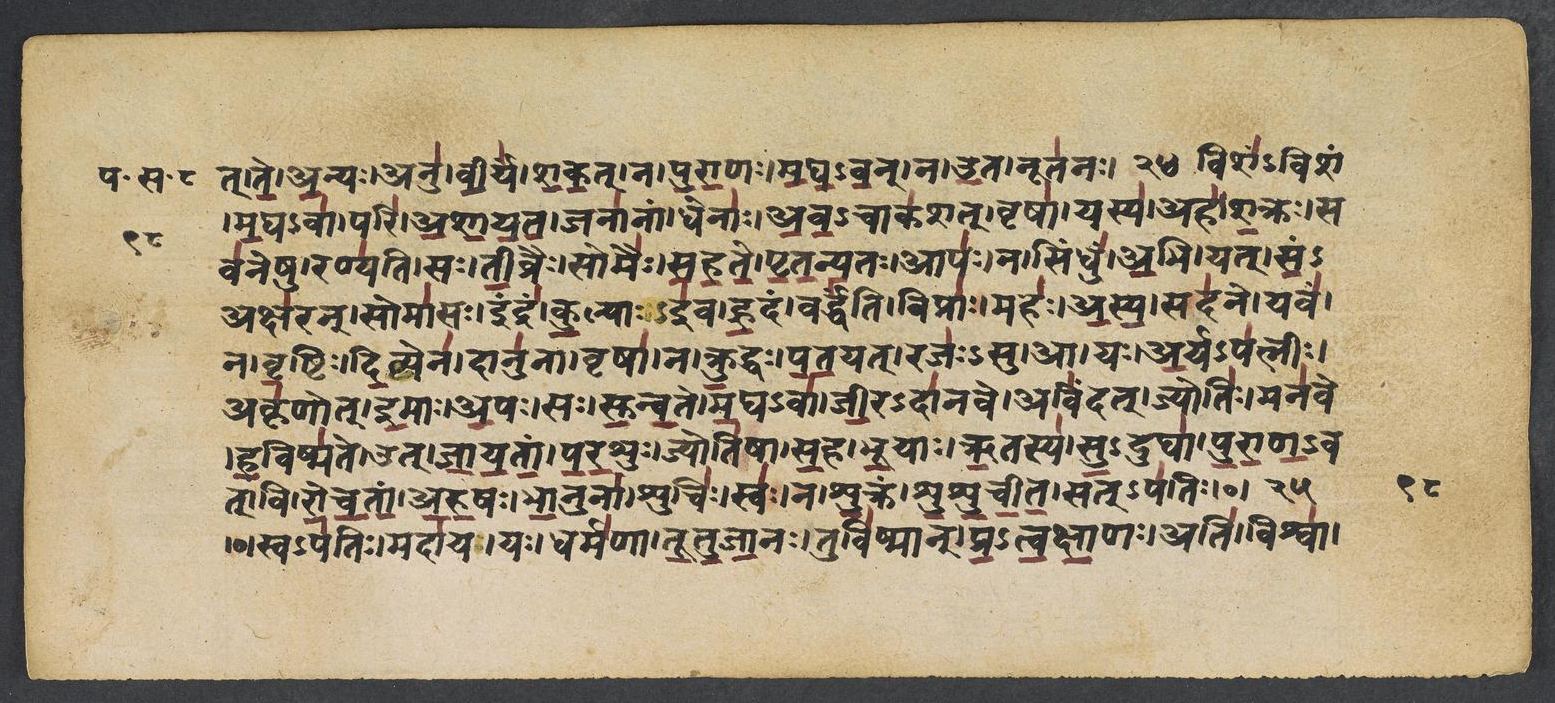
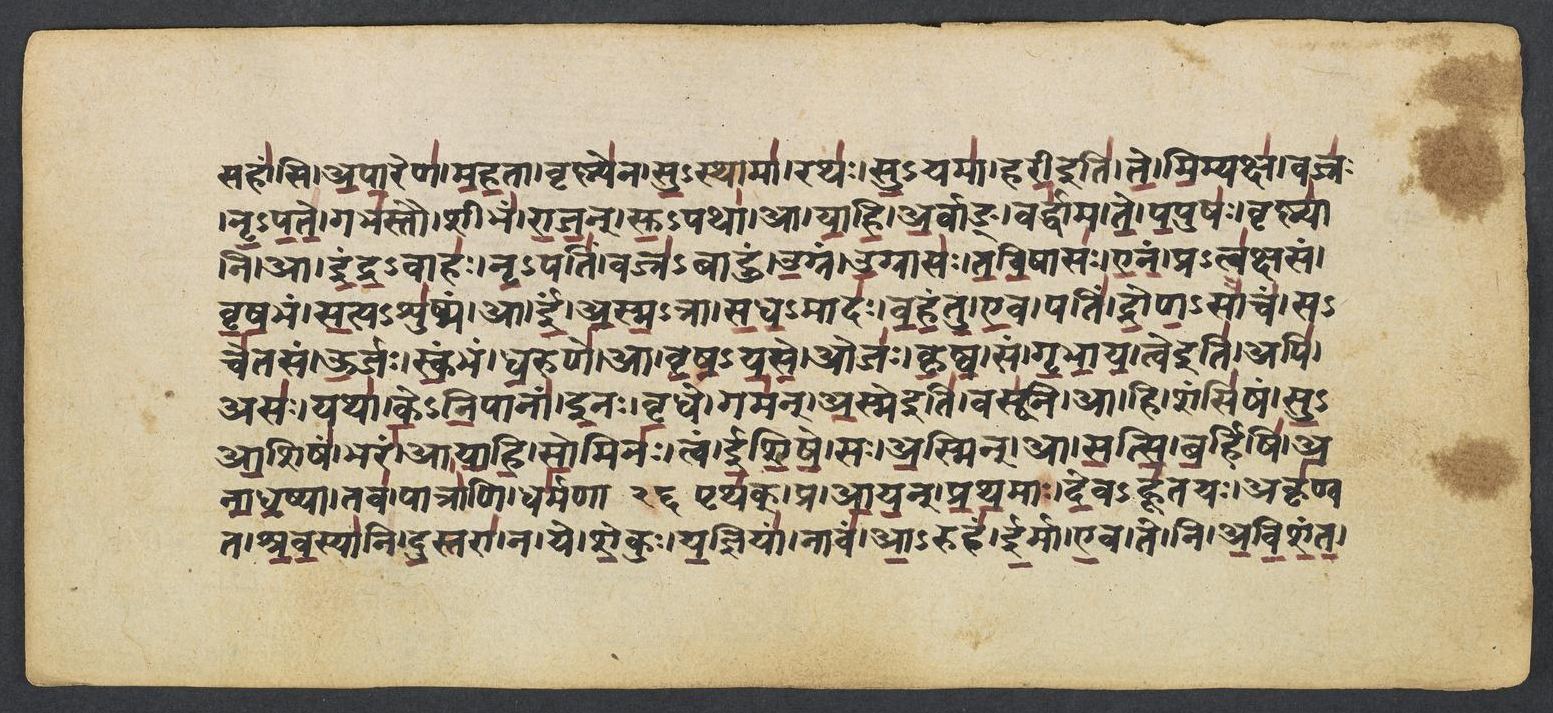
Penn Ms. Coll. 390 Item 41, fol. 783r (numbered 99r by the scribe) (OPenn image 783, lower leaf). Checked on the image: the Rigveda text on this page begins in RV 10.44.1 ‹sahāṃsi apāreṇa mahatā vṛṣṇyena›. The next page with Rigveda text, fol. 783v (numbered 99v by the scribe), begins in RV 10.44.6 ‹kepayaḥ›. Verses 10.44.1-5 end on this page; 10.44.1 begins on fol. 782v (numbered 98v by the scribe).
1ā yā̱tv indra̱ḥ svapa̍ti̱r madā̍ya̱ yo dharma̍ṇā tūtujā̱nas tuvi̍ṣmān | pra̱tva̱kṣā̱ṇo ati̱ viśvā̱ sahā̍ṁsy apā̱reṇa̍ maha̱tā vṛṣṇye̍na ||
2su̱ṣṭhāmā̱ ratha̍ḥ su̱yamā̱ harī̍ te mi̱myakṣa̱ vajro̍ nṛpate̱ gabha̍stau | śībha̍ṁ rājan su̱pathā yā̍hy a̱rvāṅ vardhā̍ma te pa̱puṣo̱ vṛṣṇyā̍ni ||
3endra̱vāho̍ nṛ̱pati̱ṁ vajra̍bāhum u̱gram u̱grāsa̍s tavi̱ṣāsa̍ enam | pratva̍kṣasaṁ vṛṣa̱bhaṁ sa̱tyaśu̍ṣma̱m em a̍sma̱trā sa̍dha̱mādo̍ vahantu ||
4e̱vā pati̍ṁ droṇa̱sāca̱ṁ sace̍tasam ū̱rjaḥ ska̱mbhaṁ dha̱ruṇa̱ ā vṛ̍ṣāyase | oja̍ḥ kṛṣva̱ saṁ gṛ̍bhāya̱ tve apy aso̱ yathā̍ keni̱pānā̍m i̱no vṛ̱dhe ||
5gama̍nn a̱sme vasū̱ny ā hi śaṁsi̍ṣaṁ svā̱śiṣa̱m bhara̱m ā yā̍hi so̱mina̍ḥ | tvam ī̍śiṣe̱ sāsminn ā sa̍tsi ba̱rhiṣy a̍nādhṛ̱ṣyā tava̱ pātrā̍ṇi̱ dharma̍ṇā ||
Compare: Padapāṭha (word-by-word text written in the manuscript; Sansknet e-text via GRETIL)
1ā | yātu | indraḥ | sva-patiḥ | madāya | yaḥ | dharmaṇā | tūtujānaḥ | tuviṣmān | pra-tvakṣāṇaḥ | ati | viśvā | sahāṃsi | apāreṇa | mahatā | vṛṣṇyena
2su-sthāmā | rathaḥ | su-yamā | harī iti | te | mimyakṣa | vajraḥ | nṛ-pate | gabhastau | śībham | rājan | su-pathā | ā | yāhi | arvāṅ | vardhāma | te | papuṣaḥ | vṛṣṇyāni
3ā | indra-vāhaḥ | nṛ-patim | vajra-bāhum | ugram | ugrāsaḥ | taviṣāsaḥ | enam | pra-tvakṣasam | vṛṣabham | satya-śuṣmam | ā | īm | asma-trā | sadha-mādaḥ | vahantu
4eva | patim | droṇa-sācam | sa-cetasam | ūrjaḥ | skambham | dharuṇe | ā | vṛṣa-yase | ojaḥ | kṛṣva | sam | gṛbhāya | tve iti | api | asaḥ | yathā | ke--nipānām | inaḥ | vṛdhe
5gaman | asme iti | vasūni | ā | hi | śaṃsiṣam | su-āśiṣam | bharam | ā | yāhi | sominaḥ | tvam | īśiṣe | saḥ | asmin | ā | satsi | barhiṣi | anādhṛṣyā | tava | pātrāṇi | dharmaṇā
1MAY Sovran Indra come to the carousal, he who by Holy Law is strong and active, The overcomer of all conquering forces with his great steer-like power that hath no limit.
2Firm-seated is thy car, thy Steeds are docile; thy hand, O King, holds, firmly grasped, the thunder. On thy fair path, O Lord of men, come quickly: we will increase thy powers when thou hast drunken.
3Let strong and mighty Steeds who bear this Mighty Indra, the Lord of men, whose arm wields thunder, Bring unto us, as sharers of our banquet, the Steer of conquering might, of real vigour.
4So like a Bull thou rushest to the Lord who loves the trough, the Sage, the prop of vigour, in the vat, Prepare thine energies, collect them in thyself: be for our profit as the Master of the wise.
5May precious treasures come to us-so will I pray. Come to the votary's gift offered with beauteous laud. Thou art the Lord, as such sit on this holy grass: thy vessels are inviolate as Law commands.
Where on the image
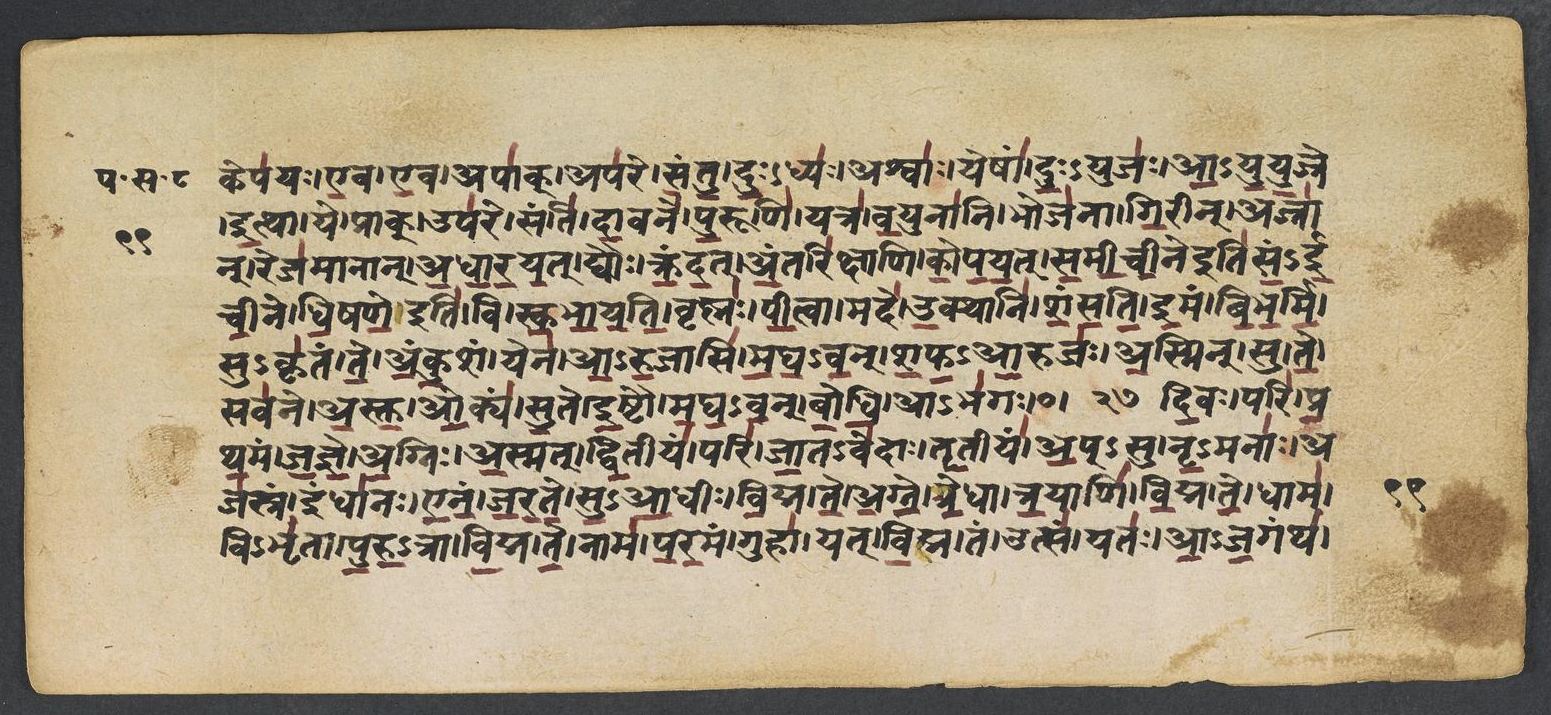
Penn Ms. Coll. 390 Item 41, fol. 783v (numbered 99v by the scribe) (OPenn image 784, upper leaf). Checked on the image: the Rigveda text on this page begins in RV 10.44.6 ‹kepayaḥ›. The next page with Rigveda text, fol. 784r (numbered 100r by the scribe), begins in RV 10.45.3 ‹samudre tvā nṛ-manāḥ ap-su›. Verses 10.44.6-11 end on this page; 10.44.6 begins on fol. 783r (numbered 99r by the scribe).
6pṛtha̱k prāya̍n pratha̱mā de̱vahū̍ta̱yo 'kṛ̍ṇvata śrava̱syā̍ni du̱ṣṭarā̍ | na ye śe̱kur ya̱jñiyā̱ṁ nāva̍m ā̱ruha̍m ī̱rmaiva te ny a̍viśanta̱ kepa̍yaḥ ||
7e̱vaivāpā̱g apa̍re santu dū̱ḍhyo 'śvā̱ yeṣā̍ṁ du̱ryuja̍ āyuyu̱jre | i̱tthā ye prāg upa̍re̱ santi̍ dā̱vane̍ pu̱rūṇi̱ yatra̍ va̱yunā̍ni̱ bhoja̍nā ||
8gi̱rīm̐r ajrā̱n reja̍mānām̐ adhāraya̱d dyauḥ kra̍ndad a̱ntari̍kṣāṇi kopayat | sa̱mī̱cī̱ne dhi̱ṣaṇe̱ vi ṣka̍bhāyati̱ vṛṣṇa̍ḥ pī̱tvā mada̍ u̱kthāni̍ śaṁsati ||
9i̱mam bi̍bharmi̱ sukṛ̍taṁ te aṅku̱śaṁ yenā̍ru̱jāsi̍ maghavañ chaphā̱ruja̍ḥ | a̱smin su te̱ sava̍ne astv o̱kya̍ṁ su̱ta i̱ṣṭau ma̍ghavan bo̱dhy ābha̍gaḥ ||
10gobhi̍ṣ ṭare̱māma̍tiṁ du̱revā̱ṁ yave̍na̱ kṣudha̍m puruhūta̱ viśvā̍m | va̱yaṁ rāja̍bhiḥ pratha̱mā dhanā̍ny a̱smāke̍na vṛ̱jane̍nā jayema ||
11bṛha̱spati̍r na̱ḥ pari̍ pātu pa̱ścād u̱totta̍rasmā̱d adha̍rād aghā̱yoḥ | indra̍ḥ pu̱rastā̍d u̱ta ma̍dhya̱to na̱ḥ sakhā̱ sakhi̍bhyo̱ vari̍vaḥ kṛṇotu ||
Compare: Padapāṭha (word-by-word text written in the manuscript; Sansknet e-text via GRETIL)
6pṛthak | pra | āyan | prathamāḥ | deva-hūtayaḥ | akṛṇvata | śravasyāni | dustarā | na | ye | śekuḥ | yajñiyām | nāvam | āruham | īrmā | eva | te | ni | aviśanta | kepayaḥ
7eva | eva | apāk | apare | santu | duḥ-dhyaḥ | aśvāḥ | yeṣām | duḥ-yujaḥ | āyuyujre | itthā | ye | prāk | upare | santi | dāvane | purūṇi | yatra | vayunāni | bhojanā
8girīn | ajrān | rejamānān | adhārayat | dyauḥ | krandat | antarikṣāṇi | kopayat | samīcīne itisam-īcīne | dhiṣaṇeiti | vi | skabhāyati | vṛṣṇaḥ | pītvā | made | ukthāni | śaṃsati
9imam | bibharmi | su-kṛtam | te | aṅkuśam | yena | ārujāsi | magha-van | śapha-ārujaḥ | asmin | su | te | savane | astu | okyam | sute | iṣṭau | magha-van | bodhi | ābhagaḥ
10gobhiḥ | tarema | amatim | duḥ-evām | yavena | kṣudham | puru-hūta | viśvām | vayam | rāja-bhiḥ | prathamā | dhanāni | asmākena | vṛjanena | jayema
11bṛhaspatiḥ | naḥ | pari | pātu | paścāt | uta | ut-tarasmāt | adharāt | agha-yoḥ | indraḥ | purastāt | uta | madhyataḥ | naḥ | sakhā | sakhi-bhyaḥ | vari-vaḥ | kṛṇotu
6Far went our earliest invocation of the Gods, and won us glories that can never be surpassed. They who could not ascend the ship of sacrifice, sink down in desolation, trembling with alarm.
7So be the others, evil-hearted, far away, whose horses, difficult to harness, have been yoked. Here in advance men stand anear to offer gifts, by whom full many a work that brings reward is done.
8He firmly fixed the plains and mountains as they shook. Dyaus thundered forth and made the air's mid-region quake. He stays apart the two confronting bowls; he sings lauds in the potent Soma's joy when he hath drunk.
9I bear this deftly-fashioned goad of thine, wherewith thou, Maghavan, shalt break the strikers with the hoof. At this libation mayst thou be well satisfied. Partake the juice, partake the worship, Maghavan.
10O Much-invoked, may we subdue all famine and evil want with store of grain and cattle. May we allied, as first in rank, with princes obtain possessions by our own exertion.
11Br̥ihaspati protect us from the rearward, and from above, and from below, from sinners. May Indra from the front and from the centre, as Friend to friends, vouchsafe us room and freedom.
Notes
- Sanskrit: Aufrecht's edition (1877) with the Vedic accents, as entered by van Nooten and Holland (GRETIL).
- English: Ralph T. H. Griffith, The Hymns of the Rigveda (1889-1892; 2nd ed. 1896-1897), from the VedaWeb digital text; OCR slips in that text were corrected against the printed 2nd edition (data/sources/rigveda/griffith_errata.json).
- Padapāṭha (edition text): Sansknet e-text via GRETIL (CC BY-NC-SA 4.0).
Cite
Sources
- Source: Penn Ms. Coll. 390 Item 41 (undated (catalogued with Penn's 18th-19th c. Vedic manuscripts)), OPenn, Public Domain Mark + Aufrecht's accented text (GRETIL) + Griffith's English (VedaWeb) (holding institution)
- Critical edition: Aufrecht (1877), accented e-text via GRETIL
← previous · → next · v cycle view · l back to library