Rigveda 10.6: To Agni
Introduction
Rigveda 10.6 is a hymn of 7 verses addressed to Agni. It stands in book (maṇḍala) 10, the last and latest book. The Rigveda is the oldest collection of Sanskrit hymns, composed in the second half of the second millennium BCE and handed down orally for many centuries before it was written down.
The manuscript shown is Penn Ms. Coll. 390 Item 41 (University of Pennsylvania), an undated paper manuscript of the padapāṭha (the word-by-word recitation text, in which every word is written separately and compounds are split) of the whole Ṛgveda in Devanāgarī, 884 leaves in fascicles, 7-9 lines to the page, accents in red; this hymn stands on fol. 746v-747r. Each section below gives the verses that end on one page; the page boundaries were read on the images (the opening words of every page), not counted out. Where the manuscript is a padapāṭha (the word-by-word recitation text), the section shows Aufrecht's continuous (saṃhitā) text first and, as the edition text, the padapāṭha of the same verses, which is the form written on the page.
How was this verified? (Provenance)
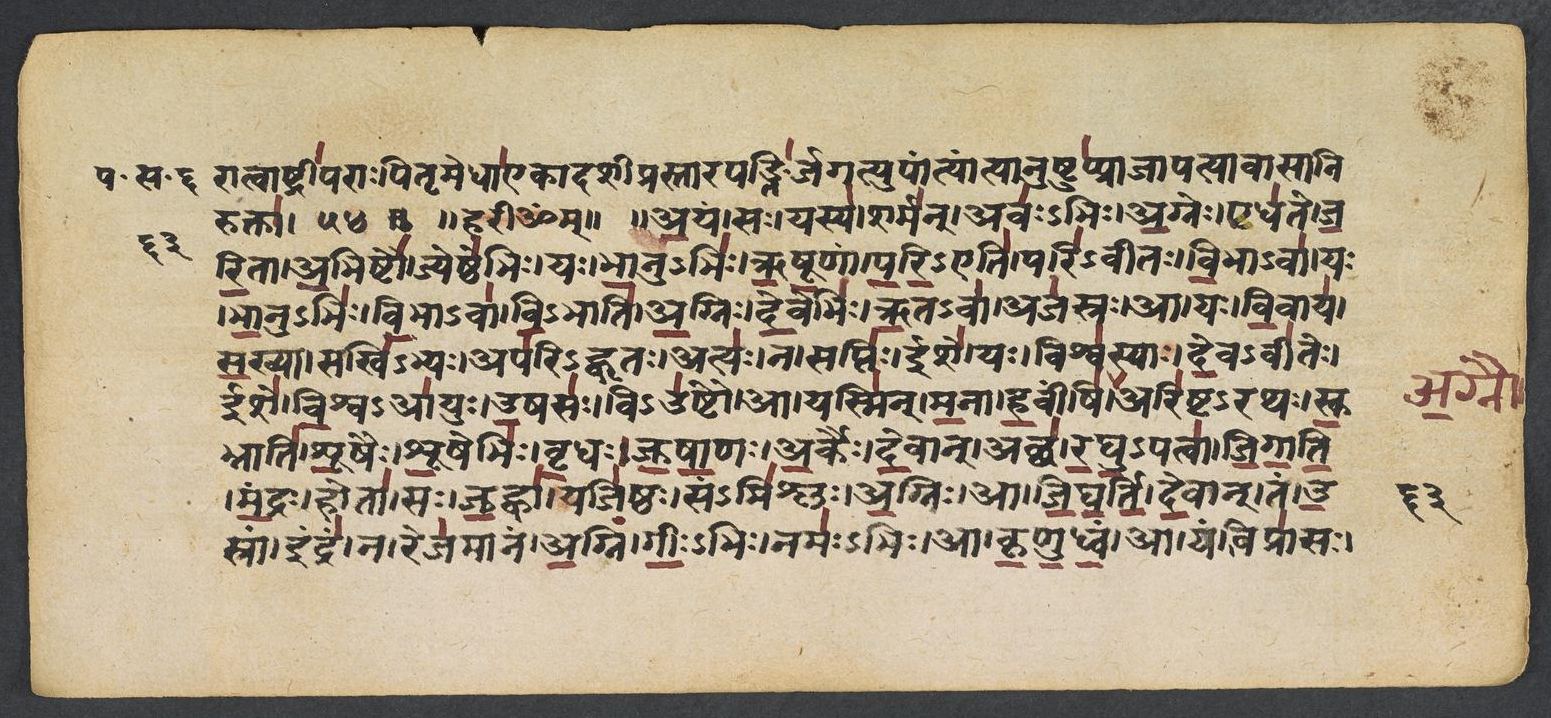
Where on the image
Penn Ms. Coll. 390 Item 41, fol. 746v (numbered 63v by the scribe) (OPenn image 747, upper leaf). Checked on the image: the Rigveda text on this page begins in RV 10.6.1 ‹ayam saḥ yasya śarman›. Lines 1-2 end the anukramaṇī (number 54) and give ॥ hariḥ oṃ ॥; 10.6.1 (ayam saḥ yasya śarman) begins in line 2. The next page with Rigveda text, fol. 747r (numbered 64r by the scribe), begins in RV 10.6.5 ‹mati-bhiḥ gṛṇanti jāta-vedasam juhvam›. Verses 10.6.1-4 end on this page.
1a̱yaṁ sa yasya̱ śarma̱nn avo̍bhir a̱gner edha̍te jari̱tābhiṣṭau̍ | jyeṣṭhe̍bhi̱r yo bhā̱nubhi̍r ṛṣū̱ṇām pa̱ryeti̱ pari̍vīto vi̱bhāvā̍ ||
2yo bhā̱nubhi̍r vi̱bhāvā̍ vi̱bhāty a̱gnir de̱vebhi̍r ṛ̱tāvāja̍sraḥ | ā yo vi̱vāya̍ sa̱khyā sakhi̱bhyo 'pa̍rihvṛto̱ atyo̱ na sapti̍ḥ ||
3īśe̱ yo viśva̍syā de̱vavī̍te̱r īśe̍ vi̱śvāyu̍r u̱ṣaso̱ vyu̍ṣṭau | ā yasmi̍n ma̱nā ha̱vīṁṣy a̱gnāv ari̍ṣṭarathaḥ ska̱bhnāti̍ śū̱ṣaiḥ ||
4śū̱ṣebhi̍r vṛ̱dho ju̍ṣā̱ṇo a̱rkair de̱vām̐ acchā̍ raghu̱patvā̍ jigāti | ma̱ndro hotā̱ sa ju̱hvā̱3̱̍ yaji̍ṣṭha̱ḥ sammi̍ślo a̱gnir ā ji̍gharti de̱vān ||
Compare: Padapāṭha (word-by-word text written in the manuscript; Sansknet e-text via GRETIL)
1ayam | saḥ | yasya | śarman | avaḥ-bhiḥ | agneḥ | edhate | jaritā | abhiṣṭau | jyeṣṭhebhiḥ | yaḥ | bhānu-bhiḥ | ṛṣūṇām | pari-eti | pari-vītaḥ | vibhāvā
2yaḥ | bhānu-bhiḥ | vibhāvā | vi-bhāti | agniḥ | devebhiḥ | ṛta-vā | ajasraḥ | ā | yaḥ | vivāya | sakhyā | sakhi-bhyaḥ | pari-hvṛtaḥ | atyaḥ | na | saptiḥ
3īśe | yaḥ | viśvasyāḥ | deva-vīteḥ | īśe | viśva-āyuḥ | uṣasaḥ | vi-uṣṭau | ā | yasmin | manā | havīṃṣi | agnau | ariṣṭa-rathaḥ | skabhnāti | śūṣaiḥ
4śūṣebhiḥ | vṛdhaḥ | juṣāṇaḥ | arkaiḥ | devān | accha | raghu-patvā | jagāti | mandraḥ | hotā | saḥ | juhvā | yajiṣṭhaḥ | sam-miślaḥ | agniḥ | ā | jigharti | devān
1THIS is that Agni, he by whose protection, favour, and help. the singer is successful; Who with the noblest flames of glowing fuel comes forth encompassed with far-spreading lustre.
2Agni, the Holy One, the everlasting, who shines far beaming with celestial splendours; He who hath come unto his friends with friendship, like a fleet steed who never trips or stumbles.
3He who is Lord of all divine oblation, shared by all living men at break of morning, Agni to whom our offerings are devoted, in whom rests he whose car, through might, is scatheless.
4Increasing by his strength. while lauds content him, with easy flight unto the Gods he travels. Agni the cheerful Priest, best Sacrificer, balms with his tongue the Gods with whom he mingles.
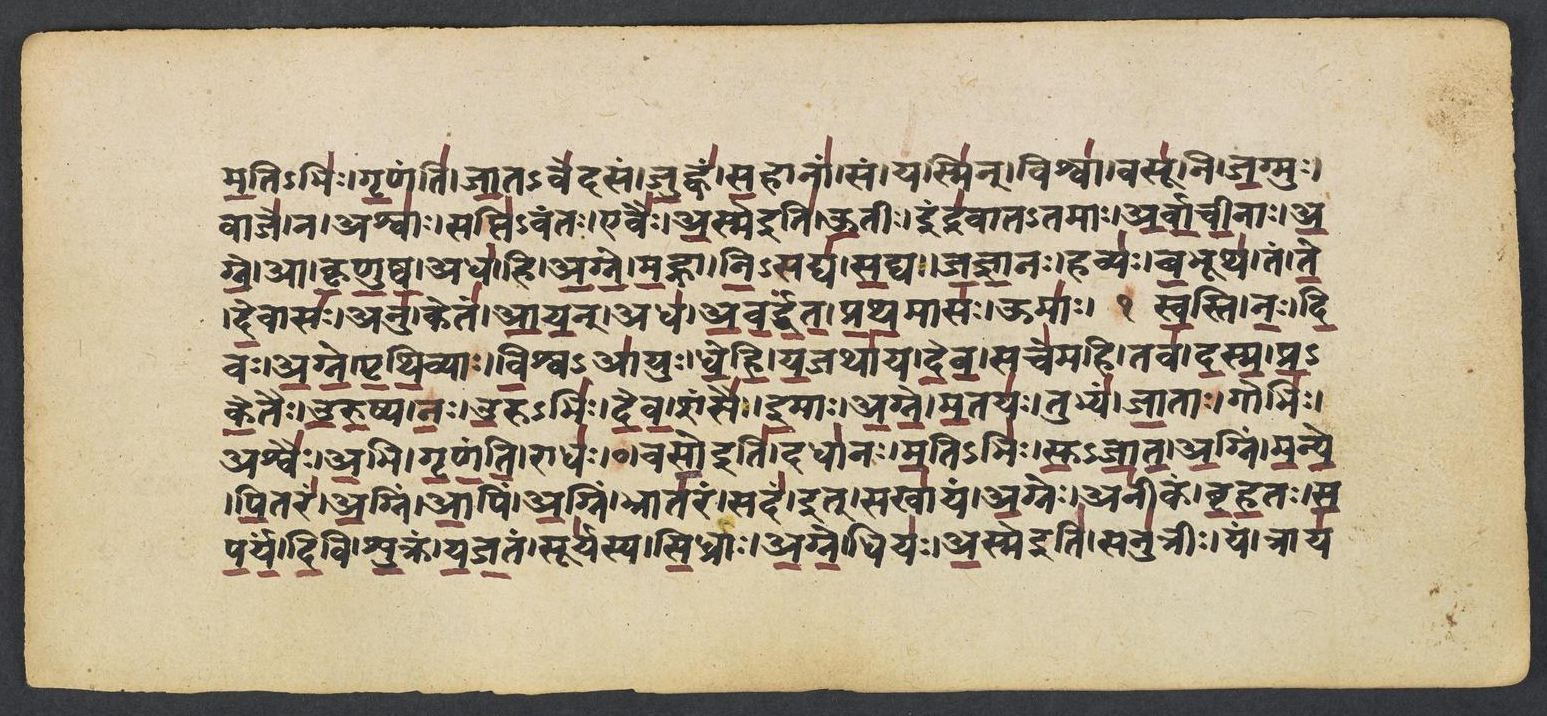
Where on the image
Penn Ms. Coll. 390 Item 41, fol. 747r (numbered 64r by the scribe) (OPenn image 747, lower leaf). Checked on the image: the Rigveda text on this page begins in RV 10.6.5 ‹mati-bhiḥ gṛṇanti jāta-vedasam juhvam›. The next page with Rigveda text, fol. 747v (numbered 64v by the scribe), begins in RV 10.7.4 ‹-trāyase dame ā nitya-hotā›. Verses 10.6.5-7 end on this page; 10.6.5 begins on fol. 746v (numbered 63v by the scribe).
5tam u̱srām indra̱ṁ na reja̍mānam a̱gniṁ gī̱rbhir namo̍bhi̱r ā kṛ̍ṇudhvam | ā yaṁ viprā̍so ma̱tibhi̍r gṛ̱ṇanti̍ jā̱tave̍dasaṁ ju̱hva̍ṁ sa̱hānā̍m ||
6saṁ yasmi̱n viśvā̱ vasū̍ni ja̱gmur vāje̱ nāśvā̱ḥ saptī̍vanta̱ evai̍ḥ | a̱sme ū̱tīr indra̍vātatamā arvācī̱nā a̍gna̱ ā kṛ̍ṇuṣva ||
7adhā̱ hy a̍gne ma̱hnā ni̱ṣadyā̍ sa̱dyo ja̍jñā̱no havyo̍ ba̱bhūtha̍ | taṁ te̍ de̱vāso̱ anu̱ keta̍m āya̱nn adhā̍vardhanta pratha̱māsa̱ ūmā̍ḥ ||
Compare: Padapāṭha (word-by-word text written in the manuscript; Sansknet e-text via GRETIL)
5tam | usrām | indram | na | rejamānam | agnim | gīḥ-bhiḥ | namaḥ-bhiḥ | ā | kṛṇudhvam | ā | yam | viprāsaḥ | mati-bhiḥ | gṛṇanti | jāta-vedasam | juhvam | sahānām
6sam | yasmin | viśvā | vasūni | jagmuḥ | vāje | na | aśvāḥ | sapti-vantaḥ | evaiḥ | asme iti | ūtīḥ | indravāta-tamāḥ | arvācīnāḥ | agne | ā | kṛṇuṣva
7adha | hi | agne | mahnā | ni-sadya | sadyaḥ | jajñānaḥ | havyaḥ | babhūtha | tam | te | devāsaḥ | anu | ketam | āyan | adha | avardhanta | prathamāsaḥ | ūmāḥ
5With songs and adorations bring ye hither Agni who stirs himself at dawn like Indra, Whom sages laud with hymns as Jâtavedas of those who wield the sacrificial ladle.
6In whom all goodly treasures meet together, even as steeds and riders for the booty. Inclining hither bring us help, O Agni, even assistance most desired by Indra.
7Yea, at thy birth, when thou hadst sat in glory, thou, Agni, wast the aim of invocations. The Gods came near, obedient to thy summons, and thus attained their rank as chief Protectors.
Notes
- Sanskrit: Aufrecht's edition (1877) with the Vedic accents, as entered by van Nooten and Holland (GRETIL).
- English: Ralph T. H. Griffith, The Hymns of the Rigveda (1889-1892; 2nd ed. 1896-1897), from the VedaWeb digital text; OCR slips in that text were corrected against the printed 2nd edition (data/sources/rigveda/griffith_errata.json).
- Padapāṭha (edition text): Sansknet e-text via GRETIL (CC BY-NC-SA 4.0).
Cite
Sources
- Source: Penn Ms. Coll. 390 Item 41 (undated (catalogued with Penn's 18th-19th c. Vedic manuscripts)), OPenn, Public Domain Mark + Aufrecht's accented text (GRETIL) + Griffith's English (VedaWeb) (holding institution)
- Critical edition: Aufrecht (1877), accented e-text via GRETIL
← previous · → next · v cycle view · l back to library