Rigveda 10.55: To Indra
Introduction
Rigveda 10.55 is a hymn of 8 verses addressed to Indra. It stands in book (maṇḍala) 10, the last and latest book. The Rigveda is the oldest collection of Sanskrit hymns, composed in the second half of the second millennium BCE and handed down orally for many centuries before it was written down.
The manuscript shown is Penn Ms. Coll. 390 Item 48 (University of Pennsylvania), a paper manuscript of the eighth aṣṭaka (RV 10.46-10.191) of the Ṛgveda Saṃhitā in Devanāgarī, 158 leaves, 6 lines to the page, with the accents marked in red; the scribe's colophon on fol. 158 gives Saṃvat 1768 (1711 CE); this hymn stands on fol. 11v-12v. Each section below gives the verses that end on one page; the page boundaries were read on the images (the opening words of every page), not counted out. Like most Rigveda manuscripts, Penn Ms. Coll. 390 Item 48 writes a repeated refrain in short form after its first occurrence (for example kasmai° for kasmai devāya haviṣā vidhema); the Sanskrit shown is the full text of Aufrecht's edition.
How was this verified? (Provenance)
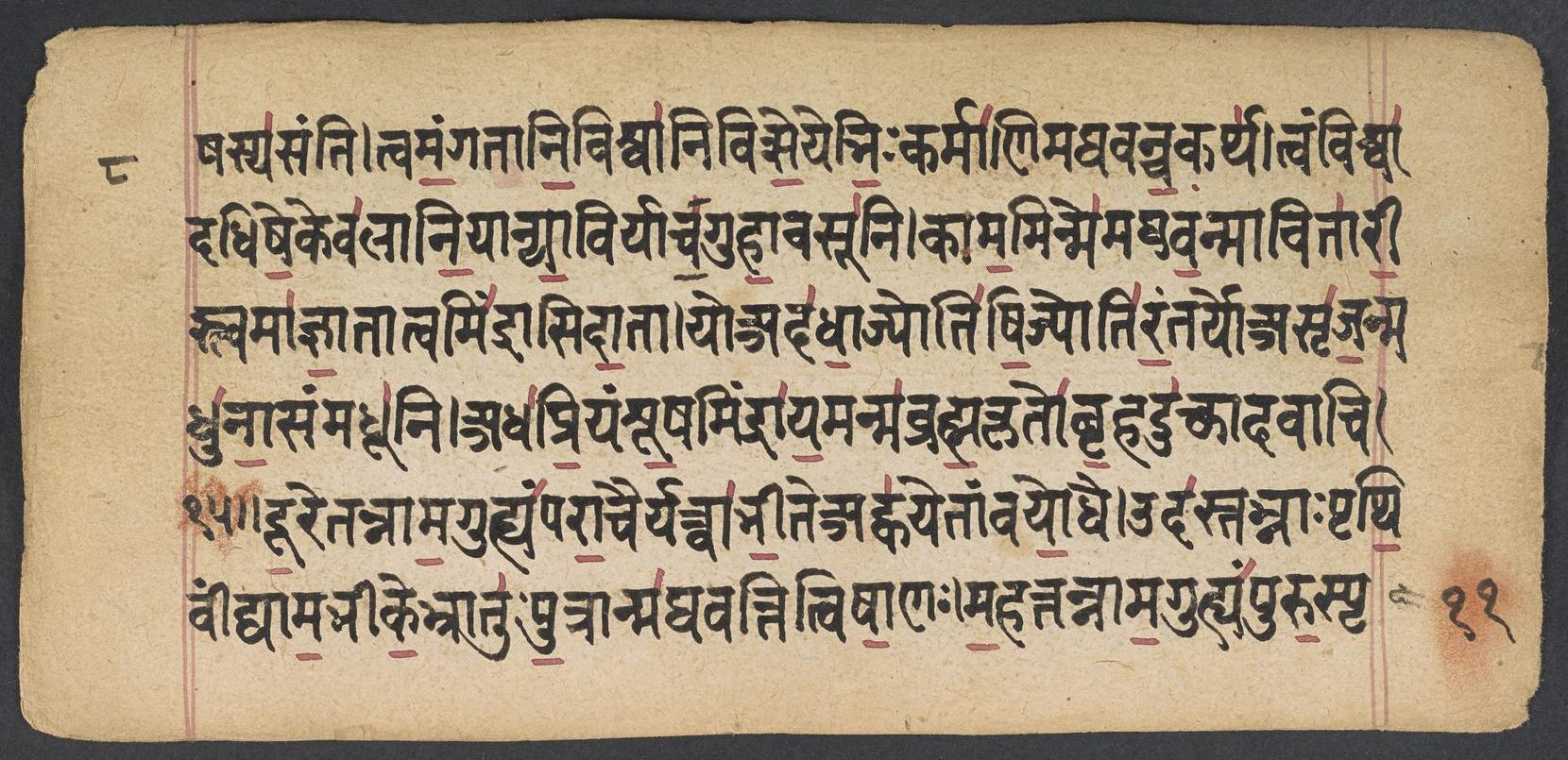
Where on the image
Penn Ms. Coll. 390 Item 48, fol. 11v (OPenn image 11, upper leaf). Checked on the image: the Rigveda text on this page begins in RV 10.54.4 ‹-mahiṣasya santi›. The next page with Rigveda text, fol. 12r, begins in RV 10.55.2 ‹-puruspṛg yena bhūtaṁ janayo›. Verse 10.55.1 ends on this page.
1dū̱re tan nāma̱ guhya̍m parā̱cair yat tvā̍ bhī̱te ahva̍yetāṁ vayo̱dhai | ud a̍stabhnāḥ pṛthi̱vīṁ dyām a̱bhīke̱ bhrātu̍ḥ pu̱trān ma̍ghavan titviṣā̱ṇaḥ ||
1FAR is that secret name by which, in terror, the worlds invoked thee and thou gavest vigour The earth and heaven thou settest near each other, and Maghavan, madest bright thy Brother's Children.
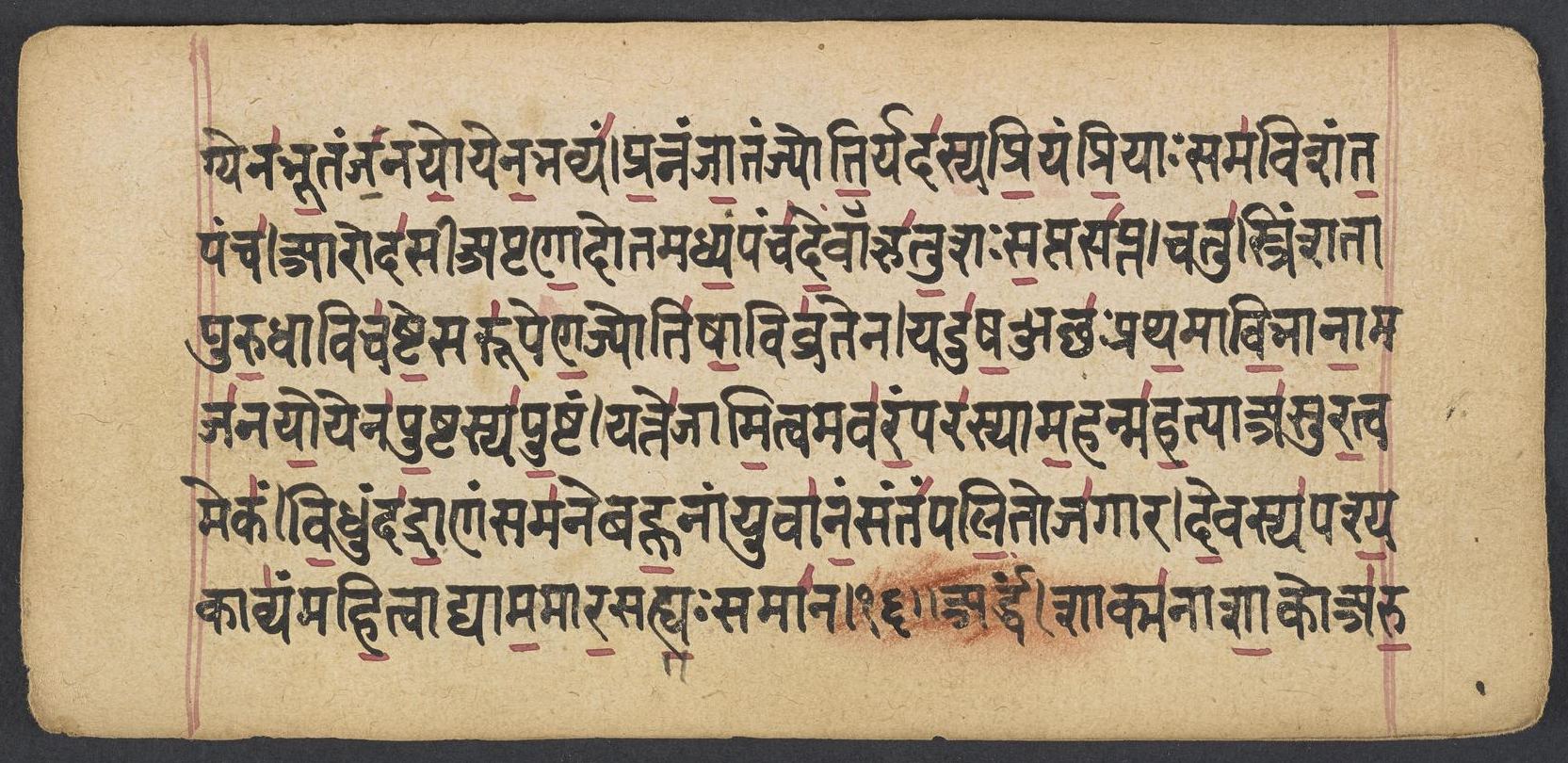
Where on the image
Penn Ms. Coll. 390 Item 48, fol. 12r (OPenn image 11, lower leaf). Checked on the image: the Rigveda text on this page begins in RV 10.55.2 ‹-puruspṛg yena bhūtaṁ janayo›. The next page with Rigveda text, fol. 12v, begins in RV 10.55.6 ‹-aruṇaḥ suparṇa ā yo›. Verses 10.55.2-5 end on this page; 10.55.2 begins on fol. 11v.
2ma̱hat tan nāma̱ guhya̍m puru̱spṛg yena̍ bhū̱taṁ ja̱nayo̱ yena̱ bhavya̍m | pra̱tnaṁ jā̱taṁ jyoti̱r yad a̍sya pri̱yam pri̱yāḥ sam a̍viśanta̱ pañca̍ ||
3ā roda̍sī apṛṇā̱d ota madhya̱m pañca̍ de̱vām̐ ṛ̍tu̱śaḥ sa̱pta-sa̍pta | catu̍striṁśatā puru̱dhā vi ca̍ṣṭe̱ sarū̍peṇa̱ jyoti̍ṣā̱ vivra̍tena ||
4yad u̍ṣa̱ auccha̍ḥ pratha̱mā vi̱bhānā̱m aja̍nayo̱ yena̍ pu̱ṣṭasya̍ pu̱ṣṭam | yat te̍ jāmi̱tvam ava̍ra̱m para̍syā ma̱han ma̍ha̱tyā a̍sura̱tvam eka̍m ||
5vi̱dhuṁ da̍drā̱ṇaṁ sama̍ne bahū̱nāṁ yuvā̍na̱ṁ santa̍m pali̱to ja̍gāra | de̱vasya̍ paśya̱ kāvya̍m mahi̱tvādyā ma̱māra̱ sa hyaḥ sam ā̍na ||
2Great is that secret name and far-extending, whereby thou madest all that is and shall be. The Five Tribes whom he loveth well have entered the light he loveth that was made aforetime.
3He filled the heaven and earth and all between them, Gods five times sevenfold in their proper seasons. With four-and-thirty lights he looks around him, lights of one colour though their ways are divers.
4As first among the lights, O Dawn, thou shonest, whereby thou broughtest forth the Stay of Increase, Great art thou, matchless is thine Asura nature, who, high above, art kin to those beneath thee.
5The old hath waked the young Moon from his slumber who runs his circling course with many round him. Behold the Gods' high wisdom in its greatness: he who died yesterday to-day is living.
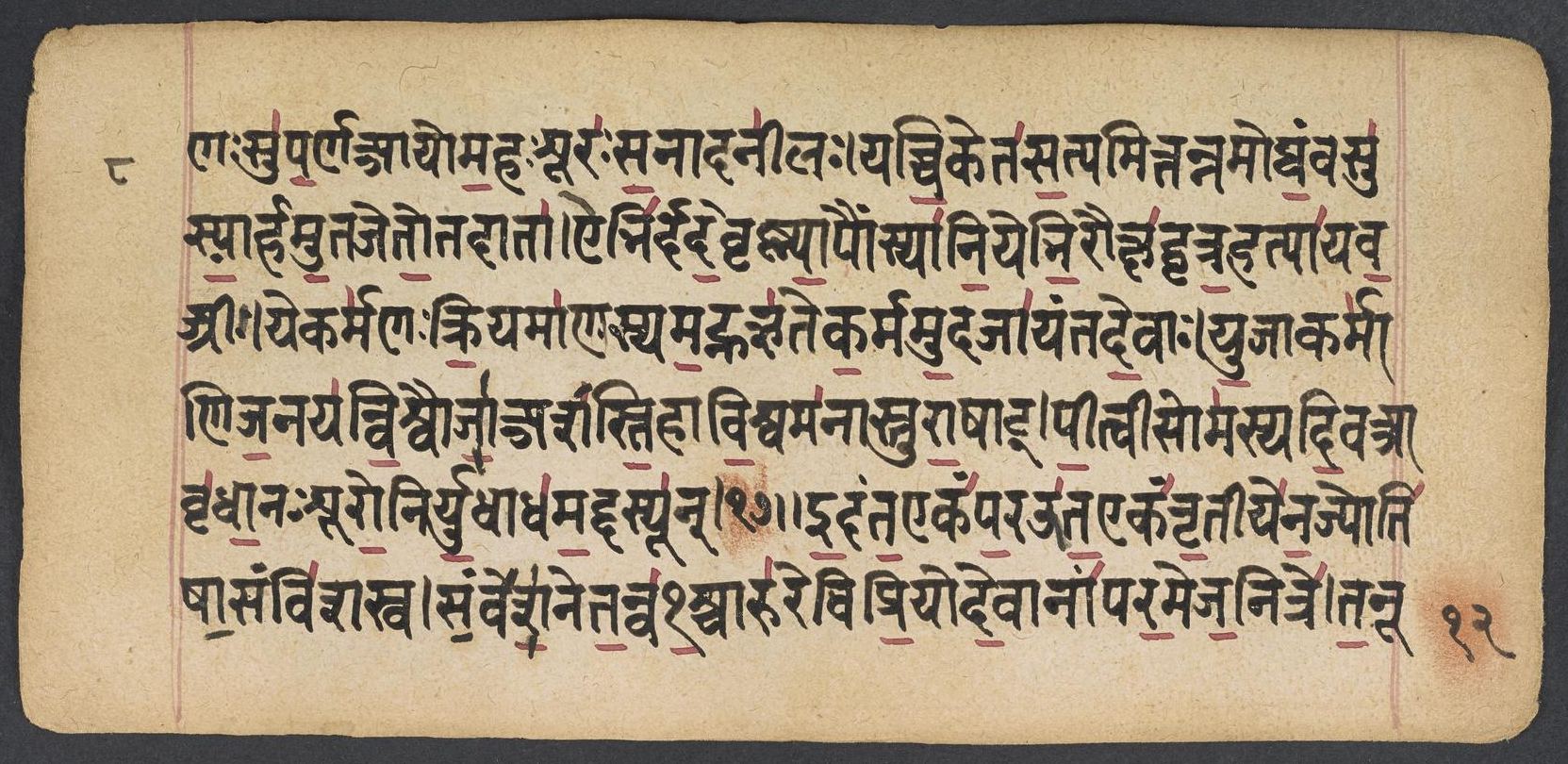
Where on the image
Penn Ms. Coll. 390 Item 48, fol. 12v (OPenn image 12, upper leaf). Checked on the image: the Rigveda text on this page begins in RV 10.55.6 ‹-aruṇaḥ suparṇa ā yo›. The next page with Rigveda text, fol. 13r, begins in RV 10.56.2 ‹-ṭe vājin tanva1ṁ nayantī›. Verses 10.55.6-8 end on this page; 10.55.6 begins on fol. 12r.
6śākma̍nā śā̱ko a̍ru̱ṇaḥ su̍pa̱rṇa ā yo ma̱haḥ śūra̍ḥ sa̱nād anī̍ḻaḥ | yac ci̱keta̍ sa̱tyam it tan na mogha̱ṁ vasu̍ spā̱rham u̱ta jeto̱ta dātā̍ ||
7aibhi̍r dade̱ vṛṣṇyā̱ pauṁsyā̍ni̱ yebhi̱r aukṣa̍d vṛtra̱hatyā̍ya va̱jrī | ye karma̍ṇaḥ kri̱yamā̍ṇasya ma̱hna ṛ̍teka̱rmam u̱dajā̍yanta de̱vāḥ ||
8yu̱jā karmā̍ṇi ja̱naya̍n vi̱śvaujā̍ aśasti̱hā vi̱śvama̍nās turā̱ṣāṭ | pī̱tvī soma̍sya di̱va ā vṛ̍dhā̱naḥ śūro̱ nir yu̱dhādha̍ma̱d dasyū̍n ||
6Strong is the Red Bird in his strength, great Hero, who from of old hath had no nest to dwell in. That which he knows is truth and never idle: he wins and gives the wealth desired of many.
7Through these the Thunderer gained strong manly vigour, through whom he waxed in power to smite down Vr̥itra,– Who through the might of Indra's operation came forth as Gods in course of Law and Order.
8All-strong, performing works with his companion, All-marking, rapid Victor, Curse-averter, The Hero, waxing, after draughts of Soma, blew far from heaven the Dasyus with his weapon.
Notes
- Sanskrit: Aufrecht's edition (1877) with the Vedic accents, as entered by van Nooten and Holland (GRETIL).
- English: Ralph T. H. Griffith, The Hymns of the Rigveda (1889-1892; 2nd ed. 1896-1897), from the VedaWeb digital text; OCR slips in that text were corrected against the printed 2nd edition (data/sources/rigveda/griffith_errata.json).
Cite
Sources
- Source: Penn Ms. Coll. 390 Item 48 (1711 CE (colophon: Saṃvat 1768)), OPenn, Public Domain Mark + Aufrecht's accented text (GRETIL) + Griffith's English (VedaWeb) (holding institution)
- Critical edition: Aufrecht (1877), accented e-text via GRETIL
← previous · → next · v cycle view · l back to library