Rigveda 10.56: Funeral speech about a horse
Introduction
Rigveda 10.56 is a hymn of 7 verses addressed to funeral speech about a horse. It stands in book (maṇḍala) 10, the last and latest book. The Rigveda is the oldest collection of Sanskrit hymns, composed in the second half of the second millennium BCE and handed down orally for many centuries before it was written down.
The manuscript shown is Penn Ms. Coll. 390 Item 48 (University of Pennsylvania), a paper manuscript of the eighth aṣṭaka (RV 10.46-10.191) of the Ṛgveda Saṃhitā in Devanāgarī, 158 leaves, 6 lines to the page, with the accents marked in red; the scribe's colophon on fol. 158 gives Saṃvat 1768 (1711 CE); this hymn stands on fol. 12v-13v. Each section below gives the verses that end on one page; the page boundaries were read on the images (the opening words of every page), not counted out. Like most Rigveda manuscripts, Penn Ms. Coll. 390 Item 48 writes a repeated refrain in short form after its first occurrence (for example kasmai° for kasmai devāya haviṣā vidhema); the Sanskrit shown is the full text of Aufrecht's edition.
How was this verified? (Provenance)
Where on the image
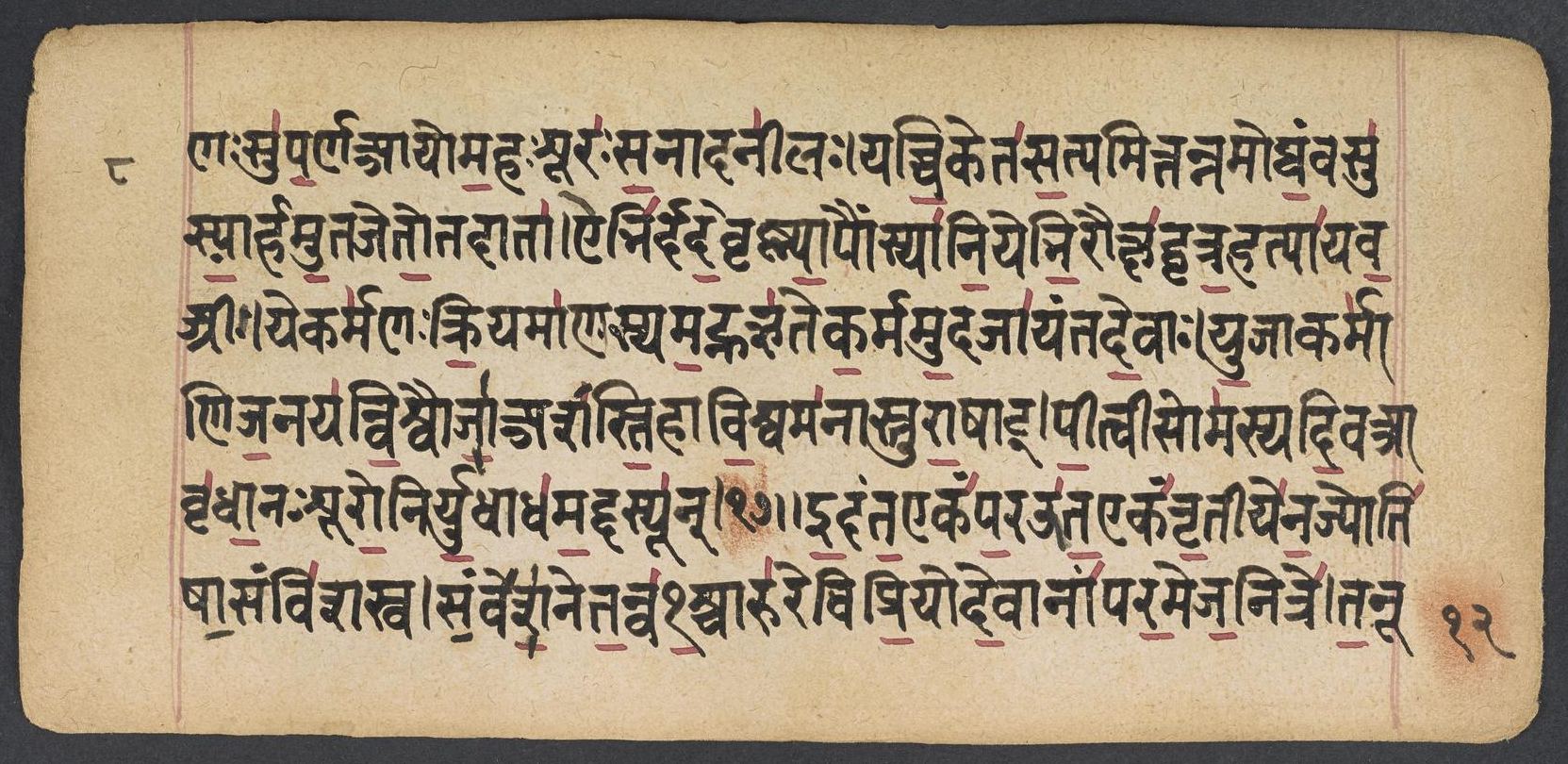
Penn Ms. Coll. 390 Item 48, fol. 12v (OPenn image 12, upper leaf). Checked on the image: the Rigveda text on this page begins in RV 10.55.6 ‹-aruṇaḥ suparṇa ā yo›. The next page with Rigveda text, fol. 13r, begins in RV 10.56.2 ‹-ṭe vājin tanva1ṁ nayantī›. Verse 10.56.1 ends on this page.
1i̱daṁ ta̱ eka̍m pa̱ra ū̍ ta̱ eka̍ṁ tṛ̱tīye̍na̱ jyoti̍ṣā̱ saṁ vi̍śasva | sa̱ṁveśa̍ne ta̱nva1̱̍ś cāru̍r edhi pri̱yo de̱vānā̍m para̱me ja̱nitre̍ ||
1HERE is one light for thee, another yonder: enter the third and he therewith united. Uniting with a body be thou welcome, dear to the Gods in their sublimest birthplace.
Where on the image
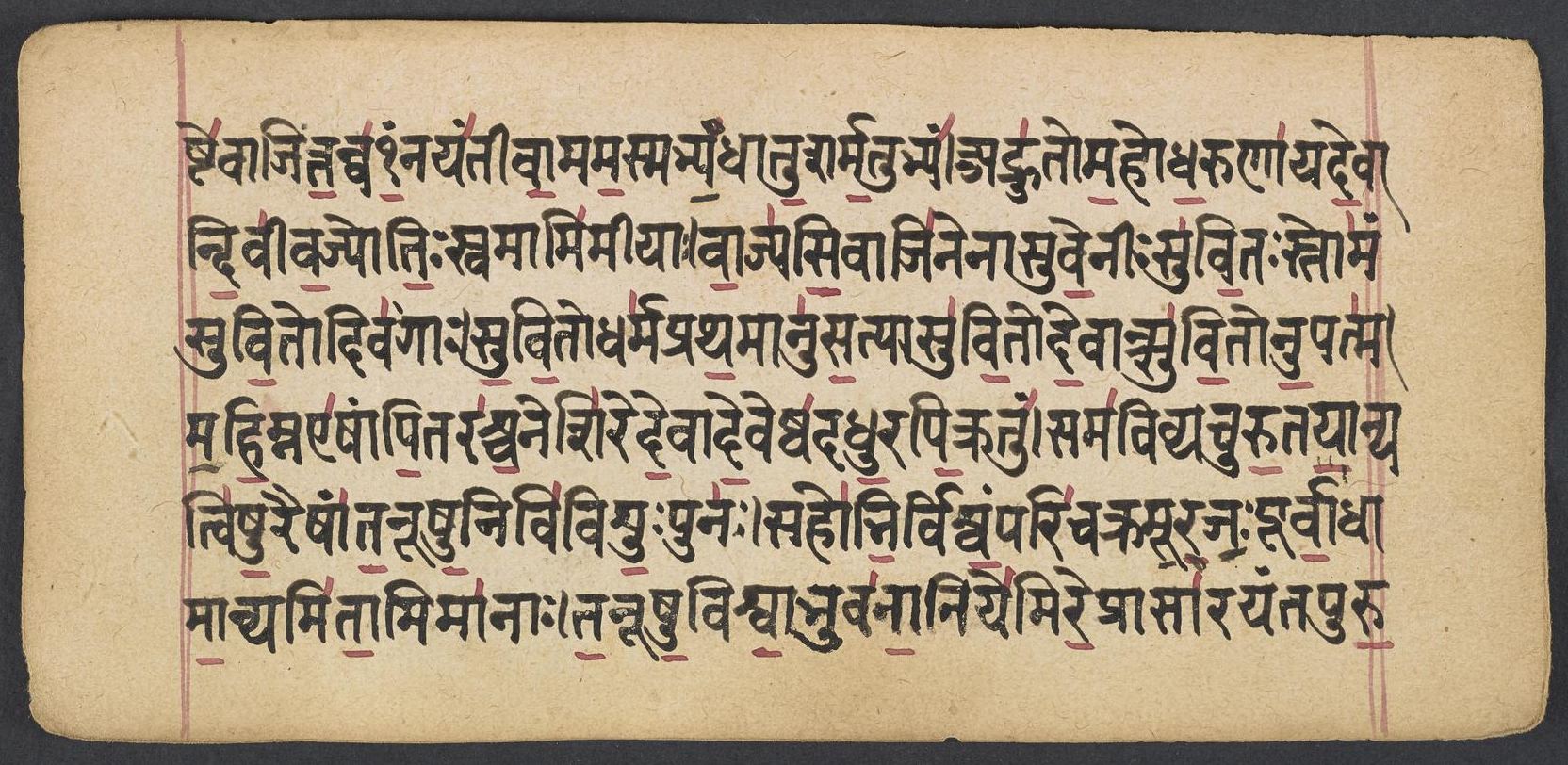
Penn Ms. Coll. 390 Item 48, fol. 13r (OPenn image 12, lower leaf). Checked on the image: the Rigveda text on this page begins in RV 10.56.2 ‹-ṭe vājin tanva1ṁ nayantī›. The next page with Rigveda text, fol. 13v, begins in RV 10.56.5 ‹-purudha prajā anu›. Verses 10.56.2-4 end on this page; 10.56.2 begins on fol. 12v.
2ta̱nūṣ ṭe̍ vājin ta̱nva1̱̍ṁ naya̍ntī vā̱mam a̱smabhya̱ṁ dhātu̱ śarma̱ tubhya̍m | ahru̍to ma̱ho dha̱ruṇā̍ya de̱vān di̱vī̍va̱ jyoti̱ḥ svam ā mi̍mīyāḥ ||
3vā̱jy a̍si̱ vāji̍nenā suve̱nīḥ su̍vi̱taḥ stoma̍ṁ suvi̱to diva̍ṁ gāḥ | su̱vi̱to dharma̍ pratha̱mānu̍ sa̱tyā su̍vi̱to de̱vān su̍vi̱to 'nu̱ patma̍ ||
4ma̱hi̱mna e̍ṣām pi̱tara̍ś ca̱neśi̍re de̱vā de̱veṣv a̍dadhu̱r api̱ kratu̍m | sam a̍vivyacur u̱ta yāny atvi̍ṣu̱r aiṣā̍ṁ ta̱nūṣu̱ ni vi̍viśu̱ḥ puna̍ḥ ||
2Bearing thy body, Vajin, may thy body afford us blessing and thyself protection. Unswerving, stablish as it were in heaven thine own light as the mighty God's supporter.
3Strong Steed art thou: go to the yearning Maidens with vigour, happily go to heaven and praises: Fly happily to the Gods with easy passage, according to the first and faithful statutes.
4Part of their grandeur have the Fathers also gained: the Gods have seated mental power in them as Gods. They have embraced within themselves all energies, which, issuing forth, again into their bodies pass.
Where on the image
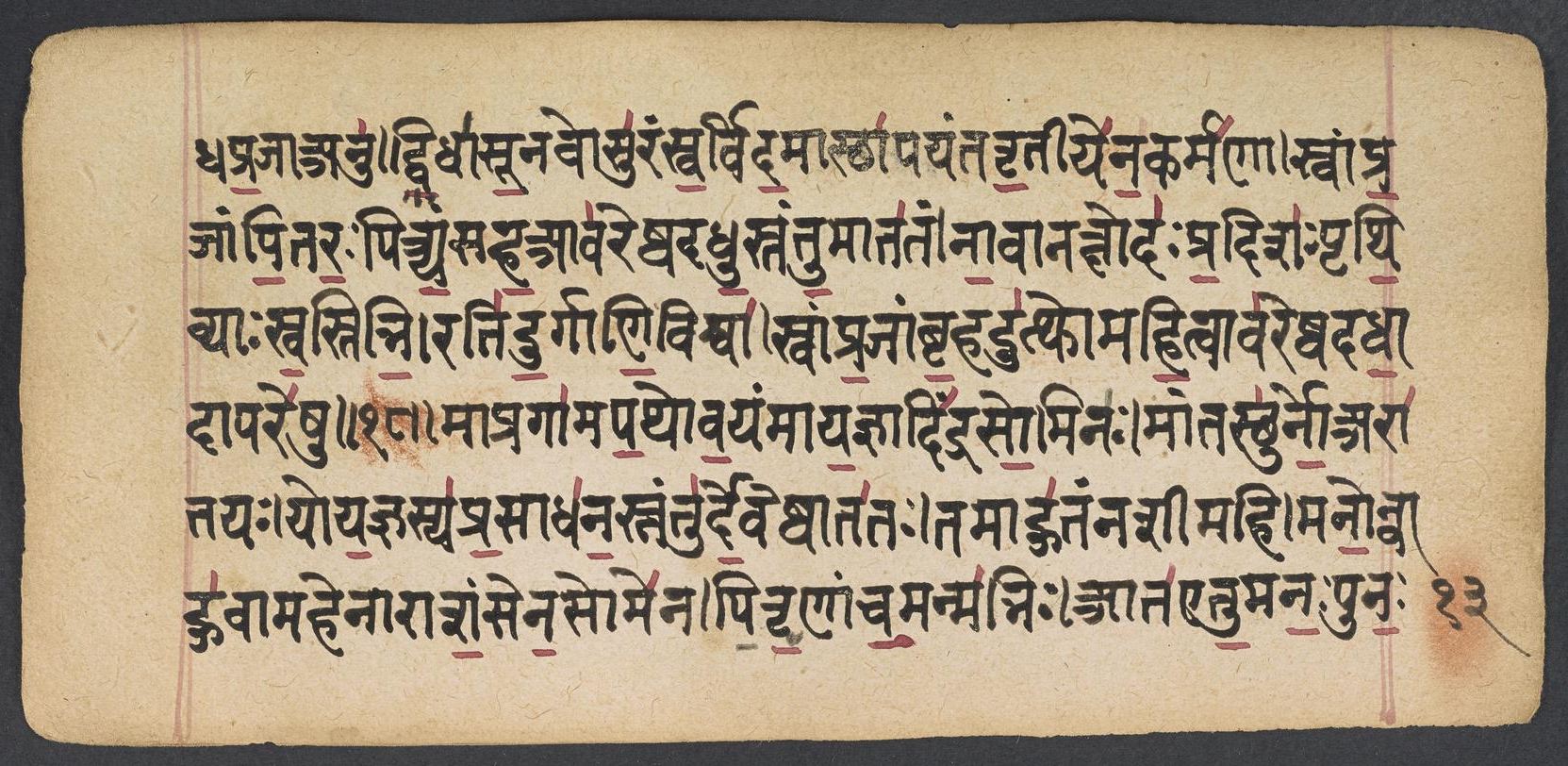
Penn Ms. Coll. 390 Item 48, fol. 13v (OPenn image 13, upper leaf). Checked on the image: the Rigveda text on this page begins in RV 10.56.5 ‹-purudha prajā anu›. The next page with Rigveda text, fol. 14r, begins in RV 10.57.4 ‹kratve dakṣāya jīvase›. Verses 10.56.5-7 end on this page; 10.56.5 begins on fol. 13r.
5saho̍bhi̱r viśva̱m pari̍ cakramū̱ raja̱ḥ pūrvā̱ dhāmā̱ny ami̍tā̱ mimā̍nāḥ | ta̱nūṣu̱ viśvā̱ bhuva̍nā̱ ni ye̍mire̱ prāsā̍rayanta puru̱dha pra̱jā anu̍ ||
6dvidhā̍ sū̱navo 'su̍raṁ sva̱rvida̱m āsthā̍payanta tṛ̱tīye̍na̱ karma̍ṇā | svām pra̱jām pi̱tara̱ḥ pitrya̱ṁ saha̱ āva̍reṣv adadhu̱s tantu̱m āta̍tam ||
7nā̱vā na kṣoda̍ḥ pra̱diśa̍ḥ pṛthi̱vyāḥ sva̱stibhi̱r ati̍ du̱rgāṇi̱ viśvā̍ | svām pra̱jām bṛ̱hadu̍ktho mahi̱tvāva̍reṣv adadhā̱d ā pare̍ṣu ||
5They strode through all the region with victorious might, establishing the old immeasurable laws. They compassed in their bodies all existing things, and streamed forth offspring in many successive forms.
6In two ways have the sons established in his place the Asura who finds the light, by the third act, As fathers, they have set their heritage on earth, their offspring, as a thread continuously spun out.
7As in a ship through billows, so through regions of air, with blessings, through toils and troubles Hath Br̥ihaduktha brought his seed with glory, and placed it here and in the realms beyond us.
Notes
- Sanskrit: Aufrecht's edition (1877) with the Vedic accents, as entered by van Nooten and Holland (GRETIL).
- English: Ralph T. H. Griffith, The Hymns of the Rigveda (1889-1892; 2nd ed. 1896-1897), from the VedaWeb digital text; OCR slips in that text were corrected against the printed 2nd edition (data/sources/rigveda/griffith_errata.json).
Cite
Sources
- Source: Penn Ms. Coll. 390 Item 48 (1711 CE (colophon: Saṃvat 1768)), OPenn, Public Domain Mark + Aufrecht's accented text (GRETIL) + Griffith's English (VedaWeb) (holding institution)
- Critical edition: Aufrecht (1877), accented e-text via GRETIL
← previous · → next · v cycle view · l back to library