Rigveda 10.62: To all the gods or the Angiras, thanksgiving to Savarni
Introduction
Rigveda 10.62 is a hymn of 11 verses addressed to all the gods or the Angiras, thanksgiving to Savarni. It stands in book (maṇḍala) 10, the last and latest book. The Rigveda is the oldest collection of Sanskrit hymns, composed in the second half of the second millennium BCE and handed down orally for many centuries before it was written down.
The manuscript shown is Penn Ms. Coll. 390 Item 48 (University of Pennsylvania), a paper manuscript of the eighth aṣṭaka (RV 10.46-10.191) of the Ṛgveda Saṃhitā in Devanāgarī, 158 leaves, 6 lines to the page, with the accents marked in red; the scribe's colophon on fol. 158 gives Saṃvat 1768 (1711 CE); this hymn stands on fol. 20r-21r. Each section below gives the verses that end on one page; the page boundaries were read on the images (the opening words of every page), not counted out. Like most Rigveda manuscripts, Penn Ms. Coll. 390 Item 48 writes a repeated refrain in short form after its first occurrence (for example kasmai° for kasmai devāya haviṣā vidhema); the Sanskrit shown is the full text of Aufrecht's edition.
How was this verified? (Provenance)
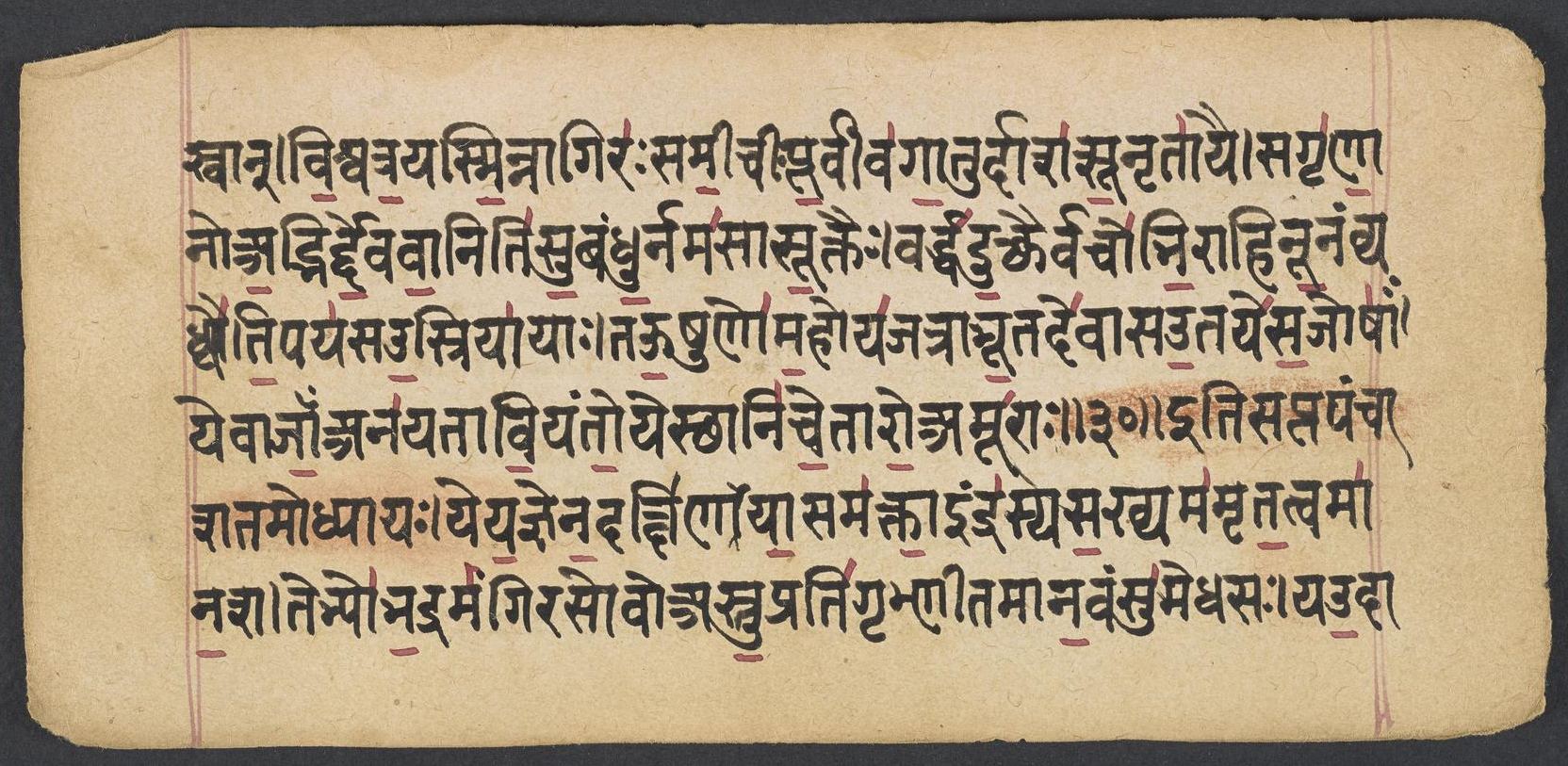
Where on the image
Penn Ms. Coll. 390 Item 48, fol. 20r (OPenn image 19, lower leaf). Checked on the image: the Rigveda text on this page begins in RV 10.61.25 ‹-namasvān›. The next page with Rigveda text, fol. 20v, begins in RV 10.62.2 ‹pitaro gomayaṁ vasv ṛtenābhindan›. Verse 10.62.1 ends on this page.
1ye ya̱jñena̱ dakṣi̍ṇayā̱ sama̍ktā̱ indra̍sya sa̱khyam a̍mṛta̱tvam ā̍na̱śa | tebhyo̍ bha̱dram a̍ṅgiraso vo astu̱ prati̍ gṛbhṇīta māna̱vaṁ su̍medhasaḥ ||
1YE, who, adorned with guerdon through the sacrifice, have won you Indra's friendship and eternal life, Even to you be happiness, Angirases. Welcome the son of Manu, ye who are most wise.
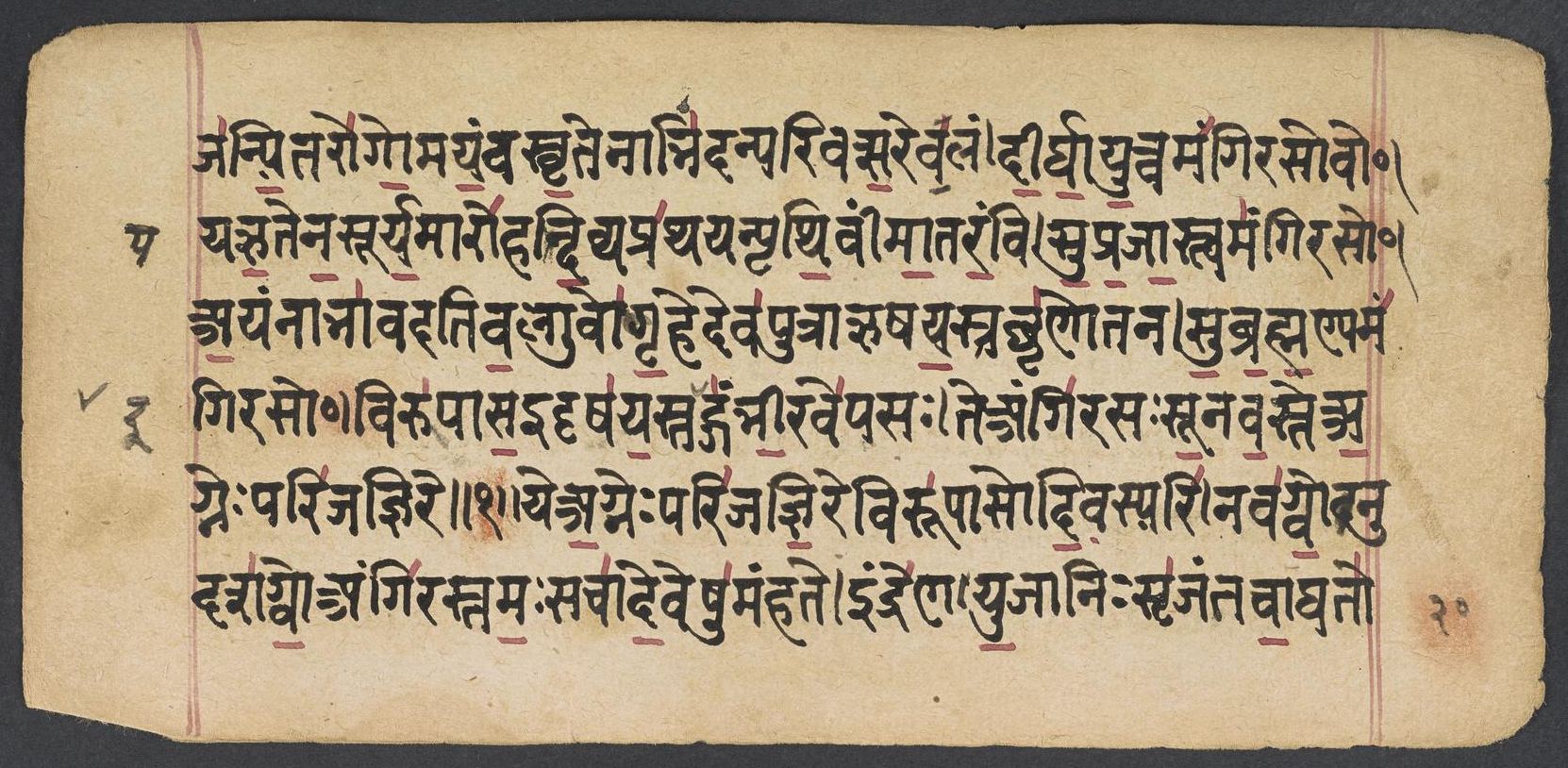
Where on the image
Penn Ms. Coll. 390 Item 48, fol. 20v (OPenn image 20, upper leaf). Checked on the image: the Rigveda text on this page begins in RV 10.62.2 ‹pitaro gomayaṁ vasv ṛtenābhindan›. The next page with Rigveda text, fol. 21r, begins in RV 10.62.7 ‹vrajaṁ gomantam aśvinam›. Verses 10.62.2-6 end on this page; 10.62.2 begins on fol. 20r.
2ya u̱dāja̍n pi̱taro̍ go̱maya̱ṁ vasv ṛ̱tenābhi̍ndan parivatsa̱re va̱lam | dī̱rghā̱yu̱tvam a̍ṅgiraso vo astu̱ prati̍ gṛbhṇīta māna̱vaṁ su̍medhasaḥ ||
3ya ṛ̱tena̱ sūrya̱m āro̍hayan di̱vy apra̍thayan pṛthi̱vīm mā̱tara̱ṁ vi | su̱pra̱jā̱stvam a̍ṅgiraso vo astu̱ prati̍ gṛbhṇīta māna̱vaṁ su̍medhasaḥ ||
4a̱yaṁ nābhā̍ vadati va̱lgu vo̍ gṛ̱he deva̍putrā ṛṣaya̱s tac chṛ̍ṇotana | su̱bra̱hma̱ṇyam a̍ṅgiraso vo astu̱ prati̍ gṛbhṇīta māna̱vaṁ su̍medhasaḥ ||
5virū̍pāsa̱ id ṛṣa̍ya̱s ta id ga̍mbhī̱rave̍pasaḥ | te aṅgi̍rasaḥ sū̱nava̱s te a̱gneḥ pari̍ jajñire ||
6ye a̱gneḥ pari̍ jajñi̱re virū̍pāso di̱vas pari̍ | nava̍gvo̱ nu daśa̍gvo̱ aṅgi̍rastama̱ḥ sacā̍ de̱veṣu̍ maṁhate ||
2The Fathers, who drave forth the wealth in cattle, have in the year's courses cleft Vala by Eternal Law: A lengthened life be yours, O ye Angirases. Welcome the son of Manu, ye who are most wise.
3Ye raised the Sun to heaven by everlasting Law, and spread broad earth, the Mother, out on every side. Fair wealth of progeny be yours, Angirases. Welcome the son of Manu, ye who are most wise.
4This kinsman in your dwellingplace speaks pleasant words: give ear to this, ye R̥ishis, children of the Gods. High Brahman dignity be yours, Angirases. Welcome the son of Manu, ye who are most wise.
5Distinguished by their varied form, these R̥ishis have been deeply moved. These are the sons of Angirases: from Agni have they sprung to life.
6Distinguished by their varied form, they sprang from Agni, from the sky. Navagva and Daṣagva, noblest Angiras, he giveth bounty with the Gods.
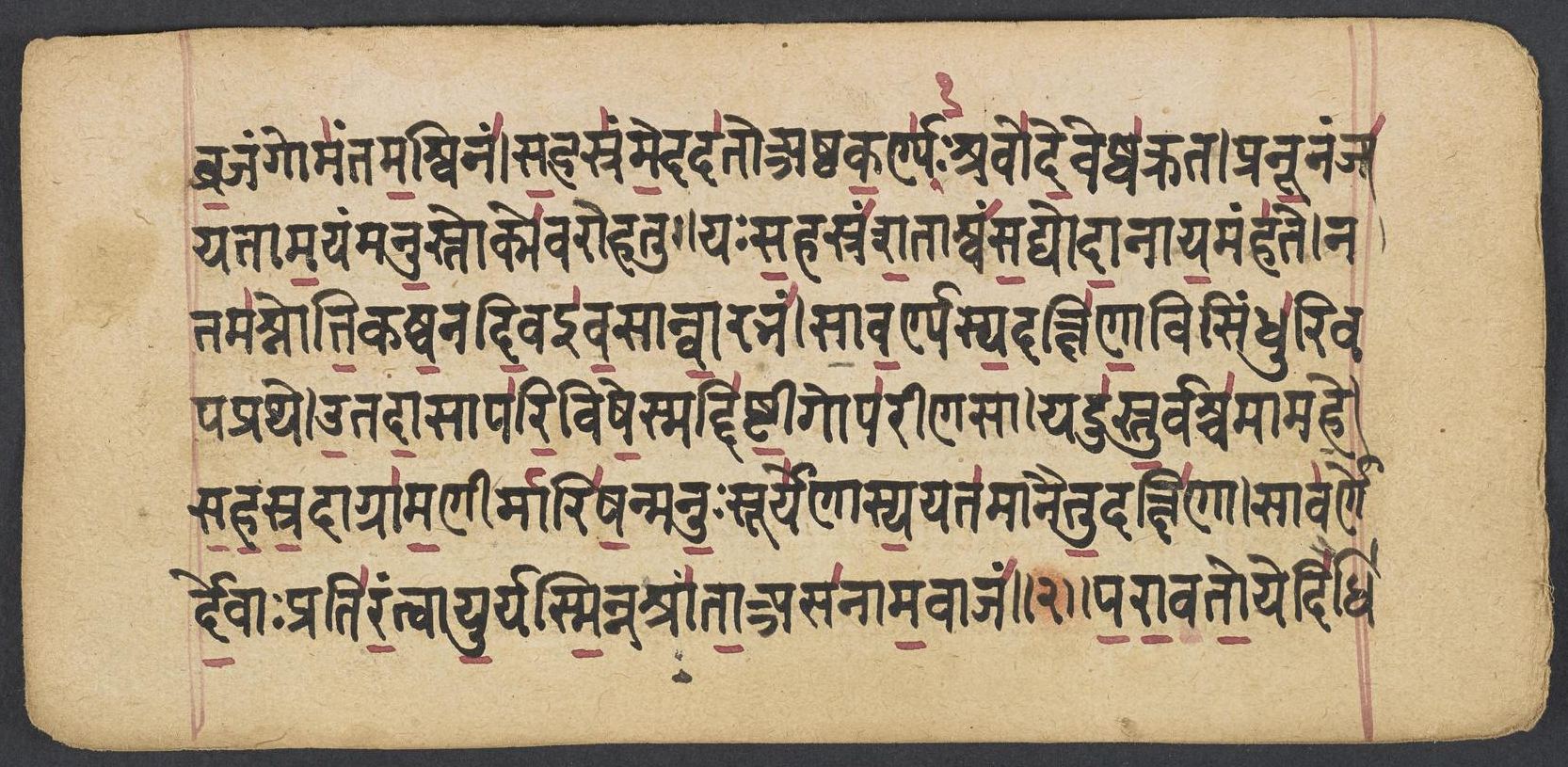
Where on the image
Penn Ms. Coll. 390 Item 48, fol. 21r (OPenn image 20, lower leaf). Checked on the image: the Rigveda text on this page begins in RV 10.62.7 ‹vrajaṁ gomantam aśvinam›. The next page with Rigveda text, fol. 21v, begins in RV 10.63.1 ‹-didhiṣanta āpyam manuprītāso janimā›. Verses 10.62.7-11 end on this page; 10.62.7 begins on fol. 20v.
7indre̍ṇa yu̱jā niḥ sṛ̍janta vā̱ghato̍ vra̱jaṁ goma̍ntam a̱śvina̍m | sa̱hasra̍m me̱ dada̍to aṣṭaka̱rṇya1̱̍ḥ śravo̍ de̱veṣv a̍krata ||
8pra nū̱naṁ jā̍yatām a̱yam manu̱s tokme̍va rohatu | yaḥ sa̱hasra̍ṁ śa̱tāśva̍ṁ sa̱dyo dā̱nāya̱ maṁha̍te ||
9na tam a̍śnoti̱ kaś ca̱na di̱va i̍va̱ sānv ā̱rabha̍m | sā̱va̱rṇyasya̱ dakṣi̍ṇā̱ vi sindhu̍r iva paprathe ||
10u̱ta dā̱sā pa̍ri̱viṣe̱ smaddi̍ṣṭī̱ gopa̍rīṇasā | yadu̍s tu̱rvaś ca̍ māmahe ||
11sa̱ha̱sra̱dā grā̍ma̱ṇīr mā ri̍ṣa̱n manu̱ḥ sūrye̍ṇāsya̱ yata̍mānaitu̱ dakṣi̍ṇā | sāva̍rṇer de̱vāḥ pra ti̍ra̱ntv āyu̱r yasmi̱nn aśrā̍ntā̱ asa̍nāma̱ vāja̍m ||
7With Indra for associate the priests have cleared the stable full of steeds and kine, Giving to me a thousand with their eightmarked ears, they gained renown among the Gods.
8May this man's sons be multiplied; like springing corn may Manu grow, Who gives at once in bounteous gift a thousand kine, a hundred steeds.
9No one attains to him, as though a man would grasp the heights of heaven. Sâvarṇya's sacrificial meed hath broadened like an ample flood.
10Yadu and Turva, too, have given two Dâsas, well-disposed, to serve, Together with great store of kine.
11Blest be the hamlet's chief, most liberal Manu, and may his bounty rival that of Sûrya. May the God let Sâvarṇi's life be leng thened, with whom, unwearied, we have lived and prospered.
Notes
- Sanskrit: Aufrecht's edition (1877) with the Vedic accents, as entered by van Nooten and Holland (GRETIL).
- English: Ralph T. H. Griffith, The Hymns of the Rigveda (1889-1892; 2nd ed. 1896-1897), from the VedaWeb digital text; OCR slips in that text were corrected against the printed 2nd edition (data/sources/rigveda/griffith_errata.json).
Cite
Sources
- Source: Penn Ms. Coll. 390 Item 48 (1711 CE (colophon: Saṃvat 1768)), OPenn, Public Domain Mark + Aufrecht's accented text (GRETIL) + Griffith's English (VedaWeb) (holding institution)
- Critical edition: Aufrecht (1877), accented e-text via GRETIL
← previous · → next · v cycle view · l back to library