Rigveda 10.69: To Agni
Introduction
Rigveda 10.69 is a hymn of 12 verses addressed to Agni. It stands in book (maṇḍala) 10, the last and latest book. The Rigveda is the oldest collection of Sanskrit hymns, composed in the second half of the second millennium BCE and handed down orally for many centuries before it was written down.
The manuscript shown is Penn Ms. Coll. 390 Item 48 (University of Pennsylvania), a paper manuscript of the eighth aṣṭaka (RV 10.46-10.191) of the Ṛgveda Saṃhitā in Devanāgarī, 158 leaves, 6 lines to the page, with the accents marked in red; the scribe's colophon on fol. 158 gives Saṃvat 1768 (1711 CE); this hymn stands on fol. 33r-34v. Each section below gives the verses that end on one page; the page boundaries were read on the images (the opening words of every page), not counted out. Like most Rigveda manuscripts, Penn Ms. Coll. 390 Item 48 writes a repeated refrain in short form after its first occurrence (for example kasmai° for kasmai devāya haviṣā vidhema); the Sanskrit shown is the full text of Aufrecht's edition.
How was this verified? (Provenance)
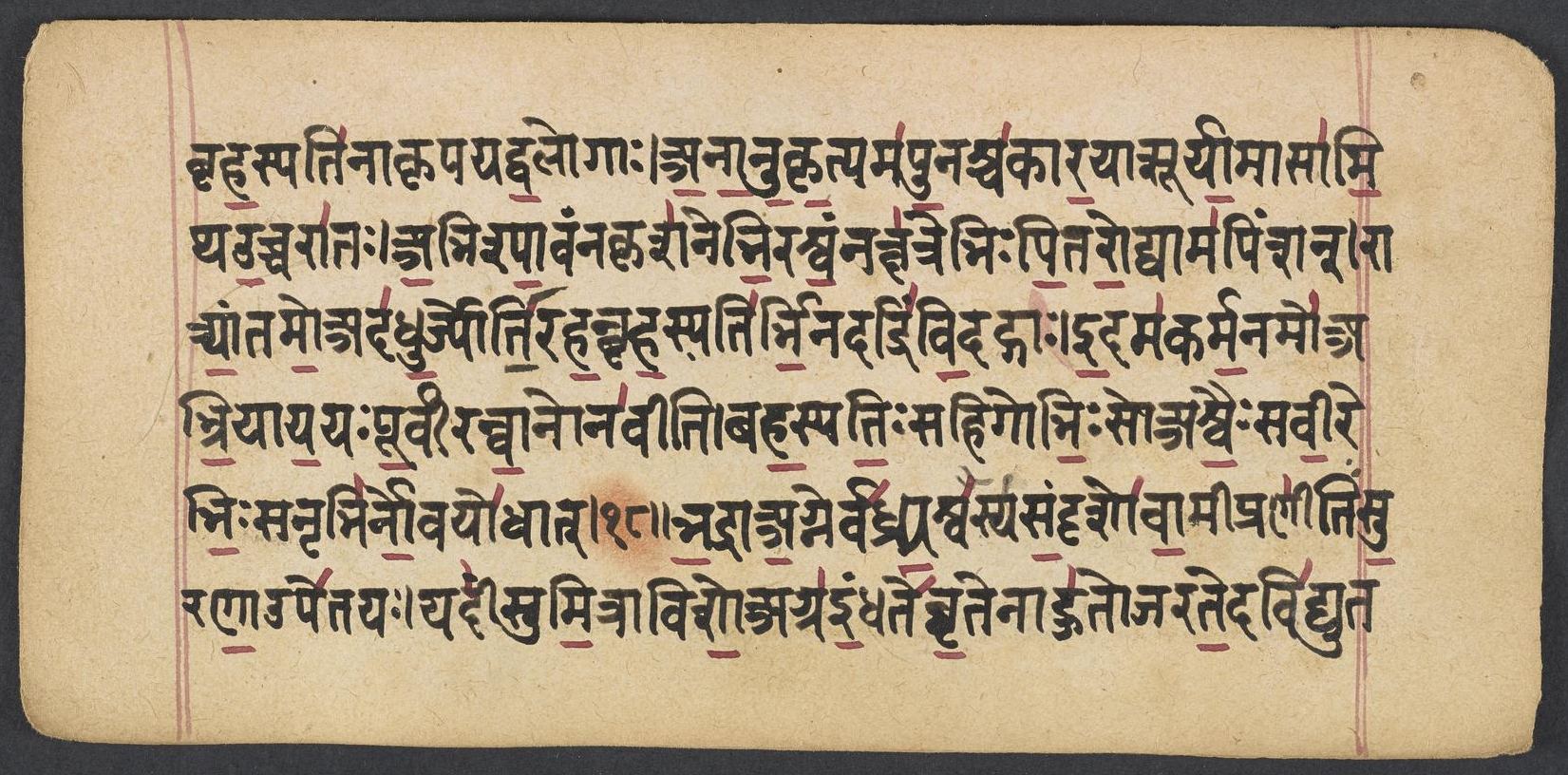
Where on the image
Penn Ms. Coll. 390 Item 48, fol. 33r (numbered 32r by the scribe) (OPenn image 32, lower leaf). Checked on the image: the Rigveda text on this page begins in RV 10.68.10 ‹bṛhaspatinākṛpayad valo gāḥ›. The next page with Rigveda text, fol. 33v (numbered 32v by the scribe), begins in RV 10.69.2 ‹ghṛtam agner vadhryaśvasya vardhanaṁ›. Verse 10.69.1 ends on this page.
1bha̱drā a̱gner va̍dhrya̱śvasya̍ sa̱ṁdṛśo̍ vā̱mī praṇī̍tiḥ su̱raṇā̱ upe̍tayaḥ | yad ī̍ṁ sumi̱trā viśo̱ agra̍ i̱ndhate̍ ghṛ̱tenāhu̍to jarate̱ davi̍dyutat ||
1Auspicious is the aspect of Vadhryaṣva's fire good is its guidance, pleasant are its visitings. When first the people Of Sumitra kindle it, with butter poured thercon it crackles and shines bright.
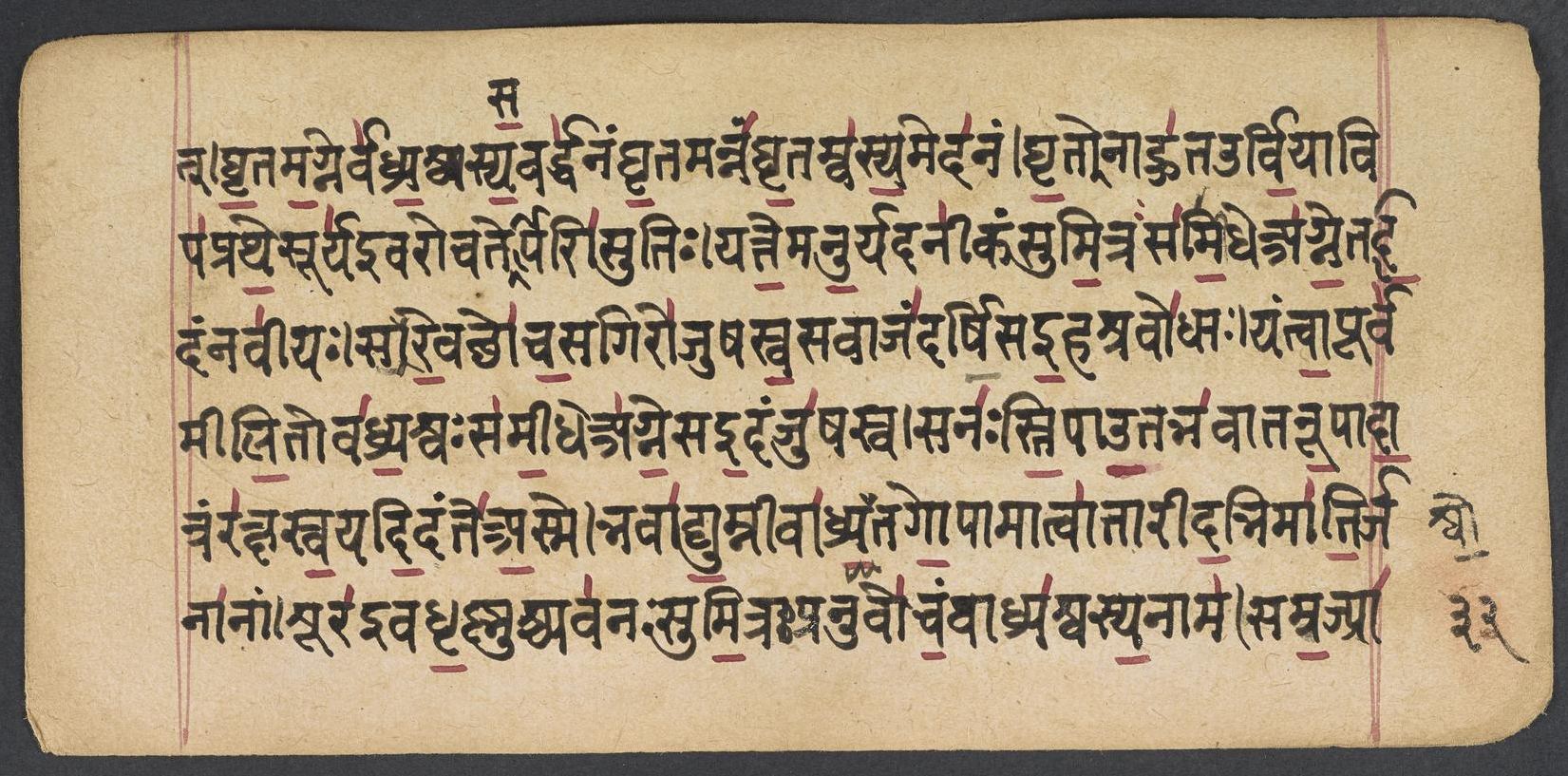
Where on the image
Penn Ms. Coll. 390 Item 48, fol. 33v (numbered 32v by the scribe) (OPenn image 33, upper leaf). Checked on the image: the Rigveda text on this page begins in RV 10.69.2 ‹ghṛtam agner vadhryaśvasya vardhanaṁ›. The next page with Rigveda text, fol. 34r (numbered 33r by the scribe), begins in RV 10.69.6 ‹parvatyā3 vasūni dāsā vṛtrāṇy›. Verses 10.69.2-5 end on this page.
2ghṛ̱tam a̱gner va̍dhrya̱śvasya̱ vardha̍naṁ ghṛ̱tam anna̍ṁ ghṛ̱tam v a̍sya̱ meda̍nam | ghṛ̱tenāhu̍ta urvi̱yā vi pa̍prathe̱ sūrya̍ iva rocate sa̱rpirā̍sutiḥ ||
3yat te̱ manu̱r yad anī̍kaṁ sumi̱traḥ sa̍mī̱dhe a̍gne̱ tad i̱daṁ navī̍yaḥ | sa re̱vac cho̍ca̱ sa giro̍ juṣasva̱ sa vāja̍ṁ darṣi̱ sa i̱ha śravo̍ dhāḥ ||
4yaṁ tvā̱ pūrva̍m īḻi̱to va̍dhrya̱śvaḥ sa̍mī̱dhe a̍gne̱ sa i̱daṁ ju̍ṣasva | sa na̍ḥ sti̱pā u̱ta bha̍vā tanū̱pā dā̱traṁ ra̍kṣasva̱ yad i̱daṁ te̍ a̱sme ||
5bhavā̍ dyu̱mnī vā̍dhryaśvo̱ta go̱pā mā tvā̍ tārīd a̱bhimā̍ti̱r janā̍nām | śūra̍ iva dhṛ̱ṣṇuś cyava̍naḥ sumi̱traḥ pra nu vo̍ca̱ṁ vādhrya̍śvasya̱ nāma̍ ||
2Butter is that which makes Vadhryaṣva's fire growstrong: the butter is its food, the butter makes it fat. It spreads abroad when butter hath been offered it, and balmed with streams of butter shines forth like the Sun.
3Still newest is this face of thine, O Agni, which Manu and Sumitra have enkindled. So richly shine, accept our songs with favour, so give us strengthening food, so send us glory.
4Accept this offering, Agni, whom aforetime Vadhryaṣva, hath entreated and enkindled. Guard well our homes and people, guard our bodies, protect thy gift to us which thou hast granted.
5Be splendid, guard us Kinsman of Vadhryaṣva: let not the enmity of men o'ercome thee, Like the bold hero Chyavâna, I Sumitra tell forth the title of Vadhryaṣva's Kinsman.
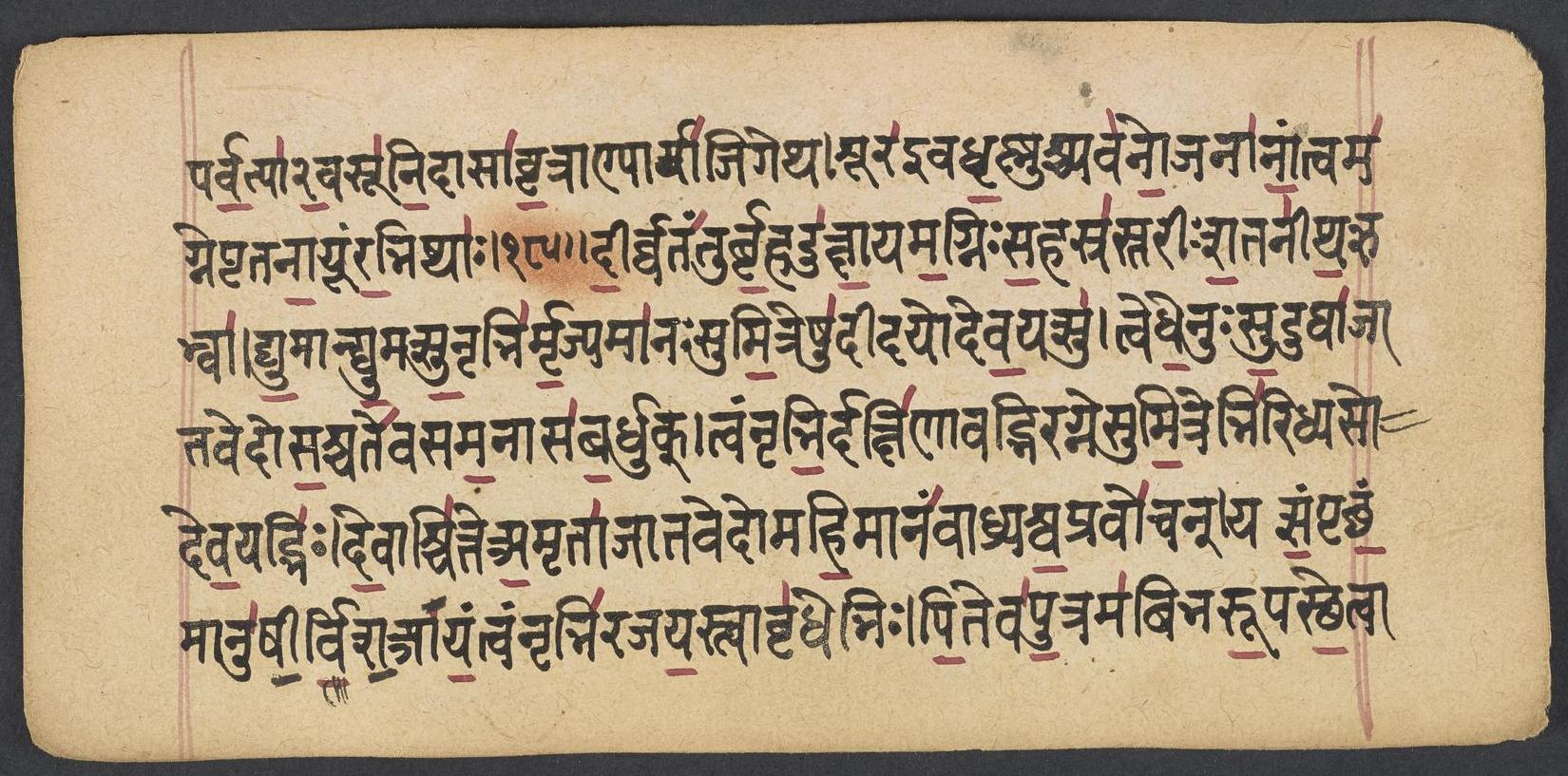
Where on the image
Penn Ms. Coll. 390 Item 48, fol. 34r (numbered 33r by the scribe) (OPenn image 33, lower leaf). Checked on the image: the Rigveda text on this page begins in RV 10.69.6 ‹parvatyā3 vasūni dāsā vṛtrāṇy›. The next page with Rigveda text, fol. 34v (numbered 33v by the scribe), begins in RV 10.69.10 ‹-tvām agne vadhryaśvaḥ saparyan›. Verses 10.69.6-9 end on this page; 10.69.6 begins on fol. 33v (numbered 32v by the scribe).
6sam a̱jryā̍ parva̱tyā̱3̱̍ vasū̍ni̱ dāsā̍ vṛ̱trāṇy āryā̍ jigetha | śūra̍ iva dhṛ̱ṣṇuś cyava̍no̱ janā̍nā̱ṁ tvam a̍gne pṛtanā̱yūm̐r a̱bhi ṣyā̍ḥ ||
7dī̱rghata̍ntur bṛ̱hadu̍kṣā̱yam a̱gniḥ sa̱hasra̍starīḥ śa̱tanī̍tha̱ ṛbhvā̍ | dyu̱mān dyu̱matsu̱ nṛbhi̍r mṛ̱jyamā̍naḥ sumi̱treṣu̍ dīdayo deva̱yatsu̍ ||
8tve dhe̱nuḥ su̱dughā̍ jātavedo 'sa̱ścate̍va sama̱nā sa̍ba̱rdhuk | tvaṁ nṛbhi̱r dakṣi̍ṇāvadbhir agne sumi̱trebhi̍r idhyase deva̱yadbhi̍ḥ ||
9de̱vāś ci̍t te a̱mṛtā̍ jātavedo mahi̱māna̍ṁ vādhryaśva̱ pra vo̍can | yat sa̱mpṛccha̱m mānu̍ṣī̱r viśa̱ āya̱n tvaṁ nṛbhi̍r ajaya̱s tvāvṛ̍dhebhiḥ ||
6All treasures hast thou won, of plains and mountains, and quelled the Dâsas' and Aryas' hatred. Like the bold hero Chyavâna, O Agni, mayst thou subdue the men who long for battle.
7Deft Agni hath a lengthened thread, tall oxen, a thousand heifers, numberless devices. Decked by the men, splendid among the splendid, shine brightly forth amid devout Sumitras.
8Thine is the teeming cow, O Jâtavedas, who pours at once her ceaseless flow, Sabardhuk, Thou. art lit up by men enriched with guerdon, O Agni, by the pious-souled Sumitras.
9Even Immortal Gods, O Jâtavedas, Vadhryaṣva's Kinsman, have declared thy grandeur. When human tribes drew near with supplication thou conqueredst with men whom thou hadst strengthened.
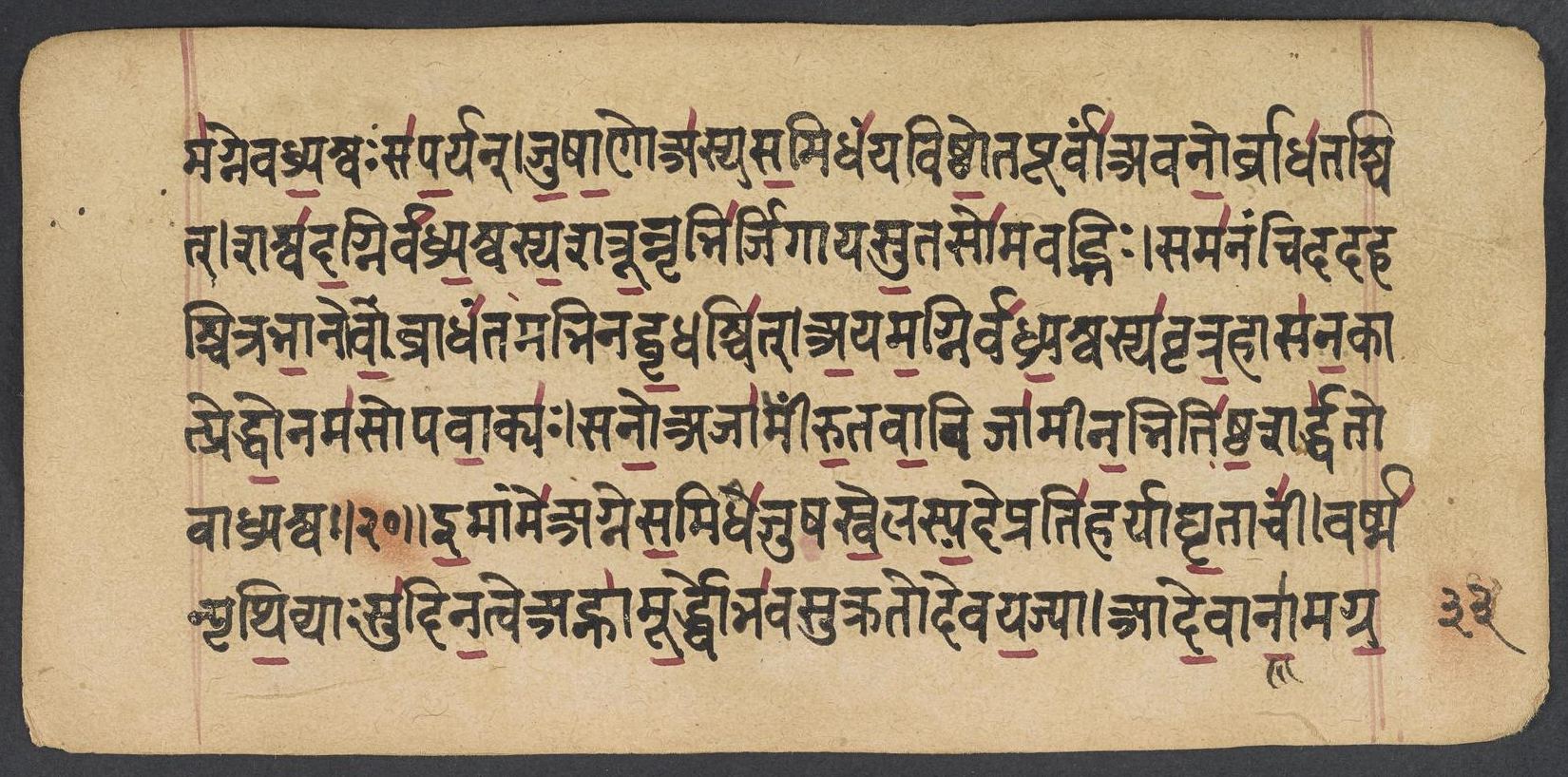
Where on the image
Penn Ms. Coll. 390 Item 48, fol. 34v (numbered 33v by the scribe) (OPenn image 34, upper leaf). Checked on the image: the Rigveda text on this page begins in RV 10.69.10 ‹-tvām agne vadhryaśvaḥ saparyan›. The next page with Rigveda text, fol. 35r (numbered 34r by the scribe), begins in RV 10.70.2 ‹-agrayāveha yātu narāśaṁso viśvarūpebhir›. Verses 10.69.10-12 end on this page; 10.69.10 begins on fol. 34r (numbered 33r by the scribe).
10pi̱teva̍ pu̱tram a̍bibhar u̱pasthe̱ tvām a̍gne vadhrya̱śvaḥ sa̍pa̱ryan | ju̱ṣā̱ṇo a̍sya sa̱midha̍ṁ yaviṣṭho̱ta pūrvā̍m̐ avano̱r vrādha̍taś cit ||
11śaśva̍d a̱gnir va̍dhrya̱śvasya̱ śatrū̱n nṛbhi̍r jigāya su̱taso̍mavadbhiḥ | sama̍naṁ cid adahaś citrabhā̱no 'va̱ vrādha̍ntam abhinad vṛ̱dhaś ci̍t ||
12a̱yam a̱gnir va̍dhrya̱śvasya̍ vṛtra̱hā sa̍na̱kāt preddho̱ nama̍sopavā̱kya̍ḥ | sa no̱ ajā̍mīm̐r u̱ta vā̱ vijā̍mīn a̱bhi ti̍ṣṭha̱ śardha̍to vādhryaśva ||
10Like as a father bears his son, O Agni, Vadhryaṣva bare thee in his lap and served thee. Thou, Youngest God, having enjoyed his fuel, didst vanquish those of old though they were mighty.
11Vadhryaṣva's Agni evermore hath vanquished his foes with heroes who had pressed the Soma. Lord of bright rays, thou burntest up the battle, subduing, as our help, e'en mighty foemen.
12This Agni of Vadhryaṣva, Vr̥itra-slayer, lit from of old, must be invoked with homage. As such assail our enemies, Vadhryaṣva, whether the foes be strangers or be kinsmen.
Notes
- Sanskrit: Aufrecht's edition (1877) with the Vedic accents, as entered by van Nooten and Holland (GRETIL).
- English: Ralph T. H. Griffith, The Hymns of the Rigveda (1889-1892; 2nd ed. 1896-1897), from the VedaWeb digital text; OCR slips in that text were corrected against the printed 2nd edition (data/sources/rigveda/griffith_errata.json).
Cite
Sources
- Source: Penn Ms. Coll. 390 Item 48 (1711 CE (colophon: Saṃvat 1768)), OPenn, Public Domain Mark + Aufrecht's accented text (GRETIL) + Griffith's English (VedaWeb) (holding institution)
- Critical edition: Aufrecht (1877), accented e-text via GRETIL
← previous · → next · v cycle view · l back to library