Rigveda 10.8: To Agni and Indra
Introduction
Rigveda 10.8 is a hymn of 9 verses addressed to Agni and Indra. It stands in book (maṇḍala) 10, the last and latest book. The Rigveda is the oldest collection of Sanskrit hymns, composed in the second half of the second millennium BCE and handed down orally for many centuries before it was written down.
The manuscript shown is Penn Ms. Coll. 390 Item 41 (University of Pennsylvania), an undated paper manuscript of the padapāṭha (the word-by-word recitation text, in which every word is written separately and compounds are split) of the whole Ṛgveda in Devanāgarī, 884 leaves in fascicles, 7-9 lines to the page, accents in red; this hymn stands on fol. 747v-748v. Each section below gives the verses that end on one page; the page boundaries were read on the images (the opening words of every page), not counted out. Where the manuscript is a padapāṭha (the word-by-word recitation text), the section shows Aufrecht's continuous (saṃhitā) text first and, as the edition text, the padapāṭha of the same verses, which is the form written on the page.
How was this verified? (Provenance)
Where on the image
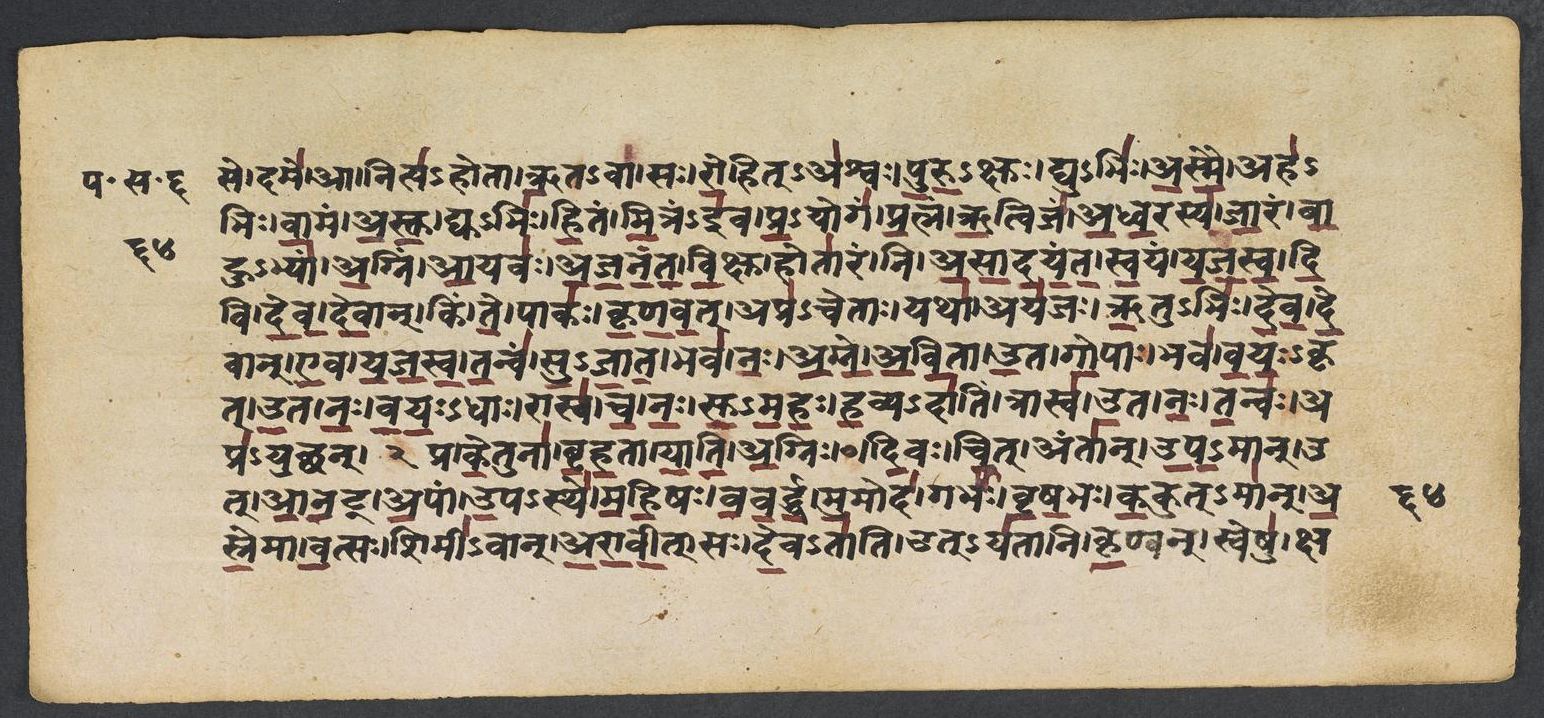
Penn Ms. Coll. 390 Item 41, fol. 747v (numbered 64v by the scribe) (OPenn image 748, upper leaf). Checked on the image: the Rigveda text on this page begins in RV 10.7.4 ‹-trāyase dame ā nitya-hotā›. The next page with Rigveda text, fol. 748r (numbered 65r by the scribe), begins in RV 10.8.2 ‹-kṣayeṣu prathamaḥ jigāti›. Verse 10.8.1 ends on this page.
1pra ke̱tunā̍ bṛha̱tā yā̍ty a̱gnir ā roda̍sī vṛṣa̱bho ro̍ravīti | di̱vaś ci̱d antā̍m̐ upa̱mām̐ ud ā̍naḻ a̱pām u̱pasthe̍ mahi̱ṣo va̍vardha ||
Compare: Padapāṭha (word-by-word text written in the manuscript; Sansknet e-text via GRETIL)
1pra | ketunā | bṛhatā | yāti | agniḥ | ā | rodasī iti | vṛṣabhaḥ | roravīti | divaḥ | cit | antān | upa-mān | ut | ānaṭ | apām | upa-sthe | mahiṣaḥ | vavardha
1AGNI advances with his lofty banner: the Bull is bellowing to the earth and heavens. He hath attained the sky's supremest limits. the Steer hath waxen in the lap of waters.
Where on the image
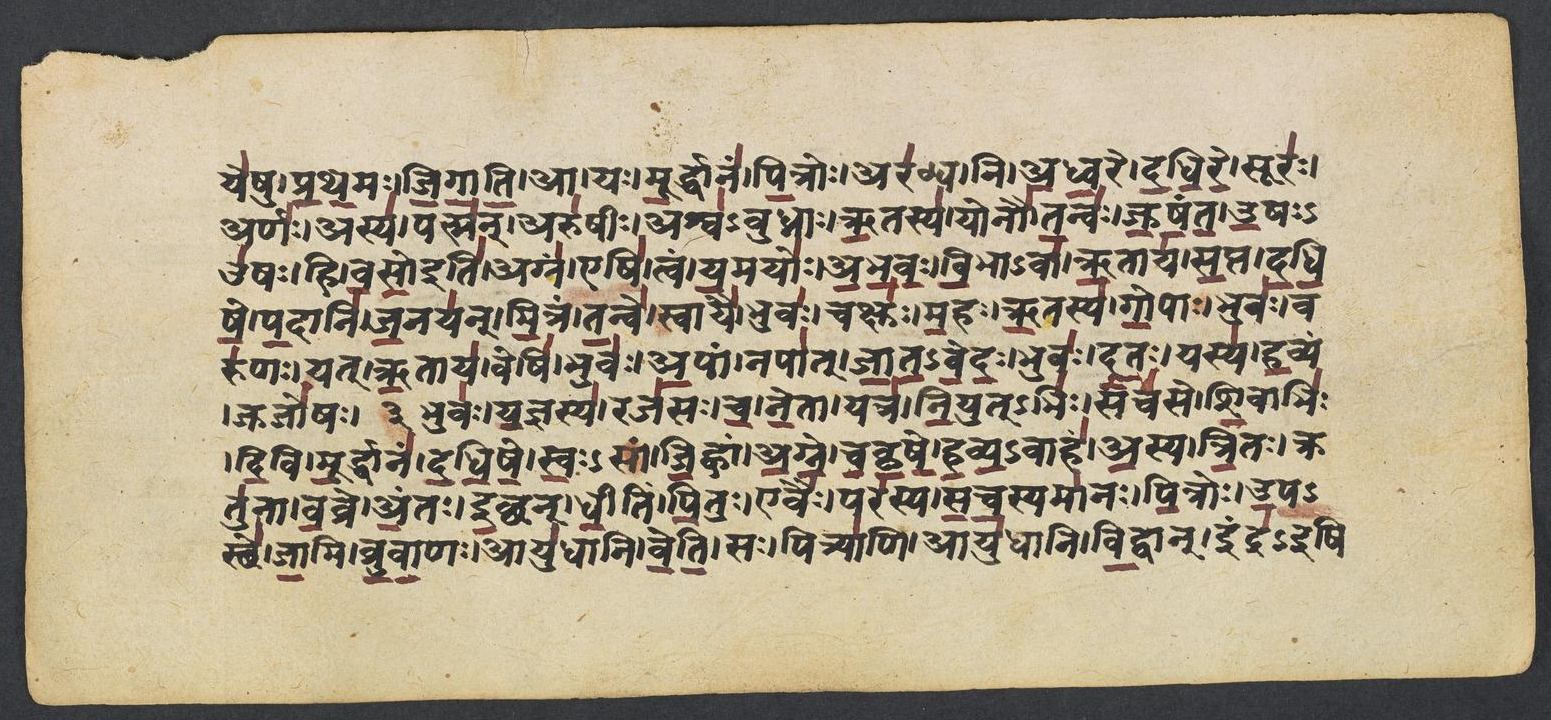
Penn Ms. Coll. 390 Item 41, fol. 748r (numbered 65r by the scribe) (OPenn image 748, lower leaf). Checked on the image: the Rigveda text on this page begins in RV 10.8.2 ‹-kṣayeṣu prathamaḥ jigāti›. The next page with Rigveda text, fol. 748v (numbered 65v by the scribe), begins in RV 10.8.8 ‹-indra-iṣitaḥ āptyaḥ abhi ayudhyat›. Verses 10.8.2-7 end on this page; 10.8.2 begins on fol. 747v (numbered 64v by the scribe).
2mu̱moda̱ garbho̍ vṛṣa̱bhaḥ ka̱kudmā̍n asre̱mā va̱tsaḥ śimī̍vām̐ arāvīt | sa de̱vatā̱ty udya̍tāni kṛ̱ṇvan sveṣu̱ kṣaye̍ṣu pratha̱mo ji̍gāti ||
3ā yo mū̱rdhāna̍m pi̱tror ara̍bdha̱ ny a̍dhva̱re da̍dhire̱ sūro̱ arṇa̍ḥ | asya̱ patma̱nn aru̍ṣī̱r aśva̍budhnā ṛ̱tasya̱ yonau̍ ta̱nvo̍ juṣanta ||
4u̱ṣa-u̍ṣo̱ hi va̍so̱ agra̱m eṣi̱ tvaṁ ya̱mayo̍r abhavo vi̱bhāvā̍ | ṛ̱tāya̍ sa̱pta da̍dhiṣe pa̱dāni̍ ja̱naya̍n mi̱traṁ ta̱nve̱3̱̍ svāyai̍ ||
5bhuva̱ś cakṣu̍r ma̱ha ṛ̱tasya̍ go̱pā bhuvo̱ varu̍ṇo̱ yad ṛ̱tāya̱ veṣi̍ | bhuvo̍ a̱pāṁ napā̍j jātavedo̱ bhuvo̍ dū̱to yasya̍ ha̱vyaṁ jujo̍ṣaḥ ||
6bhuvo̍ ya̱jñasya̱ raja̍saś ca ne̱tā yatrā̍ ni̱yudbhi̱ḥ saca̍se śi̱vābhi̍ḥ | di̱vi mū̱rdhāna̍ṁ dadhiṣe sva̱rṣāṁ ji̱hvām a̍gne cakṛṣe havya̱vāha̍m ||
7a̱sya tri̱taḥ kratu̍nā va̱vre a̱ntar i̱cchan dhī̱tim pi̱tur evai̱ḥ para̍sya | sa̱ca̱syamā̍naḥ pi̱tror u̱pasthe̍ jā̱mi bru̍vā̱ṇa āyu̍dhāni veti ||
Compare: Padapāṭha (word-by-word text written in the manuscript; Sansknet e-text via GRETIL)
2mumoda | garbhaḥ | vṛṣabhaḥ | kakut-mān | asremā | vatsaḥ | śimī-vān | arāvīt | saḥ | deva-tāti | ut-yatāni | kṛṇvan | sveṣu | kṣayeṣu | prathamaḥ | jigāti
3ā | yaḥ | mūrdhānam | pitroḥ | arabdha | ni | adhvare | dadhire | sūraḥ | arṇaḥ | asya | patman | aruṣīḥ | aśva-budhnāḥ | ṛtasya | yonau | tanvaḥ | juṣanta
4uṣaḥ-uṣaḥ | hi | vaso iti | agram | eṣi | tvam | yamayoḥ | abhavaḥ | vibhāvā | ṛtāya | sapta | dadhiṣe | padāni | janayan | mitram | tanve | svāyai
5bhuvaḥ | cakṣuḥ | mahaḥ | ṛtasya | gopāḥ | bhuvaḥ | varuṇaḥ | yat | ṛtāya | veṣi | bhuvaḥ | apām | napāt | jāta-vedaḥ | bhuvaḥ | dūtaḥ | yasya | havyam | jujoṣaḥ
6bhuvaḥ | yajñasya | rajasaḥ | ca | netā | yatra | niyut-bhiḥ | sacase | śivābhiḥ | d ivi | mūrdhānam | dadhiṣe | svaḥ-sām | jihvām | agne | cakṛṣe | havya-vāham
7asya | tritaḥ | kratunā | vavre | antaḥ | icchan | dhītim | pituḥ | evaiḥ | parasya | sacasyamānaḥ | pitroḥ | upa-sthe | jāmi | bruvāṇaḥ | āyudhāni | veti
2The Bull, the youngling with the hump, hath frolicked, the strong and never-ceasing Calf hath bellowed. Bringing our offerings to the God's assembly, he moves as Chief in his own dwelling-places.
3Him who hath grasped his Parents' head, they stablished at sacrifice a wave of heavenly lustre. In his swift flight the red Dawns borne by horses refresh their bodies in the home of Order.
4For, Vasu thou precedest every Morning, and still hast been the Twins' illuminator. For sacrifice, seven places thou retainest while for thine own self thou engenderest Mitra.
5Thou art the Eye and Guard of mighty Order, and Varuṇa when to sacrifice thou comest. Thou art the Waters' Child O Jâtavedas, envoy of him whose offering thou acceptest.
6Thou art the Leader of the rite and region, to which with thine auspicious teams thou teadest, Thy light-bestowing head to heaven thou liftest, making thy tongue the oblationbearer, Agni.
7Through his wise insight Trita in the cavern, seeking as ever the Chief Sire's intention, Carefully tended in his Parents' bosom, calling the weapons kin, goes forth to combat.
Where on the image
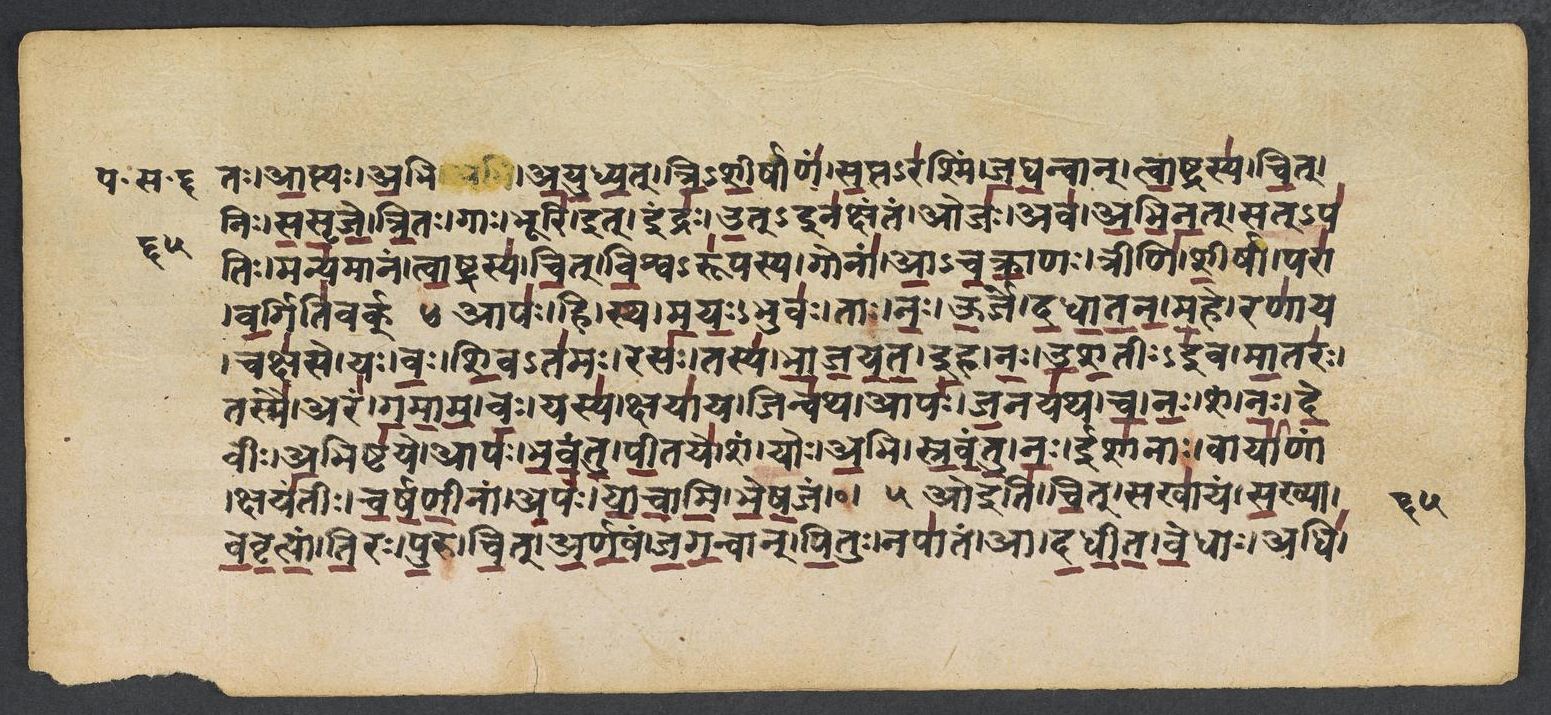
Penn Ms. Coll. 390 Item 41, fol. 748v (numbered 65v by the scribe) (OPenn image 749, upper leaf). Checked on the image: the Rigveda text on this page begins in RV 10.8.8 ‹-indra-iṣitaḥ āptyaḥ abhi ayudhyat›. The next page with Rigveda text, fol. 749r (numbered 66r by the scribe), begins in RV 10.10.1 ‹kṣami pra-taram dīdhyānaḥ›. Verses 10.8.8-9 end on this page; 10.8.8 begins on fol. 748r (numbered 65r by the scribe).
8sa pitryā̱ṇy āyu̍dhāni vi̱dvān indre̍ṣita ā̱ptyo a̱bhy a̍yudhyat | tri̱śī̱rṣāṇa̍ṁ sa̱ptara̍śmiṁ jagha̱nvān tvā̱ṣṭrasya̍ ci̱n niḥ sa̍sṛje tri̱to gāḥ ||
9bhūrīd indra̍ u̱dina̍kṣanta̱m ojo 'vā̍bhina̱t satpa̍ti̱r manya̍mānam | tvā̱ṣṭrasya̍ cid vi̱śvarū̍pasya̱ gonā̍m ācakrā̱ṇas trīṇi̍ śī̱rṣā parā̍ vark ||
Compare: Padapāṭha (word-by-word text written in the manuscript; Sansknet e-text via GRETIL)
8saḥ | pitryāṇi | āyudhāni | vidvān | indra-iṣitaḥ | āptyaḥ | abhi | ayudhyat | tri-śīrṣāṇam | sapta-raśmim | jaghanvān | tvāṣṭrasya | cit | niḥ | sasṛje | tritaḥ | gāḥ
9bhūri | it | indraḥ | ut-inakṣantam | ojaḥ | ava | abhinat | sat-patiḥ | manyamānam | tvāṣṭrasya | cit | viśva-rūpasya | gonām | ācakrāṇaḥ | trīṇi | śīrṣā | parā | varka
8Well-skilled to use the weapons of his Father, Âptya, urged on by Indra, fought the battle. Then Trita slew the foe seven-rayed, three-headed, and freed the cattle of the Son of Tvashṭar.
9Lord of the brave, Indra cleft him in pieces who sought to gain much strength and deemed him mighty. He smote his three heads from his body, seizing the cattle of the omniform Son of Tvashṭar.
Notes
- Sanskrit: Aufrecht's edition (1877) with the Vedic accents, as entered by van Nooten and Holland (GRETIL).
- English: Ralph T. H. Griffith, The Hymns of the Rigveda (1889-1892; 2nd ed. 1896-1897), from the VedaWeb digital text; OCR slips in that text were corrected against the printed 2nd edition (data/sources/rigveda/griffith_errata.json).
- Padapāṭha (edition text): Sansknet e-text via GRETIL (CC BY-NC-SA 4.0).
Cite
Sources
- Source: Penn Ms. Coll. 390 Item 41 (undated (catalogued with Penn's 18th-19th c. Vedic manuscripts)), OPenn, Public Domain Mark + Aufrecht's accented text (GRETIL) + Griffith's English (VedaWeb) (holding institution)
- Critical edition: Aufrecht (1877), accented e-text via GRETIL
← previous · → next · v cycle view · l back to library