Rigveda 10.83: To Manyu (Wrath)
Introduction
Rigveda 10.83 is a hymn of 7 verses addressed to Manyu (Wrath). It stands in book (maṇḍala) 10, the last and latest book. The Rigveda is the oldest collection of Sanskrit hymns, composed in the second half of the second millennium BCE and handed down orally for many centuries before it was written down.
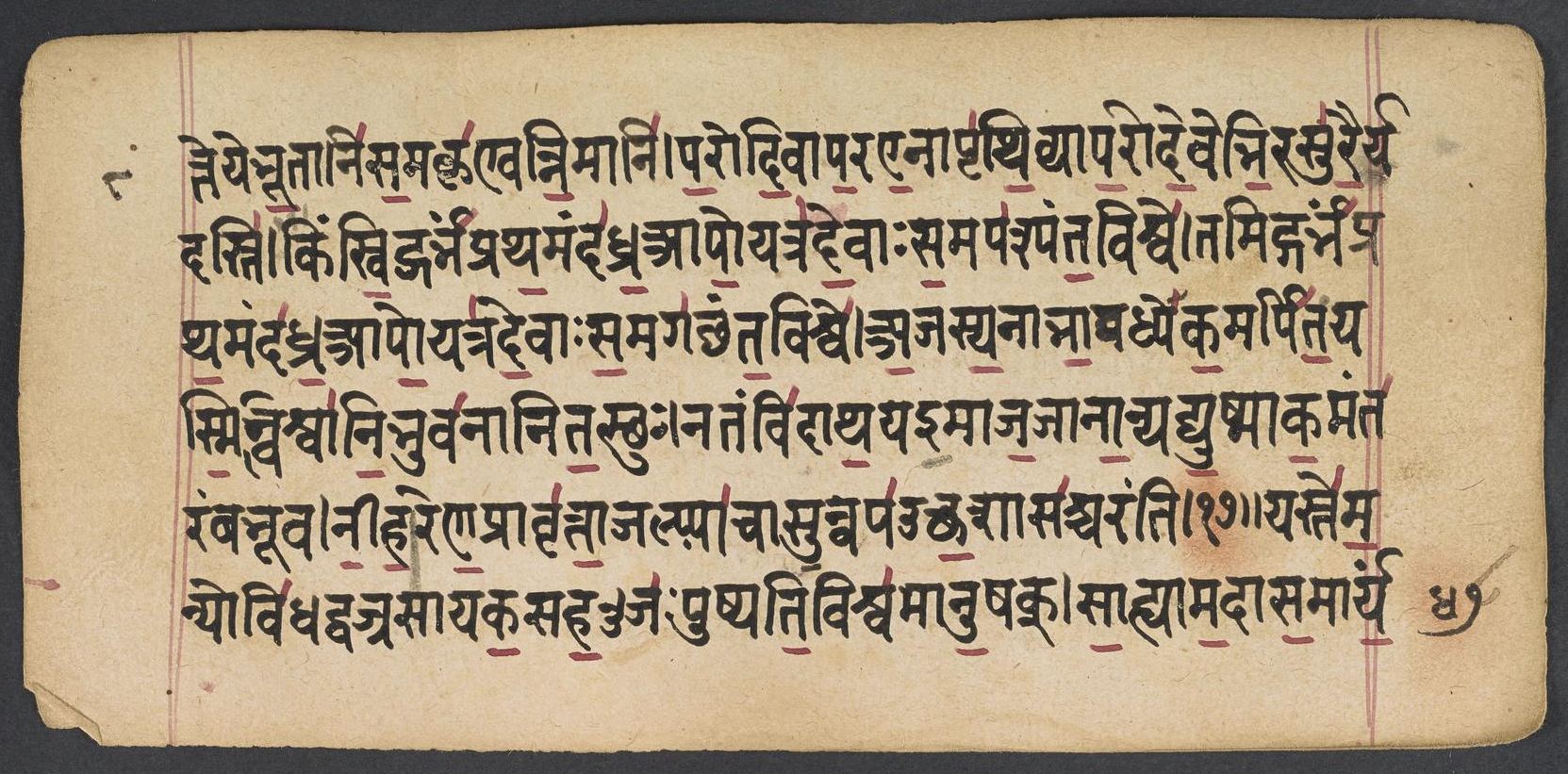
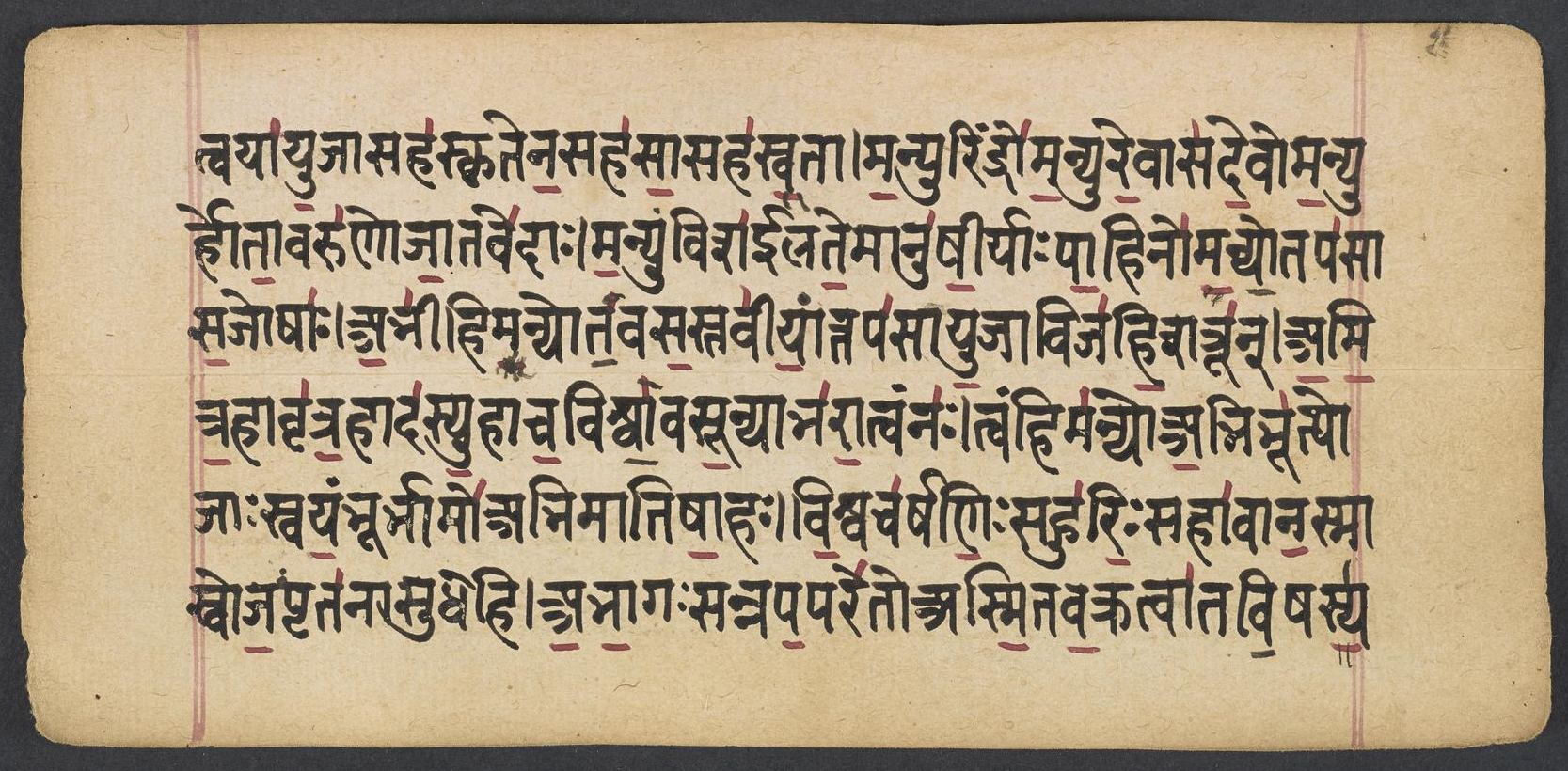
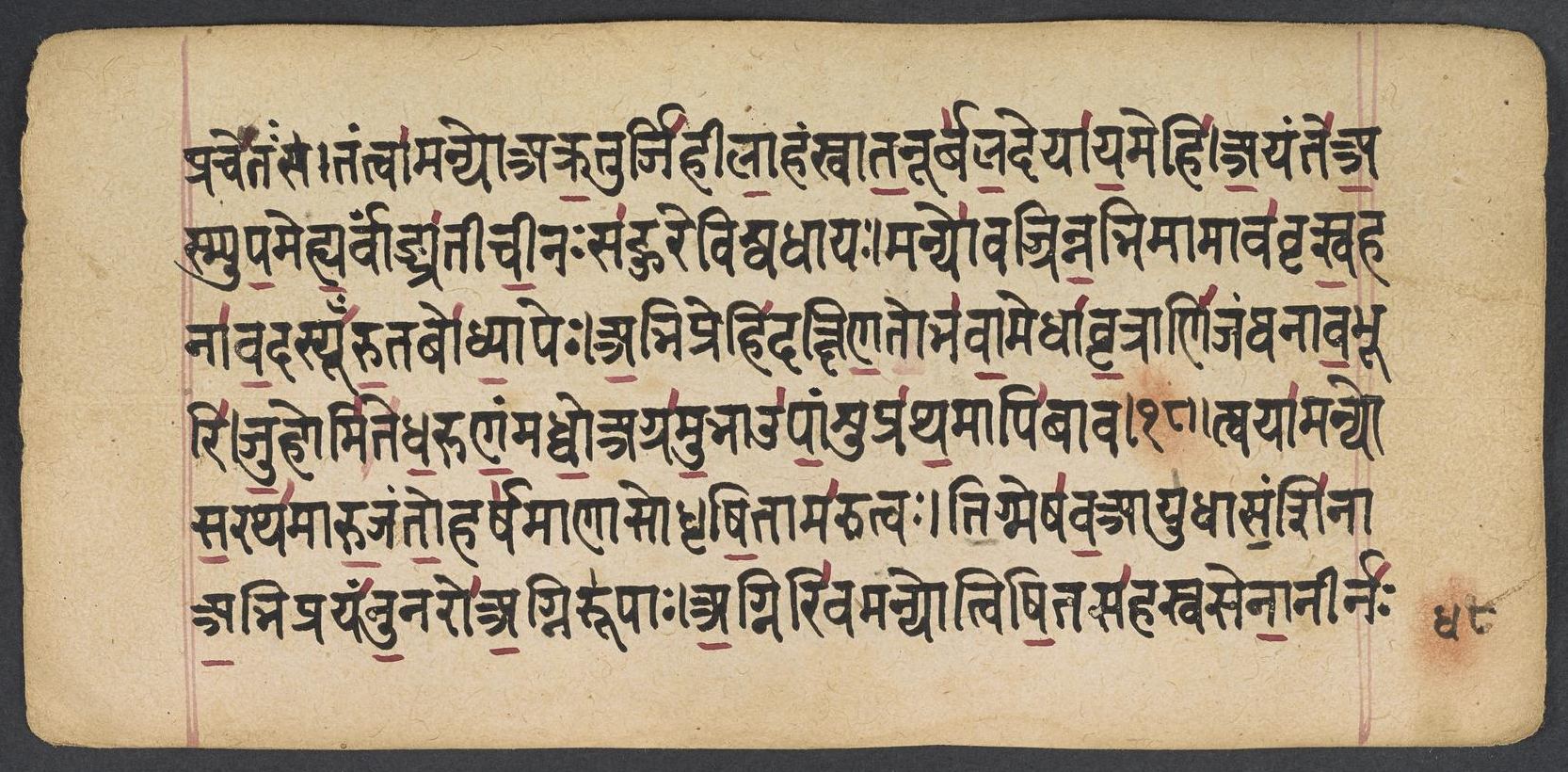
The manuscript shown is Penn Ms. Coll. 390 Item 48 (University of Pennsylvania), a paper manuscript of the eighth aṣṭaka (RV 10.46-10.191) of the Ṛgveda Saṃhitā in Devanāgarī, 158 leaves, 6 lines to the page, with the accents marked in red; the scribe's colophon on fol. 158 gives Saṃvat 1768 (1711 CE); this hymn stands on fol. 48v-49v. Each section below gives the verses that end on one page; the page boundaries were read on the images (the opening words of every page), not counted out. Like most Rigveda manuscripts, Penn Ms. Coll. 390 Item 48 writes a repeated refrain in short form after its first occurrence (for example kasmai° for kasmai devāya haviṣā vidhema); the Sanskrit shown is the full text of Aufrecht's edition.
How was this verified? (Provenance)
Where on the image
Penn Ms. Coll. 390 Item 48, fol. 49r (numbered 48r by the scribe) (OPenn image 48, lower leaf). Checked on the image: the Rigveda text on this page begins in RV 10.83.1 ‹tvayā yujā sahaskṛtena sahasā›. The next page with Rigveda text, fol. 49v (numbered 48v by the scribe), begins in RV 10.83.5 ‹-taviṣasya pracetaḥ›. Verses 10.83.1-4 end on this page; 10.83.1 begins on fol. 48v (numbered 47v by the scribe).
1yas te̍ ma̱nyo 'vi̍dhad vajra sāyaka̱ saha̱ oja̍ḥ puṣyati̱ viśva̍m ānu̱ṣak | sā̱hyāma̱ dāsa̱m ārya̱ṁ tvayā̍ yu̱jā saha̍skṛtena̱ saha̍sā̱ saha̍svatā ||
2ma̱nyur indro̍ ma̱nyur e̱vāsa̍ de̱vo ma̱nyur hotā̱ varu̍ṇo jā̱tave̍dāḥ | ma̱nyuṁ viśa̍ īḻate̱ mānu̍ṣī̱r yāḥ pā̱hi no̍ manyo̱ tapa̍sā sa̱joṣā̍ḥ ||
3a̱bhī̍hi manyo ta̱vasa̱s tavī̍yā̱n tapa̍sā yu̱jā vi ja̍hi̱ śatrū̍n | a̱mi̱tra̱hā vṛ̍tra̱hā da̍syu̱hā ca̱ viśvā̱ vasū̱ny ā bha̍rā̱ tvaṁ na̍ḥ ||
4tvaṁ hi ma̍nyo a̱bhibhū̍tyojāḥ svaya̱mbhūr bhāmo̍ abhimātiṣā̱haḥ | vi̱śvaca̍rṣaṇi̱ḥ sahu̍ri̱ḥ sahā̍vān a̱smāsv oja̱ḥ pṛta̍nāsu dhehi ||
1HE who hath reverenced thee, Manyu, destructive bolt, breeds for himself forthwith all conquering energy. Ârya and Dâsa will we conquer with thine aid, with thee the Conqueror, with conquest conquestsped.
2Manyu was Indra, yea, the God, was Manyu, Manyu was Hotar, Varuṇa, Jâtavedas. The tribes of human lineage worship Manyu. Accordant with thy fervour, Manyu, guard us.
3Come hither, Manyu, mightier than the mighty; chase, with thy fervour for ally, our foemen. Slayer of foes, of Vr̥itra, and of Dasyu, bring thou to us all kinds of wealth and treasure.
4For thou art, Manyu, of surpassing vigour, fierce, queller of the foe, and self-existent, Shared by all men, victorious, subduer: vouchsafe to us superior strength in battles.
Where on the image
Penn Ms. Coll. 390 Item 48, fol. 49v (numbered 48v by the scribe) (OPenn image 49, upper leaf). Checked on the image: the Rigveda text on this page begins in RV 10.83.5 ‹-taviṣasya pracetaḥ›. The next page with Rigveda text, fol. 50r (numbered 49r by the scribe), begins in RV 10.84.2 ‹-senānīr naḥ sahure hūta›. Verses 10.83.5-7 end on this page; 10.83.5 begins on fol. 49r (numbered 48r by the scribe).
5a̱bhā̱gaḥ sann apa̱ pare̍to asmi̱ tava̱ kratvā̍ tavi̱ṣasya̍ pracetaḥ | taṁ tvā̍ manyo akra̱tur ji̍hīḻā̱haṁ svā ta̱nūr ba̍la̱deyā̍ya̱ mehi̍ ||
6a̱yaṁ te̍ a̱smy upa̱ mehy a̱rvāṅ pra̍tīcī̱naḥ sa̍hure viśvadhāyaḥ | manyo̍ vajrinn a̱bhi mām ā va̍vṛtsva̱ hanā̍va̱ dasyū̍m̐r u̱ta bo̍dhy ā̱peḥ ||
7a̱bhi prehi̍ dakṣiṇa̱to bha̍vā̱ me 'dhā̍ vṛ̱trāṇi̍ jaṅghanāva̱ bhūri̍ | ju̱homi̍ te dha̱ruṇa̱m madhvo̱ agra̍m u̱bhā u̍pā̱ṁśu pra̍tha̱mā pi̍bāva ||
5I have departed, still without a portion, wise God! according to thy will, the Mighty. I, feeble man, was wroth thee, O Manyu I am myself; come thou to give me vigour.
6Come hither. I am all thine own; advancing turn thou to me, Victorious, All-supporter! Come to me, Manyu, Wielder of the Thunder: bethink thee of thy friend, and slay the Dasyus.
7Approach, and on my right hand hold thy station: so shall we slay a multitude of foemen. The best of meath I offer to support thee: may we be first to drink thereof in quiet.
Notes
- Sanskrit: Aufrecht's edition (1877) with the Vedic accents, as entered by van Nooten and Holland (GRETIL).
- English: Ralph T. H. Griffith, The Hymns of the Rigveda (1889-1892; 2nd ed. 1896-1897), from the VedaWeb digital text; OCR slips in that text were corrected against the printed 2nd edition (data/sources/rigveda/griffith_errata.json).
Cite
Sources
- Source: Penn Ms. Coll. 390 Item 48 (1711 CE (colophon: Saṃvat 1768)), OPenn, Public Domain Mark + Aufrecht's accented text (GRETIL) + Griffith's English (VedaWeb) (holding institution)
- Critical edition: Aufrecht (1877), accented e-text via GRETIL
← previous · → next · v cycle view · l back to library