Rigveda 10.90: Purusha Sukta
Introduction
Rigveda 10.90 is a hymn of 16 verses addressed to Purusa. It stands in book (maṇḍala) 10, the last and latest book. The Rigveda is the oldest collection of Sanskrit hymns, composed in the second half of the second millennium BCE and handed down orally for many centuries before it was written down.
The manuscript shown is Penn Ms. Coll. 390 Item 48 (University of Pennsylvania), a paper manuscript of the eighth aṣṭaka (RV 10.46-10.191) of the Ṛgveda Saṃhitā in Devanāgarī, 158 leaves, 6 lines to the page, with the accents marked in red; the scribe's colophon on fol. 158 gives Saṃvat 1768 (1711 CE); this hymn stands on fol. 65r-66v. Each section below gives the verses that end on one page; the page boundaries were read on the images (the opening words of every page), not counted out. Like most Rigveda manuscripts, Penn Ms. Coll. 390 Item 48 writes a repeated refrain in short form after its first occurrence (for example kasmai° for kasmai devāya haviṣā vidhema); the Sanskrit shown is the full text of Aufrecht's edition.
How was this verified? (Provenance)
Where on the image
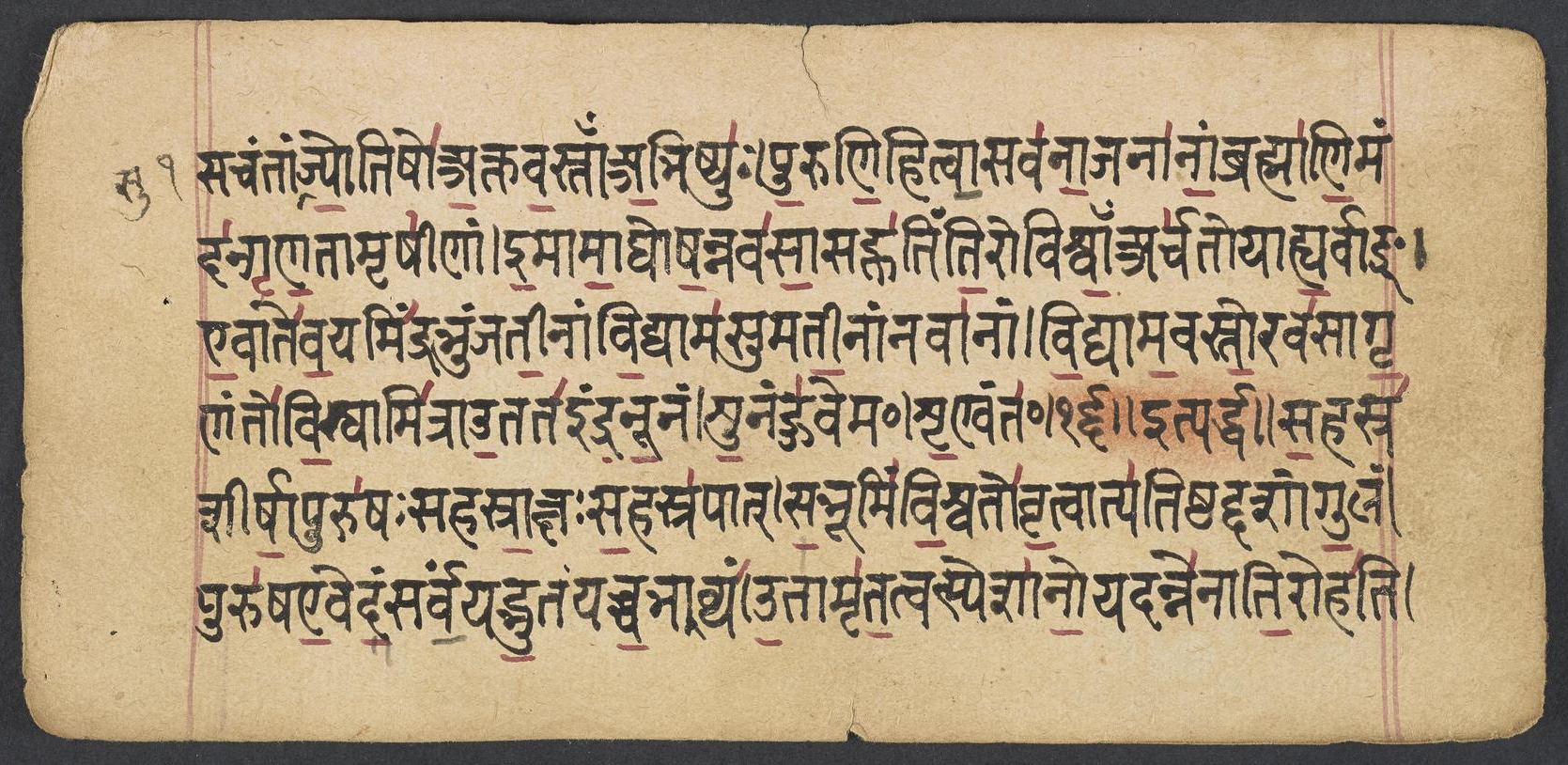
Penn Ms. Coll. 390 Item 48, fol. 65r (OPenn image 64, lower leaf). Checked on the image: the Rigveda text on this page begins in RV 10.89.15 ‹sacantāṁ sujyotiṣo aktavas tām̐›. The next page with Rigveda text, fol. 65v, begins in RV 10.90.3 ‹etāvān asya mahimāto jyāyām̐ś›. Verses 10.90.1-2 end on this page.
1sa̱hasra̍śīrṣā̱ puru̍ṣaḥ sahasrā̱kṣaḥ sa̱hasra̍pāt | sa bhūmi̍ṁ vi̱śvato̍ vṛ̱tvāty a̍tiṣṭhad daśāṅgu̱lam ||
2puru̍ṣa e̱vedaṁ sarva̱ṁ yad bhū̱taṁ yac ca̱ bhavya̍m | u̱tāmṛ̍ta̱tvasyeśā̍no̱ yad anne̍nāti̱roha̍ti ||
1A THOUSAND heads hath Purusha, a thousand eyes, a thousand feet. On every side pervading earth he fills a space ten fingers wide.
2This Purusha is all that yet hath been and all that is to be; The Lord of Immortality which waxes greater still by food.
Where on the image
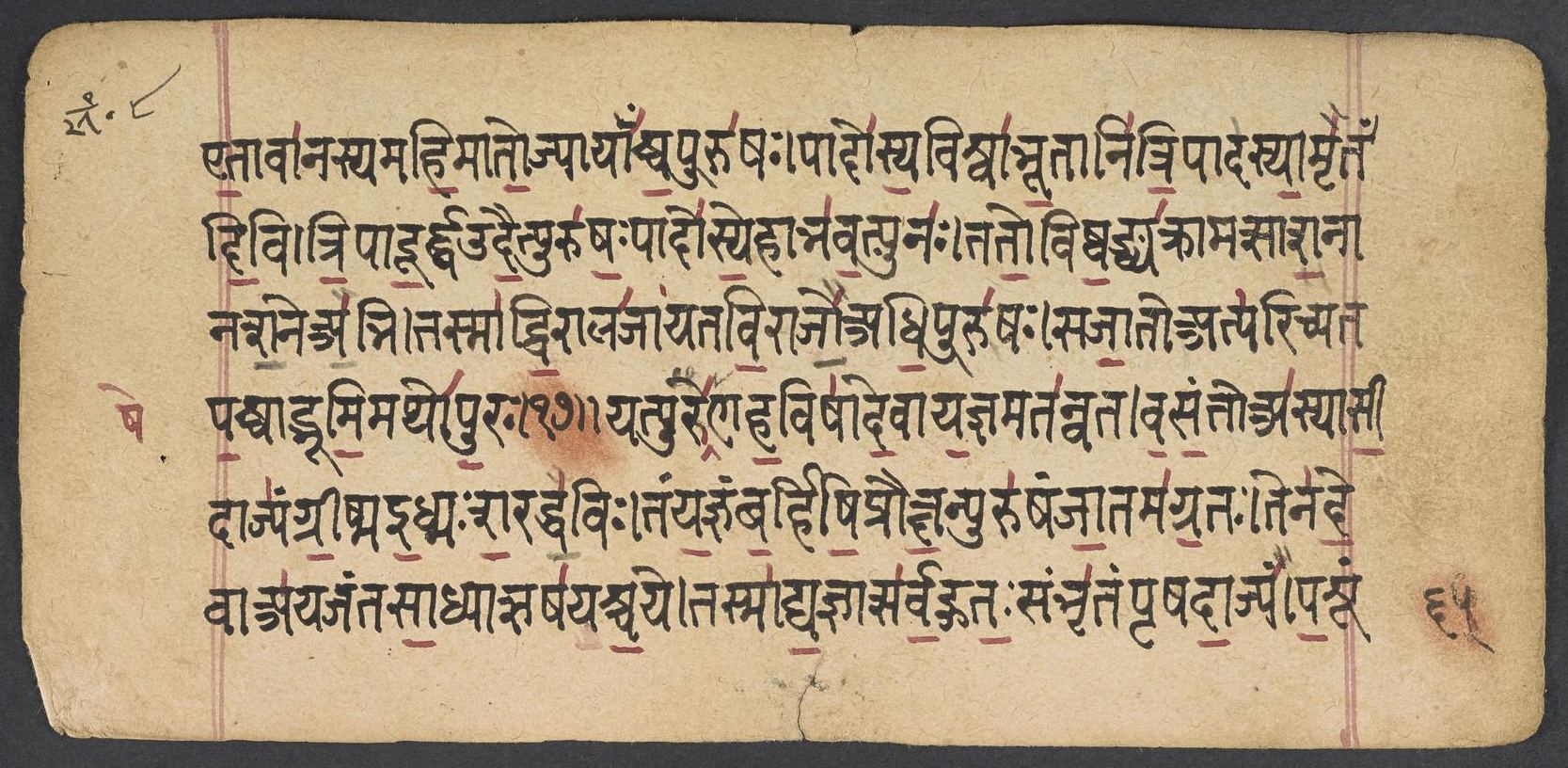
Penn Ms. Coll. 390 Item 48, fol. 65v (OPenn image 65, upper leaf). Checked on the image: the Rigveda text on this page begins in RV 10.90.3 ‹etāvān asya mahimāto jyāyām̐ś›. The next page with Rigveda text, fol. 66r, begins in RV 10.90.8 ‹tām̐ś cakre vāyavyān āraṇyān›. Verses 10.90.3-7 end on this page.
3e̱tāvā̍n asya mahi̱māto̱ jyāyā̍m̐ś ca̱ pūru̍ṣaḥ | pādo̍ 'sya̱ viśvā̍ bhū̱tāni̍ tri̱pād a̍syā̱mṛta̍ṁ di̱vi ||
4tri̱pād ū̱rdhva ud ai̱t puru̍ṣa̱ḥ pādo̍ 'sye̱hābha̍va̱t puna̍ḥ | tato̱ viṣva̱ṅ vy a̍krāmat sāśanānaśa̱ne a̱bhi ||
5tasmā̍d vi̱rāḻ a̍jāyata vi̱rājo̱ adhi̱ pūru̍ṣaḥ | sa jā̱to aty a̍ricyata pa̱ścād bhūmi̱m atho̍ pu̱raḥ ||
6yat puru̍ṣeṇa ha̱viṣā̍ de̱vā ya̱jñam ata̍nvata | va̱sa̱nto a̍syāsī̱d ājya̍ṁ grī̱ṣma i̱dhmaḥ śa̱rad dha̱viḥ ||
7taṁ ya̱jñam ba̱rhiṣi̱ praukṣa̱n puru̍ṣaṁ jā̱tam a̍gra̱taḥ | tena̍ de̱vā a̍yajanta sā̱dhyā ṛṣa̍yaś ca̱ ye ||
3So mighty is his greatness; yea, greater than this is Purusha. All creatures are one-fourth of him, three-fourths eternal life in heaven.
4With three-fourths Purusha went up: onefourth of him again was here. Thence he strode out to every side over what eats not and what eats.
5From him Virâj was born; again Purusha from Virâj was born. As soon as he was born he spread eastward and westward o'er the earth.
6When Gods prepared the sacrifice with Purusha as their offering, Its oil was spring, the holy gift was autumn; summer was the wood.
7They balmed as victim on the grass Purusha born in earliest time. With him the Deities and all Sâdhyas and R̥ishis sacrificed.
Where on the image
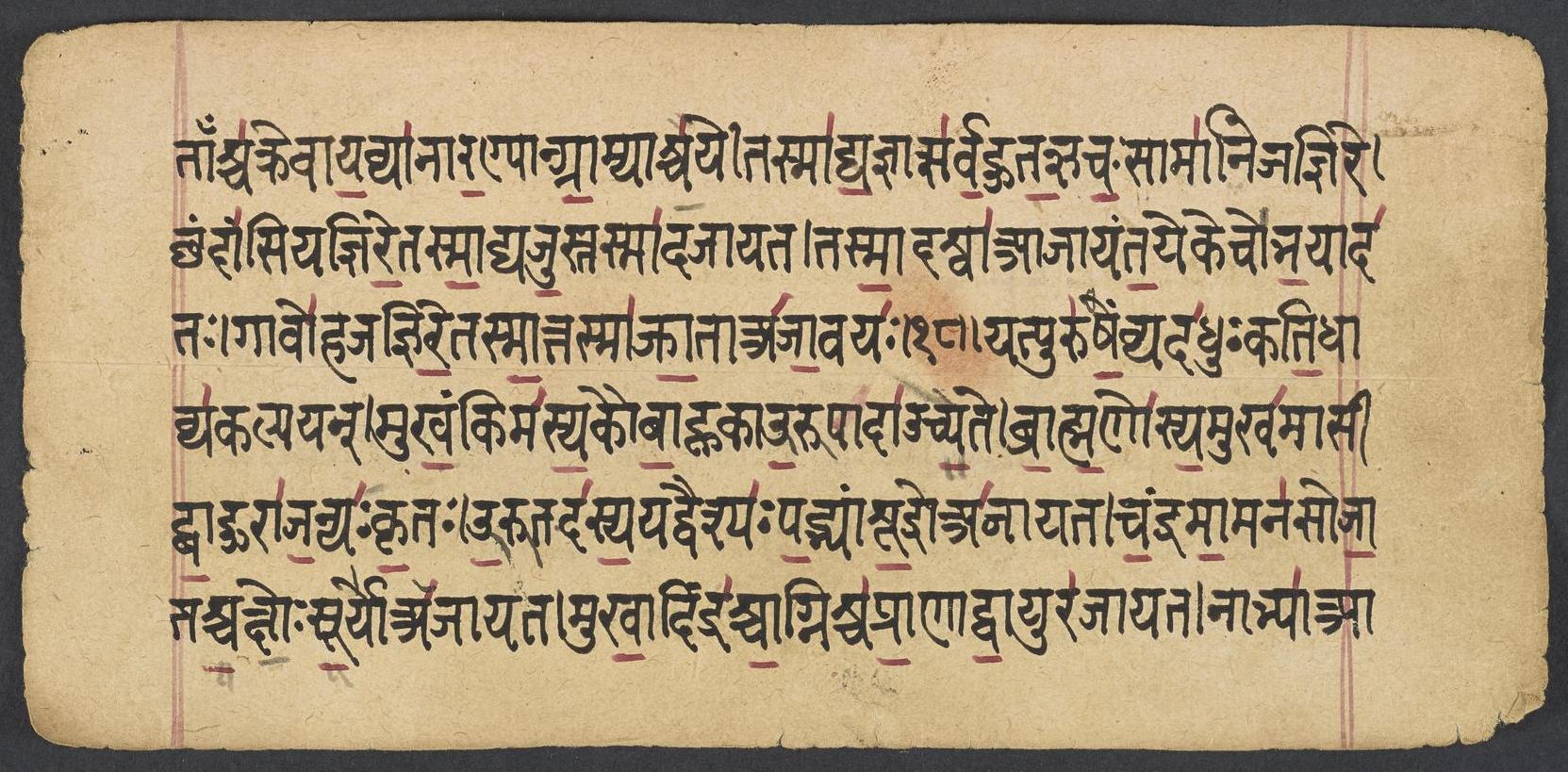
Penn Ms. Coll. 390 Item 48, fol. 66r (OPenn image 65, lower leaf). Checked on the image: the Rigveda text on this page begins in RV 10.90.8 ‹tām̐ś cakre vāyavyān āraṇyān›. The next page with Rigveda text, fol. 66v, begins in RV 10.90.14 ‹śīrṣṇo dyauḥ sam avartata›. Verses 10.90.8-13 end on this page; 10.90.8 begins on fol. 65v.
8tasmā̍d ya̱jñāt sa̍rva̱huta̱ḥ sambhṛ̍tam pṛṣadā̱jyam | pa̱śūn tām̐ś ca̍kre vāya̱vyā̍n āra̱ṇyān grā̱myāś ca̱ ye ||
9tasmā̍d ya̱jñāt sa̍rva̱huta̱ ṛca̱ḥ sāmā̍ni jajñire | chandā̍ṁsi jajñire̱ tasmā̱d yaju̱s tasmā̍d ajāyata ||
10tasmā̱d aśvā̍ ajāyanta̱ ye ke co̍bha̱yāda̍taḥ | gāvo̍ ha jajñire̱ tasmā̱t tasmā̍j jā̱tā a̍jā̱vaya̍ḥ ||
11yat puru̍ṣa̱ṁ vy ada̍dhuḥ kati̱dhā vy a̍kalpayan | mukha̱ṁ kim a̍sya̱ kau bā̱hū kā ū̱rū pādā̍ ucyete ||
12brā̱hma̱ṇo̍ 'sya̱ mukha̍m āsīd bā̱hū rā̍ja̱nya̍ḥ kṛ̱taḥ | ū̱rū tad a̍sya̱ yad vaiśya̍ḥ pa̱dbhyāṁ śū̱dro a̍jāyata ||
13ca̱ndramā̱ mana̍so jā̱taś cakṣo̱ḥ sūryo̍ ajāyata | mukhā̱d indra̍ś cā̱gniś ca̍ prā̱ṇād vā̱yur a̍jāyata ||
8From that great general sacrifice the dripping fat was gathered up. He formed the creatures of-the air, and animals both wild and tame.
9From that great general sacrifice R̥ichas and Sâma-hymns were born: Therefrom were spells and charms produced; the Yajus had its birth from it.
10From it were horses born, from it all cattle with two rows of teeth: From it were generated kine, from it the goats and sheep were born.
11When they divided Purusha how many portions did they make? What do they call his mouth, his arms? What do they call his thighs and feet?
12The Brâhman was his mouth, of both his arms was the Râjanya made. His thighs became the Vaiṣya, from his feet the Ṣûdra was produced.
13The Moon was gendered from his mind, and from his eye the Sun had birth; Indra and Agni from his mouth were born, and Vâyu from his breath.
Where on the image
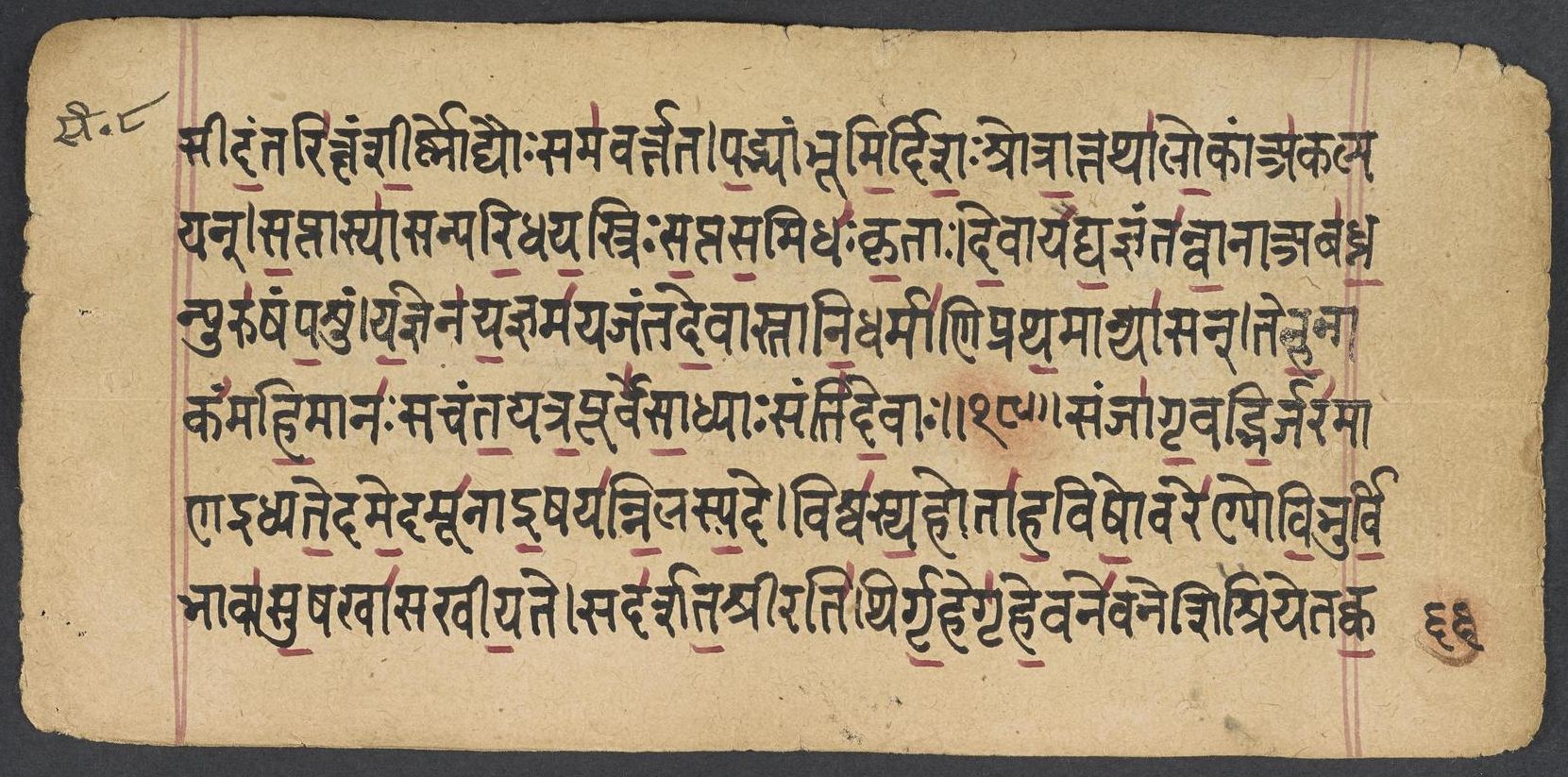
Penn Ms. Coll. 390 Item 48, fol. 66v (OPenn image 66, upper leaf). Checked on the image: the Rigveda text on this page begins in RV 10.90.14 ‹śīrṣṇo dyauḥ sam avartata›. The next page with Rigveda text, fol. 67r, begins in RV 10.91.2 ‹-iva›. Verses 10.90.14-16 end on this page; 10.90.14 begins on fol. 66r.
14nābhyā̍ āsīd a̱ntari̍kṣaṁ śī̱rṣṇo dyauḥ sam a̍vartata | pa̱dbhyām bhūmi̱r diśa̱ḥ śrotrā̱t tathā̍ lo̱kām̐ a̍kalpayan ||
15sa̱ptāsyā̍san pari̱dhaya̱s triḥ sa̱pta sa̱midha̍ḥ kṛ̱tāḥ | de̱vā yad ya̱jñaṁ ta̍nvā̱nā aba̍dhna̱n puru̍ṣam pa̱śum ||
16ya̱jñena̍ ya̱jñam a̍yajanta de̱vās tāni̱ dharmā̍ṇi pratha̱māny ā̍san | te ha̱ nāka̍m mahi̱māna̍ḥ sacanta̱ yatra̱ pūrve̍ sā̱dhyāḥ santi̍ de̱vāḥ ||
14Forth from his navel came mid-air the sky was fashioned from his head Earth from his feet, and from his ear the regions. Thus they formed the worlds.
15Seven fencing-sticks had he, thrice seven layers of fuel were prepared, When the Gods, offering sacrifice, bound, as their victim, Purusha.
16Gods, sacrificing, sacrificed the victim these were the earliest holy ordinances. The Mighty Ones attained the height of heaven, there where the Sâdhyas, Gods of old, are dwelling.
Notes
- Sanskrit: Aufrecht's edition (1877) with the Vedic accents, as entered by van Nooten and Holland (GRETIL).
- English: Ralph T. H. Griffith, The Hymns of the Rigveda (1889-1892; 2nd ed. 1896-1897), from the VedaWeb digital text; OCR slips in that text were corrected against the printed 2nd edition (data/sources/rigveda/griffith_errata.json).
Cite
Sources
- Source: Penn Ms. Coll. 390 Item 48 (1711 CE (colophon: Saṃvat 1768)), OPenn, Public Domain Mark + Aufrecht's accented text (GRETIL) + Griffith's English (VedaWeb) (holding institution)
- Critical edition: Aufrecht (1877), accented e-text via GRETIL
← previous · → next · v cycle view · l back to library