Rigveda 10.91: To Agni
Introduction
Rigveda 10.91 is a hymn of 15 verses addressed to Agni. It stands in book (maṇḍala) 10, the last and latest book. The Rigveda is the oldest collection of Sanskrit hymns, composed in the second half of the second millennium BCE and handed down orally for many centuries before it was written down.
The manuscript shown is Penn Ms. Coll. 390 Item 48 (University of Pennsylvania), a paper manuscript of the eighth aṣṭaka (RV 10.46-10.191) of the Ṛgveda Saṃhitā in Devanāgarī, 158 leaves, 6 lines to the page, with the accents marked in red; the scribe's colophon on fol. 158 gives Saṃvat 1768 (1711 CE); this hymn stands on fol. 66v-68v. Each section below gives the verses that end on one page; the page boundaries were read on the images (the opening words of every page), not counted out. Like most Rigveda manuscripts, Penn Ms. Coll. 390 Item 48 writes a repeated refrain in short form after its first occurrence (for example kasmai° for kasmai devāya haviṣā vidhema); the Sanskrit shown is the full text of Aufrecht's edition.
How was this verified? (Provenance)
Where on the image
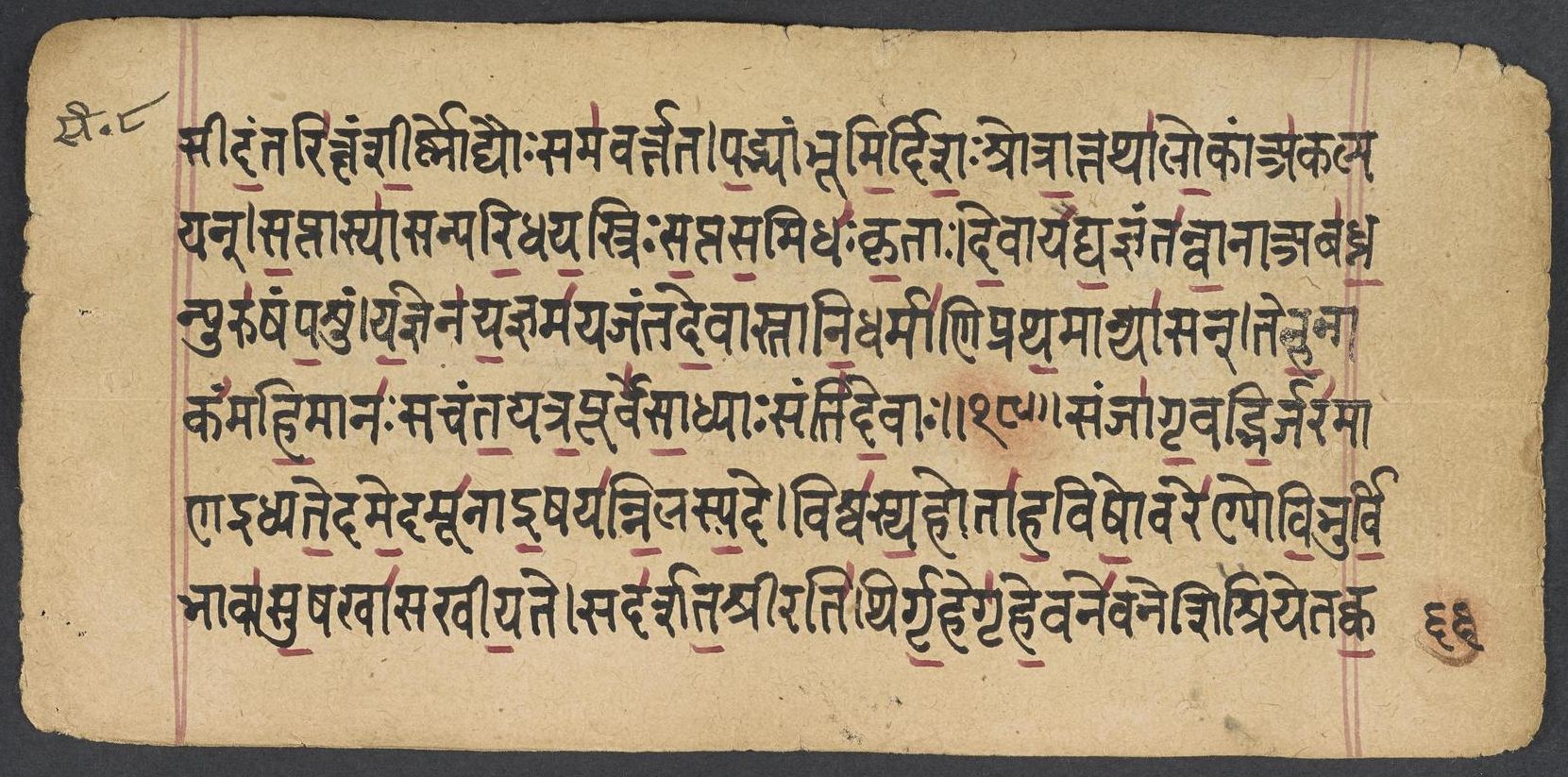
Penn Ms. Coll. 390 Item 48, fol. 66v (OPenn image 66, upper leaf). Checked on the image: the Rigveda text on this page begins in RV 10.90.14 ‹śīrṣṇo dyauḥ sam avartata›. The next page with Rigveda text, fol. 67r, begins in RV 10.91.2 ‹-iva›. Verse 10.91.1 ends on this page.
1saṁ jā̍gṛ̱vadbhi̱r jara̍māṇa idhyate̱ dame̱ damū̍nā i̱ṣaya̍nn i̱ḻas pa̱de | viśva̍sya̱ hotā̍ ha̱viṣo̱ vare̍ṇyo vi̱bhur vi̱bhāvā̍ su̱ṣakhā̍ sakhīya̱te ||
1BRISK, at the place of Iḷâ, hymned by men who wake, our own familiar Friend is kindled in the house; Hotar of all oblation, worthy of our choice, Lord, beaming, trusty friend to one who loveth him.
Where on the image
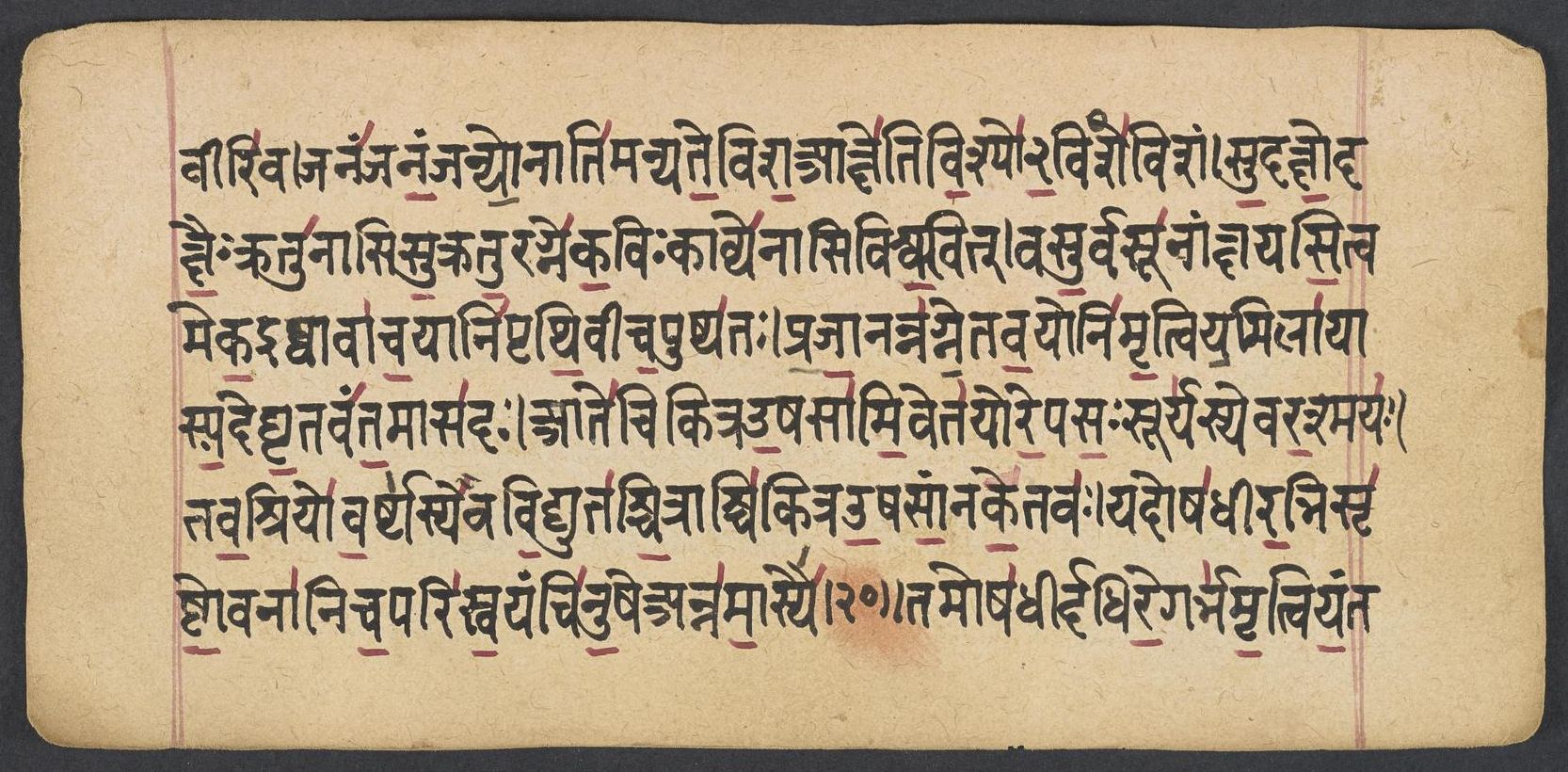
Penn Ms. Coll. 390 Item 48, fol. 67r (OPenn image 66, lower leaf). Checked on the image: the Rigveda text on this page begins in RV 10.91.2 ‹-iva›. The next page with Rigveda text, fol. 67v, begins in RV 10.91.6 ‹-tam āpo agniṁ janayanta›. Verses 10.91.2-5 end on this page; 10.91.2 begins on fol. 66v.
2sa da̍rśata̱śrīr ati̍thir gṛ̱he-gṛ̍he̱ vane̍-vane śiśriye takva̱vīr i̍va | jana̍ṁ-jana̱ṁ janyo̱ nāti̍ manyate̱ viśa̱ ā kṣe̍ti vi̱śyo̱3̱̍ viśa̍ṁ-viśam ||
3su̱dakṣo̱ dakṣai̱ḥ kratu̍nāsi su̱kratu̱r agne̍ ka̱viḥ kāvye̍nāsi viśva̱vit | vasu̱r vasū̍nāṁ kṣayasi̱ tvam eka̱ id dyāvā̍ ca̱ yāni̍ pṛthi̱vī ca̱ puṣya̍taḥ ||
4pra̱jā̱nann a̍gne̱ tava̱ yoni̍m ṛ̱tviya̱m iḻā̍yās pa̱de ghṛ̱tava̍nta̱m āsa̍daḥ | ā te̍ cikitra u̱ṣasā̍m i̱veta̍yo 're̱pasa̱ḥ sūrya̍syeva ra̱śmaya̍ḥ ||
5tava̱ śriyo̍ va̱rṣya̍syeva vi̱dyuta̍ś ci̱trāś ci̍kitra u̱ṣasā̱ṁ na ke̱tava̍ḥ | yad oṣa̍dhīr a̱bhisṛ̍ṣṭo̱ vanā̍ni ca̱ pari̍ sva̱yaṁ ci̍nu̱ṣe anna̍m ā̱sye̍ ||
2He, excellent in glory, guest in every house, finds like a swift-winged bird a home in every tree. Benevolent to men, he scorns no living man: Friend to the tribes of men he dwells with every tribe.
3Most sage with insight, passing skilful with thy powers art thou, O Agni, wise with wisdom, knowing all. As Vasu, thou alone art Lord of all good things, of all the treasures that the heavens and earth produce.
4Foreknowing well, O Agni, thou in Iḷâ's place hast occupied thy regular station balmed with oil. Marked are thy comings like the comings of the Dawns, the rays of him who shineth spotless as the Sun.
5Thy glories are, as lightnings from the rainy cloud, marked, many-hued, like heralds of the Dawns' approach, When, loosed to wander over plants and forest trees, thou crammest by thyself thy food into thy mouth.
Where on the image
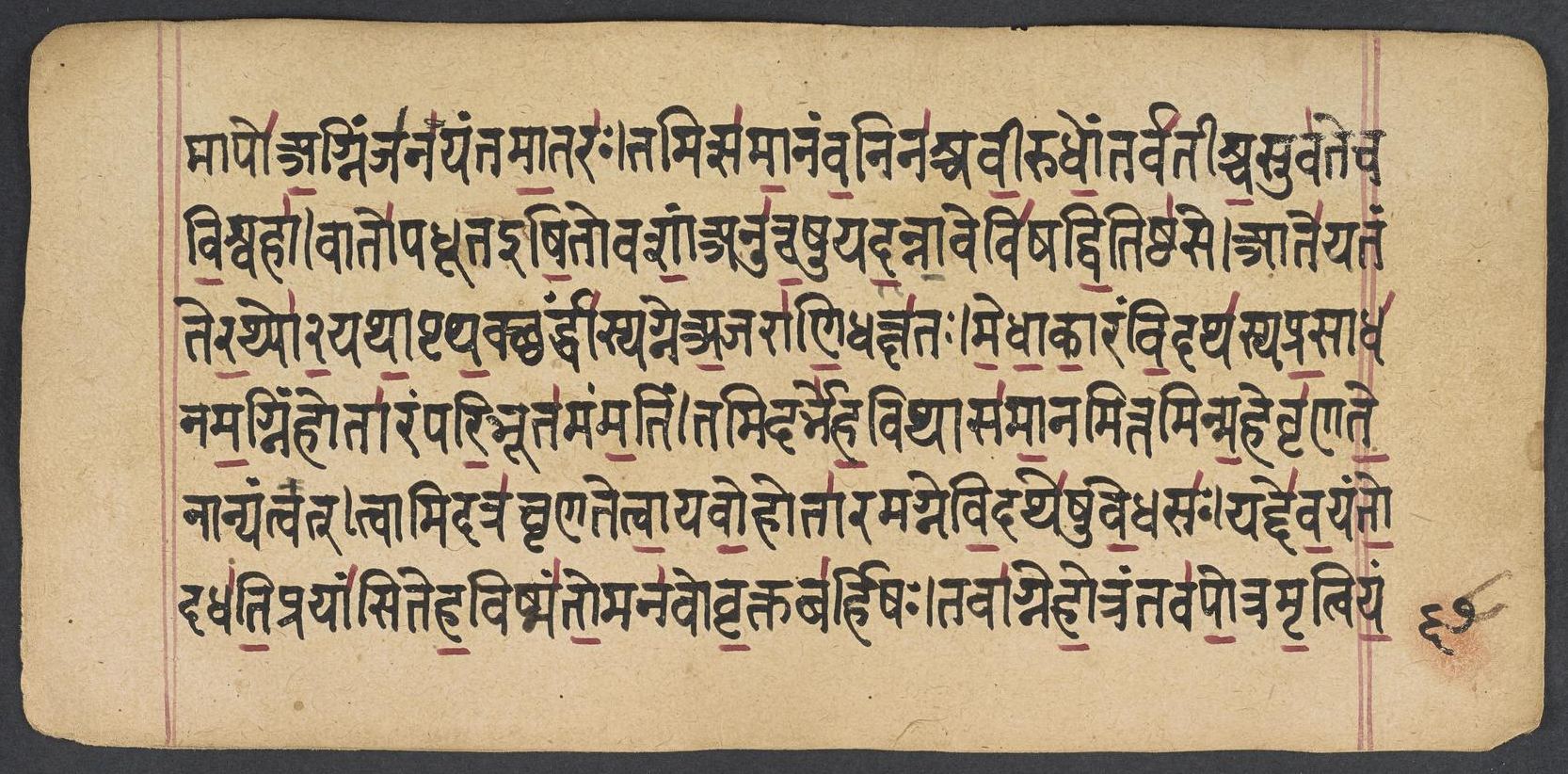
Penn Ms. Coll. 390 Item 48, fol. 67v (OPenn image 67, upper leaf). Checked on the image: the Rigveda text on this page begins in RV 10.91.6 ‹-tam āpo agniṁ janayanta›. The next page with Rigveda text, fol. 68r, begins in RV 10.91.10 ‹tava neṣṭraṁ tvam agnid›. Verses 10.91.6-9 end on this page; 10.91.6 begins on fol. 67r.
6tam oṣa̍dhīr dadhire̱ garbha̍m ṛ̱tviya̱ṁ tam āpo̍ a̱gniṁ ja̍nayanta mā̱tara̍ḥ | tam it sa̍mā̱naṁ va̱nina̍ś ca vī̱rudho̱ 'ntarva̍tīś ca̱ suva̍te ca vi̱śvahā̍ ||
7vāto̍padhūta iṣi̱to vaśā̱m̐ anu̍ tṛ̱ṣu yad annā̱ vevi̍ṣad vi̱tiṣṭha̍se | ā te̍ yatante ra̱thyo̱3̱̍ yathā̱ pṛtha̱k chardhā̍ṁsy agne a̱jarā̍ṇi̱ dhakṣa̍taḥ ||
8me̱dhā̱kā̱raṁ vi̱datha̍sya pra̱sādha̍nam a̱gniṁ hotā̍ram pari̱bhūta̍mam ma̱tim | tam id arbhe̍ ha̱viṣy ā sa̍mā̱nam it tam in ma̱he vṛ̍ṇate̱ nānyaṁ tvat ||
9tvām id atra̍ vṛṇate tvā̱yavo̱ hotā̍ram agne vi̱dathe̍ṣu ve̱dhasa̍ḥ | yad de̍va̱yanto̱ dadha̍ti̱ prayā̍ṁsi te ha̱viṣma̍nto̱ mana̍vo vṛ̱ktaba̍rhiṣaḥ ||
6Him, duly coming as their germ, have plants received: this Agni have maternal Waters brought to life. So in like manner do the forest trees and plants bear him within them and produce him evermore.
7When, sped and urged by wind, thou spreadest thee abroad, swift piercing through thy food according to thy will, Thy never-ceasing blazes, longing to consume, like men on chariots, Agni, strive on every side.
8Agni, the Hotar-priest who fills the assembly full, Waker of knowledge, chief Controller of the thought,– Him, yea, none other than thyself, doth man elect at sacrificial offerings great and small alike.
9Here, Api, the arrangers, those attached to thee, elect thee as their Priest in sacred gatherings, When men with strewn clipt grass and sacrificial gifts offer thee entertainment, piously inclined.
Where on the image
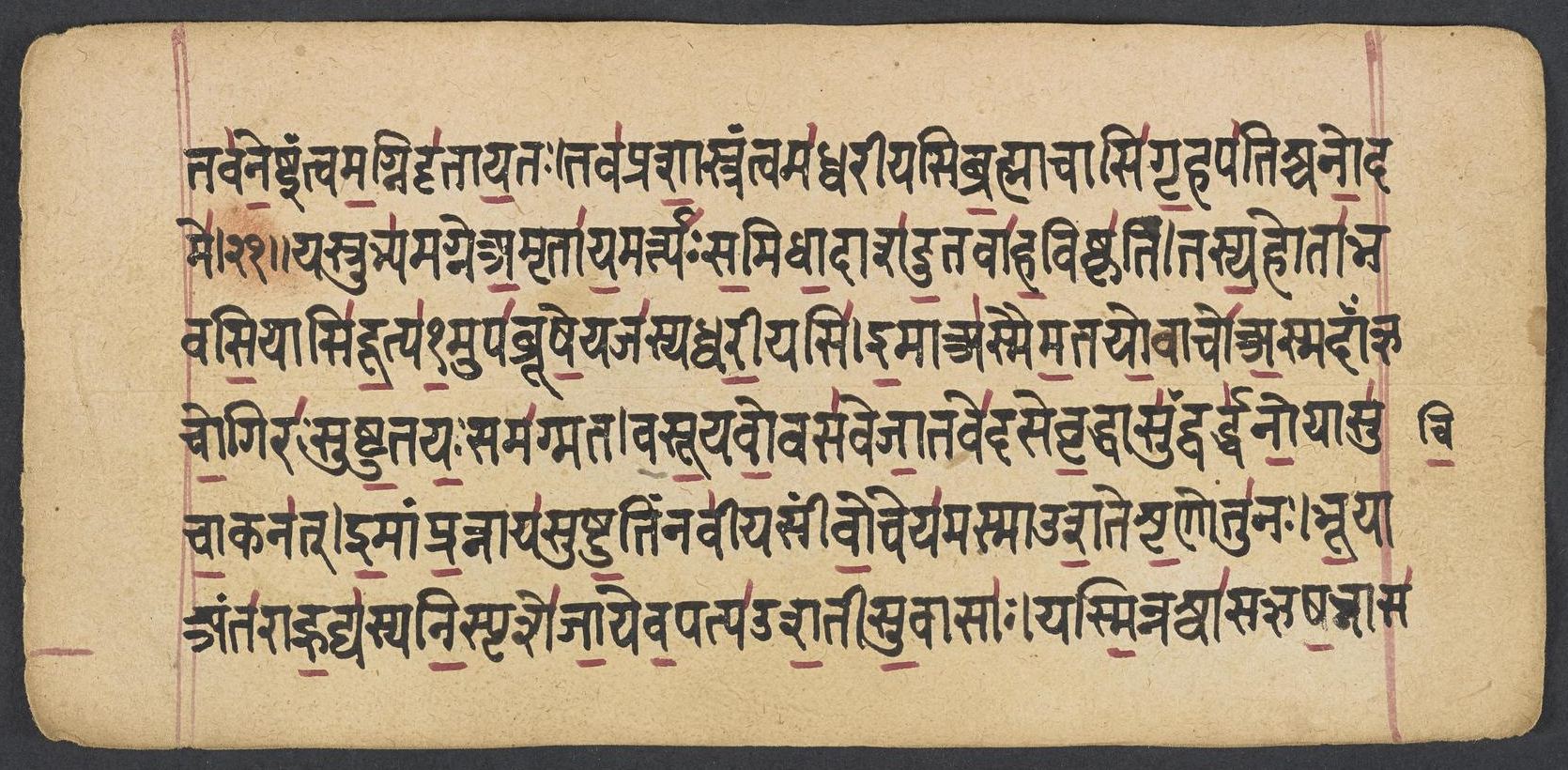
Penn Ms. Coll. 390 Item 48, fol. 68r (OPenn image 67, lower leaf). Checked on the image: the Rigveda text on this page begins in RV 10.91.10 ‹tava neṣṭraṁ tvam agnid›. The next page with Rigveda text, fol. 68v, begins in RV 10.91.14 ‹ukṣaṇo vaśā meṣā avasṛṣṭāsa›. Verses 10.91.10-13 end on this page; 10.91.10 begins on fol. 67v.
10tavā̍gne ho̱traṁ tava̍ po̱tram ṛ̱tviya̱ṁ tava̍ ne̱ṣṭraṁ tvam a̱gnid ṛ̍tāya̱taḥ | tava̍ praśā̱straṁ tvam a̍dhvarīyasi bra̱hmā cāsi̍ gṛ̱hapa̍tiś ca no̱ dame̍ ||
11yas tubhya̍m agne a̱mṛtā̍ya̱ martya̍ḥ sa̱midhā̱ dāśa̍d u̱ta vā̍ ha̱viṣkṛ̍ti | tasya̱ hotā̍ bhavasi̱ yāsi̍ dū̱tya1̱̍m upa̍ brūṣe̱ yaja̍sy adhvarī̱yasi̍ ||
12i̱mā a̍smai ma̱tayo̱ vāco̍ a̱smad ām̐ ṛco̱ gira̍ḥ suṣṭu̱taya̱ḥ sam a̍gmata | va̱sū̱yavo̱ vasa̍ve jā̱tave̍dase vṛ̱ddhāsu̍ ci̱d vardha̍no̱ yāsu̍ cā̱kana̍t ||
13i̱mām pra̱tnāya̍ suṣṭu̱tiṁ navī̍yasīṁ vo̱ceya̍m asmā uśa̱te śṛ̱ṇotu̍ naḥ | bhū̱yā anta̍rā hṛ̱dy a̍sya ni̱spṛśe̍ jā̱yeva̱ patya̍ uśa̱tī su̱vāsā̍ḥ ||
10Thine is the Herald's task and Cleanser's duly timed; Leader art thou, and Kindler for the pious man. Thou art Director, thou the ministering Priest: thou art the Brahman, Lord and Master in our home.
11When mortal man presents to thee Immortal God, Agni, his fuel or his sacrificial gift, Then thou art his Adhvaryu, Hotar, messenger, callest the Gods and orderest the sacrifice.
12From us these hymns in concert have gone forth to him, these. holy words, these R̥ichas, songs and eulogies, Eager for wealth, to Jâtavedas fain for wealth: when they have waxen strong they please their Strengthener.
13This newest eulogy will I speak forth to him, the Ancient One who loves it. May he hear our voice. May it come near his heart and make it stir with love, as a fond well-dressed matron clings about her lord.
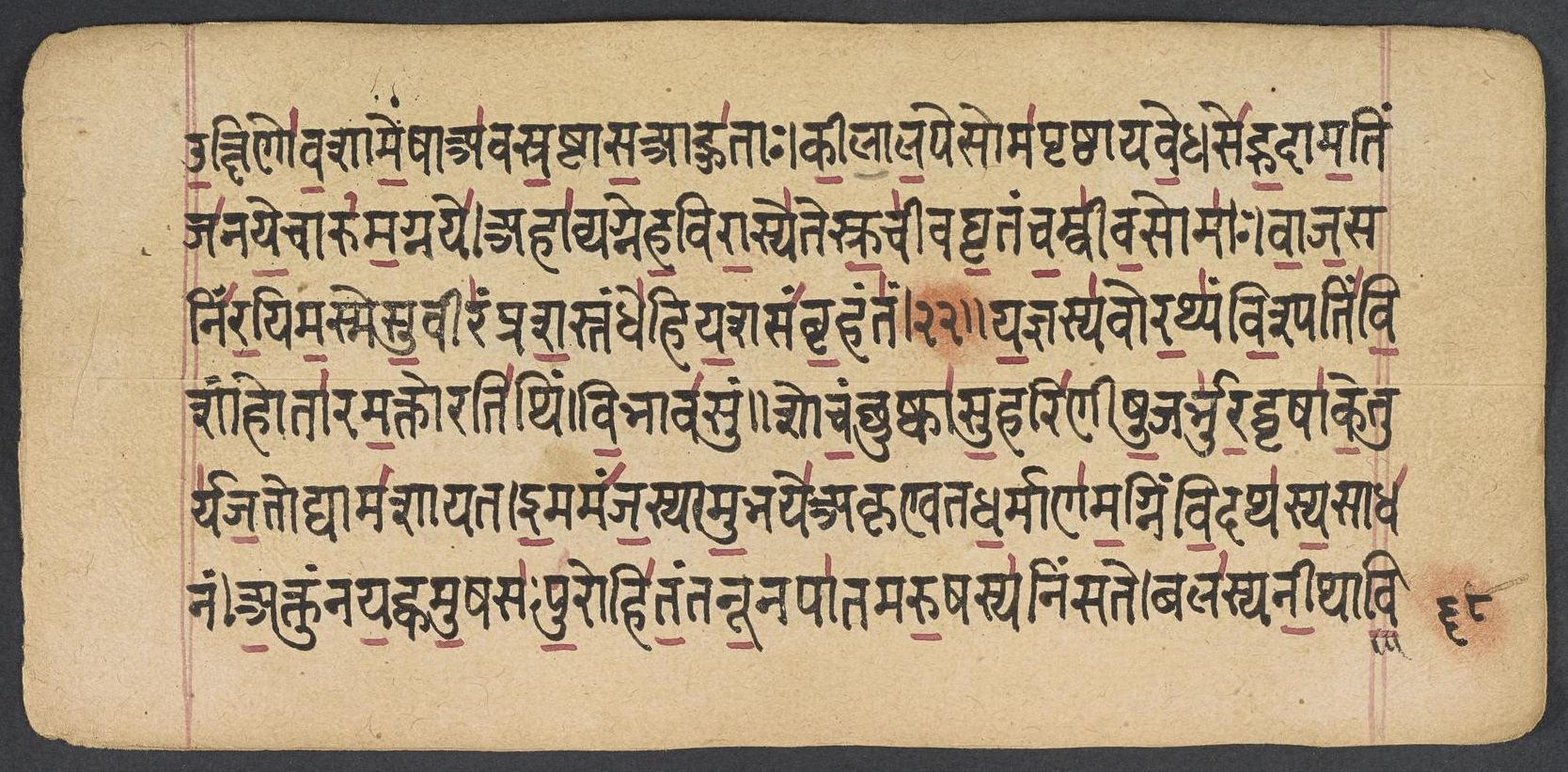
Where on the image
Penn Ms. Coll. 390 Item 48, fol. 68v (OPenn image 68, upper leaf). Checked on the image: the Rigveda text on this page begins in RV 10.91.14 ‹ukṣaṇo vaśā meṣā avasṛṣṭāsa›. The next page with Rigveda text, fol. 69r, begins in RV 10.92.3 ‹paṇeś ca manmahe vayā›. Verses 10.91.14-15 end on this page; 10.91.14 begins on fol. 68r.
14yasmi̱nn aśvā̍sa ṛṣa̱bhāsa̍ u̱kṣaṇo̍ va̱śā me̱ṣā a̍vasṛ̱ṣṭāsa̱ āhu̍tāḥ | kī̱lā̱la̱pe soma̍pṛṣṭhāya ve̱dhase̍ hṛ̱dā ma̱tiṁ ja̍naye̱ cāru̍m a̱gnaye̍ ||
15ahā̍vy agne ha̱vir ā̱sye̍ te sru̱cī̍va ghṛ̱taṁ ca̱mvī̍va̱ soma̍ḥ | vā̱ja̱sani̍ṁ ra̱yim a̱sme su̱vīra̍m praśa̱staṁ dhe̍hi ya̱śasa̍m bṛ̱hanta̍m ||
14He in whom horses, bulls, oxen, and barren cows, and rams, when duly set apart, are offered up,– To Agni, Soma-sprinkled, drinker of sweet juice, Disposer, with my heart I bring a fair hymn forth.
15Into thy mouth is poured the offering, Agni, as Soma into cup, oil into ladle. Vouchsafe us wealth. strength-winning, blest with heroes, wealth lofty, praised by men, and full of splendour.
Notes
- Sanskrit: Aufrecht's edition (1877) with the Vedic accents, as entered by van Nooten and Holland (GRETIL).
- English: Ralph T. H. Griffith, The Hymns of the Rigveda (1889-1892; 2nd ed. 1896-1897), from the VedaWeb digital text; OCR slips in that text were corrected against the printed 2nd edition (data/sources/rigveda/griffith_errata.json).
Cite
Sources
- Source: Penn Ms. Coll. 390 Item 48 (1711 CE (colophon: Saṃvat 1768)), OPenn, Public Domain Mark + Aufrecht's accented text (GRETIL) + Griffith's English (VedaWeb) (holding institution)
- Critical edition: Aufrecht (1877), accented e-text via GRETIL
← previous · → next · v cycle view · l back to library