Rigveda 10.92: To all the gods
Introduction
Rigveda 10.92 is a hymn of 15 verses addressed to all the gods. It stands in book (maṇḍala) 10, the last and latest book. The Rigveda is the oldest collection of Sanskrit hymns, composed in the second half of the second millennium BCE and handed down orally for many centuries before it was written down.
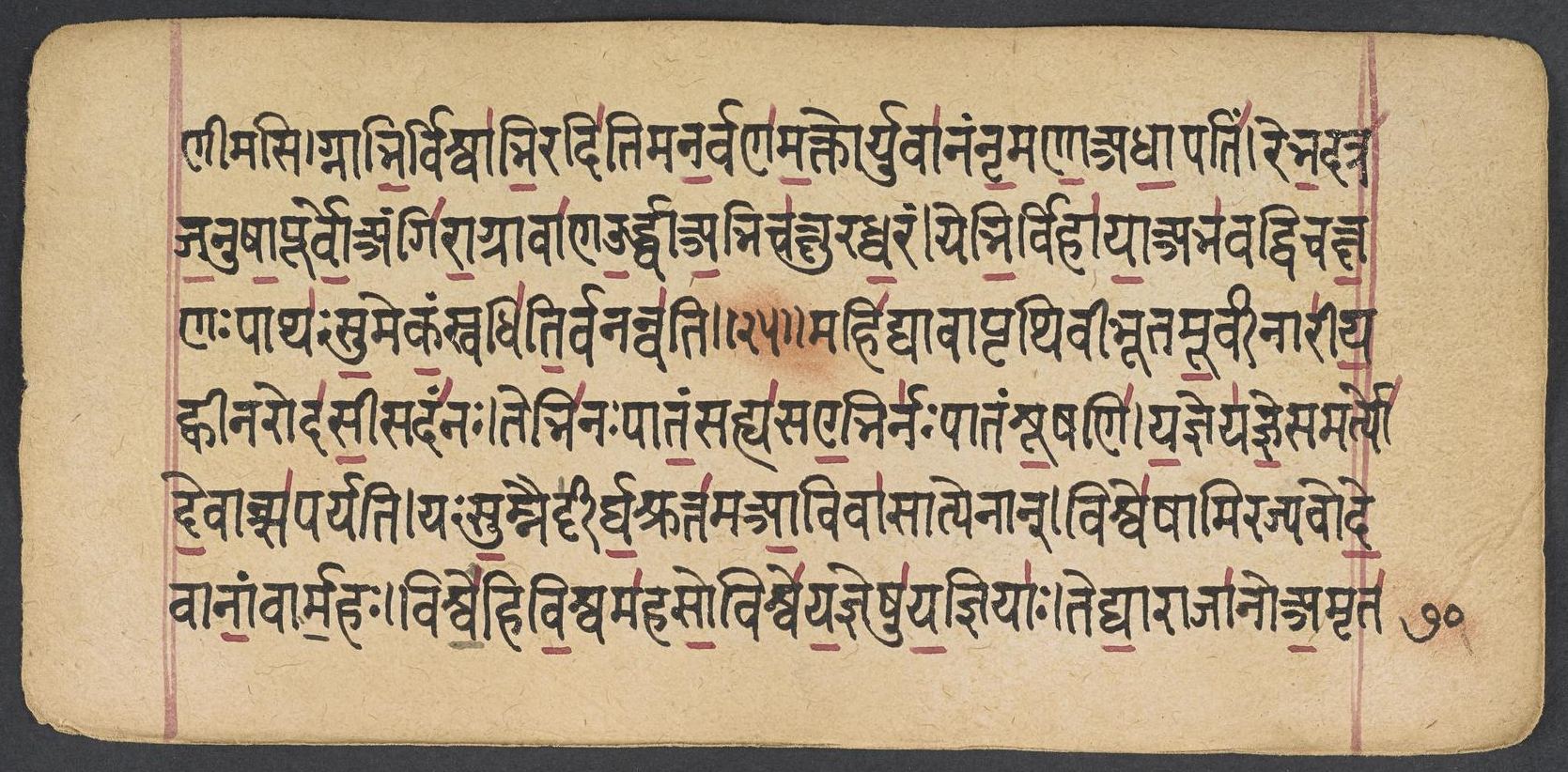
The manuscript shown is Penn Ms. Coll. 390 Item 48 (University of Pennsylvania), a paper manuscript of the eighth aṣṭaka (RV 10.46-10.191) of the Ṛgveda Saṃhitā in Devanāgarī, 158 leaves, 6 lines to the page, with the accents marked in red; the scribe's colophon on fol. 158 gives Saṃvat 1768 (1711 CE); this hymn stands on fol. 68v-70v. Each section below gives the verses that end on one page; the page boundaries were read on the images (the opening words of every page), not counted out. Like most Rigveda manuscripts, Penn Ms. Coll. 390 Item 48 writes a repeated refrain in short form after its first occurrence (for example kasmai° for kasmai devāya haviṣā vidhema); the Sanskrit shown is the full text of Aufrecht's edition.
How was this verified? (Provenance)
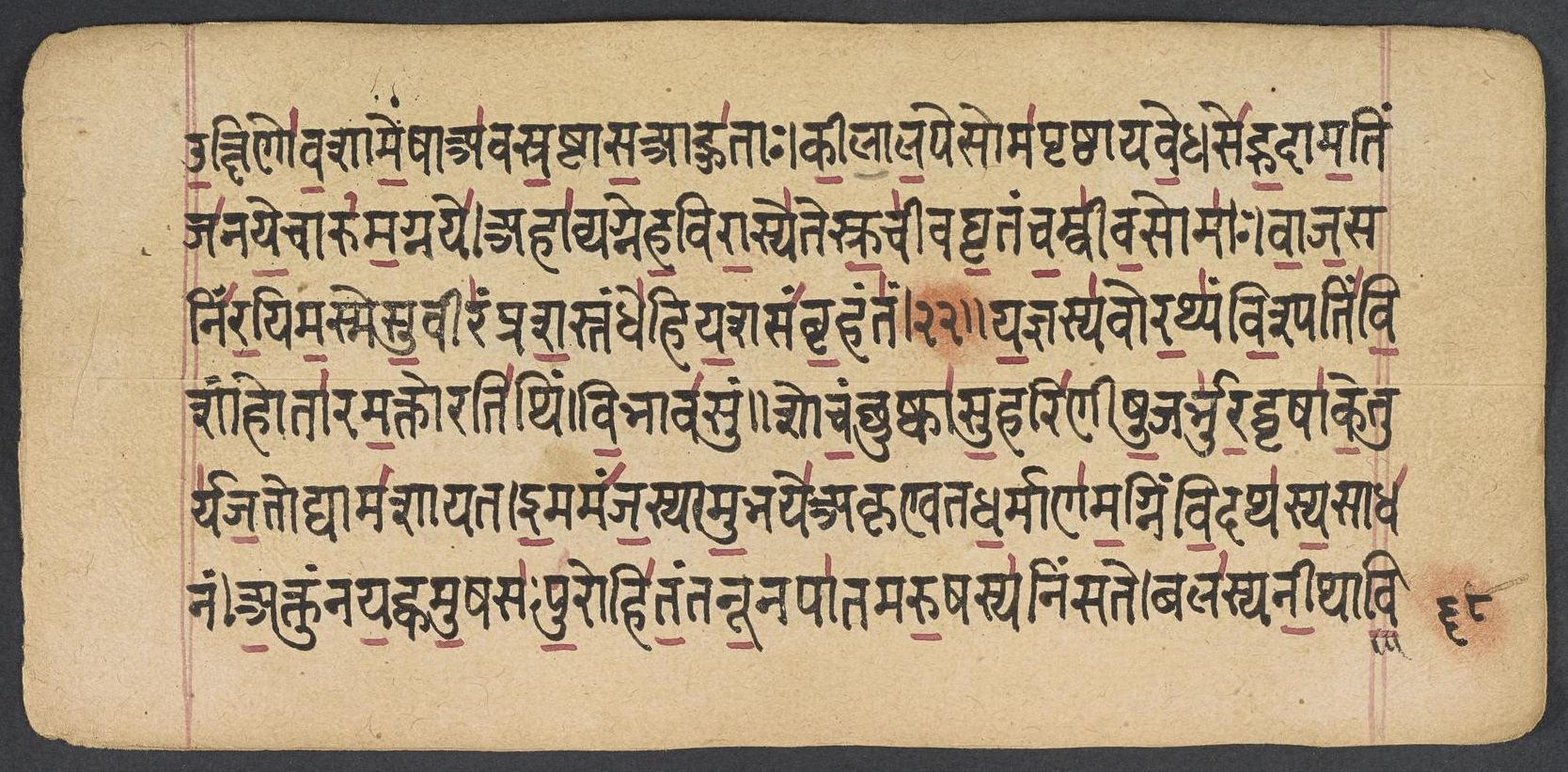
Where on the image
Penn Ms. Coll. 390 Item 48, fol. 68v (OPenn image 68, upper leaf). Checked on the image: the Rigveda text on this page begins in RV 10.91.14 ‹ukṣaṇo vaśā meṣā avasṛṣṭāsa›. The next page with Rigveda text, fol. 69r, begins in RV 10.92.3 ‹paṇeś ca manmahe vayā›. Verses 10.92.1-2 end on this page.
1ya̱jñasya̍ vo ra̱thya̍ṁ vi̱śpati̍ṁ vi̱śāṁ hotā̍ram a̱ktor ati̍thiṁ vi̱bhāva̍sum | śoca̱ñ chuṣkā̍su̱ hari̍ṇīṣu̱ jarbhu̍ra̱d vṛṣā̍ ke̱tur ya̍ja̱to dyām a̍śāyata ||
2i̱mam a̍ñja̱spām u̱bhaye̍ akṛṇvata dha̱rmāṇa̍m a̱gniṁ vi̱datha̍sya̱ sādha̍nam | a̱ktuṁ na ya̱hvam u̱ṣasa̍ḥ pu̱rohi̍ta̱ṁ tanū̱napā̍tam aru̱ṣasya̍ niṁsate ||
1I PRAISE your Charioteer of sacrifice, the Lord of men, Priest of the tribes, refulgent, Guest of night. Blazing amid dry plants, snatching amid the green, the Strong, the Holy Herald hath attained to heaven.
2Him, Agni, Gods and men have made their chief support, who drinks the fatness and completes the sacrifice. With kisses they caress the Grandson of the Red, like the swift ray of light, the Household Priest of Dawn.
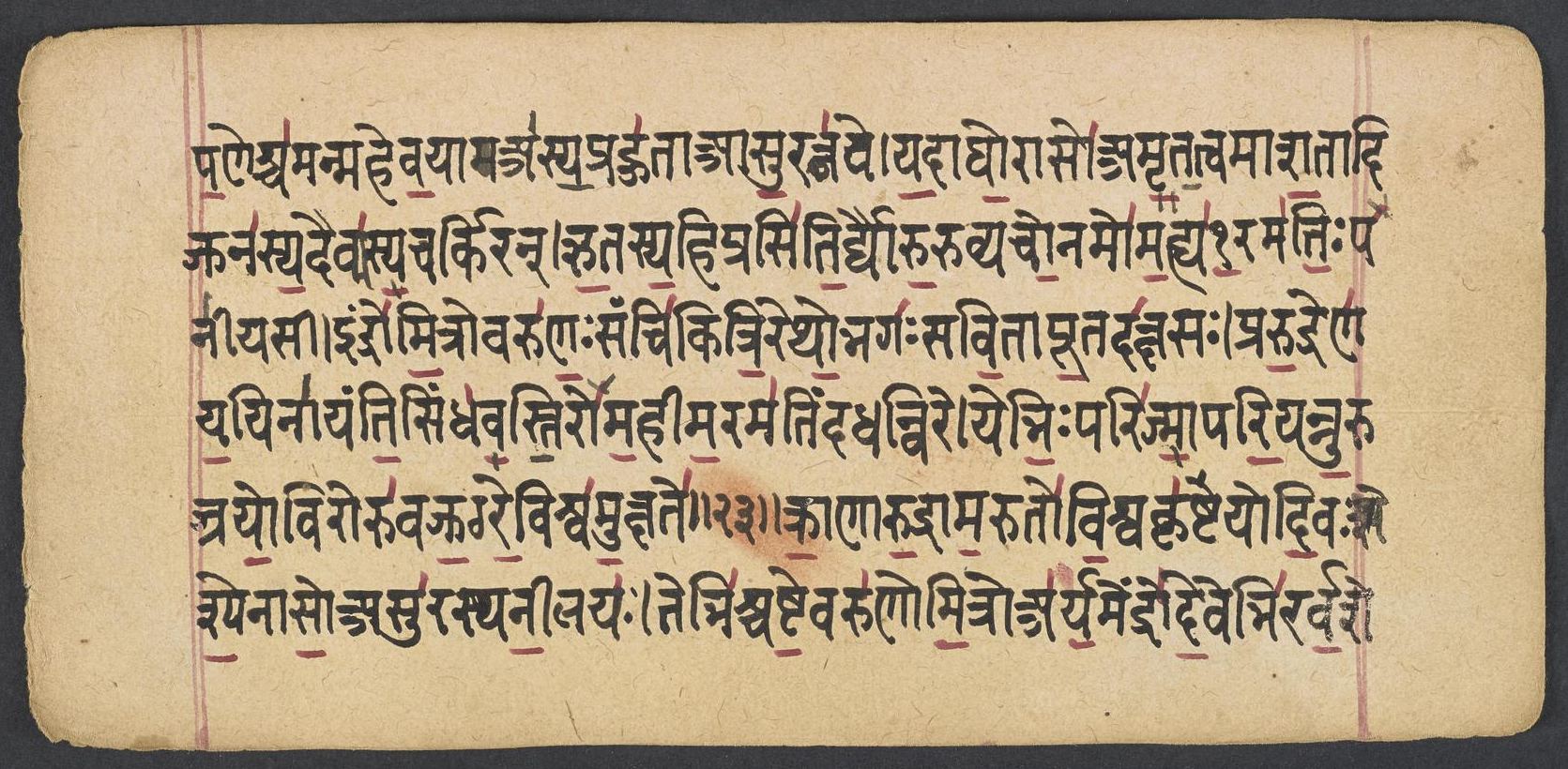
Where on the image
Penn Ms. Coll. 390 Item 48, fol. 69r (OPenn image 68, lower leaf). Checked on the image: the Rigveda text on this page begins in RV 10.92.3 ‹paṇeś ca manmahe vayā›. The next page with Rigveda text, fol. 69v, begins in RV 10.92.7 ‹śaśamānāsa āśata sūro dṛśīke›. Verses 10.92.3-6 end on this page; 10.92.3 begins on fol. 68v.
3baḻ a̍sya nī̱thā vi pa̱ṇeś ca̍ manmahe va̱yā a̍sya̱ prahu̍tā āsu̱r atta̍ve | ya̱dā gho̱rāso̍ amṛta̱tvam āśa̱tād ij jana̍sya̱ daivya̍sya carkiran ||
4ṛ̱tasya̱ hi prasi̍ti̱r dyaur u̱ru vyaco̱ namo̍ ma̱hy a1̱̍rama̍ti̱ḥ panī̍yasī | indro̍ mi̱tro varu̍ṇa̱ḥ saṁ ci̍kitri̱re 'tho̱ bhaga̍ḥ savi̱tā pū̱tada̍kṣasaḥ ||
5pra ru̱dreṇa̍ ya̱yinā̍ yanti̱ sindha̍vas ti̱ro ma̱hīm a̱rama̍tiṁ dadhanvire | yebhi̱ḥ pari̍jmā pari̱yann u̱ru jrayo̱ vi roru̍vaj ja̱ṭhare̱ viśva̍m u̱kṣate̍ ||
6krā̱ṇā ru̱drā ma̱ruto̍ vi̱śvakṛ̍ṣṭayo di̱vaḥ śye̱nāso̱ asu̍rasya nī̱ḻaya̍ḥ | tebhi̍ś caṣṭe̱ varu̍ṇo mi̱tro a̍rya̱mendro̍ de̱vebhi̍r arva̱śebhi̱r arva̍śaḥ ||
3Yea, we discriminate his and the niggard's ways: his branches evermore are sent forth to consume. When his terrific flames have reached the Immortal's world, then men remember and extol the Heavenly Folk.
4For then the net of Law, Dyaus, and the wide expanse, Earth, Worship, and Devotion meet for highest praise, Varuṇa, Indra, Mitra were of one accord, and Savitar and Bhaga, Lords of holy might.
5Onward, with ever-roaming Rudra, speed the floods: over Aramati the Mighty have they run. With them Parijman, moving round his vast domain, loud bellowing, bedews all things that are within.
6Straightway the Rudras, Maruts visiting all men, Falcons of Dyaus, home-dwellers with the Asura,– Varuṇa, Mitra, Aryaman look on with these, and the swift-moving Indra with swift-moving Gods.
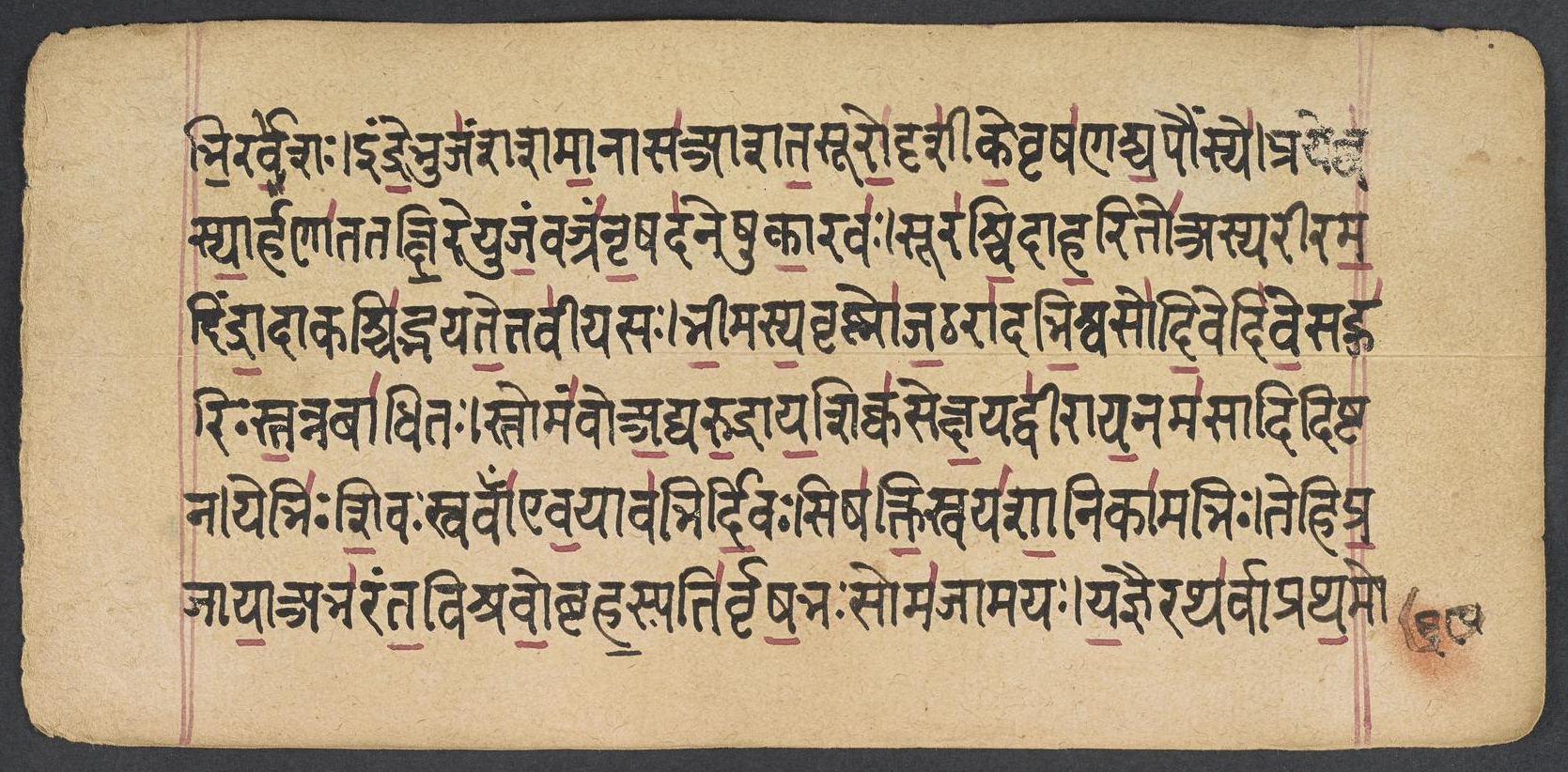
Where on the image
Penn Ms. Coll. 390 Item 48, fol. 69v (OPenn image 69, upper leaf). Checked on the image: the Rigveda text on this page begins in RV 10.92.7 ‹śaśamānāsa āśata sūro dṛśīke›. The next page with Rigveda text, fol. 70r, begins in RV 10.92.10 ‹vi dhārayad devā dakṣair›. Verses 10.92.7-9 end on this page; 10.92.7 begins on fol. 69r.
7indre̱ bhuja̍ṁ śaśamā̱nāsa̍ āśata̱ sūro̱ dṛśī̍ke̱ vṛṣa̍ṇaś ca̱ pauṁsye̍ | pra ye nv a̍syā̱rhaṇā̍ tatakṣi̱re yuja̱ṁ vajra̍ṁ nṛ̱ṣada̍neṣu kā̱rava̍ḥ ||
8sūra̍ś ci̱d ā ha̱rito̍ asya rīrama̱d indrā̱d ā kaś ci̍d bhayate̱ tavī̍yasaḥ | bhī̱masya̱ vṛṣṇo̍ ja̱ṭharā̍d abhi̱śvaso̍ di̱ve-di̍ve̱ sahu̍riḥ sta̱nn abā̍dhitaḥ ||
9stoma̍ṁ vo a̱dya ru̱drāya̱ śikva̍se kṣa̱yadvī̍rāya̱ nama̍sā didiṣṭana | yebhi̍ḥ śi̱vaḥ svavā̍m̐ eva̱yāva̍bhir di̱vaḥ siṣa̍kti̱ svaya̍śā̱ nikā̍mabhiḥ ||
7With Indra have they found enjoyment, they who toil, in the light's beauty, in the very Strong One's strength; The singers who in men's assemblies forged for him, according to his due, his friend the thunderbolt.
8Even the Sun's Bay Coursers hath lie held in check: each one fears Indra as the mightiest of all. Unhindered, from the air's vault thunders day by day the loud triumphant breathing of the fearful Bull.
9With humble adoration show this day your song of praise to mighty Rudra, Ruler of the brave: With whom, the Eager Ones, going their ordered course, he comes from heaven Self-bright, auspicious, strong to guard.
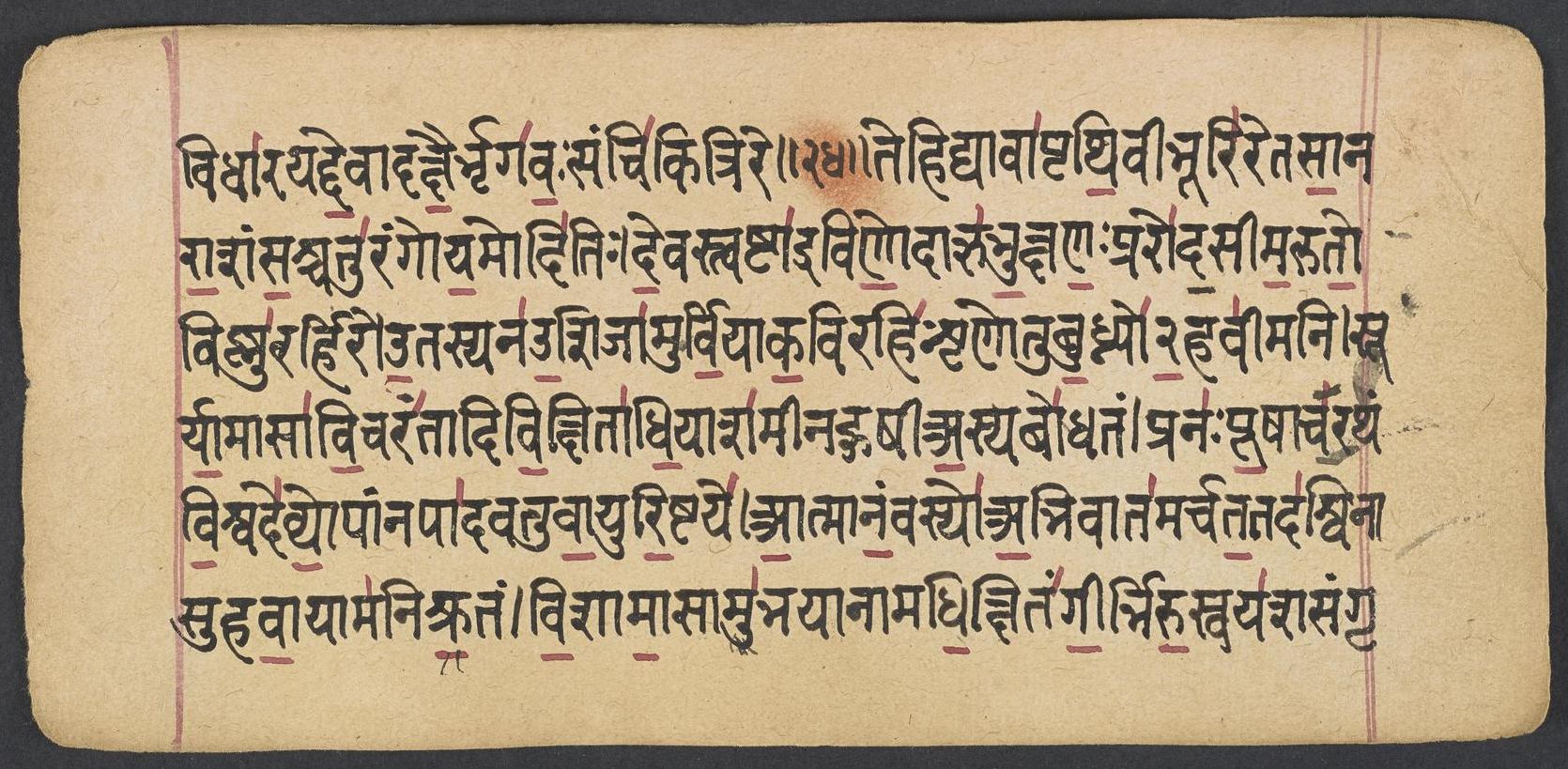
Where on the image
Penn Ms. Coll. 390 Item 48, fol. 70r (OPenn image 69, lower leaf). Checked on the image: the Rigveda text on this page begins in RV 10.92.10 ‹vi dhārayad devā dakṣair›. The next page with Rigveda text, fol. 70v, begins in RV 10.92.14 ‹-gṛṇīmasi›. Verses 10.92.10-13 end on this page; 10.92.10 begins on fol. 69v.
10te hi pra̱jāyā̱ abha̍ranta̱ vi śravo̱ bṛha̱spati̍r vṛṣa̱bhaḥ soma̍jāmayaḥ | ya̱jñair atha̍rvā pratha̱mo vi dhā̍rayad de̱vā dakṣai̱r bhṛga̍va̱ḥ saṁ ci̍kitrire ||
11te hi dyāvā̍pṛthi̱vī bhūri̍retasā̱ narā̱śaṁsa̱ś catu̍raṅgo ya̱mo 'di̍tiḥ | de̱vas tvaṣṭā̍ draviṇo̱dā ṛ̍bhu̱kṣaṇa̱ḥ pra ro̍da̱sī ma̱ruto̱ viṣṇu̍r arhire ||
12u̱ta sya na̍ u̱śijā̍m urvi̱yā ka̱vir ahi̍ḥ śṛṇotu bu̱dhnyo̱3̱̍ havī̍mani | sūryā̱māsā̍ vi̱cara̍ntā divi̱kṣitā̍ dhi̱yā śa̍mīnahuṣī a̱sya bo̍dhatam ||
13pra na̍ḥ pū̱ṣā ca̱ratha̍ṁ vi̱śvade̍vyo̱ 'pāṁ napā̍d avatu vā̱yur i̱ṣṭaye̍ | ā̱tmāna̱ṁ vasyo̍ a̱bhi vāta̍m arcata̱ tad a̍śvinā suhavā̱ yāma̍ni śrutam ||
10For these have spread abroad the fame of human kind, the Bull Br̥ihaspati and Soma's brotherhood. Atharvan first by sacrifices made men sure: through skill the Bhr̥igus were esteemed of all as Gods.
11For these, the Earth and Heaven with their abundant seed, four-bodied Narasmsa, Yama, Aditi, God Tvashṭar Wealth-bestower, the R̥ibhukshanas, Rodasî, Maruts, Vishṇu, claim and merit praise.
12And may he too give ear, the Sage, from far away, the Dragon of the Deep, to this our yearning call. Ye Sun and Moon who dwell in heaven and move in turn, and with your thought, O Earth and Sky, observe this well.
13Dear to all Gods, may Pûshan guard the ways we go, the Waters' child and Vâyu help us to success. Sing lauds for your great bliss to Wind, the breath of all: ye Aṣvins prompt to hear, hear this upon your way.
Where on the image
Penn Ms. Coll. 390 Item 48, fol. 70v (OPenn image 70, upper leaf). Checked on the image: the Rigveda text on this page begins in RV 10.92.14 ‹-gṛṇīmasi›. The next page with Rigveda text, fol. 71r, begins in RV 10.93.4 ‹-amṛtasya mandrā aryamā mitro›. Verses 10.92.14-15 end on this page; 10.92.14 begins on fol. 70r.
14vi̱śām ā̱sām abha̍yānām adhi̱kṣita̍ṁ gī̱rbhir u̱ svaya̍śasaṁ gṛṇīmasi | gnābhi̱r viśvā̍bhi̱r adi̍tim ana̱rvaṇa̍m a̱ktor yuvā̍naṁ nṛ̱maṇā̱ adhā̱ pati̍m ||
15rebha̱d atra̍ ja̱nuṣā̱ pūrvo̱ aṅgi̍rā̱ grāvā̍ṇa ū̱rdhvā a̱bhi ca̍kṣur adhva̱ram | yebhi̱r vihā̍yā̱ abha̍vad vicakṣa̱ṇaḥ pātha̍ḥ su̱meka̱ṁ svadhi̍ti̱r vana̍nvati ||
14With hymns of praise we sing him who is throned as Lord over these fearless tribes, the Selfresplendent One. We praise Night's youthful Lord benevolent to men, the foeless One, the free, with all celestial Dames.
15By reason of his birth here Angiras first sang: the pressing-stones upraised beheld the sacrifice- The stones through which the Sage became exceeding vast, and the sharp axe obtains in fight the beauteous place.
Notes
- Sanskrit: Aufrecht's edition (1877) with the Vedic accents, as entered by van Nooten and Holland (GRETIL).
- English: Ralph T. H. Griffith, The Hymns of the Rigveda (1889-1892; 2nd ed. 1896-1897), from the VedaWeb digital text; OCR slips in that text were corrected against the printed 2nd edition (data/sources/rigveda/griffith_errata.json).
Cite
Sources
- Source: Penn Ms. Coll. 390 Item 48 (1711 CE (colophon: Saṃvat 1768)), OPenn, Public Domain Mark + Aufrecht's accented text (GRETIL) + Griffith's English (VedaWeb) (holding institution)
- Critical edition: Aufrecht (1877), accented e-text via GRETIL
← previous · → next · v cycle view · l back to library