Rigveda 10.93: To all the gods
Introduction
Rigveda 10.93 is a hymn of 15 verses addressed to all the gods. It stands in book (maṇḍala) 10, the last and latest book. The Rigveda is the oldest collection of Sanskrit hymns, composed in the second half of the second millennium BCE and handed down orally for many centuries before it was written down.
The manuscript shown is Penn Ms. Coll. 390 Item 48 (University of Pennsylvania), a paper manuscript of the eighth aṣṭaka (RV 10.46-10.191) of the Ṛgveda Saṃhitā in Devanāgarī, 158 leaves, 6 lines to the page, with the accents marked in red; the scribe's colophon on fol. 158 gives Saṃvat 1768 (1711 CE); this hymn stands on fol. 70v-72r. Each section below gives the verses that end on one page; the page boundaries were read on the images (the opening words of every page), not counted out. Like most Rigveda manuscripts, Penn Ms. Coll. 390 Item 48 writes a repeated refrain in short form after its first occurrence (for example kasmai° for kasmai devāya haviṣā vidhema); the Sanskrit shown is the full text of Aufrecht's edition.
How was this verified? (Provenance)
Where on the image
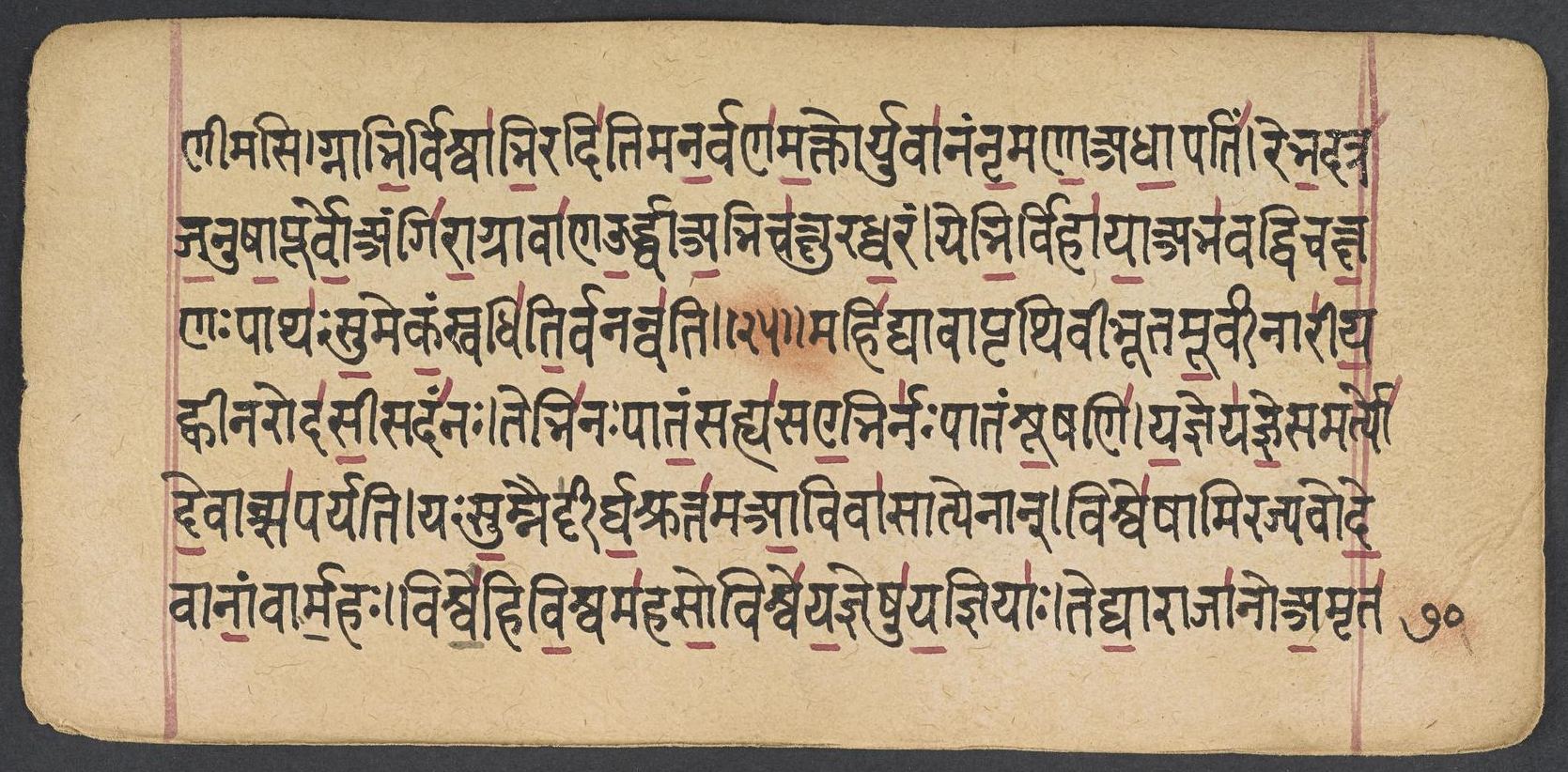
Penn Ms. Coll. 390 Item 48, fol. 70v (OPenn image 70, upper leaf). Checked on the image: the Rigveda text on this page begins in RV 10.92.14 ‹-gṛṇīmasi›. The next page with Rigveda text, fol. 71r, begins in RV 10.93.4 ‹-amṛtasya mandrā aryamā mitro›. Verses 10.93.1-3 end on this page.
1mahi̍ dyāvāpṛthivī bhūtam u̱rvī nārī̍ ya̱hvī na roda̍sī̱ sada̍ṁ naḥ | tebhi̍r naḥ pāta̱ṁ sahya̍sa e̱bhir na̍ḥ pātaṁ śū̱ṣaṇi̍ ||
2ya̱jñe-ya̍jñe̱ sa martyo̍ de̱vān sa̍paryati | yaḥ su̱mnair dī̍rgha̱śrutta̍ma ā̱vivā̍saty enān ||
3viśve̍ṣām irajyavo de̱vānā̱ṁ vār ma̱haḥ | viśve̱ hi vi̱śvama̍haso̱ viśve̍ ya̱jñeṣu̍ ya̱jñiyā̍ḥ ||
1MIGHTY are ye, and far-extended, Heaven and Earth: both Worlds are evermore to us like two young Dames. Guard us thereby from stronger foe; guard us hereby to give us strength.
2In each succeeding sacrifice that mortal honoureth the Gods, He who, most widely known and famed for happiness, inviteth them.
3Ye who are Rulers over all, great is your sovran power as Gods. Ye all possess all majesty: all must be served in sacrifice.
Where on the image
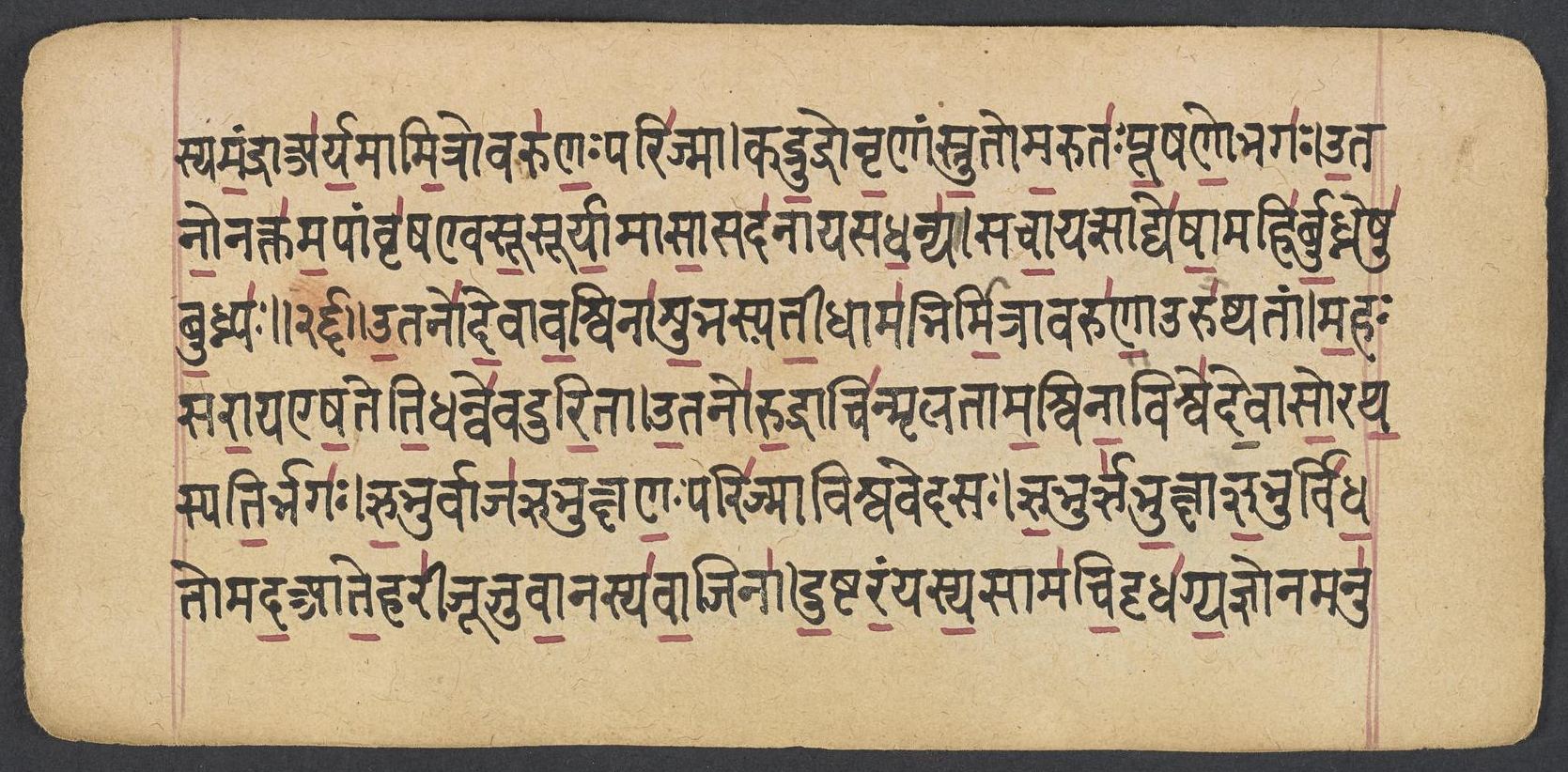
Penn Ms. Coll. 390 Item 48, fol. 71r (OPenn image 70, lower leaf). Checked on the image: the Rigveda text on this page begins in RV 10.93.4 ‹-amṛtasya mandrā aryamā mitro›. The next page with Rigveda text, fol. 71v, begins in RV 10.93.8 ‹-mānuṣaḥ›. Verses 10.93.4-7 end on this page; 10.93.4 begins on fol. 70v.
4te ghā̱ rājā̍no a̱mṛta̍sya ma̱ndrā a̍rya̱mā mi̱tro varu̍ṇa̱ḥ pari̍jmā | kad ru̱dro nṛ̱ṇāṁ stu̱to ma̱ruta̍ḥ pū̱ṣaṇo̱ bhaga̍ḥ ||
5u̱ta no̱ nakta̍m a̱pāṁ vṛ̍ṣaṇvasū̱ sūryā̱māsā̱ sada̍nāya sadha̱nyā̍ | sacā̱ yat sādy e̍ṣā̱m ahi̍r bu̱dhneṣu̍ bu̱dhnya̍ḥ ||
6u̱ta no̍ de̱vāv a̱śvinā̍ śu̱bhas patī̱ dhāma̍bhir mi̱trāvaru̍ṇā uruṣyatām | ma̱haḥ sa rā̱ya eṣa̱te 'ti̱ dhanve̍va duri̱tā ||
7u̱ta no̍ ru̱drā ci̍n mṛḻatām a̱śvinā̱ viśve̍ de̱vāso̱ ratha̱spati̱r bhaga̍ḥ | ṛ̱bhur vāja̍ ṛbhukṣaṇa̱ḥ pari̍jmā viśvavedasaḥ ||
4These are the joyous Kings of Immortality, Parijman, Mitra, Aryaman, and Varuṇa. What else is Rudra, praised of men? the Maruts, Bhaga, Pûshana?
5Come also to our dwelling, Lords of ample wealth, common partakers of our waters, Sun and Moon, When the great Dragon of the Deep hath settled down upon their floors.
6And let the Aṣvins, Lords of splendour, set us free,– both Gods, and, with their Laws, Mitra and Varuṇa. Through woes, as over desert lands, he speeds to ample opulence.
7Yea, let the Aṣvins Twain he gracious unto us, even Rudras, and all Gods, Bhaga, Rathaspati; Parijman, R̥ibhu, Vâja, O Lords of all wealth R̥ibhukshanas.
Where on the image
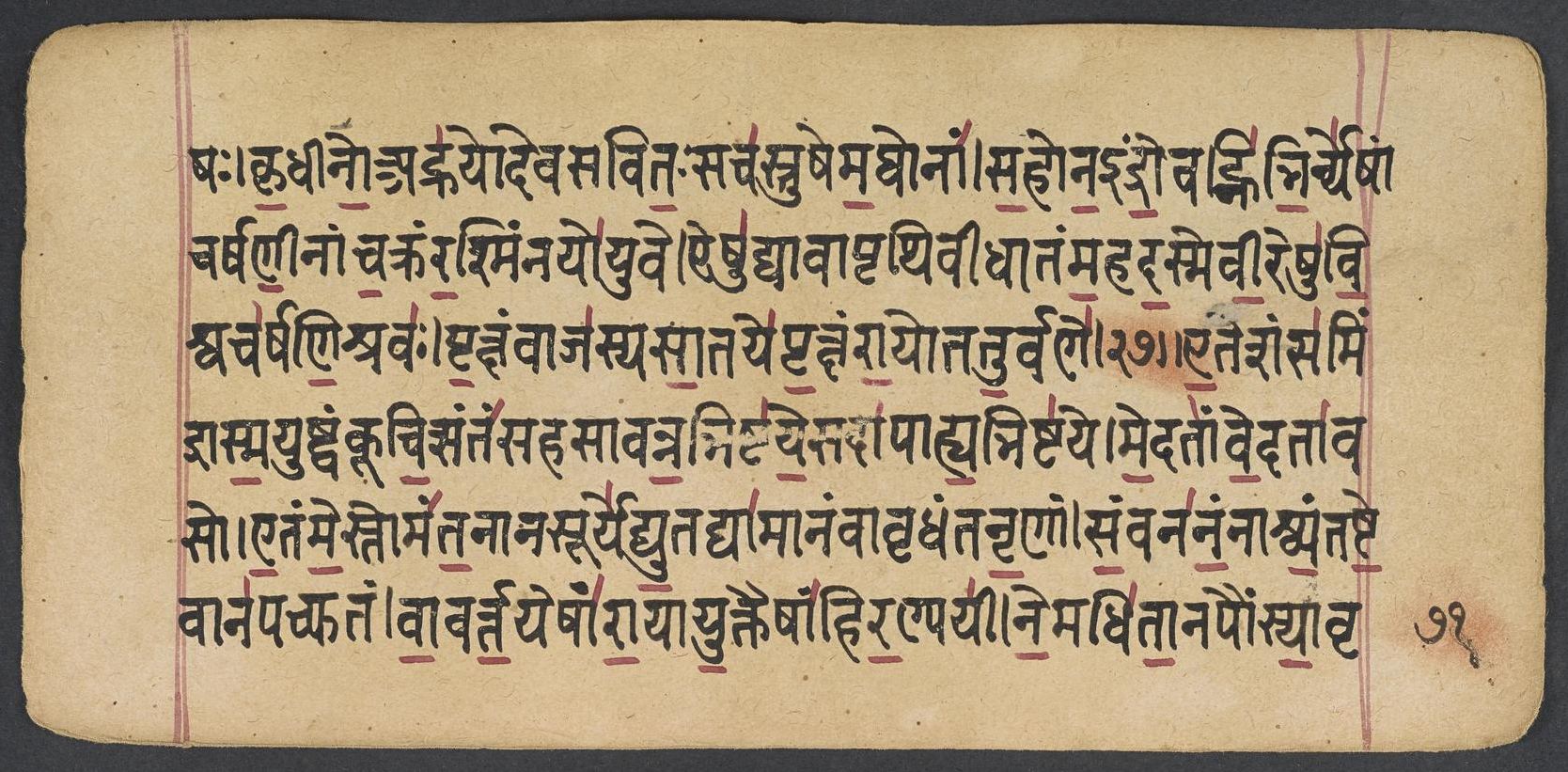
Penn Ms. Coll. 390 Item 48, fol. 71v (OPenn image 71, upper leaf). Checked on the image: the Rigveda text on this page begins in RV 10.93.8 ‹-mānuṣaḥ›. The next page with Rigveda text, fol. 72r, begins in RV 10.93.13 ‹-vṛtheva viṣṭāntā›. Verses 10.93.8-12 end on this page; 10.93.8 begins on fol. 71r.
8ṛ̱bhur ṛ̍bhu̱kṣā ṛ̱bhur vi̍dha̱to mada̱ ā te̱ harī̍ jūjuvā̱nasya̍ vā̱jinā̍ | du̱ṣṭara̱ṁ yasya̱ sāma̍ ci̱d ṛdha̍g ya̱jño na mānu̍ṣaḥ ||
9kṛ̱dhī no̱ ahra̍yo deva savita̱ḥ sa ca̍ stuṣe ma̱ghonā̍m | sa̱ho na̱ indro̱ vahni̍bhi̱r ny e̍ṣāṁ carṣaṇī̱nāṁ ca̱kraṁ ra̱śmiṁ na yo̍yuve ||
10aiṣu̍ dyāvāpṛthivī dhātam ma̱had a̱sme vī̱reṣu̍ vi̱śvaca̍rṣaṇi̱ śrava̍ḥ | pṛ̱kṣaṁ vāja̍sya sā̱taye̍ pṛ̱kṣaṁ rā̱yota tu̱rvaṇe̍ ||
11e̱taṁ śaṁsa̍m indrāsma̱yuṣ ṭvaṁ kūci̱t santa̍ṁ sahasāvann a̱bhiṣṭa̍ye | sadā̍ pāhy a̱bhiṣṭa̍ye me̱datā̍ṁ ve̱datā̍ vaso ||
12e̱tam me̱ stoma̍ṁ ta̱nā na sūrye̍ dyu̱tadyā̍mānaṁ vāvṛdhanta nṛ̱ṇām | sa̱ṁvana̍na̱ṁ nāśvya̱ṁ taṣṭe̱vāna̍pacyutam ||
8Prompt is R̥ibhukshan, prompt the worshipper's strong drink: may thy fleet Bay Steeds, thine who speedest on, approach. Not mans but God's is sacrifice whose psalm is unassailable.
9O God Savitar, harmed by none, lauded, give us a place among wealthy princes. With his Car-steeds at once 'hath our Indra guided the reins and the car of these men.
10To these men present here, O Heaven and Earth, to us grant lofty fame extending over all mankind. Give us a steed to win us strength, a steed with wealth for victory.
11This speaker, Indra-for thou art our Friend-wherever he may be, guard thou, Victor! for help, ever for help Thy wisdom, Vasu! prosper him.
12So have they strengthened this mine hymn which seems to take its bright path to the Sun, and reconciles the men: Thus forms a carpenter the yoke of horses, not to be displaced.
Where on the image
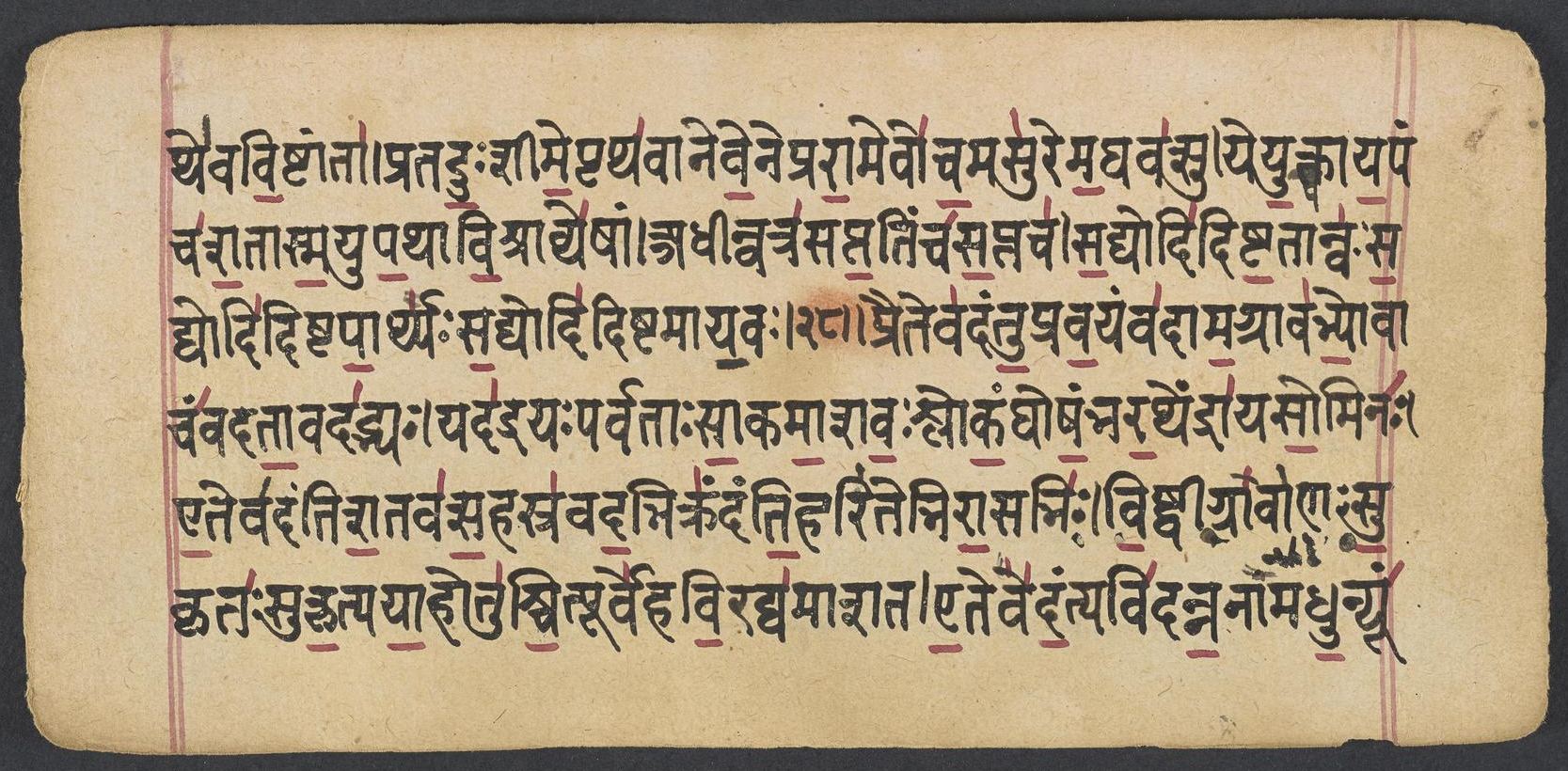
Penn Ms. Coll. 390 Item 48, fol. 72r (OPenn image 71, lower leaf). Checked on the image: the Rigveda text on this page begins in RV 10.93.13 ‹-vṛtheva viṣṭāntā›. The next page with Rigveda text, fol. 72v, begins in RV 10.94.3 ‹-ūṅkhayante adhi pakva āmiṣi›. Verses 10.93.13-15 end on this page; 10.93.13 begins on fol. 71v.
13vā̱varta̱ yeṣā̍ṁ rā̱yā yu̱ktaiṣā̍ṁ hira̱ṇyayī̍ | ne̱madhi̍tā̱ na pauṁsyā̱ vṛthe̍va vi̱ṣṭāntā̍ ||
14pra tad du̱ḥśīme̱ pṛtha̍vāne ve̱ne pra rā̱me vo̍ca̱m asu̍re ma̱ghava̍tsu | ye yu̱ktvāya̱ pañca̍ śa̱tāsma̱yu pa̱thā vi̱śrāvy e̍ṣām ||
15adhīn nv atra̍ sapta̱tiṁ ca̍ sa̱pta ca̍ | sa̱dyo di̍diṣṭa̱ tānva̍ḥ sa̱dyo di̍diṣṭa pā̱rthyaḥ sa̱dyo di̍diṣṭa māya̱vaḥ ||
13Whose chariot-seat hath come again laden with wealth and bright with gold, Lightly, with piercing ends, as 'twere two ranks of heroes ranged for fight.
14This to Duḥṣîma Pr̥ithavâna have I sung, to Vena, Râma, to the nobles, and the King. They yoked five hundred, and their love of us was famed upon their way.
15Besides, they showed us seven -and-seventy horses here. Tânva at once displayed his gift, Pârthya at once displayed his gift; and straightway Mâyava showed his.
Notes
- Sanskrit: Aufrecht's edition (1877) with the Vedic accents, as entered by van Nooten and Holland (GRETIL).
- English: Ralph T. H. Griffith, The Hymns of the Rigveda (1889-1892; 2nd ed. 1896-1897), from the VedaWeb digital text; OCR slips in that text were corrected against the printed 2nd edition (data/sources/rigveda/griffith_errata.json).
Cite
Sources
- Source: Penn Ms. Coll. 390 Item 48 (1711 CE (colophon: Saṃvat 1768)), OPenn, Public Domain Mark + Aufrecht's accented text (GRETIL) + Griffith's English (VedaWeb) (holding institution)
- Critical edition: Aufrecht (1877), accented e-text via GRETIL
← previous · → next · v cycle view · l back to library