Rigveda 2.2: To Agni
Introduction
Rigveda 2.2 is a hymn of 13 verses addressed to Agni. It stands in book (maṇḍala) 2, the family book of Gṛtsamada. The Rigveda is the oldest collection of Sanskrit hymns, composed in the second half of the second millennium BCE and handed down orally for many centuries before it was written down.
The manuscript shown is Penn Ms. Coll. 390 Item 41 (University of Pennsylvania), an undated paper manuscript of the padapāṭha (the word-by-word recitation text, in which every word is written separately and compounds are split) of the whole Ṛgveda in Devanāgarī, 884 leaves in fascicles, 7-9 lines to the page, accents in red; this hymn stands on fol. 150v-151v. Each section below gives the verses that end on one page; the page boundaries were read on the images (the opening words of every page), not counted out. Where the manuscript is a padapāṭha (the word-by-word recitation text), the section shows Aufrecht's continuous (saṃhitā) text first and, as the edition text, the padapāṭha of the same verses, which is the form written on the page.
How was this verified? (Provenance)
Where on the image
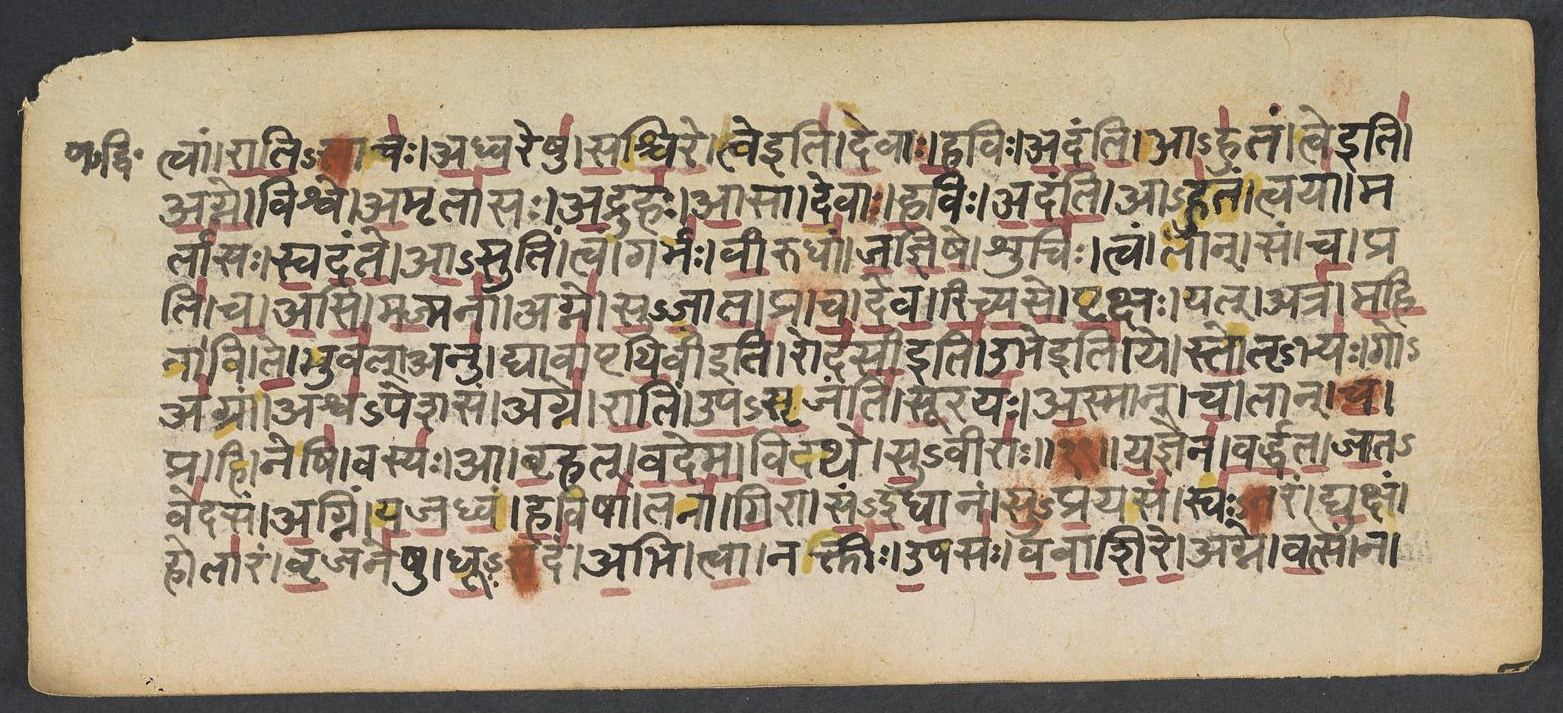
Penn Ms. Coll. 390 Item 41, fol. 150v (numbered 8v by the scribe) (OPenn image 152, upper leaf). Checked on the image: the Rigveda text on this page begins in RV 2.1.13 ‹tvām rāti-sācaḥ adhvareṣu saścire›. The next page with Rigveda text, fol. 151r (numbered 9r by the scribe), begins in RV 2.2.2 ‹svasareṣu dhenavaḥ divaḥ-iva it›. Verse 2.2.1 ends on this page.
1ya̱jñena̍ vardhata jā̱tave̍dasam a̱gniṁ ya̍jadhvaṁ ha̱viṣā̱ tanā̍ gi̱rā | sa̱mi̱dhā̱naṁ su̍pra̱yasa̱ṁ sva̍rṇaraṁ dyu̱kṣaṁ hotā̍raṁ vṛ̱jane̍ṣu dhū̱rṣada̍m ||
Compare: Padapāṭha (word-by-word text written in the manuscript; Sansknet e-text via GRETIL)
1yajñena | vardhata | jāta-vedasam | agnim | yajadhvam | haviṣā | tanā | girā | sam-idhānam | su-prayasam | svaḥ-naram | dyukṣam | hotāram | vṛjaneṣu | dhūḥ-sadam
1WITH sacrifice exalt Agni who knows all life; worship him 'with oblation and the song of praise, Well kindled, nobly fed; heaven's Lord, Celestial Priest, who labours at the pole where deeds of might are done.
Where on the image
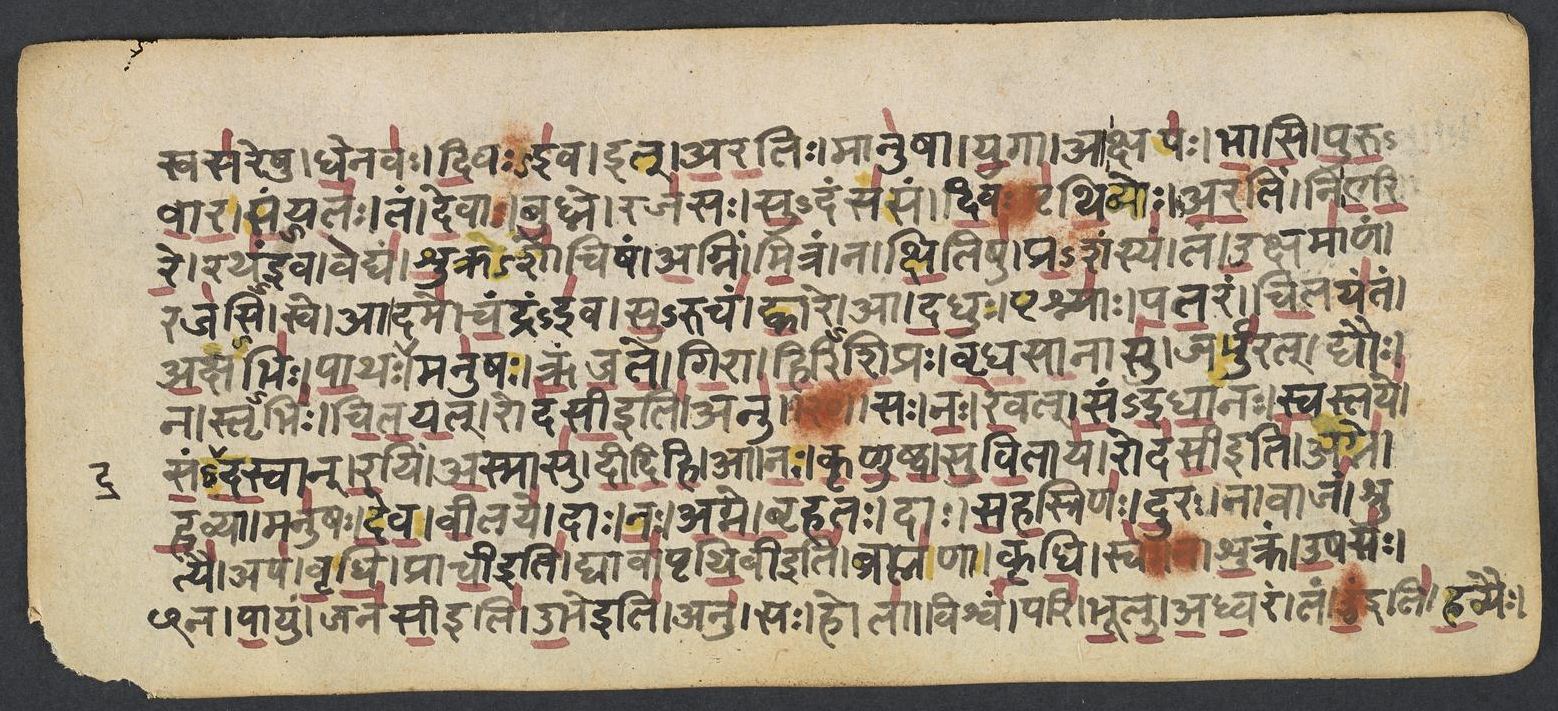
Penn Ms. Coll. 390 Item 41, fol. 151r (numbered 9r by the scribe) (OPenn image 152, lower leaf). Checked on the image: the Rigveda text on this page begins in RV 2.2.2 ‹svasareṣu dhenavaḥ divaḥ-iva it›. The next page with Rigveda text, fol. 151v (numbered 9v by the scribe), begins in RV 2.2.7 ‹vi didyutuḥ›. Verses 2.2.2-6 end on this page; 2.2.2 begins on fol. 150v (numbered 8v by the scribe).
2a̱bhi tvā̱ naktī̍r u̱ṣaso̍ vavāśi̱re 'gne̍ va̱tsaṁ na svasa̍reṣu dhe̱nava̍ḥ | di̱va i̱ved a̍ra̱tir mānu̍ṣā yu̱gā kṣapo̍ bhāsi puruvāra sa̱ṁyata̍ḥ ||
3taṁ de̱vā bu̱dhne raja̍saḥ su̱daṁsa̍saṁ di̱vaspṛ̍thi̱vyor a̍ra̱tiṁ ny e̍rire | ratha̍m iva̱ vedya̍ṁ śu̱kraśo̍ciṣam a̱gnim mi̱traṁ na kṣi̱tiṣu̍ pra̱śaṁsya̍m ||
4tam u̱kṣamā̍ṇa̱ṁ raja̍si̱ sva ā dame̍ ca̱ndram i̍va su̱ruca̍ṁ hvā̱ra ā da̍dhuḥ | pṛśnyā̍ḥ pata̱raṁ ci̱taya̍ntam a̱kṣabhi̍ḥ pā̱tho na pā̱yuṁ jana̍sī u̱bhe anu̍ ||
5sa hotā̱ viśva̱m pari̍ bhūtv adhva̱raṁ tam u̍ ha̱vyair manu̍ṣa ṛñjate gi̱rā | hi̱ri̱śi̱pro vṛ̍dhasā̱nāsu̱ jarbhu̍ra̱d dyaur na stṛbhi̍ś citaya̱d roda̍sī̱ anu̍ ||
6sa no̍ re̱vat sa̍midhā̱naḥ sva̱staye̍ saṁdada̱svān ra̱yim a̱smāsu̍ dīdihi | ā na̍ḥ kṛṇuṣva suvi̱tāya̱ roda̍sī̱ agne̍ ha̱vyā manu̍ṣo deva vī̱taye̍ ||
Compare: Padapāṭha (word-by-word text written in the manuscript; Sansknet e-text via GRETIL)
2abhi | tvā | naktīḥ | uṣasaḥ | vavāśire | agne | vatsam | na | svasareṣu | dhenavaḥ | divaḥ-iva | it | aratiḥ | mānuṣā | yugā | ā | kṣapaḥ | bhāsi | puru-vāra | sam-yataḥ
3taṃ | devāḥ | budhne | rajasaḥ | su-daṃsasam | divaḥpṛthivyoḥ | aratim | ni | er ire | ratham-iva | vedyam | śukra-śociṣam | agnim | mitram | na | kṣitiṣu | pra-śaṃsyam
4tam | ukṣamāṇam | rajasi | sve | ā | dame | candram-iva | su-rucam | hvāre | ā | dadhuḥ | pṛśnyāḥ | pataram | citayantam | akṣa-bhiḥ | pāthaḥ | na | pāyum | janasī iti | ubhe iti | anu
5saḥ | hotā | viśvam | pari | bhūtu | adhvaram | tam | oṃ iti | havyaiḥ | manuṣaḥ | ṛñjate | girā | hiri-śipraḥ | vṛdhasānāsu | jarbhurat | dyauḥ | na | stṛ-bhiḥ | citayat | rodasī iti | anu
6saḥ | naḥ | revat | sam-idhānaḥ | svastaye | sam-dadasvān | rayim | asmāsu | dīdihi | ā | naḥ | kṛṇuṣva | suvitāya | rodasī iti | agne | havyā | manuṣaḥ | deva | vītaye
2At night and morning, Agni, have they called to thee, like milch-kine in their stalls lowing to meet their young. As messenger of heaven thou lightest all night long the families of men. Thou Lord of precious boons.
3Him have the Gods established at the region's base, doer of wondrous deeds, Herald of heaven and earth; Like a most famous car, Agni the purely bright, like Mitra. to be glorified among the folk.
4Him have they set in his own dwelling, in the vault, like the Moon waxing, fulgent, in the realm of air. Bird of the firmament, observant with his eyes, guard of the place as 'twere, looking to Gods and men.
5May he as Priest encompass all the sacrifice. men throng to him with offerings and with hymns of praise. Raging with jaws of gold among the growing plants, like heaven with all the stars, he quickens earth and sky.
6Such as thou art, brilliantly kindled for our weal, a liberal giver, send us riches in thy shine, For our advantage, Agni, God, bring Heaven and Earth hither that they may taste oblation brought by man.
Where on the image
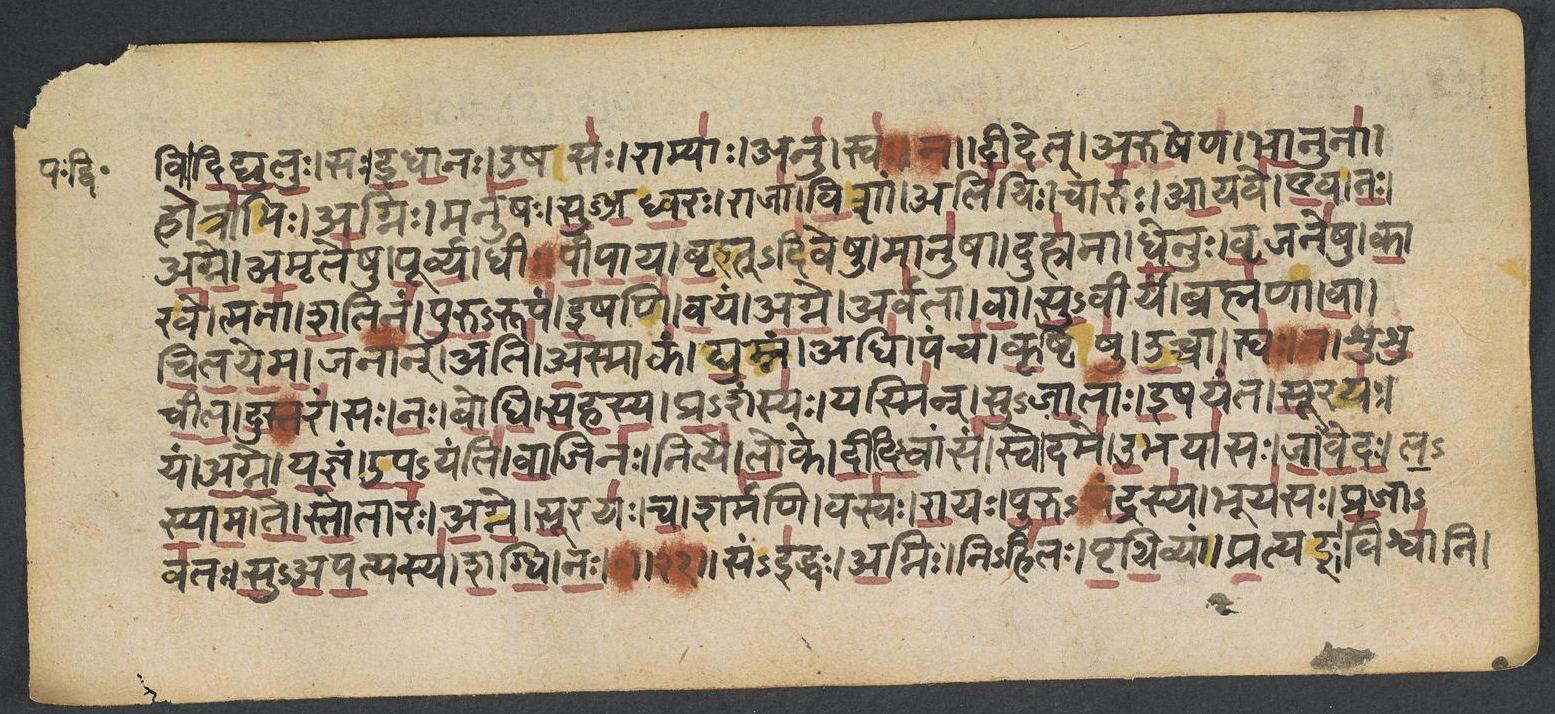
Penn Ms. Coll. 390 Item 41, fol. 151v (numbered 9v by the scribe) (OPenn image 153, upper leaf). Checked on the image: the Rigveda text on this page begins in RV 2.2.7 ‹vi didyutuḥ›. The next page with Rigveda text, fol. 152r (numbered 10r by the scribe), begins in RV 2.3.1 ‹bhuvanāni asthāt hotā pāvakaḥ›. Verses 2.2.7-13 end on this page; 2.2.7 begins on fol. 151r (numbered 9r by the scribe).
7dā no̍ agne bṛha̱to dāḥ sa̍ha̱sriṇo̍ du̱ro na vāja̱ṁ śrutyā̱ apā̍ vṛdhi | prācī̱ dyāvā̍pṛthi̱vī brahma̍ṇā kṛdhi̱ sva1̱̍r ṇa śu̱kram u̱ṣaso̱ vi di̍dyutaḥ ||
8sa i̍dhā̱na u̱ṣaso̱ rāmyā̱ anu̱ sva1̱̍r ṇa dī̍ded aru̱ṣeṇa̍ bhā̱nunā̍ | hotrā̍bhir a̱gnir manu̍ṣaḥ svadhva̱ro rājā̍ vi̱śām ati̍thi̱ś cāru̍r ā̱yave̍ ||
9e̱vā no̍ agne a̱mṛte̍ṣu pūrvya̱ dhīṣ pī̍pāya bṛ̱haddi̍veṣu̱ mānu̍ṣā | duhā̍nā dhe̱nur vṛ̱jane̍ṣu kā̱rave̱ tmanā̍ śa̱tina̍m puru̱rūpa̍m i̱ṣaṇi̍ ||
10va̱yam a̍gne̱ arva̍tā vā su̱vīrya̱m brahma̍ṇā vā citayemā̱ janā̱m̐ ati̍ | a̱smāka̍ṁ dyu̱mnam adhi̱ pañca̍ kṛ̱ṣṭiṣū̱ccā sva1̱̍r ṇa śu̍śucīta du̱ṣṭara̍m ||
11sa no̍ bodhi sahasya pra̱śaṁsyo̱ yasmi̍n sujā̱tā i̱ṣaya̍nta sū̱raya̍ḥ | yam a̍gne ya̱jñam u̍pa̱yanti̍ vā̱jino̱ nitye̍ to̱ke dī̍di̱vāṁsa̱ṁ sve dame̍ ||
12u̱bhayā̍so jātavedaḥ syāma te sto̱tāro̍ agne sū̱raya̍ś ca̱ śarma̍ṇi | vasvo̍ rā̱yaḥ pu̍ruśca̱ndrasya̱ bhūya̍saḥ pra̱jāva̍taḥ svapa̱tyasya̍ śagdhi naḥ ||
13ye sto̱tṛbhyo̱ goa̍grā̱m aśva̍peśasa̱m agne̍ rā̱tim u̍pasṛ̱janti̍ sū̱raya̍ḥ | a̱smāñ ca̱ tām̐ś ca̱ pra hi neṣi̱ vasya̱ ā bṛ̱had va̍dema vi̱dathe̍ su̱vīrā̍ḥ ||
Compare: Padapāṭha (word-by-word text written in the manuscript; Sansknet e-text via GRETIL)
7dāḥ | naḥ | agne | bṛhataḥ | dāḥ | sahasriṇaḥ | duraḥ | na | vājam | śrutyai | apa | vṛdhi | prācī iti | dyāvāpṛthivī iti | brahmaṇā | kṛdhi | svaḥ | na | śukram | uṣasaḥ | vi | didyutuḥ
8saḥ | idhānaḥ | uṣasaḥ | rāmyāḥ | anu | svaḥ | na | dīdet | aruṣeṇa | bhānunā | hotrābhiḥ | agniḥ | manuṣaḥ | su-adhvaraḥ | rājā | viśām | atithiḥ | cāruḥ | āyave
9eva | naḥ | / agne | amṛteṣu | pūrvya | dhīḥ | pīpāya | bṛhat-diveṣu | mānuṣā | duhānā | dhenuḥ | vṛjaneṣu | kārave | tmanā | śatinam | puru-rūpam | iṣaṇi
10vayam | agne | arvatā | vā | su-vīryam | brahmaṇā | vā | citayema | janān | ati | asmākam | dyumnam | adhi | pañca | kṛṣṭiṣu | uccā | svaḥ | na | śuśucīta | dustaram
11saḥ | naḥ | bodhi | sahasya | pra-śaṃsyaḥ | yasmin | su-jātāḥ | iṣayanta | sūrayaḥ | yam | agne | yajñam | upa-yanti | vājinaḥ | nitye | toke | dīdi-vāṃsam | sve | dame
12ubhayāsaḥ | jāta-vedaḥ | syāma | te | stotāraḥ | agne | sūrayaḥ | ca | śarmaṇi | vasvo | rāyaḥ | puru-candrasya | bhūyasaḥ | prajāvataḥ | su-apatyasya | śagdhi | naḥ
13ye | stotṛ-bhyaḥ | go--agrām | aśva-peśasam | agne | rātim | upa-sṛjanti | sūrayaḥ | asmān | ca | tān | ca | pra | hi | neṣi | vasyaḥ | ā | bṛhat | vadema | vidathe | su-vīrāḥ
7Agni, give us great wealth, give riches thousandfold. unclose to us, like doors, strength that shall bring renown. Make Heaven and Earth propitious through the power of prayer, and like the sky's bright sheen let mornings beam on us.
8Enkindled night by night at every morning's dawn, may he shine forth with red flame like the realm of light,– Agni adored in beauteous rites with lauds of men, fair guest of living man and King of all our folk.
9Song chanted by us men, O Agni, Ancient One, has swelled unto the deathless Gods in lofty heaven- A milch-cow yielding to the singer in the rites wealth manifold, in hundreds, even as he wills.
10Agni, may we show forth our valour with the steed or with the power of prayer beyond all other men; And over the Five Races let our glory shine high like the realm of light and unsurpassable.
11Such, Conqueror! be to us, be worthy of our praise, thou for whom princes nobly born exert themselves; Whose sacrifice the strong seek, Agni, when it shines for never-failing offspring in thine own abode.
12Knower of all that lives, O Agni may we both, singers of praise and chiefs, be in thy keeping still. Help us to wealth exceeding good and glorious, abundant, rich in children and their progeny.
13The princely worshippers who send to those who sing thy praise, O Agni, guerdon, graced with kine and steeds,– Lead thou both these and us forward to higher bliss. With brave men in the assembly may we speak aloud.
Notes
- Sanskrit: Aufrecht's edition (1877) with the Vedic accents, as entered by van Nooten and Holland (GRETIL).
- English: Ralph T. H. Griffith, The Hymns of the Rigveda (1889-1892; 2nd ed. 1896-1897), from the VedaWeb digital text; OCR slips in that text were corrected against the printed 2nd edition (data/sources/rigveda/griffith_errata.json).
- Padapāṭha (edition text): Sansknet e-text via GRETIL (CC BY-NC-SA 4.0).
Cite
Sources
- Source: Penn Ms. Coll. 390 Item 41 (undated (catalogued with Penn's 18th-19th c. Vedic manuscripts)), OPenn, Public Domain Mark + Aufrecht's accented text (GRETIL) + Griffith's English (VedaWeb) (holding institution)
- Critical edition: Aufrecht (1877), accented e-text via GRETIL
← previous · → next · v cycle view · l back to library