Rigveda 2.10: To Agni
Introduction
Rigveda 2.10 is a hymn of 6 verses addressed to Agni. It stands in book (maṇḍala) 2, the family book of Gṛtsamada. The Rigveda is the oldest collection of Sanskrit hymns, composed in the second half of the second millennium BCE and handed down orally for many centuries before it was written down.
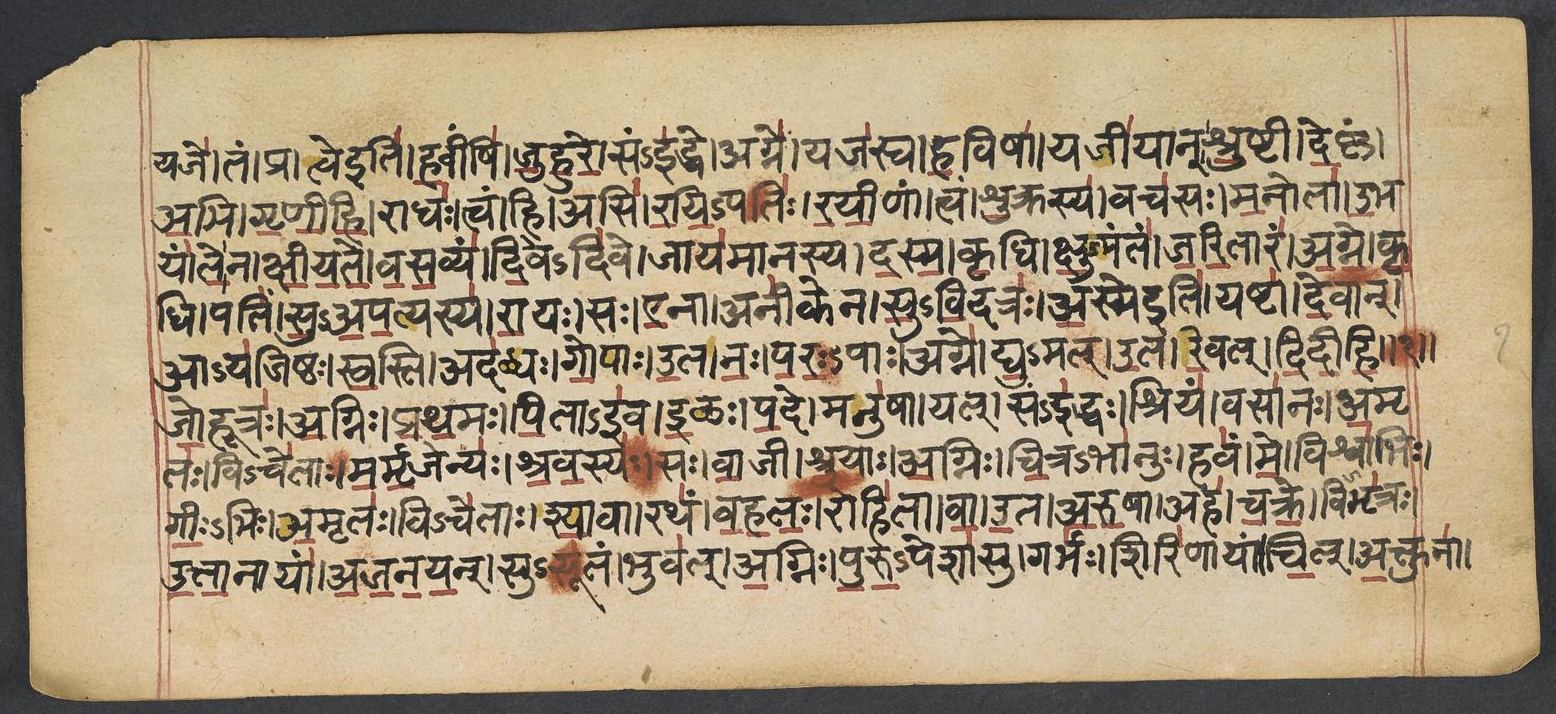
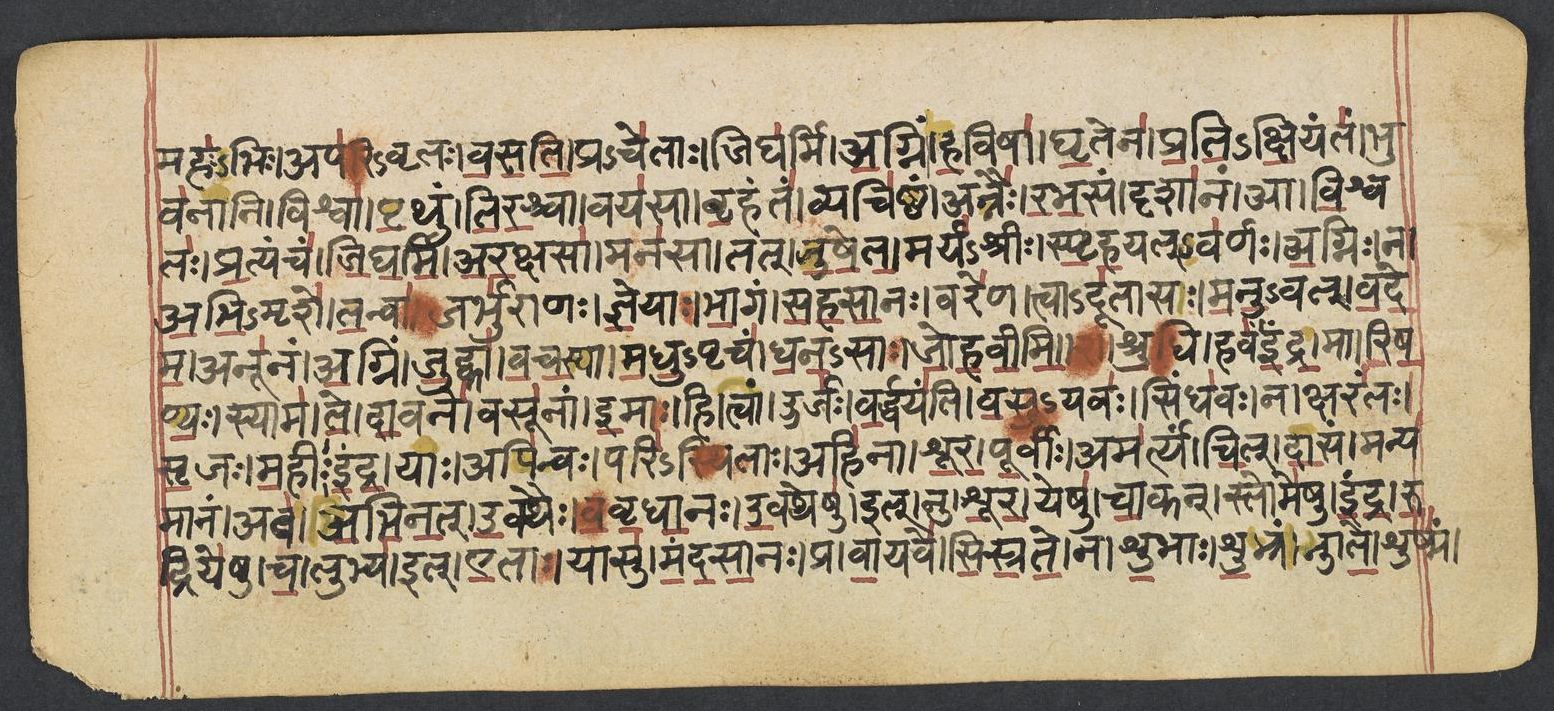
The manuscript shown is Penn Ms. Coll. 390 Item 41 (University of Pennsylvania), an undated paper manuscript of the padapāṭha (the word-by-word recitation text, in which every word is written separately and compounds are split) of the whole Ṛgveda in Devanāgarī, 884 leaves in fascicles, 7-9 lines to the page, accents in red; this hymn stands on fol. 155v-156r. Each section below gives the verses that end on one page; the page boundaries were read on the images (the opening words of every page), not counted out. Where the manuscript is a padapāṭha (the word-by-word recitation text), the section shows Aufrecht's continuous (saṃhitā) text first and, as the edition text, the padapāṭha of the same verses, which is the form written on the page.
How was this verified? (Provenance)
Where on the image
Penn Ms. Coll. 390 Item 41, fol. 155v (numbered 1v by the scribe) (OPenn image 157, upper leaf). Checked on the image: the Rigveda text on this page begins in RV 2.9.3 ‹yaje tam pra tve›. The next page with Rigveda text, fol. 156r (numbered 2r by the scribe), begins in RV 2.10.3 ‹mahaḥ-bhiḥ apari-vṛtaḥ vasati pra-cetāḥ›. Verses 2.10.1-2 end on this page.
1jo̱hūtro̍ a̱gniḥ pra̍tha̱maḥ pi̱teve̱ḻas pa̱de manu̍ṣā̱ yat sami̍ddhaḥ | śriya̱ṁ vasā̍no a̱mṛto̱ vice̍tā marmṛ̱jenya̍ḥ śrava̱sya1̱̍ḥ sa vā̱jī ||
2śrū̱yā a̱gniś ci̱trabhā̍nu̱r hava̍m me̱ viśvā̍bhir gī̱rbhir a̱mṛto̱ vice̍tāḥ | śyā̱vā ratha̍ṁ vahato̱ rohi̍tā vo̱tāru̱ṣāha̍ cakre̱ vibhṛ̍traḥ ||
Compare: Padapāṭha (word-by-word text written in the manuscript; Sansknet e-text via GRETIL)
1johūtraḥ | agniḥ | prathamaḥ | pitāiva | iḷaḥ | pade | manuṣā | yat | sam-iddhaḥ | śriyam | vasānaḥ | amṛtaḥ | vi-cetāḥ | marmṛjenyaḥ | śravasyaḥ | saḥ | vājī
2śruyāḥ | agniḥ | citra-bhānuḥ | havam | me | viśvābhiḥ | gīḥ-bhiḥ | amṛtaḥ | vi-cetāḥ | śyāvā | ratham | vahataḥ | rohitā | vā | uta | aruṣā | aha | cakre | vi-bhṛtraḥ
1AGNI, first, loudly calling, like a Father, kindled by man upon the seat of worship. Clothed in his glory, deathless, keen of insight, must be adorned by all, the Strong, the Famous.
2May Agni the resplendent hear my calling through all my songs, Immortal, keen of insight. Dark steeds or ruddy draw his car, or carried in sundry ways he makes them red of colour.
Where on the image
Penn Ms. Coll. 390 Item 41, fol. 156r (numbered 2r by the scribe) (OPenn image 157, lower leaf). Checked on the image: the Rigveda text on this page begins in RV 2.10.3 ‹mahaḥ-bhiḥ apari-vṛtaḥ vasati pra-cetāḥ›. The next page with Rigveda text, fol. 156v (numbered 2v by the scribe), begins in RV 2.11.4 ‹vardhayantaḥ śubhram vajram bāhvoḥ›. Verses 2.10.3-6 end on this page; 2.10.3 begins on fol. 155v (numbered 1v by the scribe).
3u̱ttā̱nāyā̍m ajanaya̱n suṣū̍ta̱m bhuva̍d a̱gniḥ pu̍ru̱peśā̍su̱ garbha̍ḥ | śiri̍ṇāyāṁ cid a̱ktunā̱ maho̍bhi̱r apa̍rīvṛto vasati̱ prace̍tāḥ ||
4jigha̍rmy a̱gniṁ ha̱viṣā̍ ghṛ̱tena̍ pratikṣi̱yanta̱m bhuva̍nāni̱ viśvā̍ | pṛ̱thuṁ ti̍ra̱ścā vaya̍sā bṛ̱hanta̱ṁ vyaci̍ṣṭha̱m annai̍ rabha̱saṁ dṛśā̍nam ||
5ā vi̱śvata̍ḥ pra̱tyañca̍ṁ jigharmy ara̱kṣasā̱ mana̍sā̱ taj ju̍ṣeta | marya̍śrīḥ spṛha̱yadva̍rṇo a̱gnir nābhi̱mṛśe̍ ta̱nvā̱3̱̍ jarbhu̍rāṇaḥ ||
6jñe̱yā bhā̱gaṁ sa̍hasā̱no vare̍ṇa̱ tvādū̍tāso manu̱vad va̍dema | anū̍nam a̱gniṁ ju̱hvā̍ vaca̱syā ma̍dhu̱pṛca̍ṁ dhana̱sā jo̍havīmi ||
Compare: Padapāṭha (word-by-word text written in the manuscript; Sansknet e-text via GRETIL)
3uttānāyām | ajanayan | su-sūtam | bhuvat | agniḥ | puru-peśāsu | garbhaḥ | śiriṇāyām | cit | aktunā | mahaḥ-bhiḥ | apari-vṛtaḥ | vasati | pra-cetāḥ
4jigharmi | agnim | haviṣā | ghṛtena | prati-kṣiyantam | bhuvanāni | viśvā | pṛthum | t iraścā | vayasā | bṛhantam | vyaciṣṭham | annaiḥ | rabhasam | dṛśānam
5ā | viśvataḥ | pratyañcam | jigharmi | arakṣasā | manasā | tat | juṣeta | marya-śrīḥ | spṛhayat-varṇaḥ | agniḥ | na | abhi-mṛśe | tanvā | jarbhurāṇaḥ
6jñeyāḥ | bhāgam | sahasānaḥ | vareṇa | tvādūtāsaḥ | manu-vat | vadema | anūnam | agnim | juhvā | vacasyā | madhu-pṛcam | dhana-sāḥ | johavīmi
3On wood supine they got the well-formed Infant: a germ in various-fashioned plants was Agni; And in the night, not compassed round by darkness, he dwells exceeding wise, with rays of splendour.
4With oil and sacred gifts I sprinkle Agni who makes his home in front of all things living, Broad, vast, through vital power o'er all expanded, conspicuous, strong with all the food that feeds him.
5I pour to him who looks in all directions: may he accept it with a friendly spirit. Agni with bridegroom's grace and lovely colour may not be touched when all his form is fury.
6By choice victorious, recognize thy portion: with thee for envoy may we speak like Manu. Obtaining wealth, I call on perfect Agni who with an eloquent tongue dispenses sweetness.
Notes
- Sanskrit: Aufrecht's edition (1877) with the Vedic accents, as entered by van Nooten and Holland (GRETIL).
- English: Ralph T. H. Griffith, The Hymns of the Rigveda (1889-1892; 2nd ed. 1896-1897), from the VedaWeb digital text; OCR slips in that text were corrected against the printed 2nd edition (data/sources/rigveda/griffith_errata.json).
- Padapāṭha (edition text): Sansknet e-text via GRETIL (CC BY-NC-SA 4.0).
Cite
Sources
- Source: Penn Ms. Coll. 390 Item 41 (undated (catalogued with Penn's 18th-19th c. Vedic manuscripts)), OPenn, Public Domain Mark + Aufrecht's accented text (GRETIL) + Griffith's English (VedaWeb) (holding institution)
- Critical edition: Aufrecht (1877), accented e-text via GRETIL
← previous · → next · v cycle view · l back to library