Rigveda 2.11: To Indra
Introduction
Rigveda 2.11 is a hymn of 21 verses addressed to Indra. It stands in book (maṇḍala) 2, the family book of Gṛtsamada. The Rigveda is the oldest collection of Sanskrit hymns, composed in the second half of the second millennium BCE and handed down orally for many centuries before it was written down.
The manuscript shown is Penn Ms. Coll. 390 Item 41 (University of Pennsylvania), an undated paper manuscript of the padapāṭha (the word-by-word recitation text, in which every word is written separately and compounds are split) of the whole Ṛgveda in Devanāgarī, 884 leaves in fascicles, 7-9 lines to the page, accents in red; this hymn stands on fol. 156r-157v. Each section below gives the verses that end on one page; the page boundaries were read on the images (the opening words of every page), not counted out. Where the manuscript is a padapāṭha (the word-by-word recitation text), the section shows Aufrecht's continuous (saṃhitā) text first and, as the edition text, the padapāṭha of the same verses, which is the form written on the page.
How was this verified? (Provenance)
Where on the image
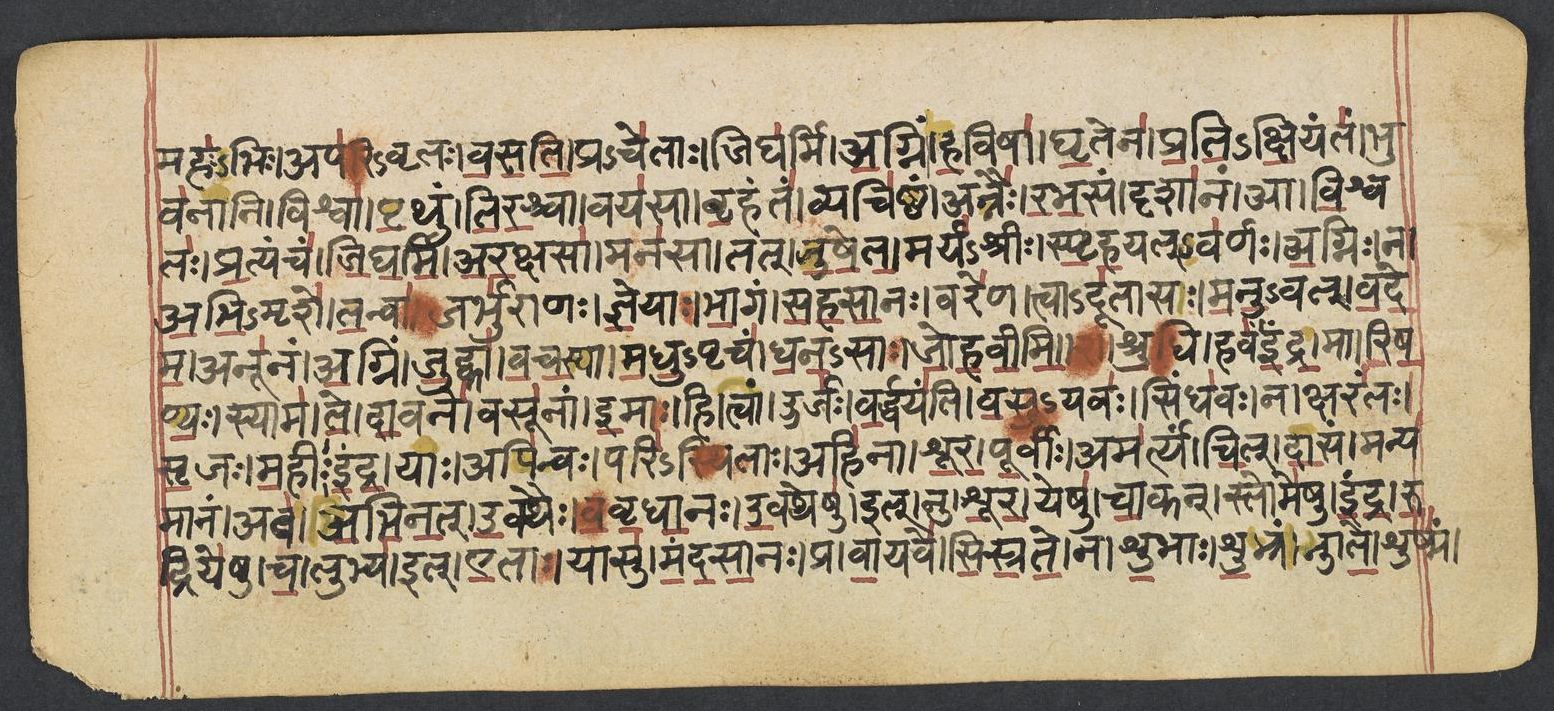
Penn Ms. Coll. 390 Item 41, fol. 156r (numbered 2r by the scribe) (OPenn image 157, lower leaf). Checked on the image: the Rigveda text on this page begins in RV 2.10.3 ‹mahaḥ-bhiḥ apari-vṛtaḥ vasati pra-cetāḥ›. The next page with Rigveda text, fol. 156v (numbered 2v by the scribe), begins in RV 2.11.4 ‹vardhayantaḥ śubhram vajram bāhvoḥ›. Verses 2.11.1-3 end on this page.
1śru̱dhī hava̍m indra̱ mā ri̍ṣaṇya̱ḥ syāma̍ te dā̱vane̱ vasū̍nām | i̱mā hi tvām ūrjo̍ va̱rdhaya̍nti vasū̱yava̱ḥ sindha̍vo̱ na kṣara̍ntaḥ ||
2sṛ̱jo ma̱hīr i̍ndra̱ yā api̍nva̱ḥ pari̍ṣṭhitā̱ ahi̍nā śūra pū̱rvīḥ | ama̍rtyaṁ cid dā̱sam manya̍māna̱m avā̍bhinad u̱kthair vā̍vṛdhā̱naḥ ||
3u̱ktheṣv in nu śū̍ra̱ yeṣu̍ cā̱kan stome̍ṣv indra ru̱driye̍ṣu ca | tubhyed e̱tā yāsu̍ mandasā̱naḥ pra vā̱yave̍ sisrate̱ na śu̱bhrāḥ ||
Compare: Padapāṭha (word-by-word text written in the manuscript; Sansknet e-text via GRETIL)
1śrudhi | havam | indra | mā | riṣaṇyaḥ | syāma | te | dāvane | vasūnām | imāḥ | hi | tvām | ūrjaḥ | vardhayanti | vasu-yavaḥ | sindhavaḥ | na | kṣarantaḥ
2sṛjaḥ | mahīḥ | indra | yāḥ | apinvaḥ | pari-sthitāḥ | ahinā | śūra | pūrvīḥ | amartyam | cit | dāsam | manyamānam | ava | abhinat | ukthaiḥ | vavṛdhānaḥ
3uktheṣu | it | nu | śūra | yeṣu | cākan | stomeṣu | indra | rudriyeṣu | ca | tubhya | it | etāḥ | yāsu | mandasānaḥ | pra | vāyave | sisrate | na | śubhrāḥ
1HEAR thou my call, O Indra; be not heedless: thine may we be for thee to give us treasures; For these presented viands, seeking riches, increase thy strength like streams of water flowing.
2Floods great and many, compassed by the Dragon, thou badest swell and settest free, O Hero. Strengthened by songs of praise thou rentest piecemeal the Dâsa, him who deemed himself immortal.
3For, Hero, in the lauds wherein thou joyedst, in hymns of praise, O Indra, songs of Rudras, These streams in which is thy delight approach thee, even as the brilliant ones draw near to Vâyu.
Where on the image
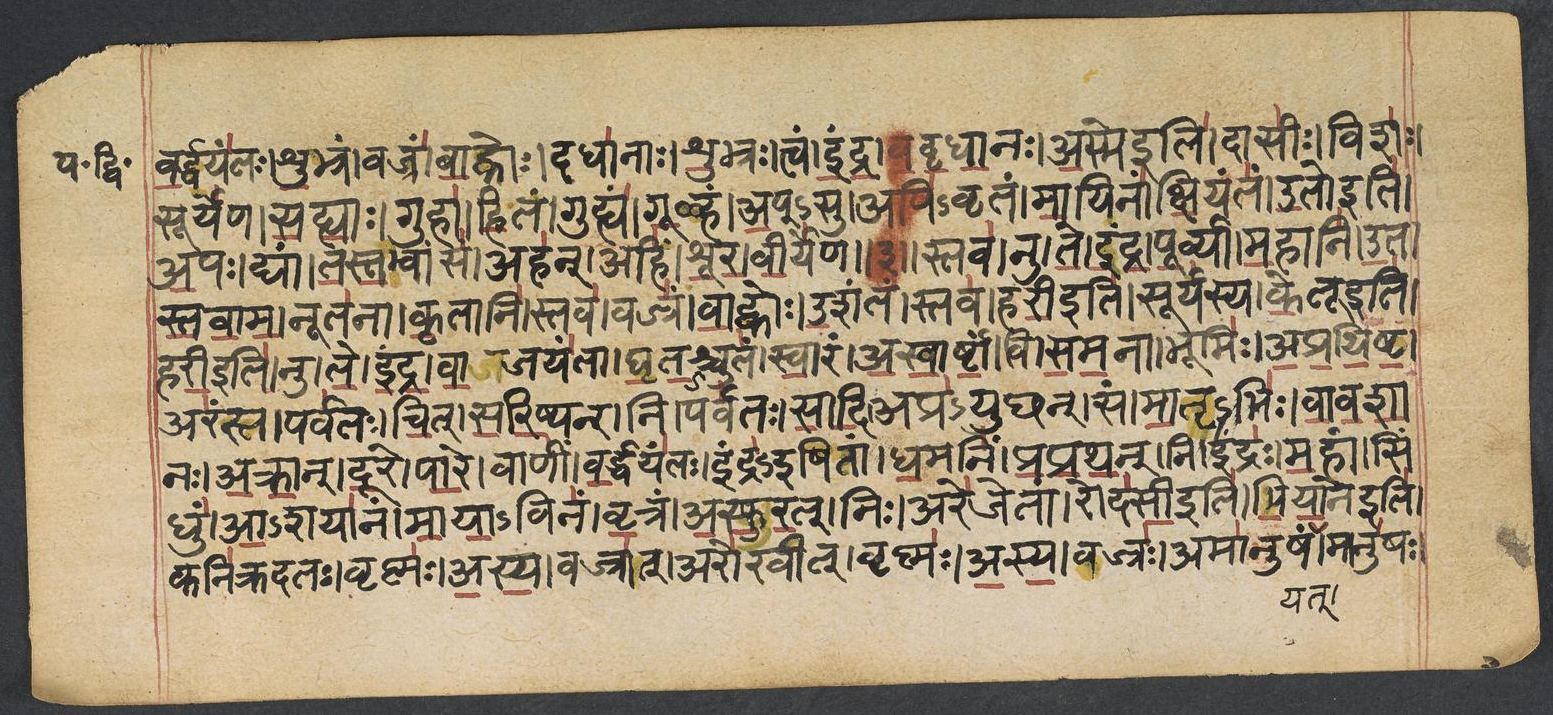
Penn Ms. Coll. 390 Item 41, fol. 156v (numbered 2v by the scribe) (OPenn image 158, upper leaf). Checked on the image: the Rigveda text on this page begins in RV 2.11.4 ‹vardhayantaḥ śubhram vajram bāhvoḥ›. The next page with Rigveda text, fol. 157r (numbered 3r by the scribe), begins in RV 2.11.10 ‹ni-jūrvāt ni māyinaḥ dānavasya›. Verses 2.11.4-9 end on this page; 2.11.4 begins on fol. 156r (numbered 2r by the scribe).
4śu̱bhraṁ nu te̱ śuṣma̍ṁ va̱rdhaya̍ntaḥ śu̱bhraṁ vajra̍m bā̱hvor dadhā̍nāḥ | śu̱bhras tvam i̍ndra vāvṛdhā̱no a̱sme dāsī̱r viśa̱ḥ sūrye̍ṇa sahyāḥ ||
5guhā̍ hi̱taṁ guhya̍ṁ gū̱ḻham a̱psv apī̍vṛtam mā̱yina̍ṁ kṣi̱yanta̍m | u̱to a̱po dyāṁ ta̍sta̱bhvāṁsa̱m aha̱nn ahi̍ṁ śūra vī̱rye̍ṇa ||
6stavā̱ nu ta̍ indra pū̱rvyā ma̱hāny u̱ta sta̍vāma̱ nūta̍nā kṛ̱tāni̍ | stavā̱ vajra̍m bā̱hvor u̱śanta̱ṁ stavā̱ harī̱ sūrya̍sya ke̱tū ||
7harī̱ nu ta̍ indra vā̱jaya̍ntā ghṛta̱ścuta̍ṁ svā̱ram a̍svārṣṭām | vi sa̍ma̱nā bhūmi̍r aprathi̱ṣṭāra̍ṁsta̱ parva̍taś cit sari̱ṣyan ||
8ni parva̍taḥ sā̱dy apra̍yuccha̱n sam mā̱tṛbhi̍r vāvaśā̱no a̍krān | dū̱re pā̱re vāṇī̍ṁ va̱rdhaya̍nta̱ indre̍ṣitāṁ dha̱mani̍m papratha̱n ni ||
9indro̍ ma̱hāṁ sindhu̍m ā̱śayā̍nam māyā̱vina̍ṁ vṛ̱tram a̍sphura̱n niḥ | are̍jetā̱ṁ roda̍sī bhiyā̱ne kani̍kradato̱ vṛṣṇo̍ asya̱ vajrā̍t ||
Compare: Padapāṭha (word-by-word text written in the manuscript; Sansknet e-text via GRETIL)
4śubhram | nu | te | śuṣmam | vardhayantaḥ | śubhram | vajram | bāhvoḥ | dadhānāḥ | śubhraḥ | tvam | indra | vavṛdhānaḥ | asme iti | dāsīḥ | viśaḥ | sūryeṇa | sahyāḥ
5guhā | hitam | guhyam | gūḷham | apsu | api-vṛtam | māyinam | kṣiyantam | uto iti | apaḥ | dyām | tastabhvāṃsam | ahan | ahim | śūra | vīryeṇa
6stava | nu | te | indra | pūrvyā | mahāni | uta | stavāma | nūtanā | kṛtāni | stava | vajram | bāhvoḥ | uśantam | stava | harī iti | sūryasya | ketū iti
7harī iti | nu | te | indra | vājayantā | ghṛta-ścutam | svāram | asvārṣṭām | vi | samanā | bhūmiḥ | aprathiṣṭa | araṃsta | parvataḥ | cit | sariṣyan
8ni | parvataḥ | sādi | apra-yucchan | sam | mātṛ-bhiḥ | vāvaśānaḥ | akrān | dūre | pāre | vāṇīm | vardhayantaḥ | indra-iṣitām | dhamanim | paprathan | ni
9indraḥ | mahām | sindhum | āśayānam | māyāvinam | vṛtram | asphurat | niḥ | arejetām | rodasī iti | bhiyāne iti | kanikradataḥ | vṛṣṇaḥ | asya | vajrāt
4We who add strength to thine own splendid vigour, laying within thine arms the splendid thunder- With us mayst thou, O Indra, waxen splendid, with Sûrya overcome the Dâsa races.
5Hero, thou slewest in thy valour Ahi concealed in depths, mysterious, great enchanter, Dwelling enveloped deep within the waters, him who checked heaven and stayed the floods from flowing.
6Indra, we laud thy great deeds wrought aforetime, we laud thine exploits later of achievement; We laud the bolt that in thine arms lies eager; we laud thy two Bay Steeds, heralds of Sûrya.
7Indra, thy Bay Steeds showing forth their vigour have sent a loud cry out that droppeth fatness. The earth hath spread herself in all her fulness: the cloud that was about to move hath rested.
8Down, never ceasing, hath the rain-cloud settled: bellowing, it hath wandered with the Mothers. Swelling the roar in the far distant limits, they have spread wide the blast sent forth by Indra.
9Indra hath hurled down the magician Vr̥itra who lay beleaguering the mighty river. Then both the heaven and earth trembled in terror at the strong Hero's thunder when he bellowed.
Where on the image
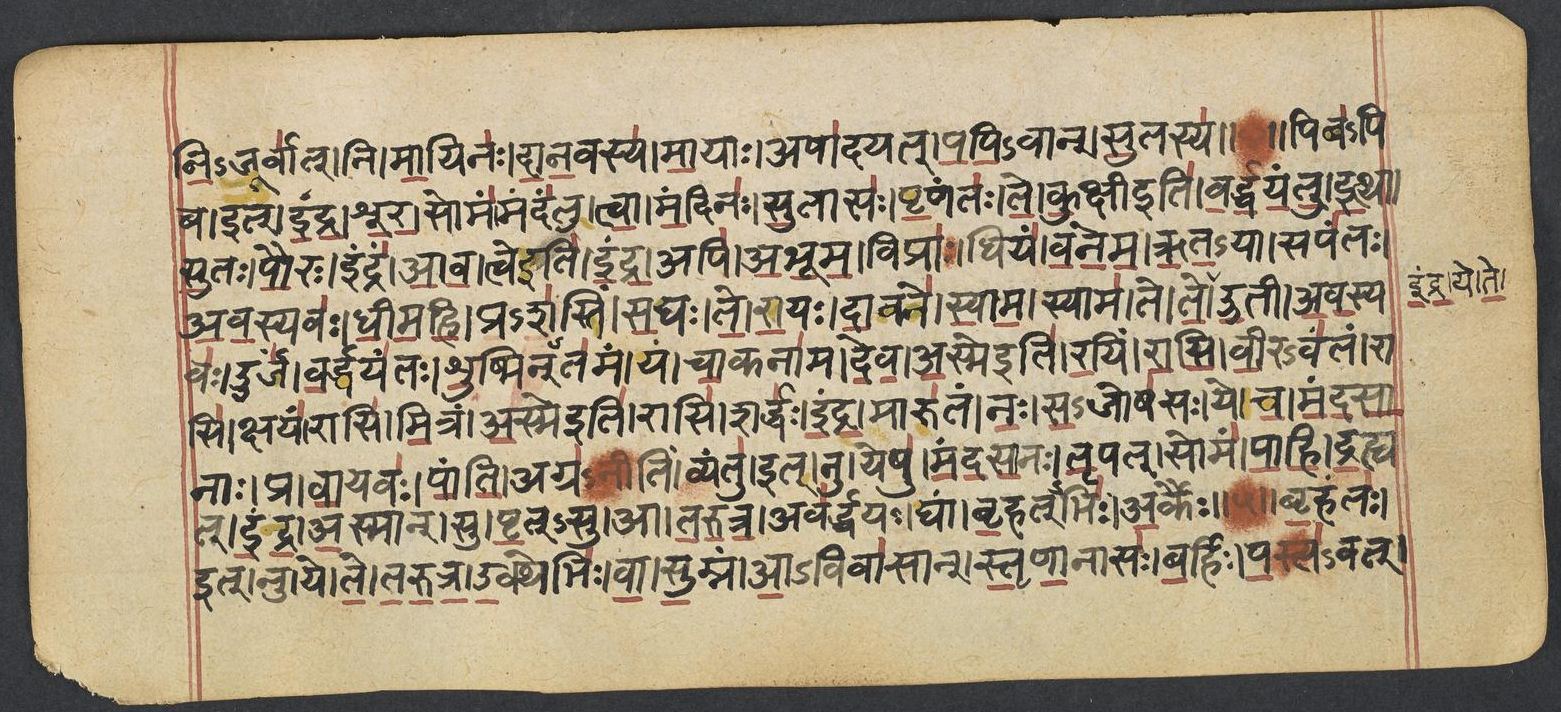
Penn Ms. Coll. 390 Item 41, fol. 157r (numbered 3r by the scribe) (OPenn image 158, lower leaf). Checked on the image: the Rigveda text on this page begins in RV 2.11.10 ‹ni-jūrvāt ni māyinaḥ dānavasya›. The next page with Rigveda text, fol. 157v (numbered 3v by the scribe), begins in RV 2.11.16 ‹-pastya-vat tvāūtāḥ it indra›. Verses 2.11.10-15 end on this page; 2.11.10 begins on fol. 156v (numbered 2v by the scribe).
10aro̍ravī̱d vṛṣṇo̍ asya̱ vajro 'mā̍nuṣa̱ṁ yan mānu̍ṣo ni̱jūrvā̍t | ni mā̱yino̍ dāna̱vasya̍ mā̱yā apā̍dayat papi̱vān su̱tasya̍ ||
11pibā̍-pi̱bed i̍ndra śūra̱ soma̱m manda̍ntu tvā ma̱ndina̍ḥ su̱tāsa̍ḥ | pṛ̱ṇanta̍s te ku̱kṣī va̍rdhayantv i̱tthā su̱taḥ pau̱ra indra̍m āva ||
12tve i̱ndrāpy a̍bhūma̱ viprā̱ dhiya̍ṁ vanema ṛta̱yā sapa̍ntaḥ | a̱va̱syavo̍ dhīmahi̱ praśa̍stiṁ sa̱dyas te̍ rā̱yo dā̱vane̍ syāma ||
13syāma̱ te ta̍ indra̱ ye ta̍ ū̱tī a̍va̱syava̱ ūrja̍ṁ va̱rdhaya̍ntaḥ | śu̱ṣminta̍ma̱ṁ yaṁ cā̱kanā̍ma devā̱sme ra̱yiṁ rā̍si vī̱rava̍ntam ||
14rāsi̱ kṣaya̱ṁ rāsi̍ mi̱tram a̱sme rāsi̱ śardha̍ indra̱ māru̍taṁ naḥ | sa̱joṣa̍so̱ ye ca̍ mandasā̱nāḥ pra vā̱yava̍ḥ pā̱nty agra̍ṇītim ||
15vyantv in nu yeṣu̍ mandasā̱nas tṛ̱pat soma̍m pāhi dra̱hyad i̍ndra | a̱smān su pṛ̱tsv ā ta̍ru̱trāva̍rdhayo̱ dyām bṛ̱hadbhi̍r a̱rkaiḥ ||
Compare: Padapāṭha (word-by-word text written in the manuscript; Sansknet e-text via GRETIL)
10aroravīt | vṛṣṇaḥ | asya | vajraḥ | amānuṣam | yat | mānuṣaḥ | ni-jūrvāt | ni | māyinaḥ | dānavasya | māyāḥ | apādayat | papi-vān | sutasya
11piba-piba | it | indra | śūra | somam | mandantu | tvā | mandinaḥ | sutāsaḥ | pṛṇantaḥ | te | kukṣī iti | vardhayantu | itthā | sutaḥ | pauraḥ | indram | āva
12tve iti | indra | api | abhūma | viprāḥ | dhiyam | vanema | ṛta-yā | sapantaḥ | avasyavaḥ | dhīmahi | pra-śastim | sadyaḥ | te | rāyaḥ | dāvane | syāma
13syāma | te | te | indra | ye | te | ūtī | avasyavaḥ | ūrjam | vardhayantaḥ | śuṣmin-tamam | yam | cākanāma | deva | asme iti | rayim | rāsi | vīra-vantam
14rāsi | kṣayam | rāsi | mitram | asme iti | rāsi | śardhaḥ | indra | mārutam | naḥ | sa-joṣasaḥ | ye | ca | mandasānāḥ | pra | vāyavaḥ | pānti | agra-nītim
15vyantu | it | nu | yeṣu | mandasānaḥ | tṛpat | somam | pāhi | drahyat | indra | asmān | su | pṛt-su | ā | tarutra | avardhayaḥ | dyām | bṛhat-bhiḥ | arkaiḥ
10Loud roared the mighty Hero's bolt of thunder, when he, the Friend of man, burnt up the monster, And, having drunk his fill of flowing Soma, baffled the guileful Dânava's devices.
11Drink thou, O Hero Indra, drink the Soma; let the joy-giving juices make thee joyful. They, filling both thy flanks, shall swell thy vigour. The juice that satisfies hath helped Indra.
12Singers have we become with thee, O Indra: may we serve duly and prepare devotion. Seeking thy help we meditate thy praises: may we at once enjoy thy gift of riches.
13May we be thine, such by thy help, O Indra, as swell thy vigour while they seek thy favour. Give us, thou God, the riches that we long for, most powerful, with store of noble children.
14Give us a friend, give us an habitation; Indra, give us the company of Maruts, And those whose minds accord with theirs, the Vâyus, who drink the first libation of the Soma.
15Let those enjoy in whom thou art delighted. Indra, drink Soma for thy strength and gladness. Thou hast exalted us to heaven, Preserver, in battles, through the lofty hymns that praise thee.
Where on the image
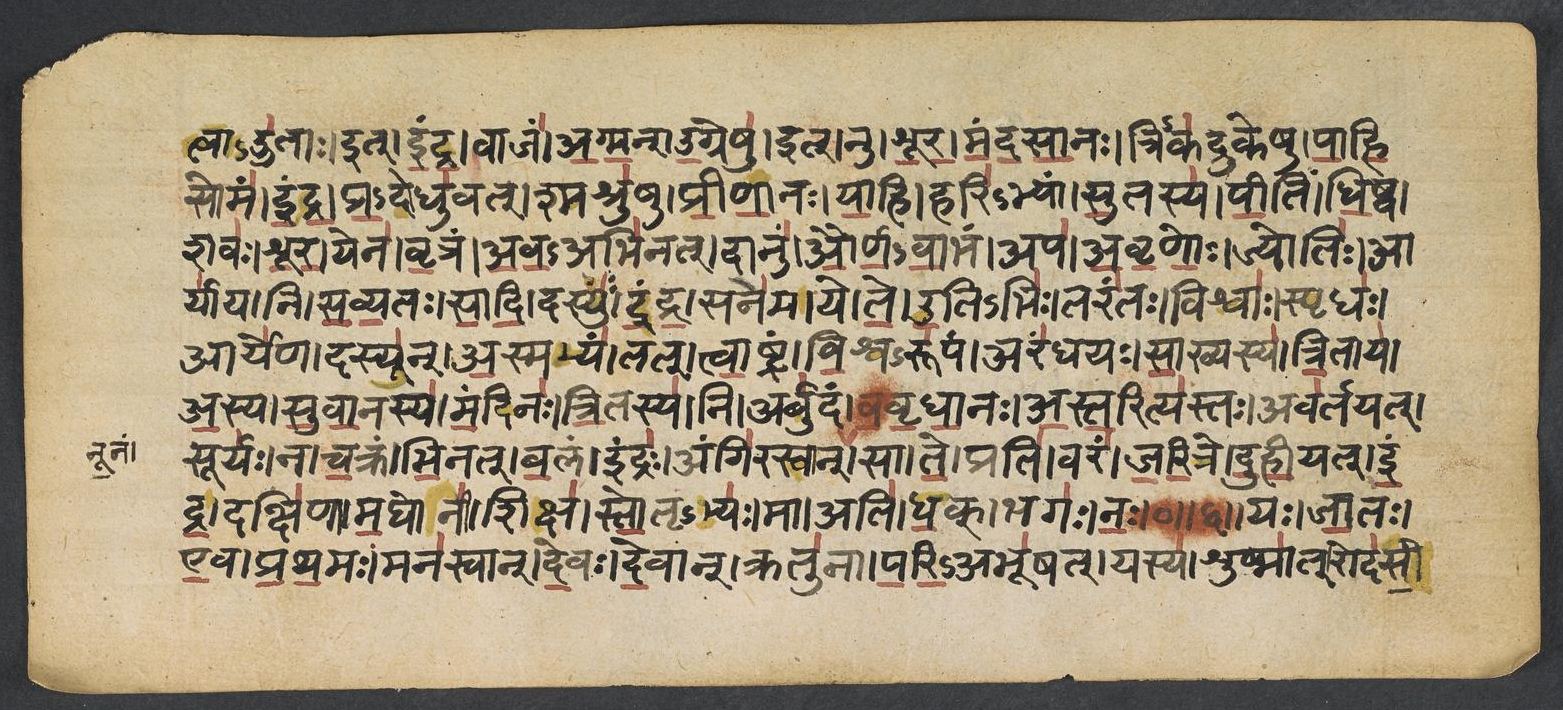
Penn Ms. Coll. 390 Item 41, fol. 157v (numbered 3v by the scribe) (OPenn image 159, upper leaf). Checked on the image: the Rigveda text on this page begins in RV 2.11.16 ‹-pastya-vat tvāūtāḥ it indra›. The next page with Rigveda text, fol. 158r (numbered 4r by the scribe), begins in RV 2.12.1 ‹iti abhyasetām nṛmṇasya mahnā›. Verses 2.11.16-21 end on this page; 2.11.16 begins on fol. 157r (numbered 3r by the scribe).
16bṛ̱hanta̱ in nu ye te̍ tarutro̱kthebhi̍r vā su̱mnam ā̱vivā̍sān | stṛ̱ṇā̱nāso̍ ba̱rhiḥ pa̱styā̍va̱t tvotā̱ id i̍ndra̱ vāja̍m agman ||
17u̱greṣv in nu śū̍ra mandasā̱nas trika̍drukeṣu pāhi̱ soma̍m indra | pra̱dodhu̍va̱c chmaśru̍ṣu prīṇā̱no yā̱hi hari̍bhyāṁ su̱tasya̍ pī̱tim ||
18dhi̱ṣvā śava̍ḥ śūra̱ yena̍ vṛ̱tram a̱vābhi̍na̱d dānu̍m aurṇavā̱bham | apā̍vṛṇo̱r jyoti̱r āryā̍ya̱ ni sa̍vya̱taḥ sā̍di̱ dasyu̍r indra ||
19sane̍ma̱ ye ta̍ ū̱tibhi̱s tara̍nto̱ viśvā̱ḥ spṛdha̱ ārye̍ṇa̱ dasyū̍n | a̱smabhya̱ṁ tat tvā̱ṣṭraṁ vi̱śvarū̍pa̱m ara̍ndhayaḥ sā̱khyasya̍ tri̱tāya̍ ||
20a̱sya su̍vā̱nasya̍ ma̱ndina̍s tri̱tasya̱ ny arbu̍daṁ vāvṛdhā̱no a̍staḥ | ava̍rtaya̱t sūryo̱ na ca̱kram bhi̱nad va̱lam indro̱ aṅgi̍rasvān ||
21nū̱naṁ sā te̱ prati̱ vara̍ṁ jari̱tre du̍hī̱yad i̍ndra̱ dakṣi̍ṇā ma̱ghonī̍ | śikṣā̍ sto̱tṛbhyo̱ māti̍ dha̱g bhago̍ no bṛ̱had va̍dema vi̱dathe̍ su̱vīrā̍ḥ ||
Compare: Padapāṭha (word-by-word text written in the manuscript; Sansknet e-text via GRETIL)
16bṛhantaḥ | it | nu | ye | te | tarutra | ukthebhiḥ | vā | sumnam | āvivāsān | stṛṇānāsaḥ | barhiḥ | pastya-vat | tvāūtāḥ | it | indra | vājam | agman
17ugreṣu | it | nu | śūra | mandasānaḥ | tri-kadrukeṣu | pāhi | somam | indra | pra-dodhuvat | śmaśruṣu | prīṇānaḥ | yāhi | hari-bhyām | sutasya | pītim
18dhiṣva | śavaḥ | śūra | yena | vṛtram | ava-abhinat | dānum | aurṇa-vābham | apa | avṛṇoḥ | jyotiḥ | āryāya | ni | savyataḥ | sādi | dasyuḥ | indra
19sanema | ye | te | ūti-bhiḥ | tarantaḥ | viśvāḥ | spṛdhaḥ | āryeṇa | dasyūn | asmabhyam | tat | tvāṣṭram | viśva-rūpam | arandhayaḥ | sākhyasya | tritāya
20asya | suvānasya | mandinaḥ | tritasya | ni | arbudam | vavṛdhānaḥ | astari tyastaḥ | avartayat | sūryaḥ | na | cakram | bhinat | valam | indraḥ | aṅgirasvān
21nūnam | sā | te | prati | varam | jaritre | duhīyat | indra | dakṣiṇā | maghonī | śikṣa | stotṛ-bhyaḥ | mā | ati | dhak | bhagaḥ | naḥ | bṛhat | vadema | vidathe | su-vīrāḥ
16Great, verily, are they, O thou Protector, who by their songs of praise have won thy blessing. They who strew sacred grass to be thy dwelling, helped by thee have got them strength, O Indra.
17Upon the great Trikadruka days, Hero, rejoicing thee, O Indra, drink the Soma. Come with Bay Steeds to drink of libation, shaking the drops from out thy beard, contented.
18Hero, assume the might wherewith thou clavest Vr̥itra piecemeal, the Dânava Aurṇavâbha. Thou hast disclosed the light to light the Arya: on thy left hand, O Indra, sank the Dasyu.
19May we gain wealth, subduing with thy succour and with the Ârya, all our foes, the Dasyus. Our gain was that to Trita of our party thou gavest up Tvashṭar's son Viṣvarûpâ.
20He cast down Arbuda what time his vigour was strengthened by libations poured by Trita. Indra sent forth his whirling wheel like Sûrya, and aided by the Angirases rent Vala.
21Now let that wealthy Cow of thine, O Indra, yield in return a boon to him who lauds thee. Give to thy praisers: let not fortune fail us. Loud may we speak, with brave men, in the assembly.
Notes
- Sanskrit: Aufrecht's edition (1877) with the Vedic accents, as entered by van Nooten and Holland (GRETIL).
- English: Ralph T. H. Griffith, The Hymns of the Rigveda (1889-1892; 2nd ed. 1896-1897), from the VedaWeb digital text; OCR slips in that text were corrected against the printed 2nd edition (data/sources/rigveda/griffith_errata.json).
- Padapāṭha (edition text): Sansknet e-text via GRETIL (CC BY-NC-SA 4.0).
Cite
Sources
- Source: Penn Ms. Coll. 390 Item 41 (undated (catalogued with Penn's 18th-19th c. Vedic manuscripts)), OPenn, Public Domain Mark + Aufrecht's accented text (GRETIL) + Griffith's English (VedaWeb) (holding institution)
- Critical edition: Aufrecht (1877), accented e-text via GRETIL
← previous · → next · v cycle view · l back to library