Rigveda 2.17: To Indra
Introduction
Rigveda 2.17 is a hymn of 9 verses addressed to Indra. It stands in book (maṇḍala) 2, the family book of Gṛtsamada. The Rigveda is the oldest collection of Sanskrit hymns, composed in the second half of the second millennium BCE and handed down orally for many centuries before it was written down.
The manuscript shown is Penn Ms. Coll. 390 Item 41 (University of Pennsylvania), an undated paper manuscript of the padapāṭha (the word-by-word recitation text, in which every word is written separately and compounds are split) of the whole Ṛgveda in Devanāgarī, 884 leaves in fascicles, 7-9 lines to the page, accents in red; this hymn stands on fol. 162v-163r. Each section below gives the verses that end on one page; the page boundaries were read on the images (the opening words of every page), not counted out. Where the manuscript is a padapāṭha (the word-by-word recitation text), the section shows Aufrecht's continuous (saṃhitā) text first and, as the edition text, the padapāṭha of the same verses, which is the form written on the page.
How was this verified? (Provenance)
Where on the image
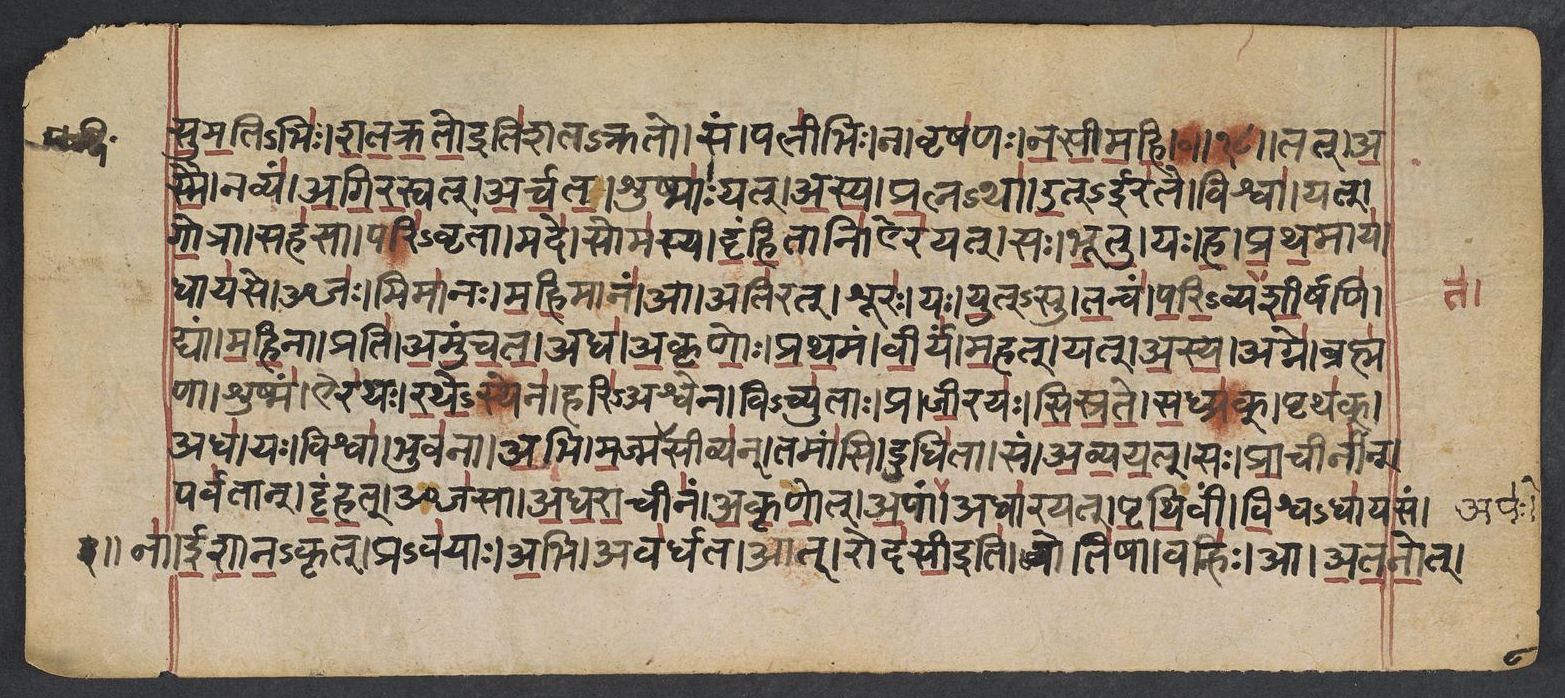
Penn Ms. Coll. 390 Item 41, fol. 162v (numbered 8v by the scribe) (OPenn image 164, upper leaf). Checked on the image: the Rigveda text on this page begins in RV 2.16.8 ‹sumati-bhiḥ śatakrato itiśata-krato sam›. The next page with Rigveda text, fol. 163r (numbered 9r by the scribe), begins in RV 2.17.5 ‹astabhnāt māyayā dyām ava-srasaḥ›. Verses 2.17.1-4 end on this page.
1tad a̍smai̱ navya̍m aṅgira̱svad a̍rcata̱ śuṣmā̱ yad a̍sya pra̱tnatho̱dīra̍te | viśvā̱ yad go̱trā saha̍sā̱ parī̍vṛtā̱ made̱ soma̍sya dṛṁhi̱tāny aira̍yat ||
2sa bhū̍tu̱ yo ha̍ pratha̱māya̱ dhāya̍sa̱ ojo̱ mimā̍no mahi̱māna̱m āti̍rat | śūro̱ yo yu̱tsu ta̱nva̍m pari̱vyata̍ śī̱rṣaṇi̱ dyām ma̍hi̱nā praty a̍muñcata ||
3adhā̍kṛṇoḥ pratha̱maṁ vī̱rya̍m ma̱had yad a̱syāgre̱ brahma̍ṇā̱ śuṣma̱m aira̍yaḥ | ra̱the̱ṣṭhena̱ harya̍śvena̱ vicyu̍tā̱ḥ pra jī̱raya̍ḥ sisrate sa̱dhrya1̱̍k pṛtha̍k ||
4adhā̱ yo viśvā̱ bhuva̍nā̱bhi ma̱jmane̍śāna̱kṛt prava̍yā a̱bhy ava̍rdhata | ād roda̍sī̱ jyoti̍ṣā̱ vahni̱r āta̍no̱t sīvya̱n tamā̍ṁsi̱ dudhi̍tā̱ sam a̍vyayat ||
Compare: Padapāṭha (word-by-word text written in the manuscript; Sansknet e-text via GRETIL)
1tat | asmai | navyam | aṅgirasvat | arcata | śuṣmāḥ | yat | asya | pratna-thā | ut-īrate | viśvā | yat | gotrā | sahasā | pari-vṛtā | made | somasya | dṛṃhitāni | airayat
2saḥ | bhūtu | yaḥ | ha | prathamāya | dhāyase | ojaḥ | mimānaḥ | mahimānam | ā | at irat | śūraḥ | yaḥ | yut-su | tanvam | pari-vyata | śīrṣaṇi | dyām | mahinā | prati | amuñcata
3adha | akṛṇoḥ | prathamam | vīryam | mahat | yat | asya | agre | brahmaṇā | śuṣmam | airayaḥ | rathe--sthena | hari-aśvena | vi-cyutāḥ | pra | jīrayaḥ | sisrate | sadhryak | pṛthak
4adha | yaḥ | viśvā | bhuvanā | abhi | majmanā | īśāna-kṛt | pra-vayāḥ | abhi | avardhata | āt | rodasī iti | jyotiṣā | vahniḥ | ā | atanot | sīvyan | tamāṃsi | dudhitā | sam | avyayat
1LIKE the Angirases, sing this new song forth to him, for, as in ancient days, his mighty powers are shown, When in the rapture of the Soma he unclosed with strength the solid firm-shut stables of the kine.
2Let him be even that God who, for the earliest draught measuring out his power, increased his majesty; Hero who fortified his body in the wars, and through his greatness set the heaven upon his head.
3Thou didst perform thy first great deed of hero might what time thou showedst power, through prayer, before this folk. Hurled down by thee the car-borne Lord of Tawny Steeds, the congregated swift ones fled in sundry ways.
4He made himself by might Lord of all living things, and strong in vital power waxed great above them all. He, borne on high, o'erspread with light the heaven and earth, and, sewing up the turbid darkness, closed it in.
Where on the image
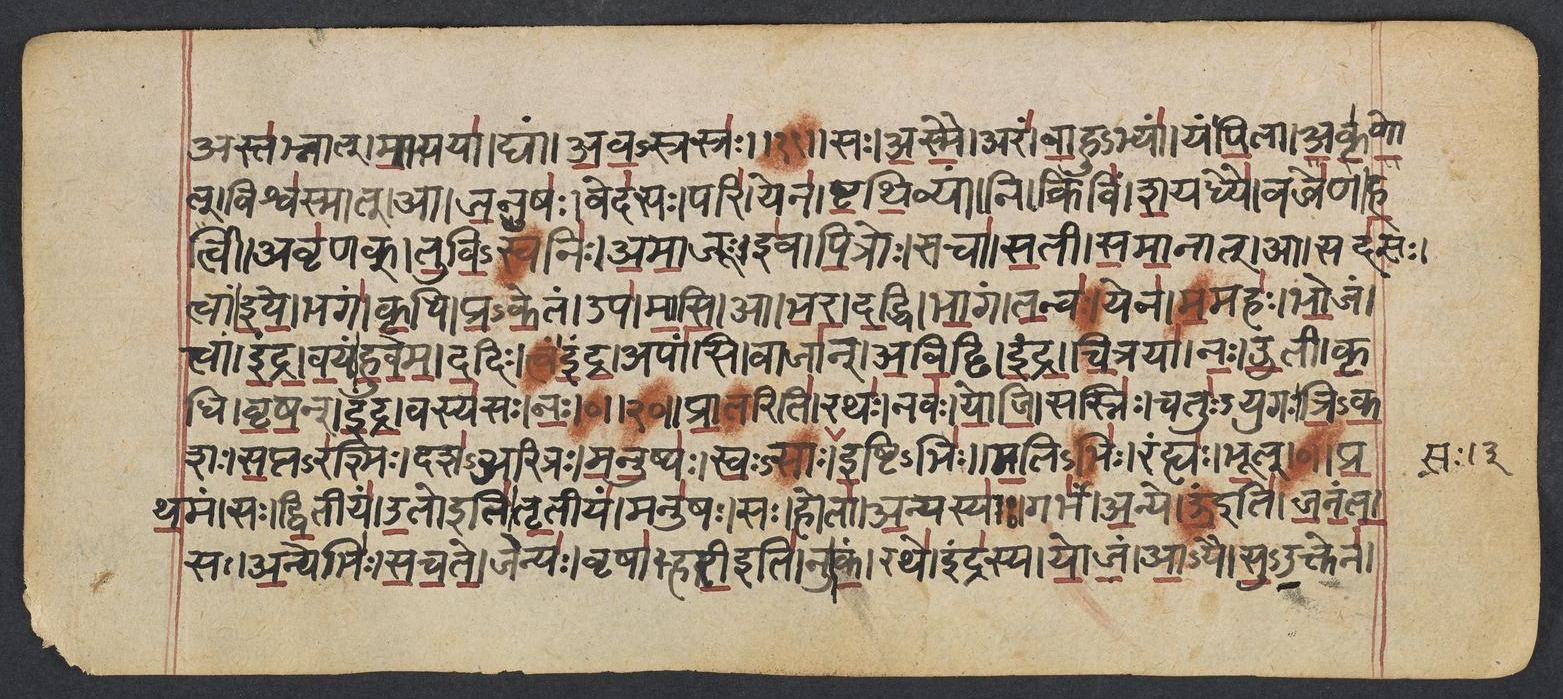
Penn Ms. Coll. 390 Item 41, fol. 163r (numbered 9r by the scribe) (OPenn image 164, lower leaf). Checked on the image: the Rigveda text on this page begins in RV 2.17.5 ‹astabhnāt māyayā dyām ava-srasaḥ›. The next page with Rigveda text, fol. 163v (numbered 9v by the scribe), begins in RV 2.18.3 ‹vacasā navena mo iti›. Verses 2.17.5-9 end on this page; 2.17.5 begins on fol. 162v (numbered 8v by the scribe).
5sa prā̱cīnā̱n parva̍tān dṛṁha̱d oja̍sādharā̱cīna̍m akṛṇod a̱pām apa̍ḥ | adhā̍rayat pṛthi̱vīṁ vi̱śvadhā̍yasa̱m asta̍bhnān mā̱yayā̱ dyām a̍va̱srasa̍ḥ ||
6sāsmā̱ ara̍m bā̱hubhyā̱ṁ yam pi̱tākṛ̍ṇo̱d viśva̍smā̱d ā ja̱nuṣo̱ veda̍sa̱s pari̍ | yenā̍ pṛthi̱vyāṁ ni krivi̍ṁ śa̱yadhyai̱ vajre̍ṇa ha̱tvy avṛ̍ṇak tuvi̱ṣvaṇi̍ḥ ||
7a̱mā̱jūr i̍va pi̱troḥ sacā̍ sa̱tī sa̍mā̱nād ā sada̍sa̱s tvām i̍ye̱ bhaga̍m | kṛ̱dhi pra̍ke̱tam upa̍ mā̱sy ā bha̍ra da̱ddhi bhā̱gaṁ ta̱nvo̱3̱̍ yena̍ mā̱maha̍ḥ ||
8bho̱jaṁ tvām i̍ndra va̱yaṁ hu̍vema da̱diṣ ṭvam i̱ndrāpā̍ṁsi̱ vājā̍n | a̱vi̱ḍḍhī̍ndra ci̱trayā̍ na ū̱tī kṛ̱dhi vṛ̍ṣann indra̱ vasya̍so naḥ ||
9nū̱naṁ sā te̱ prati̱ vara̍ṁ jari̱tre du̍hī̱yad i̍ndra̱ dakṣi̍ṇā ma̱ghonī̍ | śikṣā̍ sto̱tṛbhyo̱ māti̍ dha̱g bhago̍ no bṛ̱had va̍dema vi̱dathe̍ su̱vīrā̍ḥ ||
Compare: Padapāṭha (word-by-word text written in the manuscript; Sansknet e-text via GRETIL)
5saḥ | prācīnān | parvatān | dṛṃhat | ojasā | adharācīnam | akṛṇot | apām | apaḥ | adhārayat | pṛthivīm | viśva-dhāyasam | astabhnāt | māyayā | dyām | ava-srasaḥ
6saḥ | asmai | aram | bāhu-bhyām | yam | pitā | akṛṇot | viśvasmāt | ā | januṣaḥ | vedasaḥ | pari | yena | pṛthivyām | ni | krivim | śayadhyai | vajreṇa | hatvī | avṛṇak | tuvi-svaniḥ
7amājūḥ-iva | pitroḥ | sacā | satī | samānāt | ā | sadasaḥ | tvām | iye | bhagam | kṛdh i | pra-ketam | upa | māsi | ā | bhara | daddhi | bhāgam | tanvaḥ | yena | mamahaḥ
8bhojam | tvām | indra | vayam | huvema | dadiḥ | tvam | indra | apāṃsi | vājān | avi ḍḍhi | indra | citrayā | naḥ | ūtī | kṛdhi | vṛṣan | indra | vasyasaḥ | naḥ
9nūnam | sā | te | prati | varam | jaritre | duhīyat | indra | dakṣiṇā | maghonī | śikṣa | stotṛ-bhyaḥ | mā | ati | dhak | bhagaḥ | naḥ | bṛhat | vadema | vidathe | su-vīrāḥ
5He with his might made firm the forward-bending hills, the downward rushing of the waters he ordained. Fast he upheld the earth that nourisheth all life, and stayed the heaven from falling by his wondrous skill.
6Fit for the grasping of his arms is what the Sire hath fabricated from all kind of precious wealth. The thunderbolt, wherewith, loud-roaring, he smote down, and striking him to death laid Krivi on the earth.
7As she who in her parents' house is growing old, I pray to thee as Bhaga from the seat of all. Grant knowledge, mete it out and bring it to us here: give us the share wherewith thou makest people glad.
8May we invoke thee as a liberal giver thou givest us, O Indra, strength and labours. Help us with manifold assistance, Indra: Migthy One, Indra, make us yet more wealthy.
9Now may that wealthy Cow of thine, O Indra, give in return a boon to him who lauds thee. Give to thy praisers: let not fortune fail us. Loud may we speak, with heroes, in assembly.
Notes
- Sanskrit: Aufrecht's edition (1877) with the Vedic accents, as entered by van Nooten and Holland (GRETIL).
- English: Ralph T. H. Griffith, The Hymns of the Rigveda (1889-1892; 2nd ed. 1896-1897), from the VedaWeb digital text; OCR slips in that text were corrected against the printed 2nd edition (data/sources/rigveda/griffith_errata.json).
- Padapāṭha (edition text): Sansknet e-text via GRETIL (CC BY-NC-SA 4.0).
Cite
Sources
- Source: Penn Ms. Coll. 390 Item 41 (undated (catalogued with Penn's 18th-19th c. Vedic manuscripts)), OPenn, Public Domain Mark + Aufrecht's accented text (GRETIL) + Griffith's English (VedaWeb) (holding institution)
- Critical edition: Aufrecht (1877), accented e-text via GRETIL
← previous · → next · v cycle view · l back to library