Rigveda 2.18: To Indra
Introduction
Rigveda 2.18 is a hymn of 9 verses addressed to Indra. It stands in book (maṇḍala) 2, the family book of Gṛtsamada. The Rigveda is the oldest collection of Sanskrit hymns, composed in the second half of the second millennium BCE and handed down orally for many centuries before it was written down.
The manuscript shown is Penn Ms. Coll. 390 Item 41 (University of Pennsylvania), an undated paper manuscript of the padapāṭha (the word-by-word recitation text, in which every word is written separately and compounds are split) of the whole Ṛgveda in Devanāgarī, 884 leaves in fascicles, 7-9 lines to the page, accents in red; this hymn stands on fol. 163r-163v. Each section below gives the verses that end on one page; the page boundaries were read on the images (the opening words of every page), not counted out. Where the manuscript is a padapāṭha (the word-by-word recitation text), the section shows Aufrecht's continuous (saṃhitā) text first and, as the edition text, the padapāṭha of the same verses, which is the form written on the page.
How was this verified? (Provenance)
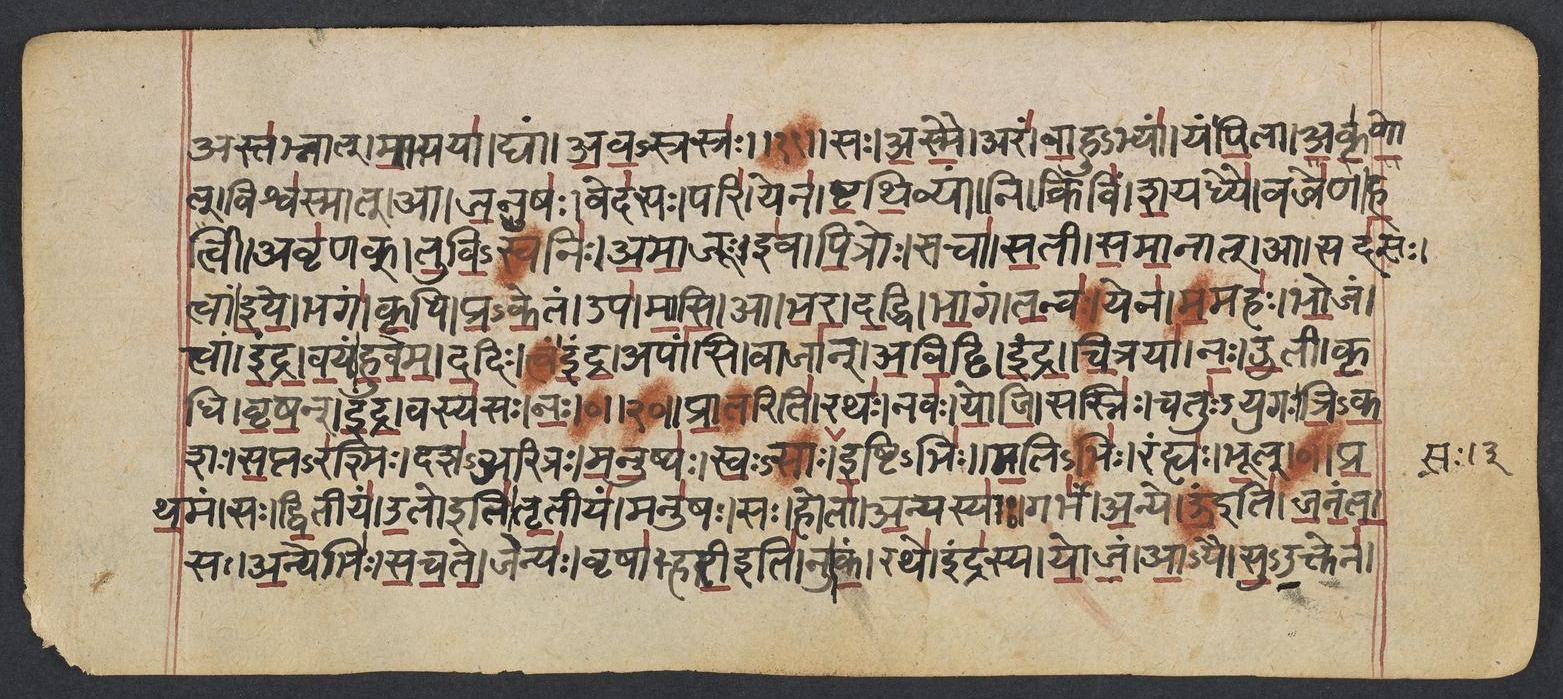
Where on the image
Penn Ms. Coll. 390 Item 41, fol. 163r (numbered 9r by the scribe) (OPenn image 164, lower leaf). Checked on the image: the Rigveda text on this page begins in RV 2.17.5 ‹astabhnāt māyayā dyām ava-srasaḥ›. The next page with Rigveda text, fol. 163v (numbered 9v by the scribe), begins in RV 2.18.3 ‹vacasā navena mo iti›. Verses 2.18.1-2 end on this page.
1prā̱tā ratho̱ navo̍ yoji̱ sasni̱ś catu̍ryugas trika̱śaḥ sa̱ptara̍śmiḥ | daśā̍ritro manu̱ṣya̍ḥ sva̱rṣāḥ sa i̱ṣṭibhi̍r ma̱tibhī̱ raṁhyo̍ bhūt ||
2sāsmā̱ ara̍m pratha̱maṁ sa dvi̱tīya̍m u̱to tṛ̱tīya̱m manu̍ṣa̱ḥ sa hotā̍ | a̱nyasyā̱ garbha̍m a̱nya ū̍ jananta̱ so a̱nyebhi̍ḥ sacate̱ jenyo̱ vṛṣā̍ ||
Compare: Padapāṭha (word-by-word text written in the manuscript; Sansknet e-text via GRETIL)
1prātariti | rathaḥ | navaḥ | yoji | sasniḥ | catuḥ-yugaḥ | tri-kaśaḥ | sapta-raśmiḥ | daśa-aritraḥ | manuṣyaḥ | svaḥ-sāḥ | saḥ | iṣṭi-bhiḥ | mati-bhiḥ | raṃhyaḥ | bhūt
2saḥ | asmai | aram | prathamam | saḥ | dvitīyam | uto iti | tṛtīyam | manuṣaḥ | saḥ | hotā | anyasyāḥ | garbham | anye | oṃ iti | jananta | saḥ | anyebhiḥ | sacate | jenyaḥ | vṛṣā
1THE rich new car hath been equipped at morning; four yokes it hath, three whips, seven reins to guide it: Ten-sided, friendly to mankind, light-winner, that must be urged to speed with prayers and wishes.
2This is prepared for him the first, the second, and the third time: he is man's Priest and Herald. Others get offspring of another parent he goeth, as a noble Bull, with others.
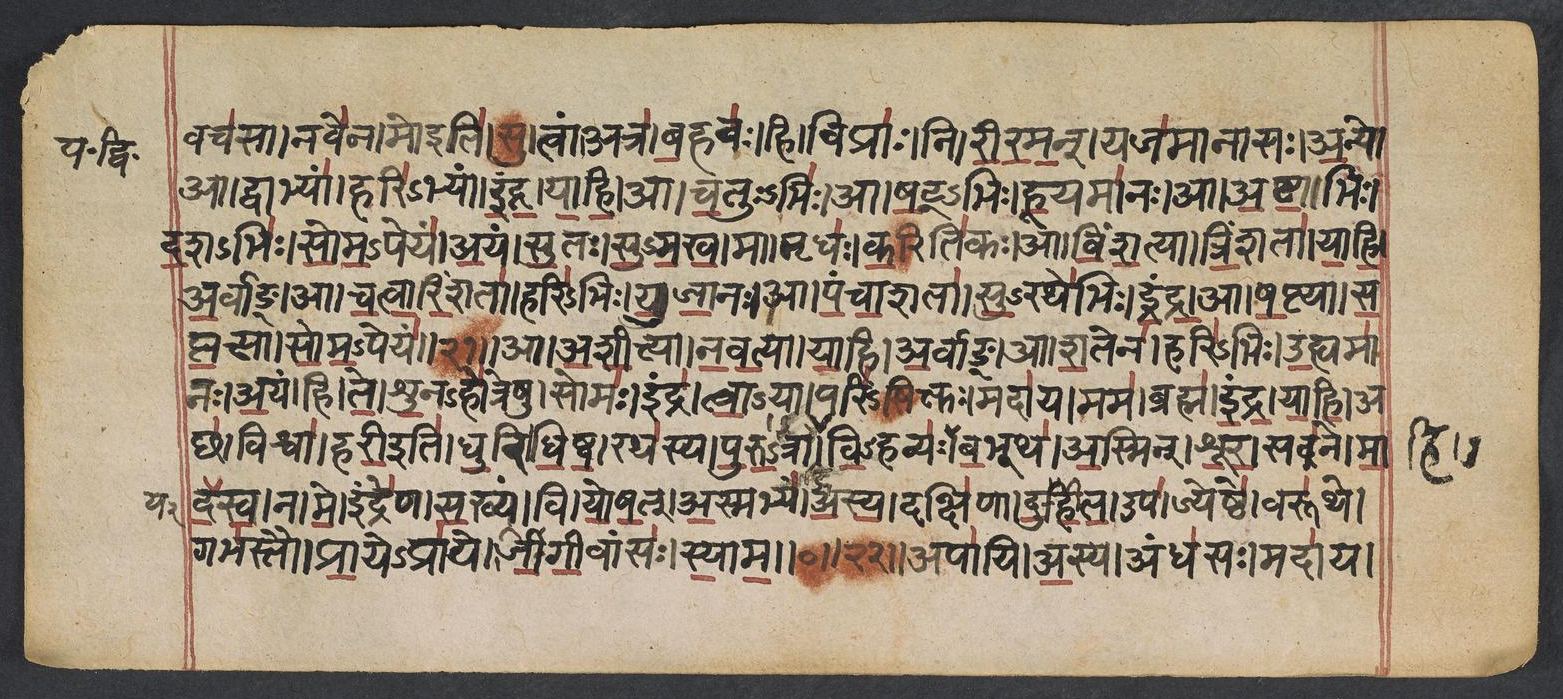
Where on the image
Penn Ms. Coll. 390 Item 41, fol. 163v (numbered 9v by the scribe) (OPenn image 165, upper leaf). Checked on the image: the Rigveda text on this page begins in RV 2.18.3 ‹vacasā navena mo iti›. The next page with Rigveda text, fol. 164r (numbered 10r by the scribe), begins in RV 2.19.1 ‹manīṣiṇaḥ suvānasya prayasaḥ yasm›. Verses 2.18.3-9 end on this page; 2.18.3 begins on fol. 163r (numbered 9r by the scribe).
3harī̱ nu ka̱ṁ ratha̱ indra̍sya yojam ā̱yai sū̱ktena̱ vaca̍sā̱ nave̍na | mo ṣu tvām atra̍ ba̱havo̱ hi viprā̱ ni rī̍rama̱n yaja̍mānāso a̱nye ||
4ā dvābhyā̱ṁ hari̍bhyām indra yā̱hy ā ca̱turbhi̱r ā ṣa̱ḍbhir hū̱yamā̍naḥ | āṣṭā̱bhir da̱śabhi̍ḥ soma̱peya̍m a̱yaṁ su̱taḥ su̍makha̱ mā mṛdha̍s kaḥ ||
5ā vi̍ṁśa̱tyā tri̱ṁśatā̍ yāhy a̱rvāṅ ā ca̍tvāri̱ṁśatā̱ hari̍bhir yujā̱naḥ | ā pa̍ñcā̱śatā̍ su̱rathe̍bhir i̱ndrā ṣa̱ṣṭyā sa̍pta̱tyā so̍ma̱peya̍m ||
6āśī̱tyā na̍va̱tyā yā̍hy a̱rvāṅ ā śa̱tena̱ hari̍bhir u̱hyamā̍naḥ | a̱yaṁ hi te̍ śu̱naho̍treṣu̱ soma̱ indra̍ tvā̱yā pari̍ṣikto̱ madā̍ya ||
7mama̱ brahme̍ndra yā̱hy acchā̱ viśvā̱ harī̍ dhu̱ri dhi̍ṣvā̱ ratha̍sya | pu̱ru̱trā hi vi̱havyo̍ ba̱bhūthā̱smiñ chū̍ra̱ sava̍ne mādayasva ||
8na ma̱ indre̍ṇa sa̱khyaṁ vi yo̍ṣad a̱smabhya̍m asya̱ dakṣi̍ṇā duhīta | upa̱ jyeṣṭhe̱ varū̍the̱ gabha̍stau prā̱ye-prā̍ye jigī̱vāṁsa̍ḥ syāma ||
9nū̱naṁ sā te̱ prati̱ vara̍ṁ jari̱tre du̍hī̱yad i̍ndra̱ dakṣi̍ṇā ma̱ghonī̍ | śikṣā̍ sto̱tṛbhyo̱ māti̍ dha̱g bhago̍ no bṛ̱had va̍dema vi̱dathe̍ su̱vīrā̍ḥ ||
Compare: Padapāṭha (word-by-word text written in the manuscript; Sansknet e-text via GRETIL)
3harī iti | nu | kam | rathe | indrasya | yojam | āyai | sūktena | vacasā | navena | mo iti | su | tvām | atra | bahavaḥ | hi | viprāḥ | ni | rīraman | yajamānāsaḥ | anye
4ā | dvābhyām | hari-bhyām | indra | yāhi | ā | catuḥ-bhiḥ | ā | ṣaṭ-bhiḥ | hūyamānaḥ | ā | aṣṭābhiḥ | daśa-bhiḥ | soma-peyam | ayam | sutaḥ | su-makha | mā | mṛdhaḥ | karitikaḥ
5ā | viṃśatyā | triṃśatā | yāhi | arvāṅ | ā | catvāriṃśatā | hari-bhiḥ | yujānaḥ | ā | pañcāśatā | su-rathebhiḥ | indra | ā | ṣaṣṭyā | saptatyā | soma-peyam
6ā | aśītyā | navatyā | yāhi | arvāṅ | ā | śatena | hari-bhiḥ | uhyamānaḥ | ayam | h i | te | śuna-hotreṣu | somaḥ | indra | tvāyā | pari-siktaḥ | madāya
7mama | brahma | indra | yāhi | accha | viśvā | harī iti | dhuri | dhiṣva | rathasya | puru-trā | hi | vi-havyaḥ | babhūtha | asmin | śūra | savane | mādayasva
8na | me | indreṇa | sakhyam | vi | yoṣat | asmabhyam | asya | dakṣiṇā | duhīta | upa | jyeṣṭhe | varūthe | gabhastau | prāye--prāye | jigīvāṃsaḥ | syāma
9nūnam | sā | te | prati | varam | jaritre | duhīyat | indra | dakṣiṇā | maghonī | śikṣa | stotṛ-bhyaḥ | mā | ati | dhak | bhagaḥ | naḥ | bṛhat | vadema | vidathe | su-vīrāḥ
3To Indra's car the Bay Steeds have I harnessed, that new well-spoken words may bring him hither. Here let not other worshippers detain thee, for among us are many holy singers.
4Indra, come hitherward with two Bay Coursers, come thou with four, with six when invocated. Come thou with eight, with ten, to drink the Soma. Here is the juice, brave Warrior: do not scorn it.
5O Indra, come thou hither having harnessed thy car with twenty, thirty, forty horses. Come thou with fifty well trained coursers, Indra, sixty or seventy, to drink the Soma.
6Come to us hitherward, O Indra, carried by eighty, ninety, or an hundred horses. This Soma juice among the Ṣunahotrâs hath been poured out, in love, to glad thee, Indra.
7To this my prayer, O Indra, come thou hither: bind to thy car's pole all thy two Bay Coursers. Thou art to be invoked in many places Hero, rejoice thyself in this libation.
8Ne'er be my love from Indra disunited still may his liberal Milch-cow yield us treasure. So may we under his supreme protection, safe in his arms, succeed in each forth-going.
9Now may that wealthy Cow Of thine, O Indra, give in return a boon to him who lauds thee. Give to thy praisers: let not fortune fail us. Loud may we speak, with heroes, in assembly.
Notes
- Sanskrit: Aufrecht's edition (1877) with the Vedic accents, as entered by van Nooten and Holland (GRETIL).
- English: Ralph T. H. Griffith, The Hymns of the Rigveda (1889-1892; 2nd ed. 1896-1897), from the VedaWeb digital text; OCR slips in that text were corrected against the printed 2nd edition (data/sources/rigveda/griffith_errata.json).
- Padapāṭha (edition text): Sansknet e-text via GRETIL (CC BY-NC-SA 4.0).
Cite
Sources
- Source: Penn Ms. Coll. 390 Item 41 (undated (catalogued with Penn's 18th-19th c. Vedic manuscripts)), OPenn, Public Domain Mark + Aufrecht's accented text (GRETIL) + Griffith's English (VedaWeb) (holding institution)
- Critical edition: Aufrecht (1877), accented e-text via GRETIL
← previous · → next · v cycle view · l back to library