Rigveda 2.19: To Indra
Introduction
Rigveda 2.19 is a hymn of 9 verses addressed to Indra. It stands in book (maṇḍala) 2, the family book of Gṛtsamada. The Rigveda is the oldest collection of Sanskrit hymns, composed in the second half of the second millennium BCE and handed down orally for many centuries before it was written down.
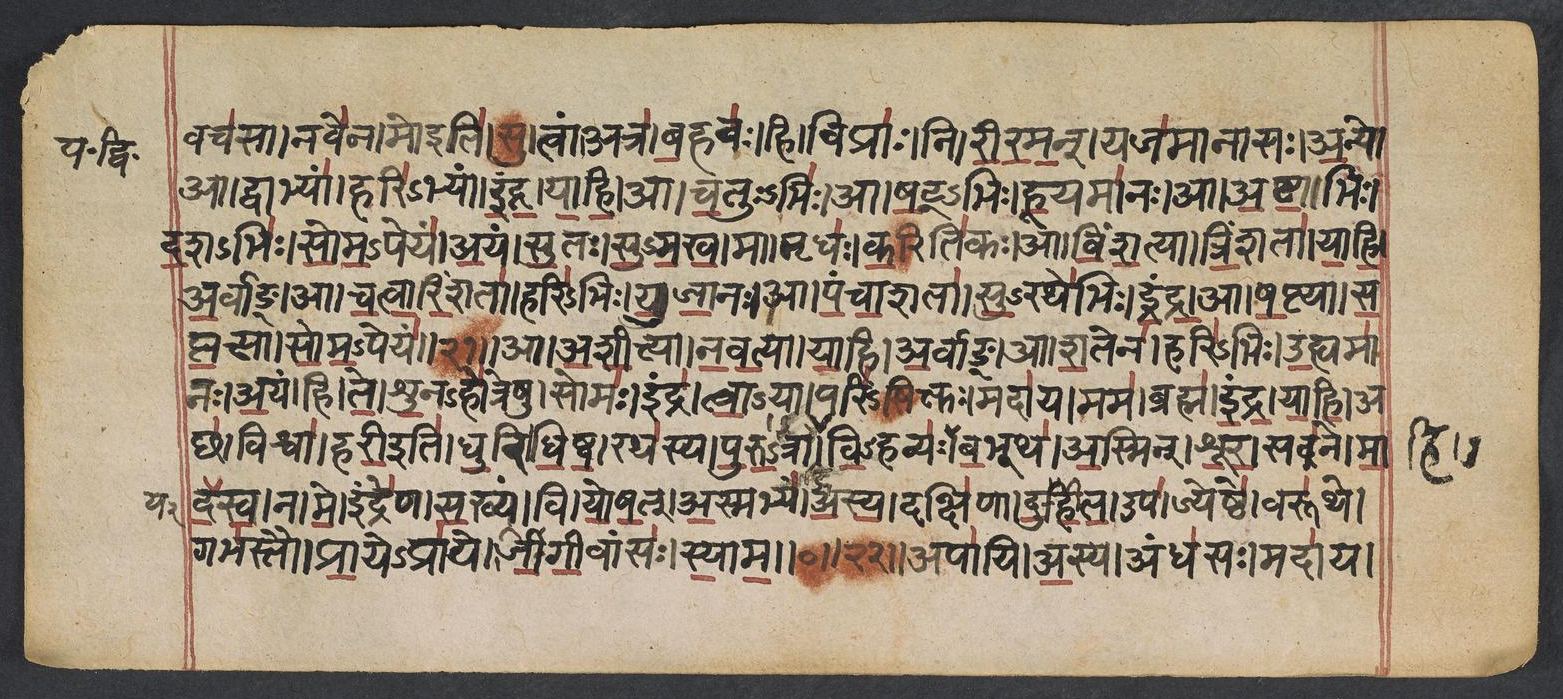
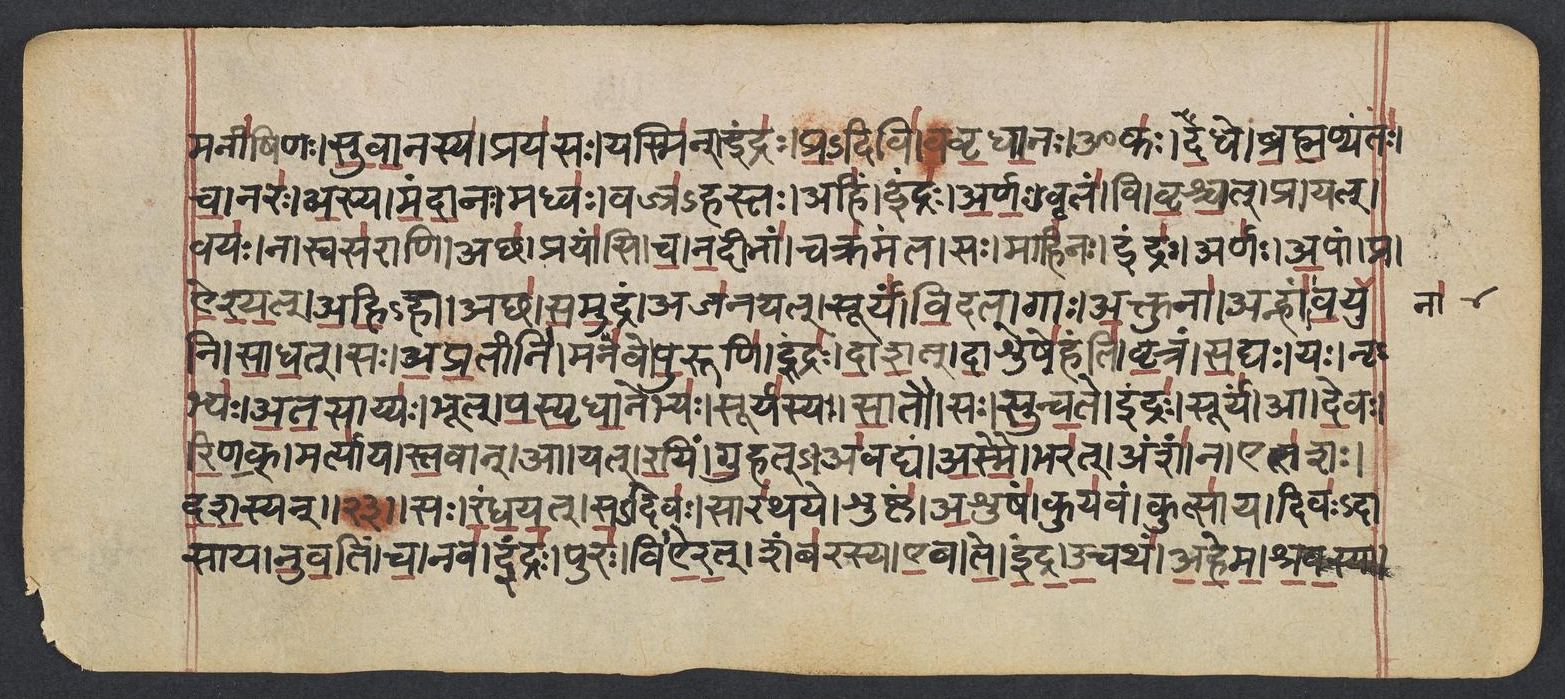
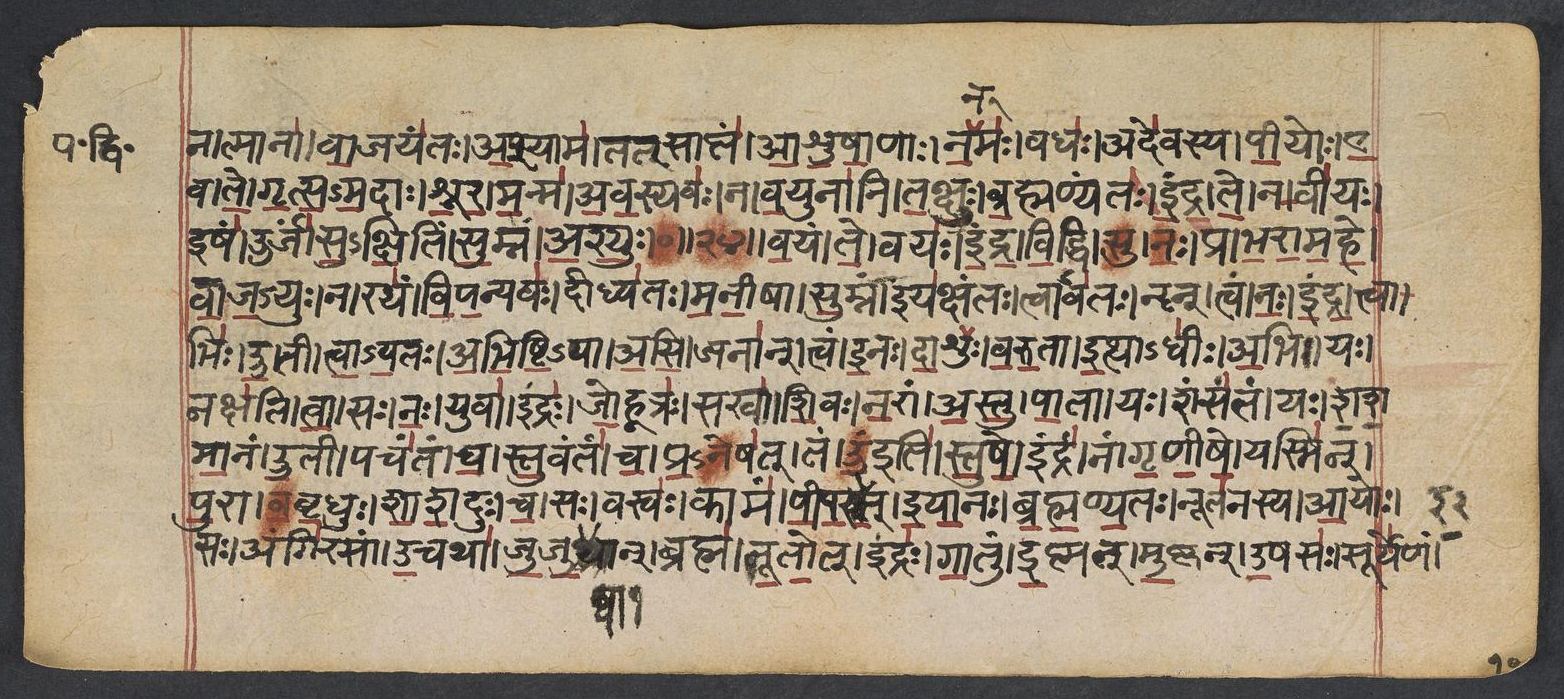
The manuscript shown is Penn Ms. Coll. 390 Item 41 (University of Pennsylvania), an undated paper manuscript of the padapāṭha (the word-by-word recitation text, in which every word is written separately and compounds are split) of the whole Ṛgveda in Devanāgarī, 884 leaves in fascicles, 7-9 lines to the page, accents in red; this hymn stands on fol. 163v-164v. Each section below gives the verses that end on one page; the page boundaries were read on the images (the opening words of every page), not counted out. Where the manuscript is a padapāṭha (the word-by-word recitation text), the section shows Aufrecht's continuous (saṃhitā) text first and, as the edition text, the padapāṭha of the same verses, which is the form written on the page.
How was this verified? (Provenance)
Where on the image
Penn Ms. Coll. 390 Item 41, fol. 164r (numbered 10r by the scribe) (OPenn image 165, lower leaf). Checked on the image: the Rigveda text on this page begins in RV 2.19.1 ‹manīṣiṇaḥ suvānasya prayasaḥ yasm›. The next page with Rigveda text, fol. 164v (numbered 10v by the scribe), begins in RV 2.19.7 ‹na tmanā vājayantaḥ aśyāma›. Verses 2.19.1-6 end on this page; 2.19.1 begins on fol. 163v (numbered 9v by the scribe).
1apā̍yy a̱syāndha̍so̱ madā̍ya̱ manī̍ṣiṇaḥ suvā̱nasya̱ praya̍saḥ | yasmi̱nn indra̍ḥ pra̱divi̍ vāvṛdhā̱na oko̍ da̱dhe bra̍hma̱ṇyanta̍ś ca̱ nara̍ḥ ||
2a̱sya ma̍ndā̱no madhvo̱ vajra̍ha̱sto 'hi̱m indro̍ arṇo̱vṛta̱ṁ vi vṛ̍ścat | pra yad vayo̱ na svasa̍rā̱ṇy acchā̱ prayā̍ṁsi ca na̱dīnā̱ṁ cakra̍manta ||
3sa māhi̍na̱ indro̱ arṇo̍ a̱pām praira̍yad ahi̱hācchā̍ samu̱dram | aja̍naya̱t sūrya̍ṁ vi̱dad gā a̱ktunāhnā̍ṁ va̱yunā̍ni sādhat ||
4so a̍pra̱tīni̱ mana̍ve pu̱rūṇīndro̍ dāśad dā̱śuṣe̱ hanti̍ vṛ̱tram | sa̱dyo yo nṛbhyo̍ ata̱sāyyo̱ bhūt pa̍spṛdhā̱nebhya̱ḥ sūrya̍sya sā̱tau ||
5sa su̍nva̱ta indra̱ḥ sūrya̱m ā de̱vo ri̍ṇa̱ṅ martyā̍ya sta̱vān | ā yad ra̱yiṁ gu̱hada̍vadyam asmai̱ bhara̱d aṁśa̱ṁ naita̍śo daśa̱syan ||
6sa ra̍ndhayat sa̱diva̱ḥ sāra̍thaye̱ śuṣṇa̍m a̱śuṣa̱ṁ kuya̍va̱ṁ kutsā̍ya | divo̍dāsāya nava̱tiṁ ca̱ navendra̱ḥ puro̱ vy ai̍ra̱c chamba̍rasya ||
Compare: Padapāṭha (word-by-word text written in the manuscript; Sansknet e-text via GRETIL)
1apāyi | asya | andhasaḥ | madāya | manīṣiṇaḥ | suvānasya | prayasaḥ | yasm in | indraḥ | pra-divi | vavṛdhānaḥ | okaḥ | dadhe | brahmaṇyantaḥ | ca | naraḥ
2asya | mandānaḥ | madhvaḥ | vajra-hastaḥ | ahim | indraḥ | arṇaḥ-vṛtam | vi | vṛścat | pra | yat | vayaḥ | na | svasarāṇi | accha | prayāṃsi | ca | nadīnām | cakramanta
3saḥ | māhinaḥ | indraḥ | arṇaḥ | apām | pra | airayat | ahi-hā | accha | samudram | ajanayat | sūryam | vidat | gāḥ | aktunā | ahnām | vayunāni | sādhat
4saḥ | apratīni | manave | purūṇi | indraḥ | dāśat | dāśuṣe | hanti | vṛtram | sadyaḥ | yaḥ | nṛ-bhyaḥ | atasāyyaḥ | bhūt | paspṛdhānebhyaḥ | sūryasya | sātau
5saḥ | sunvate | indraḥ | sūryam | ā | devaḥ | riṇak | martyāya | stavān | ā | yat | rayim | ghat-avadyam | asmai | bharat | aṃśam | na | etaśaḥ | daśasyan
6saḥ | randhayat | sa-divaḥ | sārathaye | śuṣṇam | aśuṣam | kuyavam | kutsāya | d ivaḥ-dāsāya | navatim | ca | nava | indraḥ | puraḥ | vi | airat | śambarasya
1DRAUGHTS of this sweet juice have been drunk for rapture, of the wise Soma-presser's offered dainty, Wherein, grown mighty in the days aforetime, Indra hath found delight, and men who worship.
2Cheered by this meath Indra, whose hand wields thunder, rent piecemeal Ahi who barred up the waters, So that the quickening currents of the rivers flowed forth like birds unto their resting-places.
3Indra, this Mighty One, the Dragon's slayer, sent forth the flood of waters to the ocean. He gave the Sun his life, he found the cattle, and with the night the works of days completed.
4To him who worshippeth hath Indra given many and matchless gifts. He slayeth Vr̥itra. Straight was he to be sought with supplications by men who struggled to obtain the sunlight.
5To him who poured him gifts he gave up Sûrya,– Indra, the God, the Mighty, to the mortal; For Etaṣa with worship brought him riches that keep distress afar, as 'twere his portion.
6Once to the driver of his chariot, Kutsa, he gave up greedy Sûrya, plague of harvest; And Indra, for the sake of Divodâsa demolished Ṣambara's nine-and-ninety castles.
Where on the image
Penn Ms. Coll. 390 Item 41, fol. 164v (numbered 10v by the scribe) (OPenn image 166, upper leaf). Checked on the image: the Rigveda text on this page begins in RV 2.19.7 ‹na tmanā vājayantaḥ aśyāma›. The next page with Rigveda text, fol. 165r (numbered 11r by the scribe), begins in RV 2.20.5 ‹stavān aśnasya cit śiśnathat›. Verses 2.19.7-9 end on this page; 2.19.7 begins on fol. 164r (numbered 10r by the scribe).
7e̱vā ta̍ indro̱catha̍m ahema śrava̱syā na tmanā̍ vā̱jaya̍ntaḥ | a̱śyāma̱ tat sāpta̍m āśuṣā̱ṇā na̱namo̱ vadha̱r ade̍vasya pī̱yoḥ ||
8e̱vā te̍ gṛtsama̱dāḥ śū̍ra̱ manmā̍va̱syavo̱ na va̱yunā̍ni takṣuḥ | bra̱hma̱ṇyanta̍ indra te̱ navī̍ya̱ iṣa̱m ūrja̍ṁ sukṣi̱tiṁ su̱mnam a̍śyuḥ ||
9nū̱naṁ sā te̱ prati̱ vara̍ṁ jari̱tre du̍hī̱yad i̍ndra̱ dakṣi̍ṇā ma̱ghonī̍ | śikṣā̍ sto̱tṛbhyo̱ māti̍ dha̱g bhago̍ no bṛ̱had va̍dema vi̱dathe̍ su̱vīrā̍ḥ ||
Compare: Padapāṭha (word-by-word text written in the manuscript; Sansknet e-text via GRETIL)
7eva | te | indra | ucatham | ahema | śravasyā | na | tmanā | vājayantaḥ | aśyāma | tat | sāptam | āśuṣāṇāḥ | nanamaḥ | vadhaḥ | adevasya | pīyoḥ
8eva | te | gṛtsa-madāḥ | śūra | manma | avasyavaḥ | na | vayunāni | takṣuḥ | brahmaṇyantaḥ | indra | te | navīyaḥ | iṣam | ūrjam | su-kṣitim | sumnam | aśyuḥ
9nūnam | sā | te | prati | varam | jaritre | duhīyat | indra | dakṣiṇā | maghonī | śikṣa | stotṛ-bhyaḥ | mā | ati | dhak | bhagaḥ | naḥ | bṛhat | vadema | vidathe | su-vīrāḥ
7So have we brought our hymn to thee, O Indra, strengthening thee and fain ourselves for glory. May we with best endeavours gain this friendship, and mayst thou bend the godless scorner's weapons.
8Thus the Gr̥itsamadas for thee, O Hero, have wrought their hymn and task as seeking favour. May they who worship thee afresh, O Indra, gain food and strength, bliss, and a happy dwelling.
9Now may that wealthy Cow of thine, O Indra, give in return a boon to him who lauds thee, Give to thy praisers: let not fortune fail us. Loud may we speak, with heroes, in assembly.
Notes
- Sanskrit: Aufrecht's edition (1877) with the Vedic accents, as entered by van Nooten and Holland (GRETIL).
- English: Ralph T. H. Griffith, The Hymns of the Rigveda (1889-1892; 2nd ed. 1896-1897), from the VedaWeb digital text; OCR slips in that text were corrected against the printed 2nd edition (data/sources/rigveda/griffith_errata.json).
- Padapāṭha (edition text): Sansknet e-text via GRETIL (CC BY-NC-SA 4.0).
Cite
Sources
- Source: Penn Ms. Coll. 390 Item 41 (undated (catalogued with Penn's 18th-19th c. Vedic manuscripts)), OPenn, Public Domain Mark + Aufrecht's accented text (GRETIL) + Griffith's English (VedaWeb) (holding institution)
- Critical edition: Aufrecht (1877), accented e-text via GRETIL
← previous · → next · v cycle view · l back to library