Rigveda 2.20: To Indra
Introduction
Rigveda 2.20 is a hymn of 9 verses addressed to Indra. It stands in book (maṇḍala) 2, the family book of Gṛtsamada. The Rigveda is the oldest collection of Sanskrit hymns, composed in the second half of the second millennium BCE and handed down orally for many centuries before it was written down.
The manuscript shown is Penn Ms. Coll. 390 Item 41 (University of Pennsylvania), an undated paper manuscript of the padapāṭha (the word-by-word recitation text, in which every word is written separately and compounds are split) of the whole Ṛgveda in Devanāgarī, 884 leaves in fascicles, 7-9 lines to the page, accents in red; this hymn stands on fol. 164v-165r. Each section below gives the verses that end on one page; the page boundaries were read on the images (the opening words of every page), not counted out. Where the manuscript is a padapāṭha (the word-by-word recitation text), the section shows Aufrecht's continuous (saṃhitā) text first and, as the edition text, the padapāṭha of the same verses, which is the form written on the page.
How was this verified? (Provenance)
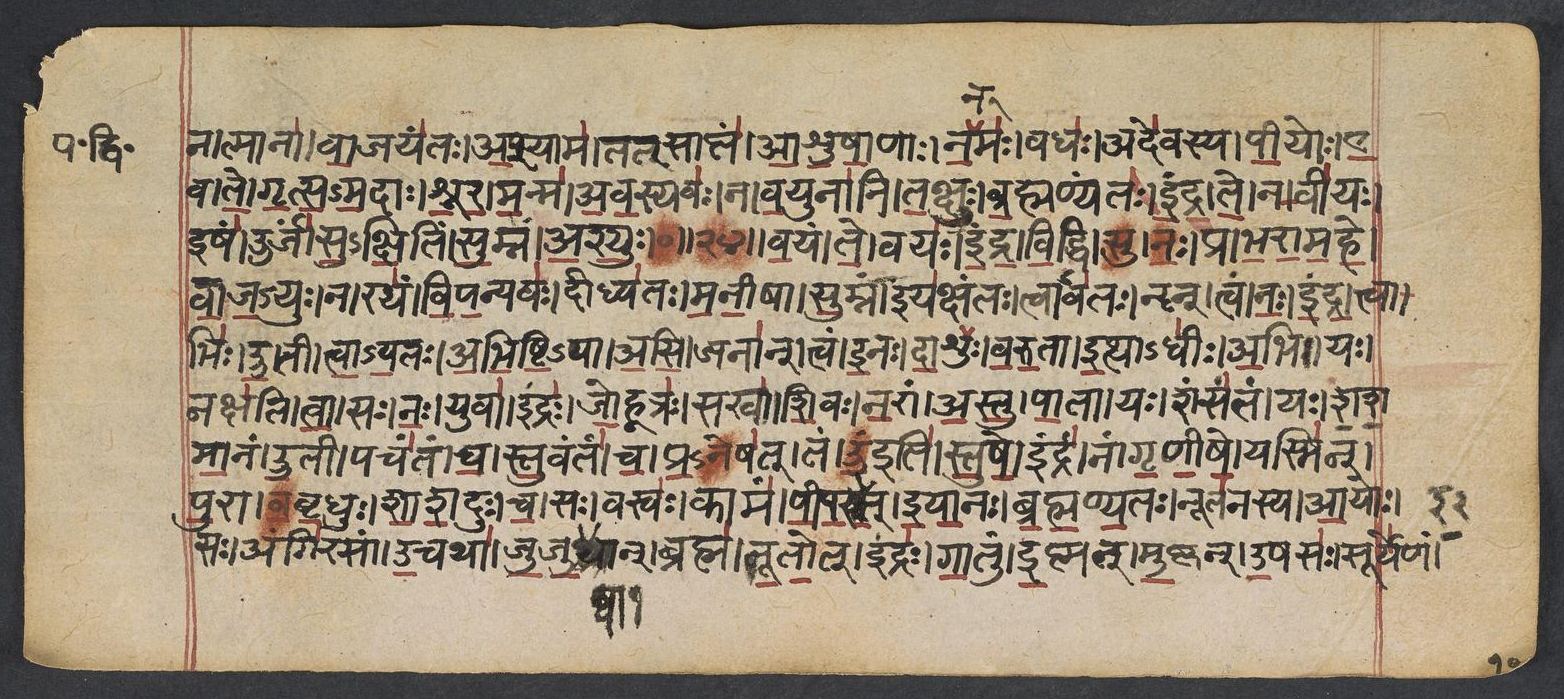
Where on the image
Penn Ms. Coll. 390 Item 41, fol. 164v (numbered 10v by the scribe) (OPenn image 166, upper leaf). Checked on the image: the Rigveda text on this page begins in RV 2.19.7 ‹na tmanā vājayantaḥ aśyāma›. The next page with Rigveda text, fol. 165r (numbered 11r by the scribe), begins in RV 2.20.5 ‹stavān aśnasya cit śiśnathat›. Verses 2.20.1-4 end on this page.
1va̱yaṁ te̱ vaya̍ indra vi̱ddhi ṣu ṇa̱ḥ pra bha̍rāmahe vāja̱yur na ratha̍m | vi̱pa̱nyavo̱ dīdhya̍to manī̱ṣā su̱mnam iya̍kṣanta̱s tvāva̍to̱ nṝn ||
2tvaṁ na̍ indra̱ tvābhi̍r ū̱tī tvā̍ya̱to a̍bhiṣṭi̱pāsi̱ janā̍n | tvam i̱no dā̱śuṣo̍ varū̱tetthādhī̍r a̱bhi yo nakṣa̍ti tvā ||
3sa no̱ yuvendro̍ jo̱hūtra̱ḥ sakhā̍ śi̱vo na̱rām a̍stu pā̱tā | yaḥ śaṁsa̍nta̱ṁ yaḥ śa̍śamā̱nam ū̱tī paca̍ntaṁ ca stu̱vanta̍ṁ ca pra̱ṇeṣa̍t ||
4tam u̍ stuṣa̱ indra̱ṁ taṁ gṛ̍ṇīṣe̱ yasmi̍n pu̱rā vā̍vṛ̱dhuḥ śā̍śa̱duś ca̍ | sa vasva̱ḥ kāma̍m pīparad iyā̱no bra̍hmaṇya̱to nūta̍nasyā̱yoḥ ||
Compare: Padapāṭha (word-by-word text written in the manuscript; Sansknet e-text via GRETIL)
1vayam | te | vayaḥ | indra | viddhi | su | ṇaḥ | pra | bharāmahe | vāja-yuḥ | na | ratham | vipanyavaḥ | dīdhyataḥ | manīṣā | sumnam | iyakṣantaḥ | tvāvataḥ | nṝn
2tvam | naḥ | indra | tvābhiḥ | ūtī | tvāyataḥ | abhiṣṭi-pā | asi | janān | tvam | inaḥ | dāśuṣaḥ | varūtā | itthādhīḥ | abhi | yaḥ | nakṣati | tvā
3saḥ | naḥ | yuvā | indraḥ | johūtraḥ | sakhā | śivaḥ | narām | astu | pātā | yaḥ | śaṃsantam | yaḥ | śaśamānam | ūtī | pacantam | ca | stuvantam | ca | pra-neṣat
4tam | oṃ iti | stuṣe | indram | tam | gṛṇīṣe | yasmin | purā | vavṛdhuḥ | śāśaduḥ | ca | saḥ | vasvaḥ | kāmam | pīparat | iyānaḥ | brahmaṇyataḥ | nūtanasya | āyoḥ
1As one brings forth his car when fain for combat, so bring we power to thee- regard us, Indra- Well skilled in song, thoughtful in spirit, seeking great bliss from one like thee amid the Heroes.
2Indra, thou art our own with thy protection, a guardian near to men who love thee truly, Active art thou, the liberal man's defender, his who draws near to thee with right devotion.
3May Indra, called with solemn invocations. the young, the Friend, be men's auspicious keeper, One who will further with his aid the singer, the toiler, praiser, dresser of oblations.
4With laud and song let me extol that Indra in whom of old men prospered and were mighty. May he, implored, fulfil the prayer for plenty of him who worships, of the living mortal.
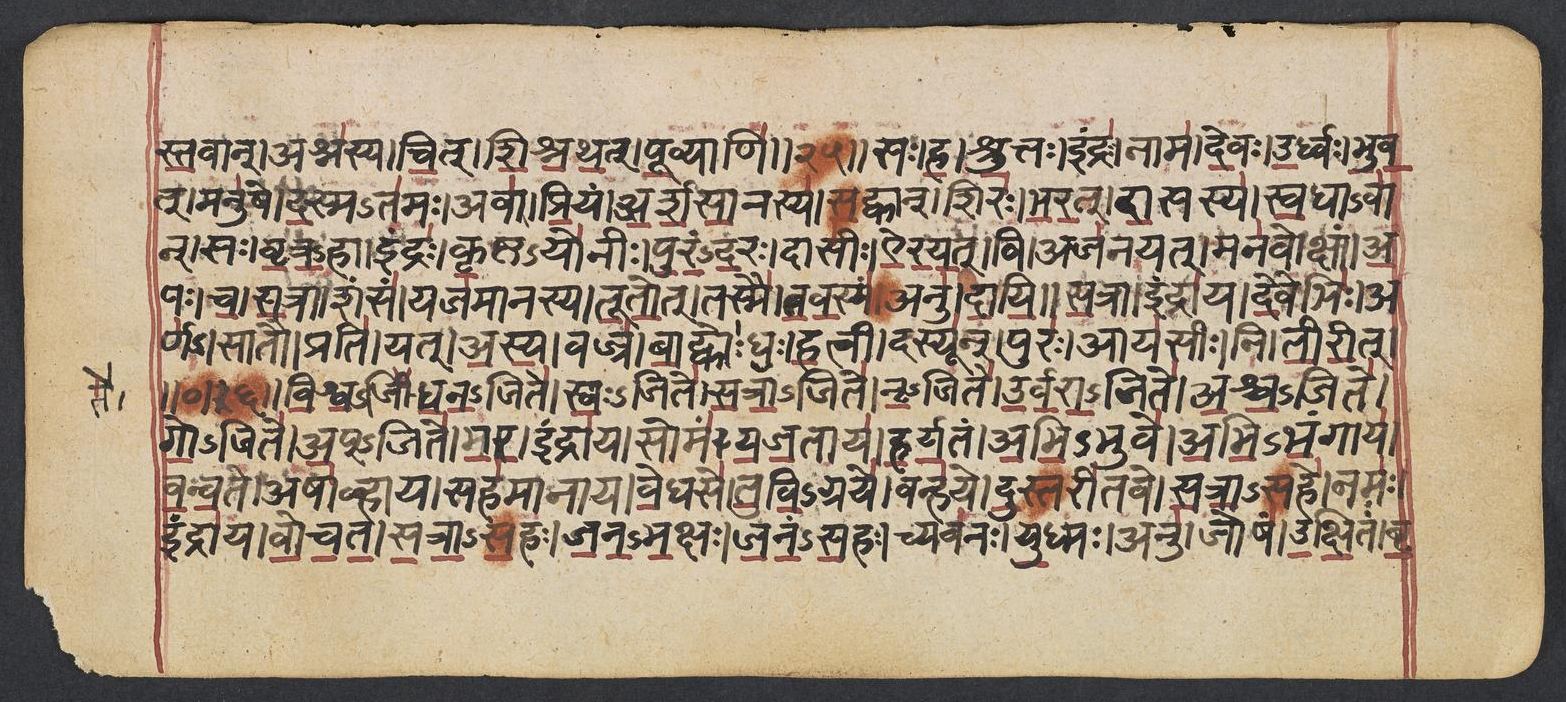
Where on the image
Penn Ms. Coll. 390 Item 41, fol. 165r (numbered 11r by the scribe) (OPenn image 166, lower leaf). Checked on the image: the Rigveda text on this page begins in RV 2.20.5 ‹stavān aśnasya cit śiśnathat›. The next page with Rigveda text, fol. 165v (numbered 11v by the scribe), begins in RV 2.21.3 ‹-vṛtam-cayaḥ sahuriḥ vikṣu āritaḥ›. Verses 2.20.5-9 end on this page; 2.20.5 begins on fol. 164v (numbered 10v by the scribe).
5so aṅgi̍rasām u̱cathā̍ juju̱ṣvān brahmā̍ tūto̱d indro̍ gā̱tum i̱ṣṇan | mu̱ṣṇann u̱ṣasa̱ḥ sūrye̍ṇa sta̱vān aśna̍sya cic chiśnathat pū̱rvyāṇi̍ ||
6sa ha̍ śru̱ta indro̱ nāma̍ de̱va ū̱rdhvo bhu̍va̱n manu̍ṣe da̱smata̍maḥ | ava̍ pri̱yam a̍rśasā̱nasya̍ sā̱hvāñ chiro̍ bharad dā̱sasya̍ sva̱dhāvā̍n ||
7sa vṛ̍tra̱hendra̍ḥ kṛ̱ṣṇayo̍nīḥ puraṁda̱ro dāsī̍r airaya̱d vi | aja̍naya̱n mana̍ve̱ kṣām a̱paś ca̍ sa̱trā śaṁsa̱ṁ yaja̍mānasya tūtot ||
8tasmai̍ tava̱sya1̱̍m anu̍ dāyi sa̱trendrā̍ya de̱vebhi̱r arṇa̍sātau | prati̱ yad a̍sya̱ vajra̍m bā̱hvor dhur ha̱tvī dasyū̱n pura̱ āya̍sī̱r ni tā̍rīt ||
9nū̱naṁ sā te̱ prati̱ vara̍ṁ jari̱tre du̍hī̱yad i̍ndra̱ dakṣi̍ṇā ma̱ghonī̍ | śikṣā̍ sto̱tṛbhyo̱ māti̍ dha̱g bhago̍ no bṛ̱had va̍dema vi̱dathe̍ su̱vīrā̍ḥ ||
Compare: Padapāṭha (word-by-word text written in the manuscript; Sansknet e-text via GRETIL)
5saḥ | aṅgirasām | ucathā | jujuṣvān | brahmā | tūtot | indraḥ | gātum | iṣṇan | muṣṇan | uṣasaḥ | sūryeṇa | stavān | aśnasya | cit | śiśnathat | pūrvyāṇi
6saḥ | ha | śṛutaḥ | indraḥ | nāma | devaḥ | ūrdhvaḥ | bhuvan | manuṣe | dasma-tamaḥ | ava | priyam | arśasānasya | śāhvān | śiraḥ | bharat | dāsasya | svadhāvān
7saḥ | vṛtra-hā | indraḥ | kṛṣṇa-yonīḥ | puram-daraḥ | dāsīḥ | airayat | vi | ajanayan | manave | kṣāma-paḥ | ca | satrā | śaṃsam | yajamānasya | tūtot
8tasmai | tavasyam | anu | dāyi | satrā | indrāya | devebhiḥ | arṇa-sātau | prati | yat | asya | vajram | bāhvoḥ | dhuḥ | hatvī | dasyūn | puraḥ | āyasīḥ | ni | tārīt
9nūnam | sā | te | prati | varam | jaritre | duhīyat | indra | dakṣiṇā | maghonī | śikṣa | stotṛ-bhyaḥ | mā | ati | dhak | bhagaḥ | naḥ | bṛhat | vadema | vidathe | su-vīrāḥ
5He, Indra whom the Angirases' praise delighted, strengthened their prayer and made their goings prosper. Stealing away the mornings with the sunlight, he, lauded, crushed even Aṣna's ancient powers.
6He verily, the God, the glorious Indra, hath raised him up for man, best Wonder-Worker. He, self-reliant, mighty and triumphant, brought low the dear head of the wicked Dâsa.
7Indra theVr̥itra-slayer, Fort-destroyer, scattered the Dâsa hosts who dwelt in darkness. For man hath he created earth and waters, and ever helped the prayer of him who worships.
8To him in might the Gods have ever yielded, to Indra in the tumult of thebattle. When in his arms they laid the bolt, he slaughtered the Dasyus and cast down their forts of iron.
9Now may that wealthy Cow of thine, O Indra, give in return a boon to him who lauds thee. Give to thy praisers: let not fortune fail us. Loud may we speak, with heroes, in assembly.
Notes
- Sanskrit: Aufrecht's edition (1877) with the Vedic accents, as entered by van Nooten and Holland (GRETIL).
- English: Ralph T. H. Griffith, The Hymns of the Rigveda (1889-1892; 2nd ed. 1896-1897), from the VedaWeb digital text; OCR slips in that text were corrected against the printed 2nd edition (data/sources/rigveda/griffith_errata.json).
- Padapāṭha (edition text): Sansknet e-text via GRETIL (CC BY-NC-SA 4.0).
Cite
Sources
- Source: Penn Ms. Coll. 390 Item 41 (undated (catalogued with Penn's 18th-19th c. Vedic manuscripts)), OPenn, Public Domain Mark + Aufrecht's accented text (GRETIL) + Griffith's English (VedaWeb) (holding institution)
- Critical edition: Aufrecht (1877), accented e-text via GRETIL
← previous · → next · v cycle view · l back to library