Rigveda 2.3: Apri hymn
Introduction
Rigveda 2.3 is a hymn of 11 verses addressed to Apri hymn. It stands in book (maṇḍala) 2, the family book of Gṛtsamada. The Rigveda is the oldest collection of Sanskrit hymns, composed in the second half of the second millennium BCE and handed down orally for many centuries before it was written down.
The manuscript shown is Penn Ms. Coll. 390 Item 41 (University of Pennsylvania), an undated paper manuscript of the padapāṭha (the word-by-word recitation text, in which every word is written separately and compounds are split) of the whole Ṛgveda in Devanāgarī, 884 leaves in fascicles, 7-9 lines to the page, accents in red; this hymn stands on fol. 151v-152v. Each section below gives the verses that end on one page; the page boundaries were read on the images (the opening words of every page), not counted out. Where the manuscript is a padapāṭha (the word-by-word recitation text), the section shows Aufrecht's continuous (saṃhitā) text first and, as the edition text, the padapāṭha of the same verses, which is the form written on the page.
How was this verified? (Provenance)
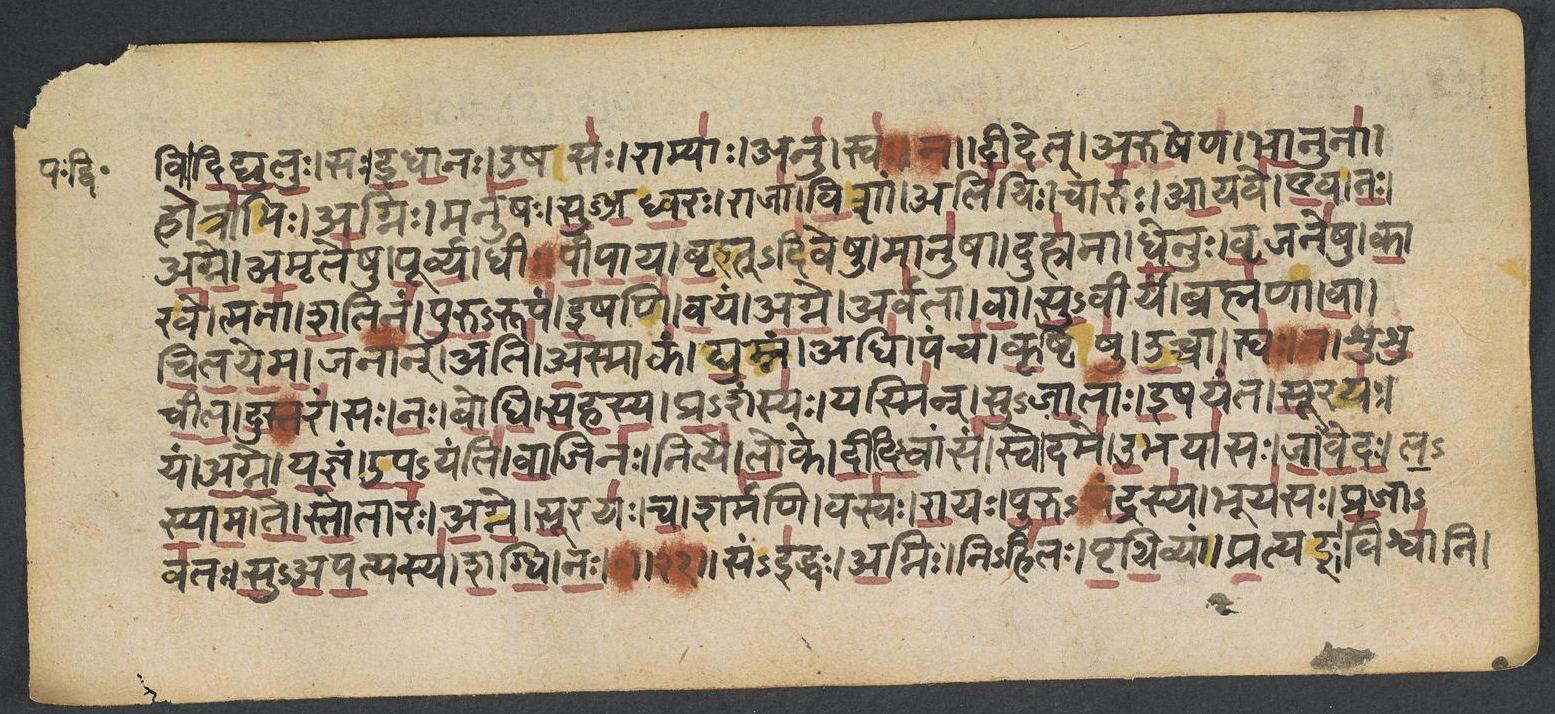
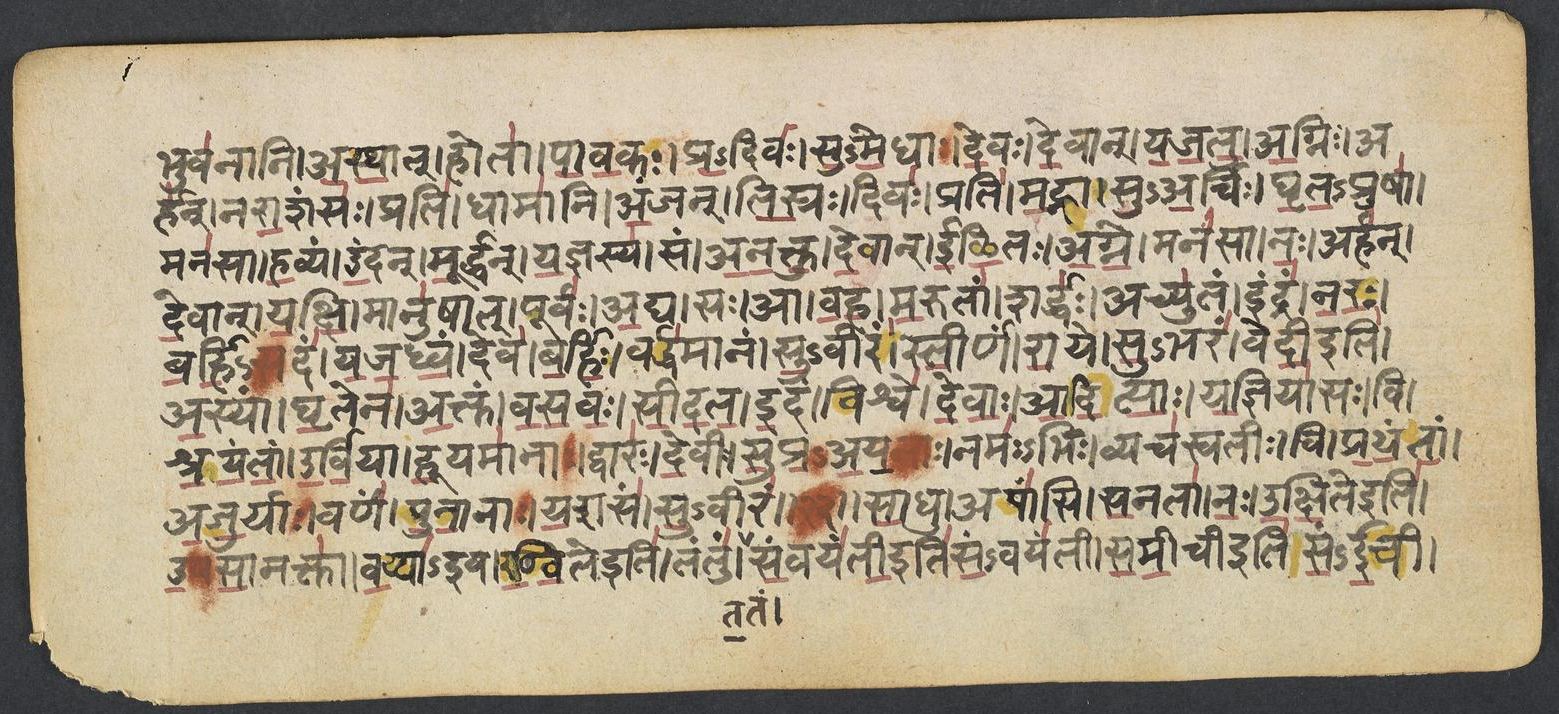
Where on the image
Penn Ms. Coll. 390 Item 41, fol. 152r (numbered 10r by the scribe) (OPenn image 153, lower leaf). Checked on the image: the Rigveda text on this page begins in RV 2.3.1 ‹bhuvanāni asthāt hotā pāvakaḥ›. The next page with Rigveda text, fol. 152v (numbered 10v by the scribe), begins in RV 2.3.6 ‹yajñasya peśaḥ sudugheitisu-dughe payasvatī›. Verses 2.3.1-5 end on this page; 2.3.1 begins on fol. 151v (numbered 9v by the scribe).
1sami̍ddho a̱gnir nihi̍taḥ pṛthi̱vyām pra̱tyaṅ viśvā̍ni̱ bhuva̍nāny asthāt | hotā̍ pāva̱kaḥ pra̱diva̍ḥ sume̱dhā de̱vo de̱vān ya̍jatv a̱gnir arha̍n ||
2narā̱śaṁsa̱ḥ prati̱ dhāmā̍ny a̱ñjan ti̱sro diva̱ḥ prati̍ ma̱hnā sva̱rciḥ | ghṛ̱ta̱pruṣā̱ mana̍sā ha̱vyam u̱ndan mū̱rdhan ya̱jñasya̱ sam a̍naktu de̱vān ||
3ī̱ḻi̱to a̍gne̱ mana̍sā no̱ arha̍n de̱vān ya̍kṣi̱ mānu̍ṣā̱t pūrvo̍ a̱dya | sa ā va̍ha ma̱rutā̱ṁ śardho̱ acyu̍ta̱m indra̍ṁ naro barhi̱ṣada̍ṁ yajadhvam ||
4deva̍ barhi̱r vardha̍mānaṁ su̱vīra̍ṁ stī̱rṇaṁ rā̱ye su̱bhara̱ṁ vedy a̱syām | ghṛ̱tenā̱ktaṁ va̍savaḥ sīdate̱daṁ viśve̍ devā ādityā ya̱jñiyā̍saḥ ||
5vi śra̍yantām urvi̱yā hū̱yamā̍nā̱ dvāro̍ de̱vīḥ su̍prāya̱ṇā namo̍bhiḥ | vyaca̍svatī̱r vi pra̍thantām aju̱ryā varṇa̍m punā̱nā ya̱śasa̍ṁ su̱vīra̍m ||
Compare: Padapāṭha (word-by-word text written in the manuscript; Sansknet e-text via GRETIL)
1sam-iddhaḥ | agniḥ | ni-hitaḥ | pṛthivyām | pratyaṅ | viśvāni | bhuvanāni | asthāt | hotā | pāvakaḥ | pra-divaḥ | su-medhāḥ | devaḥ | devān | yajatu | agniḥ | arhan
2narāśaṃsaḥ | prati | dhāmāni | añjan | tisraḥ | divaḥ | prati | mahnā | su-arci ḥ | ghṛta-pruṣā | manasā | havyam | undan | mūrdhan | yajñasya | sam | anaktu | devān
3īḷitaḥ | agne | manasā | naḥ | arhan | devān | yakṣi | mānuṣāt | pūrvaḥ | adya | saḥ | ā | vaha | marutām | śardhaḥ | acyutam | indram | naraḥ | barhi-sadam | yajadhvam
4deva | barhiḥ | vardhamānam | su-vīram | stīrṇam | rāye | su-bharam | vedī iti | asyām | ghṛtena | aktam | vasavaḥ | sīdata | idam | viśve | devāḥ | ādityāḥ | yajñiyāsaḥ
5vi | śrayantām | urviyā | hūyamānāḥ | dvāraḥ | devīḥ | supra-ayanāḥ | namaḥ-bhiḥ | vyacasvatīḥ | vi | prathantām | ajuryāḥ | varṇam | punānāḥ | yaśasam | su-vīram
1AGNI is set upon the earth well kindled; he standeth in the presence of all beings. Wise, ancient, God, the Priest and Purifier, let Agni serve the Gods for he is worthy.
2May Narâṣansa lighting up the chambers, bright in his majesty through threefold heaven, Steeping the gift with oil diffusing purpose, bedew the Gods at chiefest time of worship.
3Adored in heart, as is thy right, O Agni, serve the Gods first to-day before the mortal. Bring thou the Marut host. Ye men do worship to Indra seated on the grass, eternal.
4O Grass divine, increasing, rich in heroes, strewn for wealth' sake, well laid upon this altar,– On this bedewed with oil sit ye, O Vasus, sit all ye Gods, ye Holy, ye Âdityas.
5Wide be the Doors, the Goddesses, thrown open, easy to pass, invoked, through adorations, Let them unfold, expansive, everlasting, that sanctify the class famed, rich in heroes.
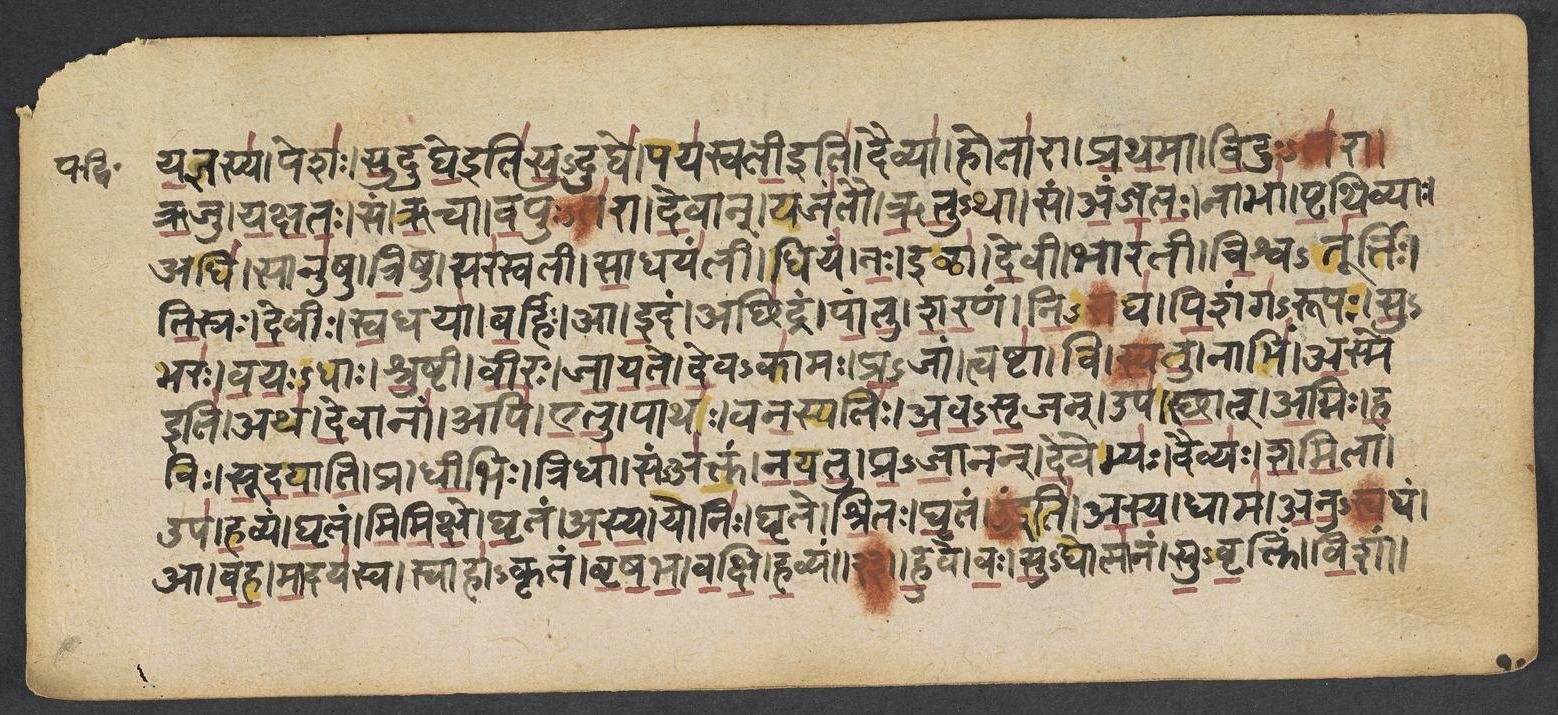
Where on the image
Penn Ms. Coll. 390 Item 41, fol. 152v (numbered 10v by the scribe) (OPenn image 154, upper leaf). Checked on the image: the Rigveda text on this page begins in RV 2.3.6 ‹yajñasya peśaḥ sudugheitisu-dughe payasvatī›. The next page with Rigveda text, fol. 153r (numbered 11r by the scribe), begins in RV 2.4.1 ‹agnim atithim su-prayasam m›. Verses 2.3.6-11 end on this page; 2.3.6 begins on fol. 152r (numbered 10r by the scribe).
6sā̱dhv apā̍ṁsi sa̱natā̍ na ukṣi̱te u̱ṣāsā̱naktā̍ va̱yye̍va raṇvi̱te | tantu̍ṁ ta̱taṁ sa̱ṁvaya̍ntī samī̱cī ya̱jñasya̱ peśa̍ḥ su̱dughe̱ paya̍svatī ||
7daivyā̱ hotā̍rā pratha̱mā vi̱duṣṭa̍ra ṛ̱ju ya̍kṣata̱ḥ sam ṛ̱cā va̱puṣṭa̍rā | de̱vān yaja̍ntāv ṛtu̱thā sam a̍ñjato̱ nābhā̍ pṛthi̱vyā adhi̱ sānu̍ṣu tri̱ṣu ||
8sara̍svatī sā̱dhaya̍ntī̱ dhiya̍ṁ na̱ iḻā̍ de̱vī bhāra̍tī vi̱śvatū̍rtiḥ | ti̱sro de̱vīḥ sva̱dhayā̍ ba̱rhir edam acchi̍dram pāntu śara̱ṇaṁ ni̱ṣadya̍ ||
9pi̱śaṅga̍rūpaḥ su̱bharo̍ vayo̱dhāḥ śru̱ṣṭī vī̱ro jā̍yate de̱vakā̍maḥ | pra̱jāṁ tvaṣṭā̱ vi ṣya̍tu̱ nābhi̍m a̱sme athā̍ de̱vānā̱m apy e̍tu̱ pātha̍ḥ ||
10vana̱spati̍r avasṛ̱jann upa̍ sthād a̱gnir ha̱viḥ sū̍dayāti̱ pra dhī̱bhiḥ | tridhā̱ sama̍ktaṁ nayatu prajā̱nan de̱vebhyo̱ daivya̍ḥ śami̱topa̍ ha̱vyam ||
11ghṛ̱tam mi̍mikṣe ghṛ̱tam a̍sya̱ yoni̍r ghṛ̱te śri̱to ghṛ̱tam v a̍sya̱ dhāma̍ | a̱nu̱ṣva̱dham ā va̍ha mā̱daya̍sva̱ svāhā̍kṛtaṁ vṛṣabha vakṣi ha̱vyam ||
Compare: Padapāṭha (word-by-word text written in the manuscript; Sansknet e-text via GRETIL)
6sādhu | apāṃsi | sanatā | naḥ | ukṣite iti | uṣasānaktā | vayyāiva | raṇvite iti | tantum | tatam | saṃvayantī itisam-vayantī | samīcī itisam-īcī | yajñasya | peśaḥ | sudugheitisu-dughe | payasvatī iti
7daivyā | hotārā | prathamā | viduḥ-tarā | ṛju | yakṣataḥ | sam | ṛcā | vapuḥ-tarā | devān | yajantau | ṛtu-thā | sam | añjataḥ | nābhā | pṛthivyāḥ | adhi | sānuṣu | triṣu
8sarasvatī | sādhayantī | dhiyam | naḥ | iḷā | devī | bhāratī | viśva-tūrtiḥ | tisraḥ | devīḥ | svadhayā | barhiḥ | ā | idam | acchidram | pāntu | śaraṇam | ni-sadya
9piśaṅga-rūpaḥ | su-bharaḥ | vayaḥ-dhāḥ | śruṣṭī | vīraḥ | jāyate | deva-kāmaḥ | pra-jām | tvaṣṭā | vi | syatu | nābhim | asme iti | atha | devānām | api | etu | pāthaḥ
10vanaspatiḥ | ava-sṛjan | upa | sthāt | agniḥ | haviḥ | sūdayāti | pra | dhībhiḥ | tridhā | sam-aktam | nayatu | pra-jānan | devebhyaḥ | daivyaḥ | śamitā | upa | havyam
11ghṛtam | mimikṣe | ghṛtam | asya | yoniḥ | ghṛte | śritaḥ | ghṛtam | oṃ iti | asya | dhāma | anu-svadham | ā | vaha | mādayasva | svāhākṛtam | vṛṣabha | vakṣi | havyam
6Good work for us, the glorious Night and Morning, like female weavers, waxen from aforetime, Yielders of rich milk, interweave in concert the long-extended thread, the web of worship.
7Let the two heavenly Heralds, first, most wise, most fair, present oblation duly with the sacred verse, Worshipping God at ordered seasons decking them at three high places at the centre of the earth.
8Sarasvatî who perfects our devotion, Iḷâ divine, Bhâratî all surpassing,– Three Goddesses, with power inherent, seated, protect this holy Grass, our flawless refuge!
9Born is the pious hero swift of hearing, like gold in hue, well formed, and full of vigour. May Tvashṭar lengthen our line and kindred, and may they reach the place which Gods inhabit.
10Vanaspati shall stand anear and start us, and Agni with his arts prepare oblation. Let the skilled heavenly Immolator forward unto the Gods the offering thrice anointed.
11Oil has been mixt: oil is his habitation. In oil he rests: oil is his proper province. Come as thy wont is: O thou Steer, rejoice thee; bear off the oblation duly consecrated.
Notes
- Sanskrit: Aufrecht's edition (1877) with the Vedic accents, as entered by van Nooten and Holland (GRETIL).
- English: Ralph T. H. Griffith, The Hymns of the Rigveda (1889-1892; 2nd ed. 1896-1897), from the VedaWeb digital text; OCR slips in that text were corrected against the printed 2nd edition (data/sources/rigveda/griffith_errata.json).
- Padapāṭha (edition text): Sansknet e-text via GRETIL (CC BY-NC-SA 4.0).
Cite
Sources
- Source: Penn Ms. Coll. 390 Item 41 (undated (catalogued with Penn's 18th-19th c. Vedic manuscripts)), OPenn, Public Domain Mark + Aufrecht's accented text (GRETIL) + Griffith's English (VedaWeb) (holding institution)
- Critical edition: Aufrecht (1877), accented e-text via GRETIL
← previous · → next · v cycle view · l back to library