Rigveda 2.21: To Indra
Introduction
Rigveda 2.21 is a hymn of 6 verses addressed to Indra. It stands in book (maṇḍala) 2, the family book of Gṛtsamada. The Rigveda is the oldest collection of Sanskrit hymns, composed in the second half of the second millennium BCE and handed down orally for many centuries before it was written down.
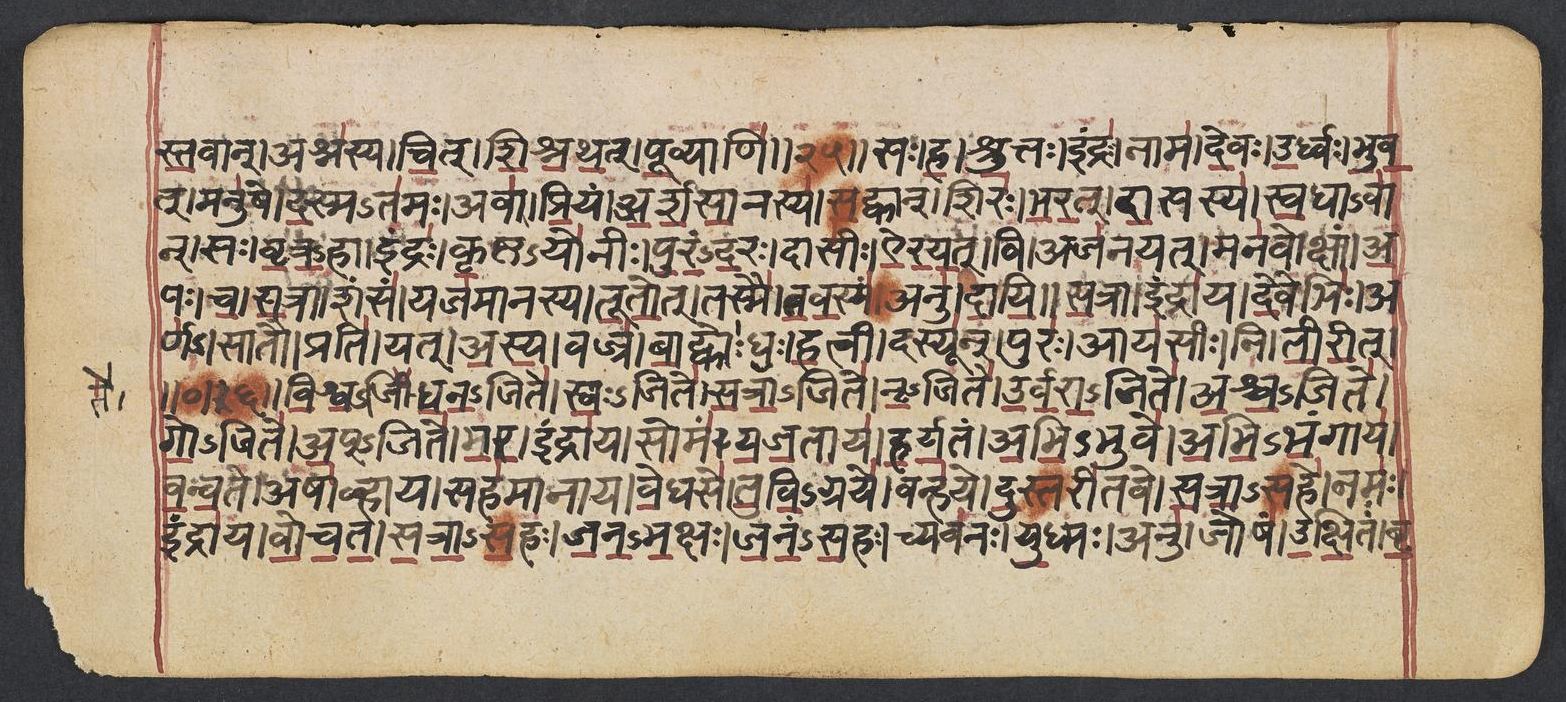
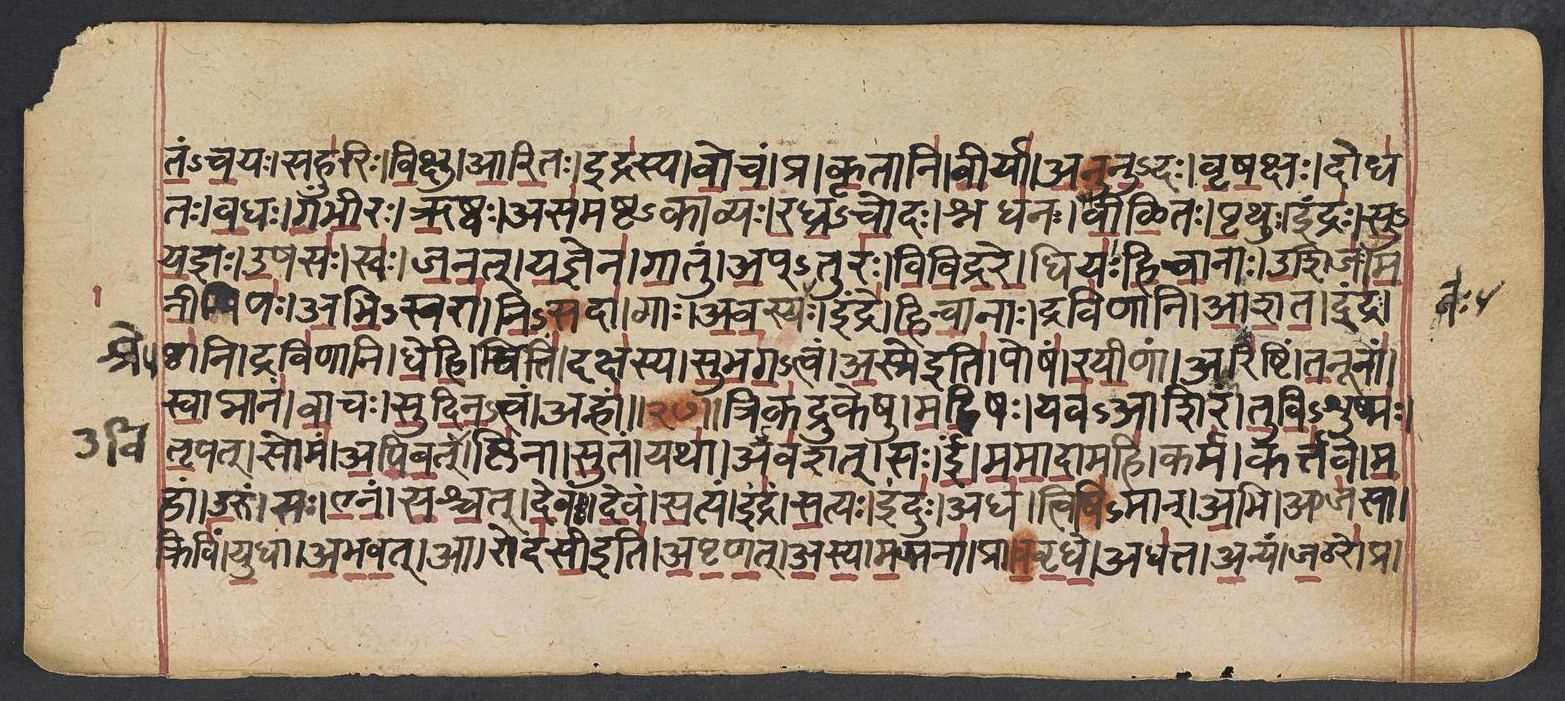
The manuscript shown is Penn Ms. Coll. 390 Item 41 (University of Pennsylvania), an undated paper manuscript of the padapāṭha (the word-by-word recitation text, in which every word is written separately and compounds are split) of the whole Ṛgveda in Devanāgarī, 884 leaves in fascicles, 7-9 lines to the page, accents in red; this hymn stands on fol. 165r-165v. Each section below gives the verses that end on one page; the page boundaries were read on the images (the opening words of every page), not counted out. Where the manuscript is a padapāṭha (the word-by-word recitation text), the section shows Aufrecht's continuous (saṃhitā) text first and, as the edition text, the padapāṭha of the same verses, which is the form written on the page.
How was this verified? (Provenance)
Where on the image
Penn Ms. Coll. 390 Item 41, fol. 165r (numbered 11r by the scribe) (OPenn image 166, lower leaf). Checked on the image: the Rigveda text on this page begins in RV 2.20.5 ‹stavān aśnasya cit śiśnathat›. The next page with Rigveda text, fol. 165v (numbered 11v by the scribe), begins in RV 2.21.3 ‹-vṛtam-cayaḥ sahuriḥ vikṣu āritaḥ›. Verses 2.21.1-2 end on this page.
1vi̱śva̱jite̍ dhana̱jite̍ sva̱rjite̍ satrā̱jite̍ nṛ̱jita̍ urvarā̱jite̍ | a̱śva̱jite̍ go̱jite̍ a̱bjite̍ bha̱rendrā̍ya̱ soma̍ṁ yaja̱tāya̍ harya̱tam ||
2a̱bhi̱bhuve̍ 'bhibha̱ṅgāya̍ vanva̱te 'ṣā̍ḻhāya̱ saha̍mānāya ve̱dhase̍ | tu̱vi̱graye̱ vahna̍ye du̱ṣṭarī̍tave satrā̱sāhe̱ nama̱ indrā̍ya vocata ||
Compare: Padapāṭha (word-by-word text written in the manuscript; Sansknet e-text via GRETIL)
1viśva-jite | dhana-jite | svaḥ-jite | satrājite | nṛ-jite | urvarājite | aśva-j ite | go--jite | ap-jite | bhara | indrāya | somam | yajatāya | haryatam
2abhi-bhuve | abhi-bhaṅgāya | vanvate | aṣāḷhāya | sahamānāya | vedhase | tuvi-graye | vahnaye | dustarītave | satrāsahe | namaḥ | indrāya | vocata
1To him the Lord of all, the Lord of wealth, of light; him who is Lord for ever, Lord of men and tilth, Him who is Lord of horses, Lord of kine,of floods, to Indra, to the Holy bring sweet Soma juice.
2To him the potent One, who conquers and breaks down, the Victor never vanquished who disposes all, The mighty-voiced, the rider, unassailable, to Indra everconquering speak your reverent prayer.
Where on the image
Penn Ms. Coll. 390 Item 41, fol. 165v (numbered 11v by the scribe) (OPenn image 167, upper leaf). Checked on the image: the Rigveda text on this page begins in RV 2.21.3 ‹-vṛtam-cayaḥ sahuriḥ vikṣu āritaḥ›. The next page with Rigveda text, fol. 166r (numbered 12r by the scribe), begins in RV 2.22.2 ‹-pra īm aricyata saḥ›. Verses 2.21.3-6 end on this page; 2.21.3 begins on fol. 165r (numbered 11r by the scribe).
3sa̱trā̱sā̱ho ja̍nabha̱kṣo ja̍naṁsa̱haś cyava̍no yu̱dhmo anu̱ joṣa̍m ukṣi̱taḥ | vṛ̱ta̱ṁca̱yaḥ sahu̍rir vi̱kṣv ā̍ri̱ta indra̍sya voca̱m pra kṛ̱tāni̍ vī̱ryā̍ ||
4a̱nā̱nu̱do vṛ̍ṣa̱bho dodha̍to va̱dho ga̍mbhī̱ra ṛ̱ṣvo asa̍maṣṭakāvyaḥ | ra̱dhra̱co̱daḥ śnatha̍no vīḻi̱tas pṛ̱thur indra̍ḥ suya̱jña u̱ṣasa̱ḥ sva̍r janat ||
5ya̱jñena̍ gā̱tum a̱pturo̍ vividrire̱ dhiyo̍ hinvā̱nā u̱śijo̍ manī̱ṣiṇa̍ḥ | a̱bhi̱svarā̍ ni̱ṣadā̱ gā a̍va̱syava̱ indre̍ hinvā̱nā dravi̍ṇāny āśata ||
6indra̱ śreṣṭhā̍ni̱ dravi̍ṇāni dhehi̱ citti̱ṁ dakṣa̍sya subhaga̱tvam a̱sme | poṣa̍ṁ rayī̱ṇām ari̍ṣṭiṁ ta̱nūnā̍ṁ svā̱dmāna̍ṁ vā̱caḥ su̍dina̱tvam ahnā̍m ||
Compare: Padapāṭha (word-by-word text written in the manuscript; Sansknet e-text via GRETIL)
3satrāsahaḥ | jana-bhakṣaḥ | janam-sahaḥ | cyavanaḥ | yudhmaḥ | anu | joṣam | kṣitaḥ | vṛtam-cayaḥ | sahuriḥ | vikṣu | āritaḥ | indrasya | vocam | pra | kṛtāni | vīryā
4ananu-daḥ | vṛṣabhaḥ | dodhataḥ | vadhaḥ | gambhīraḥ | ṛṣvaḥ | asamaṣṭa-kāvyaḥ | radhra-codaḥ | śnathanaḥ | vīḷitaḥ | pṛthuḥ | indraḥ | su-yajñaḥ | uṣasaḥ | svaḥ | janat
5yajñena | gātum | apturaḥ | vividrire | dhiyaḥ | hinvānāḥ | uśijaḥ | manīṣiṇaḥ | abhi-svarā | ni-sadā | gāḥ | avasyavaḥ | indre | hinvānāḥ | draviṇāni | āśata
6indra | śreṣṭhāni | draviṇāni | dhehi | cittim | dakṣasya | su-bhagatvam | asme iti | poṣam | rayīṇām | ariṣṭim | tanūnām | svādmānam | vācaḥ | sudina-tvam | ahnām
3Still Victor, loved by mortals, ruler over men, o'erthrower, warrior, he hath waxen as he would; Host-gatherer, triumphant, honoured mid the folk. Indra's heroic deeds will I tell forth to all.
4The strong who never yields, who slew the furious fiend, the deep, the vast, of wisdom unattainable; Who speeds the good, the breaker-down, the firm, the vast,– Indra whose rites bring joy hath made the light of Dawn.
5By sacrifice the yearning sages sending forth their songs found furtherance from him who speeds the flood. In Indra seeking help with worship and with hymn, they drew him to themselves and won them kine and wealth.
6Indra, bestow on us the best of treasures, the spirit of ability and fortune; Increase of riches, safety of our bodies, charm of sweet speech, and days of pleasant weather.
Notes
- Sanskrit: Aufrecht's edition (1877) with the Vedic accents, as entered by van Nooten and Holland (GRETIL).
- English: Ralph T. H. Griffith, The Hymns of the Rigveda (1889-1892; 2nd ed. 1896-1897), from the VedaWeb digital text; OCR slips in that text were corrected against the printed 2nd edition (data/sources/rigveda/griffith_errata.json).
- Padapāṭha (edition text): Sansknet e-text via GRETIL (CC BY-NC-SA 4.0).
Cite
Sources
- Source: Penn Ms. Coll. 390 Item 41 (undated (catalogued with Penn's 18th-19th c. Vedic manuscripts)), OPenn, Public Domain Mark + Aufrecht's accented text (GRETIL) + Griffith's English (VedaWeb) (holding institution)
- Critical edition: Aufrecht (1877), accented e-text via GRETIL
← previous · → next · v cycle view · l back to library