Rigveda 2.23: To Brahmanaspati
Introduction
Rigveda 2.23 is a hymn of 19 verses addressed to Brahmanaspati. It stands in book (maṇḍala) 2, the family book of Gṛtsamada. The Rigveda is the oldest collection of Sanskrit hymns, composed in the second half of the second millennium BCE and handed down orally for many centuries before it was written down.
The manuscript shown is Penn Ms. Coll. 390 Item 41 (University of Pennsylvania), an undated paper manuscript of the padapāṭha (the word-by-word recitation text, in which every word is written separately and compounds are split) of the whole Ṛgveda in Devanāgarī, 884 leaves in fascicles, 7-9 lines to the page, accents in red; this hymn stands on fol. 166r-167v. Each section below gives the verses that end on one page; the page boundaries were read on the images (the opening words of every page), not counted out. Where the manuscript is a padapāṭha (the word-by-word recitation text), the section shows Aufrecht's continuous (saṃhitā) text first and, as the edition text, the padapāṭha of the same verses, which is the form written on the page.
How was this verified? (Provenance)
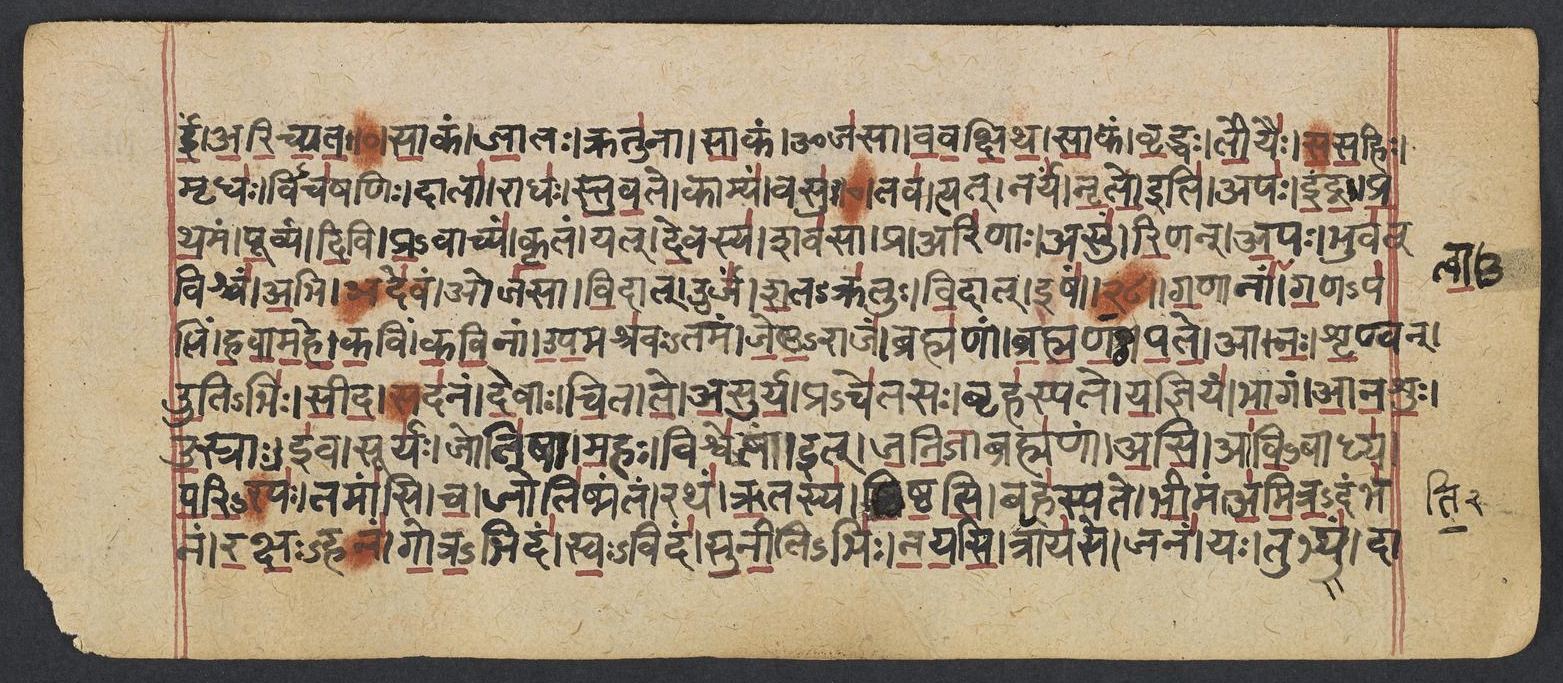
Where on the image
Penn Ms. Coll. 390 Item 41, fol. 166r (numbered 12r by the scribe) (OPenn image 167, lower leaf). Checked on the image: the Rigveda text on this page begins in RV 2.22.2 ‹-pra īm aricyata saḥ›. The next page with Rigveda text, fol. 166v (numbered 12v by the scribe), begins in RV 2.23.4 ‹na tam aṃhaḥ aśnavat›. Verses 2.23.1-3 end on this page.
1ga̱ṇānā̍ṁ tvā ga̱ṇapa̍tiṁ havāmahe ka̱viṁ ka̍vī̱nām u̍pa̱maśra̍vastamam | jye̱ṣṭha̱rāja̱m brahma̍ṇām brahmaṇas pata̱ ā na̍ḥ śṛ̱ṇvann ū̱tibhi̍ḥ sīda̱ sāda̍nam ||
2de̱vāś ci̍t te asurya̱ prace̍taso̱ bṛha̍spate ya̱jñiya̍m bhā̱gam ā̍naśuḥ | u̱srā i̍va̱ sūryo̱ jyoti̍ṣā ma̱ho viśve̍ṣā̱m ij ja̍ni̱tā brahma̍ṇām asi ||
3ā vi̱bādhyā̍ pari̱rāpa̱s tamā̍ṁsi ca̱ jyoti̍ṣmanta̱ṁ ratha̍m ṛ̱tasya̍ tiṣṭhasi | bṛha̍spate bhī̱mam a̍mitra̱dambha̍naṁ rakṣo̱haṇa̍ṁ gotra̱bhida̍ṁ sva̱rvida̍m ||
Compare: Padapāṭha (word-by-word text written in the manuscript; Sansknet e-text via GRETIL)
1gaṇānām | tvā | gaṇa-patim | havāmahe | kavim | kavīnām | upamaśravaḥ-tamam | jyeṣṭha-rājam | brahmaṇām | brahmaṇaḥ | pate | ā | naḥ | śṛṇvan | ūti-bhiḥ | sīda | sādanam
2devāḥ | cit | te | asurya | pra-cetasaḥ | bṛhaspate | yajñiyam | bhāgam | ānaśuḥ | usrāḥ-iva | sūryaḥ | jyotiṣā | mahaḥ | viśveṣām | it | janitā | brahmaṇām | asi
3ā | vi-bādhya | pari-rapaḥ | tamāṃsi | ca | jyotiṣmantam | ratham | ṛtasya | tiṣṭhasi | bṛhaspate | bhīmam | amitra-dambhanam | rakṣaḥ-hanam | gotra-bhidam | svaḥ-vidam
1WE call thee, Lord and Leader of the heavenly hosts, the wise among the wise, the famousest of all, The King supreme of prayers, O Brahmaṇaspati: hear us with help; sit down in place of sacrifice.
2Br̥ihaspati, God immortal! verily the Gods have gained from thee, the wise, a share in holy rites. As with great light the Sun brings forth the rays of morn, so thou alone art Father of all sacred prayer.
3When thou hast chased away revilers and the gloom, thou mountest the refulgent car of sacrifice; The awful car, Br̥ihaspati, that quells the foe, slays demons, cleaves the stall of kine, and finds the light.
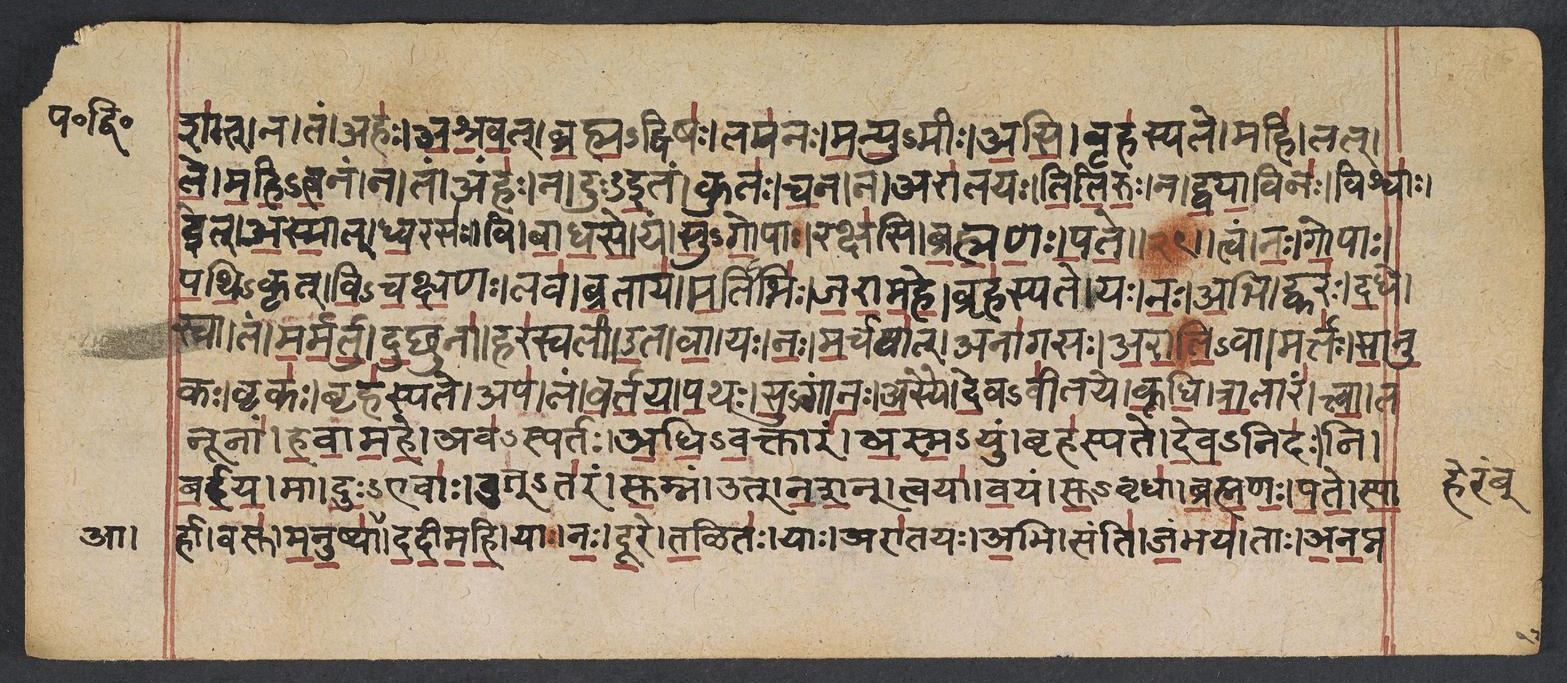
Where on the image
Penn Ms. Coll. 390 Item 41, fol. 166v (numbered 12v by the scribe) (OPenn image 168, upper leaf). Checked on the image: the Rigveda text on this page begins in RV 2.23.4 ‹na tam aṃhaḥ aśnavat›. The next page with Rigveda text, fol. 167r (numbered 13r by the scribe), begins in RV 2.23.10 ‹tvayā vayam ut-tamam dhīmahe›. Verses 2.23.4-9 end on this page; 2.23.4 begins on fol. 166r (numbered 12r by the scribe).
4su̱nī̱tibhi̍r nayasi̱ trāya̍se̱ jana̱ṁ yas tubhya̱ṁ dāśā̱n na tam aṁho̍ aśnavat | bra̱hma̱dviṣa̱s tapa̍no manyu̱mīr a̍si̱ bṛha̍spate̱ mahi̱ tat te̍ mahitva̱nam ||
5na tam aṁho̱ na du̍ri̱taṁ kuta̍ś ca̱na nārā̍tayas titiru̱r na dva̍yā̱vina̍ḥ | viśvā̱ id a̍smād dhva̱raso̱ vi bā̍dhase̱ yaṁ su̍go̱pā rakṣa̍si brahmaṇas pate ||
6tvaṁ no̍ go̱pāḥ pa̍thi̱kṛd vi̍cakṣa̱ṇas tava̍ vra̱tāya̍ ma̱tibhi̍r jarāmahe | bṛha̍spate̱ yo no̍ a̱bhi hvaro̍ da̱dhe svā tam ma̍rmartu du̱cchunā̱ hara̍svatī ||
7u̱ta vā̱ yo no̍ ma̱rcayā̱d anā̍gaso 'rātī̱vā marta̍ḥ sānu̱ko vṛka̍ḥ | bṛha̍spate̱ apa̱ taṁ va̍rtayā pa̱thaḥ su̱gaṁ no̍ a̱syai de̱vavī̍taye kṛdhi ||
8trā̱tāra̍ṁ tvā ta̱nūnā̍ṁ havāma̱he 'va̍spartar adhiva̱ktāra̍m asma̱yum | bṛha̍spate deva̱nido̱ ni ba̍rhaya̱ mā du̱revā̱ utta̍raṁ su̱mnam un na̍śan ||
9tvayā̍ va̱yaṁ su̱vṛdhā̍ brahmaṇas pate spā̱rhā vasu̍ manu̱ṣyā da̍dīmahi | yā no̍ dū̱re ta̱ḻito̱ yā arā̍tayo̱ 'bhi santi̍ ja̱mbhayā̱ tā a̍na̱pnasa̍ḥ ||
Compare: Padapāṭha (word-by-word text written in the manuscript; Sansknet e-text via GRETIL)
4sunīti-bhiḥ | nayasi | trāyase | janam | yaḥ | tubhyam | dāśāt | na | tam | aṃhaḥ | aśnavat | brahma-dviṣaḥ | tapanaḥ | manyu-mīḥ | asi | bṛhaspate | mahi | tat | te | mahi-tvanam
5na | tam | aṃhaḥ | na | duḥ-itam | kutaḥ | cana | na | arātayaḥ | titiruḥ | na | dvayāvinaḥ | viśvāḥ | it | asmāt | dhvarasaḥ | vi | bādhase | yam | su-gopāḥ | rakṣasi | brahmaṇaḥ | pate
6tvam | naḥ | go--pāḥ | pathi-kṛt | vi-cakṣaṇaḥ | tava | vratāya | mati-bhiḥ | jarāmahe | bṛhaspate | yaḥ | naḥ | abhi | hvaraḥ | dadhe | svā | tam | marmartu | ducchunā | harasvatī
7uta | vā | yaḥ | naḥ | marcayāt | anāgasaḥ | arātī-vā | martaḥ | sānukaḥ | vṛkaḥ | bṛhaspate | apa | tam | vartaya | pathaḥ | su-gam | naḥ | asyai | deva-vītaye | kṛdhi
8trātāram | tvā | tanūnām | havāmahe | ava-spartaḥ | adhi-vaktāram | asmayum | bṛhaspate | deva-nidaḥ | ni | barhaya | mā | duḥ-evāḥ | ut-taram | sumnam | ut | naśan
9tvayā | vayam | su-vṛdhā | brahmaṇaḥ | pate | spārhā | vasu | manuṣyā | ā | dadīmahi | yāḥ | naḥ | dūre | taḷitaḥ | yāḥ | arātayaḥ | abhi | santi | jambhaya | tāḥ | anapnasaḥ
4Thou leadest with good guidance and preservest men; distress o'ertakes not him who offers gifts to thee. Him who hates prayer thou punishest, Br̥ihaspati, quelling his wrath: herein is thy great mightiness.
5No sorrow, no distress from any side, no foes, no creatures double-tongued have overcome the man,– Thou drivest all seductive fiends away from him whom, careful guard, thou keepest Brahmaṇaspati.
6Thou art our keeper, wise, preparer of our paths: we, for thy service, sing to thee with hymns of praise. Br̥ihaspati, whoever lays a snare for us, him may his evil fate, precipitate, destroy.
7Him, too, who threatens us without offence of ours, the evilminded, arrogant, rapacious man,– Him turn thou from our path away, Br̥ihaspati: give us fair access to this banquet of the Gods.
8Thee as protector of our bodies we invoke, thee, saviour, as the comforter who loveth us. Strike, O Br̥ihaspati, the Gods' revilers down, and let not the unrighteous come to highest bliss.
9Through thee, kind -prosperer, O Brahmaṇaspati, may we obtain the wealth of Men which all desire: And all our enemies, who near or far away prevail against us, crush, and leave them destitute.
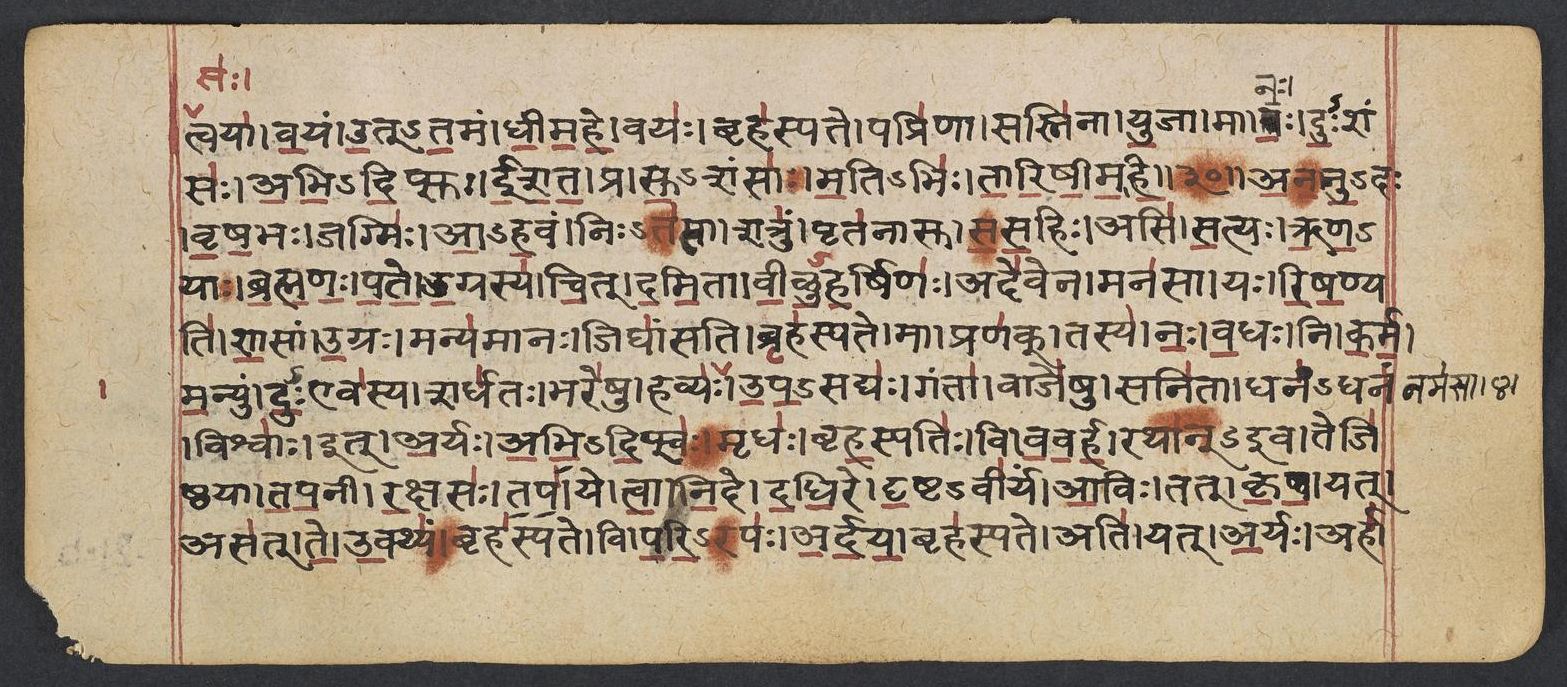
Where on the image
Penn Ms. Coll. 390 Item 41, fol. 167r (numbered 13r by the scribe) (OPenn image 168, lower leaf). Checked on the image: the Rigveda text on this page begins in RV 2.23.10 ‹tvayā vayam ut-tamam dhīmahe›. The next page with Rigveda text, fol. 167v (numbered 13v by the scribe), begins in RV 2.23.15 ‹-arhāt dyu-mat vi-bhāti kratu-mat›. Verses 2.23.10-14 end on this page.
10tvayā̍ va̱yam u̍tta̱maṁ dhī̍mahe̱ vayo̱ bṛha̍spate̱ papri̍ṇā̱ sasni̍nā yu̱jā | mā no̍ du̱ḥśaṁso̍ abhidi̱psur ī̍śata̱ pra su̱śaṁsā̍ ma̱tibhi̍s tāriṣīmahi ||
11a̱nā̱nu̱do vṛ̍ṣa̱bho jagmi̍r āha̱vaṁ niṣṭa̍ptā̱ śatru̱m pṛta̍nāsu sāsa̱hiḥ | asi̍ sa̱tya ṛ̍ṇa̱yā bra̍hmaṇas pata u̱grasya̍ cid dami̱tā vī̍ḻuha̱rṣiṇa̍ḥ ||
12ade̍vena̱ mana̍sā̱ yo ri̍ṣa̱ṇyati̍ śā̱sām u̱gro manya̍māno̱ jighā̍ṁsati | bṛha̍spate̱ mā praṇa̱k tasya̍ no va̱dho ni ka̍rma ma̱nyuṁ du̱reva̍sya̱ śardha̍taḥ ||
13bhare̍ṣu̱ havyo̱ nama̍sopa̱sadyo̱ gantā̱ vāje̍ṣu̱ sani̍tā̱ dhana̍ṁ-dhanam | viśvā̱ id a̱ryo a̍bhidi̱psvo̱3̱̍ mṛdho̱ bṛha̱spati̱r vi va̍varhā̱ rathā̍m̐ iva ||
14teji̍ṣṭhayā tapa̱nī ra̱kṣasa̍s tapa̱ ye tvā̍ ni̱de da̍dhi̱re dṛ̱ṣṭavī̍ryam | ā̱vis tat kṛ̍ṣva̱ yad asa̍t ta u̱kthya1̱̍m bṛha̍spate̱ vi pa̍ri̱rāpo̍ ardaya ||
Compare: Padapāṭha (word-by-word text written in the manuscript; Sansknet e-text via GRETIL)
10tvayā | vayam | ut-tamam | dhīmahe | vayaḥ | bṛhaspate | papriṇā | sasninā | yujā | mā | naḥ | duḥ-śaṃsaḥ | abhi-dipsuḥ | īśata | pra | su-śaṃsāḥ | mati-bhiḥ | tāriṣīmahi
11ananu-daḥ | vṛṣabhaḥ | jagmiḥ | āhavam | niḥ-taptā | śatrum | pṛtanāsu | sasahiḥ | asi | satyaḥ | ṛṇa-yāḥ | brahmaṇaḥ | pate | ugrasya | cit | damitā | vīḷu-harṣiṇaḥ
12adeveva | manasā | yaḥ | riṣaṇyati | śāsām | ugraḥ | mayamānaḥ | jighāṃsati | bṛhaspate | mā | praṇak | tasya | naḥ | vadhaḥ | ni | karma | manyum | duḥ-evasya | śardhataḥ
13bhareṣu | havya | namasā | upa-sadyaḥ | gantā | vājeṣu | sanitā | dhanam-dhanam | viśvāḥ | it | aryaḥ | abhi-dipsvaḥ | mṛdhaḥ | bṛhaspatiḥ | vi | vavarha | rathān-iva
14tejiṣṭhayā | tapanī | rakṣasaḥ | tapa | ye | tvā | nide | dadhire | dṛṣṭa-vīryam | āviḥ | tat | kṛṣva | yat | asat | te | ukthyam | bṛhaspate | vi | pari-rapaḥ | ardaya
10With thee as our own rich and liberal ally may we, Br̥ihaspati, gain highest power of life. Let not the guileful wicked man be lord of us:-still may we prosper, singing goodly hymns of praise.
11Strong, never yielding, hastening to the battle-cry, consumer of the foe, victorious in the strife, Thou art sin's true avenger, Brahmaṇaspati, who tamest e'en the fierce, the wildly passionate.
12Whoso with mind ungodly seeks to do us harm, who, deeming him a man of might mid lords, would slay,– Let not his deadly blow reach us, Br̥ihaspati; may we humiliate the strong ill-doer's wrath.
13The mover mid the spoil, the winner of all wealth, to be invoked in fight and reverently adored, Br̥ihaspati hath overthrown like cars of war all wicked enemies who fain would injure us.
14Burn up the demons with thy fiercest flaming brand, those who have scorned thee in thy manifested might. Show forth that power that shall deserve the hymn of praise: destroy the evil speakers, O Br̥ihaspati.
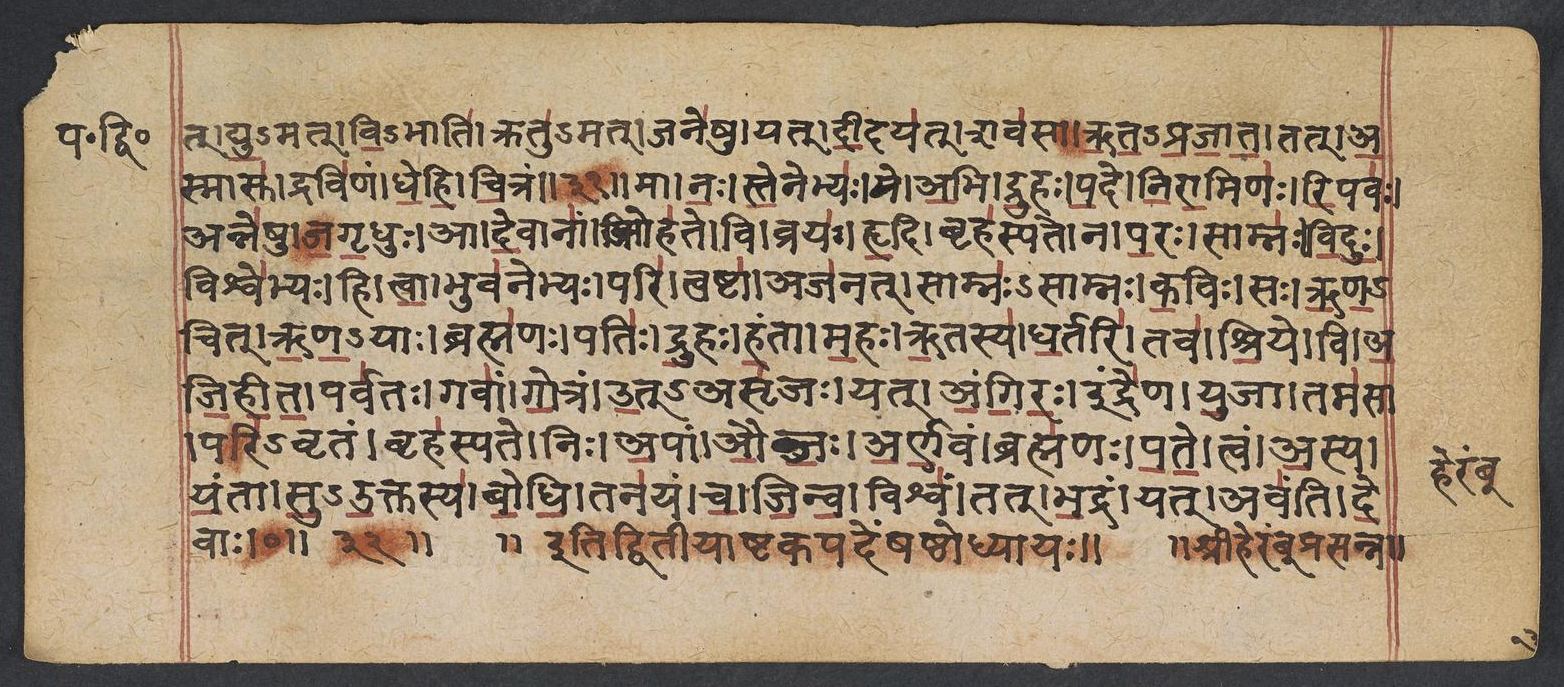
Where on the image
Penn Ms. Coll. 390 Item 41, fol. 167v (numbered 13v by the scribe) (OPenn image 169, upper leaf). Checked on the image: the Rigveda text on this page begins in RV 2.23.15 ‹-arhāt dyu-mat vi-bhāti kratu-mat›. The next page with Rigveda text, fol. 168r (numbered 1r by the scribe), begins in RV 2.24.1 ‹saḥ imām aviḍḍhi pra-bhṛtim›. Verses 2.23.15-19 end on this page; 2.23.15 begins on fol. 167r (numbered 13r by the scribe).
15bṛha̍spate̱ ati̱ yad a̱ryo arhā̍d dyu̱mad vi̱bhāti̱ kratu̍ma̱j jane̍ṣu | yad dī̱daya̱c chava̍sa ṛtaprajāta̱ tad a̱smāsu̱ dravi̍ṇaṁ dhehi ci̱tram ||
16mā na̍ḥ ste̱nebhyo̱ ye a̱bhi dru̱has pa̱de ni̍rā̱miṇo̍ ri̱pavo 'nne̍ṣu jāgṛ̱dhuḥ | ā de̱vānā̱m oha̍te̱ vi vrayo̍ hṛ̱di bṛha̍spate̱ na pa̱raḥ sāmno̍ viduḥ ||
17viśve̍bhyo̱ hi tvā̱ bhuva̍nebhya̱s pari̱ tvaṣṭāja̍na̱t sāmna̍ḥ-sāmnaḥ ka̱viḥ | sa ṛ̍ṇa̱cid ṛ̍ṇa̱yā brahma̍ṇa̱s pati̍r dru̱ho ha̱ntā ma̱ha ṛ̱tasya̍ dha̱rtari̍ ||
18tava̍ śri̱ye vy a̍jihīta̱ parva̍to̱ gavā̍ṁ go̱tram u̱dasṛ̍jo̱ yad a̍ṅgiraḥ | indre̍ṇa yu̱jā tama̍sā̱ parī̍vṛta̱m bṛha̍spate̱ nir a̱pām au̍bjo arṇa̱vam ||
19brahma̍ṇas pate̱ tvam a̱sya ya̱ntā sū̱ktasya̍ bodhi̱ tana̍yaṁ ca jinva | viśva̱ṁ tad bha̱draṁ yad ava̍nti de̱vā bṛ̱had va̍dema vi̱dathe̍ su̱vīrā̍ḥ ||
Compare: Padapāṭha (word-by-word text written in the manuscript; Sansknet e-text via GRETIL)
15bṛhaspate | ati | yat | aryaḥ | arhāt | dyu-mat | vi-bhāti | kratu-mat | janeṣu | yat | dīdayat | śavasā | ṛta-prajāta | tat | asmāsu | draviṇam | dhehi | citram
16mā | naḥ | stenebhyaḥ | ye | abhi | druhaḥ | pade | nirāmiṇaḥ | ripavaḥ | anneṣu | jagṛdhuḥ | ā | devānām | ohate | vi | vrayaḥ | hṛdi | bṛhaspate | na | paraḥ | sāmnaḥ | viduḥ
17viśvebhyaḥ | hi | tvā | bhuvanebhyaḥ | pari | tvaṣṭā | ajanat | sāmnaḥ-sāmnaḥ | kaviḥ | saḥ | ṛṇa-cit | ṛṇa-yāḥ | brahmaṇaḥ | patiḥ | druhaḥ | hantā | mahaḥ | ṛtasya | dhartari
18tava | śriye | vi | ajihīta | parvataḥ | gavām | gotram | ut | asṛjaḥ | yat | aṅgiraḥ | indreṇa | yujā | tamasā | pari-vṛtam | bṛhaspate | niḥ | apām | aubjaḥ | arṇavam
19brahmaṇaḥ | pate | tvam | asya | yantā | su-uktasya | bodhi | tanayam | ca | jinva | viśvam | tat | bhadram | yat | avanti | devāḥ | bṛhat | vadema | vidathe | su-vīrāḥ
15Br̥ihaspati, that which the foe deserves not which shines among the folk effectual, splendid, That, Son of Law I which is with might refulgent-that treasure wonderful bestow thou on us.
16Give us not up to those who, foes in ambuscade, are greedy for the wealth of him who sits at ease, Who cherish in their heart abandonment of Gods. Br̥ihaspati, no further rest shall they obtain.
17For Tvashṭar, he who knows each sacred song, brought thee to life, preeminent o'er all the things that be. Guilt-scourger, guilt-avenger is Br̥ihaspati, who slays the spoiler and upholds the mighty Law.
18The mountain, for thy glory, cleft itself apart when, Angiras! thou openedst the stall of kine. Thou, O Br̥ihaspati, with Indra for ally didst hurl down water-floods which gloom had compassed round.
19O Brahmaṇaspati, be thou controller of this our hymn and prosper thou our children. All that the Gods regard with love is blessed. Loud may we speak, with heroes, in assembly.
Notes
- Sanskrit: Aufrecht's edition (1877) with the Vedic accents, as entered by van Nooten and Holland (GRETIL).
- English: Ralph T. H. Griffith, The Hymns of the Rigveda (1889-1892; 2nd ed. 1896-1897), from the VedaWeb digital text; OCR slips in that text were corrected against the printed 2nd edition (data/sources/rigveda/griffith_errata.json).
- Padapāṭha (edition text): Sansknet e-text via GRETIL (CC BY-NC-SA 4.0).
Cite
Sources
- Source: Penn Ms. Coll. 390 Item 41 (undated (catalogued with Penn's 18th-19th c. Vedic manuscripts)), OPenn, Public Domain Mark + Aufrecht's accented text (GRETIL) + Griffith's English (VedaWeb) (holding institution)
- Critical edition: Aufrecht (1877), accented e-text via GRETIL
← previous · → next · v cycle view · l back to library