Rigveda 2.24: To Brahmanaspati
Introduction
Rigveda 2.24 is a hymn of 16 verses addressed to Brahmanaspati. It stands in book (maṇḍala) 2, the family book of Gṛtsamada. The Rigveda is the oldest collection of Sanskrit hymns, composed in the second half of the second millennium BCE and handed down orally for many centuries before it was written down.
The manuscript shown is Penn Ms. Coll. 390 Item 41 (University of Pennsylvania), an undated paper manuscript of the padapāṭha (the word-by-word recitation text, in which every word is written separately and compounds are split) of the whole Ṛgveda in Devanāgarī, 884 leaves in fascicles, 7-9 lines to the page, accents in red; this hymn stands on fol. 168r-169r. Each section below gives the verses that end on one page; the page boundaries were read on the images (the opening words of every page), not counted out. Where the manuscript is a padapāṭha (the word-by-word recitation text), the section shows Aufrecht's continuous (saṃhitā) text first and, as the edition text, the padapāṭha of the same verses, which is the form written on the page.
How was this verified? (Provenance)
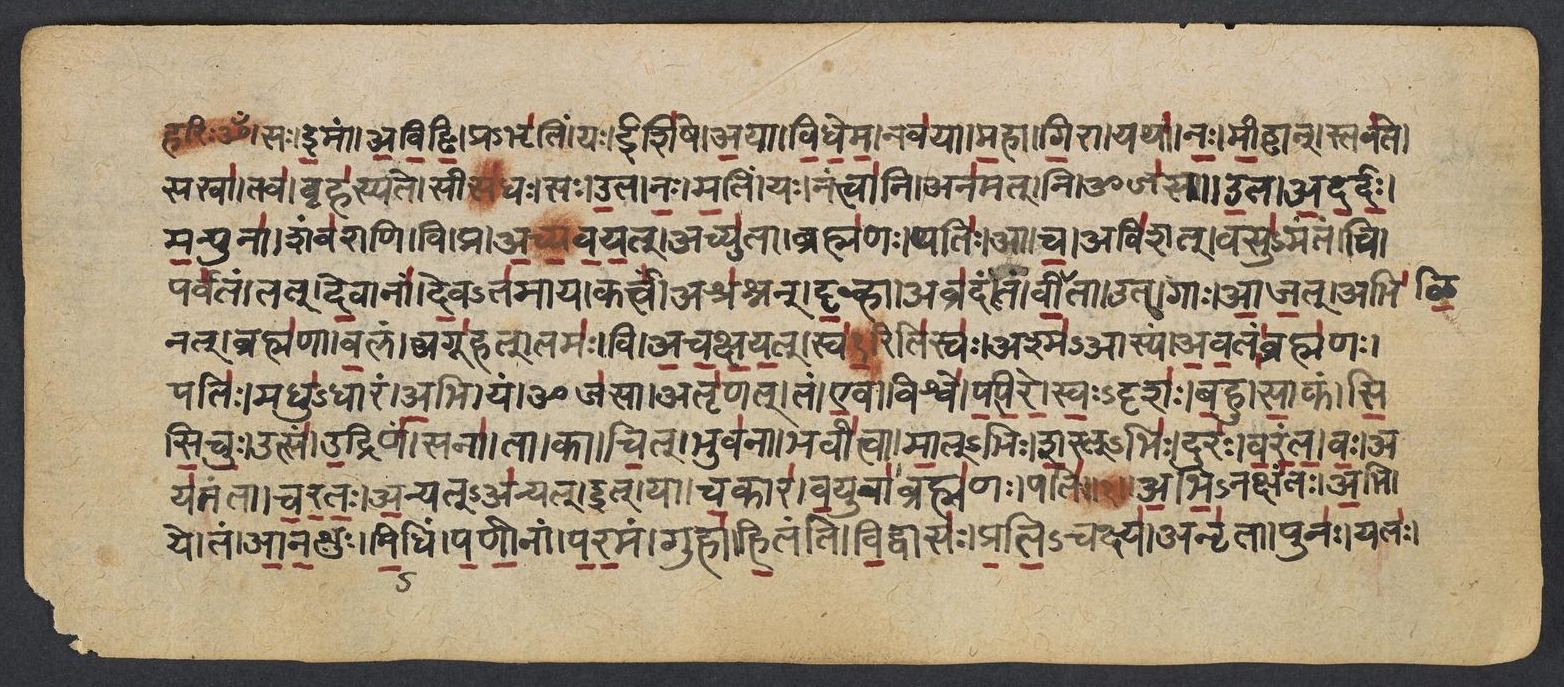
Where on the image
Penn Ms. Coll. 390 Item 41, fol. 168r (numbered 1r by the scribe) (OPenn image 169, lower leaf). Checked on the image: the Rigveda text on this page begins in RV 2.24.1 ‹saḥ imām aviḍḍhi pra-bhṛtim›. Line 1 opens with hariḥ oṃ, then 2.24.1 (saḥ imām aviḍḍhi prabhṛtim). The next page with Rigveda text, fol. 168v (numbered 1v by the scribe), begins in RV 2.24.6 ‹oṃ iti āyan tat›. Verses 2.24.1-5 end on this page.
1semām a̍viḍḍhi̱ prabhṛ̍ti̱ṁ ya īśi̍ṣe̱ 'yā vi̍dhema̱ nava̍yā ma̱hā gi̱rā | yathā̍ no mī̱ḍhvān stava̍te̱ sakhā̱ tava̱ bṛha̍spate̱ sīṣa̍dha̱ḥ sota no̍ ma̱tim ||
2yo nantvā̱ny ana̍ma̱n ny oja̍so̱tāda̍rdar ma̱nyunā̱ śamba̍rāṇi̱ vi | prācyā̍vaya̱d acyu̍tā̱ brahma̍ṇa̱s pati̱r ā cāvi̍śa̱d vasu̍manta̱ṁ vi parva̍tam ||
3tad de̱vānā̍ṁ de̱vata̍māya̱ kartva̱m aśra̍thnan dṛ̱ḻhāvra̍danta vīḻi̱tā | ud gā ā̍ja̱d abhi̍na̱d brahma̍ṇā va̱lam agū̍ha̱t tamo̱ vy a̍cakṣaya̱t sva̍ḥ ||
4aśmā̍syam ava̱tam brahma̍ṇa̱s pati̱r madhu̍dhāram a̱bhi yam oja̱sātṛ̍ṇat | tam e̱va viśve̍ papire sva̱rdṛśo̍ ba̱hu sā̱kaṁ si̍sicu̱r utsa̍m u̱driṇa̍m ||
5sanā̱ tā kā ci̱d bhuva̍nā̱ bhavī̍tvā mā̱dbhiḥ śa̱radbhi̱r duro̍ varanta vaḥ | aya̍tantā carato a̱nyad-a̍nya̱d id yā ca̱kāra̍ va̱yunā̱ brahma̍ṇa̱s pati̍ḥ ||
Compare: Padapāṭha (word-by-word text written in the manuscript; Sansknet e-text via GRETIL)
1saḥ | imām | aviḍḍhi | pra-bhṛtim | yaḥ | īśiṣe | ayā | vidhema | navayā | mahā | girā | yathā | naḥ | mīḍhavān | stavate | sakhā | tava | bṛhaspate | sīsadhaḥ | saḥ | uta | naḥ | matim
2yaḥ | nantvāni | anamat | ni | ojasā | uta | adardaḥ | manyunā | śambarāṇi | vi | pra | acyavayat | acyutā | brahmaṇaḥ | patiḥ | ā | ca | aviśat | vasu-mantam | v i | parvatam
3tat | devānām | deva-tamāya | kartvam | aśrathnān | dṛḷhā | avradanta | vīḷitā | ut | gāḥ | ājat | abhinat | brahmaṇā | valam | agūhat | tamaḥ | vi | acakṣayat | svar itisvaḥ
4aśma-āsyam | avatam | brahmaṇaḥ | patiḥ | madhu-dhāram | abhi | yam | ojasā | atṛṇat | tam | eva | viśve | papire | svaḥ-dṛśaḥ | bahu | sākam | sisicuḥ | utsam | udriṇam
5sanā | tā | kā | cit | bhuvanā | bhavītvā | māt-bhiḥ | śarat-bhiḥ | duraḥ | varanta | vaḥ | ayatantā | carataḥ | anyat-anyat | it | yā | cakāra | vayunā | brahmaṇaḥ | patiḥ
1BE pleased with this our offering, thou who art the Lord; we will adore thee with this new and mighty song. As this thy friend, our liberal patron, praises thee, do thou, Br̥ihaspati, fulfil our hearts' desire.
2He who with might bowed down the things that should be bowed, and in his fury rent the holds of Ṣambara: Who overthrew what shook not, Brahmapaspati,– he made his way within the mountain stored with wealth.
3That was a great deed for the Godliest of the Gods: strong things were loosened and the firmly fixed gave way. He drave the kine forth and cleft Vala through by prayer, dispelled the darkness and displayed the light of heaven.
4The well with mouth of stone that poured a flood of meath, which Brahmaṇaspati hath opened with his might- All they who see the light have drunk their fill thereat: together they have made the watery fount flow forth.
5Ancient will be those creatures, whatsoe'er they be; with moons, with autumns, doors unclose themselves to you. Effortless they pass on to perfect this and that, appointed works which Brahmaṇaspati ordained.
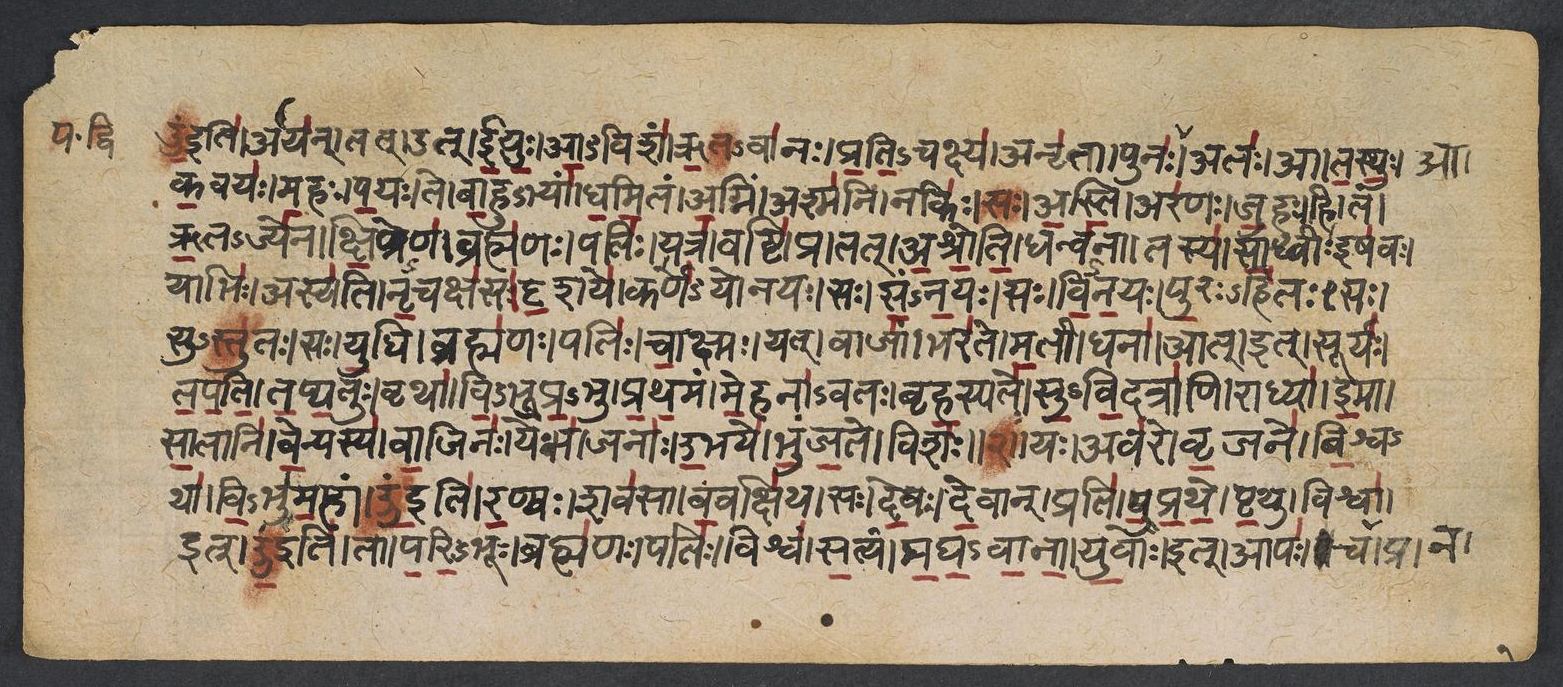
Where on the image
Penn Ms. Coll. 390 Item 41, fol. 168v (numbered 1v by the scribe) (OPenn image 170, upper leaf). Checked on the image: the Rigveda text on this page begins in RV 2.24.6 ‹oṃ iti āyan tat›. The next page with Rigveda text, fol. 169r (numbered 2r by the scribe), begins in RV 2.24.12 ‹minanti vratam vām accha›. Verses 2.24.6-11 end on this page; 2.24.6 begins on fol. 168r (numbered 1r by the scribe).
6a̱bhi̱nakṣa̍nto a̱bhi ye tam ā̍na̱śur ni̱dhim pa̍ṇī̱nām pa̍ra̱maṁ guhā̍ hi̱tam | te vi̱dvāṁsa̍ḥ prati̱cakṣyānṛ̍tā̱ puna̱r yata̍ u̱ āya̱n tad ud ī̍yur ā̱viśa̍m ||
7ṛ̱tāvā̍naḥ prati̱cakṣyānṛ̍tā̱ puna̱r āta̱ ā ta̍sthuḥ ka̱vayo̍ ma̱has pa̱thaḥ | te bā̱hubhyā̍ṁ dhami̱tam a̱gnim aśma̍ni̱ naki̱ḥ ṣo a̱sty ara̍ṇo ja̱hur hi tam ||
8ṛ̱tajye̍na kṣi̱preṇa̱ brahma̍ṇa̱s pati̱r yatra̱ vaṣṭi̱ pra tad a̍śnoti̱ dhanva̍nā | tasya̍ sā̱dhvīr iṣa̍vo̱ yābhi̱r asya̍ti nṛ̱cakṣa̍so dṛ̱śaye̱ karṇa̍yonayaḥ ||
9sa sa̍ṁna̱yaḥ sa vi̍na̱yaḥ pu̱rohi̍ta̱ḥ sa suṣṭu̍ta̱ḥ sa yu̱dhi brahma̍ṇa̱s pati̍ḥ | cā̱kṣmo yad vāja̱m bhara̍te ma̱tī dhanād it sūrya̍s tapati tapya̱tur vṛthā̍ ||
10vi̱bhu pra̱bhu pra̍tha̱mam me̱hanā̍vato̱ bṛha̱spate̍ḥ suvi̱datrā̍ṇi̱ rādhyā̍ | i̱mā sā̱tāni̍ ve̱nyasya̍ vā̱jino̱ yena̱ janā̍ u̱bhaye̍ bhuñja̱te viśa̍ḥ ||
11yo 'va̍re vṛ̱jane̍ vi̱śvathā̍ vi̱bhur ma̱hām u̍ ra̱ṇvaḥ śava̍sā va̱vakṣi̍tha | sa de̱vo de̱vān prati̍ paprathe pṛ̱thu viśved u̱ tā pa̍ri̱bhūr brahma̍ṇa̱s pati̍ḥ ||
Compare: Padapāṭha (word-by-word text written in the manuscript; Sansknet e-text via GRETIL)
6abhi-nakṣantaḥ | abhi | ye | tam | ānaśuḥ | nidhim | paṇīnām | paramam | guhā | hitam | te | vidvāṃsaḥ | prati-cakṣya | anṛtā | punaḥ | yataḥ | oṃ iti | āyan | tat | ut | īyuḥ | āviśam
7ṛta-vānaḥ | prati-cakṣya | anṛtā | punaḥ | ā | ataḥ | ā | tasthuḥ | kavayaḥ | mahaḥ | pathaḥ | te | bāhu-bhyām | dhamitam | agnim | asmani | nakiḥ | saḥ | asti | araṇaḥ | juhuḥ | hi | tam
8ṛta-jyena | kṣipreṇa | brahmaṇaḥ | patiḥ | yatra | vaṣṭi | pra | tar | aśnoti | dhanvanā | tasya | sādhvīḥ | iṣavaḥ | yābhiḥ | asyati | nṛ-cakṣasaḥ | dṛśaye | karṇa-yonayaḥ
9saḥ | sam-nayaḥ | saḥ | vi-nayaḥ | puraḥ-hitaḥ | saḥ | su-stutaḥ | saḥ | yudhi | brahmaṇaḥ | patiḥ | cākṣmaḥ | yat | vājam | bharate | matī | dhanā | āt | it | sūryaḥ | tapati | tapyatuḥ | vṛthā
10vi-bhu | pra-bhu | prathamam | mehanāvataḥ | bṛhaspateḥ | su-vidatrāṇi | rādhyā | imā | sātāni | venyasya | vājinaḥ | yena | janāḥ | ubhaye | bhuñjate | viśaḥ
11yaḥ | avare | vṛjane | viśva-thā | vi-bhuḥ mahām | oṃ iti | raṇvaḥ | śavasā | vavakṣitha | saḥ | devaḥ | devān | prati | paprathe | pṛthu | viśvā | it | oṃ iti | tā | pari-bhūḥ | brahmaṇaḥ | patiḥ
6They who with much endeavour searching round obtained the Paṇis' noblest treasure hidden in the cave,– Those sages, having marked the falsehoods, turned them back whence they had come, and sought again to enter in.
7The pious ones when they had seen the falsehoods turned them back, the sages stood again upon the lofty ways. Cast down with both their arms upon the rock they left the kindled fire, and said, No enemy is he.
8With his swift bow, strung truly, Brahmaṇaspati reaches the mark whate'er it be that he desires. Excellent are the arrows wherewithal he shoots, keen-eyed to look on men and springing from his ear.
9He brings together and he parts, the great High Priest; extolled is he, in battle Brahmaṇaspati. When, gracious, for the hymn he brings forth food and wealth, the glowing Sun untroubled sends forth fervent heat.
10First and preeminent, excelling all besides are the kind gifts of liberal Br̥ihaspati. These are the boons of him the Strong who should be loved, whereby both classes and the people have delight.
11Thou who in every way supreme in earthly power, rejoicing, by thy mighty strength hast waxen great,– He is the God spread forth in breadth against the Gods: he, Brahmaṇaspati, encompasseth this All.
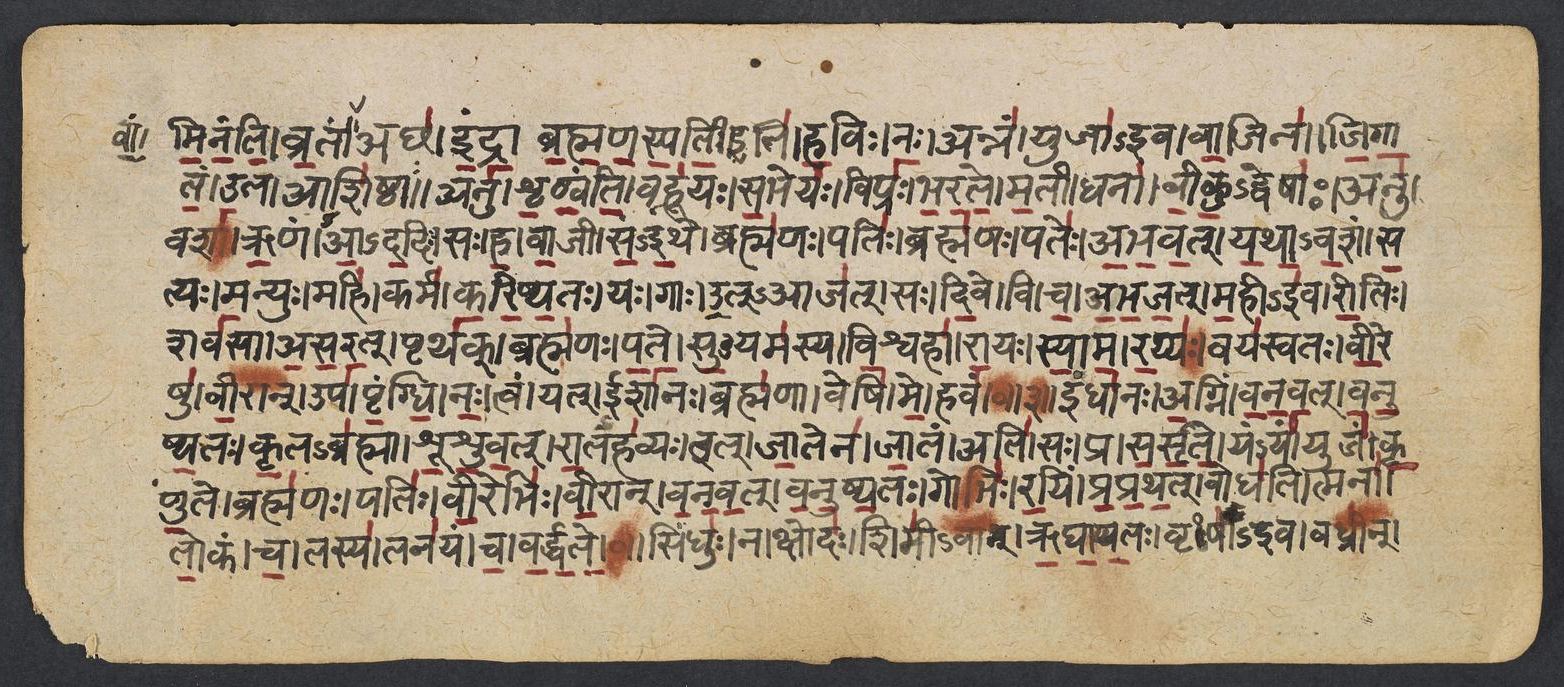
Where on the image
Penn Ms. Coll. 390 Item 41, fol. 169r (numbered 2r by the scribe) (OPenn image 170, lower leaf). Checked on the image: the Rigveda text on this page begins in RV 2.24.12 ‹minanti vratam vām accha›. The next page with Rigveda text, fol. 169v (numbered 2v by the scribe), begins in RV 2.25.3 ‹abhi vaṣṭi ojasā agneḥ-iva›. Verses 2.24.12-16 end on this page; 2.24.12 begins on fol. 168v (numbered 1v by the scribe).
12viśva̍ṁ sa̱tyam ma̍ghavānā yu̱vor id āpa̍ś ca̱na pra mi̍nanti vra̱taṁ vā̍m | acche̍ndrābrahmaṇaspatī ha̱vir no 'nna̱ṁ yuje̍va vā̱jinā̍ jigātam ||
13u̱tāśi̍ṣṭhā̱ anu̍ śṛṇvanti̱ vahna̍yaḥ sa̱bheyo̱ vipro̍ bharate ma̱tī dhanā̍ | vī̱ḻu̱dveṣā̱ anu̱ vaśa̍ ṛ̱ṇam ā̍da̱diḥ sa ha̍ vā̱jī sa̍mi̱the brahma̍ṇa̱s pati̍ḥ ||
14brahma̍ṇa̱s pate̍r abhavad yathāva̱śaṁ sa̱tyo ma̱nyur mahi̱ karmā̍ kariṣya̱taḥ | yo gā u̱dāja̱t sa di̱ve vi cā̍bhajan ma̱hīva̍ rī̱tiḥ śava̍sāsara̱t pṛtha̍k ||
15brahma̍ṇas pate su̱yama̍sya vi̱śvahā̍ rā̱yaḥ syā̍ma ra̱thyo̱3̱̍ vaya̍svataḥ | vī̱reṣu̍ vī̱rām̐ upa̍ pṛṅdhi na̱s tvaṁ yad īśā̍no̱ brahma̍ṇā̱ veṣi̍ me̱ hava̍m ||
16brahma̍ṇas pate̱ tvam a̱sya ya̱ntā sū̱ktasya̍ bodhi̱ tana̍yaṁ ca jinva | viśva̱ṁ tad bha̱draṁ yad ava̍nti de̱vā bṛ̱had va̍dema vi̱dathe̍ su̱vīrā̍ḥ ||
Compare: Padapāṭha (word-by-word text written in the manuscript; Sansknet e-text via GRETIL)
12viśvam | satyam | magha-vānā | yuvoḥ | it | āpaḥ | cana | pra | minanti | vratam | vām | accha | indrābrahmaṇaspatī iti | haviḥ | naḥ | annam | yujāiva | vājinā | jigātam
13uta | āśiṣṭhāḥ | anu | śṛṇvanti | vahnayaḥ | sabheyaḥ | vipraḥ | bharate | matī | dhanā | vīḷu-dveṣāḥ | anu | vaśā | ṛṇam | ādadiḥ | saḥ | ha | vājī | sam-ithe | brahmaṇaḥ | patiḥ
14brahmaṇaḥ | pateḥ | abhavat | yathāvaśam | satyaḥ | manyuḥ | mahi | karma | kariṣyataḥ | yaḥ | gāḥ | ut-ājat | saḥ | dive | vi | ca | abhajat | mahī-iva | rītiḥ | śavasā | asarat | pṛthak
15brahmaṇaḥ | pate | su-yamasya | viśvahā | rāyaḥ | syāma | rathyaḥ | vayasvataḥ | vīreṣu | vīrān | upa | pṛṅdhi | naḥ | tvam | yat | īśānaḥ | brahmaṇā | veṣi | me | havam
16brahmaṇaḥ | pate | tvam | asya | yantā | su-uktasya | bodhi | tanayam | ca | jinva | viśvam | tat | bhadram | yat | avanti | devāḥ | bṛhat | vadema | vidathe | su-vīrāḥ
12From you, twain Maghavans, all truth proceedeth: even the waters break not your commandment. Come to us, Brahmaṇaspati and Indra, to our oblation Iiie yoked steeds to fodder.
13The sacrificial flames most swiftly hear the call: the priest of the assembly gaineth wealth for hymns. Hating the stern, remitting at his will the debt, strong in the shock of fight is Brahmaṇaspati.
14The wrath of Brahmaṇaspati according to his will had full effect when he would do a mighty deed. The kine he drave forth and distributed to heaven, even as a copious flood with strength flows sundry ways.
15O Brahmaṇaspati, may we be evermore masters of wealth well-guided, full of vital strength. Heroes on heroes send abundantly to us, when thou omnipotent through prayer seekest my call.
16O Brahmaṇaspati, be thou controller of this our hymn, and prosper thou our children. All that the Gods regard with love is blessed. Loud may we speak, with heroes, in assembly.
Notes
- Sanskrit: Aufrecht's edition (1877) with the Vedic accents, as entered by van Nooten and Holland (GRETIL).
- English: Ralph T. H. Griffith, The Hymns of the Rigveda (1889-1892; 2nd ed. 1896-1897), from the VedaWeb digital text; OCR slips in that text were corrected against the printed 2nd edition (data/sources/rigveda/griffith_errata.json).
- Padapāṭha (edition text): Sansknet e-text via GRETIL (CC BY-NC-SA 4.0).
Cite
Sources
- Source: Penn Ms. Coll. 390 Item 41 (undated (catalogued with Penn's 18th-19th c. Vedic manuscripts)), OPenn, Public Domain Mark + Aufrecht's accented text (GRETIL) + Griffith's English (VedaWeb) (holding institution)
- Critical edition: Aufrecht (1877), accented e-text via GRETIL
← previous · → next · v cycle view · l back to library