Rigveda 2.27: To Adityas
Introduction
Rigveda 2.27 is a hymn of 17 verses addressed to Adityas. It stands in book (maṇḍala) 2, the family book of Gṛtsamada. The Rigveda is the oldest collection of Sanskrit hymns, composed in the second half of the second millennium BCE and handed down orally for many centuries before it was written down.
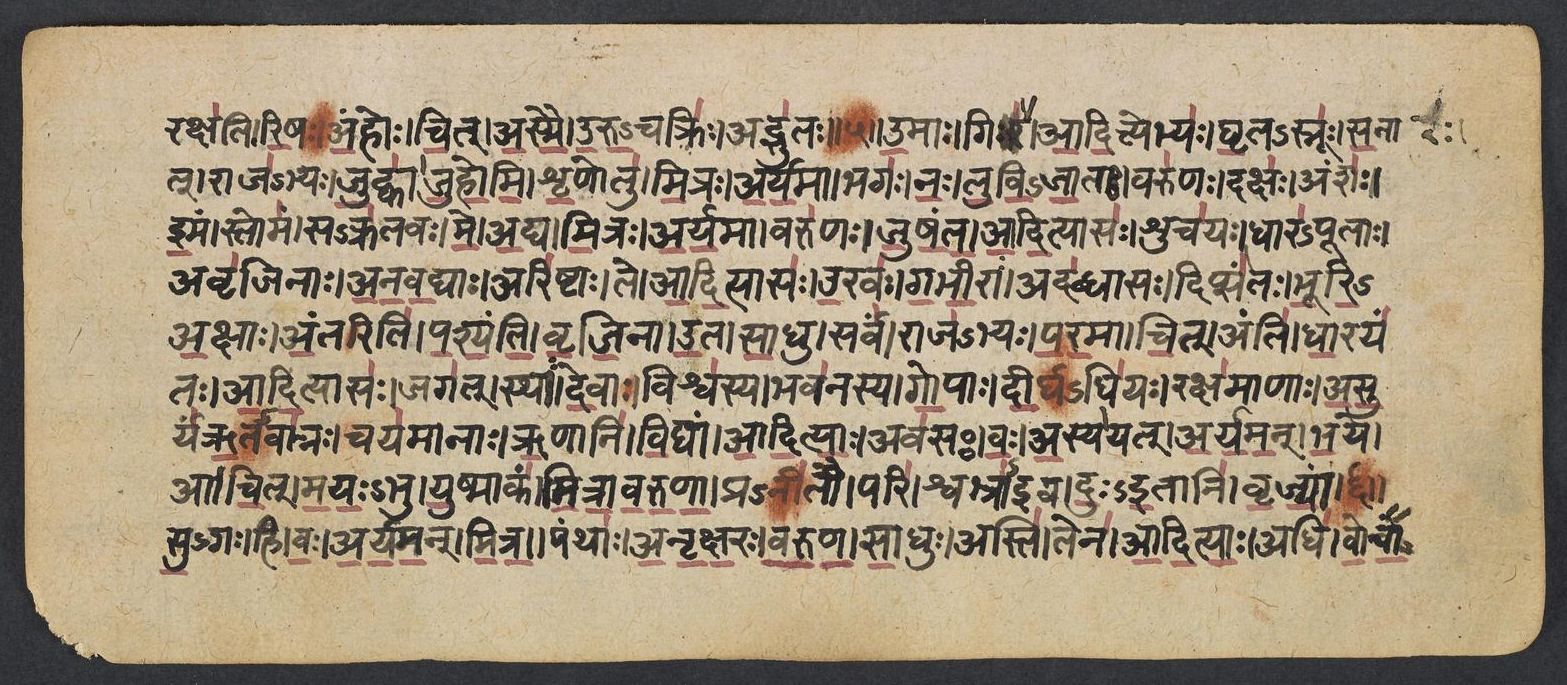
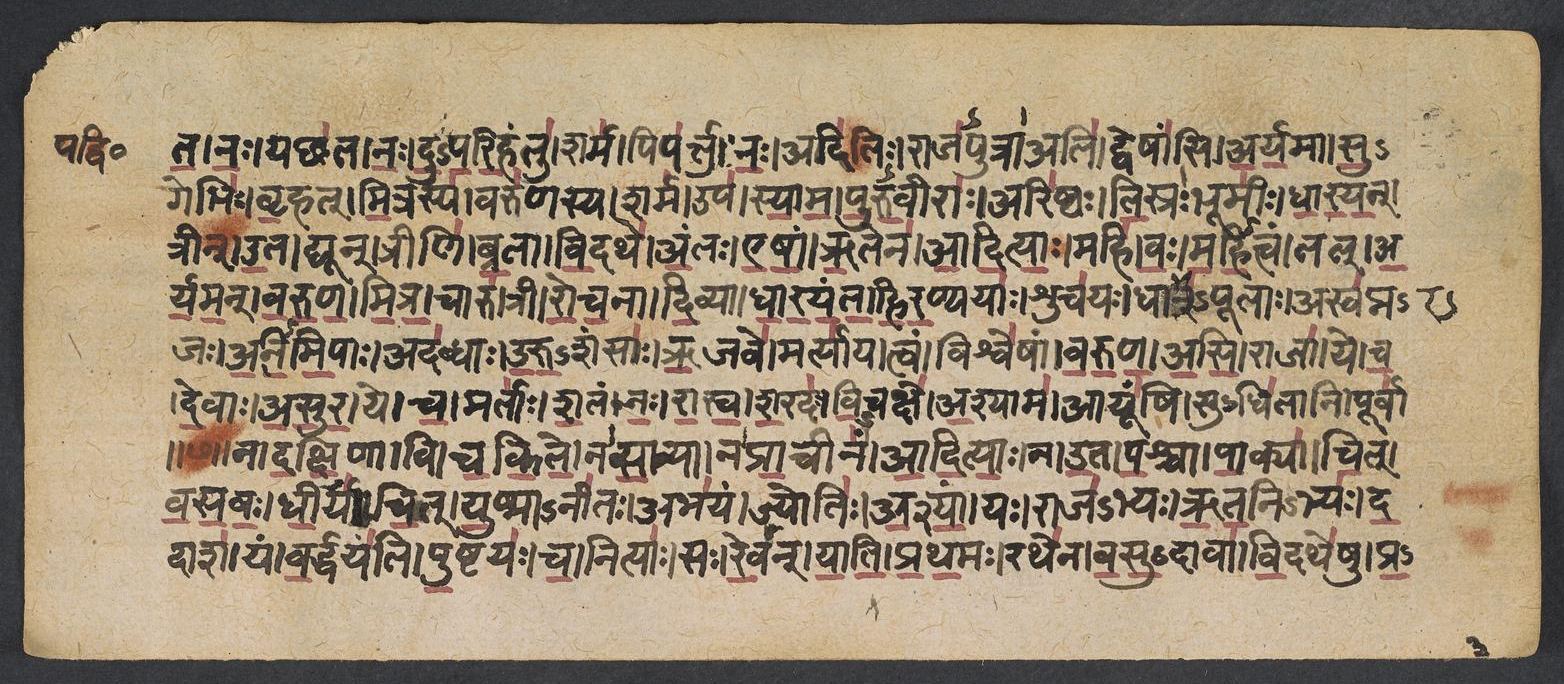
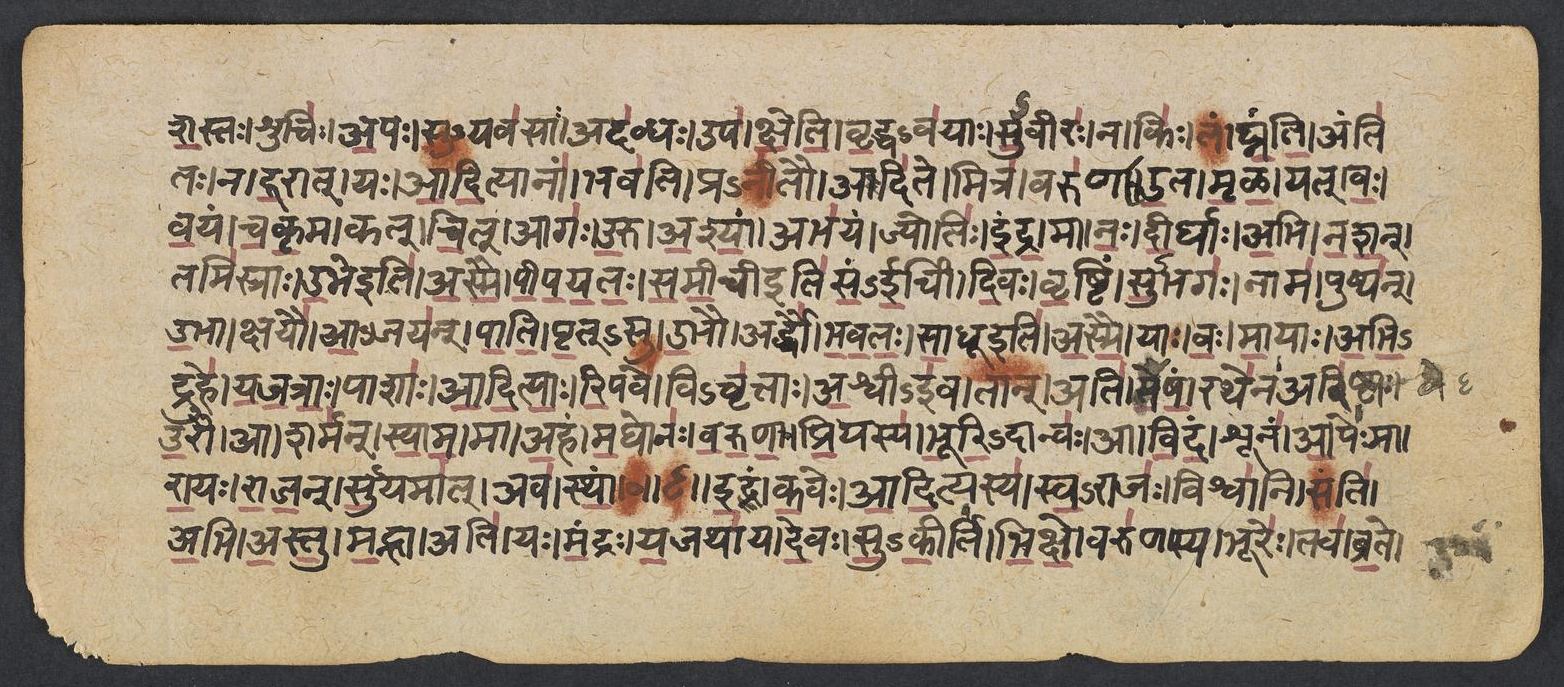
The manuscript shown is Penn Ms. Coll. 390 Item 41 (University of Pennsylvania), an undated paper manuscript of the padapāṭha (the word-by-word recitation text, in which every word is written separately and compounds are split) of the whole Ṛgveda in Devanāgarī, 884 leaves in fascicles, 7-9 lines to the page, accents in red; this hymn stands on fol. 170r-171r. Each section below gives the verses that end on one page; the page boundaries were read on the images (the opening words of every page), not counted out. Where the manuscript is a padapāṭha (the word-by-word recitation text), the section shows Aufrecht's continuous (saṃhitā) text first and, as the edition text, the padapāṭha of the same verses, which is the form written on the page.
How was this verified? (Provenance)
Where on the image
Penn Ms. Coll. 390 Item 41, fol. 170r (numbered 3r by the scribe) (OPenn image 171, lower leaf). Checked on the image: the Rigveda text on this page begins in RV 2.26.4 ‹rakṣati riṣaḥ aṃhoḥ cit›. The next page with Rigveda text, fol. 170v (numbered 3v by the scribe), begins in RV 2.27.6 ‹-vocata naḥ yacchata naḥ›. Verses 2.27.1-5 end on this page.
1i̱mā gira̍ ādi̱tyebhyo̍ ghṛ̱tasnū̍ḥ sa̱nād rāja̍bhyo ju̱hvā̍ juhomi | śṛ̱ṇotu̍ mi̱tro a̍rya̱mā bhago̍ nas tuvijā̱to varu̍ṇo̱ dakṣo̱ aṁśa̍ḥ ||
2i̱maṁ stoma̱ṁ sakra̍tavo me a̱dya mi̱tro a̍rya̱mā varu̍ṇo juṣanta | ā̱di̱tyāsa̱ḥ śuca̍yo̱ dhāra̍pūtā̱ avṛ̍jinā anava̱dyā ari̍ṣṭāḥ ||
3ta ā̍di̱tyāsa̍ u̱ravo̍ gabhī̱rā ada̍bdhāso̱ dipsa̍nto bhūrya̱kṣāḥ | a̱ntaḥ pa̍śyanti vṛji̱nota sā̱dhu sarva̱ṁ rāja̍bhyaḥ para̱mā ci̱d anti̍ ||
4dhā̱raya̍nta ādi̱tyāso̱ jaga̱t sthā de̱vā viśva̍sya̱ bhuva̍nasya go̱pāḥ | dī̱rghādhi̍yo̱ rakṣa̍māṇā asu̱rya̍m ṛ̱tāvā̍na̱ś caya̍mānā ṛ̱ṇāni̍ ||
5vi̱dyām ā̍dityā̱ ava̍so vo a̱sya yad a̍ryaman bha̱ya ā ci̍n mayo̱bhu | yu̱ṣmāka̍m mitrāvaruṇā̱ praṇī̍tau̱ pari̱ śvabhre̍va duri̱tāni̍ vṛjyām ||
Compare: Padapāṭha (word-by-word text written in the manuscript; Sansknet e-text via GRETIL)
1imāḥ | giraḥ | ādityebhyaḥ | ghṛta-snūḥ | sanāt | rāja-bhyaḥ | juhvā | juhomi | śṛṇotu | mitraḥ | aryamā | bhagaḥ | naḥ | tuvi-jātaḥ | varuṇaḥ | dakṣaḥ | aṃśaḥ
2imam | stomam | sa-kratavaḥ | me | adya | mitraḥ | aryamā | varuṇaḥ | juṣanta | ādityāsaḥ | śucayaḥ | dhāra-pūtāḥ | avṛjināḥ | anavadyāḥ | ariṣṭāḥ
3te | ādityāsaḥ | uravaḥ | gabhīrāḥ | adabdhāsaḥ | dipsantaḥ | bhūri-akṣāḥ | antariti | paśyanti | vṛjinā | uta | sādhu | sarvam | rāja-bhyaḥ | paramā | cit | anti
4dhārayantaḥ | ādityāsaḥ | jagat | sthāḥ | devāḥ | viśvasya | bhuvanasya | gopāḥ | dīrgha-dhiyaḥ | rakṣamāṇāḥ | asuryam | ṛta-vānaḥ | cayamānāḥ | ṛṇāni
5vidyām | ādityāḥ | avasaḥ | vaḥ | asya | yat | aryaman | bhaye | ā | cit | mayaḥ-bhu | yuṣmākam | mitrāvaruṇā | pra-nītau | pari | śvabhrāiva | duḥ-itāni | vṛjyām
1THESE hymns that drop down fatness, with the ladle I ever offer tothe Kings Âdityas. May Mitra, Aryaman, and Bhaga hear us, the mighty Varuṇa Daksha, and Anṣa.
2With one accord may Aryaman and Mitra and Varuṇa this day accept this praise-song- Âdityas bright and pure as streams of water, free from all guile and falsehood, blameless, perfect.
3These Gods, Âdityas, vast, profound, and faithful, with many eyes, fain to deceive the wicked, Looking within behold the good and evil near to the Kings is even the thing most distant.
4Upholding that which moves and that which moves not, Âdityas, Gods, protectors of all being, Provident, guarding well the world of spirits, true to eternal Law, the debt-exactors.
5May I, Âdityas, share m this your favour which, Aryaman, brings profit e'en in danger. Under your guidance, Varuṇa and Mitra, round troubles may I pass, like rugged places.
Where on the image
Penn Ms. Coll. 390 Item 41, fol. 170v (numbered 3v by the scribe) (OPenn image 172, upper leaf). Checked on the image: the Rigveda text on this page begins in RV 2.27.6 ‹-vocata naḥ yacchata naḥ›. The next page with Rigveda text, fol. 171r (numbered 4r by the scribe), begins in RV 2.27.12 ‹-pra-śastaḥ›. Verses 2.27.6-11 end on this page; 2.27.6 begins on fol. 170r (numbered 3r by the scribe).
6su̱go hi vo̍ aryaman mitra̱ panthā̍ anṛkṣa̱ro va̍ruṇa sā̱dhur asti̍ | tenā̍dityā̱ adhi̍ vocatā no̱ yaccha̍tā no duṣpari̱hantu̱ śarma̍ ||
7pipa̍rtu no̱ adi̍tī̱ rāja̍pu̱trāti̱ dveṣā̍ṁsy arya̱mā su̱gebhi̍ḥ | bṛ̱han mi̱trasya̱ varu̍ṇasya̱ śarmopa̍ syāma puru̱vīrā̱ ari̍ṣṭāḥ ||
8ti̱sro bhūmī̍r dhāraya̱n trīm̐r u̱ta dyūn trīṇi̍ vra̱tā vi̱dathe̍ a̱ntar e̍ṣām | ṛ̱tenā̍dityā̱ mahi̍ vo mahi̱tvaṁ tad a̍ryaman varuṇa mitra̱ cāru̍ ||
9trī ro̍ca̱nā di̱vyā dhā̍rayanta hira̱ṇyayā̱ḥ śuca̍yo̱ dhāra̍pūtāḥ | asva̍pnajo animi̱ṣā ada̍bdhā uru̱śaṁsā̍ ṛ̱jave̱ martyā̍ya ||
10tvaṁ viśve̍ṣāṁ varuṇāsi̱ rājā̱ ye ca̍ de̱vā a̍sura̱ ye ca̱ martā̍ḥ | śa̱taṁ no̍ rāsva śa̱rado̍ vi̱cakṣe̱ 'śyāmāyū̍ṁṣi̱ sudhi̍tāni̱ pūrvā̍ ||
11na da̍kṣi̱ṇā vi ci̍kite̱ na sa̱vyā na prā̱cīna̍m ādityā̱ nota pa̱ścā | pā̱kyā̍ cid vasavo dhī̱ryā̍ cid yu̱ṣmānī̍to̱ abha̍ya̱ṁ jyoti̍r aśyām ||
Compare: Padapāṭha (word-by-word text written in the manuscript; Sansknet e-text via GRETIL)
6su-gaḥ | hi | vaḥ | aryaman | mitra | panthāḥ | anṛkṣaraḥ | varuṇa | sādhuḥ | ast i | tena | ādityāḥ | adhi | vocata | naḥ | yacchata | naḥ | duḥ-parihantu | śarma
7pipartu | naḥ | aditiḥ | rāja-putrā | ati | dveṣāṃsi | aryamā | su-gebhiḥ | bṛhat | m itrasya | varuṇasya | śarma | upa | syāma | puru-vīrāḥ | ariṣṭāḥ
8tisraḥ | bhūmīḥ | dhārayan | trīn | uta | dyūn | trīṇi | vratā | vidathe | antaḥ | eṣām | ṛtena | ādityāḥ | mahi | vaḥ | mahi-tvam | tat | aryaman | varuṇa | mitra | cāru
9trī | rocanā | divyā | dhārayanta | hiraṇyayāḥ | śucayaḥ | dhāra-pūtāḥ | asvapn-ajaḥ | ani-miṣāḥ | adabdhāḥ | uru-śaṃsāḥ | ṛjave | martyāya
10tvam | viśveṣām | varuṇa | asi | rājā | ye | ca | devāḥ | asura | ye | ca | martāḥ | śatam | naḥ | rāsva | śaradaḥ | vi-cakṣe | aśyāma | āyūṃṣi | sudhitāni | pūrvā
11na | dakṣiṇā | vi | cikite | na | savyā | na | prācīnam | ādityāḥ | na | uta | paścā | pākyā | cit | vasavaḥ | dhīryā | cit | yuṣmānītaḥ | abhayam | jyotiḥ | aśyām
6Smooth is your path, O Aryaman and Mitra; excellent is it, Varuṇa, and thornless. Thereon, Âdityas, send us down your blessing: grant us a shelter hard to be demolished.
7Mother of Kings, may Aditi transport us, by fair paths Aryaman, beyond all hatred. May we uninjured, girt by many heroes, win Varuṇa's and Mitra's high protection.
8With their support they stay three earths, three heavens; three are their functions in the Gods' assembly. Mighty through Law, Âdityas, is your greatness; fair is it, Aryaman, Varuṇa, and Mitra.
9Golden and splendid, pure like streams of water, they hold aloft the three bright heavenly regions. Ne'er do they slumber, never close their eyelids, faithful, far-ruling for the righteous mortal.
10Thou over all, O Varuṇa, art Sovran, be they Gods, Asura! or be they mortals. Grant unto us to see a hundred autumns ours be the blest long lives of our forefathers.
11Neither the right nor left do I distinguish, neither the east nor yet the west, Âdityas. Simple and guided by your wisdom, Vasus! may I attain the light that brings no danger.
Where on the image
Penn Ms. Coll. 390 Item 41, fol. 171r (numbered 4r by the scribe) (OPenn image 172, lower leaf). Checked on the image: the Rigveda text on this page begins in RV 2.27.12 ‹-pra-śastaḥ›. The next page with Rigveda text, fol. 171v (numbered 4v by the scribe), begins in RV 2.28.2 ‹su-bhagāsaḥ syāma su-ādhyaḥ varuṇa›. Verses 2.27.12-17 end on this page; 2.27.12 begins on fol. 170v (numbered 3v by the scribe).
12yo rāja̍bhya ṛta̱nibhyo̍ da̱dāśa̱ yaṁ va̱rdhaya̍nti pu̱ṣṭaya̍ś ca̱ nityā̍ḥ | sa re̱vān yā̍ti pratha̱mo rathe̍na vasu̱dāvā̍ vi̱dathe̍ṣu praśa̱staḥ ||
13śuci̍r a̱paḥ sū̱yava̍sā̱ ada̍bdha̱ upa̍ kṣeti vṛ̱ddhava̍yāḥ su̱vīra̍ḥ | naki̱ṣ ṭaṁ ghna̱nty anti̍to̱ na dū̱rād ya ā̍di̱tyānā̱m bhava̍ti̱ praṇī̍tau ||
14adi̍te̱ mitra̱ varu̍ṇo̱ta mṛ̍ḻa̱ yad vo̍ va̱yaṁ ca̍kṛ̱mā kac ci̱d āga̍ḥ | u̱rv a̍śyā̱m abha̍ya̱ṁ jyoti̍r indra̱ mā no̍ dī̱rghā a̱bhi na̍śa̱n tami̍srāḥ ||
15u̱bhe a̍smai pīpayataḥ samī̱cī di̱vo vṛ̱ṣṭiṁ su̱bhago̱ nāma̱ puṣya̍n | u̱bhā kṣayā̍v ā̱jaya̍n yāti pṛ̱tsūbhāv ardhau̍ bhavataḥ sā̱dhū a̍smai ||
16yā vo̍ mā̱yā a̍bhi̱druhe̍ yajatrā̱ḥ pāśā̍ ādityā ri̱pave̱ vicṛ̍ttāḥ | a̱śvīva̱ tām̐ ati̍ yeṣa̱ṁ rathe̱nāri̍ṣṭā u̱rāv ā śarma̍n syāma ||
17māham ma̱ghono̍ varuṇa pri̱yasya̍ bhūri̱dāvna̱ ā vi̍da̱ṁ śūna̍m ā̱peḥ | mā rā̱yo rā̍jan su̱yamā̱d ava̍ sthām bṛ̱had va̍dema vi̱dathe̍ su̱vīrā̍ḥ ||
Compare: Padapāṭha (word-by-word text written in the manuscript; Sansknet e-text via GRETIL)
12yaḥ | rāja-bhyaḥ | ṛtani-bhyaḥ | dadāśa | yam | vardhayanti | puṣṭayaḥ | ca | n ityāḥ | saḥ | revān | yāti | prathamaḥ | rathena | vasu-dāvā | vidatheṣu | pra-śastaḥ
13śuciḥ | apaḥ | su-yavasāḥ | adabdhaḥ | upa | kṣeti | vṛddha-vayāḥ | su-vīraḥ | nakiḥ | tam | ghnanti | antitaḥ | na | dūrāt | yaḥ | ādityānām | bhavati | pra-nītau
14adite | mitra | varuṇa | uta | mṛḷa | yat | vaḥ | vayam | cakṛma | kat | cit | āgaḥ | uru | aśyām | abhayam | jyotiḥ | indra | mā | naḥ | dīrghāḥ | abhi | naśan | tamisrāḥ
15ubhe iti | asmai | pīpayataḥ | samīcī itisam-īcī | divaḥ | vṛṣṭim | su-bhagaḥ | nāma | puṣyan | ubhā | kṣayau | ājayan | yāti | pṛt-su | ubhau | ardhau | bhavataḥ | sādhū iti | asmai
16yāḥ | vaḥ | māyāḥ | abhi-druhe | yajatrāḥ | pāśāḥ | ādityāḥ | ripave | vi-cṛttāḥ | aśvī-iva | tān | ati | yeṣam | rathena | ariṣṭāḥ | urau | ā | śarman | syāma
17mā | aham | maghonaḥ | varuṇa | priyasya | bhūri-dāvnaḥ | ā | vidam | śūnam | āpeḥ | mā | rāyaḥ | rājan | su-yamāt | ava | sthām | bṛhat | vadema | vidathe | su-vīrāḥ
12He who bears gifts unto the Kings, true Leaders, he whom their everlasting blessings prosper, Moves with his chariot first in rank and wealthy, munificent and lauded in assemblies.
13Pure, faithful, very strong, with heroes round him, he dwells beside the waters rich with pasture. None slays, from near at hand or from a distance, him who is under the Âdityas' guidance.
14Aditi, Mitra, Varuṇa, forgive us however we have erred and sinned against you. May I obtain the broad light free from peril: O Indra, let not during darkness seize us.
15For him the Twain united pour their fulness, the rain from heaven: he thrives most highly favoured. He goes to war mastering both the mansions: to him both portions of the world are gracious.
16Your guiles, ye Holy Ones, to quell oppressors, your snares spread out against the foe, Âdityas, May I car-borne pass like a skilful horseman: uninjured may we dwell in spacious shelter.
17May I not live, O Varuṇa, to witness my wealthy, liberal, dear friend's destitution. King, may I never lack well-ordered riches. Loud may we speak, with heroes, in assembly.
Notes
- Sanskrit: Aufrecht's edition (1877) with the Vedic accents, as entered by van Nooten and Holland (GRETIL).
- English: Ralph T. H. Griffith, The Hymns of the Rigveda (1889-1892; 2nd ed. 1896-1897), from the VedaWeb digital text; OCR slips in that text were corrected against the printed 2nd edition (data/sources/rigveda/griffith_errata.json).
- Padapāṭha (edition text): Sansknet e-text via GRETIL (CC BY-NC-SA 4.0).
Cite
Sources
- Source: Penn Ms. Coll. 390 Item 41 (undated (catalogued with Penn's 18th-19th c. Vedic manuscripts)), OPenn, Public Domain Mark + Aufrecht's accented text (GRETIL) + Griffith's English (VedaWeb) (holding institution)
- Critical edition: Aufrecht (1877), accented e-text via GRETIL
← previous · → next · v cycle view · l back to library