Rigveda 2.28: To Varuna
Introduction
Rigveda 2.28 is a hymn of 11 verses addressed to Varuna. It stands in book (maṇḍala) 2, the family book of Gṛtsamada. The Rigveda is the oldest collection of Sanskrit hymns, composed in the second half of the second millennium BCE and handed down orally for many centuries before it was written down.
The manuscript shown is Penn Ms. Coll. 390 Item 41 (University of Pennsylvania), an undated paper manuscript of the padapāṭha (the word-by-word recitation text, in which every word is written separately and compounds are split) of the whole Ṛgveda in Devanāgarī, 884 leaves in fascicles, 7-9 lines to the page, accents in red; this hymn stands on fol. 171r-172r. Each section below gives the verses that end on one page; the page boundaries were read on the images (the opening words of every page), not counted out. Where the manuscript is a padapāṭha (the word-by-word recitation text), the section shows Aufrecht's continuous (saṃhitā) text first and, as the edition text, the padapāṭha of the same verses, which is the form written on the page.
How was this verified? (Provenance)
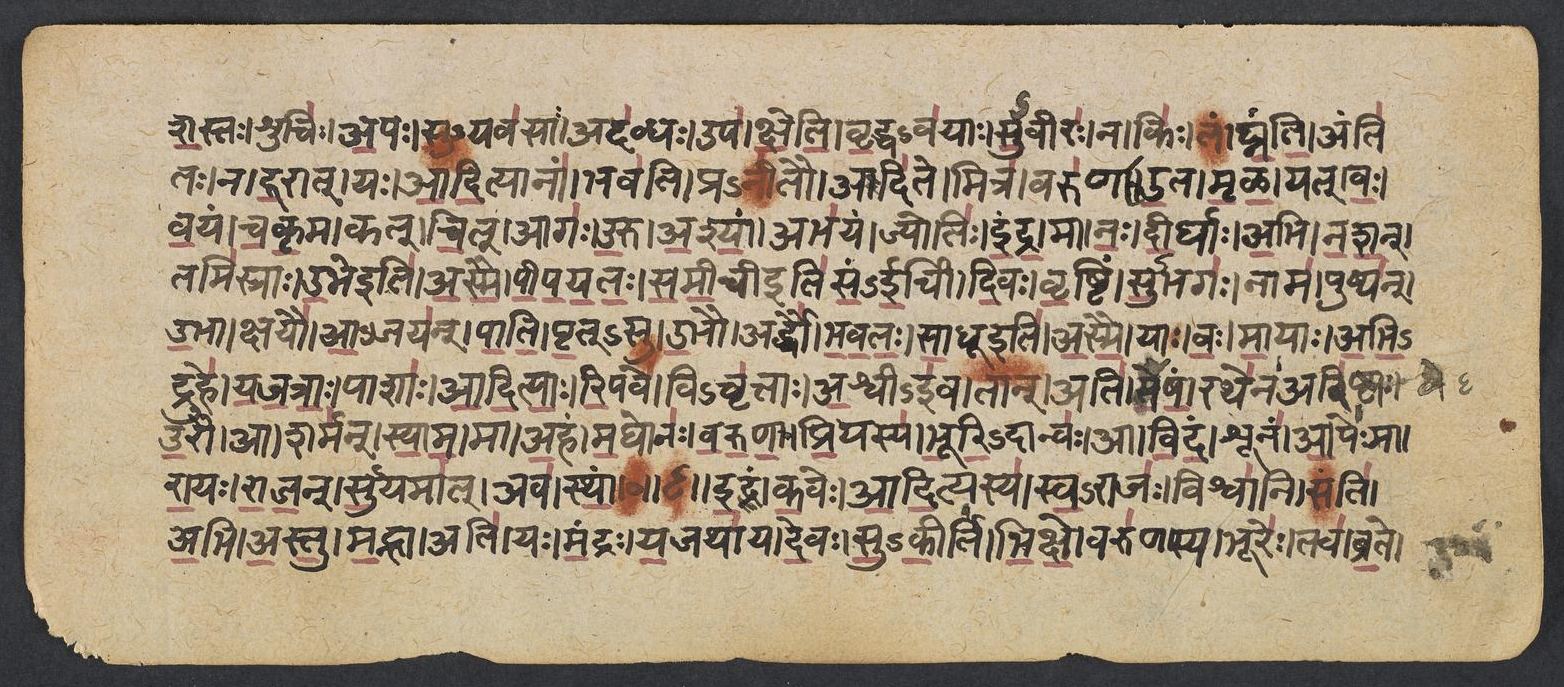
Where on the image
Penn Ms. Coll. 390 Item 41, fol. 171r (numbered 4r by the scribe) (OPenn image 172, lower leaf). Checked on the image: the Rigveda text on this page begins in RV 2.27.12 ‹-pra-śastaḥ›. The next page with Rigveda text, fol. 171v (numbered 4v by the scribe), begins in RV 2.28.2 ‹su-bhagāsaḥ syāma su-ādhyaḥ varuṇa›. Verse 2.28.1 ends on this page.
1i̱daṁ ka̱ver ā̍di̱tyasya̍ sva̱rājo̱ viśvā̍ni̱ sānty a̱bhy a̍stu ma̱hnā | ati̱ yo ma̱ndro ya̱jathā̍ya de̱vaḥ su̍kī̱rtim bhi̍kṣe̱ varu̍ṇasya̱ bhūre̍ḥ ||
Compare: Padapāṭha (word-by-word text written in the manuscript; Sansknet e-text via GRETIL)
1idam | kaveḥ | ādityasya | sva-rājaḥ | viśvāni | santi | abhi | astu | mahnā | ati | yaḥ | mandraḥ | yajathāya | devaḥ | su-kīrtim | bhikṣe | varuṇasya | bhūreḥ
1THIS laud of the self-radiant wise Âditya shall be supreme o'er all that is in greatness.
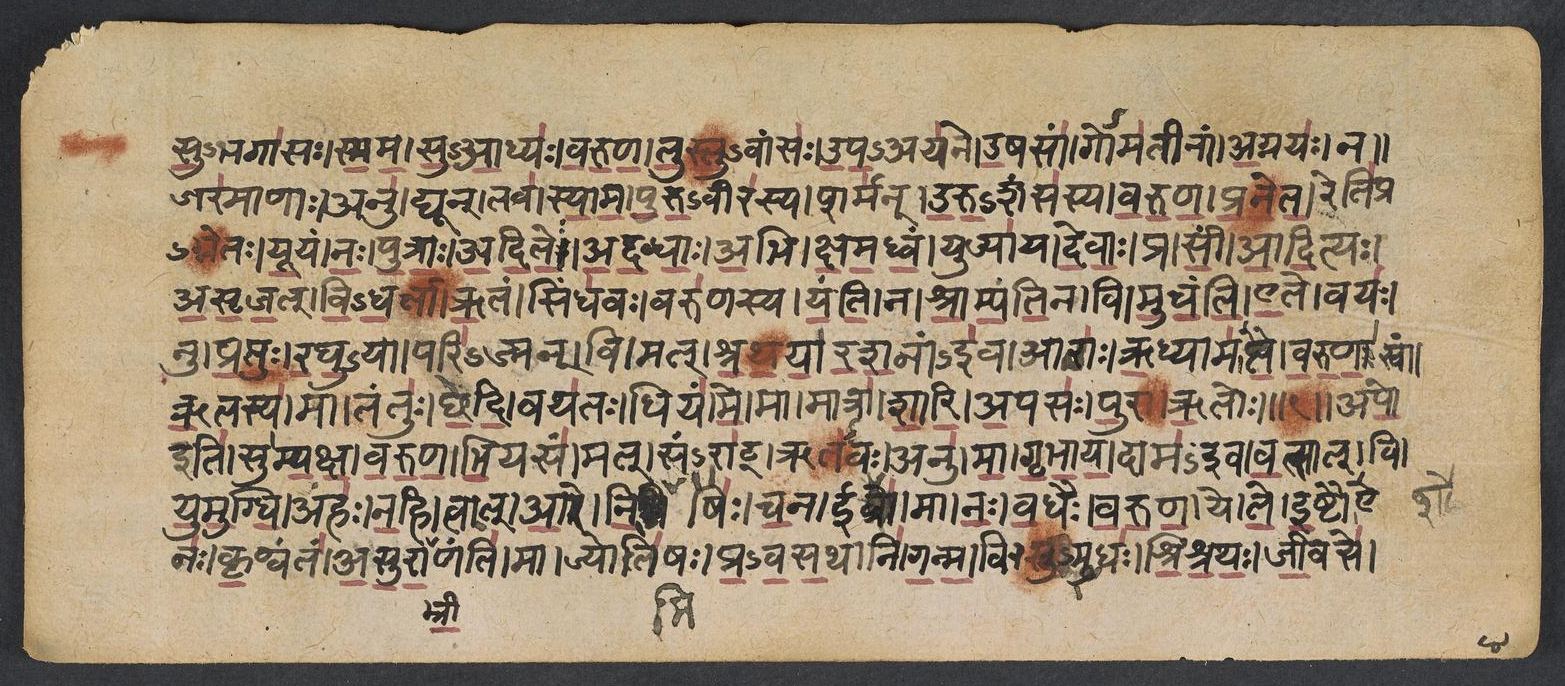
Where on the image
Penn Ms. Coll. 390 Item 41, fol. 171v (numbered 4v by the scribe) (OPenn image 173, upper leaf). Checked on the image: the Rigveda text on this page begins in RV 2.28.2 ‹su-bhagāsaḥ syāma su-ādhyaḥ varuṇa›. The next page with Rigveda text, fol. 172r (numbered 5r by the scribe), begins in RV 2.28.7 ‹naḥ›. Verses 2.28.2-6 end on this page; 2.28.2 begins on fol. 171r (numbered 4r by the scribe).
2tava̍ vra̱te su̱bhagā̍saḥ syāma svā̱dhyo̍ varuṇa tuṣṭu̱vāṁsa̍ḥ | u̱pāya̍na u̱ṣasā̱ṁ goma̍tīnām a̱gnayo̱ na jara̍māṇā̱ anu̱ dyūn ||
3tava̍ syāma puru̱vīra̍sya̱ śarma̍nn uru̱śaṁsa̍sya varuṇa praṇetaḥ | yū̱yaṁ na̍ḥ putrā aditer adabdhā a̱bhi kṣa̍madhva̱ṁ yujyā̍ya devāḥ ||
4pra sī̍m ādi̱tyo a̍sṛjad vidha̱rtām̐ ṛ̱taṁ sindha̍vo̱ varu̍ṇasya yanti | na śrā̍myanti̱ na vi mu̍canty e̱te vayo̱ na pa̍ptū raghu̱yā pari̍jman ||
5vi mac chra̍thāya raśa̱nām i̱vāga̍ ṛ̱dhyāma̍ te varuṇa̱ khām ṛ̱tasya̍ | mā tantu̍ś chedi̱ vaya̍to̱ dhiya̍m me̱ mā mātrā̍ śāry a̱pasa̍ḥ pu̱ra ṛ̱toḥ ||
6apo̱ su mya̍kṣa varuṇa bhi̱yasa̱m mat samrā̱ḻ ṛtā̱vo 'nu̍ mā gṛbhāya | dāme̍va va̱tsād vi mu̍mu̱gdhy aṁho̍ na̱hi tvad ā̱re ni̱miṣa̍ś ca̱neśe̍ ||
Compare: Padapāṭha (word-by-word text written in the manuscript; Sansknet e-text via GRETIL)
2tava | vrate | su-bhagāsaḥ | syāma | su-ādhyaḥ | varuṇa | tustu-vāṃsaḥ | upa-ayane | uṣasām | go--matīnām | agnayaḥ | na | jaramāṇāḥ | anu | dyūn
3ava | syāma | puru-vīrasya | śarman | uru-śaṃsasya | varuṇa | pranetarit ipra-netaḥ | yūyam | naḥ | putrāḥ | aditeḥ | adabdhāḥ | abhi | kṣamadhvam | yujyāya | devāḥ
4pra | sīm | ādityaḥ | asṛjat | vi-dhartā | ṛtam | sindhavaḥ | varuṇasya | yanti | na | śrāmyanti | na | vi | mucanti | ete | vayaḥ | na | paptuḥ | raghu-yā | pari-jman
5vi | mat | śrathaya | raśanām-iva | āgaḥ | ṛdhyāma | te | varuṇa | khām | ṛtasya | mā | tantuḥ | chedi | vayataḥ | dhiyam | me | mā | mātrā | śāri | apasaḥ | purā | ṛtoḥ
6apo iti | su | myakṣa | varuṇa | bhiyasam | mat | sam-rāṭ | ṛta-vaḥ | anu | mā | gṛbhāya | dāma-iva | vatsāt | vi | mumugdhi | aṃhaḥ | nahi | tvat | ārte | ni-miṣaḥ | cana | īśe
2, Having extolled thee. Varuṇa, with thoughtful care may we have high fortune in thy service, Singing thy praises like the fires at coming, day after day, of mornings rich in cattle.
3May we be in thy keeping, O thou Leader wide-ruling Varuṇa, Lord of many heroes. O sons of Aditi, for ever faithful, pardon us, Gods, admit us to your friendship.
4He made them flow, the Âditya, the Sustainer: the rivers run by Varuṇa's commandment. These feel no weariness, nor cease from flowing: swift have they flown like birds in air around us.
5Loose me from sin as from a bond that binds me: may we swell, Varuṇa, thy spring of Order. Let not my thread, while I weave song, be severed, nor my work's sum, before the time, be shattered.
6Far from me, Varuṇa, remove all danger accept me graciously, thou Holy Sovran. Cast off, like cords that hold a calf, my troubles: I am not even mine eyelid's lord without thee.
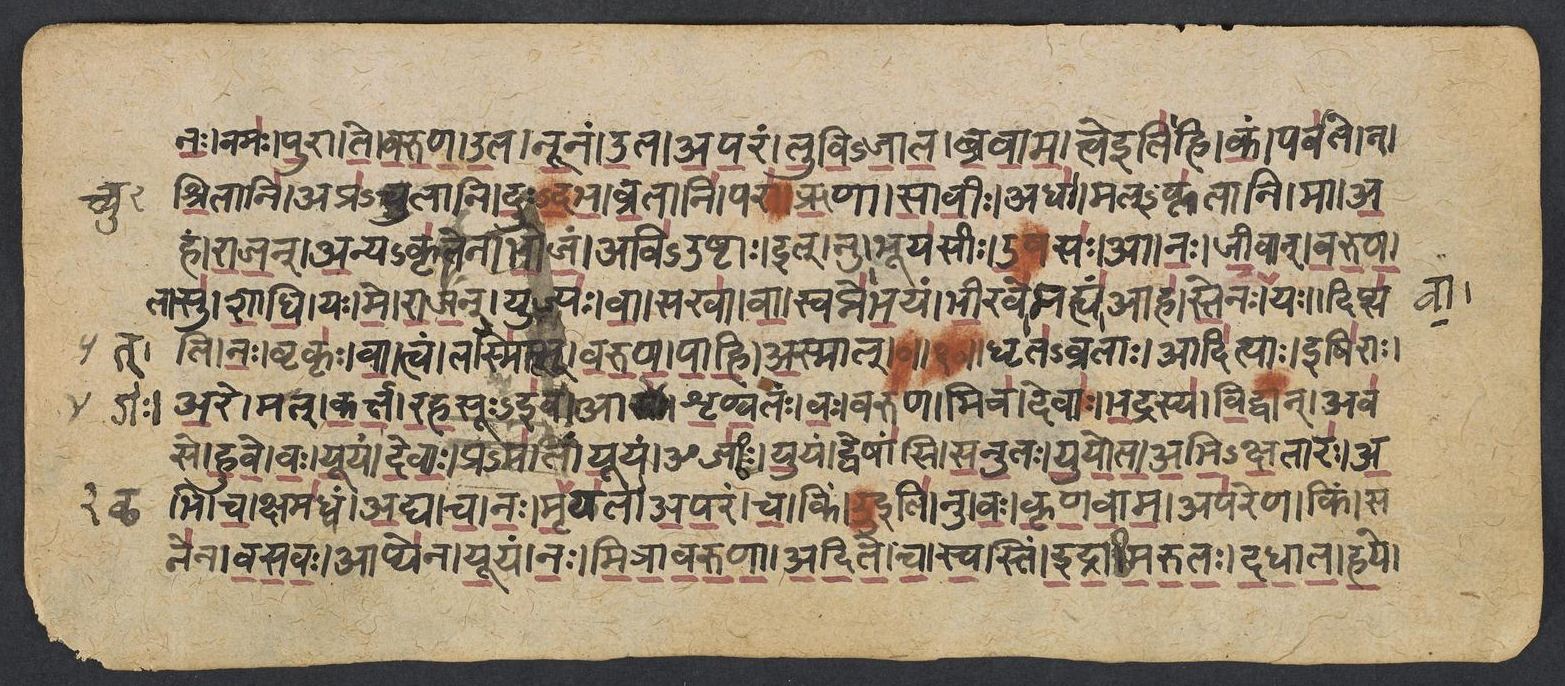
Where on the image
Penn Ms. Coll. 390 Item 41, fol. 172r (numbered 5r by the scribe) (OPenn image 173, lower leaf). Checked on the image: the Rigveda text on this page begins in RV 2.28.7 ‹naḥ›. The next page with Rigveda text, fol. 172v (numbered 5v by the scribe), begins in RV 2.29.4 ‹devāḥ yūyam it āpayaḥ›. Verses 2.28.7-11 end on this page; 2.28.7 begins on fol. 171v (numbered 4v by the scribe).
7mā no̍ va̱dhair va̍ruṇa̱ ye ta̍ i̱ṣṭāv ena̍ḥ kṛ̱ṇvanta̍m asura bhrī̱ṇanti̍ | mā jyoti̍ṣaḥ pravasa̱thāni̍ ganma̱ vi ṣū mṛdha̍ḥ śiśratho jī̱vase̍ naḥ ||
8nama̍ḥ pu̱rā te̍ varuṇo̱ta nū̱nam u̱tāpa̱raṁ tu̍vijāta bravāma | tve hi ka̱m parva̍te̱ na śri̱tāny apra̍cyutāni dūḻabha vra̱tāni̍ ||
9para̍ ṛ̱ṇā sā̍vī̱r adha̱ matkṛ̍tāni̱ māhaṁ rā̍jann a̱nyakṛ̍tena bhojam | avyu̍ṣṭā̱ in nu bhūya̍sīr u̱ṣāsa̱ ā no̍ jī̱vān va̍ruṇa̱ tāsu̍ śādhi ||
10yo me̍ rāja̱n yujyo̍ vā̱ sakhā̍ vā̱ svapne̍ bha̱yam bhī̱rave̱ mahya̱m āha̍ | ste̱no vā̱ yo dipsa̍ti no̱ vṛko̍ vā̱ tvaṁ tasmā̍d varuṇa pāhy a̱smān ||
11māham ma̱ghono̍ varuṇa pri̱yasya̍ bhūri̱dāvna̱ ā vi̍da̱ṁ śūna̍m ā̱peḥ | mā rā̱yo rā̍jan su̱yamā̱d ava̍ sthām bṛ̱had va̍dema vi̱dathe̍ su̱vīrā̍ḥ ||
Compare: Padapāṭha (word-by-word text written in the manuscript; Sansknet e-text via GRETIL)
7mā | naḥ | vadhaiḥ | varuṇa | ye | te | iṣṭau | enaḥ | kṛṇvantam | asura | bhrīṇanti | mā | jyotiṣaḥ | pra-vasathāni | ganma | vi | su | mṛdhaḥ | śiśrathaḥ | jīvase | naḥ
8namaḥ | purā | te | varuṇa | uta | nūnam | uta | aparam | tuvi-jāta | bravāma | tve iti | hi | kam | parvate | na | śritāni | apra-cyutāni | duḥ-dabha | vratāni
9parā | ṛṇā | sāvīḥ | adha | mat-kṛtāni | mā | aham | rājan | anya-kṛtena | bhojam | av i-uṣṭāḥ | it | nu | bhūyasīḥ | uṣasaḥ | ā | naḥ | jīvān | varuṇa | tāsu | śādhi
10yaḥ | me | rājan | yujyaḥ | vā | sakhā | vā | svapne | bhayam | bhīrave | mahyam | āha | stenaḥ | vā | yaḥ | dipsati | naḥ | vṛkaḥ | vā | tvam | tasmāt | varuṇa | pāhi | asmān
11mā | aham | maghonaḥ | varuṇa | priyasya | bhūri-dāvnaḥ | ā | vidam | śūnam | āpeḥ | mā | rāyaḥ | rājan | su-yamāt | ava | sthām | bṛhat | vadema | vidathe | su-vīrāḥ
7Strike us not, Varuṇa, with those dread weapons which, Asura, at thy bidding wound the sinner. Let us not pass away from light to exile. Scatter, that we may live, the men who hate us
8O mighty Varuṇa, now and hereafter, even as of old, will we speak forth our worship. For in thyself, invincible God, thy statutes ne'er to be moved are fixed as on a mountain.
9Move far from me what sins I have committed: let me not suffer, King, for guilt of others. Full many a morn remains to dawn upon us: in these, O Varuṇa, while we live direct us.
10O King, whoever, be he friend or kinsman, hath threatened me affrighted in my slumber- If any wolf or robber fain would harm us, therefrom, O Varuṇa, give thou us protection.
11May I not live O Varuṇa, to witness my wealthy, liberal dear friend's destitution. King, may I never lack well-ordered riches. Loud may we speak, with heroes, in assembly.
Notes
- Sanskrit: Aufrecht's edition (1877) with the Vedic accents, as entered by van Nooten and Holland (GRETIL).
- English: Ralph T. H. Griffith, The Hymns of the Rigveda (1889-1892; 2nd ed. 1896-1897), from the VedaWeb digital text; OCR slips in that text were corrected against the printed 2nd edition (data/sources/rigveda/griffith_errata.json).
- Padapāṭha (edition text): Sansknet e-text via GRETIL (CC BY-NC-SA 4.0).
Cite
Sources
- Source: Penn Ms. Coll. 390 Item 41 (undated (catalogued with Penn's 18th-19th c. Vedic manuscripts)), OPenn, Public Domain Mark + Aufrecht's accented text (GRETIL) + Griffith's English (VedaWeb) (holding institution)
- Critical edition: Aufrecht (1877), accented e-text via GRETIL
← previous · → next · v cycle view · l back to library