Rigveda 2.29: To all the gods
Introduction
Rigveda 2.29 is a hymn of 7 verses addressed to all the gods. It stands in book (maṇḍala) 2, the family book of Gṛtsamada. The Rigveda is the oldest collection of Sanskrit hymns, composed in the second half of the second millennium BCE and handed down orally for many centuries before it was written down.
The manuscript shown is Penn Ms. Coll. 390 Item 41 (University of Pennsylvania), an undated paper manuscript of the padapāṭha (the word-by-word recitation text, in which every word is written separately and compounds are split) of the whole Ṛgveda in Devanāgarī, 884 leaves in fascicles, 7-9 lines to the page, accents in red; this hymn stands on fol. 172r-172v. Each section below gives the verses that end on one page; the page boundaries were read on the images (the opening words of every page), not counted out. Where the manuscript is a padapāṭha (the word-by-word recitation text), the section shows Aufrecht's continuous (saṃhitā) text first and, as the edition text, the padapāṭha of the same verses, which is the form written on the page.
How was this verified? (Provenance)
Where on the image
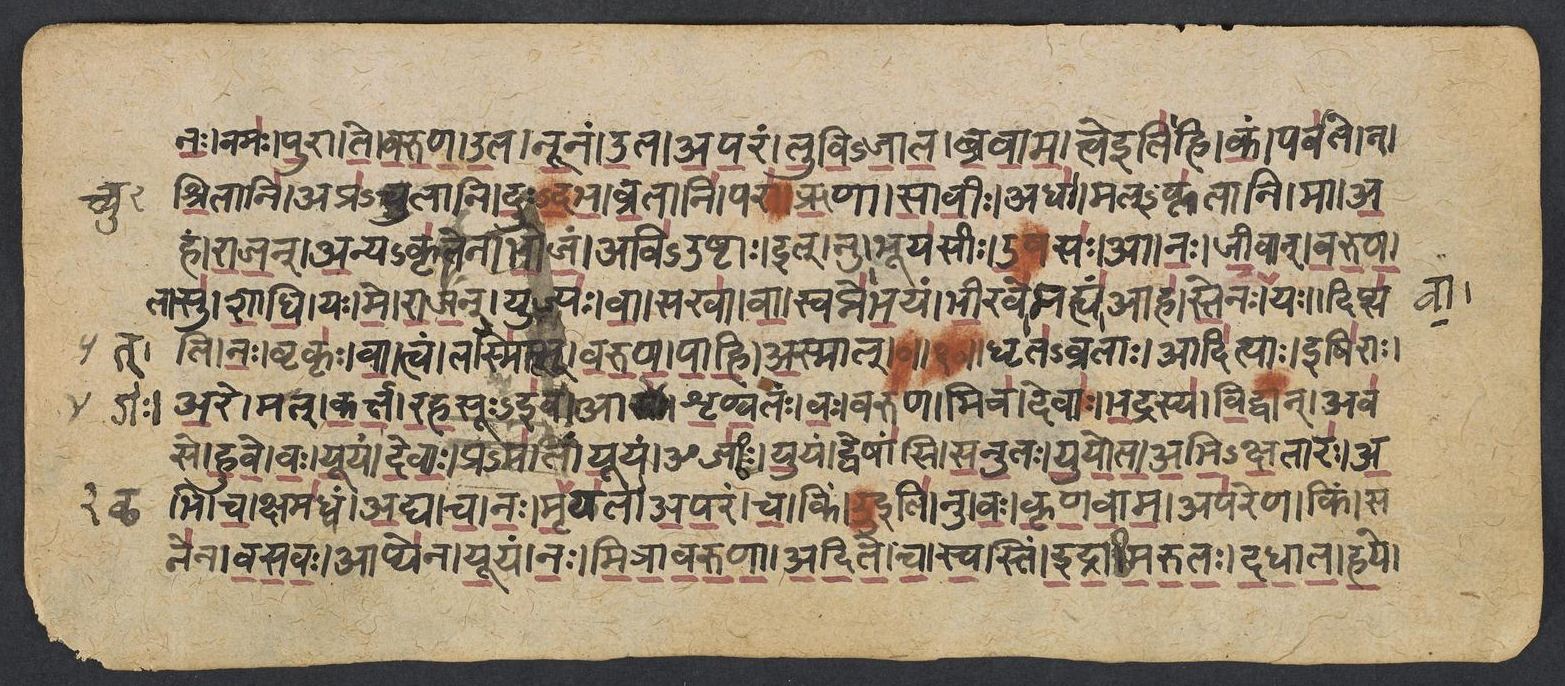
Penn Ms. Coll. 390 Item 41, fol. 172r (numbered 5r by the scribe) (OPenn image 173, lower leaf). Checked on the image: the Rigveda text on this page begins in RV 2.28.7 ‹naḥ›. The next page with Rigveda text, fol. 172v (numbered 5v by the scribe), begins in RV 2.29.4 ‹devāḥ yūyam it āpayaḥ›. Verses 2.29.1-3 end on this page.
1dhṛta̍vratā̱ ādi̍tyā̱ iṣi̍rā ā̱re mat ka̍rta raha̱sūr i̱vāga̍ḥ | śṛ̱ṇva̱to vo̱ varu̍ṇa̱ mitra̱ devā̍ bha̱drasya̍ vi̱dvām̐ ava̍se huve vaḥ ||
2yū̱yaṁ de̍vā̱ḥ prama̍tir yū̱yam ojo̍ yū̱yaṁ dveṣā̍ṁsi sanu̱tar yu̍yota | a̱bhi̱kṣa̱ttāro̍ a̱bhi ca̱ kṣama̍dhvam a̱dyā ca̍ no mṛ̱ḻaya̍tāpa̱raṁ ca̍ ||
3kim ū̱ nu va̍ḥ kṛṇavā̱māpa̍reṇa̱ kiṁ sane̍na vasava̱ āpye̍na | yū̱yaṁ no̍ mitrāvaruṇādite ca sva̱stim i̍ndrāmaruto dadhāta ||
Compare: Padapāṭha (word-by-word text written in the manuscript; Sansknet e-text via GRETIL)
1dhṛta-vratāḥ | ādityāḥ | iṣirāḥ | āre | mat | karta | rahasūḥ-iva | āgaḥ | śṛṇvataḥ | vaḥ | varuṇa | mitra | devāḥ | bhadrasya | vidvān | avase | huve | vaḥ
2yūyam | devāḥ | pra-matiḥ | yūyam | ojaḥ | yūyam | dveṣāṃsi | sanutaḥ | yuyota | abhi-kṣattāraḥ | abhi | ca | kṣamadhvam | adya | ca | naḥ | mṛḷayata | aparam | ca
3kim | oṃ iti | nu | vaḥ | kṛṇavāma | apareṇa | kim | sanena | vasavaḥ | āpyena | yūyam | naḥ | mitrāvaruṇā | adite | ca | svastim | indrāmarutaḥ | dadhāta
1UPHOLDERS of the Law, ye strong Âdityas, remove my sin like her who bears in secret. You, Varuṇa, Mitra and all Gods who listen, I call to help me, I who know your goodness.
2Ye, Gods, are providence and ye are power: remove ye utterly all those who hate us. As givers of good things deal with us kindly: this day be gracious to us and hereafter.
3What service may we do you with our future, what service, Vasus, with our ancient friendship? O Aditi, and Varuṇa and Mitra, Indra and Maruts, make us well and happy.
Where on the image
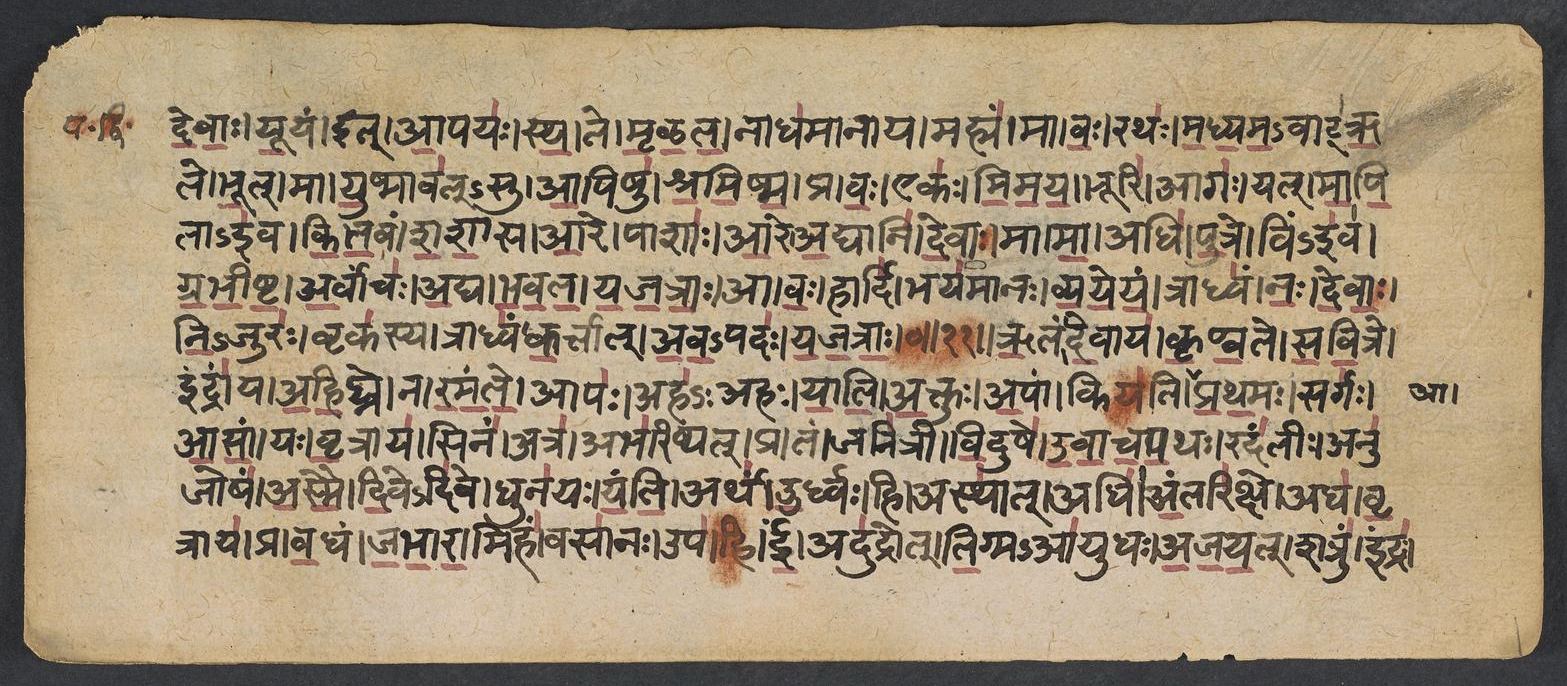
Penn Ms. Coll. 390 Item 41, fol. 172v (numbered 5v by the scribe) (OPenn image 174, upper leaf). Checked on the image: the Rigveda text on this page begins in RV 2.29.4 ‹devāḥ yūyam it āpayaḥ›. The next page with Rigveda text, fol. 173r (numbered 6r by the scribe), begins in RV 2.30.4 ‹bṛhaspate tapuṣā aśnāiva vidhya›. Verses 2.29.4-7 end on this page; 2.29.4 begins on fol. 172r (numbered 5r by the scribe).
4ha̱ye de̍vā yū̱yam id ā̱paya̍ḥ stha̱ te mṛ̍ḻata̱ nādha̍mānāya̱ mahya̍m | mā vo̱ ratho̍ madhyama̱vāḻ ṛ̱te bhū̱n mā yu̱ṣmāva̍tsv ā̱piṣu̍ śramiṣma ||
5pra va̱ eko̍ mimaya̱ bhūry āgo̱ yan mā̍ pi̱teva̍ kita̱vaṁ śa̍śā̱sa | ā̱re pāśā̍ ā̱re a̱ghāni̍ devā̱ mā mādhi̍ pu̱tre vim i̍va grabhīṣṭa ||
6a̱rvāñco̍ a̱dyā bha̍vatā yajatrā̱ ā vo̱ hārdi̱ bhaya̍māno vyayeyam | trādhva̍ṁ no devā ni̱juro̱ vṛka̍sya̱ trādhva̍ṁ ka̱rtād a̍va̱pado̍ yajatrāḥ ||
7māham ma̱ghono̍ varuṇa pri̱yasya̍ bhūri̱dāvna̱ ā vi̍da̱ṁ śūna̍m ā̱peḥ | mā rā̱yo rā̍jan su̱yamā̱d ava̍ sthām bṛ̱had va̍dema vi̱dathe̍ su̱vīrā̍ḥ ||
Compare: Padapāṭha (word-by-word text written in the manuscript; Sansknet e-text via GRETIL)
4haye | devāḥ | yūyam | it | āpayaḥ | stha | te | mṛḷata | nādhamānāya | mahyam | mā | vaḥ | rathaḥ | madhyama-vāṭ | ṛte | bhūt | mā | yuṣmāvat-su | āpiṣu | śramiṣma
5pra | vaḥ | ekaḥ | mimaya | bhūri | āgaḥ | yat | mā | pitāiva | kitavam | śaśāsa | āre | pāśāḥ | āre | aghāni | devāḥ | mā | mā | adhi | putre | vim-iva | grabhīṣṭa
6arvāñcaḥ | adya | bhavatā | yajatrāḥ | ā | vaḥ | hārdi | bhayamānaḥ | vyayeyam | trādhvam | naḥ | devāḥ | ni-juraḥ | vṛkasya | trādhvam | kartāt | ava-padaḥ | yajatrāḥ
7mā | aham | maghonaḥ | varuṇa | priyasya | bhūri-dāvnaḥ | ā | vidam | śūnam | āpeḥ | mā | rāyaḥ | rājan | su-yamāt | ava | sthām | bṛhat | vadema | vidathe | su-vīrāḥ
4Ye, O ye Gods, are verily our kinsmen as such be kind to me who now implore you. Let not your car come slowly to our worship: of kinsmen such as you ne'er let us weary.
5I singly have sinned many a sin against you, and ye chastised me as a sire the gambler. Far be your nets, far, Gods, be mine offences: seize me not like a bird upon her offspring.
6Turn yourselves hitherward this day, ye Holy, that fearing in my heart I may approach you. Protect us, God; let not the wolf destroy us. Save us, ye Holy, from the pit and falling.
7May I not live, O Varuṇa, to witness my wealthy, liberal, dear friend's destitution. King, may I never lack well-ordered riches. Loud may we speak, with heroes, in assembly.
Notes
- Sanskrit: Aufrecht's edition (1877) with the Vedic accents, as entered by van Nooten and Holland (GRETIL).
- English: Ralph T. H. Griffith, The Hymns of the Rigveda (1889-1892; 2nd ed. 1896-1897), from the VedaWeb digital text; OCR slips in that text were corrected against the printed 2nd edition (data/sources/rigveda/griffith_errata.json).
- Padapāṭha (edition text): Sansknet e-text via GRETIL (CC BY-NC-SA 4.0).
Cite
Sources
- Source: Penn Ms. Coll. 390 Item 41 (undated (catalogued with Penn's 18th-19th c. Vedic manuscripts)), OPenn, Public Domain Mark + Aufrecht's accented text (GRETIL) + Griffith's English (VedaWeb) (holding institution)
- Critical edition: Aufrecht (1877), accented e-text via GRETIL
← previous · → next · v cycle view · l back to library