Rigveda 2.30: To Indra and other gods
Introduction
Rigveda 2.30 is a hymn of 11 verses addressed to Indra and other gods. It stands in book (maṇḍala) 2, the family book of Gṛtsamada. The Rigveda is the oldest collection of Sanskrit hymns, composed in the second half of the second millennium BCE and handed down orally for many centuries before it was written down.
The manuscript shown is Penn Ms. Coll. 390 Item 41 (University of Pennsylvania), an undated paper manuscript of the padapāṭha (the word-by-word recitation text, in which every word is written separately and compounds are split) of the whole Ṛgveda in Devanāgarī, 884 leaves in fascicles, 7-9 lines to the page, accents in red; this hymn stands on fol. 172v-173v. Each section below gives the verses that end on one page; the page boundaries were read on the images (the opening words of every page), not counted out. Where the manuscript is a padapāṭha (the word-by-word recitation text), the section shows Aufrecht's continuous (saṃhitā) text first and, as the edition text, the padapāṭha of the same verses, which is the form written on the page.
How was this verified? (Provenance)
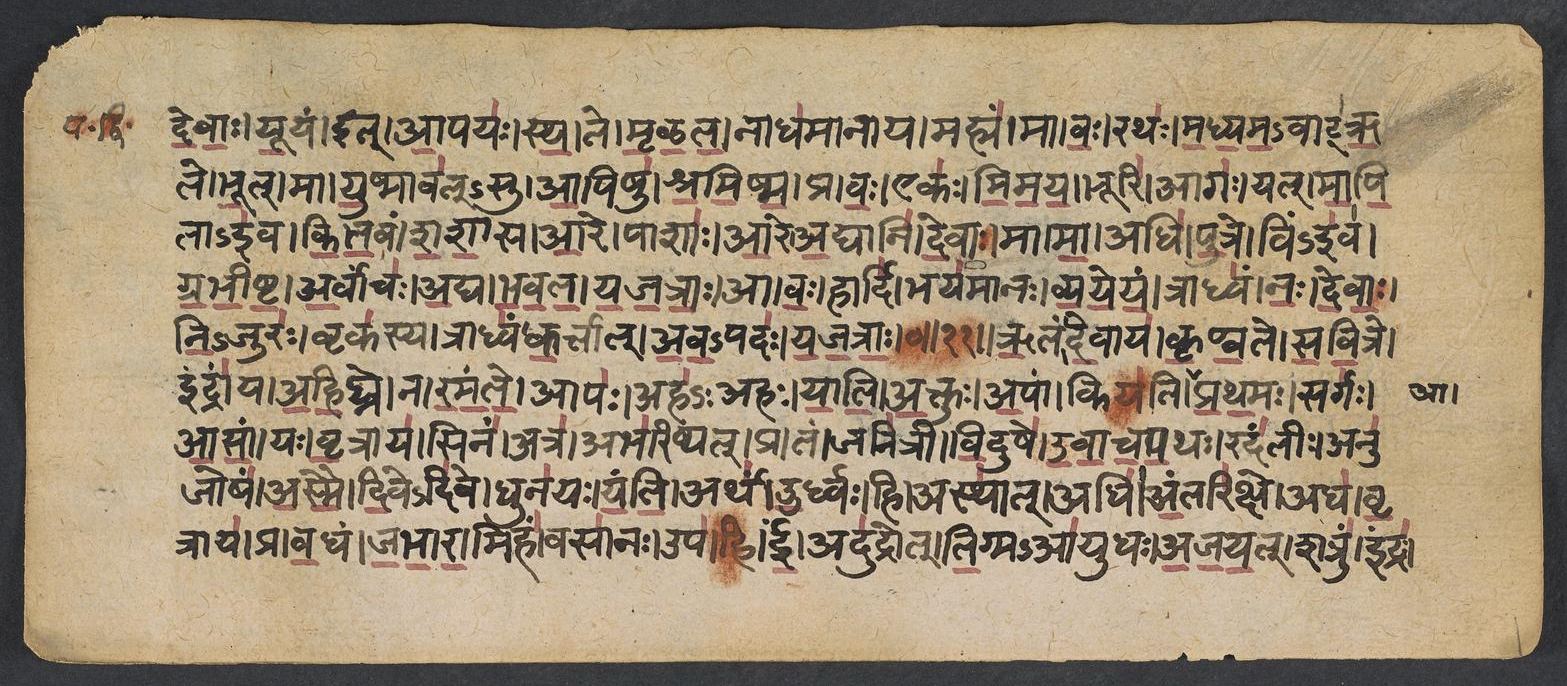
Where on the image
Penn Ms. Coll. 390 Item 41, fol. 172v (numbered 5v by the scribe) (OPenn image 174, upper leaf). Checked on the image: the Rigveda text on this page begins in RV 2.29.4 ‹devāḥ yūyam it āpayaḥ›. The next page with Rigveda text, fol. 173r (numbered 6r by the scribe), begins in RV 2.30.4 ‹bṛhaspate tapuṣā aśnāiva vidhya›. Verses 2.30.1-3 end on this page.
1ṛ̱taṁ de̱vāya̍ kṛṇva̱te sa̍vi̱tra indrā̍yāhi̱ghne na ra̍manta̱ āpa̍ḥ | aha̍r-ahar yāty a̱ktur a̱pāṁ kiyā̱ty ā pra̍tha̱maḥ sarga̍ āsām ||
2yo vṛ̱trāya̱ sina̱m atrābha̍riṣya̱t pra taṁ jani̍trī vi̱duṣa̍ uvāca | pa̱tho rada̍ntī̱r anu̱ joṣa̍m asmai di̱ve-di̍ve̱ dhuna̍yo ya̱nty artha̍m ||
3ū̱rdhvo hy asthā̱d adhy a̱ntari̱kṣe 'dhā̍ vṛ̱trāya̱ pra va̱dhaṁ ja̍bhāra | miha̱ṁ vasā̍na̱ upa̱ hīm adu̍drot ti̱gmāyu̍dho ajaya̱c chatru̱m indra̍ḥ ||
Compare: Padapāṭha (word-by-word text written in the manuscript; Sansknet e-text via GRETIL)
1ṛtam | devāya | kṛṇvate | savitre | indrāya | ahi-ghne | na | ramante | āpaḥ | ahaḥ-ahaḥ | yāti | aktuḥ | apām | kiyati | ā | prathamaḥ | sargaḥ | āsām
2yaḥ | vṛtrāya | sinam | atra | abhariṣyat | pra | tam | janitrī | viduṣe | uvāca | pathaḥ | radantīḥ | anu | joṣam | asmai | dive--dive | dhunayaḥ | yanti | artham
3ūrdhvaḥ | hi | asthāt | adhi | antarikṣe | adha | vṛtrāya | pra | vadham | jabhāra | miham | vasānaḥ | upa | hi | īm | adudrot | tigma-āyudhaḥ | ajayat | śatrum | indraḥ
1THE streams unceasing flow to Indra, slayer of Ahi, Savitar, God, Law's fulfiller, Day after day goes on the sheen of waters. What time hath past since they were first set flowing?
2His Mother-for she knew-spake and proclaimed him who was about to cast his bolt at Vr̥itra. Cutting their paths according to his pleasure day after day flow to their goal the rivers.
3Aloft he stood above the airy region, and against Vr̥itra shot his deadly missile. Enveloped in a cloud he rushed upon him. Indra subdued the foe with sharpened weapons.
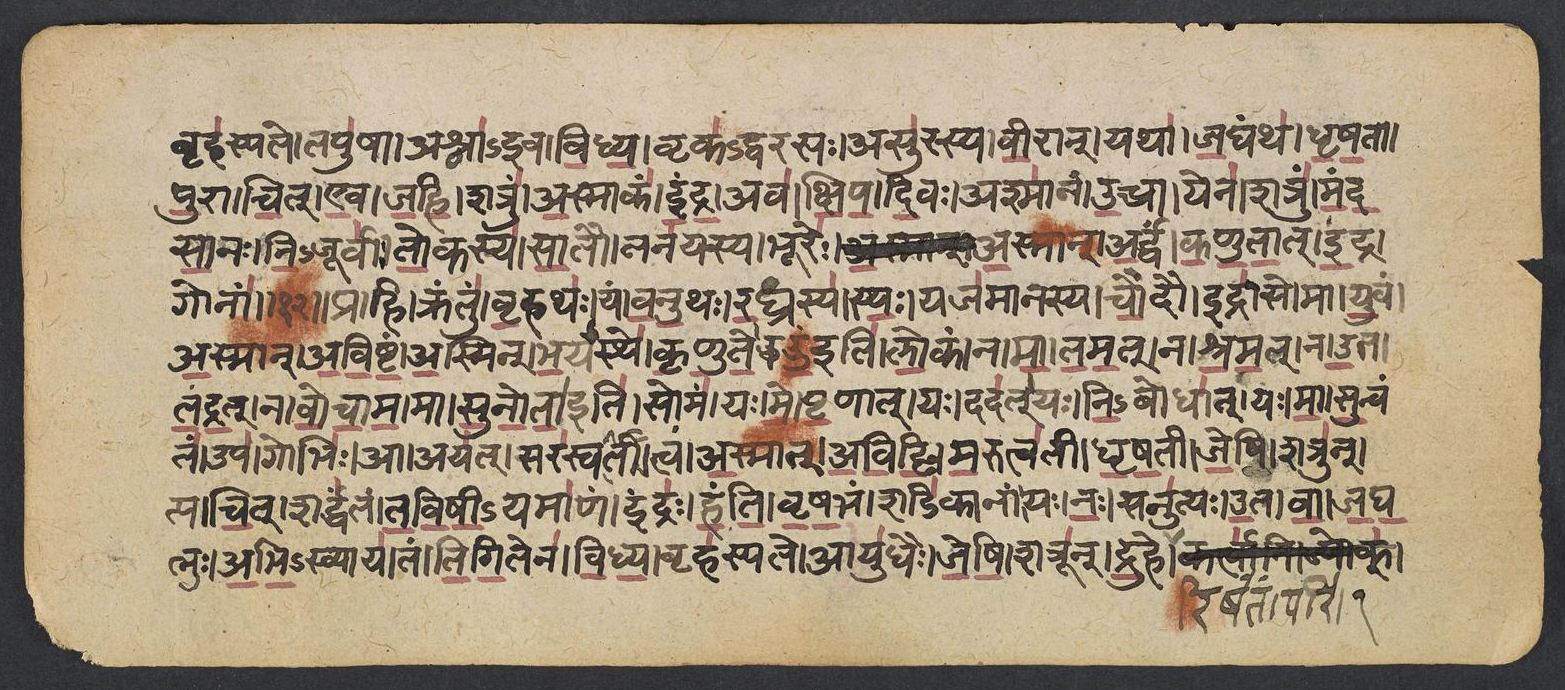
Where on the image
Penn Ms. Coll. 390 Item 41, fol. 173r (numbered 6r by the scribe) (OPenn image 174, lower leaf). Checked on the image: the Rigveda text on this page begins in RV 2.30.4 ‹bṛhaspate tapuṣā aśnāiva vidhya›. The next page with Rigveda text, fol. 173v (numbered 6v by the scribe), begins in RV 2.30.9 ‹dhehi rājan›. Verses 2.30.4-8 end on this page.
4bṛha̍spate̱ tapu̱ṣāśne̍va vidhya̱ vṛka̍dvaraso̱ asu̍rasya vī̱rān | yathā̍ ja̱ghantha̍ dhṛṣa̱tā pu̱rā ci̍d e̱vā ja̍hi̱ śatru̍m a̱smāka̍m indra ||
5ava̍ kṣipa di̱vo aśmā̍nam u̱ccā yena̱ śatru̍m mandasā̱no ni̱jūrvā̍ḥ | to̱kasya̍ sā̱tau tana̍yasya̱ bhūre̍r a̱smām̐ a̱rdhaṁ kṛ̍ṇutād indra̱ gonā̍m ||
6pra hi kratu̍ṁ vṛ̱hatho̱ yaṁ va̍nu̱tho ra̱dhrasya̍ stho̱ yaja̍mānasya co̱dau | indrā̍somā yu̱vam a̱smām̐ a̍viṣṭam a̱smin bha̱yasthe̍ kṛṇutam u lo̱kam ||
7na mā̍ tama̱n na śra̍ma̱n nota ta̍ndra̱n na vo̍cāma̱ mā su̍no̱teti̱ soma̍m | yo me̍ pṛ̱ṇād yo dada̱d yo ni̱bodhā̱d yo mā̍ su̱nvanta̱m upa̱ gobhi̱r āya̍t ||
8sara̍svati̱ tvam a̱smām̐ a̍viḍḍhi ma̱rutva̍tī dhṛṣa̱tī je̍ṣi̱ śatrū̍n | tyaṁ ci̱c chardha̍ntaṁ taviṣī̱yamā̍ṇa̱m indro̍ hanti vṛṣa̱bhaṁ śaṇḍi̍kānām ||
Compare: Padapāṭha (word-by-word text written in the manuscript; Sansknet e-text via GRETIL)
4bṛhaspate | tapuṣā | aśnāiva | vidhya | vṛka-dvarasaḥ | asurasya | vīrān | yathā | jaghantha | dhṛṣatā | purā | cit | eva | jahi | śatrum | asmākam | indra
5ava | kṣipa | divaḥ | aśmānam | uccā | yena | śatrum | mandasānaḥ | ni-jūrvāḥ | tokasya | sātau | tanayasya | bhūreḥ | asmān | ardham | kṛṇutāt | indra | gonām
6pra | hi | kratum | vṛhathaḥ | yam | vanuthaḥ | radhrasya | sthaḥ | yajamānasya | codau | indrāsomā | yuvam | asmān | aviṣṭam | asmin | bhaya-sthe | kṛṇutam | oṃ iti | lokam
7na | mā | tamat | na | śramat | na | uta | tandrat | na | vocāma | mā | sunota | iti | somam | yaḥ | me | pṛṇāt | yaḥ | dṛt | yaḥ | ni-bodhāt | yaḥ | mā | sunvantam | upa | gobhiḥ | ā | ayat
8sarasvati | tvam | asmān | aviḍḍhi | marutvatī | dhṛṣatī | jeṣi | śatrūn | tyam | cit | śardhantam | taviṣī-yamāṇam | indraḥ | hanti | vṛṣabham | śaṇḍikānām
4As with a bolt, Br̥ihaspati, fiercely flaming, pierce thou Vr̥ikadvaras', the Asura's, heroes. Even as in time of old with might thou slewest, so slay even now our enemy, O Indra.
5Cast down from heaven on high thy bolt of thunder wherewith in joy thou smitest dead the foeman. For gain of children make us thine, O Indra, of many children's children and of cattle.
6Whomso ye love, his power ye aid and strengthen; ye Twain are the rich worshipper's advancers. Graciously favour us, Indra and Soma; give us firm standing in this time of danger.
7Let it not vex me, tire me, make me slothful, and never let us say, Press not the Soma; For him who cares for me, gives gifts, supports me, who comes with kine to me who pour libations.
8Sarasvatî, protect us: with the Maruts allied thou boldly conquerest our foemen, While Indra does to death the daring chieftain of Ṣaṇḍikas exulting in his prowess.
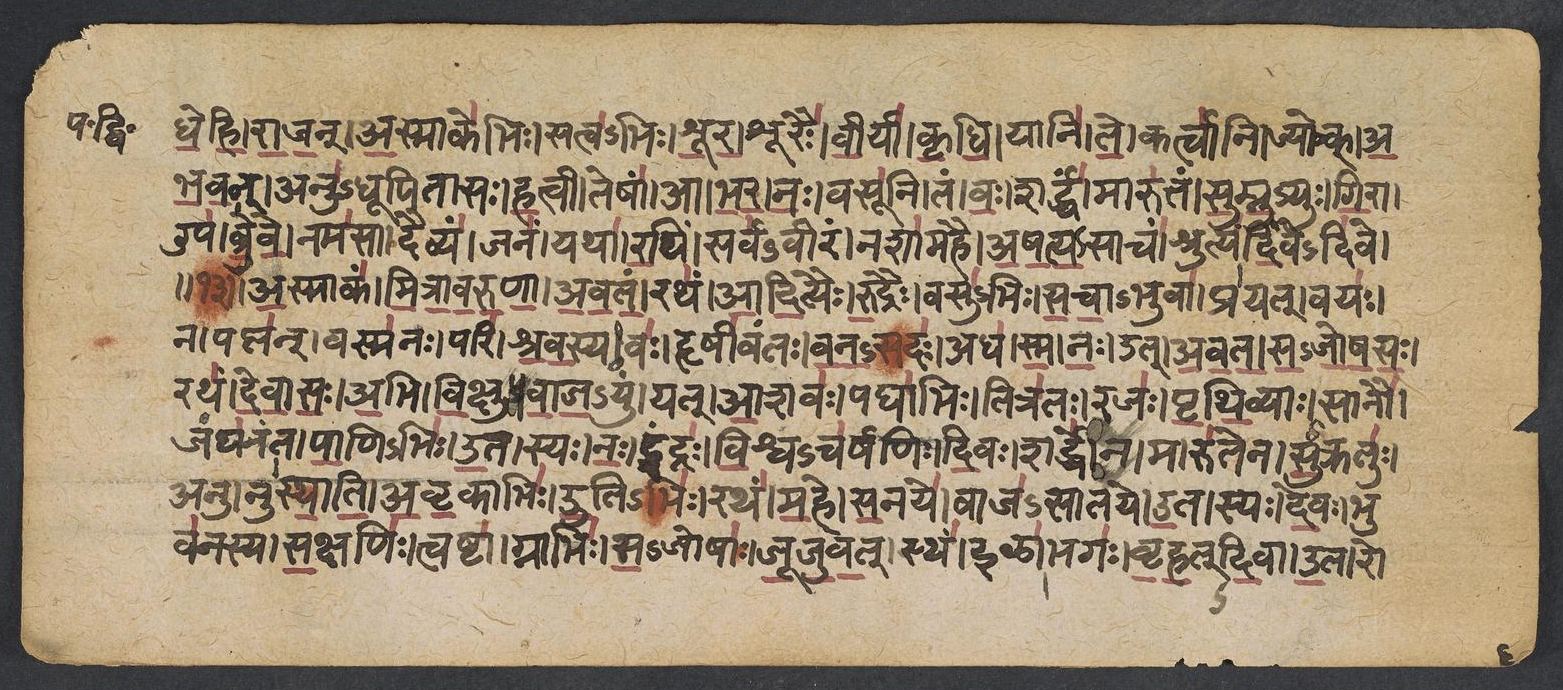
Where on the image
Penn Ms. Coll. 390 Item 41, fol. 173v (numbered 6v by the scribe) (OPenn image 175, upper leaf). Checked on the image: the Rigveda text on this page begins in RV 2.30.9 ‹dhehi rājan›. The next page with Rigveda text, fol. 174r (numbered 7r by the scribe), begins in RV 2.31.4 ‹-rodasī iti pūṣā puram-dhiḥ›. Verses 2.30.9-11 end on this page; 2.30.9 begins on fol. 173r (numbered 6r by the scribe).
9yo na̱ḥ sanu̍tya u̱ta vā̍ jigha̱tnur a̍bhi̱khyāya̱ taṁ ti̍gi̱tena̍ vidhya | bṛha̍spata̱ āyu̍dhair jeṣi̱ śatrū̍n dru̱he rīṣa̍nta̱m pari̍ dhehi rājan ||
10a̱smāke̍bhi̱ḥ satva̍bhiḥ śūra̱ śūrai̍r vī̱ryā̍ kṛdhi̱ yāni̍ te̱ kartvā̍ni | jyog a̍bhūva̱nn anu̍dhūpitāso ha̱tvī teṣā̱m ā bha̍rā no̱ vasū̍ni ||
11taṁ va̱ḥ śardha̱m māru̍taṁ sumna̱yur gi̱ropa̍ bruve̱ nama̍sā̱ daivya̱ṁ jana̍m | yathā̍ ra̱yiṁ sarva̍vīra̱ṁ naśā̍mahā apatya̱sāca̱ṁ śrutya̍ṁ di̱ve-di̍ve ||
Compare: Padapāṭha (word-by-word text written in the manuscript; Sansknet e-text via GRETIL)
9yaḥ | naḥ | sanutya | uta | vā | jighatnuḥ | abhi-khyāya | tam | tigitena | vidhya | bṛhaspate | āyudhaiḥ | jeṣi | śatrūn | duhe | riṣantam | pari | dhehi | rājan
10asmākebhiḥ | satva-bhiḥ | śūra | śūraiḥ | vīryā | kṛdhi | yāni | te | kartvāni | jyok | abhūvan | anu-dhūpitāsaḥ | hatvī | teṣām | ā | bhara | naḥ | vasūni
11tam | vaḥ | śardham | mārutam | sumna-yuḥ | girā | upa | bruve | namasā | daivyam | janam | yathā | rayim | sarva-vīram | naśāmahai | apatya-sācam | śrutyam | d ive--dive
9Him who waylays, yea, him who would destroy us,– aim at him, pierce him with thy sharpened weapon. Br̥ihaspati, with arms thou slayest foemen O King, give up the spoiler to destruction.
10Perform, O Hero, with our valiant heroes the deeds heroic which thou hast to finish. Long have they been inflated with presumption: slay them, and bring us hither their possessions.
11I craving joy address with hymn and homage your heavenly host, the company of Maruts, That we may gain wealth with full store of heroes, each day more famous, and with troops of children.
Notes
- Sanskrit: Aufrecht's edition (1877) with the Vedic accents, as entered by van Nooten and Holland (GRETIL).
- English: Ralph T. H. Griffith, The Hymns of the Rigveda (1889-1892; 2nd ed. 1896-1897), from the VedaWeb digital text; OCR slips in that text were corrected against the printed 2nd edition (data/sources/rigveda/griffith_errata.json).
- Padapāṭha (edition text): Sansknet e-text via GRETIL (CC BY-NC-SA 4.0).
Cite
Sources
- Source: Penn Ms. Coll. 390 Item 41 (undated (catalogued with Penn's 18th-19th c. Vedic manuscripts)), OPenn, Public Domain Mark + Aufrecht's accented text (GRETIL) + Griffith's English (VedaWeb) (holding institution)
- Critical edition: Aufrecht (1877), accented e-text via GRETIL
← previous · → next · v cycle view · l back to library