Rigveda 2.4: To Agni
Introduction
Rigveda 2.4 is a hymn of 9 verses addressed to Agni. It stands in book (maṇḍala) 2, the family book of Gṛtsamada. The Rigveda is the oldest collection of Sanskrit hymns, composed in the second half of the second millennium BCE and handed down orally for many centuries before it was written down.
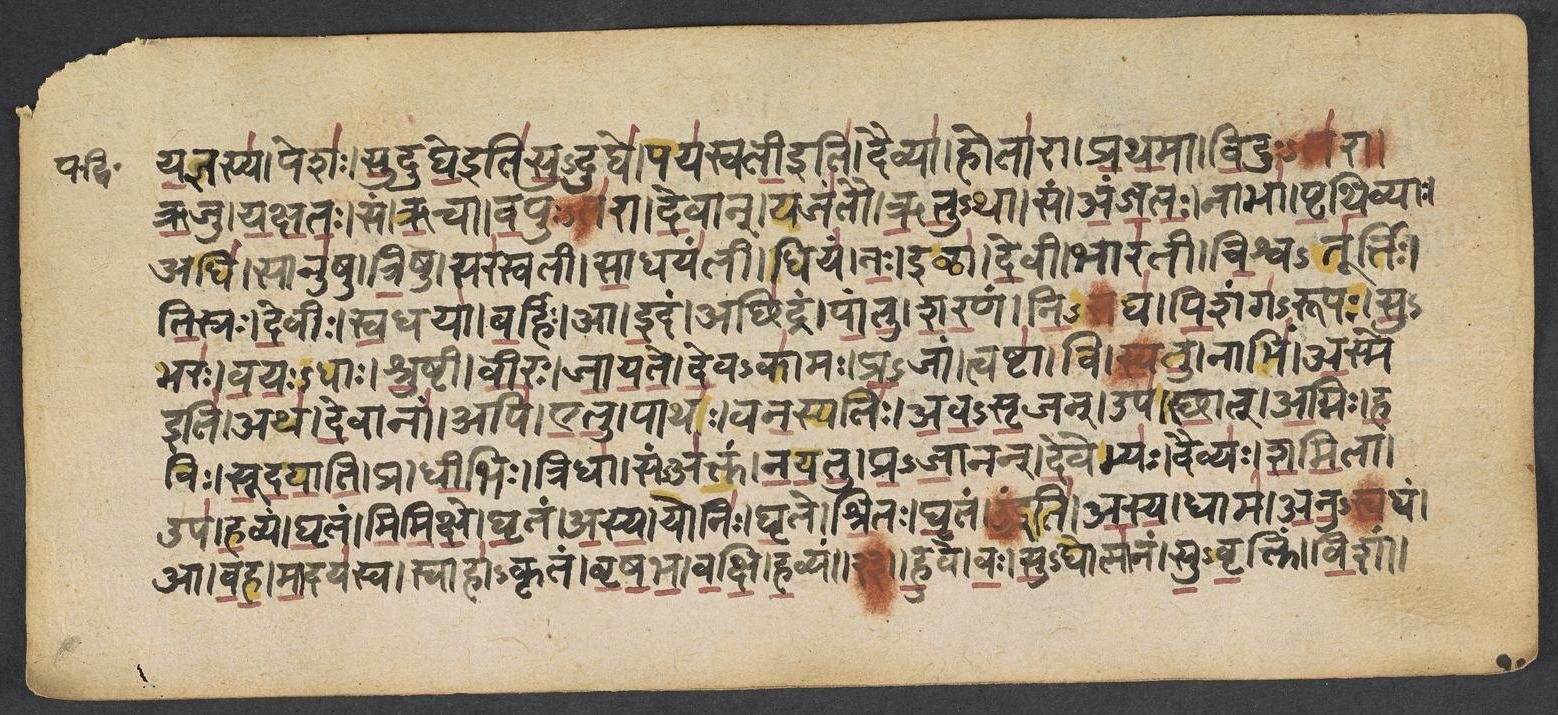
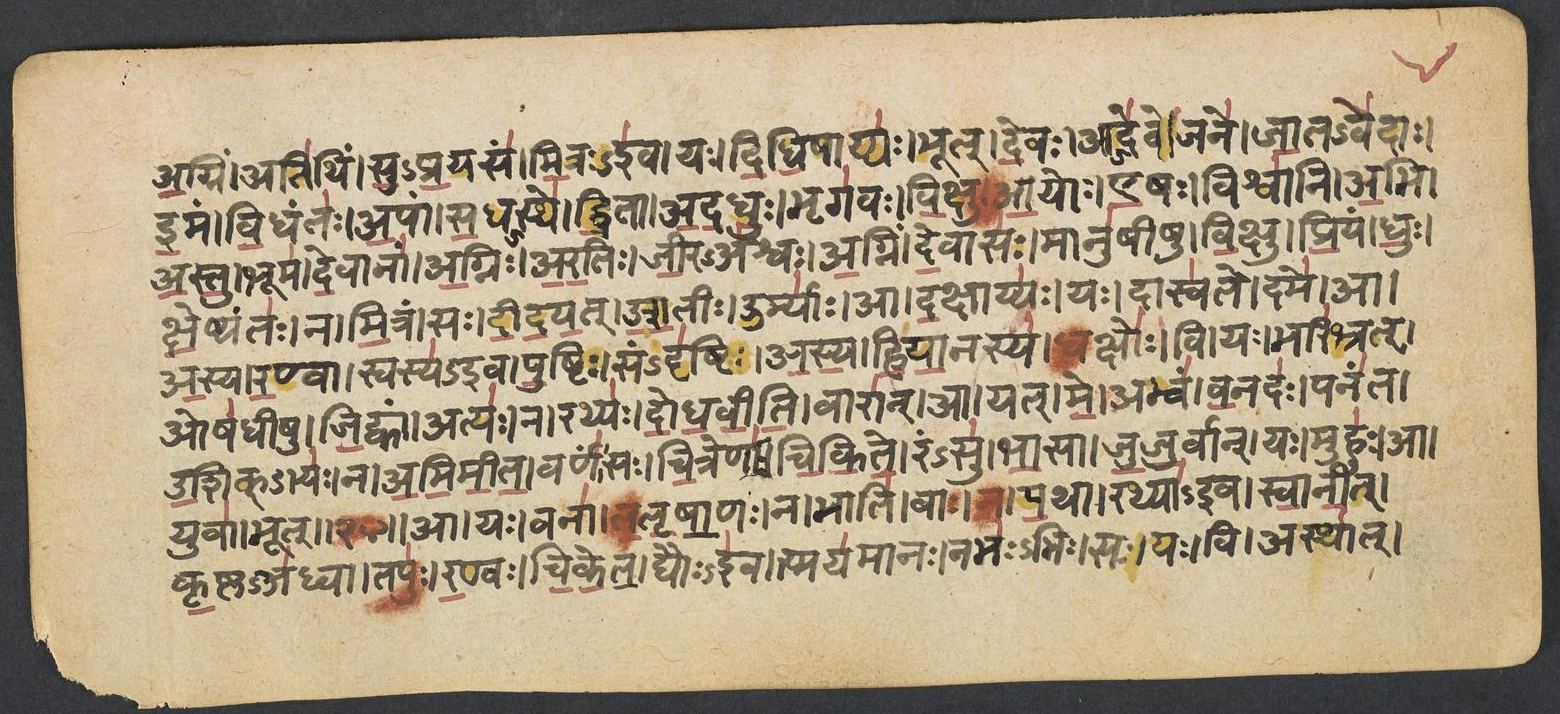
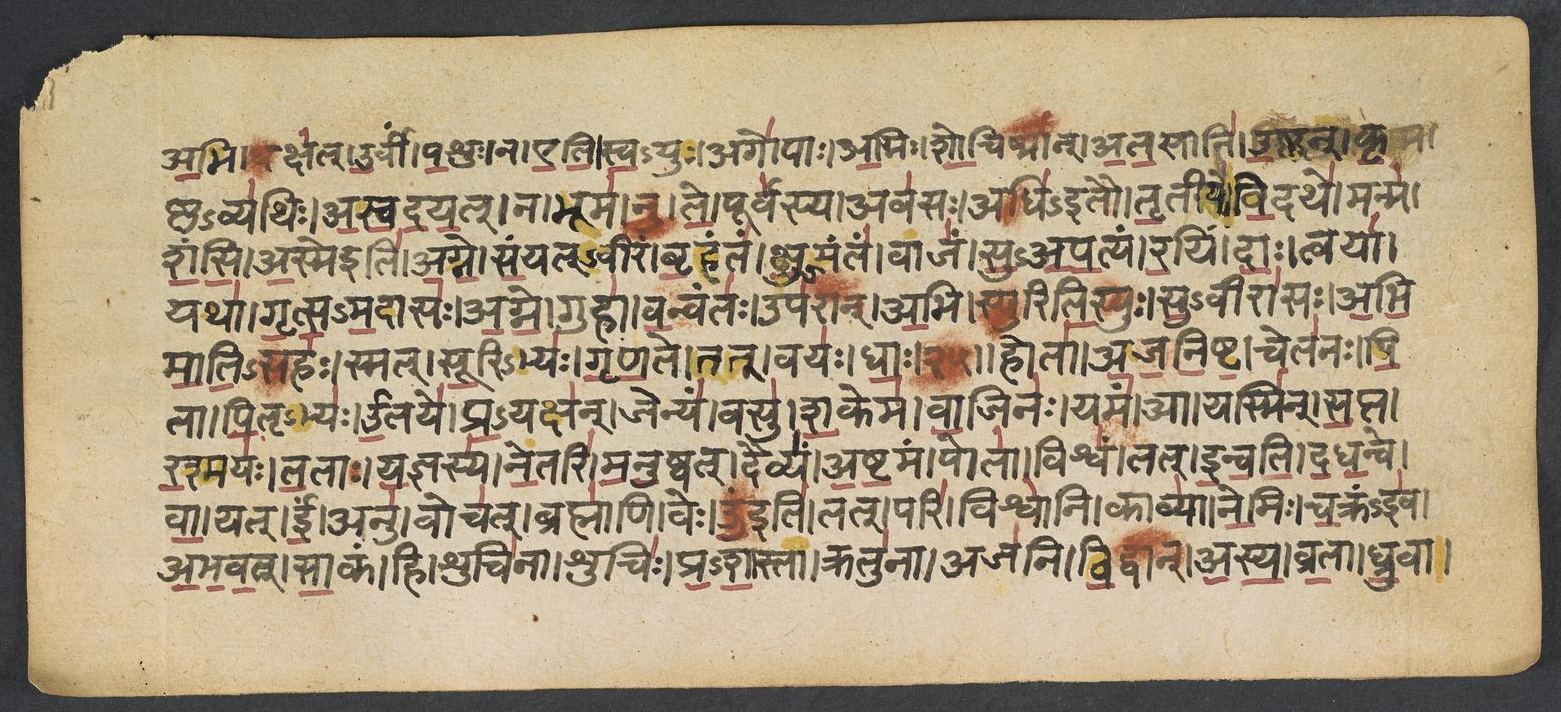
The manuscript shown is Penn Ms. Coll. 390 Item 41 (University of Pennsylvania), an undated paper manuscript of the padapāṭha (the word-by-word recitation text, in which every word is written separately and compounds are split) of the whole Ṛgveda in Devanāgarī, 884 leaves in fascicles, 7-9 lines to the page, accents in red; this hymn stands on fol. 152v-153v. Each section below gives the verses that end on one page; the page boundaries were read on the images (the opening words of every page), not counted out. Where the manuscript is a padapāṭha (the word-by-word recitation text), the section shows Aufrecht's continuous (saṃhitā) text first and, as the edition text, the padapāṭha of the same verses, which is the form written on the page.
How was this verified? (Provenance)
Where on the image
Penn Ms. Coll. 390 Item 41, fol. 153r (numbered 11r by the scribe) (OPenn image 154, lower leaf). Checked on the image: the Rigveda text on this page begins in RV 2.4.1 ‹agnim atithim su-prayasam m›. The next page with Rigveda text, fol. 153v (numbered 11v by the scribe), begins in RV 2.4.7 ‹-dhakṣat urvīṃ paśuḥ na›. Verses 2.4.1-6 end on this page; 2.4.1 begins on fol. 152v (numbered 10v by the scribe).
1hu̱ve va̍ḥ su̱dyotmā̍naṁ suvṛ̱ktiṁ vi̱śām a̱gnim ati̍thiṁ supra̱yasa̍m | mi̱tra i̍va̱ yo di̍dhi̱ṣāyyo̱ bhūd de̱va āde̍ve̱ jane̍ jā̱tave̍dāḥ ||
2i̱maṁ vi̱dhanto̍ a̱pāṁ sa̱dhasthe̍ dvi̱tāda̍dhu̱r bhṛga̍vo vi̱kṣv ā̱3̱̍yoḥ | e̱ṣa viśvā̍ny a̱bhy a̍stu̱ bhūmā̍ de̱vānā̍m a̱gnir a̍ra̱tir jī̱rāśva̍ḥ ||
3a̱gniṁ de̱vāso̱ mānu̍ṣīṣu vi̱kṣu pri̱yaṁ dhu̍ḥ kṣe̱ṣyanto̱ na mi̱tram | sa dī̍dayad uśa̱tīr ūrmyā̱ ā da̱kṣāyyo̱ yo dāsva̍te̱ dama̱ ā ||
4a̱sya ra̱ṇvā svasye̍va pu̱ṣṭiḥ saṁdṛ̍ṣṭir asya hiyā̱nasya̱ dakṣo̍ḥ | vi yo bhari̍bhra̱d oṣa̍dhīṣu ji̱hvām atyo̱ na rathyo̍ dodhavīti̱ vārā̍n ||
5ā yan me̱ abhva̍ṁ va̱nada̱ḥ pana̍nto̱śigbhyo̱ nāmi̍mīta̱ varṇa̍m | sa ci̱treṇa̍ cikite̱ raṁsu̍ bhā̱sā ju̍ju̱rvām̐ yo muhu̱r ā yuvā̱ bhūt ||
6ā yo vanā̍ tātṛṣā̱ṇo na bhāti̱ vār ṇa pa̱thā rathye̍va svānīt | kṛ̱ṣṇādhvā̱ tapū̍ ra̱ṇvaś ci̍keta̱ dyaur i̍va̱ smaya̍māno̱ nabho̍bhiḥ ||
Compare: Padapāṭha (word-by-word text written in the manuscript; Sansknet e-text via GRETIL)
1huve | vaḥ | su-dyotmānam | su-vṛktim | viśām | agnim | atithim | su-prayasam | m itraḥ-iva | yaḥ | didhiṣāyyaḥ | bhūt | devaḥ | ādeve | jane | jāta-vedāḥ
2imam | vidhantaḥ | apām | sadha-sthe | dvitā | adadhuḥ | bhṛgavaḥ | vikṣu | āyoḥ | eṣaḥ | viśvāni | abhi | astu | bhūma | devānām | agniḥ | aratiḥ | jīra-aśvaḥ
3agnim | devāsaḥ | mānuṣīṣu | vikṣu | priyam | dhuḥ | kṣeṣyantaḥ | na | mitram | saḥ | dīdayat | uśatīḥ | ūrmyāḥ | ā | dakṣāyyaḥ | yaḥ | dāsvate | dame | ā
4asya | raṇvā | svasya-iva | puṣṭiḥ | sam-dṛṣṭiḥ | asya | hiyānasya | dhakṣoḥ | vi | yaḥ | bharibhrat | oṣadhīṣu | jihvām | atyaḥ | na | rathyaḥ | dodhavīti | vārān
5ā | yat | me | abhvam | vanadaḥ | pananta | uśik-bhyaḥ | na | amimīta | varṇam | saḥ | citreṇa | cikite | ram-su | bhāsā | jujurvān | yaḥ | muhuḥ | ā | yuvā | bhūt
6ā | yaḥ | vanā | tatṛṣāṇaḥ | na | bhāti | vāḥ | na | pathā | rathyāiva | svānīt | kṛṣṇa-adhvā | tapuḥ | raṇvaḥ | ciketa | dyauḥ-iva | smayamānaḥ | nabhaḥ-bhiḥ
1FOR you I call theglorious refulgent Agni, the guest of men, rich in oblations Whom all must strive to win even as a lover, God among godly people, Jâtavedas.
2Bhr̥igus who served him in the home of waters set him of old in houses of the living. Over all worlds let Agni be the Sovran, the messenger of Gods with rapid coursers.
3Among the tribes of men the Gods placed Agni as a dear Friend when they would dwell among them. Against the longing nights may he shine brightly, and show the offerer in the house his vigour.
4Sweet is his growth as of one's own possessions; his look when rushing fain to burn is lovely. He darts his tongue forth, like a harnessed courser who shakes his flowing tail, among the bushes.
5Since they who honour me have praised my greatness,– he gave, as 'twere, his hue to those who love him. Known is he by his bright delightful splendour, and waxing old renews his youth for ever.
6Like one athirst, he lighteth up the forests; like water down the chariot ways he roareth. On his black path he shines in burning beauty, marked as it were the heaven that smiles through vapour.
Where on the image
Penn Ms. Coll. 390 Item 41, fol. 153v (numbered 11v by the scribe) (OPenn image 155, upper leaf). Checked on the image: the Rigveda text on this page begins in RV 2.4.7 ‹-dhakṣat urvīṃ paśuḥ na›. The next page with Rigveda text, fol. 154r (numbered 12r by the scribe), begins in RV 2.5.4 ‹vayāḥ-iva anu rohate›. Verses 2.4.7-9 end on this page; 2.4.7 begins on fol. 153r (numbered 11r by the scribe).
7sa yo vy asthā̍d a̱bhi dakṣa̍d u̱rvīm pa̱śur naiti̍ sva̱yur ago̍pāḥ | a̱gniḥ śo̱ciṣmā̍m̐ ata̱sāny u̱ṣṇan kṛ̱ṣṇavya̍thir asvadaya̱n na bhūma̍ ||
8nū te̱ pūrva̱syāva̍so̱ adhī̍tau tṛ̱tīye̍ vi̱dathe̱ manma̍ śaṁsi | a̱sme a̍gne sa̱ṁyadvī̍ram bṛ̱hanta̍ṁ kṣu̱manta̱ṁ vāja̍ṁ svapa̱tyaṁ ra̱yiṁ dā̍ḥ ||
9tvayā̱ yathā̍ gṛtsama̱dāso̍ agne̱ guhā̍ va̱nvanta̱ upa̍rām̐ a̱bhi ṣyuḥ | su̱vīrā̍so abhimāti̱ṣāha̱ḥ smat sū̱ribhyo̍ gṛṇa̱te tad vayo̍ dhāḥ ||
Compare: Padapāṭha (word-by-word text written in the manuscript; Sansknet e-text via GRETIL)
7saḥ | yaḥ | vi | asthāt | abhi | dhakṣat | urvīṃ | paśuḥ | na | eti | sva-yuḥ | agopāḥ | agniḥ | śociṣmān | atasān | yuṣṇan | kṛṣṇa-vyathiḥ | asvadayat | na | bhūma
8nu | te | pūrvasya | avasaḥ | adhi-itau | tṛtīye | vidathe | manma | śaṃsi | asme iti | agne | saṃyat-vīram | bṛhantam | kṣu-mantam | vājam | su-apatyam | rayim | dāḥ
9tvayā | yathā | gṛtsa-madāsaḥ | agne | guhā | vanvantaḥ | uparān | abhi | syuritisyuḥ | su-vīrāsaḥ | abhimāti-sahaḥ | smat | sūri-bhyaḥ | gṛṇate | tat | vayaḥ | dhāḥ
7Around, consuming the broad earth, he wanders, free roaming like an ox without a herdsman,– Agni refulgent, burning up the bushes, with blackened lines, as though the earth he seasoned.
8I, in remembrance of thine ancient favour have sung my hymn in this our third assembly. O Agni, give us wealth with store of heroes and mighty strength in food and noble offspring.
9May the Gr̥itsamadas, serving in secret, through thee, O Agni, overcome their neighbours, Rich in good heroes and subduing foemen. That vital power give thou to chiefs and singers.
Notes
- Sanskrit: Aufrecht's edition (1877) with the Vedic accents, as entered by van Nooten and Holland (GRETIL).
- English: Ralph T. H. Griffith, The Hymns of the Rigveda (1889-1892; 2nd ed. 1896-1897), from the VedaWeb digital text; OCR slips in that text were corrected against the printed 2nd edition (data/sources/rigveda/griffith_errata.json).
- Padapāṭha (edition text): Sansknet e-text via GRETIL (CC BY-NC-SA 4.0).
Cite
Sources
- Source: Penn Ms. Coll. 390 Item 41 (undated (catalogued with Penn's 18th-19th c. Vedic manuscripts)), OPenn, Public Domain Mark + Aufrecht's accented text (GRETIL) + Griffith's English (VedaWeb) (holding institution)
- Critical edition: Aufrecht (1877), accented e-text via GRETIL
← previous · → next · v cycle view · l back to library