Rigveda 2.31: To all the gods
Introduction
Rigveda 2.31 is a hymn of 7 verses addressed to all the gods. It stands in book (maṇḍala) 2, the family book of Gṛtsamada. The Rigveda is the oldest collection of Sanskrit hymns, composed in the second half of the second millennium BCE and handed down orally for many centuries before it was written down.
The manuscript shown is Penn Ms. Coll. 390 Item 41 (University of Pennsylvania), an undated paper manuscript of the padapāṭha (the word-by-word recitation text, in which every word is written separately and compounds are split) of the whole Ṛgveda in Devanāgarī, 884 leaves in fascicles, 7-9 lines to the page, accents in red; this hymn stands on fol. 173v-174r. Each section below gives the verses that end on one page; the page boundaries were read on the images (the opening words of every page), not counted out. Where the manuscript is a padapāṭha (the word-by-word recitation text), the section shows Aufrecht's continuous (saṃhitā) text first and, as the edition text, the padapāṭha of the same verses, which is the form written on the page.
How was this verified? (Provenance)
Where on the image
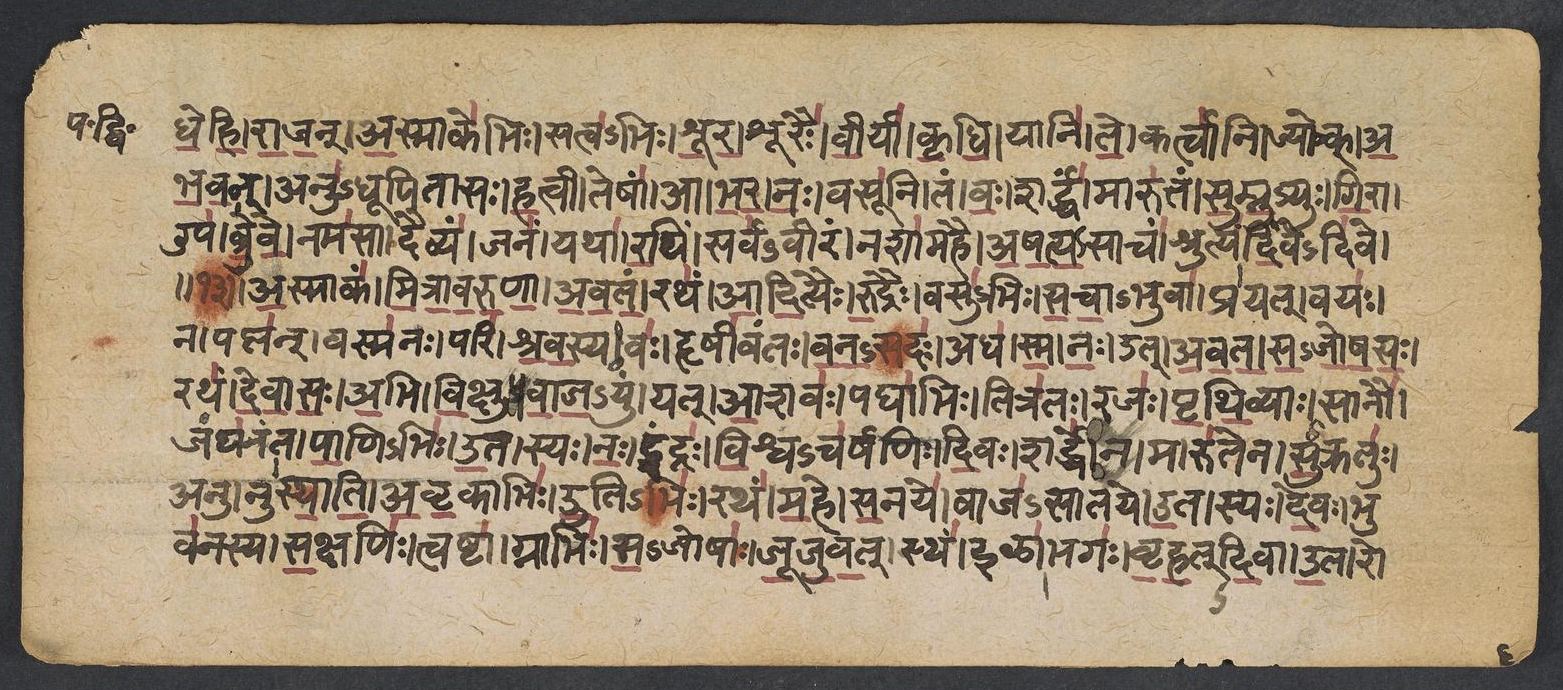
Penn Ms. Coll. 390 Item 41, fol. 173v (numbered 6v by the scribe) (OPenn image 175, upper leaf). Checked on the image: the Rigveda text on this page begins in RV 2.30.9 ‹dhehi rājan›. The next page with Rigveda text, fol. 174r (numbered 7r by the scribe), begins in RV 2.31.4 ‹-rodasī iti pūṣā puram-dhiḥ›. Verses 2.31.1-3 end on this page.
1a̱smāka̍m mitrāvaruṇāvata̱ṁ ratha̍m ādi̱tyai ru̱drair vasu̍bhiḥ sacā̱bhuvā̍ | pra yad vayo̱ na papta̱n vasma̍na̱s pari̍ śrava̱syavo̱ hṛṣī̍vanto vana̱rṣada̍ḥ ||
2adha̍ smā na̱ ud a̍vatā sajoṣaso̱ ratha̍ṁ devāso a̱bhi vi̱kṣu vā̍ja̱yum | yad ā̱śava̱ḥ padyā̍bhi̱s titra̍to̱ raja̍ḥ pṛthi̱vyāḥ sānau̱ jaṅgha̍nanta pā̱ṇibhi̍ḥ ||
3u̱ta sya na̱ indro̍ vi̱śvaca̍rṣaṇir di̱vaḥ śardhe̍na̱ māru̍tena su̱kratu̍ḥ | anu̱ nu sthā̍ty avṛ̱kābhi̍r ū̱tibhī̱ ratha̍m ma̱he sa̱naye̱ vāja̍sātaye ||
Compare: Padapāṭha (word-by-word text written in the manuscript; Sansknet e-text via GRETIL)
1asmākam | mitrāvaruṇā | avatam | ratham | ādityaiḥ | rudraiḥ | vasu-bhiḥ | sacābhuvā | pra | yat | vayaḥ | na | paptan | vasmanaḥ | pari | śravasyavaḥ | hṛṣīvantaḥ | vana-sadaḥ
2adha | sma | naḥ | ut | avata | sa-joṣasaḥ | ratham | devāsaḥ | abhi | vikṣu | vāja-yum | yat | āśavaḥ | padyābhiḥ | titrataḥ | rajaḥ | pṛthivyāḥ | sānau | jaṅghananta | pāṇi-bhiḥ
3uta | syaḥ | naḥ | indraḥ | viśva-carṣaṇiḥ | divaḥ | śardhena | mārutena | su-kratuḥ | anu | nu | sthāti | avṛkābhiḥ | ūti-bhiḥ | ratham | mahe | sanaye | vāja-sātaye
1HELP, Varuṇa and Mitra, O ye Twain allied with Vasus, Rudras, and Âdityas, help our car, That, as the wild birds of the forest from their home, our horses may fly forth, glad, eager for renown.
2Yea, now ye Gods of one accord speed on our car what time among the folk it seeks an act of might; When, hasting through the region with the stamp of hoofs, our swift steeds trample on the ridges of the earth.
3Or may our Indra here, the Friend of all mankind, coming from heaven, most.wise, girt by the Marut host, Accompany, with aid untroubled by a foe, our car to mighty gain, to win the meed of strength.
Where on the image
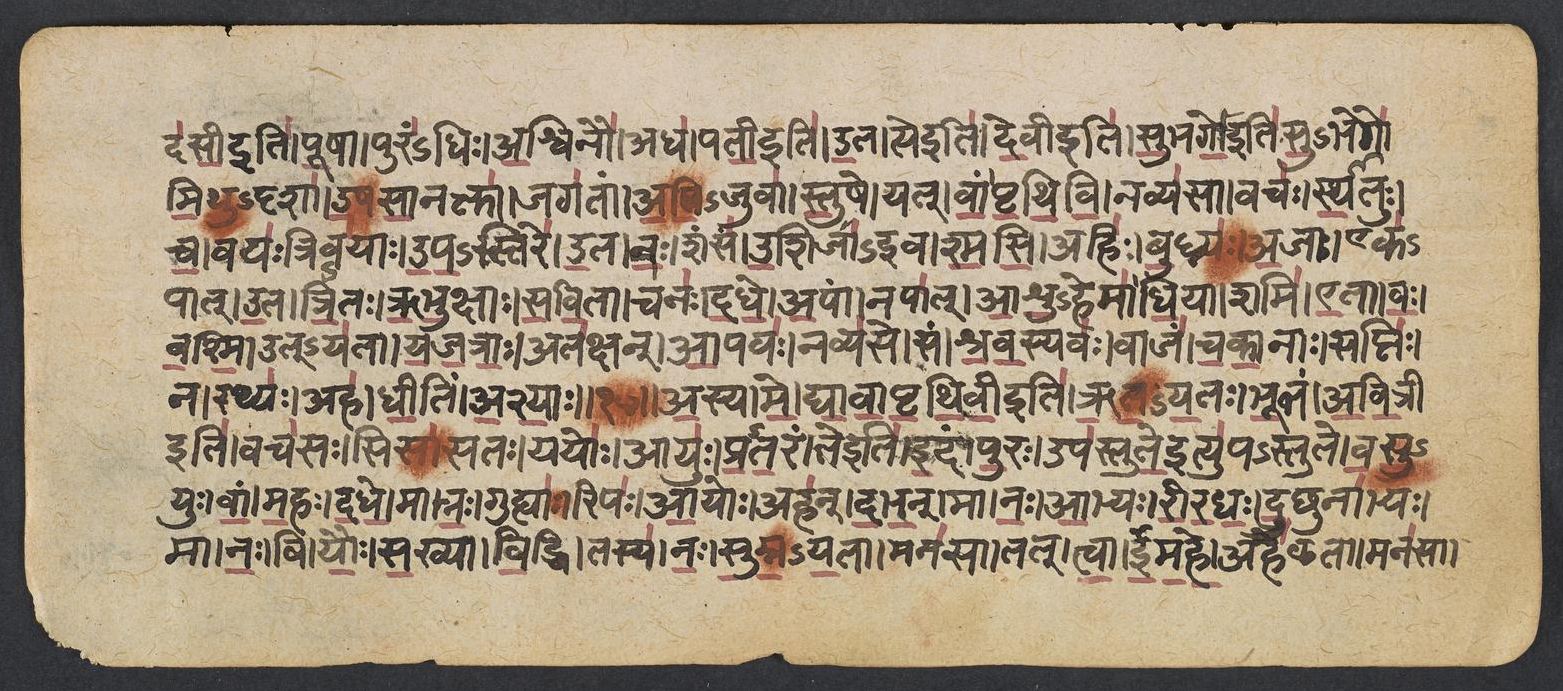
Penn Ms. Coll. 390 Item 41, fol. 174r (numbered 7r by the scribe) (OPenn image 175, lower leaf). Checked on the image: the Rigveda text on this page begins in RV 2.31.4 ‹-rodasī iti pūṣā puram-dhiḥ›. The next page with Rigveda text, fol. 174v (numbered 7v by the scribe), begins in RV 2.32.3 ‹śruṣṭim ā vaha duhānām›. Verses 2.31.4-7 end on this page; 2.31.4 begins on fol. 173v (numbered 6v by the scribe).
4u̱ta sya de̱vo bhuva̍nasya sa̱kṣaṇi̱s tvaṣṭā̱ gnābhi̍ḥ sa̱joṣā̍ jūjuva̱d ratha̍m | iḻā̱ bhago̍ bṛhaddi̱vota roda̍sī pū̱ṣā pura̍ṁdhir a̱śvinā̱v adhā̱ patī̍ ||
5u̱ta tye de̱vī su̱bhage̍ mithū̱dṛśo̱ṣāsā̱naktā̱ jaga̍tām apī̱juvā̍ | stu̱ṣe yad vā̍m pṛthivi̱ navya̍sā̱ vaca̍ḥ sthā̱tuś ca̱ vaya̱s triva̍yā upa̱stire̍ ||
6u̱ta va̱ḥ śaṁsa̍m u̱śijā̍m iva śma̱sy ahi̍r bu̱dhnyo̱3̱̍ 'ja eka̍pād u̱ta | tri̱ta ṛ̍bhu̱kṣāḥ sa̍vi̱tā cano̍ dadhe̱ 'pāṁ napā̍d āśu̱hemā̍ dhi̱yā śami̍ ||
7e̱tā vo̍ va̱śmy udya̍tā yajatrā̱ ata̍kṣann ā̱yavo̱ navya̍se̱ sam | śra̱va̱syavo̱ vāja̍ṁ cakā̱nāḥ sapti̱r na rathyo̱ aha̍ dhī̱tim a̍śyāḥ ||
Compare: Padapāṭha (word-by-word text written in the manuscript; Sansknet e-text via GRETIL)
4uta | syaḥ | devaḥ | bhuvanasya | sakṣaṇiḥ | tvaṣṭā | gnābhiḥ | sa-joṣāḥ | jūjuvat | ratham | iḷā | bhagaḥ | bṛhat-divā | uta | rodasī iti | pūṣā | puram-dhiḥ | aśvinau | adha | patī iti
5uta | tye | devī iti | subhageitisu-bhage | mithu-dṛśā | uṣasānaktā | jagatām | api-juvā | stuṣe | yat | vām | pṛthivi | navyasā | vacaḥ | sthātuḥ | ca | vayaḥ | tri-vayāḥ | upa-stire
6uta | vaḥ | śaṃsam | uśijām-iva | śmasi | ahiḥ | budhnyaḥ | aja | eka-pāt | uta | tritaḥ | ṛbhu-kṣāḥ | savitā | canaḥ | dadhe | apām | napāt | āśu-hemā | dhiyā | śami
7etā | vaḥ | vaśmi | ut-yatā | yajatrāḥ | atakṣan | āyavaḥ | navyase | sam | śravasyavaḥ | vājam | cakānāḥ | saptiḥ | na | rathyaḥ | aha | dhītim | aśyāḥ
4Or may this Tvashṭar, God who rules the world with power, one-minded with the Goddesses speed forth our car; Iḷâ and Bhaga the celestial, Earth and Heaven, Pûshan, Purandhi, and the Aṣvins, ruling Lords.
5Or, seen alternate, those two blessed Goddesses, Morning and Night who stir all living things to act: While with my newest song I praise you both, O Earth, that from what moves not ye may spread forth threefold food.
6Your blessing as a boon for suppliants we desire: the Dragon of the Deep, and Aja-Ekapad, Trita, R̥ibhukshan, Savitar shall joy in us, and the Floods' swift Child in our worship and our prayer.
7These earnest prayers I pray to you, ye Holy: to pay you honour, living men have formed them, Men fain to win the prize and glory. May they win, as a car-horse might the goal, your notice.
Notes
- Sanskrit: Aufrecht's edition (1877) with the Vedic accents, as entered by van Nooten and Holland (GRETIL).
- English: Ralph T. H. Griffith, The Hymns of the Rigveda (1889-1892; 2nd ed. 1896-1897), from the VedaWeb digital text; OCR slips in that text were corrected against the printed 2nd edition (data/sources/rigveda/griffith_errata.json).
- Padapāṭha (edition text): Sansknet e-text via GRETIL (CC BY-NC-SA 4.0).
Cite
Sources
- Source: Penn Ms. Coll. 390 Item 41 (undated (catalogued with Penn's 18th-19th c. Vedic manuscripts)), OPenn, Public Domain Mark + Aufrecht's accented text (GRETIL) + Griffith's English (VedaWeb) (holding institution)
- Critical edition: Aufrecht (1877), accented e-text via GRETIL
← previous · → next · v cycle view · l back to library