Rigveda 2.32: Diverse gods
Introduction
Rigveda 2.32 is a hymn of 8 verses addressed to diverse gods. It stands in book (maṇḍala) 2, the family book of Gṛtsamada. The Rigveda is the oldest collection of Sanskrit hymns, composed in the second half of the second millennium BCE and handed down orally for many centuries before it was written down.
The manuscript shown is Penn Ms. Coll. 390 Item 41 (University of Pennsylvania), an undated paper manuscript of the padapāṭha (the word-by-word recitation text, in which every word is written separately and compounds are split) of the whole Ṛgveda in Devanāgarī, 884 leaves in fascicles, 7-9 lines to the page, accents in red; this hymn stands on fol. 174r-174v. Each section below gives the verses that end on one page; the page boundaries were read on the images (the opening words of every page), not counted out. Where the manuscript is a padapāṭha (the word-by-word recitation text), the section shows Aufrecht's continuous (saṃhitā) text first and, as the edition text, the padapāṭha of the same verses, which is the form written on the page.
How was this verified? (Provenance)
Where on the image
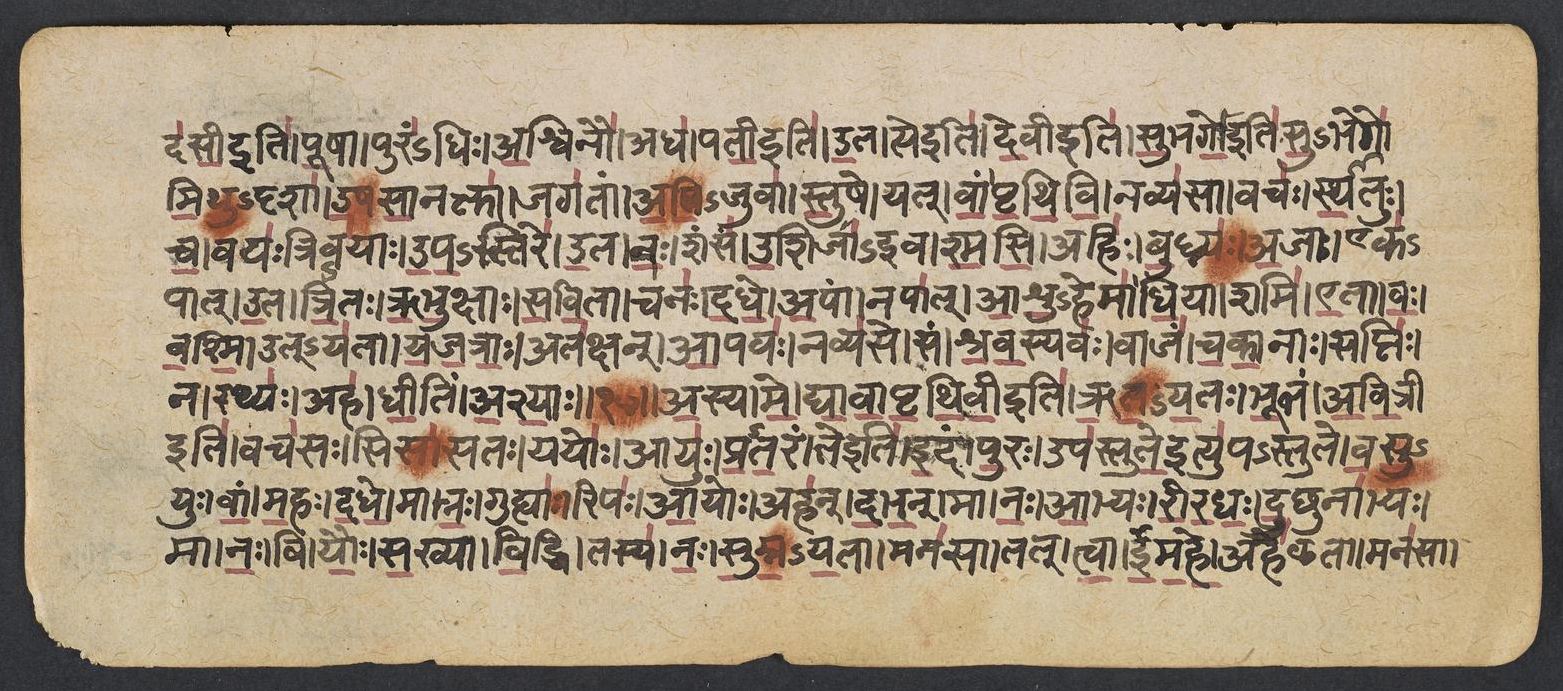
Penn Ms. Coll. 390 Item 41, fol. 174r (numbered 7r by the scribe) (OPenn image 175, lower leaf). Checked on the image: the Rigveda text on this page begins in RV 2.31.4 ‹-rodasī iti pūṣā puram-dhiḥ›. The next page with Rigveda text, fol. 174v (numbered 7v by the scribe), begins in RV 2.32.3 ‹śruṣṭim ā vaha duhānām›. Verses 2.32.1-2 end on this page.
1a̱sya me̍ dyāvāpṛthivī ṛtāya̱to bhū̱tam a̍vi̱trī vaca̍sa̱ḥ siṣā̍sataḥ | yayo̱r āyu̍ḥ prata̱raṁ te i̱dam pu̱ra upa̍stute vasū̱yur vā̍m ma̱ho da̍dhe ||
2mā no̱ guhyā̱ ripa̍ ā̱yor aha̍n dabha̱n mā na̍ ā̱bhyo rī̍radho du̱cchunā̍bhyaḥ | mā no̱ vi yau̍ḥ sa̱khyā vi̱ddhi tasya̍ naḥ sumnāya̱tā mana̍sā̱ tat tve̍mahe ||
Compare: Padapāṭha (word-by-word text written in the manuscript; Sansknet e-text via GRETIL)
1asya | me | dyāvāpṛthivī iti | ṛta-yataḥ | bhūtam | avitrī iti | vacasaḥ | sisāsataḥ | yayoḥ | āyuḥ | pra-taram | teiti | idam | puraḥ | upastuteity upa-stute | vasu-yuḥ | vā | mahaḥ | dadhe
2mā | naḥ | guhyāḥ | ripaḥ | āyoḥ | ahan | dabhan | mā | naḥ | ābhyaḥ | rīradhaḥ | ducchunābhyaḥ | mā | naḥ | vi | yauḥ | sakhyā | viddhi | tasya | naḥ | sumna-yatā | manasā | tat | tvā | īmahe
1GRACIOUSLY further, O ye Heaven and Earth, this speech striving to win reward, of me your worshipper. First rank I give to you, Immortal, high extolled! I, fain to win me wealth, to you the mighty Pair.
2Let not man's guile annoy us, secret or by day: give not us up a prey to these calamities. Sever not thou our friendship: think thereon for us. This, with a heart that longs for bliss, we seek from thee.
Where on the image
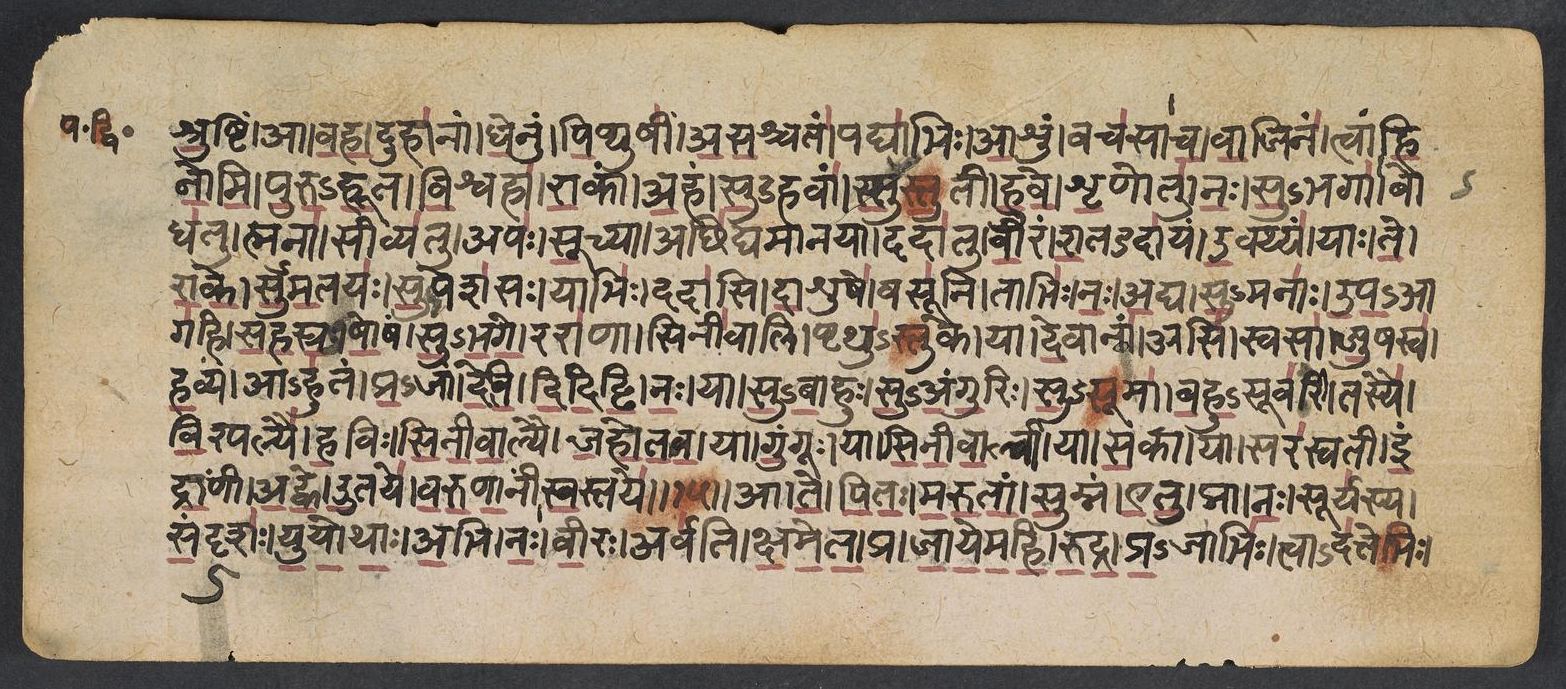
Penn Ms. Coll. 390 Item 41, fol. 174v (numbered 7v by the scribe) (OPenn image 176, upper leaf). Checked on the image: the Rigveda text on this page begins in RV 2.32.3 ‹śruṣṭim ā vaha duhānām›. The next page with Rigveda text, fol. 175r (numbered 8r by the scribe), begins in RV 2.33.2 ‹rudra śam-tamebhiḥ śatam himāḥ›. Verses 2.32.3-8 end on this page; 2.32.3 begins on fol. 174r (numbered 7r by the scribe).
3ahe̍ḻatā̱ mana̍sā śru̱ṣṭim ā va̍ha̱ duhā̍nāṁ dhe̱num pi̱pyuṣī̍m asa̱ścata̍m | padyā̍bhir ā̱śuṁ vaca̍sā ca vā̱jina̱ṁ tvāṁ hi̍nomi puruhūta vi̱śvahā̍ ||
4rā̱kām a̱haṁ su̱havā̍ṁ suṣṭu̱tī hu̍ve śṛ̱ṇotu̍ naḥ su̱bhagā̱ bodha̍tu̱ tmanā̍ | sīvya̱tv apa̍ḥ sū̱cyācchi̍dyamānayā̱ dadā̍tu vī̱raṁ śa̱tadā̍yam u̱kthya̍m ||
5yās te̍ rāke suma̱taya̍ḥ su̱peśa̍so̱ yābhi̱r dadā̍si dā̱śuṣe̱ vasū̍ni | tābhi̍r no a̱dya su̱manā̍ u̱pāga̍hi sahasrapo̱ṣaṁ su̍bhage̱ rarā̍ṇā ||
6sinī̍vāli̱ pṛthu̍ṣṭuke̱ yā de̱vānā̱m asi̱ svasā̍ | ju̱ṣasva̍ ha̱vyam āhu̍tam pra̱jāṁ de̍vi didiḍḍhi naḥ ||
7yā su̍bā̱huḥ sva̍ṅgu̱riḥ su̱ṣūmā̍ bahu̱sūva̍rī | tasyai̍ vi̱śpatnyai̍ ha̱viḥ si̍nīvā̱lyai ju̍hotana ||
8yā gu̱ṅgūr yā si̍nīvā̱lī yā rā̱kā yā sara̍svatī | i̱ndrā̱ṇīm a̍hva ū̱taye̍ varuṇā̱nīṁ sva̱staye̍ ||
Compare: Padapāṭha (word-by-word text written in the manuscript; Sansknet e-text via GRETIL)
3aheḷatā | manasā | śruṣṭim | ā | vaha | duhānām | dhenum | pipyuṣīm | asaścatam | padyābhiḥ | āśum | vacasā | ca | vājinam | tvām | hinomi | puru-hūta | viśvahā
4rākām | aham | su-havām | su-stutī | huve | śṛṇotu | naḥ | su-bhagā | bodhatu | tmanā | sīvyatu | apaḥ | sūcyā | acchidyamānayā | dadātu | vīram | śata-dāyam | ukthyam
5yāḥ | te | rāke | su-matayaḥ | su-peśasaḥ | yābhiḥ | dadāsi | dāśuṣe | vasūni | tābhiḥ | naḥ | adya | su-manāḥ | upa-āgahi | sahasra-poṣam | su-bhage | rarāṇā
6sinīvāli | pṛthu-stuke | yā | devānām | asi | svasā | juṣasva | havyam | āhutam | pra-jām | devi | didiḍḍhi | naḥ
7yā | su-bāhuḥ | su-aṅguriḥ | su-sūmā | bahu-sūvarī | tasyai | viśpatnyai | haviḥ | sinīvālyai | juhotana
8yā | guṅgūḥ | yā | sinīvālī | yā | rākā | yā | sarasvatī | indrāṇīm | ahve | ūtaye | varuṇānīm | svastaye
3Bring hither with benignant mind the willing Cow teeming with plenteous milk, full, inexhaustible. O thou invoked by many, day by day I urge thee with my word, a charger rapid in his tread.
4With eulogy I call on Râkâ swift to hear may she, auspicious, hear us, and herself observe. With never-breaking needle may she sew her work, and give a hero son most wealthy, meet for praise.
5All thy kind thoughts, O Râkâ, lovely in their form, wherewith thou grantest wealth to him who offers gifts- With these come thou to us this day benevolent, O Blessed One, bestowing food of thousand sorts.
6O broad-tressed Sinîvâlî, thou who art the Sister of the Gods, Accept the offered sacrifice, and, Goddess, grant us progeny.
7With lovely fingers, lovely arms, prolific Mother of many sons- Present the sacred gifts to her, to Sinîvâlî Queen of men.
8Her, Sinîvâlî, her, Gungû, her, Râkâ, her, Sarasvatî, Indrâṇî to mine aid I call, and Varuṇânî for my weal.
Notes
- Sanskrit: Aufrecht's edition (1877) with the Vedic accents, as entered by van Nooten and Holland (GRETIL).
- English: Ralph T. H. Griffith, The Hymns of the Rigveda (1889-1892; 2nd ed. 1896-1897), from the VedaWeb digital text; OCR slips in that text were corrected against the printed 2nd edition (data/sources/rigveda/griffith_errata.json).
- Padapāṭha (edition text): Sansknet e-text via GRETIL (CC BY-NC-SA 4.0).
Cite
Sources
- Source: Penn Ms. Coll. 390 Item 41 (undated (catalogued with Penn's 18th-19th c. Vedic manuscripts)), OPenn, Public Domain Mark + Aufrecht's accented text (GRETIL) + Griffith's English (VedaWeb) (holding institution)
- Critical edition: Aufrecht (1877), accented e-text via GRETIL
← previous · → next · v cycle view · l back to library