Rigveda 2.33: To Rudra
Introduction
Rigveda 2.33 is a hymn of 15 verses addressed to Rudra. It stands in book (maṇḍala) 2, the family book of Gṛtsamada. The Rigveda is the oldest collection of Sanskrit hymns, composed in the second half of the second millennium BCE and handed down orally for many centuries before it was written down.
The manuscript shown is Penn Ms. Coll. 390 Item 41 (University of Pennsylvania), an undated paper manuscript of the padapāṭha (the word-by-word recitation text, in which every word is written separately and compounds are split) of the whole Ṛgveda in Devanāgarī, 884 leaves in fascicles, 7-9 lines to the page, accents in red; this hymn stands on fol. 174v-176r. Each section below gives the verses that end on one page; the page boundaries were read on the images (the opening words of every page), not counted out. Where the manuscript is a padapāṭha (the word-by-word recitation text), the section shows Aufrecht's continuous (saṃhitā) text first and, as the edition text, the padapāṭha of the same verses, which is the form written on the page.
How was this verified? (Provenance)
Where on the image
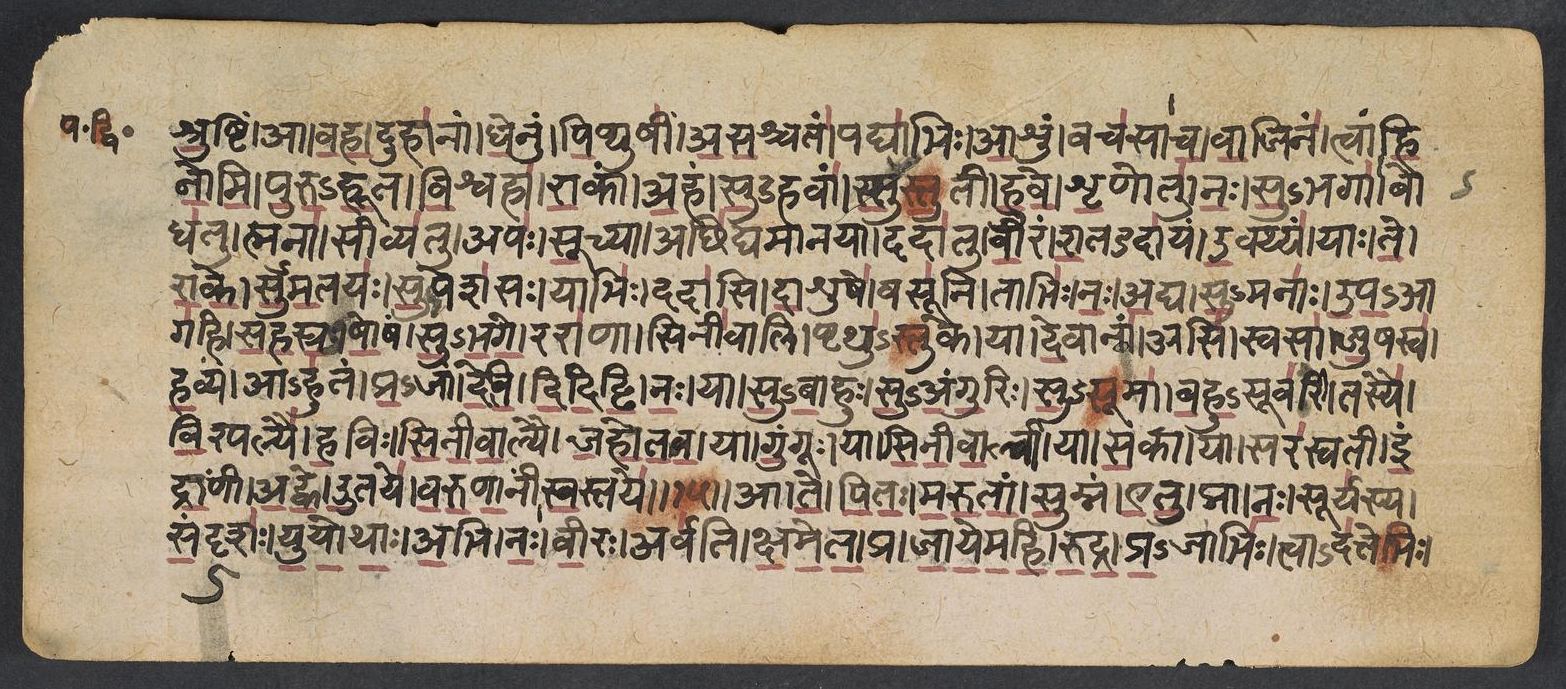
Penn Ms. Coll. 390 Item 41, fol. 174v (numbered 7v by the scribe) (OPenn image 176, upper leaf). Checked on the image: the Rigveda text on this page begins in RV 2.32.3 ‹śruṣṭim ā vaha duhānām›. The next page with Rigveda text, fol. 175r (numbered 8r by the scribe), begins in RV 2.33.2 ‹rudra śam-tamebhiḥ śatam himāḥ›. Verse 2.33.1 ends on this page.
1ā te̍ pitar marutāṁ su̱mnam e̍tu̱ mā na̱ḥ sūrya̍sya sa̱ṁdṛśo̍ yuyothāḥ | a̱bhi no̍ vī̱ro arva̍ti kṣameta̱ pra jā̍yemahi rudra pra̱jābhi̍ḥ ||
Compare: Padapāṭha (word-by-word text written in the manuscript; Sansknet e-text via GRETIL)
1ā | te | pitaḥ | marutām | sumnam | etu | mā | naḥ | sūryasya | sam-dṛśaḥ | yuyothāḥ | abhi | naḥ | vīraḥ | arvati | kṣameta | pra | jāyemahi | rudra | pra-jābhiḥ
1FATHER of Maruts, let thy bliss approach us: exclude us not from looking on the sunlight. Gracious to our fleet courser be the Hero may we transplant us, Rudra, in our children.
Where on the image
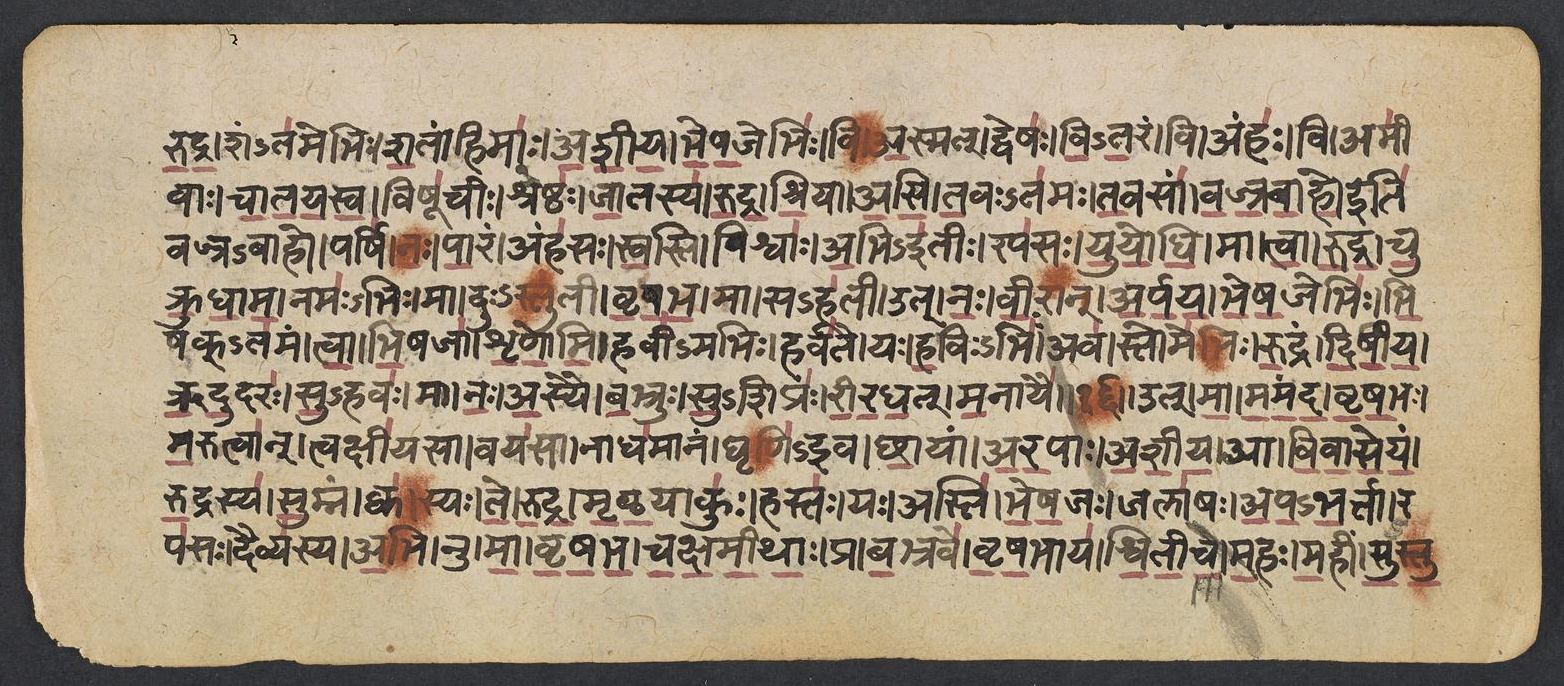
Penn Ms. Coll. 390 Item 41, fol. 175r (numbered 8r by the scribe) (OPenn image 176, lower leaf). Checked on the image: the Rigveda text on this page begins in RV 2.33.2 ‹rudra śam-tamebhiḥ śatam himāḥ›. The next page with Rigveda text, fol. 175v (numbered 8v by the scribe), begins in RV 2.33.8 ‹-su-stutim īrayāmi namasya kalmalīkinam›. Verses 2.33.2-7 end on this page; 2.33.2 begins on fol. 174v (numbered 7v by the scribe).
2tvāda̍ttebhī rudra̱ śaṁta̍mebhiḥ śa̱taṁ himā̍ aśīya bheṣa̱jebhi̍ḥ | vy a1̱̍smad dveṣo̍ vita̱raṁ vy aṁho̱ vy amī̍vāś cātayasvā̱ viṣū̍cīḥ ||
3śreṣṭho̍ jā̱tasya̍ rudra śri̱yāsi̍ ta̱vasta̍mas ta̱vasā̍ṁ vajrabāho | parṣi̍ ṇaḥ pā̱ram aṁha̍saḥ sva̱sti viśvā̍ a̱bhī̍tī̱ rapa̍so yuyodhi ||
4mā tvā̍ rudra cukrudhāmā̱ namo̍bhi̱r mā duṣṭu̍tī vṛṣabha̱ mā sahū̍tī | un no̍ vī̱rām̐ a̍rpaya bheṣa̱jebhi̍r bhi̱ṣakta̍maṁ tvā bhi̱ṣajā̍ṁ śṛṇomi ||
5havī̍mabhi̱r hava̍te̱ yo ha̱virbhi̱r ava̱ stome̍bhī ru̱draṁ di̍ṣīya | ṛ̱dū̱dara̍ḥ su̱havo̱ mā no̍ a̱syai ba̱bhruḥ su̱śipro̍ rīradhan ma̱nāyai̍ ||
6un mā̍ mamanda vṛṣa̱bho ma̱rutvā̱n tvakṣī̍yasā̱ vaya̍sā̱ nādha̍mānam | ghṛṇī̍va cchā̱yām a̍ra̱pā a̍śī̱yā vi̍vāseyaṁ ru̱drasya̍ su̱mnam ||
7kva1̱̍ sya te̍ rudra mṛḻa̱yāku̱r hasto̱ yo asti̍ bheṣa̱jo jalā̍ṣaḥ | a̱pa̱bha̱rtā rapa̍so̱ daivya̍syā̱bhī nu mā̍ vṛṣabha cakṣamīthāḥ ||
Compare: Padapāṭha (word-by-word text written in the manuscript; Sansknet e-text via GRETIL)
2tvādattebhiḥ | rudra | śam-tamebhiḥ | śatam | himāḥ | aśīya | bheṣajebhiḥ | vi | asmat | dveṣaḥ | vi-taram | vi | aṃhaḥ | vi | amīvāḥ | cātayasva | viṣūcīḥ
3śreṣṭhaḥ | jātasya | rudra | śriyā | asi | tavaḥ-tamaḥ | tavasām | vajrabāho itivajra-bāho | parṣi | naḥ | pāram | aṃhasaḥ | svasti | viśvāḥ | abhi-itīḥ | rapasaḥ | yuyodhi
4mā | tvā | rudra | cukrudhāma | namaḥ-bhiḥ | mā | duḥ-stutī | vṛṣabha | mā | sa-hūtī | ut | naḥ | vīrān | arpaya | bheṣajebhiḥ | bhiṣak-tamam | tvā | bhiṣajām | śṛṇomi
5havīma-bhiḥ | havate | yaḥ | haviḥ-bhiḥ | ava | stomebhiḥ | rudram | diṣīya | ṛdūdaraḥ | su-havaḥ | mā | naḥ | asyai | babhruḥ | su-śipraḥ | rīradhat | manāyai
6ut | mā | mamanda | vṛṣabhaḥ | marutvān | tvakṣīyasā | vayasā | nādhamānam | ghṛṇi-iva | chāyām | arapāḥ | aśīya | vivāseyam | rudrasya | sumnam
7kva | syaḥ | te | rudra | mṛḷayākuḥ | hastaḥ | yaḥ | asti | bheṣajaḥ | jalāṣaḥ | apa-bhartā | rapasaḥ | daivyasya | abhi | nu | mā | vṛṣabha | cakṣamīthāḥ
2With the most saving medicines which thou givest, Rudra, may I attain a hundred winters. Far from us banish enmity and hatred, and to all quarters maladies and trouble.
3Chief of all born art thou in glory, Rudra, armed with the thunder, mightiest of the mighty. Transport us over trouble to well-being repel thou from us all assaults of mis. chief.
4Let us not anger thee with worship, Rudra, ill praise, Strong God! or mingled invocation. Do thou with strengthening balms incite our heroes: I hear thee famed as best of all physicians.
5May I with praise-songs win that Rudra's favour who is adored with gifts and invocations. Ne'er may the tawny God, fair-checked, and gracious, swifthearing, yield us to this evil purpose.
6The Strong, begirt by Maruts, hath refreshed me, with most invigorating food, imploring. As he who finds a shade in fervent sunlight may I, uninjured, win the bliss of Rudra.
7Where is that gracious hand of thine, O Rudra, the hand that giveth health and bringeth comfort, Remover of the woe that Gods have sent us? O Strong One, look thou on me with compassion.
Where on the image
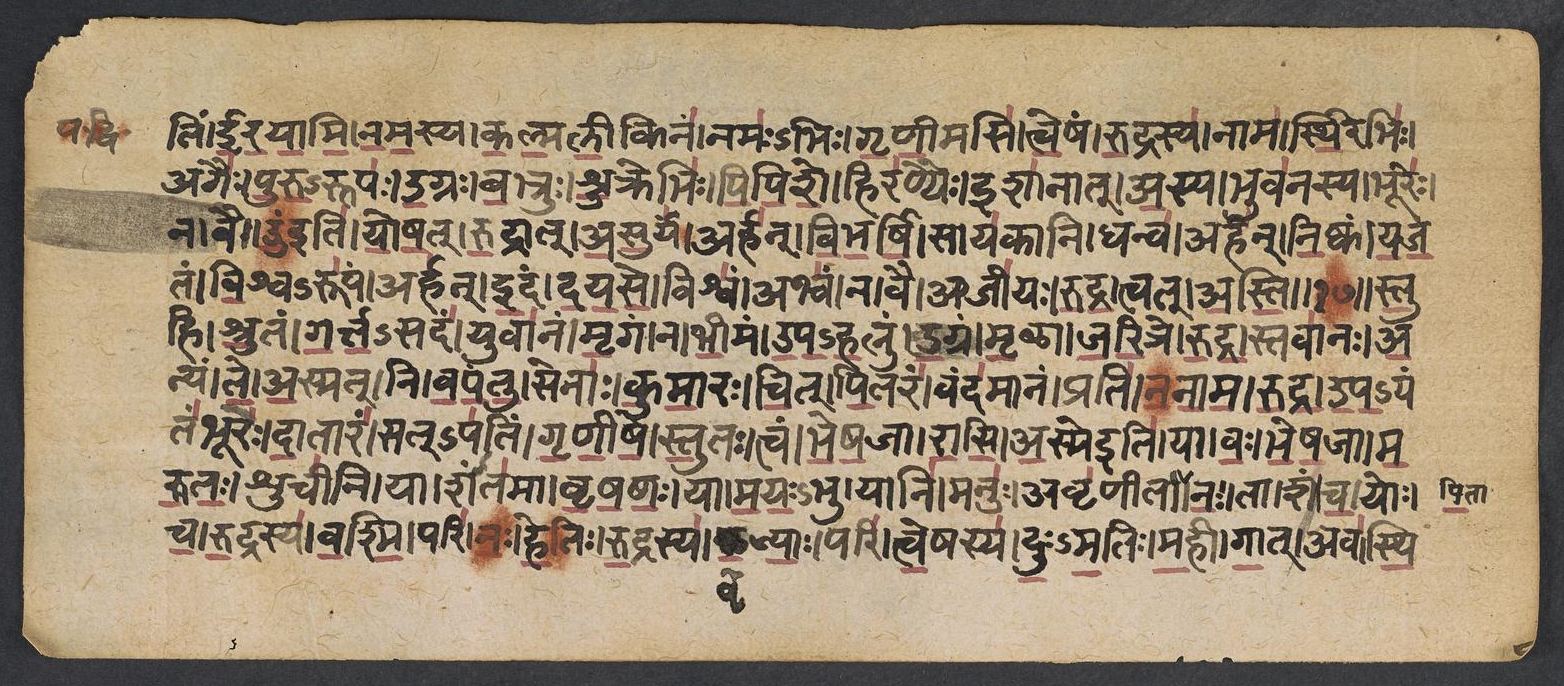
Penn Ms. Coll. 390 Item 41, fol. 175v (numbered 8v by the scribe) (OPenn image 177, upper leaf). Checked on the image: the Rigveda text on this page begins in RV 2.33.8 ‹-su-stutim īrayāmi namasya kalmalīkinam›. The next page with Rigveda text, fol. 176r (numbered 9r by the scribe), begins in RV 2.33.14 ‹-sthirā maghavat-bhyaḥ tanuṣva mīḍhavaḥ›. Verses 2.33.8-13 end on this page; 2.33.8 begins on fol. 175r (numbered 8r by the scribe).
8pra ba̱bhrave̍ vṛṣa̱bhāya̍ śvitī̱ce ma̱ho ma̱hīṁ su̍ṣṭu̱tim ī̍rayāmi | na̱ma̱syā ka̍lmalī̱kina̱ṁ namo̍bhir gṛṇī̱masi̍ tve̱ṣaṁ ru̱drasya̱ nāma̍ ||
9sthi̱rebhi̱r aṅgai̍ḥ puru̱rūpa̍ u̱gro ba̱bhruḥ śu̱krebhi̍ḥ pipiśe̱ hira̍ṇyaiḥ | īśā̍nād a̱sya bhuva̍nasya̱ bhūre̱r na vā u̍ yoṣad ru̱drād a̍su̱rya̍m ||
10arha̍n bibharṣi̱ sāya̍kāni̱ dhanvārha̍n ni̱ṣkaṁ ya̍ja̱taṁ vi̱śvarū̍pam | arha̍nn i̱daṁ da̍yase̱ viśva̱m abhva̱ṁ na vā ojī̍yo rudra̱ tvad a̍sti ||
11stu̱hi śru̱taṁ ga̍rta̱sada̱ṁ yuvā̍nam mṛ̱gaṁ na bhī̱mam u̍paha̱tnum u̱gram | mṛ̱ḻā ja̍ri̱tre ru̍dra̱ stavā̍no̱ 'nyaṁ te̍ a̱sman ni va̍pantu̱ senā̍ḥ ||
12ku̱mā̱raś ci̍t pi̱tara̱ṁ vanda̍māna̱m prati̍ nānāma rudropa̱yanta̍m | bhūre̍r dā̱tāra̱ṁ satpa̍tiṁ gṛṇīṣe stu̱tas tvam bhe̍ṣa̱jā rā̍sy a̱sme ||
13yā vo̍ bheṣa̱jā ma̍ruta̱ḥ śucī̍ni̱ yā śaṁta̍mā vṛṣaṇo̱ yā ma̍yo̱bhu | yāni̱ manu̱r avṛ̍ṇītā pi̱tā na̱s tā śaṁ ca̱ yoś ca̍ ru̱drasya̍ vaśmi ||
Compare: Padapāṭha (word-by-word text written in the manuscript; Sansknet e-text via GRETIL)
8pra | babhrave | vṛṣabhāya | śvitīce | mahaḥ | mahīm | su-stutim | īrayāmi | namasya | kalmalīkinam | namaḥ-bhiḥ | gṛṇīmasi | tveṣam | rudrasya | nāma
9sthirebhiḥ | aṅgaiḥ | puru-rūpaḥ | ugraḥ | babhruḥ | śukrebhiḥ | pipiśe | hiraṇyaiḥ | īśānāt | asya | bhuvanasya | bhūreḥ | na | vai | oṃ iti | yoṣat | rudrāt | asuryam
10arhan | bibharṣi | sāyakāni | dhanva | arhan | niṣkam | yajatam | viśva-rūpam | arhan | idam | dayase | viśvam | abhvam | na | vai | ojīyaḥ | rudra | tvat | asti
11stuhi | śrutam | garta-sadam | yuvānam | mṛgam | na | bhīmam | upa-hatnum | ugram | mṛḷa | jaritre | rudra | stavānaḥ | anyam | te | asmat | ni | vapantu | senāḥ
12kumāraḥ | cit | pitaram | vandamānam | prati | nanāma | rudra | upa-yantam | bhūreḥ | dātāram | sat-patim | gṛṇīṣe | stutaḥ | tvam | bheṣajā | rāsi | asme iti
13yā | vaḥ | bheṣajā | marutaḥ | śucīni | yā | śam-tamā | vṛṣaṇaḥ | yā | mayaḥ-bhu | yāni | manuḥ | avṛṇīta | pitā | naḥ | tā | śam | ca | yoḥ | ca | rudrasya | vaśmi
8To him the strong, great, tawny, fair-complexioned, I utter forth a mighty hymn of praises. We serve the brilliant God with adorations, we glorify, the splendid name of Rudra.
9With firm limbs, multiform, the strong, the tawny adorns himself with bright gold decorations: The strength of Godhead ne'er departs from Rudra, him who is Sovran of this world, the mighty.
10Worthy, thou carriest thy bow and arrows, worthy, thy manyhued and honoured necklace. Worthy, thou cuttest here each fiend to pieces: a mightier than thou there is not, Rudra.
11Praise him the chariot-borne, the young, the famous, fierce, slaying like a dread beast of the forest. O Rudra, praised, be gracious to the singer. let thy hosts spare us and smite down another.
12I bend to thee as thou approachest, Rudra, even as a boy before the sire who greets him. I praise thee Bounteous Giver, Lord of heroes: give medicines to us as thou art lauded.
13Of your pure medicines, O potent Martits, those that are wholesomest and healthbestowing, Those which our father Manu hath selected, I crave from. Rudra for our gain and welfare.
Where on the image
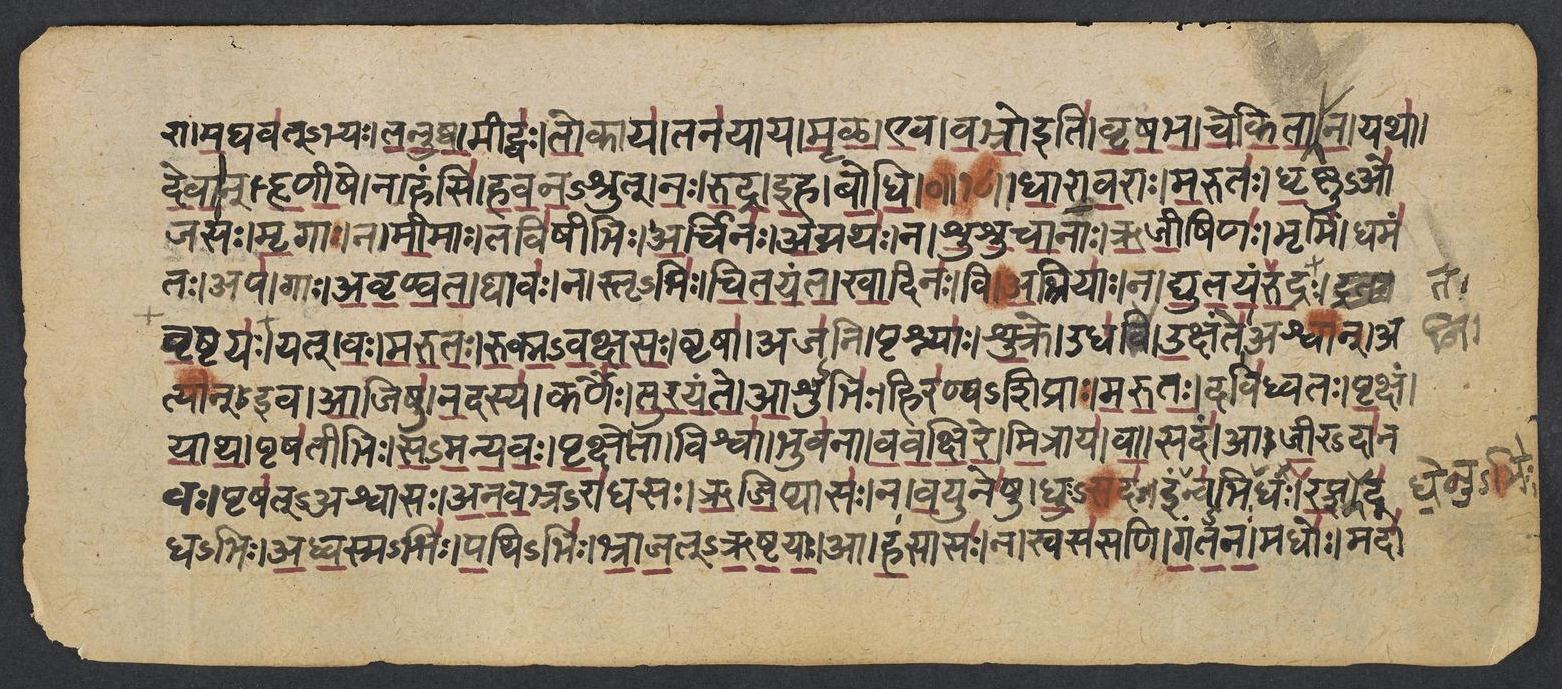
Penn Ms. Coll. 390 Item 41, fol. 176r (numbered 9r by the scribe) (OPenn image 177, lower leaf). Checked on the image: the Rigveda text on this page begins in RV 2.33.14 ‹-sthirā maghavat-bhyaḥ tanuṣva mīḍhavaḥ›. The next page with Rigveda text, fol. 176v (numbered 9v by the scribe), begins in RV 2.34.5 ‹-madāya marutaḥ sa-manyavaḥ›. Verses 2.33.14-15 end on this page; 2.33.14 begins on fol. 175v (numbered 8v by the scribe).
14pari̍ ṇo he̱tī ru̱drasya̍ vṛjyā̱ḥ pari̍ tve̱ṣasya̍ durma̱tir ma̱hī gā̍t | ava̍ sthi̱rā ma̱ghava̍dbhyas tanuṣva̱ mīḍhva̍s to̱kāya̱ tana̍yāya mṛḻa ||
15e̱vā ba̍bhro vṛṣabha cekitāna̱ yathā̍ deva̱ na hṛ̍ṇī̱ṣe na haṁsi̍ | ha̱va̱na̱śrun no̍ rudre̱ha bo̍dhi bṛ̱had va̍dema vi̱dathe̍ su̱vīrā̍ḥ ||
Compare: Padapāṭha (word-by-word text written in the manuscript; Sansknet e-text via GRETIL)
14pari | naḥ | hetiḥ | rudrasya | vṛjyāḥ | pari | tveṣasya | duḥ-matiḥ | mahī | gāt | ava | sthirā | maghavat-bhyaḥ | tanuṣva | mīḍhavaḥ | tokāya | tanayāya | mṛḷa
15eva | babhro iti | vṛṣabha | cekitāna | yathā | deva | na | hṛṇīṣe | na | haṃsi | havana-śrut | naḥ | rudra | iha | bodhi | bṛhat | vadema | vidathe | su-vīrāḥ
14May Rudra's missile turn aside and spare us, the great wrath of the impetuous One avoid us. Turn, Bounteous God, thy strong bow from our princes, and be thou gracious to our seed and offspring.
15O tawny Bull, thus showing forth thy nature, as neither to be wroth, O God, nor slay us. Here, Rudra, listen to our invocation. Loud may we speak, with heroes, in assembly.
Notes
- Sanskrit: Aufrecht's edition (1877) with the Vedic accents, as entered by van Nooten and Holland (GRETIL).
- English: Ralph T. H. Griffith, The Hymns of the Rigveda (1889-1892; 2nd ed. 1896-1897), from the VedaWeb digital text; OCR slips in that text were corrected against the printed 2nd edition (data/sources/rigveda/griffith_errata.json).
- Padapāṭha (edition text): Sansknet e-text via GRETIL (CC BY-NC-SA 4.0).
Cite
Sources
- Source: Penn Ms. Coll. 390 Item 41 (undated (catalogued with Penn's 18th-19th c. Vedic manuscripts)), OPenn, Public Domain Mark + Aufrecht's accented text (GRETIL) + Griffith's English (VedaWeb) (holding institution)
- Critical edition: Aufrecht (1877), accented e-text via GRETIL
← previous · → next · v cycle view · l back to library